Yellow Leaves in Summer Heat and Full Sun

 Here we how direct midday sun burns and discolors leaves, why exposed parts turn yellow while shaded areas stay healthy, and which plants are most sensitive to intense light. It also explains how to spot sunburn patterns, place plants better, use shade cloth, and help damaged plants recover safely.
- How direct midday sun causes leaf burn and discoloration
- Why sun-exposed leaves yellow while shaded parts stay healthy
- Plants most sensitive to full sun and light intensity
- How to identify sunburn patterns on leaves
- Best placement strategies to avoid excessive sunlight
- Using shade cloths and positioning to reduce sun exposure
- How to help plants recover from sun damage safely
Yellow leaves in hot summer sun usually point to plant stress, not just one disease or pest. Heat, intense sunlight, dry or compacted soil, root damage, and uneven watering can all cause the same symptom. The pattern matters: leaves may fade at the edges, between veins, or all over, depending on the cause. By noticing when and where yellowing starts, gardeners can act early, adjust care, and prevent more serious damage.
How direct midday sun causes leaf burn and discoloration

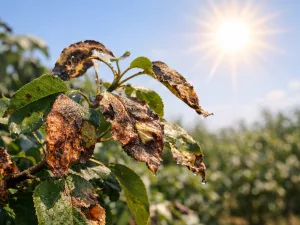
Summer light can be intense enough to damage leaves even when a plant is technically labeled “full sun.” The problem is often not sunlight alone, but the combination of strong midday rays, high leaf temperature, dry soil, reflected heat, and low humidity. When leaves absorb more light and heat than they can process, tissues begin to break down. That damage first appears as yellowing, bleaching, tan patches, or crisp brown edges.
Midday sun is usually the harshest between about 11:00 a.m. and 3:00 p.m., though local climate matters. In hot spells above 30°C (86°F), leaf surfaces can become much hotter than the surrounding air, especially near walls, patios, gravel, or windows that reflect light. Once leaf cells overheat, chlorophyll degrades and the green color fades. If the stress continues, the damaged areas dry out and turn papery.
What happens inside the leaf
Leaves use sunlight to make energy, but that process depends on enough water moving through the plant. In extreme heat, roots may not keep up with evaporation. Stomata close to conserve moisture, which reduces cooling and slows photosynthesis. The leaf then sits in intense light without its normal protection, making discoloration more likely.
- Chlorophyll loss: Green pigment breaks down first, so leaves look pale yellow or washed out.
- Cell dehydration: Thin leaf tissue dries rapidly, especially at the tips and margins.
- Surface scorch: Sun-facing tissue can bleach white or tan before turning brown.
- Heat stress overlap: A plant may show both sun injury and drought symptoms at the same time.
Why the damage often appears suddenly
Many gardeners are surprised when a plant looks fine for weeks and then declines over two or three hot afternoons. That is common because sun stress builds. A plant may tolerate bright weather when nights are cool and soil stays evenly moist, then fail during a heatwave when roots, leaves, and potting mix all heat up together.
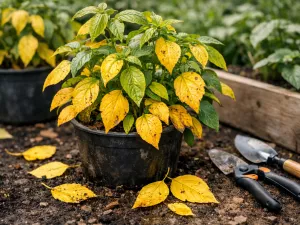
Container plants are especially vulnerable because the root zone warms quickly. A dark nursery pot can heat the soil to damaging levels, and once roots are stressed, the foliage loses resilience. Newly planted shrubs, divisions, and houseplants moved outdoors also burn more easily because they have not yet adapted to stronger light.
Editor’s note: If a plant was recently moved from indoors, a greenhouse, or a shaded shelf to open sun, treat it like a hardening-off problem. Even species that eventually handle bright exposure can scorch badly during the first 7 to 10 days.
Why sun-exposed leaves yellow while shaded parts stay healthy

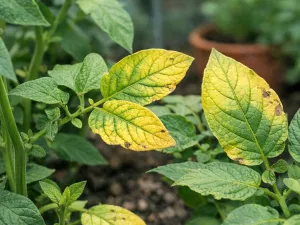
One of the clearest clues that sunlight is the issue is when only the exposed side of a plant suffers. Leaves on the outer canopy, top growth, or west-facing side may yellow, while inner foliage or shaded lower leaves remain deep green. This uneven pattern points to environmental stress rather than a whole-plant nutrient deficiency.
Sun-exposed leaves receive the greatest light load and heat gain. Shaded leaves stay cooler, lose water more slowly, and avoid the direct tissue damage that causes bleaching. The same plant can therefore show two very different appearances at once: healthy green growth inside and stressed yellow growth on the outside.
Microclimates around the same plant
A single bed or container can contain several microclimates. The top of the plant may face direct overhead sun, one side may catch reflected heat from a wall, and the base may remain cool because it is shaded by neighboring foliage. This is why yellowing can look selective rather than uniform.
- South- or west-facing exposure: Often receives the hottest afternoon light.
- Reflected heat: White walls, stone, metal fencing, and paving intensify brightness and temperature.
- Wind exposure: Dry wind speeds moisture loss from leaves already under heat stress.
- Root competition: Plants in crowded beds may have enough light but not enough water to support that light level.
Why this looks different from nutrient yellowing
Nutrient problems usually follow a more predictable pattern based on leaf age. For example, nitrogen deficiency often starts on older leaves throughout the plant, while iron deficiency tends to affect newer growth with green veins and yellow tissue. Sun-related yellowing is more positional. It appears where the light hits hardest, not necessarily on the oldest or newest leaves first.
Another difference is texture. Sun-stressed leaves often feel dry, thin, or brittle in the damaged areas. Nutrient-related yellow leaves usually stay soft unless another problem is involved. Looking at both where the yellowing occurs and how the tissue feels can save time and prevent unnecessary feeding.
Plants most sensitive to full sun and light intensity

Not all plants that dislike summer sun are obvious shade lovers. Some species tolerate bright morning light but struggle in harsh afternoon exposure, especially in hot inland climates. Others can handle full sun in cool regions yet scorch in hotter zones. Leaf thickness, color, variegation, root health, and recent transplanting all influence sensitivity.
Broad, thin, soft leaves generally burn faster than small, leathery, or silver-gray foliage. Variegated plants are also more vulnerable because pale leaf sections contain less chlorophyll and less natural protection from intense light. Tender annuals, tropical foliage plants, and moisture-loving perennials often show damage first.
Common groups that burn easily
The following groups frequently yellow or bleach in strong summer exposure, especially if water supply is inconsistent or the plant was not acclimated gradually.
| Plant type | Why it is sensitive | Typical symptom |
|---|---|---|
| Hosta, heuchera, caladium | Thin foliage and preference for cooler, filtered light | Pale patches, scorched edges, limp leaves |
| Hydrangea, impatiens, begonias | High moisture demand and poor tolerance for hot afternoon sun | Yellowing between veins, wilting, brown margins |
| Variegated shrubs and vines | White or cream areas burn faster than green tissue | Bleached sections on the brightest side |
| Houseplants moved outdoors | Leaves are adapted to lower indoor light | Sudden whitening, tan spots, collapse of exposed leaves |
| Young vegetable starts such as lettuce or basil | Soft new growth and shallow roots during establishment | Leaf fade, crispy tips, stalled growth |
Situations that increase sensitivity
Even sun-tolerant plants can struggle when other stress factors pile up. A rose in open light may perform well in the ground but scorch in a small black container. Lavender may love sun but decline in heavy, wet soil that weakens roots. A tomato can withstand brightness yet still yellow if roots are restricted and watering swings from dry to saturated.
- Recent transplanting: Roots have not spread enough to support the top growth.
- Root-bound containers: Water runs through quickly and the root ball overheats.
- Variegation: Less green tissue means less tolerance for direct intensity.
- Soft, fertilized growth: Heavy feeding can push tender leaves that burn more easily.
Practical recommendation: Plant labels often describe light needs under ideal moisture and soil conditions. In very hot summers, “full sun” may still mean morning sun plus light afternoon protection for the best leaf quality.
How to identify sunburn patterns on leaves

Sunburn on plants has a recognizable look once you know what to check. The damage usually appears on the side facing the strongest light, on uppermost leaves, or on foliage that was recently exposed after pruning or moving the plant. Instead of a uniform yellow cast across the whole plant, the discoloration is patchy, directional, and tied to exposure.
The earliest sign may be a faded, dull green surface that quickly turns yellowish or bleached. In stronger cases, the tissue becomes tan, then brown and crisp. Some leaves develop irregular dry spots between veins, while others scorch along the margins first. The pattern matters more than the exact shade.
Visual clues that point to sun injury
Use several clues together rather than relying on one symptom. Heat stress, underwatering, and fertilizer issues can overlap, but sunburn usually leaves a distinct exposure pattern.
- Upper or outer leaves affected first: Inner foliage remains healthier.
- Bleached patches: Tissue may look white, pale straw, or washed out before browning.
- Sharp exposure line: One side of a leaf or plant is damaged while the shaded side is not.
- Dry texture: Burned areas feel papery rather than soft or mushy.
- Recent weather trigger: Symptoms appear after a run of very bright, hot days.
How to distinguish sunburn from other common problems
It helps to compare pattern, texture, and timing. Overwatering tends to cause more generalized yellowing and soft decline. Underwatering often causes wilting first, then edge scorch across the plant if dryness continues. Nutrient deficiencies usually follow leaf age or vein patterns rather than the sunniest side.
| Problem | Typical pattern | Leaf texture |
|---|---|---|
| Sunburn | Top, outer, or west-facing leaves; patchy exposed areas | Dry, thin, crisp |
| Overwatering | More widespread yellowing, often lower leaves first | Soft, limp, sometimes swollen |
| Nutrient deficiency | Follows old or new growth patterns, often symmetrical | Usually normal at first |
| Pest damage | Speckling, stippling, holes, or distorted growth | Variable, often with visible insects or residue |
If you are unsure, inspect the plant in early morning and again in late afternoon. A leaf that looks only mildly yellow at dawn may appear scorched by evening if sun is the main driver. That daily change is a useful clue.
Best placement strategies to avoid excessive sunlight

Good placement prevents most summer leaf scorch before it starts. The goal is not to deprive plants of light, but to match each species to the right intensity and timing. Morning sun is usually gentler and more useful than late afternoon sun, especially in climates with hot, dry summers. A plant that struggles in open western exposure may thrive with the same total brightness if it receives sun before noon and shade later.
Look beyond the label and study the site itself. Walls, fences, paving, balconies, and windows can all increase heat around a plant. Two spots only 1 m (3.3 ft) apart may perform very differently if one receives reflected light or trapped afternoon warmth.
How to choose a safer location
When deciding where to place a plant, consider both direct sun hours and the hottest part of the day. Also pay attention to root conditions. Cool, evenly moist soil allows plants to handle more light than hot, dry, compacted ground.
- Watch the area from morning to late afternoon and note when direct sun begins and ends.
- Check whether the site faces south, west, east, or north, and whether nearby surfaces reflect heat.
- Feel the soil 5 cm to 8 cm (2 in to 3 in) below the surface during hot weather to see how quickly it dries.
- Match moisture-loving plants to spots with morning sun and afternoon relief.
- Reserve the hottest locations for species with thick, leathery, silver, or narrow foliage.
Placement mistakes that often cause yellow leaves
Many cases of summer yellowing come from a few common setup issues rather than from disease. Containers pushed against a bright wall, newly planted shrubs in exposed corners, and shade perennials placed in “just a little more sun” are frequent examples.
- West-facing patios: Strong afternoon heat radiates upward and outward.
- Balconies with glass or metal rails: Light reflection increases leaf temperature.
- Raised beds with fast drainage: Soil dries quickly, making sun stress worse.
- Plants under sparse trees: Dappled light can become full sun at midday in summer.
Practical recommendation: If a plant repeatedly burns in one spot, move it before trying more fertilizer. Feeding a heat-stressed plant rarely solves the problem and can push weak, tender growth.
Using shade cloths and positioning to reduce sun exposure

When relocation is difficult, temporary shading is often the safest fix. Shade cloth reduces light intensity and lowers leaf temperature without creating deep darkness. It is especially useful during heatwaves, after transplanting, or while hardening plants into brighter conditions. The aim is to soften the harshest hours, not keep the plant dim all day.
Positioning matters as much as the material itself. A cloth draped directly on foliage can trap heat and rub leaves in the wind. It works better when suspended above the plant so air can move freely. Even a small reduction in direct afternoon exposure can prevent further yellowing.
Choosing the right level of shade
Most garden plants that need protection do well with light to moderate filtering rather than heavy cover. Dense shade can reduce flowering and weaken growth, so use only as much as needed for the climate and plant type.
- 30% shade: Useful for sun-tolerant plants during short heat spikes.
- 40% to 50% shade: A practical range for many ornamentals, vegetables, and newly moved container plants.
- 60% shade or more: Better for very tender foliage or temporary rescue, not usually for long-term use on sun-loving species.
Simple ways to reduce exposure without permanent structures
You do not always need a full frame or greenhouse setup. Small adjustments in orientation and nearby shelter can make a noticeable difference.
- Turn containers: Rotate the most damaged side away from afternoon sun while the plant recovers.
- Group plants: Place taller pots to cast light afternoon shade on more delicate ones.
- Use movable barriers: A lattice panel, patio umbrella, or open-weave screen can block the harshest rays.
- Raise the cloth above foliage: Keep it at least 15 cm to 30 cm (6 in to 12 in) above the plant when possible for airflow.
- Protect during peak hours: Cover mainly from late morning to mid-afternoon rather than all day.
For vegetables and annuals, temporary shading can also reduce blossom drop and leaf stress during extreme heat. For shrubs and perennials, it buys time while roots establish or while you decide whether a more permanent move is needed.
How to help plants recover from sun damage safely
Once leaves are sunburned, the damaged tissue will not turn green again. Recovery means protecting the plant from further stress so it can produce healthy new growth. The safest approach is to reduce exposure, stabilize watering, and avoid forcing growth too quickly. Plants often recover well if the roots remain healthy and the crown or stems are still active.
Start by checking soil moisture before watering. Heat-damaged plants are often thirsty, but not always. If the root zone is already wet, adding more water can create a second problem. Water deeply enough to moisten the root area, then allow the top layer to begin drying slightly before the next irrigation, according to the plant’s needs.
Immediate recovery steps
These actions help the plant regain balance without adding extra stress.
- Move or shade the plant during the hottest part of the day.
- Water thoroughly at the base in the morning so moisture is available before afternoon heat.
- Add a light mulch layer of 5 cm to 7 cm (2 in to 3 in) around in-ground plants, keeping it away from stems, to cool the soil and reduce evaporation.
- Delay strong fertilizer applications until you see active new growth.
- Remove only leaves that are fully brown, dry, or collapsed; keep partly green leaves if they still contribute energy.
What not to do
Plants weakened by sun damage are easy to over-treat. Too much pruning, feeding, or watering can slow recovery more than the original scorch.
- Do not heavy-feed immediately: High nitrogen can trigger soft growth that burns again.
- Do not strip all damaged leaves: Partial foliage still shades stems and supports recovery.
- Do not water on a rigid schedule only: Check soil and plant condition first.
- Do not repot during peak heat unless necessary: Root disturbance adds another layer of stress.
When pruning helps
Pruning is useful once the worst heat has passed or when dead tissue is clearly no longer helping. On shrubs and perennials, wait until you can see where new buds are forming. On annuals and herbs, a light trim can encourage fresh growth if the plant still has a healthy root system and enough remaining leaf area.
If a container plant is repeatedly burning despite careful watering, consider repotting into a slightly larger, light-colored pot after temperatures moderate. A larger volume of mix stays cooler and dries less abruptly. Use a well-draining medium, but not one so coarse that water rushes through in seconds.
Finally, be patient. New leaves are the real sign of recovery, not the appearance of old damaged ones. If fresh growth emerges green and unmarked after 1 to 3 weeks, depending on the plant and weather, your adjustments are working. If new leaves continue to yellow in the same exposed areas, the light level is still too strong or root stress is still unresolved.