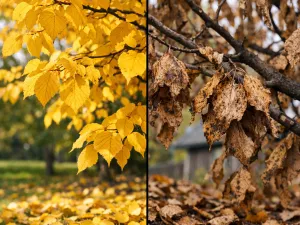
Why Leaves Turn Yellow After Heavy Rain

 This article explains how sudden heavy rain shocks roots, saturates soil after dry spells, and triggers leaf stress or yellowing. It covers temporary vs lasting storm damage, nutrient changes in wet soil, recovery signs, quick post-rain steps, and ways to prevent repeat damage.
- How sudden heavy rain shocks plant roots and soil balance
- Why rapid soil saturation after dry periods causes leaf stress
- Temporary yellowing vs lasting damage after storms
- How weather patterns affect nutrient availability in soil
- Signs your plant will recover naturally after rain
- What to do immediately after heavy rainfall to reduce stress
- How to protect plants from repeated rain damage in wet seasons
After a period of heavy rain, yellow leaves often mean the roots are under stress, not that the plant suddenly needs fertilizer. When soil stays waterlogged, roots cannot get enough oxygen, nutrient uptake slows, and the plant reacts quickly by losing healthy green color. Understanding this warning sign helps gardeners decide whether to be patient, improve drainage, or take action before the plant suffers more serious and lasting damage.
How sudden heavy rain shocks plant roots and soil balance

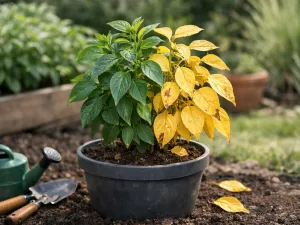
Leaves often turn yellow after a downpour because the problem starts below the surface. Plant roots need both water and oxygen, and heavy rain can push too much water into the soil too quickly. When air spaces fill with water, roots cannot breathe normally, and the plant responds by slowing growth and sacrificing older leaves first.
This change can happen surprisingly fast, especially in containers, clay soil, or garden beds with poor drainage. Even healthy plants may show yellowing when the root zone stays saturated for more than a day or two. The yellow color is a stress signal, not always a sign of disease.
What happens underground during a soaking rain
Healthy soil contains pockets of air between particles. Those spaces are just as important as moisture because roots use oxygen to absorb nutrients and maintain normal cell function. After intense rainfall, the soil profile can become waterlogged, and the root system shifts from active uptake to survival mode.
- Oxygen drops: Saturated soil limits gas exchange, so roots struggle to respire.
- Root hairs weaken: Fine feeder roots are delicate and can die back first, reducing nutrient uptake.
- Microbes change: Beneficial organisms that help release nutrients may slow down, while harmful organisms can become more active.
- Temperature shifts: Cool storm water can lower root-zone temperature and briefly slow metabolism.
Why some soils make yellowing worse
Not every garden reacts the same way to rain. Soil texture, compaction, and organic matter all affect how quickly excess water drains away. A sandy bed may recover in hours, while dense clay can stay soggy for several days. That difference often explains why one plant bounces back and another declines after the same storm.
Compacted ground is especially troublesome because water sits near the surface instead of moving downward. In raised beds, the issue is often less severe, but if the bed is overfilled with fine compost and little structure, it can still hold too much moisture.
Editor’s note: If yellowing appears after one storm and the soil smells fresh rather than sour, wait before feeding. Fertilizer applied to stressed, oxygen-starved roots often adds pressure instead of helping.
Why rapid soil saturation after dry periods causes leaf stress

A long dry spell followed by sudden heavy rain is harder on plants than steady, moderate moisture. During dry weather, roots and soil microbes adjust to limited water. Then a rapid soak changes everything at once: roots swell, soil chemistry shifts, and the plant’s water balance becomes uneven. Yellow leaves can appear as part of that abrupt transition.
Plants that were already mildly drought-stressed are especially vulnerable. Their finer roots may have dried back, and their leaves may have been conserving moisture. When the soil suddenly becomes saturated, the damaged root system cannot immediately make good use of the new water supply.
Dry soil does not always absorb rain evenly
Very dry soil can become hard or even water-repellent at the surface. Instead of soaking in gradually, rain may run off, pool in low spots, or flood the top few centimeters of soil while deeper layers remain unevenly moist. That creates a confusing environment for roots: some areas are too wet, others still too dry.
Container plants show this clearly. A potting mix that has pulled away from the sides of the pot may channel water straight through, leaving parts of the root ball dry and other parts soaked. The leaves then yellow because the plant is still under stress despite all the rain.
Why stressed roots trigger yellow leaves
Leaf yellowing after a weather swing is often linked to disrupted transport inside the plant. Water and nutrients move through tissues best when uptake is steady. A sudden shift from drought to saturation can interrupt that flow, so chlorophyll breaks down in older leaves first.
- Dry conditions reduce active feeder roots.
- Heavy rain floods the remaining root zone.
- The plant cannot balance water uptake with oxygen needs.
- Older leaves lose color as the plant redirects energy to new growth and root repair.
This is why yellowing after rain does not always mean the plant needed more water beforehand. The issue is often the speed of the change rather than the amount alone.
Temporary yellowing vs lasting damage after storms

Not all post-storm yellowing means permanent harm. Many plants shed a few older leaves after weather stress and then recover once the soil drains and roots regain normal function. The key is to watch the pattern over several days rather than react immediately on the first morning after rain.
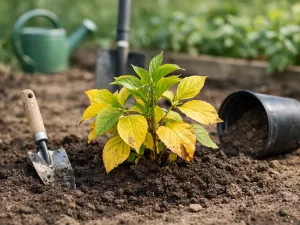
Temporary yellowing usually stays limited to lower or inner leaves, while new growth remains firm and green. Lasting damage tends to spread, especially if the soil remains wet, stems soften, or root disease begins. Looking at the whole plant gives a better answer than judging one yellow leaf in isolation.
Clues that point to a short-term setback
Plants often recover naturally when the stress was brief. If the weather improves and drainage is decent, the root system can resume normal uptake before serious decline sets in.
- Yellowing is limited: Only a few older leaves are affected.
- New growth looks normal: Tips remain green and upright.
- Stems stay firm: There is no mushiness, collapse, or dark cankers.
- Soil begins drying within 24 to 72 hours: About 1 to 3 days.
- No foul smell: Healthy wet soil smells earthy, not rotten.
Signs the damage may continue
When yellowing spreads upward, the problem is often more than a simple weather reaction. Waterlogged roots may have started to rot, or nutrients may now be unavailable. In that case, the plant needs closer monitoring and sometimes intervention.
| Symptom | More likely temporary | More likely lasting damage |
|---|---|---|
| Leaf color change | Older leaves yellow first, then stop | Yellowing spreads to new leaves |
| Stem condition | Firm and upright | Soft, dark, or collapsing |
| Soil condition | Moist but draining | Wet and airless for days |
| Recovery pattern | New growth resumes within 7 to 14 days | Wilting and yellowing continue beyond 2 weeks |
Practical tip: Remove fully yellow leaves only if they come away easily or spoil airflow. Stripping too much foliage from a stressed plant reduces its ability to recover through photosynthesis.
How weather patterns affect nutrient availability in soil

Rain does more than add moisture. It changes how nutrients move, dissolve, and become available to roots. After heavy weather, leaves may yellow not because the soil lacks nutrients overall, but because roots cannot access them efficiently. Nitrogen, iron, magnesium, and sulfur are common nutrients involved in post-rain color changes.
Repeated storms can also leach mobile nutrients downward, especially in sandy ground or containers. At the same time, saturated conditions can lock up other elements by altering soil chemistry and microbial activity. That is why feeding immediately after rain is not always the right fix.
Which nutrients are most affected by wet conditions
Different nutrients respond differently to excess water. Some wash out easily, while others become harder for roots to absorb when oxygen levels fall or pH shifts.
- Nitrogen: Easily lost from the root zone in prolonged rain, especially as nitrate.
- Iron: May become unavailable in certain wet, alkaline soils, causing yellowing between veins on young leaves.
- Magnesium: Can leach from lighter soils, often affecting older leaves first.
- Calcium: Uptake slows when roots are damaged, even if the soil contains enough.
Why timing and temperature matter
Cool, cloudy, wet weather slows root activity and photosynthesis at the same time. Even when nutrients are present, the plant may not use them efficiently. This is common in spring storms, when soils are already cool, often below 15°C (59°F), and roots are less active than they are in warm summer conditions.
By contrast, warm-season downpours can trigger fast microbial changes and stronger nutrient loss in porous soils. Weather patterns matter as much as the rain event itself: one storm after a stable week is different from ten wet days in a row.
When yellowing is really a nutrient access problem
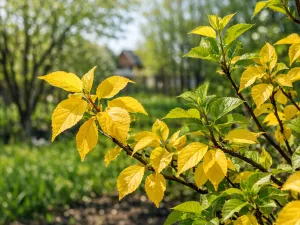
You can often tell nutrient disruption from simple overwatering by observing where the yellowing starts and what the veins look like. Uniform yellowing on older leaves often points to nitrogen stress, while yellow tissue with greener veins may suggest iron or magnesium issues. Still, root stress usually sits underneath the symptom, so correcting soil conditions comes first.
If you fertilize, wait until the top 2.5 to 5 cm (1 to 2 in) of soil begins to dry and the plant shows signs of active recovery. Feeding a plant that is still sitting in cold, wet soil can worsen root burn and salt buildup later.
Signs your plant will recover naturally after rain

Many plants are more resilient than they look right after a storm. A few yellow leaves can be part of a normal recovery process, especially if the roots were only stressed briefly. The best signs of recovery are subtle at first: steadier posture, fresh leaf color at the tips, and soil that is gradually returning to a balanced moisture level.
Instead of focusing only on damaged foliage, check whether the plant is still producing healthy tissue. Recovery is about direction. If the plant is improving a little each day, it often needs patience more than treatment.
Positive signs to look for over the next week
The first 3 to 7 days after heavy rain usually reveal whether the plant is stabilizing. During that period, avoid making too many changes at once so you can read the plant’s natural response clearly.
- Leaf posture improves: Slight drooping eases as the root zone re-oxygenates.
- New growth stays green: The newest leaves or buds do not yellow.
- Soil surface begins to dry: Moisture is moving out rather than staying stagnant.
- No spread of spotting or stem rot: Stress is not turning into disease.
- Roots remain pale and firm: In pots, visible roots near drainage holes should not be brown and mushy.
Plants that often rebound well
Established shrubs, perennials with deep root systems, and vigorous annuals often recover better than newly planted specimens. Plants growing in loose, amended soil also tend to bounce back faster than those in compacted beds. Recently transplanted plants are usually slower because their roots were already disturbed before the rain arrived.
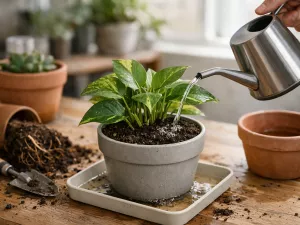
Container plants can recover quickly too, but only if drainage holes are open and the potting mix has not collapsed into a dense, soggy mass. If a saucer under the pot holds water for more than a few hours, empty it so the root ball can breathe.
Editor’s note: Resist the urge to “cheer up” a rain-stressed plant with extra water once the sun returns. Check the root zone first; the surface can look dry while the lower half of the pot is still saturated.
What to do immediately after heavy rainfall to reduce stress

The first response after a storm should be gentle and practical. Most plants do not need dramatic rescue measures. They need better airflow, less standing water, and time for the root zone to regain oxygen. Acting too aggressively, especially with fertilizer or heavy pruning, often creates a second wave of stress.
Start by checking drainage, soil texture, and the condition of stems and leaves. If the plant is in a container, lift it slightly to make sure excess water can escape freely. In the ground, focus on moving water away rather than digging deeply around roots, which can compact wet soil even more.
Immediate actions that help
These steps reduce risk without disturbing the plant more than necessary.
- Remove standing water: Tip out saucers, unblock drainage channels, and clear debris from pot holes.
- Delay watering: Do not water again until the top few centimeters or inches have begun to dry appropriately for that plant.
- Improve airflow: Space crowded containers and gently tie back dense foliage if needed.
- Hold fertilizer for now: Wait until active growth resumes and the soil is no longer saturated.
- Inspect for physical damage: Broken stems, split branches, and mud-coated leaves may need light cleanup.
What not to do right away
Some common reactions make the situation worse. Wet soil is structurally fragile, and roots are already under pressure. Avoid trying to solve yellowing with a quick product before the plant has had a chance to stabilize.
- Do not cultivate soggy soil: Digging or hoeing wet ground compacts it and destroys pore space.
- Do not prune heavily: Removing too much foliage reduces recovery energy.
- Do not repot immediately unless essential: Transplant shock added to water stress can set the plant back further.
- Do not apply strong liquid feed: Roots may be too stressed to handle it safely.
If a container plant is clearly waterlogged and the mix smells sour after several days, repotting into fresh, airy mix may become necessary. But if the rain just ended, waiting 24 to 48 hours often gives a clearer picture of whether intervention is really needed.
How to protect plants from repeated rain damage in wet seasons
One storm can cause temporary yellowing, but repeated wet weather is what turns stress into decline. Prevention is mostly about keeping roots oxygenated and reducing the amount of time soil stays saturated. The best long-term fixes are usually structural: better drainage, better soil texture, and better plant placement.
If your area gets frequent rain in spring or during a monsoon-like period, prepare before symptoms appear. Plants growing in the right soil and the right position tolerate excess moisture far better than plants constantly fighting their environment.
Soil and bed improvements that make a difference
Improving drainage does not always mean making soil dry. It means creating a root zone that holds moisture while still allowing air exchange. Organic matter, coarse mineral structure, and bed shape all influence that balance.
- Raise planting areas: Even an extra 15 to 20 cm (6 to 8 in) of height can improve drainage in heavy ground.
- Add organic matter wisely: Compost improves structure, but avoid turning beds into fine, dense material that stays soggy.
- Use mulch carefully: Keep mulch a few centimeters away from stems, about 5 cm (2 in), so crowns do not stay constantly damp.
- Break compaction in dry periods: Deep aeration or broadforking works best when soil is workable, not waterlogged.
Container strategies for rainy climates
Potted plants are especially exposed because all excess water must leave through a limited number of drainage holes. In wet seasons, container setup matters as much as watering habits.
- Choose pots with generous drainage: Multiple holes are better than one small opening.
- Use an airy mix: Include bark, perlite, grit, or other coarse material suited to the plant.
- Lift pots off flat surfaces: Pot feet or bricks help water drain instead of pooling underneath.
- Shelter sensitive plants: Move vulnerable containers under cover during prolonged rain if light remains adequate.
Match plants to the site
Some yellowing problems keep returning because the plant is simply in the wrong place. Lavender, rosemary, many succulents, and Mediterranean herbs resent long periods of wet roots. Moisture-loving plants such as iris, some ferns, and certain dogwoods cope much better in heavier or wetter spots.
When repeated storms are part of your climate, site selection is a form of plant care. A sun-loving plant in a low, poorly drained corner will always struggle more than the same plant on a slope or in a raised bed. If a plant yellows after every major rain despite your efforts, relocation may be the most effective solution.