How to Water Plants After Repotting Without Root Stress

 This article explains how repotting affects roots, when to water right away, and how much moisture newly repotted plants need. It also covers how to avoid root rot or shock, spot healthy recovery signs, and prevent watering mistakes that harm roots.
- Why repotted plants are sensitive to watering changes
- How roots react after repotting
- When to water immediately after repotting
- How much water newly repotted plants need
- Balancing moisture to avoid root rot or shock
- Signs plants are adapting well after repotting
- Mistakes that damage roots after transplanting
Watering correctly after repotting helps reduce transplant shock and gives roots the best chance to recover. Overwatering can deprive stressed roots of oxygen and lead to rot, while underwatering can slow recovery and leave the plant weak. The goal is to adjust watering to the potting mix, the health of the root system, and the surrounding light, temperature, and humidity so the plant can settle in without extra stress.
Why repotted plants are sensitive to watering changes

Freshly repotted plants often look stable above the soil line, but below the surface they are adjusting to a completely different environment. Even when repotting is done carefully, roots are disturbed, the soil structure changes, and the plant has to re-balance how it takes up water and oxygen. That is why watering habits that worked before repotting can suddenly become too heavy or too light.
One of the biggest changes is that new potting mix usually holds moisture differently from the old root ball. A peat-based blend may stay wet longer, while a chunky mix with bark and pumice drains faster. If you water the same way you did before, the roots may sit in soggy pockets or dry out unevenly. Both conditions can slow recovery.
Pot size also matters. Moving a plant into a container that is 2.5 to 5 cm (1 to 2 in) wider than the old one is usually safer than jumping to a much larger pot. Extra soil around a small root system stays wet longer, and that can reduce oxygen around damaged roots. Without enough air, roots cannot rebuild efficiently.
- Root disturbance: Fine feeder roots are often bent, broken, or exposed during transplanting.
- Different moisture retention: New soil may dry faster or slower than the old mix.
- Changed airflow: Pot depth, drainage holes, and soil texture affect oxygen availability.
- Temporary imbalance: Leaves may still lose water at the old rate while roots absorb less.
This sensitivity is why post-repotting care should be based on observation rather than a fixed schedule. A plant recovering in bright indirect light at 22°C (72°F) will use water differently from one sitting in a cooler room at 16°C (61°F). The goal is not simply to keep the soil wet, but to maintain a moist, airy root zone while the plant settles in.
Editor’s note: Many post-repotting problems are blamed on “transplant shock,” but poor watering is often the real trigger. If a plant declines after repotting, check the root-zone moisture before changing light, fertilizer, or pruning routines.
How roots react after repotting

Roots do not resume normal growth the moment a plant is moved into a new pot. They go through a short recovery phase first. During that time, the plant is repairing damaged tissue, adjusting to the new soil contact, and trying to restart water uptake through fine root hairs. Understanding that process helps explain why careful watering matters so much in the first one to two weeks.
What happens to fine roots
The most important roots for water absorption are the smallest ones, especially the delicate root hairs near the growing tips. These are easily damaged during repotting, even in routine houseplant care. When they are lost, the plant may still have a healthy-looking root mass, but its ability to absorb moisture drops temporarily.
That is why leaves may droop even when the soil is damp. The issue is not always lack of water in the pot; it may be reduced uptake at the root surface. Overwatering at this stage can make things worse by depriving the healing roots of oxygen.
How roots respond to the new soil
Once the plant is settled, roots begin exploring the fresh mix. They grow best when moisture is even and the spaces between soil particles still hold air. If the mix is compacted by repeated heavy watering, root growth slows. If it dries too hard around the root ball, new roots may not move outward into the surrounding soil.
In many cases, the old root ball and the new potting mix do not dry at the same speed. The center may stay dense while the outer layer dries first. This uneven pattern is common with root-bound plants or when old soil is very different from the new blend.
Why recovery speed varies by plant type
Not all plants react the same way. Tropical foliage plants with soft, fibrous roots often recover faster than woody shrubs or succulents with thicker, more specialized root systems. Plants repotted during active growth, such as spring or early summer, usually restart root production more quickly than those moved during winter dormancy.
- Fast responders: Pothos, philodendron, spider plant, and tradescantia often resume growth quickly if moisture stays balanced.
- Moderate responders: Peace lilies, ferns, and calatheas recover well but react strongly to drying out.
- Slow responders: Ficus, citrus, hoya, and many succulents may need more time before normal watering resumes.
When you know roots are in repair mode, it becomes easier to avoid the common mistake of treating a repotted plant like an established one. Recovery depends less on frequent watering and more on creating the right root conditions for regrowth.
When to water immediately after repotting

Whether to water right after repotting depends on the plant type, the condition of the roots, and the moisture level of the new potting mix. For most leafy houseplants, watering immediately after repotting is helpful because it settles the soil around the roots, removes large air gaps, and gives the plant access to moisture while it recovers. But there are important exceptions.
Situations where immediate watering helps
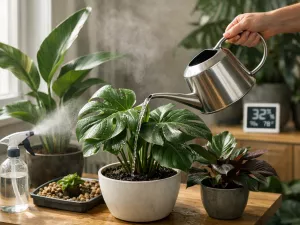
If the plant has healthy roots and has been moved into slightly moist potting mix, a thorough first watering is usually the best approach. Water until excess drains from the bottom, then let the pot drain fully. This initial soak helps the old root ball connect with the new mix, especially if the roots were circling tightly in the previous container.
Plants with thin, thirsty roots benefit most from this approach. Ferns, peace lilies, pothos, and many aroids dislike sitting dry after root disturbance. For these plants, delaying water can increase wilt and slow recovery.
When to wait before watering
Some plants should not be watered immediately, especially if roots were cut, damaged, or naturally prone to rot. Cacti, succulents, snake plants, ZZ plants, and some orchids often do better if left dry for a short period after repotting. Waiting 2 to 5 days allows damaged root surfaces to callus slightly, reducing the chance of rot in fresh mix.
This is particularly important if the repotting involved trimming mushy roots or removing old, compacted soil from a plant that had already been overwatered.
| Plant situation | Best timing for first watering | Why |
|---|---|---|
| Leafy tropical houseplant with healthy roots | Immediately after repotting | Settles soil and restores access to moisture quickly |
| Root-bound plant loosened but not heavily pruned | Immediately after repotting | Helps new mix contact the old root ball evenly |
| Succulent or cactus with disturbed roots | After 2 to 5 days | Lets damaged roots dry and lowers rot risk |
| Plant with rotten roots removed | After a short drying period, then lightly | Fresh wounds are vulnerable in wet soil |
The best test is to match the watering decision to the biology of the plant rather than following one universal rule. If the species stores water in thick leaves, stems, or roots, a short dry rest is often useful. If it depends on constant moisture, water sooner and monitor closely.
Practical recommendation: If you are unsure, check the root type before you check the calendar. Fine, fibrous roots usually want contact with moisture quickly; thick, fleshy roots usually want more caution.
How much water newly repotted plants need

Newly repotted plants need enough water to moisten the entire root zone, but not so much that the fresh mix stays saturated for days. The right amount depends on pot size, soil texture, root density, and the plant’s natural water use. A small plant in a large container needs much less frequent watering than a full, fast-growing plant that nearly fills its pot.
Water deeply, then pause
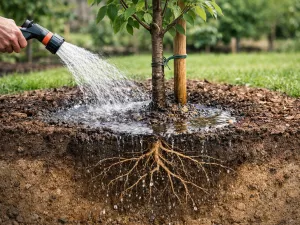
For most non-succulent houseplants, the first watering should be deep enough to wet all the soil from top to bottom. That often means watering until a small amount runs from the drainage holes. In a 15 cm (6 in) nursery pot, that may take roughly 250 to 500 ml (8 to 17 fl oz), while a 25 cm (10 in) pot may need 1 to 1.5 liters (34 to 51 fl oz), depending on the mix. These are only rough guides, not fixed doses.
After that first soak, the next watering should be based on how quickly the plant is using moisture. Fresh soil can stay damp longer than expected, especially if the root system is small compared with the pot volume.
Match the amount to the root mass
A common mistake is watering according to pot size alone. What matters more is how much of the pot is actually occupied by roots. If only a small central root ball is present, the outer ring of soil may remain wet for too long. In that case, it can help to water more slowly and target the root zone rather than repeatedly drenching the whole pot.
- Dense root ball in a slightly larger pot: Water thoroughly, then allow the upper layer to begin drying before watering again.
- Small plant in a much larger pot: Use a moderate amount around the root area and check moisture deeper in the pot before repeating.
- Chunky, fast-draining mix: Expect to water more often, but still only after checking the moisture level.
- Heavy, moisture-retentive mix: Water less frequently and watch for cool, soggy soil at the bottom.
Simple ways to judge the next watering
Instead of relying on the calendar, use physical checks. Insert a finger 2.5 to 5 cm (1 to 2 in) into the mix, lift the pot to judge weight, or use a wooden skewer to test deeper moisture. The surface can look dry while the lower root zone is still wet.
For many houseplants, the safest pattern after repotting is a full initial watering followed by a slightly longer wait than usual before the next one. This encourages roots to move outward into the fresh mix rather than sitting in constantly wet soil.
Balancing moisture to avoid root rot or shock

The challenge after repotting is finding the middle ground between drought stress and waterlogging. Too little water leaves damaged roots unable to support the foliage. Too much water fills air spaces in the soil and creates the low-oxygen conditions that invite rot. Good aftercare is really about moisture balance, not maximum hydration.
Keep the soil evenly moist, not constantly wet
For most foliage plants, the ideal condition is lightly and evenly moist soil with enough air movement through the mix. That usually means watering thoroughly, letting excess drain, and then waiting until the top layer begins to dry before watering again. In a warm room around 21 to 24°C (70 to 75°F), this may happen faster than in a cool area around 16 to 18°C (61 to 64°F).
Humidity and light also affect the balance. Bright indirect light supports recovery because the plant can photosynthesize without losing water as fast as it would in direct sun. Very low light, on the other hand, slows water use and can leave the soil wet for too long.
Support recovery with the right environment
Watering works best when the rest of the care routine supports root repair. Avoid fertilizing immediately after repotting unless the plant was moved into an inert medium that requires feeding. Fresh roots are sensitive to salt buildup, and fertilizer can add stress before normal uptake resumes. Hold off for about 2 to 4 weeks for most houseplants.
Pruning should also be limited unless you are removing clearly damaged leaves. Heavy pruning plus root disturbance can force the plant to recover from two stresses at once. Gentle conditions are more helpful: stable temperatures, moderate humidity, and no harsh midday sun.
- Use drainage holes: Decorative pots without drainage make moisture control much harder.
- Avoid compacting the mix: Press lightly to stabilize the plant, but do not pack the soil hard.
- Adjust for season: A plant repotted in active growth uses water faster than one repotted in winter.
- Delay feeding: Wait until you see new growth or clear signs of recovery.
Practical recommendation: If you are torn between watering today or tomorrow, inspect the lower soil first. Repotted plants are often harmed by hidden wetness deeper in the pot, not by a slightly dry surface.
Balancing moisture is easier when you stop thinking in fixed intervals and start reading the plant’s environment. Airy soil, proper drainage, and moderate light do more to prevent root rot than any strict “water once a week” rule ever will.
Signs plants are adapting well after repotting

A plant does not need to produce instant new growth to show that repotting went well. In the first days, the best signs are stability and gradual recovery rather than dramatic change. Some temporary drooping is normal, but the plant should begin to look more settled as the roots reconnect with the new soil.
Early signs of healthy adjustment
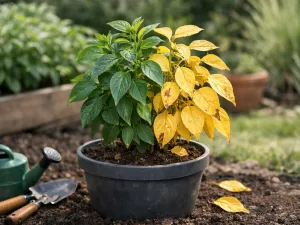
One of the first good signs is improved leaf posture. A plant that looked limp on day one but stands more upright by day three or four is usually regaining water balance. Leaves should also hold their color. Mild softness can be normal, but widespread yellowing, blackening, or rapid leaf drop suggests a problem below the soil line.
Another positive sign is that the potting mix begins drying at a reasonable pace. If the soil remains soggy for many days with no change in pot weight, the root system may not be functioning well or the mix may be too dense.
What new growth tells you
Fresh leaves, extending vines, firmer stems, or active root tips at drainage holes are strong indicators that the plant has moved beyond recovery mode. Depending on the species and season, this may happen within 1 to 3 weeks for fast growers or much later for slower plants.
Do not rush to feed the plant just because you see one new leaf. Wait until growth is steady and the watering pattern feels normal again.
- Leaves stay turgid: The plant holds moisture well between waterings.
- Soil dries evenly: The root zone is beginning to function throughout the pot.
- No sour smell from the mix: Healthy soil should smell earthy, not stagnant.
- New growth appears: A clear sign that roots are supporting the top growth again.
- Stable color: Existing leaves remain green and firm without sudden collapse.
Recovery can be subtle, especially with woody or slow-growing plants. A ficus may show adaptation through stable leaf retention rather than visible new shoots. A peace lily may tell you by staying upright longer between waterings. The key is improvement over time, not perfection immediately after transplanting.
Mistakes that damage roots after transplanting
Most root problems after transplanting come from well-meaning care that is too aggressive. The plant has already gone through a disruption, so it needs steadiness more than intervention. Overwatering is the most common issue, but it is far from the only one.
Watering mistakes that cause the most trouble
Frequent light watering is often worse than occasional deep watering. Small splashes keep the upper layer damp while the lower soil may stay cold and airless. This encourages weak surface rooting and can leave the center of the pot in poor condition. On the other hand, soaking the pot again before it has begun drying can suffocate roots that are still healing.
Using a much larger pot than necessary also leads to moisture problems. Excess soil acts like a sponge around a limited root system, and that can keep the plant wet for too long even if you water “carefully.”
Other post-repotting errors
Root stress is often made worse by environmental and care mistakes that have nothing to do with the watering can. Strong sun immediately after repotting can increase leaf water loss faster than the roots can replace it. Heavy feeding can burn tender root tips. Constantly moving the plant, checking the roots, or pressing the soil down repeatedly can interrupt recovery.
| Mistake | What it does to roots | Better approach |
|---|---|---|
| Watering on a fixed schedule | Ignores slower water use after repotting and can keep soil too wet | Check moisture by touch, pot weight, or a skewer before watering |
| Upsizing the pot too much | Leaves large areas of wet soil around a small root mass | Increase pot size gradually, usually by 2.5 to 5 cm (1 to 2 in) |
| Fertilizing immediately | Can burn fresh root tips and add salt stress | Wait 2 to 4 weeks, or until clear new growth appears |
| Placing in harsh direct sun | Raises transpiration before roots recover | Use bright, indirect light until the plant stabilizes |
One final mistake is assuming every wilt means thirst. After transplanting, wilt can come from damaged roots, overwatering, heat, or poor soil contact. Adding more water without checking the root-zone condition often deepens the problem.
Good post-repotting care is mostly restraint: water with purpose, give the roots air, delay fertilizer, and let the plant settle. When those basics are right, most healthy plants rebuild their root systems surprisingly well.