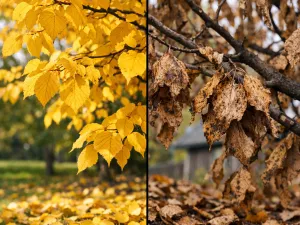
Yellow Leaves With Soft Stems and Weak Growth

 Here we why soft stems usually mean tissue breakdown, internal damage, and often too much moisture. It explains how to tell normal flexibility from structural collapse, spot early stem rot, handle fungal or bacterial causes, and prevent future weakening.
- Why soft stems signal tissue breakdown and internal damage
- How excess moisture leads to stem weakening and rot
- Differences between healthy flexible stems and structural collapse
- Early signs of stem rot before severe plant damage
- How fungal and bacterial issues affect plant structure
- What to do when stems lose firmness and stability
- How to prevent stem rot and maintain strong plant structure
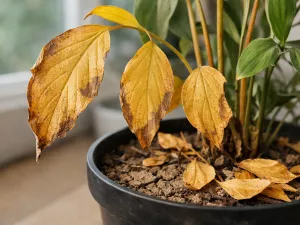
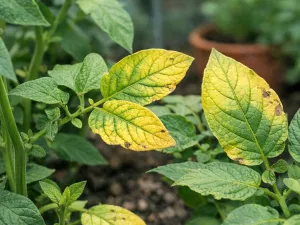
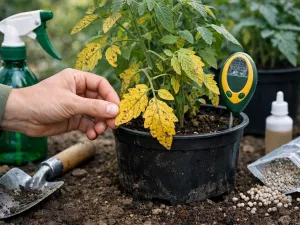
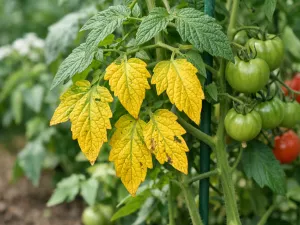
Yellowing leaves, soft stems, and slowed growth usually mean a plant is under stress and needs attention soon. In many cases, the problem starts below the soil, where excess water, poor drainage, or damaged roots can limit oxygen and weaken the plant. Low light may also reduce healthy growth and make stems less firm. Recognizing these warning signs early helps gardeners adjust care, prevent further decline, and give the plant a better chance to recover.
Why soft stems signal tissue breakdown and internal damage

Yellow leaves paired with soft stems usually point to more than a simple watering mistake. When stems lose firmness, the plant is often struggling with damaged internal tissue that can no longer move water, oxygen, and nutrients efficiently. That is why foliage starts fading, growth slows down, and the whole plant can begin to lean or collapse.
A healthy stem is not just a support pole. It contains living cells, moisture channels, and structural fibers that keep the plant upright while feeding leaves and new shoots. Once those tissues are injured by excess moisture, infection, cold stress, or root failure, the stem may feel mushy, hollow, or weak instead of springy and solid.
What softness usually means inside the plant
Softness is often a sign that cells have begun to break down. Instead of holding pressure and shape, the tissue loses integrity and starts decomposing. In many houseplants and garden plants, this process begins low on the stem near the soil line, where moisture lingers longest and airflow is poorest.
- Mushy texture: Cells are collapsing and releasing moisture instead of holding structure.
- Darkened stem areas: Browning or blackening often means rot is advancing through internal tissue.
- Weak attachment: Leaves or side shoots may detach easily because the stem can no longer support them.
- Poor water movement: Even wet soil cannot help if the stem’s transport system is damaged.
Why yellow leaves often appear at the same time
Leaves turn yellow because the plant is no longer functioning normally above or below the damaged area. If roots are stressed and the stem is also softening, chlorophyll production drops and older leaves fade first. In faster-moving cases, even young leaves can yellow, wilt, and fall within days.
This combination matters because yellowing alone can come from many causes, but yellowing with soft stems is more urgent. It suggests the problem is structural, not just nutritional. Waiting too long often allows the damage to move upward into crowns, leaf bases, and new growth points.
If a stem feels soft at the base, do not assume the plant only needs less water next week. Check the root zone and stem base the same day, because stem rot can move quickly once tissue begins to collapse.
How excess moisture leads to stem weakening and rot

Too much moisture is one of the most common triggers behind weak stems and yellow foliage. Constantly wet compost, heavy garden soil, or water trapped around the crown deprives roots and lower stems of oxygen. Once that happens, tissues become vulnerable to decay and opportunistic pathogens.
Plants need water, but they also need air spaces in the growing medium. When those spaces stay filled with water for too long, roots cannot breathe properly. The plant becomes stressed, uptake slows, and the lower stem remains damp enough for rot to begin.
How overwatering sets the stage
Overwatering is not only about volume. It can also mean watering too often, using a pot with poor drainage, or planting in soil that stays dense and cold. A plant in a decorative cachepot with trapped runoff may suffer just as much as one watered with 1 L (34 fl oz) too often.
- Frequent watering: Soil never reaches the lightly dry stage that many plants need between drinks.
- Poor drainage holes: Excess water remains around roots and the stem base.
- Dense mixes: Fine peat, compacted compost, or clay-heavy soil hold moisture too long.
- Low light: Plants use water more slowly in dim conditions, so wet soil lingers longer.
- Cool temperatures: At 18°C (64°F) or below, evaporation and root activity often slow noticeably.
Why the stem base is especially vulnerable
The lower stem, crown, or collar area sits where soil moisture, warmth, and microbes meet. If leaves are watered from above or mulch is piled against the stem outdoors, this zone stays damp for extended periods. The tissue softens first here because it is repeatedly exposed to moisture and poor airflow.
Once rot starts at the base, the plant may still look recoverable from above for a short time. Leaves can remain attached even while the stem interior is already failing. That delay often misleads growers into watering again, which speeds the damage.
Moisture-related risk factors at a glance
Several growing conditions can turn normal watering into a rot problem. Looking at the full setup is often more useful than blaming water alone.
| Condition | How it increases risk | Typical result |
|---|---|---|
| Pot too large | Extra compost stays wet longer around unused root space | Slow drying and root stress |
| Heavy soil mix | Low air space keeps the lower stem damp | Softening near the soil line |
| Low indoor light | Reduced growth means lower water use | Yellow leaves and weak new growth |
| Standing water in saucer | Roots remain saturated after watering | Oxygen loss and rot spread |
| Cold, wet conditions | Metabolism slows while moisture remains high | Stem collapse and leaf drop |
Differences between healthy flexible stems and structural collapse

Not every bendy stem is unhealthy. Many plants naturally have supple growth, especially herbs, vines, seedlings, and fresh spring shoots. The key difference is whether the stem still feels resilient and alive, or whether it feels waterlogged, weak, and unable to support itself.
Healthy flexibility has tension. Structural collapse does not. A living stem may bend slightly and then recover, while a failing stem folds, creases, or stays limp after being moved. Learning this distinction helps prevent unnecessary panic and also helps you catch true rot before it becomes irreversible.
Signs of normal flexibility
Young stems often contain less woody tissue and more moisture, so they naturally feel softer than mature growth. That is normal as long as the plant remains upright, leaves stay turgid, and the stem surface is even in color.
- Springy feel: The stem bends but resists pressure.
- Even color: Green or naturally colored tissue looks consistent, not blotchy.
- Stable growth: New leaves continue to emerge at a normal pace.
- Firm nodes: Joints and leaf attachments remain secure.
Signs of true structural failure
When a stem is collapsing, the tissue no longer supports the plant’s weight. You may see a pinched section, a dark wet-looking patch, or a stem that flops over despite adequate light. This is especially concerning when the softness is concentrated near the base or crown.
- Flattened or pinched areas: Internal support has broken down.
- Wet or translucent patches: Tissue is decaying rather than maturing.
- Persistent leaning: The plant cannot hold itself upright even after watering conditions improve.
- Easy breakage: The stem tears instead of bending cleanly.
Quick comparison when checking a plant
If you are unsure whether a stem is simply tender or actually failing, compare touch, appearance, and behavior together rather than relying on one clue.
| Feature | Healthy flexible stem | Collapsing stem |
|---|---|---|
| Texture | Elastic and smooth | Mushy, hollow, or papery-soft |
| Response to pressure | Springs back gently | Stays dented or folds |
| Color | Uniform and fresh-looking | Yellow-brown, blackened, or translucent |
| Plant posture | Supported and balanced | Leaning, drooping, or toppling |
Early signs of stem rot before severe plant damage

Stem rot rarely starts with dramatic collapse on day one. There is usually a short early stage when the plant gives quieter warnings. Spotting those signs can make the difference between trimming one damaged section and losing the entire plant.
The earliest clues often show up around the soil line, leaf bases, or lower nodes. At this point the plant may still have enough healthy tissue to survive if conditions are corrected quickly. Delay, however, allows rot to spread into the crown and root system.
Subtle changes worth checking
These symptoms are easy to overlook because they can seem mild at first. Taken together, though, they strongly suggest developing stem trouble.
- Slight yellowing of lower leaves: Often the first visible sign that the plant is under stress.
- Stem discoloration at the base: A pale brown, dark green, or black patch may appear before softness becomes obvious.
- Reduced vigor: New growth stays smaller, slower, or misshapen.
- Persistent dampness: The top of the compost or soil remains wet longer than usual.
- Faint sour smell: A stale or swampy odor can indicate decaying organic matter around roots and stems.
What a hands-on inspection can reveal
A careful touch test is often more revealing than looking from a distance. Gently press the lower stem between your fingers. Healthy tissue should feel firm enough to resist. If it gives way easily or feels slick, the problem is already advancing.
You can also slide the plant from its pot if the root ball is stable enough. Roots that are tan to white and fresh-smelling are usually healthy. Dark, slimy, or foul-smelling roots alongside a soft stem point to a wider rot issue rather than an isolated wound.
Check plants in the morning when stems are naturally more turgid. If a stem still feels weak and soft early in the day, it is less likely to be temporary wilt and more likely to be tissue damage.
When early action is still realistic
Recovery is more likely when the upper stem remains firm, at least some roots are healthy, and the crown has not turned black. Plants with one affected side shoot or one damaged lower section can often be saved by pruning, repotting, and correcting moisture levels. Once the main stem is mushy throughout, success rates drop sharply.
How fungal and bacterial issues affect plant structure

Soft stems are often linked to microbes that attack weakened tissue. Fungal and bacterial problems do not always begin the damage, but they frequently accelerate it once a plant is stressed by excess water, poor airflow, or physical injury. Their effect is structural because they break down the very tissues that keep the plant upright and functional.
These organisms thrive in damp, stagnant conditions. Once established, they can move through the stem base, crown, roots, or leaf petioles, causing yellowing, collapse, and a rapid decline in growth. The exact speed depends on the plant type, temperature, and how much healthy tissue remains.
How fungal problems behave
Fungal stem rots often develop in wet media with low air circulation. They may produce gradual browning, dry-to-soft lesions, or a spreading dark ring near the base. In seedlings and cuttings, fungal attack can cause sudden collapse known as damping off.
- Common pattern: Slow spread from the soil line upward.
- Typical texture: Soft but sometimes fibrous or sunken rather than slimy.
- Favored conditions: Humidity, cool wet soil, overcrowding, and reused contaminated pots.
How bacterial problems differ
Bacterial issues often move faster and can make tissue feel wetter or more foul-smelling. The stem may become water-soaked, translucent, or mushy in a short period. In severe cases, the plant can look fine one day and collapse within 24 to 72 hours.
- Common pattern: Rapid softening and spreading decay.
- Typical texture: Wet, slimy, or collapsing tissue.
- Favored conditions: Warm temperatures around 24°C to 30°C (75°F to 86°F), splashing water, and wounds.
Why structure fails so quickly once infection starts
Both fungi and bacteria can release enzymes that digest cell walls. As those walls break down, stems lose pressure, support, and transport capacity. That is why a plant with infected tissue may still be sitting in moist soil yet show signs of dehydration above the damaged area.
This also explains why feeding a sick plant rarely helps. Fertilizer cannot rebuild rotted tissue. In fact, adding nutrients to already saturated soil may stress damaged roots further and encourage more soft growth that is vulnerable to infection.
Disinfect pruners between cuts when removing soft or blackened stems. A quick wipe with 70% isopropyl alcohol helps reduce the chance of spreading infection from one section to another.
What to do when stems lose firmness and stability

When stems start losing firmness, quick and calm action gives the best chance of saving the plant. The goal is to stop the conditions causing decay, remove damaged tissue, and preserve any healthy growth that remains. Do not keep watering on schedule while you decide what to do, because continued saturation usually makes the problem worse.
Start by isolating the plant from others if rot or infection is suspected. This is especially useful for closely grouped houseplants, trays of seedlings, or greenhouse benches where moisture and splash can spread problems quickly.
Immediate first steps
Before cutting or repotting, assess how far the damage has spread. Check the stem base, crown, roots, and nearby leaves. If the upper stem is still firm, there may be enough healthy tissue to work with.
- Stop watering until you inspect the root zone and stem base.
- Remove any standing water from saucers, trays, or outer pots.
- Trim away yellow, collapsed, or obviously rotten sections with clean tools.
- Unpot the plant if the compost smells sour or stays soggy.
- Cut back to healthy tissue that looks firm and evenly colored.
- Repot into fresh, airy mix in a container with drainage holes.
When pruning is enough and when repotting is necessary
If only one side stem or one leaf base is affected and the potting mix is otherwise healthy, careful pruning may be enough. If the soil is dense, wet, or foul-smelling, repotting is usually the safer choice. In severe cases, taking healthy cuttings from the top may be the only practical way to preserve the plant.
- Prune only: Damage is localized, roots look healthy, and the plant is in a well-draining medium.
- Repot: The root ball is soggy, roots are brown, or the stem base is affected.
- Propagate from healthy growth: The lower stem is failing but upper shoots remain firm and clean.
Aftercare during recovery
Once the plant is cleaned up, place it in bright but not harsh conditions so it can recover without extra stress. For many indoor plants, bright indirect light is ideal. Avoid direct midday sun immediately after root disturbance, especially above 27°C (81°F), because weakened plants lose moisture unevenly.
Hold off on fertilizer until you see clear new growth. Water only when the medium has dried to the level appropriate for that plant, such as the top 2 to 5 cm (1 to 2 in) for many common houseplants. Good airflow matters too, but avoid cold drafts that chill wet roots.
How to prevent stem rot and maintain strong plant structure
Prevention is mostly about keeping the root zone balanced: moist enough for steady growth, airy enough for healthy respiration, and clean enough to limit disease pressure. Strong stems are built over time through proper watering, suitable light, moderate feeding, and a potting setup that drains well.
Plants with consistently healthy roots usually produce firmer stems, better leaf color, and stronger new growth. That is why prevention works best when you look at the whole growing environment rather than one symptom at a time.
Build a safer watering routine
Instead of watering by calendar alone, check the actual moisture level in the pot or bed. Lift containers, feel the top layer, and learn how quickly your conditions dry out in different seasons. A plant near a radiator or in summer sun may need very different timing from the same plant in winter shade.
- Water thoroughly, then drain: Let excess water escape fully rather than leaving roots in runoff.
- Match watering to light: Brighter conditions usually mean faster water use.
- Reduce frequency in cool weather: Growth slows below about 20°C (68°F) for many tropical plants.
- Avoid wet crowns: Direct water to the soil instead of repeatedly soaking the stem base.
Use the right growing medium and container
A suitable mix makes a major difference. Indoor plants prone to rot often do better in media amended with bark, perlite, grit, or coarse materials that improve airflow. Outdoors, raised beds and organic matter can help heavy soil drain more evenly without becoming waterlogged.
Container choice matters too. A pot only slightly larger than the root ball dries more predictably than one with a large volume of unused wet compost. As a practical guide, increase pot diameter by about 2.5 to 5 cm (1 to 2 in) at a time for many houseplants rather than jumping several sizes.
Support stronger growth through environment and care
Plants grown in dim light often stretch and produce weaker stems, even if rot is not present. Adequate light encourages compact, sturdy growth, while balanced feeding supports tissue development without pushing soft, vulnerable growth. Pruning also helps by removing weak or crowded sections and improving airflow.
- Provide enough light: Match the plant to its preferred exposure rather than forcing low-light tolerance.
- Feed moderately: Use a balanced fertilizer at the recommended dilution during active growth, not when the plant is stressed.
- Space plants properly: Better airflow reduces prolonged dampness around stems and leaves.
- Refresh old mix: Repot before the medium breaks down into a dense, slow-draining mass.
- Inspect regularly: A quick weekly check catches yellowing or soft spots before they spread.
Strong plant structure is the result of many small decisions done consistently well. If leaves are yellowing and stems feel soft, treat that as an early warning that the plant’s support system is under strain. Correct moisture, improve drainage, increase airflow, and remove damaged tissue promptly, and many plants can still recover before collapse becomes permanent.