Uneven Yellow Leaves on One Side of Plant

 This article explains why a plant may yellow on only one side, covering uneven light, root damage, wind or heat from one direction, and localized soil or watering problems. It also shows how rotating the plant and correcting conditions can restore balanced growth.
- Why yellowing appears on one side only
- Light exposure imbalance and plant positioning
- Root damage affecting one side of the plant
- Environmental stress from wind or heat direction
- Checking for localized soil or watering issues
- How to rotate and rebalance plant growth
- Fixing uneven conditions to restore symmetry
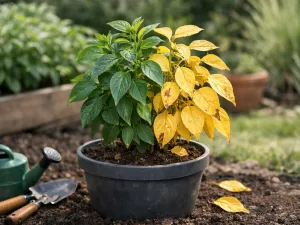
Yellowing on only one side of a plant usually suggests a localized issue rather than a problem affecting the entire plant. Uneven light, root stress, physical injury, pests, or exposure to a cold or hot draft can damage one section first. Check where the yellowing begins and compare that side’s light, airflow, soil moisture, and possible pest activity to the rest of the plant to help identify the cause and choose the right fix.
Why yellowing appears on one side only

When leaves turn yellow on only one side of a plant, the pattern itself is a clue. Whole-plant yellowing often points to general stress such as overwatering, nutrient imbalance, or natural aging. A one-sided problem usually means something is affecting only part of the canopy or root zone. That could be stronger light on one side, heat from a nearby wall, wind from a vent, or root injury where only part of the root system is struggling.
Plants do not function as perfectly even machines. One side may receive more energy, lose more moisture, or support more damaged roots than the other. Because water and nutrients move through connected but still localized tissues, stress can show up unevenly before it spreads. Looking at the direction of the yellowing is often more useful than looking at the color alone.
What the pattern can tell you
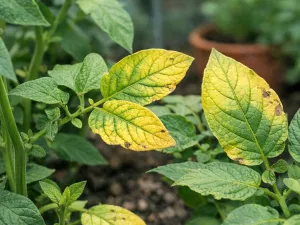
The exact look of the leaves helps narrow the cause. Yellowing that appears mostly on the outer, exposed side suggests environmental exposure. Yellowing on the side closest to a damaged pot edge or compacted soil may indicate root trouble. If the affected side also has smaller leaves or weaker stems, the issue has likely been building for some time rather than appearing overnight.
- Sun-facing side: More likely to show bleaching, crisp edges, or faded patches from excess light or heat.
- Shaded side: More likely to develop pale, soft growth and leaf drop from low light.
- One side of the root zone: Can cause yellowing, wilting, or stunting only in the stems fed by those roots.
- Windward side: Often shows dry tips, curled margins, and faster moisture loss.
When to act quickly
Not every yellow leaf is an emergency, but uneven yellowing should not be ignored. If the affected side is also limp, spotted, or rapidly dropping leaves, inspect the plant the same day. Fast decline can mean root rot, stem damage, or intense heat stress. Slower yellowing over several weeks usually gives you time to correct conditions and observe improvement.
A useful habit is to take one photo from the same angle every 5 to 7 days. Uneven problems are easier to diagnose when you can see whether the yellowing is spreading, staying directional, or improving after a change in care.
Light exposure imbalance and plant positioning

Light is one of the most common reasons a plant yellows on one side. Indoor plants especially grow toward the brightest source, usually a window, patio door, or skylight. The side facing the light may become denser and stronger, while the opposite side stretches and weakens. In harsher conditions, the brighter side may also become stressed, especially if afternoon sun is hitting leaves through glass.
The direction, duration, and intensity of light all matter. Morning sun is usually gentler than late-day sun, and a plant placed 30 cm (12 in) from a bright window can behave very differently from one placed 1 m (3.3 ft) back. If yellowing is limited to the side nearest the window, think about whether the issue is too much light, reflected heat, or simply uneven growth from one-direction exposure.
Signs of too much light on one side
Excess light does not always look like classic scorching. Some plants first show washed-out green, thin yellow patches, or a papery texture before browning begins. This is especially common on foliage plants moved suddenly from shade to stronger sun.
- Leaves look faded or bleached on the bright side only.
- Yellow areas later turn tan, brittle, or crisp.
- The plant dries out faster on the exposed side.
- Leaf angle changes, with foliage twisting away from the light source.
Signs of too little light on the shaded side
Low light can also create one-sided yellowing, though the symptoms are softer. The shaded side may produce weak stems, wider gaps between leaves, and older leaves that yellow and drop because they are no longer efficient. This is common in plants kept against walls, in corners, or in rooms where light comes from only one direction.
If the dim side is sparse and pale while the bright side remains healthy, the plant is not necessarily sick; it may simply be growing unevenly. The fix is usually gradual repositioning rather than heavy feeding or drastic pruning.
How to assess the light setup
Stand where the plant sits and look at the room from the plant’s perspective. Notice whether one side faces a bright opening and the other faces a dark interior wall. Also check for seasonal changes. A spot that was safe in winter may become intense in summer, especially when sun angles shift and glass magnifies heat.
- Distance: Move the plant back by 20 to 60 cm (8 to 24 in) if the bright side shows bleaching or crisping.
- Filtering: Use a sheer curtain to soften direct exposure without making the room dim.
- Orientation: Turn the plant a quarter rotation every 1 to 2 weeks to distribute growth more evenly.
- Observation: Check whether new leaves emerge balanced after the adjustment, since old yellow leaves may not recover.
Root damage affecting one side of the plant

When only one side of a plant yellows, the roots deserve close attention. Root systems are not always damaged evenly. A crack in a pot, a compacted patch of soil, rot from standing water on one side, or physical injury during repotting can affect a limited section of the roots. Because stems and leaves are often supplied by nearby roots, the canopy can decline in a directional pattern.
This is especially likely in container plants, shrubs planted near paving, or specimens growing where one side of the root zone is crowded by another plant. If the yellowing side also wilts faster than the rest of the plant, root function may be reduced there even if the soil looks normal from above.
Common causes of one-sided root stress
Root damage can happen slowly or all at once. A plant that was recently repotted may have had roots bent, torn, or buried too deeply on one side. Outdoor plants can lose part of the root system after edging, trenching, or repeated foot traffic. Indoors, water can pool unevenly in a pot if the mix has settled or if the container sits at a slight angle.
- Compaction: Dense soil limits oxygen and can suffocate roots in one section of the pot or bed.
- Rot: A constantly wet side encourages fungal decay, often producing yellow leaves and soft stems.
- Mechanical injury: Roots can be cut by tools, broken during transplanting, or pressed against a damaged container wall.
- Root binding: Circling roots may become tighter on one side, reducing water uptake there.
What to look for during inspection
Gently slide the plant from its pot if it is small enough to handle. Healthy roots are usually firm and pale, while rotting roots are brown, black, or mushy. If one side has fewer roots, smells sour, or stays wetter than the opposite side, you have likely found the source of the uneven yellowing.
For plants in the ground, inspect the soil surface and the base of the stems. One-sided decline after digging nearby, installing edging, or changing drainage is a strong sign that roots were disturbed. You may also notice that the affected side leafs out later or remains smaller after stress.
After repotting, avoid assuming every yellow leaf means fertilizer is needed. Freshly disturbed roots are often less able to absorb nutrients, and feeding too soon can worsen the problem. Let the plant settle first.
How to respond without causing more damage
If root rot is present, trim only clearly dead roots with clean tools and repot into a fresh, airy mix. If the issue is compaction, loosen only the outer root ball lightly rather than tearing deeply into healthy roots. Water thoroughly after repotting, then let excess drain completely. For in-ground plants, improving drainage and reducing further disturbance are often more important than immediate feeding.
Environmental stress from wind or heat direction

Plants react strongly to the direction of moving air and heat. A vent, radiator, heater, fan, drafty door, or reflected sun from a wall can stress only the side it reaches. This creates a very different pattern from general care issues. The exposed side may yellow, curl, dry at the edges, or look thinner because it loses moisture faster than the rest of the plant can replace it.
Outdoor plants can show the same effect. A shrub facing prevailing wind may have one side that looks dull and weathered, while the sheltered side stays greener. In hot climates, surfaces such as brick, concrete, or metal fencing can radiate significant warmth in the afternoon, raising leaf temperature well above the surrounding air.
Indoor directional stress sources
Many indoor plants sit in places that seem stable but are actually harsh. Air conditioning can lower humidity and increase evaporation, while heating vents create warm, dry airflow that repeatedly hits the same leaves. Even a ceiling fan can contribute if a plant is directly beneath it.
- Leaves nearest a vent yellow and develop brown tips.
- The potting mix dries unevenly, with one side becoming dusty first.
- New growth on the exposed side stays smaller or deforms.
- Damage worsens during heating or cooling seasons and eases when the system is off.
Outdoor directional stress sources
Garden plants can suffer from one-sided heat and wind in ways that are easy to miss unless you observe them at different times of day. A south- or west-facing wall may create intense afternoon conditions, while a gap in fencing can channel wind toward one side of a plant. Salt-laden wind near roads or coasts can also yellow and burn exposed foliage.
If symptoms are strongest after hot afternoons, check surface temperatures. A container standing on dark paving may heat up much more on one side, warming roots unevenly and stressing the canopy above.
| Stress source | Typical one-sided symptoms | Practical fix |
|---|---|---|
| Heating vent or radiator | Yellowing with crisp tips, fast drying, leaf drop nearest airflow | Move the plant at least 60 cm (24 in) away or redirect the airflow |
| Air conditioner or drafty door | Pale, curled leaves and slowed growth on the exposed side | Shift to a more stable spot and protect from direct drafts |
| Reflected heat from wall or paving | Faded color, scorch patches, afternoon wilt on one side | Provide shade during hottest hours or increase distance from the surface |
| Prevailing wind outdoors | Dry margins, torn leaves, stunted growth on windward side | Use a windbreak or relocate to a more sheltered position |
Checking for localized soil or watering issues

Uneven yellowing often begins below the surface. Soil does not always wet evenly, especially in older potting mixes or beds with mixed textures. One side may stay soggy while the other turns dry, leading to a plant that is effectively overwatered and underwatered at the same time. The leaves reflect whichever side is under the most stress.
This happens frequently in containers where water runs down channels in dry mix, bypassing parts of the root ball. It also happens in beds where one side is shaded and cool while the other side receives more sun, causing different drying rates. If you water from the same direction every time, the pattern can become more pronounced.
How to test moisture properly
A quick surface check is not enough. Insert a finger or moisture probe in several spots around the pot or root zone, not just one. For medium-sized containers, test at least 5 to 8 cm (2 to 3 in) deep. In larger pots, check deeper if possible. Compare the side with yellow leaves to the healthier side.
- Very dry on one side: The mix may have shrunk from the pot edge or become hydrophobic.
- Wet and sour on one side: Drainage may be blocked or the pot may be sitting unevenly.
- Hard crusted areas: Water may be running off instead of soaking in.
- Different soil texture: One side may contain more roots, bark, or compacted material than the other.
Watering habits that create imbalance
Even careful gardeners can water unevenly. Pouring in one spot, using a narrow-spout can without moving it around, or watering too quickly can leave dry pockets. Outdoor drip emitters can also create one-sided moisture if they are placed too close to one stem or if one emitter clogs.
Try watering slowly in a full circle around the root zone until excess begins to drain from the bottom of a pot. Then empty saucers so one side does not remain saturated. For garden plants, water deeply enough to moisten the broader root area rather than only the base of the trunk or crown.
If a potting mix has become very dry and repels water, bottom watering for 15 to 30 minutes can help rehydrate it evenly. That is about 0.25 to 0.5 hours. Let the pot drain well afterward so roots are moist, not waterlogged.
When soil quality is part of the problem
Old potting mix breaks down and loses structure over time. Fine particles settle, reducing air spaces and making wet spots more likely. In garden soil, one-sided yellowing can appear where fill soil, buried rubble, or a shallow hard layer changes drainage. If the plant repeatedly develops the same directional symptoms despite corrected watering, the soil itself may need improvement or replacement.
How to rotate and rebalance plant growth

Rotation is one of the simplest ways to correct uneven growth, but it works best when done gradually and consistently. Plants adapt to directional light and often build more foliage on the brighter side. Turning the pot helps distribute light exposure so the shaded side can catch up. It does not repair old yellow leaves, but it can improve future growth and prevent the imbalance from becoming structural.
Not every plant should be spun dramatically all at once. Large sudden changes can stress flowering plants, cacti in active bloom, or specimens that have been settled in one orientation for a long time. A gentle schedule is more effective than occasional major turns.
A practical rotation routine
For most foliage houseplants, a quarter turn every 1 to 2 weeks is enough. In very bright rooms, weekly rotation keeps growth more symmetrical. If the plant is already badly lopsided, support weak stems first and avoid forcing them sharply away from their current lean.
- Mark the pot with a small piece of tape so you know its starting position.
- Turn the plant about 90 degrees every 7 to 14 days.
- Watch new growth rather than old damaged leaves for signs of improvement.
- Adjust the schedule if the plant is still leaning strongly toward one direction.
Supporting the weaker side
Rotation works better when combined with improved care for the underperforming side. If that side has sparse growth, prune lightly above a healthy node to encourage branching. Clean off fully yellow leaves so the plant can direct resources into stronger new growth. Avoid heavy pruning all at once unless the plant is clearly vigorous and in active growth.
- Increase light access to the weaker side by moving the plant away from walls.
- Space crowded neighboring plants so air and light reach all sides.
- Use a stake temporarily if one-sided growth has made stems unstable.
- Delay fertilizer until watering and light are corrected, then feed modestly during active growth.
Plants that need extra caution
Some plants resent frequent movement. Budding orchids, Christmas cactus, and certain flowering houseplants may drop buds if their orientation changes during bloom. In those cases, wait until flowering finishes before starting a rotation plan. For large floor plants, even moving them 30 cm (12 in) into a brighter, more even position can help without constant turning.
Fixing uneven conditions to restore symmetry
Restoring a balanced shape means correcting the cause first, then giving the plant time to grow evenly again. Yellow leaves already damaged may not turn green, so success is measured by healthier new growth and a more even canopy over the next few weeks or months. The best results come from making one or two targeted changes rather than applying every remedy at once.
Start with the most likely directional factor: light, root health, airflow, or moisture distribution. Once that is addressed, maintain steady care. Plants recover more predictably under consistent watering, moderate feeding, and stable placement than under frequent adjustments.
A step-by-step recovery approach
Use a simple sequence so you can see what is helping. This prevents overcorrecting and creating new stress while trying to solve the old problem.
- Inspect the affected side for clues such as scorch, wilt, soft stems, or dry edges.
- Check roots and soil moisture in multiple spots if the cause is not obvious.
- Move or shield the plant from directional heat, wind, or harsh sun.
- Begin a gentle rotation schedule if uneven light is part of the issue.
- Prune only fully yellow or dead leaves once the plant is stable.
- Resume light feeding during active growth if the plant is otherwise healthy.
What recovery usually looks like
Improvement is rarely instant. A plant recovering from one-sided stress often produces smaller but healthier leaves first. Over time, internodes shorten, color deepens, and the sparse side begins to fill in. If no improvement appears after 3 to 6 weeks, or about 21 to 42 days, reassess the root zone and environmental conditions instead of increasing fertilizer.
Symmetry may not return perfectly, especially in woody plants or older specimens with a long-established lean. In those cases, your goal is a stable, healthy plant with balanced new growth rather than a perfectly mirrored shape. Strategic pruning over one or two growing seasons can gradually improve the outline.
When professional help makes sense
If a valuable plant continues declining on one side despite corrected care, there may be a hidden issue such as vascular disease, stem injury, or severe root loss. For large landscape plants, consulting a local horticulturist or arborist can prevent further damage. For houseplants, repotting guidance from a trusted nursery is worthwhile when root rot or chronic imbalance keeps returning.
Most one-sided yellowing is fixable once you identify the directional stress behind it. Observe carefully, correct the uneven condition, and let the plant respond at its own pace. New growth is the real report card.