How to Reduce Watering in Cooler Fall Weather

 Here we why plants need less water as temperatures drop, including slower growth, lower water use, and soil staying moist longer. It also explains how to cut back watering through fall, what signs show plants are adjusting well, and which common mistakes to avoid.
- Why plants need less water as temperatures drop
- How cooler weather slows plant growth and water use
- Adjusting watering frequency during fall months
- How soil retains moisture longer in cooler conditions
- Best practices for reducing watering gradually
- Signs plants are adapting to lower water levels
- Common mistakes when watering plants in fall
As temperatures drop and daylight shortens, most plants use water more slowly, making fall the right time to reduce irrigation instead of sticking to a summer schedule. Cooler air, lower evaporation, and slower growth mean soil stays moist longer, so watering less often helps prevent soggy roots, disease, and unnecessary stress. Adjusting gradually keeps garden beds and containers healthy while matching plants’ changing seasonal needs.
Why plants need less water as temperatures drop

As fall settles in, plants usually need less frequent watering because the environment around them becomes less demanding. Lower air temperatures reduce evaporation from the soil surface, and plants lose less moisture through their leaves. Even if a garden still looks full and healthy, its daily water use often drops noticeably once hot summer weather is gone.
This change is not only about cooler air. Shorter days and lower sun intensity also reduce how hard plants have to work. In summer, roots often race to replace water lost to heat and strong sunlight. In autumn, that pressure eases, so the same watering schedule that worked in July can become excessive by October.
What changes in fall conditions
Several seasonal shifts happen at once, and together they lower plant demand for moisture. Understanding them makes it easier to water with confidence instead of following a summer routine out of habit.
- Lower temperatures: Cooler days and nights slow moisture loss from both leaves and soil.
- Reduced sunlight: With fewer intense hours of sun, plants photosynthesize more slowly and use less water.
- Higher humidity in many regions: Fall air can hold moisture differently, which may reduce leaf transpiration.
- More dew and seasonal rain: Natural moisture often supplements irrigation, especially in temperate climates.
These factors do not affect every plant equally. A newly planted shrub, a thirsty vegetable crop, and a mature perennial bed will all respond differently. Still, the general pattern holds true: when weather cools, most plants can go longer between deep soakings.
Editor’s note: A watering schedule should follow the weather, not the calendar. A warm spell of 24°C (75°F) in early fall may briefly increase demand again, so keep checking the soil rather than cutting water all at once.
Container plants may still dry out faster than those in the ground because their root zones are smaller and more exposed. On the other hand, established trees and shrubs often need much less supplemental water once daytime heat fades. Paying attention to plant type and location helps you reduce watering without stressing the garden.
How cooler weather slows plant growth and water use

Cooler weather changes the pace of plant life. Many plants shift from active summer growth into a slower autumn rhythm, and that directly affects how much water they need. When stems, leaves, flowers, and fruit are no longer developing as quickly, roots are not pulling moisture from the soil at the same rate.
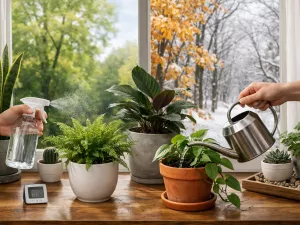
This slowdown is especially noticeable in annual flowers, vegetables nearing the end of their season, and many houseplants moved near cooler windows. Even evergreen plants, which stay visually active, often reduce their water use as temperatures decline.
Growth rate and moisture demand are linked
Plants use water for more than preventing wilt. Moisture supports cell expansion, nutrient movement, and photosynthesis. When growth slows, those processes continue at a lower level, so water demand naturally declines as well.
A plant that was producing new leaves every week in summer may hold steady in fall with little visible expansion. That does not mean it needs no water, but it does mean the root zone stays moist longer after each irrigation.
Why transpiration drops in autumn
Transpiration is the process of water moving through a plant and evaporating from leaf surfaces. This process speeds up in heat, bright sun, and dry wind. In fall, all three often become less intense, so plants lose less water through their leaves.
- Cooler leaf surfaces: Leaves do not heat up as much, so evaporation slows.
- Shorter days: Less daylight means fewer hours of active water movement.
- Milder conditions: Reduced heat stress lowers the need for constant root uptake.
Gardeners sometimes mistake slower growth for a problem and respond by watering more. In reality, many plants are simply following their seasonal cycle. If the soil remains damp 5 cm (2 in) below the surface for several days after watering, the plant is likely using moisture at a reduced rate, which is normal in cooler weather.
Feeding also plays a role here. Heavy fertilizing in fall can push soft new growth that needs more water and is more vulnerable to cold damage. In many gardens, easing off both fertilizer and irrigation at the same time supports a healthier seasonal transition.
Adjusting watering frequency during fall months

Reducing watering in fall works best when done gradually. Instead of making a sudden cut, stretch the time between waterings and observe how quickly the soil dries. This approach helps plants adapt while preventing the soggy conditions that often appear when summer habits continue into cooler weather.
The right schedule depends on rainfall, wind, soil type, plant maturity, and whether plants are growing in the ground or in containers. Because of that, there is no single number that fits every garden. What matters is shifting from routine watering to responsive watering.
How to taper your schedule
A simple way to begin is to keep the same deep-watering method but increase the interval between sessions. If you watered every three days in late summer, move to every four or five days, then reassess. For many established outdoor plants, the need may drop even further as the season progresses.
- Check the soil 5 cm to 7.5 cm (2 in to 3 in) below the surface before watering.
- If it still feels cool and slightly damp, wait another day or two.
- Water deeply rather than giving frequent light sprinkles.
- Recheck after rain before turning irrigation back on.
This method encourages roots to stay healthy and prevents the shallow, constantly wet surface conditions that can lead to disease. It also helps you notice differences between plant groups, such as thirsty fall vegetables versus dormant perennials.
General fall watering pattern by plant type
The table below shows broad tendencies rather than strict rules. Local climate always matters, especially if your area has dry autumn winds or unusually warm temperatures.
| Plant type | Typical fall adjustment | What to watch for |
|---|---|---|
| Established shrubs and trees | Water less often, but deeply when needed | Dry soil deeper than 10 cm (4 in), especially after windy weather |
| Perennial beds | Reduce frequency as top growth slows | Yellowing from soggy soil rather than drought stress |
| Cool-season vegetables | Moderate reduction; keep moisture even | Drying during active leaf or root production |
| Containers and hanging baskets | Reduce carefully, but check often | Fast drying on sunny patios or under eaves |
Practical recommendation: If you use an irrigation timer, shorten run times before reducing the number of watering days. That small change often prevents overwatering while you learn how your garden behaves in autumn.
Morning remains the best time to water in most cases. It gives foliage time to dry and lets you judge the day’s conditions more accurately. Evening watering is sometimes necessary, but in cool fall weather it can leave leaves and soil wet for too long.
How soil retains moisture longer in cooler conditions

Soil behaves differently in autumn than it does in summer. Once temperatures drop, moisture evaporates more slowly from the surface, and the root zone stays damp for a longer period after rain or irrigation. This is one of the main reasons plants can go longer between waterings in cooler weather.
The effect is even stronger in beds with compost-rich soil or mulch. Organic matter improves water-holding capacity, while mulch reduces direct sun and wind exposure on the soil surface. Together, they create a more stable moisture level that does not fluctuate as sharply from day to day.
Factors that influence moisture retention
Not all soil holds water the same way. Sandy ground drains quickly, while clay can stay wet for a long time. Loamy soil sits somewhere in the middle. In fall, these differences become more important because overwatering heavy soil can be just as harmful as underwatering sandy soil.
- Soil texture: Clay retains water longer; sand dries faster even in cool weather.
- Organic matter: Compost improves both retention and drainage balance.
- Mulch depth: A layer of 5 cm to 7.5 cm (2 in to 3 in) helps slow evaporation without sealing the soil.
- Exposure: Windy or south-facing areas may still dry faster than sheltered beds.
Because moisture lingers longer, roots sit in contact with wet soil for more time after each watering. That can be helpful when done properly, but it can also create poor air circulation below ground if the soil never gets a chance to drain. Roots need oxygen as well as water, and cool, saturated soil can lead to rot.
How to assess soil before watering
A quick surface glance is not enough in fall. The top layer may look dry while the root zone below remains moist. Checking by hand is often more reliable than watering on schedule.
Push a finger or a narrow trowel into the soil to at least 5 cm (2 in) for small plants and closer to 10 cm (4 in) for shrubs or larger perennials. If the soil feels cool, dark, and slightly sticky, wait. If it is dry and crumbly at that depth, watering is more likely to be needed.
For containers, lift the pot when possible. A lighter pot usually means less moisture remains. This simple habit is especially useful in fall, when potted plants may stay wet for surprisingly long periods after a cool, cloudy week.
Best practices for reducing watering gradually

The safest way to reduce watering is to do it in measured steps while observing how plants and soil respond. Fall is not the time for abrupt changes, especially for recently planted trees, autumn vegetables, or plants that are still flowering. A gradual reduction keeps roots functioning well and avoids the stress that can come from sudden drought or prolonged sogginess.
Think of the process as recalibrating rather than cutting back blindly. You are matching irrigation to slower growth, cooler temperatures, and longer-lasting soil moisture.
Step-by-step approach
A few practical habits make the transition much smoother. They also reduce the risk of disease, nutrient issues, and weak root systems caused by overwatering.
- Start with observation: Track how long the soil stays moist after a normal watering.
- Extend the interval: Add one or two days between waterings rather than halving irrigation immediately.
- Keep depth consistent: Water thoroughly so moisture reaches the active root zone.
- Adjust after rain: Skip scheduled watering if rainfall has already moistened the soil adequately.
- Review plant by plant: Group thirsty plants separately from drought-tolerant ones when possible.
This method works better than giving tiny amounts of water more often. Light, frequent watering keeps the upper soil constantly damp and encourages shallow roots. In cooler months, that pattern can create fungal problems and weak growth.
Supporting practices that make reduced watering easier
Watering is only one part of fall plant care. A few related tasks help plants cope with lower irrigation while staying healthy.
- Refresh mulch: A tidy mulch layer moderates soil temperature and reduces unnecessary evaporation.
- Clean up diseased foliage: Removing unhealthy leaves improves airflow and lowers the chance of rot in damp conditions.
- Ease off high-nitrogen feeding: Less soft new growth means less water demand and better cold tolerance.
- Prune lightly, not heavily: Remove damaged growth, but avoid major pruning that stimulates tender regrowth.
Editor’s note: Newly planted trees and shrubs are the main exception to aggressive fall cutbacks. Their roots are still establishing, so they often need steady deep watering until the ground cools significantly or freezes.
If you use saucers under indoor or patio containers, empty standing water promptly. In cool weather, roots absorb moisture more slowly, and pots left sitting in water can become waterlogged fast. Gradual reduction works best when excess water has somewhere to drain.
Signs plants are adapting to lower water levels

When watering is reduced correctly, most plants adjust without drama. The goal is not to push them into stress, but to let them settle into a lower-demand season. Healthy adaptation usually looks calm and steady rather than dramatic growth or sudden decline.
Some gardeners expect plants to look exactly as they did in midsummer, but fall often brings a more restrained appearance. Slightly slower growth, fewer new leaves, and a longer period between wilting are all normal signs that plants are using water more efficiently in cooler weather.
Positive signs to look for
These signals suggest your reduced watering routine is working well and the plant is coping with the seasonal shift.
- Soil dries slowly but not constantly: The root zone stays evenly moist for several days, then gradually dries.
- Leaves remain firm: Foliage stays upright and resilient, especially in the morning.
- No sudden yellowing at the base: Lower leaves are not dropping from excess moisture around the roots.
- Growth becomes steadier: Plants stop pushing lush soft growth and begin maturing existing stems and leaves.
- Roots smell fresh, not sour: In containers, healthy roots indicate the mix is not staying too wet.
For lawns, adaptation may show up as slower top growth and less frequent mowing rather than visible dryness. For perennials, it may mean foliage remains stable while flowering winds down naturally. For houseplants, the potting mix may simply stay moist a few extra days between waterings.
When adaptation is not going well
If a plant is not adjusting, the symptoms usually point to either too little water too quickly or too much water lingering too long. The pattern matters. Dry stress often appears as limp leaves and crisp edges, while overwatering tends to cause yellowing, softness, or leaf drop without the soil ever becoming dry.
Check the roots of potted plants if symptoms are confusing. White or pale tan roots usually indicate good health, while brown, mushy roots suggest the mix has stayed wet for too long. Outdoors, a musty smell or persistently slick soil can be a warning sign that reduced evaporation is trapping too much moisture around the root zone.
Common mistakes when watering plants in fall
Many fall watering problems come from treating autumn like a milder version of summer. In reality, cooler weather changes how both plants and soil behave. The biggest mistakes usually involve watering too often, reacting to surface dryness, or ignoring the effect of rain and shorter days.
These issues are easy to correct once you know what to watch for. A few small adjustments can prevent root rot, weak growth, and unnecessary stress heading into winter.
Frequent errors that cause trouble
The following mistakes are especially common in mixed gardens with containers, annuals, shrubs, and houseplants all needing slightly different care.
- Keeping the summer schedule: Watering on autopilot often leaves soil wet for too long in fall.
- Judging by the surface only: The top 2.5 cm (1 in) may dry while deeper soil remains moist.
- Ignoring rainfall: Supplemental watering after a soaking rain quickly leads to oversaturation.
- Using light daily sprinkles: Shallow watering encourages weak roots and damp surface conditions.
- Watering late in the day too often: Cool nights can leave foliage and soil wet for extended periods.
- Treating all plants the same: Containers, new plantings, and established shrubs rarely need identical schedules.
Another mistake is continuing heavy feeding while reducing light and temperature. That mismatch can create soft growth that struggles in cooler conditions and complicates watering decisions. If a plant is being pushed to grow, it may seem to need more water than is seasonally appropriate.
How to avoid fall watering problems
A better approach is to combine observation with simple routine checks. That means looking at weather patterns, feeling the soil, and adjusting based on plant type rather than habit.
If disease has been a problem in your garden, improve spacing and remove fallen debris so damp fall conditions do not linger around stems and leaves. Good airflow matters more when evaporation slows. For indoor plants, move them away from cold drafts and reassess watering after the heating system starts, since indoor air can become drier even while outdoor conditions cool.
Fall watering should feel deliberate, not automatic. When you respond to actual soil moisture, slower growth, and changing weather, plants are far more likely to head into winter healthy, balanced, and free from the stress caused by too much water.