Seasonal Watering Changes for Indoor Plants

 This article explains why indoor plants need different watering through the year. It covers how light, temperature, growth cycles, and indoor drying rates affect soil moisture, plus seasonal frequency changes, healthy signs to watch for, and common watering mistakes.
- Why indoor plants need seasonal watering adjustments
- How indoor light and temperature shift through the year
- Adjusting watering frequency in different seasons
- Balancing moisture during active and dormant periods
- How indoor conditions affect soil drying rates
- Signs indoor plants respond well to seasonal care
- Common mistakes in year-round indoor watering
Indoor plants do not need the same amount of water all year, so it helps to adjust your routine as the seasons change. Light levels, temperature, humidity, and growth rate all vary through the year, and a schedule that works well in summer can easily lead to overwatering or stress in winter. Paying attention to these seasonal shifts makes plant care easier, reduces guesswork, and helps roots and leaves stay healthier over time.
Why indoor plants need seasonal watering adjustments

Indoor plants do not stop responding to the seasons just because they live inside. Even in a heated or air-conditioned home, the amount of light, the length of the day, and the pace of growth change over the year. Watering that works well in July can leave roots sitting in cold, wet compost in January. That is why a fixed weekly routine often causes more problems than it prevents.
Most houseplants use water in relation to growth. When they are producing fresh leaves, extending roots, or flowering, they draw moisture from the potting mix more quickly. When growth slows, the same volume of water remains in the soil for longer. If the roots stay wet without actively using that moisture, oxygen levels in the pot drop and root health suffers.
Plants follow seasonal rhythms indoors too
A windowsill plant may seem sheltered from weather, but it still experiences shorter winter days and stronger summer sun. Tropical foliage plants, succulents, orchids, and flowering houseplants all react differently, yet they share the same basic pattern: more active growth in brighter periods and slower growth in dimmer ones. This means watering should be tied to what the plant is doing, not what the calendar says alone.
Seasonal adjustment is also about avoiding extremes. Underwatering during a bright, warm spell can stress leaves and buds, while overwatering during a cool, dark stretch can trigger yellowing, fungus gnats, and root rot. Good care comes from matching moisture to demand.
- Spring: growth resumes, so many plants begin to need water a little more often.
- Summer: stronger light and warmer rooms increase moisture use and evaporation.
- Autumn: growth starts to slow, so frequent soaking often becomes unnecessary.
- Winter: lower light means many plants need less water, even if indoor heating makes the air feel dry.
Editor’s note: If you have been watering every plant on the same day, change that habit first. A fern in a 12 cm (5 in) nursery pot and a snake plant in a 20 cm (8 in) ceramic pot should almost never be on the same schedule.
Seasonal watering is not complicated once you stop thinking in fixed intervals. The real goal is consistency in observation: check the soil, look at the foliage, and notice how quickly each pot dries at different times of year. That approach is far more reliable than following a reminder app without adjustment.
How indoor light and temperature shift through the year

Light and temperature are the main drivers behind seasonal watering changes indoors. A plant near a south-facing window may receive intense direct sun in summer but much weaker, shorter-duration light in winter. Even a small shift in brightness can change how quickly the plant photosynthesizes and therefore how much water it uses.
Temperature adds another layer. Warm rooms generally speed up evaporation from the soil and transpiration from leaves. Cooler rooms slow both processes. Because homes are rarely uniform, one room may stay at 18°C (64°F) while another reaches 24°C (75°F), and that difference can be enough to change watering needs significantly.
Seasonal light patterns indoors
Indoor light is not only weaker than outdoor light; it also changes in angle and duration. In winter, the sun sits lower, days are shorter, and cloud cover may be more frequent. Plants placed farther than 1 m (3.3 ft) from a window often receive dramatically less usable light than people expect. In summer, stronger sun can increase growth, but it can also heat pots and dry the top layer of soil faster.
Window orientation matters throughout the year. East-facing windows usually offer gentler morning light, west-facing windows can become hot in late afternoon, and south-facing windows often produce the biggest seasonal swings in brightness. North-facing spaces tend to remain more stable but generally dimmer.
Heating, cooling, and drafts
Indoor climate control can make watering decisions less obvious. Central heating dries the air and may warm the top of the potting mix, but low winter light still means many plants are not using much water. Air conditioning can also dry rooms while reducing heat stress. Meanwhile, cold drafts from doors or poorly insulated windows can chill roots and keep soil wet for longer than expected.
- Radiators and vents: increase drying around nearby plants, especially in small pots.
- Cold glass: can lower leaf and root-zone temperature at night, slowing water uptake.
- Humid rooms: kitchens and bathrooms may reduce moisture loss from foliage.
- Ceiling fans or air movement: can speed surface drying of the potting mix.
These shifts explain why two identical plants in the same home may need different care. A pothos on a bright shelf above a heater may dry in 4 days, while another in a cooler hallway may stay moist for 9 days. Seasonal watering works best when you read the room as well as the plant.
Adjusting watering frequency in different seasons

The best way to adjust watering frequency is to use the season as a guide and the soil as the final decision-maker. Rather than watering every 7 days, check how deep the compost has dried and how heavy the pot feels. That gives a more accurate picture of what the roots are experiencing.
Frequency should change gradually, not abruptly. As daylight increases in late winter and spring, many houseplants begin to wake up before the weather feels warm. Likewise, in autumn, they often start needing less water before indoor temperatures drop much. Watching these transitions helps you avoid both drought stress and soggy soil.
What to do in spring and summer
During active growth, many indoor plants benefit from deeper watering followed by partial drying before the next soak. This is often the right time to resume feeding, refresh the top layer of potting mix, and prune weak winter growth. Because roots are actively working, they can usually handle a more thorough watering pattern as long as excess water drains away.
- Check the top 2.5 cm to 5 cm (1 in to 2 in) of soil, depending on pot size and plant type.
- Water thoroughly until excess runs from the drainage holes.
- Empty saucers or cachepots after about 10 minutes so roots do not sit in water.
- Recheck sooner during heatwaves, especially for plants in terracotta or small containers.
What to do in autumn and winter
As growth slows, allow more drying between waterings for most foliage plants and succulents. This does not mean neglect. It means smaller demand, slower drying, and a greater need for caution. Many common indoor plants are lost in winter not from thirst, but from repeated watering into already damp soil.
Some plants, such as peace lilies and ferns, still dislike becoming bone dry and may need fairly steady moisture. Others, including ZZ plants, snake plants, and many cacti, should dry much more thoroughly. Knowing the plant category matters as much as knowing the season.
| Season | Typical indoor plant response | Watering approach |
|---|---|---|
| Spring | New leaves and roots begin forming | Increase checks and water a little more often as drying speeds up |
| Summer | Fastest growth in bright conditions | Water thoroughly when needed and monitor small pots closely |
| Autumn | Growth gradually slows | Extend the gap between waterings and reduce feeding |
| Winter | Low light and reduced uptake for many species | Water cautiously, checking deeper in the pot before adding more |
Practical tip: Mark the date on a small plant label when you water a problem plant. After a month, you will see its real drying pattern in your home instead of guessing from memory.
If you repot in spring, remember that fresh mix often holds moisture differently from old, compacted soil. A newly potted plant may need less frequent watering at first, even during the growing season, because the improved structure retains moisture more evenly around the roots.
Balancing moisture during active and dormant periods

Not every season is simply “more water” or “less water.” The real task is balancing moisture so roots receive enough water to support growth without losing air space in the pot. This balance shifts when plants move between active growth and partial dormancy.
Active periods call for a rhythm of watering, feeding, and occasional grooming. Dormant or slow periods call for restraint. The soil should still be checked regularly, but the goal changes from fueling growth to maintaining root health until conditions improve.
During active growth
When a plant is producing leaves, stems, or flowers, it generally benefits from evenly managed moisture. For many tropical houseplants, that means allowing the upper layer of compost to dry slightly while the root zone stays lightly moist. This is also the time when plants can make use of diluted fertilizer and recover more quickly from pruning or repositioning.
- Leafy tropicals: often prefer moderate, even moisture while growing.
- Flowering indoor plants: may need closer monitoring because buds and blooms increase water demand.
- Succulents and cacti: still need drying between waterings, but may use water faster in bright summer conditions.
During dormancy or slow growth
Many indoor plants are not fully dormant in the strict botanical sense, but they do enter a slower phase in low light. In that period, roots absorb water more slowly and the potting mix remains wet for longer. Feeding should usually be reduced or paused, and heavy pruning is often better delayed until growth resumes.
Watering during slow periods should be lighter in frequency, not necessarily lighter in quality. It is usually better to water thoroughly when the plant truly needs it than to add small splashes every few days. Frequent small amounts often wet only the top layer and encourage shallow rooting.
Editor’s note: If a plant has stopped growing for winter, do not try to “wake it up” with extra water or fertilizer. Better light in spring is what restarts healthy growth, not a wetter pot.
Balancing moisture also means matching care to species. A calathea in active growth may struggle if allowed to dry too much, while a jade plant in winter can decline if kept constantly damp. The season sets the background, but the plant’s natural habit determines the fine detail.
How indoor conditions affect soil drying rates

Soil does not dry at the same speed in every home, or even in every corner of the same room. Drying rate depends on pot size, material, root mass, light exposure, temperature, humidity, airflow, and the structure of the potting mix. Understanding these factors helps you judge moisture more accurately than any fixed schedule can.
A plant in a cramped pot with dense roots may use water quickly because there is less compost to hold moisture. A recently repotted plant in a much larger container may stay wet for too long because the unused soil around the roots dries slowly. Both situations can be mistaken for watering problems when the real issue is container balance.
Pot, soil, and placement factors
Terracotta pots lose moisture through their walls, while plastic and glazed ceramic hold it longer. A chunky aroid mix with bark and perlite drains and aerates differently from a peat-free general compost. Placement matters too: bright shelves, warm windows, and spots near heaters all speed drying compared with shaded corners.
| Condition | Effect on drying rate | What to watch for |
|---|---|---|
| Small pot with active roots | Dries faster | Wilting can appear quickly in bright weather |
| Large pot around a small root ball | Dries slower | Risk of staying wet deep down after the surface looks dry |
| Terracotta container | Dries faster | More frequent checks needed in summer |
| Dense, compacted mix | Dries unevenly | Top may seem dry while the lower half stays soggy |
| Bright window with warm air movement | Dries faster | Plants may need watering sooner than those in the same room |
Simple ways to judge drying accurately
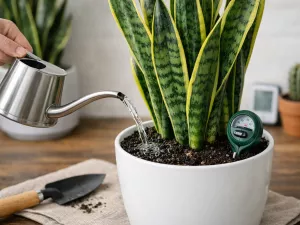
You do not need specialist equipment to read a pot well. A finger test works for shallow checks, but deeper moisture is often better judged by lifting the pot, using a wooden skewer, or observing how long the plant usually takes to dry after a full watering. Over time, these small checks become more reliable than moisture meters used without context.
- Lift the pot: a freshly watered container feels noticeably heavier than a dry one.
- Use a skewer: insert it near the root zone and remove it to see whether it comes out damp.
- Check drainage holes: roots and lingering moisture near the base reveal what the surface cannot.
- Watch leaf posture: some plants soften slightly when genuinely thirsty, but this should confirm, not replace, soil checks.
If a plant seems to stay wet for more than 10 to 14 days in normal indoor conditions, especially in a pot under 15 cm (6 in) wide, review the mix, light, and pot size. Slow drying can be normal in winter, but it can also point to poor drainage or root trouble.
Signs indoor plants respond well to seasonal care

When watering is adjusted properly through the year, the results are usually visible before they become dramatic. Plants tend to look steady rather than extreme: not limp, not yellowing, not stalled for long without reason. Healthy seasonal care supports balanced growth in bright months and stable maintenance in darker ones.
Good response is not always rapid growth. In winter, success may simply mean the plant holds its leaves well, avoids root problems, and enters spring in good condition. In spring and summer, positive signs are often more obvious because the plant has enough energy to produce fresh growth.
Visible signs above the soil
Leaves should look proportionate, firm, and appropriately colored for the species. New growth should emerge without being unusually small or distorted. Flowering plants may set buds more reliably when moisture is steady during active growth, while foliage plants often produce cleaner, stronger leaves.
- Even leaf color: fewer yellow lower leaves caused by chronic overwatering.
- Steady new growth: fresh leaves appear at a normal pace for the season.
- Better leaf posture: less repeated drooping between waterings.
- Cleaner soil surface: fewer fungus gnats and less algae from constantly wet compost.
Root and soil clues
Healthy seasonal watering also improves what you cannot always see at first glance. The potting mix smells fresh rather than sour, and water moves through the container evenly instead of pooling on top. When repotting time comes, roots are typically pale, firm, and branching well rather than brown and mushy.
Another good sign is predictability. A well-managed plant develops a fairly regular drying rhythm for its position and season. If the pot suddenly starts drying much faster or much slower than usual, that change often signals either a growth spurt, root crowding, or a developing problem worth checking.
Plants that respond well to seasonal care also tend to handle light feeding and routine pruning better. Because the roots are healthy, they can support fresh growth after dead leaves are removed or stems are trimmed back. This creates a useful cycle: correct watering supports roots, healthy roots support growth, and strong growth makes future watering easier to judge.
Common mistakes in year-round indoor watering
Many indoor watering problems come from habits that seem sensible but ignore seasonal change. The most common mistake is treating all plants alike all year. A second is assuming dry indoor air always means the soil is dry too. In winter especially, leaves may lose some moisture in heated rooms while the compost remains wet for days.
Another frequent issue is reacting to symptoms too quickly without checking the roots or soil depth. Yellow leaves, drooping, and brown tips can all be linked to watering, but they do not all mean “give more water.” Correct diagnosis matters more than speed.
Mistakes that lead to overwatering
Overwatering is not just about volume; it is often about timing. Watering again before the root zone has used the previous supply is what creates trouble. Decorative pots without drainage, oversized containers, and heavy mixes make this more likely.
- Watering by the calendar: weekly routines ignore seasonal drying changes.
- Trusting the surface only: the top 2 cm (0.8 in) can feel dry while the lower half is still wet.
- Leaving water in saucers: roots remain saturated after the plant has taken what it needs.
- Using too large a pot: excess compost holds moisture longer than the roots can manage.
Mistakes that lead to underwatering
Underwatering often happens in bright summer rooms, with root-bound plants, or when growers assume drought-tolerant species need almost no water. Even succulents need a full soak at the right time. Repeated shallow watering can also create hidden dryness lower in the pot while only the surface is moistened.
- Do not give tiny amounts just to “keep it going.” Water thoroughly when needed.
- Check small pots more often in hot weather, because they can dry within a few days.
- Review root crowding if a plant wilts again soon after watering.
- Increase humidity for sensitive plants only as a support, not as a substitute for proper root-zone moisture.
Finally, avoid changing several care factors at once. If a plant struggles, do not immediately increase water, move it to a darker spot, repot it, and feed it in the same week. Make one informed adjustment and observe the response. Seasonal care works best when it is thoughtful, measured, and based on what the plant and pot are actually telling you.