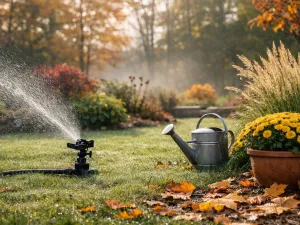
Proper Watering for Annual Plants in Warm Weather

 Here we how hot weather changes watering for annual plants: why they need more water, why soil dries faster, and the best time of day to water. It also explains how often to water in warm climates, how to reduce moisture loss in beds, signs of heat stress, and common mistakes to avoid.
- How warm weather increases water needs in annual plants
- Why soil dries faster during hot conditions
- Best time of day to water annual plants in heat
- Adjusting watering frequency in warm climates
- Techniques to prevent moisture loss in garden beds
- Signs annual plants are stressed by heat and dehydration
- Common mistakes when watering in warm weather
Keeping annual flowers healthy in hot weather is not about watering constantly, but about watering deeply and at the right time. Light, frequent sprinkling often leaves roots near the surface, where they dry out quickly and become stressed. A slower, steadier routine encourages deeper roots and helps plants stay colorful, productive, and resilient. Paying attention to soil type, sun exposure, and whether plants grow in beds or containers makes watering easier and more effective.
How warm weather increases water needs in annual plants

Annual flowers and foliage plants grow fast, bloom hard, and use water quickly even in mild conditions. Once temperatures rise, that demand increases sharply. Heat speeds up evaporation from the soil and also drives more moisture out through leaves, so plants can go from well hydrated to stressed in a surprisingly short time.
Unlike shrubs or established perennials, many annuals have relatively shallow root systems. That means they rely on the upper layer of soil, the very part that dries first during hot spells. Bedding plants such as petunias, impatiens, marigolds, zinnias, calibrachoa, and begonias often look full and healthy in the morning, then begin to droop by late afternoon if their roots cannot keep pace with water loss.
What happens inside the plant during heat
When the air is warm and dry, leaves release more water through tiny pores called stomata. This process helps cool the plant, but it also increases the need for steady moisture at the roots. If the soil cannot supply enough water, the plant reduces growth, flower production slows, and leaf edges may begin to scorch.
Warm weather can also speed up overall metabolism. Annuals push out new stems, buds, and blooms rapidly in summer, which is part of why they are so rewarding. The trade-off is that fast growth requires a regular supply of moisture and nutrients. If watering is inconsistent, feeding becomes less effective because roots cannot absorb dissolved nutrients properly.
Plants in containers need even more attention
Annuals growing in pots, window boxes, and hanging baskets dry much faster than those in the ground. Their root zone is limited, the potting mix contains more air, and the container itself can heat up in direct sun. A dark plastic pot sitting in 30°C (86°F) weather may have root-zone temperatures much higher than the air temperature.
- Small pots: Dry out fastest because they hold less soil and less reserve moisture.
- Hanging baskets: Lose water quickly through wind exposure and all-around sun.
- Terracotta containers: Allow moisture to evaporate through the pot walls.
- Mixed plantings: Can become uneven, with vigorous plants taking more than their share of water.
A plant that wilts every hot afternoon is not always under-watered, but if it is still limp in the evening or next morning, treat that as a clear signal to check the root zone more closely. Temporary heat wilt and true drought stress look similar from a distance.
Good watering in warm weather is not about keeping the soil constantly soggy. It is about making sure roots have access to deep, even moisture before the plant reaches the point of stress. That balance supports flowering, steadier growth, and stronger resistance to pests that often target weakened summer bedding plants.
Why soil dries faster during hot conditions

Hot weather changes the way water moves through the garden. Soil loses moisture not only because plants are using more of it, but also because the environment pulls water away faster. Sunlight, warm air, wind, and the texture of the soil all work together to shorten the time between one watering and the next.
Understanding why this happens helps you water more accurately. Instead of following a fixed schedule, you can judge how quickly the bed or container is drying and adjust before plants begin to suffer.
Sun, wind, and temperature all speed evaporation
In exposed beds, direct sun heats the soil surface and encourages rapid evaporation. Wind makes the effect stronger by moving humid air away from the soil and leaves, replacing it with drier air that can absorb more moisture. A breezy day at 28°C (82°F) can dry a planting faster than a still day at 31°C (88°F).
Raised beds and sloped sites often dry first because they warm up quickly and drain freely. Areas beside walls, fences, paving, or driveways can become heat traps, especially where reflected light adds extra stress. In those spots, annuals may need more frequent checks even if the rest of the garden looks fine.
Soil type makes a major difference
Not all soils hold water equally. Sandy ground drains quickly and has large air spaces, so moisture moves through it fast. Clay holds water longer, but when it dries hard it can repel water at first and make rewetting difficult. Loam, especially when improved with compost, usually gives the best balance of drainage and moisture retention for annual plantings.
Organic matter is one of the most useful tools for warm-weather watering. Compost helps sandy soil hold moisture longer and improves the structure of heavier soil so roots can spread more evenly.
| Soil or site condition | How it affects moisture | What to watch for |
|---|---|---|
| Sandy soil | Water drains quickly and dries fast near the surface | Plants wilt sooner between waterings |
| Clay soil | Holds water longer but may dry into a hard crust | Water may run off before soaking in |
| Raised beds | Warm up quickly and lose moisture from more exposed sides | Upper corners and edges dry first |
| Containers | Limited soil volume means little stored moisture | Daily checks are often needed in summer |
| Sites near stone or paving | Reflected heat increases drying | Leaf scorch and midday wilt appear earlier |
Feeding also plays a role here. Fast-release fertilizer can encourage soft, lush growth that uses water rapidly. That does not mean you should stop feeding annuals, only that nutrition and watering should stay in balance. If growth is excessive and the soil dries too quickly, reduce feeding slightly and focus on deeper irrigation rather than frequent light sprinkles.
Best time of day to water annual plants in heat

The best time to water annual plants during hot weather is usually early morning. At that point, the soil is cooler, the air is calmer, and roots can absorb moisture before the strongest sun arrives. Morning watering also gives leaves time to dry, which helps reduce fungal problems that can spread when foliage stays wet overnight.
For most gardens, aiming to water between dawn and mid-morning works well. If temperatures are already high by breakfast time, move the routine earlier. The goal is to send plants into the hottest part of the day with a full reserve of moisture around the roots.
Why morning is usually better than evening
Evening watering can still be useful, especially during a heatwave, but it has trade-offs. The soil remains damp for longer because evaporation slows, and that can help badly stressed plants recover. However, cooler night conditions may leave foliage and crowded stems wet for too long, especially in dense bedding displays.
- Morning watering: Best for routine care, efficient uptake, and cleaner foliage conditions.
- Late afternoon watering: Helpful when plants are clearly stressed and cannot wait until the next day.
- Night watering: Usually less ideal if leaves are soaked and air circulation is poor.
When midday watering is acceptable
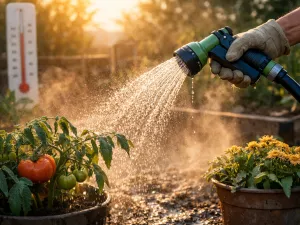
Gardeners are often told never to water in the middle of the day, but that rule is too rigid. Midday is not the most efficient time because more water evaporates, yet it is still better to water than to let annuals collapse in severe heat. If a container planting is bone dry at 32°C (90°F), delaying until evening can cause more damage than a prompt soak.
When emergency watering is needed in hot sun, direct the water at the soil rather than the flowers. Apply enough to moisten the root ball thoroughly, then check again later. A quick splash that only darkens the surface will not solve the problem.
If hanging baskets are dry by noon in repeated hot weather, the issue is rarely the hour you watered. It usually means the basket is undersized, root-bound, or exposed to too much sun and wind for its soil volume.
Whichever time you choose, consistency matters. Plants adapt better when moisture arrives before stress becomes severe. Repeated cycles of drying out and then flooding can reduce bloom quality and shorten the display of summer annuals.
Adjusting watering frequency in warm climates

There is no single schedule that suits every annual planting in warm weather. A shaded border in rich soil may need water every few days, while a sunny patio pot may need it every day or even twice daily during extreme heat. The best approach is to adjust frequency based on plant type, soil depth, sun exposure, wind, and container size.
Rather than watering by the calendar alone, check the soil regularly. Insert a finger 2.5 cm to 5 cm (1 in to 2 in) into the soil for beds, or slightly deeper in larger containers. If that layer feels dry and the pot feels light or the bed is losing its cool, damp feel beneath the surface, it is time to water thoroughly.
How often different situations may need water
The ranges below are practical starting points, not strict rules. Heatwaves, strong wind, and very fast-growing plants can shorten the interval.
| Planting situation | Typical warm-weather frequency | Best approach |
|---|---|---|
| Annuals in open ground with improved soil | Every 2 to 4 days in sustained heat | Water deeply so moisture reaches below the surface roots |
| Raised beds in full sun | Every 1 to 3 days | Check edges first, as they dry faster than the center |
| Large patio containers | Daily in hot spells | Water until excess drains out, then empty saucers if needed |
| Small pots and baskets | Daily, sometimes twice a day above 30°C (86°F) | Use enough water to fully rewet the root ball |
| Shade annuals in protected areas | Less often than sun-loving plants | Avoid overwatering simply because the weather is warm |
Deep watering versus frequent light watering
Deep watering is usually more effective than shallow daily sprinkling. A proper soak encourages roots to grow downward, where the soil stays cooler and more stable. Light watering, by contrast, often wets only the top few centimeters of soil, roughly 3 cm to 5 cm (1 in to 2 in), which trains roots to remain near the surface.
That said, containers are a special case. Because they hold limited soil, they often do need frequent watering in summer. The key is still to water thoroughly each time, not just often. If water runs straight through a dried-out pot, apply it in stages, wait a few minutes, and water again so the mix can rehydrate properly.
When to reduce watering slightly
Warm weather does not always mean more water for every plant every day. If annuals are in shade, growth has slowed, or the soil remains damp below the surface, overwatering can become a problem. Constantly wet soil reduces oxygen around roots and may lead to yellowing leaves, weak stems, and root disease.
- Check before you water: Surface dryness alone is not enough evidence in larger beds.
- Match water to growth stage: Newly planted annuals need closer monitoring than established ones.
- Adjust after rain: Even 12 mm (0.5 in) of rainfall may not fully soak a dense bed, so inspect rather than assume.
- Reassess after pruning: A freshly trimmed plant with less foliage may use slightly less water for a short period.
Good summer care also includes grooming and feeding. Remove spent blooms and damaged leaves so the plant directs energy into healthy growth. Feed according to the needs of the species, but avoid heavy fertilizer during severe heat if the plant is already dry, as that can add stress to the roots.
Techniques to prevent moisture loss in garden beds

Reducing water loss is often more effective than simply watering more often. A few practical changes in the bed can help annuals stay evenly moist for longer, which means less stress on the plants and less work for the gardener. These techniques are especially useful in full-sun borders, raised beds, and exposed sites where heat builds quickly.
The aim is to keep the root zone cooler, slow evaporation, and make sure the water you apply actually reaches and stays where roots can use it.
Mulch and soil improvement
A light organic mulch is one of the best tools for annual beds. A layer of compost, leaf mold, or fine bark about 2.5 cm to 5 cm (1 in to 2 in) thick shades the soil surface and reduces evaporation. Keep mulch slightly back from stems so crowns do not stay too wet.
Before planting season, mix compost into the bed to improve structure and moisture retention. This is particularly helpful in sandy or thin soils. Richer soil acts like a reservoir, holding water longer between irrigations without becoming waterlogged.
Watering methods that waste less moisture
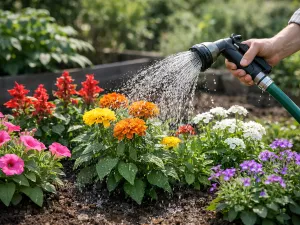
How you water matters. A hose-end spray aimed broadly over the bed can lose a lot of water to evaporation and runoff, especially in heat. Slower methods allow moisture to soak in where it is needed.
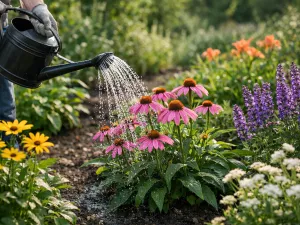
- Water at the base of plants rather than over the foliage.
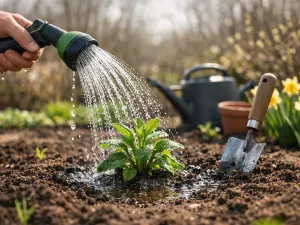
- Apply water slowly so it penetrates instead of running off the surface.
- Repeat in two passes if the soil is very dry or compacted.
- Check that moisture has reached below the top layer before moving on.
Plant spacing and bed design
Overcrowded annuals compete intensely for water. Dense planting can look lush at first, but it often creates a bed that dries unevenly and is harder to irrigate well. Give each plant enough room to mature so roots have access to moisture and air can move through the foliage.
Grouping plants with similar water needs also helps. Sun-loving annuals that bloom heavily, such as petunias and geraniums, often need a different watering rhythm than shade annuals like wax begonias or coleus. Keeping them in separate zones makes irrigation more precise.
In very hot gardens, a thin mulch plus compost usually does more for summer annuals than buying a larger watering can. Better soil means fewer emergency rescues.
- Mulch exposed soil: This reduces surface crusting and slows drying after each watering.
- Shade the root zone, not the flowers: Low companion planting or mulch can cool the soil without reducing bloom.
- Avoid repeated shallow sprays: They encourage surface roots and faster stress.
- Use saucers carefully in pots near beds: They can help briefly in heat, but standing water should not remain for long around sensitive roots.
These moisture-saving steps also support feeding and pruning routines. Plants that stay evenly moist recover better after deadheading, trimming, or a light summer feed, and they are less likely to abort buds during hot spells.
Signs annual plants are stressed by heat and dehydration

Annuals often show stress quickly, which is useful if you know what to look for. The earliest signs are usually subtle: leaves lose their crispness, flowers close sooner than normal, and new growth appears less vigorous. If heat and dryness continue, symptoms become more obvious and can affect the entire plant.
Learning to distinguish temporary heat response from real dehydration helps you avoid both under- and overwatering. Some plants wilt in strong sun even when the soil is still adequately moist, then recover as temperatures drop. Others remain limp because the roots genuinely cannot supply enough water.
Early warning signs
These symptoms often appear before serious damage sets in. Catching them early can prevent flower loss and stunted growth.
- Midday droop: Mild wilting during peak heat may be temporary, but it should improve later in the day.
- Dull leaf color: Foliage may look less glossy or slightly gray-green.
- Smaller blooms: Flowers can open undersized when moisture is inconsistent.
- Slower growth: New shoots and buds appear less frequently.
More serious dehydration symptoms
If the root zone stays too dry, annuals begin to show lasting damage. Lower leaves may yellow and drop, petal edges may brown, and stems can become weak or brittle. In severe cases, buds fail to open, flowers fade quickly, and the whole plant may remain wilted into the evening.
Heat stress can also make plants more vulnerable to pests such as spider mites, which thrive in hot, dry conditions. A plant already struggling for moisture is less able to resist feeding damage, so inspect the undersides of leaves if foliage looks speckled or tired.
| Symptom | Likely meaning | What to do next |
|---|---|---|
| Wilting only in midday, recovery by evening | Heat response, possibly normal but worth monitoring | Check soil moisture before adding more water |
| Wilting that continues overnight | True dehydration or root trouble | Water deeply and inspect drainage and root health |
| Crispy leaf edges or scorched petals | Heat plus moisture shortage | Improve watering consistency and reduce reflected heat if possible |
| Yellow leaves with constantly wet soil | Possible overwatering or root stress | Let soil dry slightly and improve drainage |
| Bud drop and weak flowering | Repeated cycles of stress | Stabilize watering and review feeding routine |
Pruning can help stressed annuals recover, but timing matters. Remove damaged blooms and scorched leaves to tidy the plant, yet avoid hard cutting during the hottest part of the day. If a plant is badly wilted, water first, let it recover, and then prune lightly once it is rehydrated.
Common mistakes when watering in warm weather
Warm conditions make watering feel urgent, and that is when many gardeners fall into habits that do more harm than good. The goal is not simply to apply more water. It is to water in a way that reaches the roots, supports healthy growth, and avoids creating new problems such as shallow rooting, disease, or nutrient imbalance.
Most mistakes come from reacting to what the plant looks like at the surface without checking what is happening in the soil. A bed can appear dry on top while still holding moisture lower down, and a wilted plant can be suffering from either drought or saturated roots.
Watering too lightly and too often
One of the most common errors is frequent shallow watering. This dampens the top layer but leaves the deeper root zone dry. Annuals then form roots close to the surface, where heat dries the soil fastest. The result is a planting that becomes more dependent on constant attention.
A better method is to water thoroughly, allow the moisture to penetrate, and then recheck before watering again. In containers, this means watering until excess drains from the bottom. In beds, it means enough water to moisten the soil below the immediate surface layer.
Ignoring drainage and root health
Another mistake is assuming every wilted plant needs more water. If the soil is already wet and the plant still droops, roots may be stressed from lack of oxygen or early rot. This is especially common in pots without good drainage or decorative cachepots where water collects unnoticed.
- Check the pot base: Make sure drainage holes are open and not blocked by roots or debris.
- Lift containers: A heavy pot may still be holding plenty of moisture.
- Watch saucers: Standing water can keep roots too wet in warm weather.
- Inspect the crown: Soft stems at soil level can point to rot rather than drought.
Using water without adjusting the rest of care
Watering alone cannot compensate for poor placement, overcrowding, or excessive feeding. Annuals packed too tightly in a hot bed will always dry faster and struggle more. Plants given heavy fertilizer in high heat may produce soft growth that wilts quickly and demands more moisture than the roots can support.
Good summer care is integrated. Water deeply, feed moderately, deadhead regularly, and trim leggy growth so the plant stays balanced. If a variety repeatedly scorches in a certain location, consider moving it next season to a site with afternoon shade or less reflected heat.
Common warm-weather watering mistakes include:
- Watering by habit instead of checking the soil first.
- Sprinkling the surface rather than soaking the root zone.
- Waiting for severe wilting before taking action.
- Keeping foliage wet late into the evening in crowded plantings.
- Letting containers become so dry that the potting mix shrinks away from the sides.
- Applying fertilizer to very dry soil, which can stress roots.
When annuals are watered properly in warm weather, they respond quickly. Foliage stays firmer, flowering is more consistent, and the plants recover better from pruning, feeding, and the normal strain of summer heat. A few careful checks each week usually do more good than any rigid schedule.