How to Water Potted Plants in Hot Weather Conditions

 Here we why potted plants dry out faster than plants in the ground during hot weather, including the role of limited soil, pot types, and soil mixes. It also explains when and how often to water, how to reduce evaporation, and how to spot overheating, dehydration, and common watering mistakes.
- Why potted plants dry faster than ground plants in heat
- How limited soil volume affects moisture retention in pots
- Best time of day to water container plants in high temperatures
- How to adjust watering frequency for potted plants in summer
- Techniques to reduce evaporation in container soil
- Choosing pot types and soil mixes for hot weather conditions
- Signs potted plants are overheating or dehydrated
- Common mistakes when watering potted plants in extreme heat
Keeping container plants hydrated during intense heat requires more than watering more often. Pots lose moisture faster than garden soil, and factors like direct sun, wind, pot size, and plant variety all influence how quickly they dry out. A consistent routine, watering early or late in the day, and checking the soil before adding water help prevent stress, wilting, and root damage while supporting steady, healthy growth.
Why potted plants dry faster than ground plants in heat

Potted plants lose moisture much faster than plants growing in the ground, especially during spells of strong sun, hot wind, and low humidity. A container exposes roots to heat from all sides, while garden soil stays cooler and benefits from a much larger reservoir of moisture below the surface. That difference becomes obvious when temperatures climb above 30°C (86°F), and even more so when dark pots sit on stone, decking, or concrete.
In the ground, roots can spread outward and downward to find cooler, damper soil. In a pot, the root system is confined to a limited space, so once the mix dries, there is nowhere else for the plant to draw water. The result is a faster swing from evenly moist to dry, and sometimes from dry to stressed in just a few hours.
Heat builds up around container roots
Containers absorb and radiate heat in ways open soil does not. Plastic, metal, and glazed ceramic can warm quickly in direct sun, raising the temperature of the root zone. Warm roots use water less efficiently, and very hot roots may temporarily stop functioning well even if moisture is present.
- Side exposure: Pot walls heat up from direct sunlight and warm the compost from the outside inward.
- Surface exposure: The top layer of potting mix is fully exposed to sun and moving air, so it dries first.
- Base heat: Containers placed on patios, balconies, and paved areas often receive reflected heat from below.
- Wind effect: Breezy conditions increase water loss from both leaves and soil surface.
Transpiration rises faster in hot weather
Plants cool themselves by releasing water through their leaves. In hot weather, this process speeds up. A thirsty plant in a small pot can lose moisture through foliage much faster than the root ball can replace it, particularly if the roots are crowded or the soil has become hydrophobic after drying out.
This is why a pot can feel heavy and moist in the morning but become noticeably lighter by late afternoon. Leafy annuals, tomatoes, herbs, and flowering baskets are especially quick to use up available water because they have active top growth and relatively small root space.
Editor’s note: If a container repeatedly wilts by midday but recovers in the evening, do not assume that is harmless. Temporary wilting is a sign the plant is already operating under stress, and repeated episodes can reduce flowering, fruiting, and root health.
How limited soil volume affects moisture retention in pots

The amount of soil in a pot directly affects how long moisture remains available. A small volume of compost simply cannot store as much water as a large garden bed. In hot weather, that limited reserve is used quickly by roots and lost quickly from the surface, making container plants far more dependent on timely watering.
Shallow or cramped containers are the most vulnerable. They dry from top to bottom more rapidly, and the root ball can become densely packed, leaving less room for moisture-holding particles. Even when water is applied, a tight root mass may not absorb it evenly unless the pot is watered slowly and thoroughly.
Pot size changes the moisture buffer
Larger pots usually offer a more stable root environment because they hold more mix and dry more slowly. Smaller pots, hanging baskets, and window boxes can go from adequately moist to dangerously dry in a single hot day.
- Small pots: Containers under 20 cm (8 in) wide often need close monitoring in summer heat.
- Medium pots: Pots around 25 to 35 cm (10 to 14 in) wide hold moisture better but still dry quickly with thirsty plants.
- Large tubs: Containers above 40 cm (16 in) wide provide more buffering against heat and irregular watering.
Root density affects how water moves
As plants mature, roots occupy more of the pot and leave less free compost to retain water. This is common with fast-growing annuals, peppers, tomatoes, and houseplants that have outgrown their containers. Water may run through quickly, giving the impression of adequate watering while the root ball remains only partly moistened.
When a pot is heavily root-bound, moisture distribution becomes uneven. The outer edge may get wet while the center stays dry, or the reverse may happen if the mix has shrunk from the pot sides. In these cases, watering technique matters as much as watering frequency.
Soil ingredients determine retention and drainage
Not all potting mixes behave the same way in heat. A very light, bark-heavy mix drains fast and may need more frequent watering, while a dense mix can stay wet too long in cooler periods but still dry hard at the surface in summer. Good hot-weather performance comes from a balance of drainage, aeration, and water-holding capacity.
Materials such as coir, composted bark, and quality compost help retain moisture, while perlite and grit improve structure. The goal is not to keep the pot soggy, but to create a mix that rewets easily and holds enough moisture between waterings.
Best time of day to water container plants in high temperatures

The best time to water potted plants during hot weather is usually early morning. At that point, the compost is cooler, evaporation is lower, and the plant has time to take up moisture before the hottest part of the day. Morning watering also helps support leaf function and reduces the chance of severe midday wilt.
Late afternoon or early evening can also work when mornings are not possible, but it is generally less ideal for plants that dislike staying damp overnight. The right timing depends on climate, airflow, and the type of plant, yet morning remains the most reliable default for most containers.
Why morning watering works best
Watering early gives roots the best chance to absorb moisture efficiently. It also allows excess water on foliage to dry as temperatures rise, which is useful for plants prone to fungal problems. In hot spells, a thorough morning soak often means the difference between a plant coping well and one struggling by noon.
- Check the soil before the sun becomes strong.
- Water slowly until moisture reaches the full root zone.
- Allow excess water to drain freely from the bottom.
- Recheck exposed or small pots later in the day if temperatures exceed 32°C (90°F).
When evening watering is appropriate
If containers are still drying out dangerously fast, a second watering in late afternoon or early evening may be necessary. This is common for hanging baskets, vegetables in full sun, and pots on balconies where reflected heat is intense. The key is to water the soil rather than repeatedly wetting leaves.
Evening watering is most useful when the root ball is genuinely dry, not just when the top 2 cm (0.8 in) of compost feels warm. Overdoing late watering can leave some plants sitting wet overnight, so it is better used as a response to need rather than as an automatic routine.
Practical tip: If you can water only once a day during a heatwave, make it early. A rushed evening watering often helps the plant recover, but it does not prevent the daytime stress that already occurred.
How to adjust watering frequency for potted plants in summer

Summer watering should be based on conditions, plant type, and container size rather than a fixed schedule. A rigid routine such as “every two days” often fails in hot weather because water use changes with temperature, wind, light levels, and plant growth. The right approach is to monitor the compost and respond before the plant reaches severe stress.
Some pots may need water once every few days, while others need it daily or even twice daily during extreme heat. Fast-growing plants with flowers or fruit usually need more frequent watering than slow-growing foliage plants, and small containers always require closer attention than larger ones.
What changes watering demand
Several factors combine to determine how often a container dries out. Looking at only the weather forecast is not enough; the plant itself and its potting setup matter just as much.
- Plant type: Tomatoes, petunias, dahlias, and basil are usually thirstier than succulents or woody herbs.
- Growth stage: Plants in active bloom or fruit production use more water than newly planted or semi-dormant specimens.
- Pot size: A 15 cm (6 in) pot dries much faster than a 45 cm (18 in) tub.
- Exposure: Full sun, windy balconies, and south-facing walls increase water loss.
- Soil condition: Fresh, moisture-retentive compost behaves differently from old, compacted mix.
How to check before watering
The most reliable method is to test below the surface. The top layer often dries first and can be misleading. Insert a finger into the compost to a depth of 3 to 5 cm (1.2 to 2 in), or lift the pot to judge weight if it is small enough to handle. Dry, lightweight pots need water; cool, heavier pots often do not.
For large containers, inspect drainage holes and the root zone if possible. If water runs straight through immediately, the mix may have dried so much that it needs slow repeated watering or a brief soak to rehydrate evenly.
General summer frequency guide
The table below gives a practical overview, but use it as a starting point rather than a strict rule. Local climate and plant choice can shift these intervals significantly.
| Container situation | Typical summer frequency | Notes |
|---|---|---|
| Small pots under 20 cm (8 in) in full sun | Daily, sometimes twice daily in extreme heat above 35°C (95°F) | Check morning and late afternoon |
| Medium pots 25 to 35 cm (10 to 14 in) | Every 1 to 2 days | Depends heavily on plant size and wind exposure |
| Large containers above 40 cm (16 in) | Every 2 to 4 days | Deep watering is more important than light daily splashes |
| Hanging baskets and window boxes | Daily in warm weather, often twice daily during heatwaves | Very exposed to airflow and rapid drying |
Techniques to reduce evaporation in container soil

Reducing water loss is often just as effective as increasing watering. In hot weather, the aim is to keep moisture in the root zone for longer without making the compost stagnant. Small changes in placement, surface cover, and watering method can noticeably improve how long a pot stays evenly moist.
These techniques are especially useful for gardeners who cannot water multiple times a day. They also help prevent the cycle of severe drying followed by heavy soaking, which can stress roots and reduce nutrient uptake.
Mulch the soil surface
A thin mulch layer slows evaporation from the top of the potting mix and helps moderate temperature swings. It also reduces crusting, which can make water run off rather than soak in.
- Compost mulch: A top layer of 2 to 3 cm (0.8 to 1.2 in) helps retain moisture and gradually improves the mix.
- Fine bark: Useful for ornamental pots and larger containers where appearance matters.
- Gravel or pebbles: Best for drought-tolerant plants that need sharp drainage but still benefit from reduced surface evaporation.
Change the microclimate around the pot
Moving containers out of the harshest conditions can significantly cut water demand. Even a few hours of relief from intense afternoon sun can make a difference, especially for leafy plants and newly potted specimens.
- Shift vulnerable pots to a spot with morning sun and light afternoon shade.
- Group containers together so they create a slightly more humid pocket of air.
- Raise pots off hot paving with feet or pot risers to improve drainage and reduce heat buildup.
- Shelter exposed containers from drying wind where possible.
Water more deeply, not just more often
Quick splashes wet only the top layer and encourage shallow rooting. A slower, deeper watering reaches the full root ball and keeps moisture available for longer. This matters most for larger pots and plants with dense root systems.
Apply water in stages, pausing briefly between passes so the compost can absorb it. Continue until water drains from the bottom, then stop. If the pot is extremely dry, repeat after 10 to 15 minutes, or bottom-soak for a short period if the plant type tolerates it.
Editor’s note: Self-watering pots can be very helpful in summer, but they are not foolproof. Always check the actual compost moisture during heatwaves, because thirsty plants can empty a reservoir faster than expected.
Choosing pot types and soil mixes for hot weather conditions

The container itself has a major influence on watering needs in hot weather. Material, color, size, and shape all affect how quickly the root zone heats up and dries out. Pairing the right pot with a suitable mix creates a more stable environment, which means less stress for the plant and fewer emergency waterings for the gardener.
There is no single best setup for every plant, but some combinations are clearly better for summer than others. Moisture-loving annuals and vegetables benefit from different choices than cacti, lavender, or rosemary.
How pot materials behave in heat
Each material has strengths and trade-offs. The best choice depends on whether your priority is moisture retention, cooling, durability, or weight.
- Terracotta: Breathable and attractive, but it loses moisture through the sides and can dry out fast in hot, windy weather.
- Plastic: Holds moisture longer and is lightweight, though dark plastic can overheat in direct sun.
- Glazed ceramic: Retains moisture better than terracotta and often insulates roots reasonably well, but can become heavy.
- Fabric pots: Provide excellent aeration but dry very quickly in high temperatures.
- Metal: Usually the least forgiving in heat because it warms rapidly and can overheat roots.
Pot design features that help in summer
Larger, deeper containers generally perform better in prolonged heat because they hold more compost and buffer roots from temperature spikes. Light-colored pots reflect more sunlight than black or very dark containers, which can be useful on exposed patios and balconies.
Drainage remains essential. A water-retentive setup should still allow excess water to escape freely, otherwise roots may suffer from poor oxygen levels after heavy watering. The ideal summer pot is roomy, stable, and well drained without being excessively porous.
What to look for in a hot-weather soil mix
A good summer potting mix should absorb water easily, hold enough moisture between waterings, and still contain air spaces for healthy roots. Cheap mixes often shrink, compact, or become difficult to rewet after drying.
- For flowering annuals and vegetables: Use a quality peat-free or peat-based container compost with added coir and some perlite for structure.
- For Mediterranean herbs: Choose a freer-draining mix with added grit, since these plants dislike prolonged saturation.
- For tropical foliage plants outdoors: Use a moisture-retentive but airy blend that does not become dense after repeated watering.
If repotting before summer, increase container width by about 5 to 8 cm (2 to 3 in) rather than jumping to an oversized pot. This gives roots more moisture reserve without leaving too much cold, unused compost around a small root system in cooler periods.
Signs potted plants are overheating or dehydrated
Heat stress and dehydration often appear together, but they are not exactly the same. A plant may overheat even when the compost is still somewhat moist, especially if the roots are in a dark pot exposed to intense sun. On the other hand, a dehydrated plant may simply have run out of available water. Reading the symptoms correctly helps you respond in the right way.
Some signs are obvious, such as limp leaves and dry compost. Others are subtler, including faded flower color, scorched leaf edges, or buds dropping before opening. Repeated stress can weaken growth long before the plant fully wilts.
Common visual symptoms
Look at the whole plant rather than one leaf or one dry patch of soil. Heat and water stress usually show up as a pattern across foliage, stems, flowers, and overall posture.
- Wilting: Leaves and stems lose firmness, especially in midday heat.
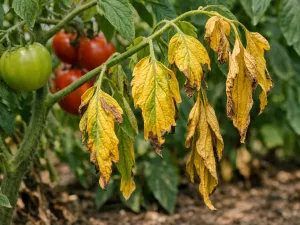
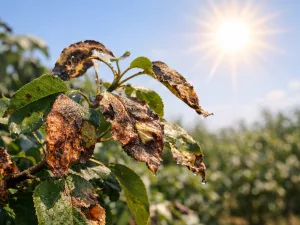
- Crisp edges: Brown margins often indicate moisture loss faster than the roots can replace it.
- Leaf curl: Many plants roll or cup their leaves to reduce sun exposure.
- Flower drop: Blossoms may fade quickly or fall before setting fruit.
- Bleached patches: Intense sun can scorch leaves, particularly after sudden weather changes.
How to tell heat stress from simple thirst
A thirsty plant usually improves fairly quickly after a proper watering if the roots are still healthy. A plant suffering from root-zone overheating may remain limp or dull even when the compost is damp. In that case, shading the container, cooling the pot area, or moving it out of reflected heat can help more than adding extra water.
Check the container itself. If the pot wall feels hot to the touch and the compost is warm several centimeters below the surface, the roots may be struggling from temperature as much as moisture shortage. This is common with black nursery pots and metal planters in direct sun.
When stress becomes damage
Short-term wilt is often reversible, but repeated episodes can lead to lasting problems. Root tips may die back, leaves may yellow and drop, and growth can stall. Fruiting plants may produce smaller harvests, while flowering plants may stop budding altogether.
If a plant fails to recover by the next morning after watering and cooler overnight temperatures below 21°C (70°F), inspect the root ball, drainage, and pot position. Persistent decline may indicate root damage, compaction, or a plant that has simply outgrown its container.
Common mistakes when watering potted plants in extreme heat
Hot weather often pushes gardeners into reactive habits that seem helpful but actually make container care less effective. The biggest mistakes usually involve shallow watering, poor timing, or assuming every wilted plant needs more water. In extreme heat, good technique matters as much as frequency.
Avoiding these common errors will help roots stay healthier, reduce stress swings, and make watering more efficient. This is particularly important for mixed containers, edible crops, and plants growing on exposed patios, balconies, or rooftops.
Watering too lightly
A quick pour over the surface may dampen the top layer without reaching the lower root zone. This encourages roots to stay near the surface, where they dry out even faster. In severe heat, shallow watering can create a cycle of frequent wilting despite daily attention.
- Better approach: Water slowly and thoroughly until excess drains from the base.
- Watch for runoff: If water escapes immediately, pause and reapply in stages.
- Rewet dry compost properly: Very dry pots may need soaking or repeated passes.
Following a schedule instead of checking the pot
Fixed routines lead to both underwatering and overwatering. A cloudy day with 24°C (75°F) weather is not the same as a windy day at 34°C (93°F), and a compact root-bound pot behaves differently from a freshly planted one. The compost should guide the decision, not the calendar alone.
This matters because overwatering in heat is possible, especially in large containers or shaded areas where the surface looks dry but the lower compost remains wet. Constantly saturated roots can decline just as surely as dry ones.
Ignoring pot placement and heat reflection
Sometimes the problem is not the amount of water but the environment around the container. Pots beside walls, railings, glass, or paving can experience much higher root temperatures than the air temperature suggests. Watering more and more will not fully solve that issue.
If a plant repeatedly struggles, review the setup. Afternoon shade, a larger outer cachepot, pot feet, or moving the container away from reflective surfaces may improve conditions more than increasing water volume.
Using stress responses as the only signal
Waiting until leaves droop badly before watering is risky in extreme heat. By that stage, the plant may already have lost flowers, scorched foliage, or damaged fine roots. It is better to use preventive checks such as pot weight, finger testing, and observation of exposure patterns.
- Inspect vulnerable containers early in the day.
- Check the root zone, not just the surface.
- Water deeply when needed.
- Adjust shade, mulch, or pot position if the same plant keeps stressing.
Practical recommendation: Keep newly planted containers under closer watch for the first 1 to 2 weeks (7 to 14 days) of hot weather. Fresh compost may shed water differently at first, and roots have not yet spread enough to use the full pot efficiently.