How to Water Tropical Plants in Dry Indoor Air

 Here we why tropical plants struggle in dry indoor air and how low humidity affects soil moisture and overall plant health. It also explains better watering and humidity balance, ways to keep potting mix evenly moist, signs of dehydration, and common indoor care mistakes.
- Why tropical plants struggle in dry indoor environments
- How low humidity affects soil moisture and plant health
- Best watering practices for indoor tropical plants
- Balancing watering and humidity levels indoors
- Techniques to maintain consistent moisture in pots
- Signs tropical plants are dehydrated in dry air
- Common mistakes when caring for tropical plants indoors
Keeping tropical houseplants hydrated in dry indoor air takes more than watering on a fixed schedule. Low humidity makes moisture leave both the soil and the leaves faster, so a plant may need water sooner than expected even if the surface still looks damp. Check how quickly the potting mix dries, water more carefully during active growth, reduce frequency in cooler months, and avoid letting roots sit in soggy soil or become bone dry.
Why tropical plants struggle in dry indoor environments

Tropical houseplants evolved in places where the air stays warm, moisture lingers around leaves, and roots rarely swing from soggy to bone dry overnight. Indoors, especially during winter heating or in air-conditioned rooms, they face a very different climate. The air is often far drier than the forest understory conditions many of these plants are adapted to, so they lose water faster than they can comfortably replace it.
That mismatch affects more than leaf appearance. A monstera, calathea, philodendron, or peace lily may sit in a pot of decent soil and still struggle because the surrounding air pulls moisture from its foliage all day. As the plant transpires more quickly, the potting mix also dries faster, which means watering habits that worked in one season can suddenly become inadequate in another.
Indoor air is often much drier than tropical plants expect
Many tropical species are happiest when relative humidity stays around 50% to 70%. In heated homes, indoor humidity can easily drop to 20% to 35%, especially near vents, radiators, or drafty windows. At that point, the plant is not just dealing with dry soil now and then; it is constantly trying to conserve moisture.
This is why a plant can seem thirsty even when you watered it recently. It may be using water quickly through its leaves, while the roots are also working in a confined container that cannot buffer moisture the way ground soil does outdoors.
- Heating systems: Forced-air heat dries the room and speeds up evaporation from both leaves and soil.
- Air conditioning: Cool air may feel gentle, but it often reduces indoor humidity significantly.
- Small pots: Less soil means less moisture reserve, so tropical plants dry out faster.
- Bright indoor light: Strong indirect light encourages growth and water use, which is good, but it also increases demand.
Container growing makes moisture swings sharper
In nature, roots spread through a broad area and can access deeper moisture. In a pot, roots are limited to a small volume of mix. Once that mix dries beyond a certain point, the plant has no backup supply. Dry indoor air makes this happen more often and more abruptly.
The type of pot matters too. Terracotta loses moisture through its sides, which can help prevent rot but also causes faster drying in arid rooms. Plastic and glazed ceramic hold moisture longer, which can be useful for humidity-loving species if drainage is still good.
Editor’s note: If a tropical plant declines every winter despite regular watering, do not assume the problem is fertilizer or light alone. Seasonal indoor dryness is often the hidden factor that changes the plant’s water needs most dramatically.
How low humidity affects soil moisture and plant health

Low humidity changes the relationship between the plant, the soil, and the room around it. When the air is dry, water moves out of leaves faster through transpiration. To keep up, the roots pull more water from the potting mix. That means the soil can go from evenly moist to uncomfortably dry in a shorter time, even if the pot size and light level stay the same.
This process can create confusing symptoms. A grower may see brown tips and assume the plant needs less water because the leaves look stressed, when in fact the plant may be drying too fast between waterings. At the same time, overcorrecting with frequent small splashes can leave the upper soil damp while deeper roots remain inconsistently hydrated.
What happens in the plant when the air is too dry
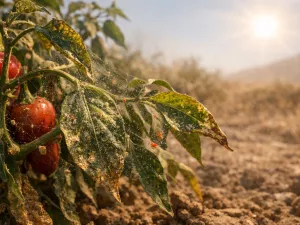
As moisture loss increases, many tropical plants partially close their stomata to conserve water. This helps them survive, but it also slows gas exchange and growth. Leaves may curl, edges may crisp, and new foliage can emerge smaller or distorted. Plants that normally produce broad, soft leaves are especially quick to show stress.
Dry air also weakens resilience. A plant already struggling to maintain water balance is more likely to react badly to missed watering, salt buildup from fertilizer, or a sudden increase in light.
How the potting mix behaves differently
Potting soil in dry indoor conditions does not just dry faster; it can dry unevenly. The top few centimeters may feel dusty while the center remains slightly damp, or the entire root ball may shrink away from the pot edge and become hard to rewet. Peat-heavy mixes are especially prone to becoming hydrophobic once very dry.
The table below shows how low humidity commonly affects both the plant and the root zone.
| Condition | Effect on soil or roots | Visible plant response |
|---|---|---|
| Relative humidity around 20% to 35% | Potting mix loses moisture quickly between checks | Leaf edges dry, tips brown, foliage may droop by afternoon |
| Warm air near vents or heaters | Top layer dries rapidly and root ball may become unevenly moist | Wilting despite recent watering, especially in thin-leaved plants |
| Mix allowed to become fully dry | Soil can repel water and rewet poorly | Plant stays limp after light watering and growth stalls |
| Repeated stress from dry air | Roots cycle between drought stress and weak uptake | Smaller new leaves, yellowing older leaves, reduced vigor |
Because humidity affects water movement so strongly, watering should never be judged by the calendar alone. The same plant may need a different routine in January than in June, even in the same room.
Best watering practices for indoor tropical plants

The best approach is to water thoroughly, then let the plant use that moisture at a pace suited to its species and environment. Tropical plants generally prefer a root zone that stays lightly and evenly moist rather than repeatedly swinging from saturated to dry. That does not mean keeping the pot constantly wet. It means watering deeply when needed and checking the mix before watering again.
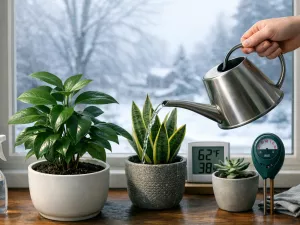
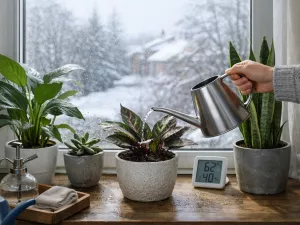
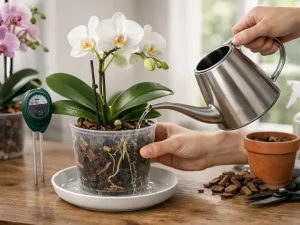
A proper watering session should moisten the whole root ball. Quick, shallow watering often wets only the top layer, encouraging weak surface roots and leaving the lower mix too dry. Water until excess drains from the bottom, then discard any water left in the saucer after a short period.
How to decide when to water
Finger testing works well for many plants. Insert a finger about 2.5 to 5 cm (1 to 2 in) into the potting mix. If that layer feels dry but the lower mix is still faintly cool or slightly moist, many tropical foliage plants are ready for water. For species that like more moisture, such as calatheas and ferns, do not wait until the pot is dry all the way through.
Weight is another reliable guide. Lift the pot right after a full watering, then again a few days later. Over time, the difference between a freshly watered pot and a dry one becomes easy to recognize.
- Check the soil, not just the surface.
- Water slowly and evenly around the pot.
- Continue until water drains from the bottom.
- Let the pot drain fully for several minutes.
- Empty decorative cachepots or saucers so roots are not left sitting in water.
Water quality and temperature matter
Many tropical plants are sensitive to mineral-heavy water, chlorine, or fluoride. If leaf tips brown despite careful watering, your tap water may be contributing. Rainwater, filtered water, or tap water left to stand overnight can help in some homes, though standing water does not remove all dissolved minerals.
Use water that is close to room temperature, around 18°C to 24°C (65°F to 75°F). Very cold water can shock warm-growing roots, while hot water can damage them.
Adjusting by plant type
Not all tropical houseplants want the same moisture level. A pothos can tolerate more drying than a prayer plant, and a ZZ plant, while often sold beside tropical foliage, should not be watered like a humidity-loving calathea. Matching the watering rhythm to the plant is more important than following a universal schedule.
- Moisture-loving plants: Calathea, maranta, maidenhair fern, and peace lily usually perform best when the mix never becomes fully dry.
- Moderate drinkers: Monstera, philodendron, syngonium, and anthurium prefer partial drying near the top before watering again.
- More drought-tolerant tropicals: Dracaena, snake plant, and ZZ plant need longer drying intervals and are more likely to suffer from overwatering than low humidity alone.
Practical recommendation: If you are unsure whether a plant is thirsty, check the root zone with a wooden skewer. Insert it near the edge of the pot and leave it for a minute; damp mix will darken the wood and give a clearer reading than the surface alone.
Balancing watering and humidity levels indoors

Watering and humidity should work together. If the air is extremely dry, simply adding more water to the pot is not always the answer. Excess watering in response to dry air can lead to root problems, especially when the lower mix stays wet while the leaves continue to lose moisture too quickly. The goal is to support the plant from both directions: adequate root moisture and a less dehydrating atmosphere.
Raising humidity modestly can reduce stress and make watering more predictable. Even an increase from 25% to 45% can help many tropical plants hold leaf quality better and slow the speed at which pots dry out.
Ways to improve humidity without creating problems
Some methods are more effective than others. Light misting may briefly wet leaves, but it rarely changes room humidity for long. Grouping plants, using a humidifier, and moving plants away from hot air streams have a much bigger impact.
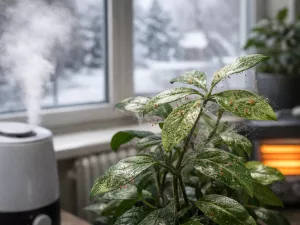
- Use a humidifier: A small unit placed nearby can keep humidity in a safer range, especially during heating season.
- Group plants together: Clusters create a slightly more humid microclimate as plants release moisture.
- Avoid direct heat sources: Keep foliage at least 30 to 90 cm (12 to 36 in) from radiators, vents, and heaters when possible.
- Choose the right room: Kitchens and bathrooms with bright indirect light often suit tropical plants better than dry living rooms.
When more watering is not the fix
If the soil still feels damp but leaves are crisping, the issue may be atmospheric dryness rather than lack of water in the pot. In that case, watering again can make the root zone too wet while the plant continues to struggle above the soil line. This is a common reason tropical plants decline in winter: the grower sees dehydration symptoms and responds with more frequent watering, which solves one symptom briefly but creates another problem below.
Good balance comes from observing both the plant and the environment. A simple indoor hygrometer can be very useful. It tells you whether the room is sitting at 30% humidity or 55%, which makes it easier to judge whether to alter the watering routine, the room conditions, or both.
Techniques to maintain consistent moisture in pots

Consistent moisture starts with the potting setup, not just the watering can. A well-chosen mix and container help buffer the plant against sudden drying. This matters even more in dry indoor air, where evaporation and transpiration can outpace what the roots can comfortably absorb.
The aim is a mix that holds enough water for the plant’s needs while still draining freely. Tropical plants usually dislike compacted, muddy soil, but they also suffer in blends that are so chunky and airy that they dry within a day or two indoors.
Build a potting mix that holds moisture sensibly
For many foliage tropicals, a balanced mix might include potting soil with additions such as fine bark, coco coir, perlite, or composted materials. The exact ratio depends on the plant. Aroids often like a looser blend, while ferns and prayer plants appreciate more moisture retention.
If your current mix dries too quickly, repotting into a slightly more water-retentive blend can help more than simply watering more often. Likewise, if the mix stays wet for too long in the center, increasing aeration may be the safer fix.
Practical methods that reduce moisture swings
Small changes in routine can make a noticeable difference. These techniques help keep the root ball evenly hydrated without creating stagnant conditions.
- Water evenly around the pot: This prevents dry pockets and encourages roots to spread through the whole container.
- Bottom-water occasionally: Set the pot in shallow water for 10 to 20 minutes, then let it drain. This can help rehydrate a dry root ball thoroughly.
- Repot before the plant becomes severely root-bound: Crowded roots leave very little soil to hold moisture.
- Use a pot size increase of about 2.5 to 5 cm (1 to 2 in): A modest step up gives more moisture reserve without leaving excess wet soil around a small root system.
- Add a mulch-like top layer carefully: A thin layer of sphagnum moss or fine orchid bark can slow surface drying for some plants, but it should not stay soggy.
Know when the container is part of the problem
Pot material changes drying speed. Terracotta is breathable and useful for plants prone to overwatering, but in very dry homes it can make moisture-loving tropicals hard to manage. Plastic nursery pots inside decorative covers often provide a better balance because they retain moisture longer while still allowing drainage.
Self-watering pots can work for some tropicals, but they are not ideal for every species. They are most useful for plants that prefer steady moisture rather than a clear wet-dry cycle. If you use one, monitor the mix closely for the first few weeks rather than assuming the reservoir will always provide the right amount.
Editor’s note: If a plant dries out within 24 to 48 hours, the issue is often the setup rather than your memory. A root-bound plant in a small terracotta pot can be impossible to keep evenly moist in a heated room.
Signs tropical plants are dehydrated in dry air

Dehydration in tropical houseplants does not always look like dramatic wilting. In dry indoor air, the earliest clues are often subtle and show up on leaf texture, edges, and new growth. Learning these signs helps you respond before the plant enters a cycle of repeated stress.
It is also important to separate dehydration from root rot or nutrient issues. A thirsty plant and an overwatered plant can both droop. The difference becomes clearer when you check the soil, the room humidity, and the pattern of damage on the leaves.
Early warning signs
Plants often show mild stress before they collapse. Edges may feel papery, leaf tips may turn tan, and the plant may lose some of its normal sheen. Thin-leaved species usually show these symptoms first because they have less built-in water storage.
- Crispy brown tips: Common on calatheas, dracaenas, and peace lilies in dry rooms.
- Leaf curl or folding: A protective response to reduce surface area and water loss.
- Midday drooping: The plant perks up after watering or overnight, then slumps again in warm dry air.
- Slow or distorted new leaves: Fresh growth may stick, tear, or emerge undersized.
Signs that point to dry air rather than only dry soil
If the potting mix is still slightly moist but the leaf margins are crisp, humidity may be the bigger issue. Browning concentrated at the edges and tips, especially on otherwise healthy green leaves, often suggests atmospheric dryness. By contrast, uniform yellowing of lower leaves is more often linked to watering imbalance, age, or root stress.
Watch where the damage appears. If leaves nearest a heater, vent, or sunny window crisp first, the room conditions are likely contributing. If the entire plant wilts and the pot feels extremely light, the root zone is probably too dry as well.
When symptoms become more serious
Long-term dehydration weakens the plant and can trigger leaf drop, stalled growth, and increased pest pressure. Spider mites, in particular, thrive in dry air and often attack stressed tropical plants. Fine webbing, speckled leaves, and a dull, dusty appearance can indicate that dryness has progressed from a watering issue into a pest problem too.
At that stage, recovery is still possible, but it requires more than one heavy watering. The plant needs a steadier care pattern, improved humidity, and sometimes pruning of badly damaged foliage so it can redirect energy into healthy new growth.
Common mistakes when caring for tropical plants indoors
Most indoor tropical plant problems come from reacting to symptoms without checking the cause. Dry air makes this more likely because it produces stress signals that overlap with both underwatering and overwatering. A few common mistakes can keep plants stuck in a cycle of decline even when the owner is trying hard to help.
The best prevention is to think in systems: room humidity, pot size, soil type, light, and watering method all interact. Correcting only one part while ignoring the others often leads to mixed results.
Misreading dry-air stress as a simple watering issue
One of the biggest mistakes is watering more often every time a leaf tip browns. If the root zone is already moist, adding more water can suffocate roots and make the plant less able to absorb moisture. The leaves still look dry, so the grower waters again, and the cycle continues.
Another version of this mistake is watering too lightly. Frequent small amounts may dampen the top layer while leaving much of the root ball dry. Tropical plants usually do better with a full soak followed by an appropriate drying interval.
Using the wrong environment for the plant
A humidity-loving plant placed beside a heat register or in strong afternoon sun through glass will be difficult to keep happy no matter how carefully it is watered. Placement matters as much as technique. Bright indirect light is ideal for many tropicals, but harsh exposure combined with dry air sharply increases water loss.
- Too much direct sun: Raises leaf temperature and increases moisture loss.
- Too little light: Slows water use, so the soil stays wet longer and overwatering becomes more likely.
- Cold drafts: Stress roots and foliage, making moisture uptake less efficient.
- Overfeeding: Fertilizer salts can worsen brown tips when humidity is low.
Ignoring maintenance that supports water balance
Pruning, cleaning, and repotting all affect how a plant handles moisture. Dead roots in old compacted soil cannot absorb water properly. Dusty leaves transpire less efficiently and photosynthesize poorly. Severely damaged foliage continues to drain the plant’s resources without contributing much in return.
Good routine care includes flushing the pot occasionally to reduce salt buildup, trimming fully brown leaves, and repotting when the mix breaks down. During active growth, feed lightly rather than heavily, especially in dry indoor conditions. A half-strength liquid fertilizer every 2 to 4 weeks during the growing season can be enough for many foliage plants, depending on the product and species.
When troubleshooting, use this quick sequence: check the soil depth, assess humidity, inspect roots if decline continues, then review light and feeding. That order prevents many common misdiagnoses and leads to steadier, healthier tropical plants indoors.