What Makes Good Soil for Healthy Plants

 The article explains what makes good soil, focusing on balancing air, water, and nutrients, the role of organic matter, and why drainage and aeration matter. It also covers how soil pH affects nutrient availability, signs of poor soil, and ways to improve it.
Healthy plants depend on soil that does more than look dark and crumbly. Truly supportive garden soil has a balanced structure that holds moisture and nutrients, yet stays airy enough for roots to breathe and excess water to drain. Learn what to check in your beds, which issues to fix first, and how a few small improvements can deliver faster, stronger growth.
Core characteristics of good soil
Healthy plant growth starts with a growing medium that holds enough moisture and nutrients, but still drains well and lets roots breathe. When those basics are in balance, plants can build strong root systems, resist stress, and make better use of fertilizer and water.
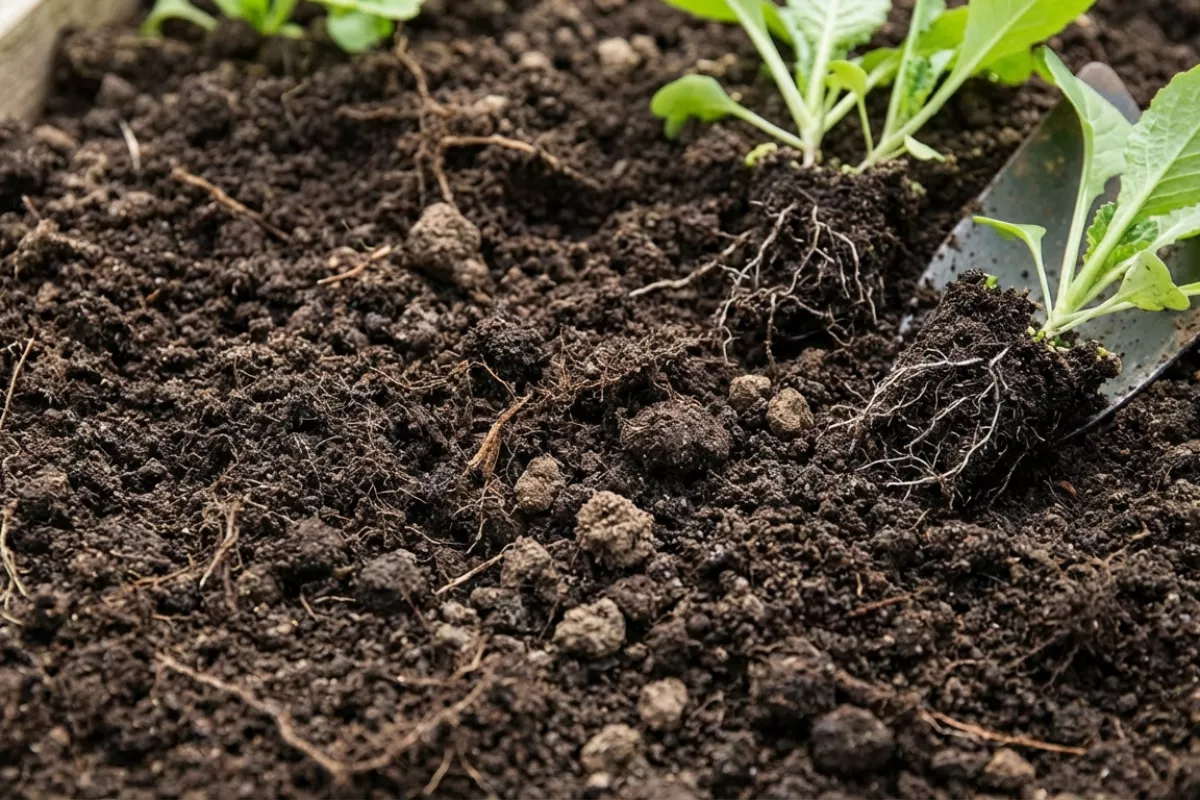
- Good structure (crumbly, stable aggregates): Soil that breaks into small crumbs rather than hard clods has pore spaces for air and water. This improves root penetration and reduces crusting and compaction after rain or irrigation.
- Balanced texture: A useful mix of sand, silt, and clay helps with both drainage and nutrient holding. Very sandy ground drains fast but can dry out quickly; heavy clay holds water and nutrients but can stay waterlogged if structure is poor.
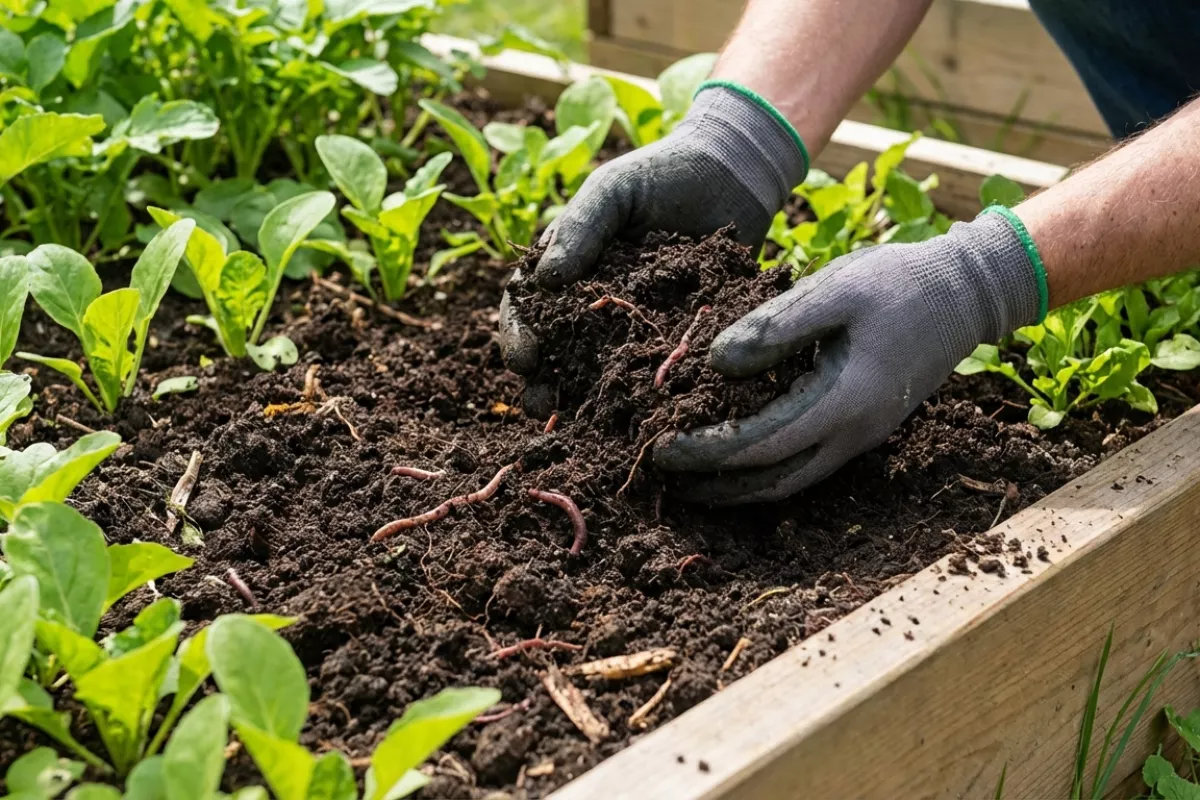
- Plenty of organic matter: Compost, decayed leaves, and other humus-like material feed soil life, improve aggregation, and increase water-holding capacity. Even small increases can make a noticeable difference in how evenly the bed stays moist.
- Active soil biology: Earthworms, fungi, bacteria, and other organisms cycle nutrients into plant-available forms and help build stable structure. A living soil tends to recover faster from stress than a sterile one.
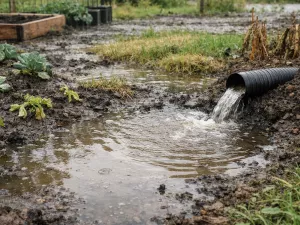
- Drainage plus aeration: Roots need oxygen as much as they need water. If water sits in the root zone for long periods, roots can suffocate and diseases become more likely, especially in containers and low spots.
- Moisture-holding without staying soggy: The goal is a “sponge” effect: it absorbs water, then releases it gradually. Mulch and organic matter help reduce rapid drying, particularly in hot, windy weather.
- Fertility and nutrient balance: Productive soil supplies nitrogen, phosphorus, potassium, and trace minerals in reasonable proportions. Too much of one nutrient can block uptake of another, so “more fertilizer” isn’t automatically better.
- Appropriate pH for the plants you’re growing: Most garden plants do well around pH 6.0–7.0, where many nutrients are easiest to access. Outside that range, nutrients may be present but less available to roots.
- Low salinity and minimal contaminants: Excess salts (often from over-fertilizing or poor-quality irrigation water) can burn roots and reduce water uptake. Avoid unknown fill dirt and be cautious near old structures or high-traffic areas where contaminants may be present.
| Characteristic | What it looks like in practice | Why it matters for plants |
|---|---|---|
| Structure & aggregation | Crumbly soil that holds shape lightly when squeezed, then breaks apart | Improves root growth, water infiltration, and resistance to compaction |
| Organic matter | Darker top layer, earthy smell, visible decomposed material | Buffers moisture, feeds microbes, and supports steady nutrient release |
| Drainage & aeration | Water soaks in rather than puddling; roots aren’t sitting in saturated soil | Prevents oxygen starvation and reduces risk of root diseases |
| Nutrient balance | Consistent growth without excessive leafy softness or frequent deficiencies | Supports flowering, fruiting, and overall resilience |
| pH suitability | Plants thrive without chronic yellowing despite adequate feeding | Keeps nutrients available and reduces lockout problems |
In real gardens, you rarely “fix” everything at once. Improving structure and organic matter usually gives the biggest return because it also helps drainage, moisture retention, and nutrient cycling work more smoothly together.
Balance of air, water, and nutrients
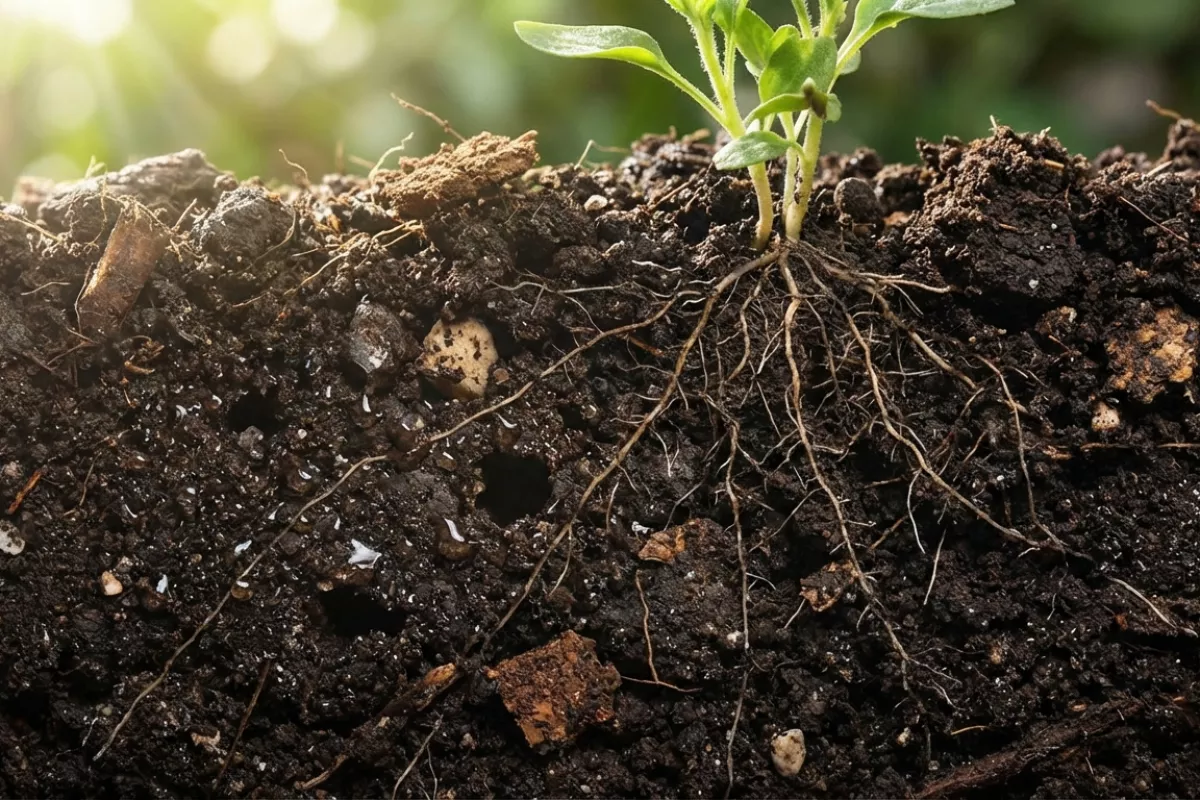
Healthy roots need three things at the same time: oxygen to breathe, moisture to move dissolved minerals, and a steady supply of nutrients. Soil works when its pore spaces hold both air and water, rather than staying waterlogged or drying into a hard crust. That mix is what lets roots grow, microbes do their job, and fertilizers (or compost) actually get taken up instead of washing away.
The key is pore size. Large pores (macropores) drain quickly and refill with air after watering or rain. Small pores (micropores) hold water for later. Good soil structure creates a range of pore sizes, which is why crumbly, aggregated soil usually grows stronger plants than compacted soil with the same texture.
- When there’s too much water, oxygen gets pushed out of the root zone. Roots slow down, beneficial microbes decline, and you may see yellowing leaves even if nutrients are present.
- When there’s too much air (too little water), nutrient movement stalls because most minerals reach roots through water films. Plants can look “hungry” during dry spells even in fertile beds.
- When nutrients are excessive, especially nitrogen, plants can grow soft, leafy tissue that’s more prone to pests and disease, and salts can build up in containers or poorly drained areas.
You can usually “read” this balance by how the soil behaves after a thorough watering. Ideally, water soaks in rather than running off, the surface doesn’t seal over, and the soil becomes workable again within about 24 hours (1 day) in average conditions. If it stays soggy longer than 48 hours (2 days), drainage or compaction is often the limiting factor.
| What you notice | Likely imbalance | Practical fix |
|---|---|---|
| Water puddles; soil stays sticky and smells sour | Too little air (poor drainage/compaction) | Add compost, avoid working wet soil, create raised beds 15–30 cm (6–12 in) high if needed |
| Water runs off; surface forms a crust | Weak structure; pores not accepting water | Mulch 5–8 cm (2–3 in), add organic matter, water more slowly or in two passes |
| Soil dries fast; plants wilt quickly on warm days | Too much drainage/too little water-holding | Mix in compost, use mulch, increase watering depth rather than frequency |
| Lush leaves, few flowers/fruit; frequent pest issues | Nutrients out of proportion (often excess nitrogen) | Cut back high-N inputs, use balanced amendments, add potassium/phosphorus sources if tests indicate |
| Slow growth despite regular feeding | Nutrients present but not accessible (dry soil, cold soil, or poor biology) | Keep moisture even, warm soil with mulch, add compost to support microbial cycling |
To keep air, moisture, and fertility working together, focus on structure first: minimize compaction (limit foot traffic, use paths), feed the soil with organic matter, and keep it covered with mulch or living plants. Once the physical conditions are right, nutrient management becomes simpler because roots and microbes can access what’s already there.
Role of organic matter
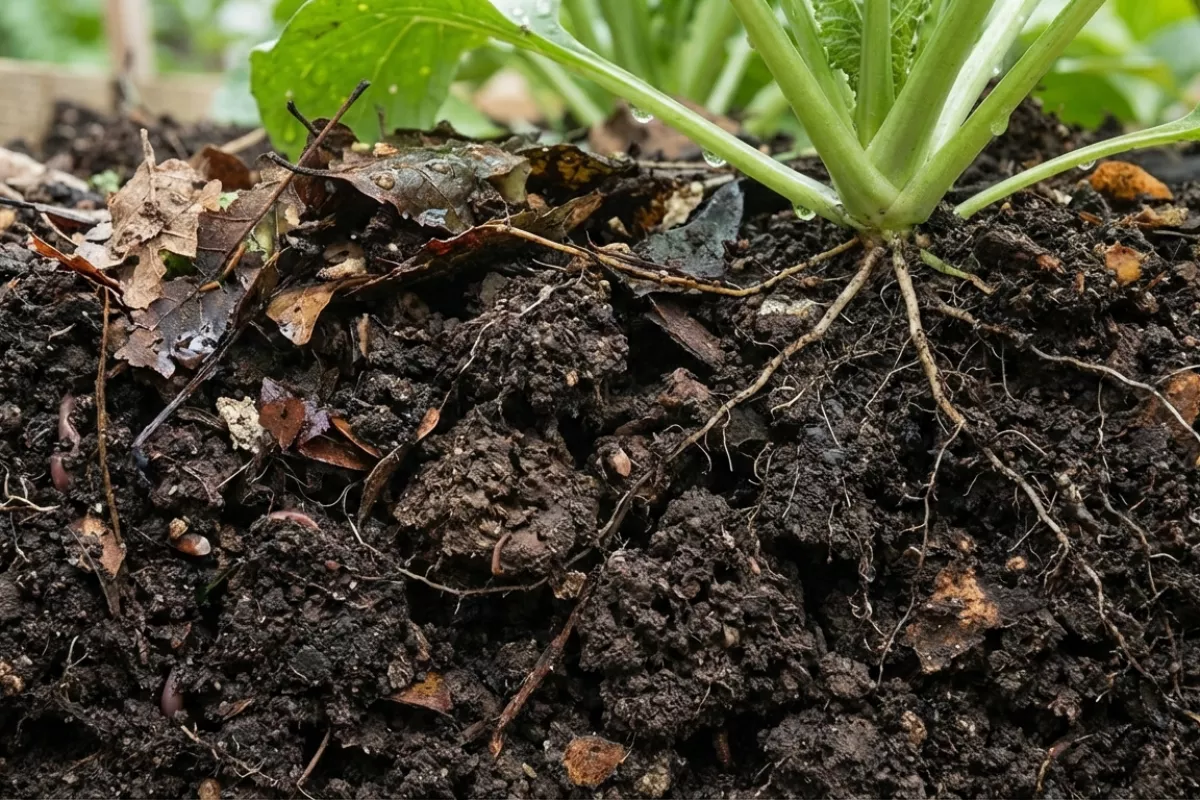
Organic material is the soil’s “living pantry” and structural support at the same time. As leaves, compost, and roots break down, they feed microbes, which in turn release nutrients in plant-usable forms. That slow, steady cycling helps plants grow without the feast-or-famine pattern you can get from quick-release inputs.
It also improves how soil behaves physically. Decomposed residues act like a glue that binds mineral particles into stable aggregates, which creates pore space for air and water. In sandy ground, added humus helps hold moisture; in heavy clay, it helps prevent crusting and compaction so roots can explore more easily.
- Better nutrient storage and delivery: Humus increases the soil’s ability to hold onto nutrients (like potassium and ammonium) so they don’t wash away, then makes them available as plants need them.
- More consistent moisture: Organic amendments increase water-holding capacity and infiltration, reducing runoff after heavy rain and drought stress between waterings.
- Healthier soil biology: Fungi, bacteria, and earthworms thrive when there’s carbon to eat, and their activity improves nutrient cycling and root-zone resilience.
- Improved structure: Aggregation creates a crumbly texture with spaces for oxygen, which supports root growth and reduces the risk of waterlogging.
- Buffering and balance: Added organic inputs can moderate pH swings and reduce the impact of salts or other stresses by improving overall soil function.
Not all sources act the same. Fresh, high-carbon materials (like shredded leaves or straw) can temporarily tie up nitrogen while microbes decompose them, while finished compost is usually gentler and more immediately helpful. A practical approach is to use well-broken-down compost for planting areas and reserve coarser residues as mulch on top, where they protect the surface and decompose gradually.
For most gardens, a thin layer worked into the top 10–15 cm (4–6 in) can make a noticeable difference over time, especially if you repeat it seasonally rather than trying to “fix” everything in one go. The goal is steady replenishment: organic matter is always being used up by soil life, so keeping it topped up is what maintains good structure and fertility year after year.
Importance of drainage and aeration
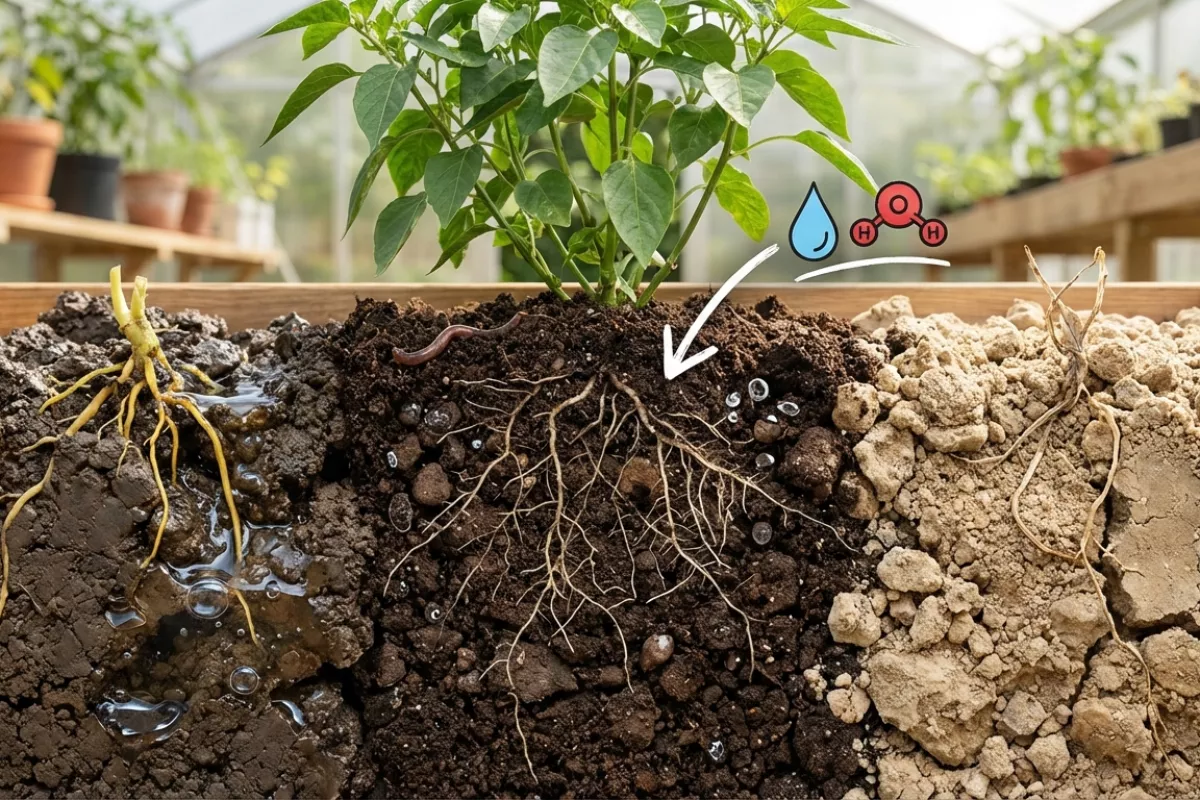
Roots need a steady balance of water and oxygen to stay active. When soil holds water for too long, air spaces fill up, oxygen drops, and roots shift from healthy growth to stress responses. On the other hand, soil that sheds water too quickly can leave plants cycling between drought and sudden soaking, which also strains roots and reduces nutrient uptake.
Good water movement and airflow depend on soil structure as much as soil type. A mix of pore sizes matters: larger pores let excess water drain and pull in fresh air, while smaller pores hold moisture that roots can access between waterings. Compaction, over-tilling, or working soil when it’s wet collapses these pores, which is why even “good” soil can perform poorly after heavy foot traffic or repeated digging.
- Drainage prevents suffocation and rot. In waterlogged beds, roots can’t respire properly, and opportunistic fungi thrive. Symptoms often look like nutrient deficiency (yellowing, stunting) because the plant can’t absorb what’s present.
- Aeration supports nutrient cycling. Many beneficial microbes that convert organic matter into plant-available nutrients need oxygen. Better airflow generally means more consistent decomposition and fewer sour, anaerobic odors.
- Stable pore space improves resilience. Soil with good structure handles heavy rain and dry spells with less drama: it drains after storms yet still holds enough moisture for the next warm day.
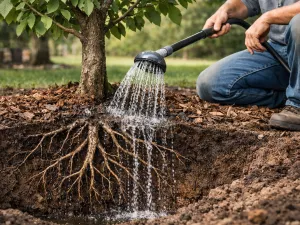
- Root growth follows the path of least resistance. If the soil is dense, roots stay shallow and circle near the surface. With looser, well-aired soil, roots explore deeper, making plants less dependent on frequent watering.
If you’re diagnosing a problem, a quick check is how the soil behaves after watering. If puddles linger for more than a few hours, or the soil smells swampy, drainage is likely limiting oxygen. If water disappears instantly and the surface crusts, the issue may be low organic matter or a structure that doesn’t hold moisture in the smaller pores.
Improving these conditions usually comes down to building structure rather than “fixing” it with one-time inputs. Adding compost, keeping soil covered with mulch, and minimizing compaction help pores form and persist. For containers, choose a potting mix designed to stay airy; garden soil in pots often packs down and blocks airflow, even when it looks fine on day one.
Soil pH and nutrient availability
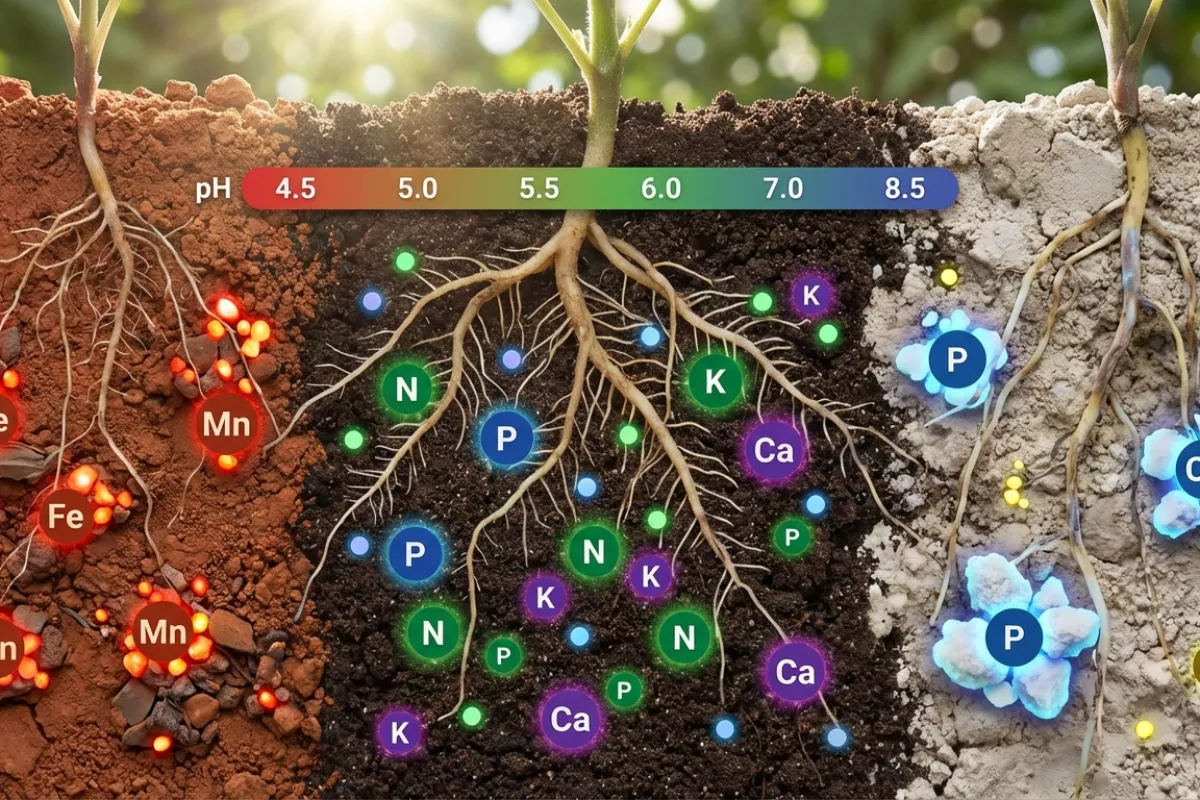
Acidity and alkalinity act like a master dial for how easily roots can take up minerals. Even when a soil test shows plenty of nutrients present, the wrong pH can “lock” them into forms plants struggle to use. Most garden plants do best in a slightly acidic to neutral range, where the widest spread of nutrients stays available.
pH is measured on a 0–14 scale: 7 is neutral, lower numbers are acidic, higher numbers are alkaline. What matters in practice is how pH shifts the chemistry around key elements like nitrogen, phosphorus, potassium, calcium, magnesium, iron, and manganese.
| pH range | What tends to happen | Nutrients most often affected |
|---|---|---|
| < 5.5 (strongly acidic) | Higher risk of aluminum/manganese stress; many nutrients become harder to use | Phosphorus often becomes less available; calcium and magnesium commonly low |
| 5.5–6.5 (slightly acidic) | Broad availability for most crops; good balance for many soils | Iron and manganese usually accessible without being excessive |
| 6.5–7.5 (near neutral to slightly alkaline) | Still workable for many plants; some micronutrients start to tighten up | Iron, manganese, zinc can become less available, especially in calcareous soils |
| > 7.5 (alkaline) | Micronutrient deficiencies become more common even in “fertile” soils | Iron chlorosis risk increases; phosphorus may bind with calcium |
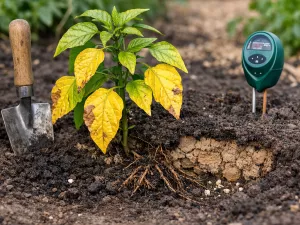
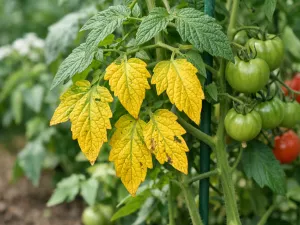
Common clue: yellowing leaves with green veins (often on newer growth) can point to iron being present but not accessible in higher-pH conditions. On the other end, very acidic ground can stunt roots and reduce vigor even if you fertilize, because key bases like calcium and magnesium are in short supply or easily leached.
- Test before adjusting. A basic soil test gives pH plus context (like buffering capacity), which helps you avoid over-correcting.
- Raise pH gradually with lime. Garden lime is typically calcium carbonate; it works slowly, so changes are measured in months, not days. Mix into the top 15–20 cm (6–8 in) when possible for best effect.
- Lower pH carefully. Elemental sulfur and acid-forming fertilizers can nudge pH down over time, but the shift depends on soil texture and biology.
- Use organic matter as a stabilizer. Compost improves buffering and helps nutrients cycle more steadily, reducing sharp swings in availability.
If you’re growing plants with specific preferences (like blueberries that like more acidic conditions), it’s often easier to tailor a bed or container mix than to force an entire yard into a narrow target. The goal isn’t a “perfect number,” but a range where nutrients stay accessible and roots can work efficiently.
Signs soil quality is poor
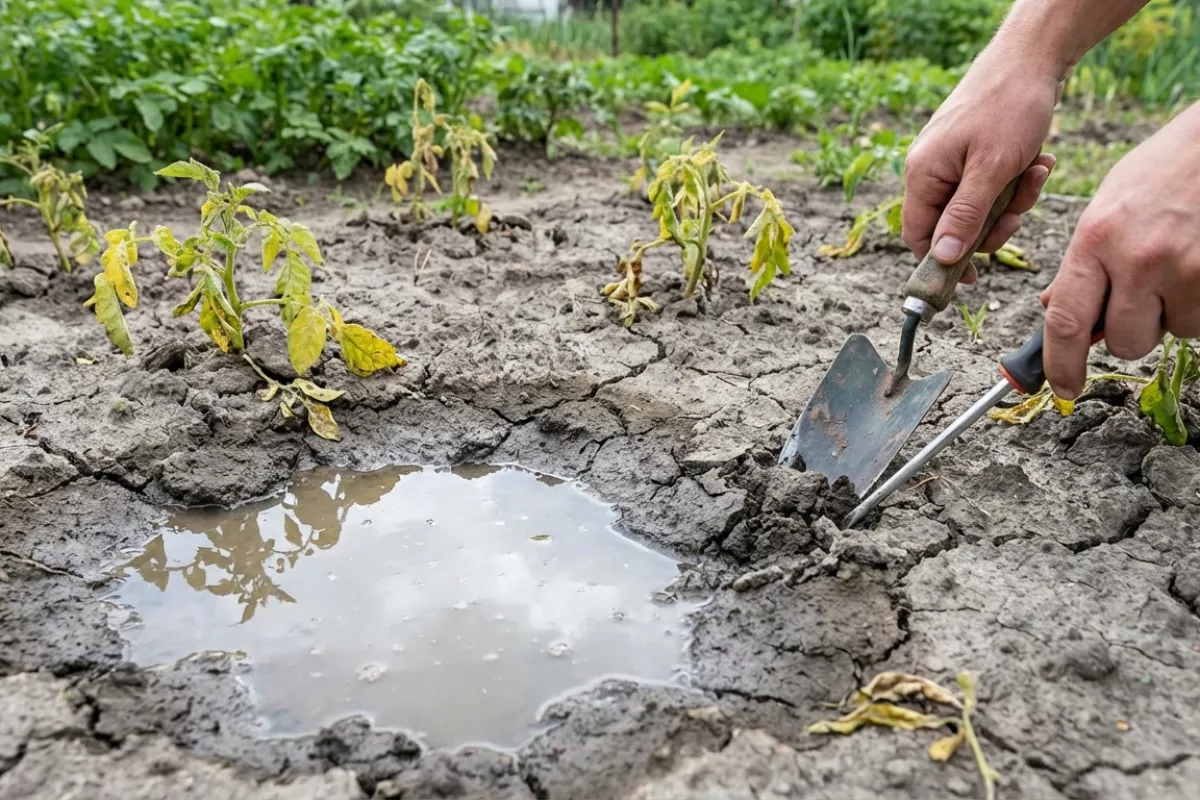
Poor ground usually gives itself away through how it behaves when you water it, how it smells and feels, and how plants respond over time. One clue on its own can be misleading (weather and plant variety matter), but several together often point to a soil problem worth fixing.
| What you notice | What it often suggests | Quick check you can do |
|---|---|---|
| Water puddles for hours after rain or irrigation | Compaction, heavy clay, or poor drainage limiting oxygen to roots | Push a screwdriver in after watering; if it won’t go in easily, compaction is likely |
| Water runs off the surface and the bed dries fast underneath | Crusting, low organic matter, or hydrophobic (water-repellent) sandy soil | Water a small area slowly for 2–3 minutes; if it beads and runs, infiltration is poor |
| Hard crust on top; seedlings struggle to break through | Surface sealing from fine particles, low mulch/organic inputs, or repeated overhead watering | Gently scrape the top 1 cm (0.4 in); if it’s cement-like while below is looser, crusting is the issue |
| Soil forms big hard clods when dry, or sticky ribbons when wet | High clay content and weak structure (aggregates not stable) | Do a simple “squeeze test”: if it ribbons easily and stays shiny, it’s likely too wet and clay-heavy |
| Very pale color, few earthworms, little crumbly “tilth” | Low organic matter and low biological activity | Dig a 15 cm (6 in) cube; count worms and look for dark, crumbly aggregates |
| Sour, swampy, or rotten-egg smell | Waterlogging and anaerobic conditions (roots and microbes short on oxygen) | Smell a handful from 10–15 cm (4–6 in) deep right after watering; foul odor is a red flag |
| White crust on the surface or leaf burn despite adequate watering | Salt buildup from fertilizers, hard water, or poor drainage | Scrape the crust and dissolve in water; if it re-crystallizes on drying, salts may be accumulating |
| Yellowing leaves, weak growth, or purpling despite regular feeding | Nutrient imbalance or pH issues locking nutrients up (not always “lack of fertilizer”) | Compare plants in the same bed; if symptoms cluster in one area, pH/drainage is often involved |
| Roots are short, thick, circling, or “J-shaped” instead of spreading | Compacted layer, poor aeration, or an abrupt texture change in the profile | Pull a small plant and inspect roots; check for a hardpan around 15–30 cm (6–12 in) |
If you recognize several of these patterns, focus first on structure and biology: reduce compaction, add organic matter, and keep the surface covered. Once water and air move well through the root zone, nutrient problems become much easier to correct.
How to improve soil conditions
Better soil starts with fixing the limiting factor you actually have: compaction, poor drainage, low organic matter, or an off-balance pH. Before adding anything, do a quick check after rain or watering: if water puddles for more than 2–4 hours, drainage is the first priority; if the surface crusts or feels hard, compaction is likely; if plants look pale and growth is slow despite watering, nutrients or pH may be the issue.
- Add organic matter regularly. Mix in 2–5 cm (0.8–2 in) of finished compost into the top 15–20 cm (6–8 in) once or twice a year, or top-dress and let worms pull it down. This improves structure, moisture-holding, and nutrient buffering without the “boom and bust” of heavy fertilizing.
- Reduce compaction instead of “digging harder.” Avoid working soil when it’s wet, keep foot traffic off beds, and use wide boards or paths. If the ground is already tight, loosen with a garden fork or broadfork to 20–30 cm (8–12 in) without flipping layers; then add compost on top.
- Improve drainage in heavy soils. Build beds up 15–30 cm (6–12 in) with added compost and coarse organic material (leaf mold, well-rotted bark fines). In persistently soggy spots, consider a shallow swale to redirect water or a raised bed rather than trying to “sand your way out” of clay (adding sand can create a concrete-like mix unless proportions are extreme).
- Help sandy soils hold water and nutrients. The fix is usually more carbon: compost, leaf mold, and aged manure. Apply 2–5 cm (0.8–2 in) as a mulch layer and replenish as it breaks down. Frequent light watering (for example, 10–15 mm / 0.4–0.6 in) often works better than occasional soaking on very fast-draining ground.
- Mulch to protect the surface. A 5–8 cm (2–3 in) layer of straw, shredded leaves, or wood chips moderates temperature swings, reduces evaporation, and prevents crusting. Keep mulch 5–8 cm (2–3 in) back from stems to reduce rot and pests.
- Use cover crops to “grow” structure. In empty beds, sow mixes like oats and peas, clover, or rye (timing depends on season). Their roots open channels for air and water, and the residue feeds microbes when cut and left as mulch.
- Adjust pH only when you have a reason. If a soil test shows it’s too acidic, lime can help; if it’s too alkaline, elemental sulfur is sometimes used. Make changes gradually and re-test after a season—overcorrecting can lock up nutrients even when you fertilize.
- Feed plants, but don’t skip the biology. Slow-release sources (compost, balanced organic fertilizers) support steady growth and microbial life. If you use soluble fertilizers, apply smaller doses and water in well to reduce salt buildup.
| Problem you notice | Likely cause | What to do first |
|---|---|---|
| Water sits on the surface for hours | Compaction or poor drainage | Fork-loosen to 20–30 cm (8–12 in) and top-dress 2–5 cm (0.8–2 in) compost; consider raising the bed 15–30 cm (6–12 in) |
| Soil dries out a day after watering | Low organic matter, sandy texture | Mulch 5–8 cm (2–3 in) and add compost/leaf mold each season |
| Hard crust forms; seedlings struggle | Surface sealing, low aggregation | Keep covered with mulch; avoid overhead blasts; add compost and minimize tilling |
| Yellow leaves despite watering | Nutrient shortage or pH issue | Test soil; correct pH slowly; use a balanced fertilizer alongside compost |
| Plants look stunted; roots are short and thick | Compaction layer | Deep loosen with a fork/broadfork; keep traffic off; add organic matter on top |
| Lots of weeds after “improving” soil | Exposed soil and buried seed bank brought up | Switch to top-dressing and mulching; disturb soil less; use cover crops between plantings |
One practical rule: make one major change at a time and watch what happens over a few weeks. Soil responds slowly, but consistent additions of organic matter, less disturbance, and better water management usually show up as easier digging, steadier moisture, and healthier roots by the next season.