Poor Drainage and Waterlogged Soil Effects

 Here we how soil structure affects water movement and root health, and why compacted, heavy, or clay-rich soil holds too much moisture. It also explains how to spot drainage problems without digging, which materials improve aeration, and long-term fixes for gardens and pots to prevent recurring yellow leaves.
- How soil structure controls water movement and root conditions
- Why heavy, compacted, or clay soils trap excess moisture
- Key signs your soil cannot drain properly even with correct watering
- How to identify drainage problems without digging up plants
- Best materials to improve soil aeration and structure
- Long-term solutions to fix poor drainage in garden and pots
- How proper soil composition prevents recurring yellow leaves
When soil remains soggy and drains too slowly, plants often show subtle stress before serious damage appears. Roots need a balance of water and air, so excess moisture can limit oxygen, slow growth, yellow the leaves, and increase the risk of root rot. Gardeners and plant owners who notice these early warning signs can act sooner to improve drainage, adjust watering habits, and protect plants from long-term decline.
How soil structure controls water movement and root conditions

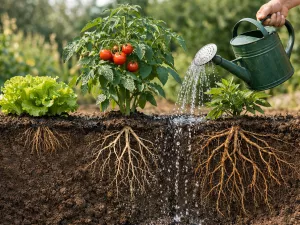
Soil does much more than hold a plant upright. Its structure determines how quickly water moves through the root zone, how long moisture stays available, and how much air remains around roots after watering or rain. Healthy roots need both water and oxygen, so the best growing medium is not one that stays wet all the time, but one that balances moisture retention with open space.
When soil particles bind together in stable crumbs or aggregates, water can travel downward through larger pores while smaller pores hold enough moisture for later use. This balance lets roots spread, breathe, and absorb nutrients efficiently. If that structure collapses, water lingers where it should drain, and roots begin to struggle even when the plant appears to be getting “enough” water.
Why pore space matters
The spaces between soil particles are just as important as the particles themselves. Large pores drain quickly and refill with air, while small pores hold water longer. A good root environment contains a mix of both.
- Large pores: Help excess water move away after watering and allow oxygen back into the soil.
- Small pores: Store moisture that roots can use between waterings.
- Balanced structure: Supports steady root growth, stronger nutrient uptake, and less risk of rot.
- Collapsed structure: Leaves roots sitting in stagnant moisture with too little oxygen.
What happens to roots in wet, airless soil
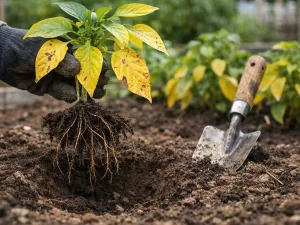
Roots are living tissue, and they respire just like the rest of the plant. In waterlogged soil, oxygen levels drop quickly. Fine feeder roots, which do most of the water and nutrient absorption, are usually the first to fail. Once those roots die back, the plant can look both overwatered and thirsty at the same time.
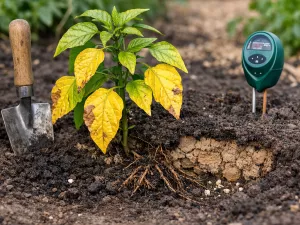
This is why poor drainage often causes confusing symptoms: yellow leaves, limp growth, slow recovery after watering, and leaf drop can all appear together. The problem is not simply “too much water” in a general sense, but the loss of air in the root zone.
How texture and structure differ
Gardeners often use the terms interchangeably, but they are not the same. Texture refers to the proportion of sand, silt, and clay. Structure describes how those particles are arranged. A clay soil can be improved structurally, while a sandy soil can still perform poorly if it becomes compacted or depleted of organic matter.
Understanding that difference helps when choosing the right fix. Texture changes slowly and often only with major amendment over time. Structure can improve more quickly through better cultivation, organic additions, and avoiding repeated compaction.
Editor’s note: If a plant keeps declining despite careful watering, stop focusing only on the watering schedule. The condition of the root zone usually tells the real story.
Why heavy, compacted, or clay soils trap excess moisture

Heavy soils tend to hold water longer because they contain many very small particles packed closely together. Clay is especially prone to this behavior. Those tiny particles create many small pores that retain moisture, but they often lack enough larger channels for rapid drainage and air exchange. When compacted, the problem becomes much worse.
Compaction happens when soil is pressed down by foot traffic, machinery, repeated potting pressure, or even frequent watering from above. The particles settle tightly, reducing the spaces that water and air need to move. In beds and borders, this can create a dense layer that slows drainage after every rainfall. In containers, it can turn potting mix into a soggy mass that stays wet far too long.
Why clay behaves differently from loam
Clay-rich soil is not automatically bad. It can hold nutrients well and support healthy growth when managed properly. The issue appears when clay is poorly structured, bare, compacted, or worked while wet. Under those conditions, it drains slowly and dries into hard clods, making root growth difficult at both extremes.
- After rain: Water may sit near the surface because downward movement is slow.
- During dry spells: The same soil can shrink, crack, and become hard to re-wet evenly.
- For roots: Expansion is limited, especially for young plants and shallow-rooted species.
Common causes of compaction
Drainage trouble often starts with routine habits rather than dramatic mistakes. Soil can become dense gradually over a season or two, especially in busy gardens.
- Walking on wet beds or repeatedly stepping in the same area.
- Using heavy tools or wheelbarrows on soft ground.
- Digging or turning clay soil when it is sticky rather than crumbly.
- Using old potting mix that has broken down into fine particles.
- Allowing bare soil to be hit directly by strong rain, which seals the surface.
Why excess moisture lingers in containers
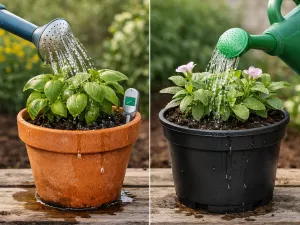
Pots are often assumed to drain well just because they have holes, but drainage depends on the whole system: pot size, mix texture, root density, and how quickly the container can dry. A large pot holding a small plant may stay wet for many days. Decorative cachepots, blocked holes, or saucers left full of water can keep the lower root zone saturated.
Dense mixes made with too much peat, garden soil, or decomposed compost can also hold more water than the plant can use. This is especially risky indoors or in cool weather below 18°C (64°F), when evaporation slows and roots are less active.
Key signs your soil cannot drain properly even with correct watering

A plant can suffer from poor drainage even when the watering routine is sensible. This is one of the reasons waterlogged soil is often misdiagnosed. If the soil stays wet too long after a normal watering, the root system experiences stress regardless of how carefully water was applied.
The clearest clues come from the combination of plant symptoms and soil behavior. Looking at only the leaves can lead to the wrong conclusion, because yellowing, wilting, and leaf drop can all happen when roots are drowning rather than drying out.
Visible plant symptoms
Plants growing in poorly drained conditions often lose vigor before they show severe damage. New growth may become smaller, pale, or weak. Lower leaves usually show trouble first, but the whole plant can decline if the problem continues.
- Yellow leaves: Often start on older foliage, especially when roots cannot absorb nutrients properly.
- Wilting in wet soil: A classic sign that roots are failing, not that the plant needs more water.
- Brown leaf edges or blackened stems: Can indicate root damage and the beginning of rot.
- Slow growth: Plants may stop producing healthy new leaves or flowers.
- Leaf drop: Common when roots remain stressed for too long.
Soil and container clues
The growing medium itself usually gives warning signs before the plant collapses. Surface appearance, smell, and drying speed all matter.
| Sign | What it suggests | Why it matters |
|---|---|---|
| Soil stays dark and wet for many days | Drainage is too slow for current conditions | Roots remain in low-oxygen conditions |
| Sour or swampy smell | Stagnant moisture and microbial imbalance | Often appears before visible root rot |
| Green algae or moss on the surface | Persistent surface moisture | Indicates the top layer rarely dries properly |
| Water pools on top before soaking in | Compacted or sealed surface | Shows poor infiltration and likely compaction below |
When symptoms are mistaken for nutrient deficiency
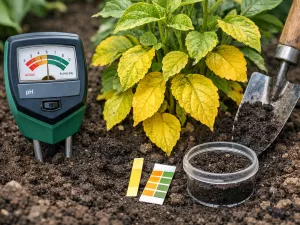
Waterlogged roots cannot take up nutrients efficiently, so the plant may look hungry even when fertilizer is present in the soil. Gardeners sometimes respond by feeding more, which can increase stress if roots are already damaged. If yellowing appears together with wet, slow-drying soil, fix the drainage issue first and then reassess feeding later.
Practical tip: If leaves are yellow but the pot still feels heavy 4 to 7 days after watering, depending on pot size and season, suspect drainage before reaching for fertilizer.
How to identify drainage problems without digging up plants

You do not need to disturb a plant to confirm that the root zone is staying too wet. Careful observation usually reveals enough evidence. The goal is to compare how quickly water enters, how long the soil remains damp, and whether the plant responds as expected between waterings.
Non-invasive checks are especially useful for established shrubs, houseplants in active growth, and recently repotted specimens that should not be disturbed again too soon. A few simple tests can show whether drainage is the real issue.
Simple checks for beds and borders
Outdoor soil can be assessed by watching how it behaves after irrigation or rain. Surface pooling, sticky texture, and delayed drying are all useful clues.
- Water the area evenly and note whether puddles remain after 30 minutes.
- Check the same spot again after 24 hours in mild weather around 20°C (68°F).
- Press the surface lightly with your fingers; if it is still sticky and airless, drainage is likely poor.
- Compare low spots with slightly raised areas, since water often collects unevenly.
If a planting area remains soggy while nearby soil dries normally, the problem may be a compacted layer, poor grading, or naturally heavy subsoil.
Ways to assess potted plants
Containers offer a few extra clues because you can judge both weight and drainage flow. A pot that stays unusually heavy is often holding too much water below the surface even when the top looks acceptable.
- Lift test: Compare the weight right after watering with the weight several days later.
- Drainage check: Water should exit the holes within a short time, not trickle slowly for many minutes.
- Saucer check: Empty standing water after 10 to 15 minutes rather than letting roots sit in it.
- Skewer test: Insert a wooden skewer or chopstick and remove it after a few minutes to see how deep the wet zone extends.
Look at plant timing, not just appearance
One of the best clues is how the plant behaves over time. A healthy plant should gradually use moisture and regain firmness after a proper watering cycle. If it remains limp while the soil is still wet, roots are not functioning well. If growth stalls for weeks despite warm temperatures and adequate light, the root environment may be the limiting factor.
Season also matters. In winter or in low light, many plants use water much more slowly. A pot that dried in 3 days during summer may need 7 to 10 days in cooler indoor conditions. Slow drying is not always a problem, but slow drying combined with decline usually is.
Best materials to improve soil aeration and structure

The best amendment depends on whether you are working with garden soil or containers. The aim is not to make soil dry out instantly, but to create a more open, stable structure that holds moisture without becoming stagnant. Good amendments improve pore space, reduce compaction, and support healthy root activity over time.
Some materials are better for long-term structure, while others mainly improve short-term texture in potting mixes. Choosing the right one matters more than simply adding “something for drainage.”
Useful amendments for garden beds
In the ground, long-lasting structure usually comes from organic matter used consistently rather than in one heavy application. Well-rotted compost is often the most practical choice because it encourages aggregation and biological activity.
- Compost: Improves crumb structure, supports soil life, and helps both drainage and moisture retention.
- Leaf mould: Excellent for loosening heavy soil and increasing resilience without making it overly rich.
- Aged bark fines: Useful where soil needs more lasting texture and improved air space.
- Gypsum: Sometimes helpful in certain clay soils, especially where sodium-related dispersion is an issue, but it is not a universal fix.
Avoid mixing in large amounts of sand unless you know the soil composition well. In clay-heavy ground, small additions of sand can create a denser, cement-like result rather than improving drainage.
Best ingredients for potting mixes
Containers need ingredients that stay open and airy even after repeated watering. Fine materials break down and settle, so durable particles are important.
| Material | Best use | Main benefit |
|---|---|---|
| Perlite | General houseplant and nursery mixes | Creates air pockets and lightens dense media |
| Pumice | Succulents, aroids, and long-term container mixes | Improves drainage with more weight and stability than perlite |
| Orchid bark | Epiphytic plants and chunky indoor mixes | Adds coarse structure and slows compaction |
| Coco coir | Moisture-balanced mixes | Holds water more evenly than many peat-heavy blends while remaining airy when blended properly |
Materials to use carefully
Not every amendment improves drainage in every situation. Fine compost in a pot, for example, can become too dense if used heavily. Vermiculite holds moisture well and is useful for seed starting, but it is not ideal as the main aeration ingredient in plants already prone to overwatering.
For most potted plants, a blend works better than a single ingredient. A practical mix might combine organic moisture-holding material with coarse particles that preserve air space. The exact ratio depends on plant type, pot size, and local climate.
Editor’s note: If you are repotting a plant that has already shown signs of soggy roots, choose a slightly airier mix than you think you need. It is usually easier to water a free-draining mix more often than to rescue roots from a dense one.
Long-term solutions to fix poor drainage in garden and pots

Lasting improvement comes from changing the growing environment, not just reducing how often you water. If the soil or potting mix stays saturated too long, the real solution is to improve drainage pathways, restore structure, and match the plant to the site. Temporary drying between waterings may reduce symptoms, but it will not solve a fundamentally unsuitable root zone.
The right fix depends on whether the problem is in open ground, raised beds, or containers. In each case, the goal is to create a root environment that can drain excess water while still holding enough moisture for healthy growth.
Improving drainage in garden soil
Outdoor sites often need gradual correction. Trying to overhaul heavy ground in one afternoon rarely works, especially in established planting areas. Better results come from combining structural improvements with smarter planting methods.
- Top-dress with 5 to 8 cm (2 to 3 in) of compost and let earthworms and weather work it in over time.
- Create raised planting zones 15 to 30 cm (6 to 12 in) above the surrounding soil where water tends to collect.
- Redirect runoff from downspouts, hard surfaces, or sloped paths that feed water into beds.
- Avoid walking on wet soil and install stepping stones if access is needed.
- Choose plants suited to the site if drainage cannot be fully corrected.
Where a hardpan or compacted sublayer is present, deep cultivation may help before planting, but this should be done when the soil is moist and crumbly, not wet and sticky.
Correcting drainage problems in pots
Container issues are often easier to fix because the root environment is fully controlled. If a plant is in a dense, slow-draining mix, repotting is usually the best answer. Move it into a container with clear drainage holes and a mix appropriate to the plant’s water needs.
- Use the right pot size: A pot only 2.5 to 5 cm (1 to 2 in) wider than the root ball usually dries more evenly than an oversized one.
- Refresh old media: Replace broken-down potting mix rather than topping it up repeatedly.
- Do not add gravel at the bottom: This does not improve drainage the way many gardeners expect and can keep moisture higher in the pot.
- Empty saucers: Standing water should not remain around the base for hours.
When site change is the best solution
Sometimes the most practical long-term fix is relocation. A sunken bed with heavy clay may never suit Mediterranean herbs. A moisture-loving iris may thrive there instead. Likewise, a plant that constantly stays wet in a glazed indoor pot may do much better in terracotta, where the container walls allow faster moisture loss.
Matching plant choice to drainage conditions is not giving up; it is sound horticulture. Repeated rescue attempts often cost more time than placing the right plant in the right setting.
How proper soil composition prevents recurring yellow leaves
Yellow leaves often return when the root problem has not truly been solved. A plant may improve briefly after drying out, pruning, or a light feed, then decline again because the soil still holds too much water or lacks enough air. Proper soil composition prevents this cycle by supporting steady root function instead of forcing roots to recover after every watering.
When the growing medium is balanced, roots can absorb water, oxygen, and nutrients in the right proportions. That means foliage stays greener, new growth develops more normally, and the plant is less likely to show repeated stress after rain or irrigation.
Why balanced soil reduces chlorosis
Yellowing is often linked to nutrient uptake failure rather than simple nutrient absence. In saturated soil, roots cannot efficiently access nitrogen, iron, magnesium, and other essentials. Even if those nutrients are present, the plant behaves as though they are missing.
A well-composed soil or potting mix helps prevent this by keeping the root zone active. Moisture is available, but not stagnant. Air returns after watering. Microbial processes stay more stable, and roots can keep feeding the plant instead of shutting down.
What a healthier mix usually includes
The exact recipe varies by plant type, but most successful mixes share the same basic features: moisture-holding ingredients, coarse particles for aeration, and enough structure to resist collapse over time.
- For general houseplants: A balanced mix with organic base material plus perlite or pumice often prevents repeated yellowing caused by soggy roots.
- For succulents and cacti: A much grittier blend is usually needed so the root zone dries faster between waterings.
- For garden beds: Improved structure from compost and reduced compaction are often more important than adding fertilizer.
Keeping the improvement going
Good composition works best when paired with good habits. Water according to drying speed, not by the calendar. Feed only when the plant is actively growing and roots are healthy enough to use nutrients. Check drainage holes, refresh tired potting mix, and avoid letting the soil become repeatedly saturated for long periods.
If yellow leaves keep coming back, review the whole system: pot size, mix texture, light level, temperature, and watering frequency. In many cases, recurring chlorosis is the visible symptom of a root zone that stays wet too long. Fix the soil environment, and the foliage usually follows.