Aphid Damage vs Plant Disease

 Here we how to tell aphid damage from plant disease, including the visual clues that suggest pests versus infection and how to avoid misdiagnosing the problem. It also explains what to do when both are present, why the wrong treatment can worsen plant health, and how to choose the right fix after finding the real cause.
- Key differences between pest damage and plant disease
- Visual signs that point to aphids vs infections
- How to avoid misdiagnosing plant problems
- When both aphids and disease are present
- How incorrect treatment can worsen plant health
- Steps to correctly identify the root cause
- Choosing the right treatment after diagnosis
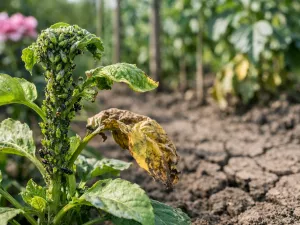
Distinguishing insect damage from a real plant disease can save time, money, and even the plant. Aphids usually leave sticky residue called honeydew, curled or distorted new growth, and visible clusters of tiny insects on stems or leaves. Plant diseases, by contrast, often show up as spreading spots, mold, rot, wilting, or unusual discoloration without any obvious pests present. Recognizing these clues early helps you choose the right treatment before the problem gets worse.
Key differences between pest damage and plant disease

Aphid injury and plant disease can look similar at first because both may cause curling leaves, yellowing, stunted growth, or a general loss of vigor. The difference is in what starts the problem. Aphids are sap-feeding insects. They physically feed on soft growth, distort tissue, and leave behind sticky honeydew. Plant diseases are caused by pathogens such as fungi, bacteria, or viruses, and they disrupt plant function from within or through infected tissue.
For gardeners, this distinction matters because the treatment path is completely different. Spraying for insects will not cure a fungal leaf spot, and applying fungicide will not stop a colony of aphids reproducing under a leaf. Good diagnosis begins with understanding whether the plant is being eaten, infected, or stressed by both at once.
What aphids usually do to a plant
Aphids prefer tender shoots, flower buds, and the undersides of young leaves. As they feed, they remove plant sap and inject saliva that can distort growth. Damage often shows up on the newest parts first because that is where tissue is softest and easiest to pierce.
- Leaf curling: New leaves may twist, cup, or pucker around feeding sites.
- Sticky residue: Honeydew can coat leaves, stems, pots, and nearby surfaces.
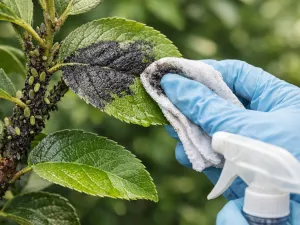
- Sooty mold: Black fungal growth may develop on honeydew, even though the mold itself is secondary.
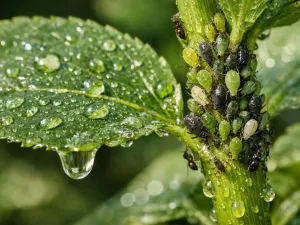
- Visible insects: Clusters of green, black, yellow, brown, or pink soft-bodied insects are often present.
- Ant activity: Ants may move up and down stems to collect honeydew and protect aphids.
What disease usually does to a plant
Diseases tend to create patterns linked to infection rather than feeding. Spots may have defined margins, stems can develop cankers, roots may rot, and whole sections of the plant may wilt even when the soil is moist. Some diseases spread with splashing water, poor airflow, contaminated tools, or infected planting material.
- Spots and lesions: Circular, angular, water-soaked, or sunken marks often point to infection.
- Rot: Soft, mushy, or foul-smelling tissue is more typical of disease than insects.
- Patterned yellowing: Mosaic, rings, or vein clearing may suggest viral issues.
- Stem collapse: Damping off and crown rot are classic disease problems, especially in seedlings.
- No visible pests: Symptoms may progress without any insects present on the plant.
Another useful difference is speed and spread. Aphid populations can explode within days in warm, sheltered conditions, especially indoors or in greenhouses. Disease may spread quickly too, but often follows moisture events, overhead watering, or prolonged humidity above about 85% relative humidity. If a problem appears after several cool, wet days at 18°C (64°F) to 24°C (75°F), disease becomes more likely. If it appears during a flush of soft new growth after heavy feeding, aphids move higher on the list.
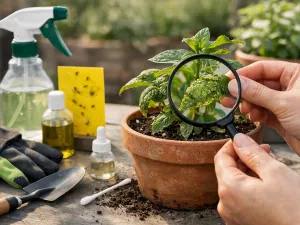
Editor’s note: Before treating anything, look at the newest leaves and the undersides of stems in bright natural light. A 10x hand lens often tells you more in 30 seconds than a broad spray treatment does in a week.
Visual signs that point to aphids vs infections

The fastest way to separate insect feeding from disease is to look for a combination of signs rather than one symptom alone. A curled leaf by itself proves very little. A curled leaf with sticky honeydew, cast skins, and ants strongly suggests aphids. A curled leaf with dark lesions, fuzzy growth, or expanding necrotic patches points more toward infection.
Plants also reveal clues through location. Aphids gather where growth is tender and sheltered. Diseases often show where moisture lingers, where leaves touch, or where roots stay wet and oxygen-poor.
Signs that strongly suggest aphids
Aphid evidence is often direct. Even when the insects are small, the colony leaves a trail of clues. Check leaf undersides, flower stalks, and shoot tips first.
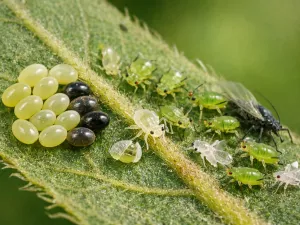
- Clusters of insects: Pear-shaped insects grouped along veins, buds, or stems.
- White shed skins: Papery exoskeletons left behind as aphids molt.
- Shiny stickiness: Honeydew on foliage or the bench below the plant.
- Distorted new growth: Twisted tips while older leaves remain more normal.
- Ant attendance: Ants farming aphids are a strong supporting sign.
Signs that strongly suggest infection
Infections usually alter tissue quality and create lesions, discoloration boundaries, or decay. Some signs are subtle at first, so compare damaged leaves with healthy ones on the same plant.
- Spots with margins: Brown, black, tan, or yellow-ringed lesions that enlarge over time.
- Water-soaked areas: Tissue that looks translucent or greasy before turning brown.
- Fuzzy or powdery growth: Mold or mildew on leaf surfaces, especially in humid still air.
- Stem lesions: Darkened, sunken, or cracked areas near nodes or the crown.
- Root symptoms: Brown, mushy roots instead of firm pale roots when unpotted.
Some cases are less obvious because aphid feeding can indirectly create black sooty mold on honeydew, and that black coating may be mistaken for disease. The key is that sooty mold sits on the surface and can often be rubbed away, while true leaf disease affects the tissue itself.
| Observation | More likely aphids | More likely disease |
|---|---|---|
| Where symptoms begin | Soft shoot tips, buds, leaf undersides | Leaf surfaces, stems, roots, crown, wounds |
| Surface feel | Sticky from honeydew | Dry lesions, soft rot, or fuzzy growth |
| Visible cause | Insects, cast skins, ants | No insects required; lesions or rot visible |
| Pattern on plant | Distorted newest growth first | Spots, wilting, collapse, or spreading patches |
| Secondary clue | Sooty mold on honeydew | Leaf drop, stem canker, root decline |
Lighting can affect what you see. In dim rooms, honeydew may just look like dust or a glossy patch. Outdoors after rain, disease spots may be easier to spot than insects. If needed, inspect in morning light and again in late afternoon to confirm what is actually present.
How to avoid misdiagnosing plant problems

Misdiagnosis usually happens when a gardener reacts to the most visible symptom instead of tracing the cause. Yellow leaves, wilt, or curling can come from insects, disease, overwatering, underwatering, heat stress, fertilizer burn, root damage, or herbicide drift. The safest approach is to slow down and gather evidence before treating.
One common mistake is assuming every deformed leaf means pests. Another is blaming every black coating on fungus. Plants often show overlapping stress signals, especially after abrupt changes in watering, temperature, or light levels.
Check the growing conditions before treating
Environmental stress weakens plants and can mimic both pest and disease issues. A plant kept too wet may develop edema, root damage, and yellow leaves that look like infection. A plant pushed with high nitrogen feed may produce soft growth that attracts aphids rapidly.
- Watering: Check whether the root zone stays soggy or dries too far between waterings.
- Soil texture: Dense mixes with poor drainage can trigger root decline and secondary problems.
- Light: Low light leads to weak, soft growth; harsh midday sun can scorch leaves and confuse diagnosis.
- Feeding: Excess fertilizer, especially high nitrogen, can encourage lush growth that aphids prefer.
- Airflow: Crowded plants and stagnant air raise disease pressure.
Use a simple inspection routine
A repeatable routine reduces guesswork. Instead of scanning only the damaged area, inspect the whole plant from top to bottom and compare old growth with new growth. Also look at nearby plants, since both aphids and infectious problems often spread locally.
- Examine shoot tips, buds, and leaf undersides for insects or sticky residue.
- Look for distinct spots, fuzzy growth, stem lesions, or mushy tissue.
- Check the soil moisture 5 cm (2 in) below the surface if the plant is in a pot.
- Lift the pot or inspect drainage to see whether roots may be sitting wet.
- Review recent changes in weather, watering, fertilizer, or plant location.
It also helps to watch the problem for a short period if the plant is stable. Aphid damage often becomes more obvious as colonies increase and new leaves distort. Disease lesions tend to enlarge, merge, or spread after watering or humid nights. A 48-hour to 72-hour pause can provide useful clues, as long as the plant is not collapsing.
Practical recommendation: Take close photos before doing anything. Comparing images over two or three days makes it easier to tell whether you are seeing active feeding, spreading infection, or old damage that is no longer progressing.
When both aphids and disease are present

Sometimes the answer is not either-or. A plant can have aphids and a disease at the same time, and one problem may make the other worse. Aphids weaken tender growth, create wounds, and leave honeydew that supports sooty mold. Stressed plants also have fewer reserves to resist fungal or bacterial infection. In some cases, aphids can even help spread certain viruses from plant to plant.
This overlap is common on fast-growing ornamentals, vegetables, roses, peppers, and indoor plants kept in warm rooms with uneven airflow. A plant that has been overfed and watered irregularly is especially vulnerable because it produces soft tissue while also struggling to regulate moisture.
How the two problems interact
When aphids feed heavily, leaves may curl around the colony. That curled tissue traps humidity and reduces airflow, creating a more favorable microclimate for fungal growth. If honeydew accumulates, black sooty mold can coat leaves and reduce light capture. Meanwhile, a diseased plant often grows weakly, and weak growth is easier for aphids to exploit.
- Feeding stress: Sap loss reduces vigor and slows recovery from infection.
- Sticky surfaces: Honeydew supports secondary fungal growth on the leaf surface.
- Virus transmission: Some aphid species can vector plant viruses during feeding.
- Crowded growth: Distorted foliage can hold moisture and favor disease spread.
How to prioritize treatment
When both are present, start with the issue causing the fastest active decline. If aphids are covering shoot tips and flower buds, reduce the insect pressure first so the plant can stop losing sap and producing distorted growth. If stems are rotting at the base or roots are failing, address the disease and moisture problem immediately because the plant may collapse regardless of insect control.
In practical terms, this often means combining sanitation, environmental correction, and targeted treatment rather than relying on one product. Remove heavily infested tips if the plant can spare them, isolate the plant from healthy neighbors, improve airflow, and avoid wetting leaves late in the day. Water the soil directly and let the top layer dry appropriately for the species before watering again.
For container plants, replacing the top 2 cm to 3 cm (0.8 in to 1.2 in) of contaminated potting mix can help if honeydew, mold, or fallen infested debris has built up on the surface. Do not repot aggressively unless root disease or severe compaction makes it necessary, because unnecessary disturbance can add another stress factor.
How incorrect treatment can worsen plant health

Wrong treatment does more than waste time. It can actively damage the plant, upset beneficial insects, and allow the real problem to spread. A stressed plant has limited energy for repair, so every unnecessary spray, drench, or pruning cut should be avoided.
For example, repeated insecticidal soap applications on a drought-stressed plant in strong sun can scorch leaves. Likewise, using fungicide on a plant whose roots are already suffocating in wet soil does nothing to solve the root-zone problem. The visible symptoms continue, and the gardener may respond with even more product.
Common treatment mistakes
Many setbacks come from broad, untargeted action. Gardeners understandably want to act fast, but speed without diagnosis often compounds the damage.
- Spraying the wrong product: Insecticides do not cure root rot, and fungicides do not remove aphid colonies.
- Treating in heat: Applying oils or soaps above 29°C (84°F) can burn foliage.
- Overwatering after yellowing appears: Extra water may worsen disease if roots are already stressed.
- Heavy feeding to “boost recovery”: Fertilizer can push weak, soft growth and attract more aphids.
- Pruning without sanitation: Dirty tools can spread pathogens between cuts.
Secondary effects gardeners often overlook
Incorrect treatment can also affect the wider growing area. Broad insecticides may kill ladybirds, lacewings, and hoverfly larvae that naturally suppress aphids. Repeated copper or sulfur use where it is not needed may stress sensitive plants. Constant leaf wetting from frequent sprays can increase foliar disease pressure, especially in dense canopies.
Another hidden problem is residue buildup. Thick layers of horticultural products can block gas exchange on already damaged leaves. Indoors, spraying too often without wiping honeydew away leaves a sticky film that continues to attract dust and mold.
Editor’s note: If a treatment label says to test on a small area first, do it. A single leaf sacrificed today is better than discovering tomorrow that the whole plant reacts badly at 31°C (88°F) on a bright windowsill.
Good plant care after treatment matters just as much as the treatment itself. Keep watering even and measured, avoid sudden moves from shade to full sun, and hold back strong fertilizer until healthy new growth appears. Recovery is usually slower than the onset of symptoms, so patience is part of proper care.
Steps to correctly identify the root cause
A reliable diagnosis comes from a sequence of checks rather than a guess based on one symptom. The aim is to separate direct evidence from assumptions. If you follow a simple process each time, you are less likely to miss an aphid colony hiding under a curled leaf or a root problem hidden below the soil line.
This approach works for houseplants, vegetables, shrubs, and greenhouse crops alike. It is especially useful when symptoms appeared suddenly after a weather change, repotting, pruning, or a change in feeding.
Step-by-step inspection process
Start with what you can see, then move toward less obvious causes. Keep notes if several plants are affected, because patterns across the growing area often reveal the source.
- Inspect the newest growth first. Aphids usually gather where growth is softest, while many diseases are less selective.
- Turn over several leaves. Check at least 5 to 10 leaves on different parts of the plant rather than only one damaged leaf.
- Look for residue. Sticky honeydew, black sooty coating, or white cast skins support an insect diagnosis.
- Study lesion shape. Distinct spots, halos, water-soaked patches, or stem cankers suggest infection.
- Assess the root zone. If the plant is potted, inspect drainage and root smell; sour or swampy odor points to trouble below.
- Review recent care. Note watering frequency, fertilizer strength, pruning, temperature swings, and plant movement.
- Check neighboring plants. Aphids often spread to nearby tender plants; disease may cluster where leaves stay wet longest.
Questions that sharpen the diagnosis
Asking a few targeted questions can prevent a wrong conclusion. These questions are especially helpful when symptoms are mild or mixed.
- Did the problem start on new growth or older leaves?
- Is there any stickiness on the plant, pot, shelf, or nearby leaves?
- Do the damaged areas have edges, halos, or soft rot?
- Has the plant recently been fed heavily or watered more often than usual?
- Did the issue appear after several humid days, cool nights, or overhead watering?
- Are ants unusually active on the plant?
If uncertainty remains, isolate the plant and continue observing. Wash one part of the plant gently with water and leave another part untouched if practical. If aphids are involved, the washed section may show fewer insects and less new distortion over time. If disease is driving the issue, lesions may continue to spread regardless of that wash.
For valuable specimens, edible crops, or repeated unexplained losses, sending a sample to a local extension service or plant clinic can save time. A clear sample often includes a few affected leaves, a section of stem, and notes on watering, light, and temperature conditions such as 21°C (70°F) indoors or 15°C (59°F) at night outside.
Choosing the right treatment after diagnosis
Once the cause is clear, treatment should be as targeted and gentle as possible. The goal is not only to stop the immediate problem but also to correct the conditions that allowed it to develop. Plants recover best when treatment and care adjustments work together.
Whether the issue is aphids, disease, or both, avoid a “more is better” approach. Measured action, good hygiene, and stable growing conditions usually outperform repeated heavy applications.
If aphids are the main problem
Start by physically reducing the population. A strong stream of water can dislodge many aphids from outdoor plants and sturdy indoor plants, especially if repeated every few days. Follow with a suitable insecticidal soap or horticultural oil if needed, applied according to the label and not during the hottest part of the day.
- Prune lightly: Remove heavily infested shoot tips if the plant can tolerate it.
- Wash the plant: Rinse undersides of leaves and stems to remove insects and honeydew.
- Support recovery: Give bright appropriate light, steady watering, and avoid excess nitrogen.
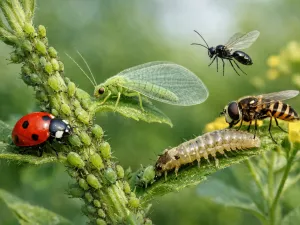
- Encourage beneficials outdoors: Ladybirds, lacewings, and hoverflies can reduce recurring infestations.
If disease is the main problem
Treatment depends on the type of disease, but sanitation and environment come first. Remove infected leaves where practical, sterilize pruners between cuts, and improve airflow around the plant. Water at the soil level rather than overhead, and let the root zone dry to the right degree for the species before watering again.
- For foliar fungal issues: Reduce humidity around leaves, thin crowded growth, and consider an appropriate fungicide if the disease is active and recurring.
- For bacterial problems: Remove affected tissue promptly and avoid splashing water between plants.
- For root or crown rot: Correct drainage, reduce watering, and repot only if the mix is staying wet too long or roots are decaying.
- For viral suspicion: Isolate the plant and consider disposal if symptoms are severe and spreading, since viruses are not cured by sprays.
If both are present
Use a layered plan. First reduce aphid numbers so the plant stops losing sap and spreading honeydew. Then clean the foliage, remove obviously diseased tissue, and correct moisture and airflow issues. Keep the plant separate from healthy stock until new growth appears clean and stable.
After treatment, monitor for at least 7 to 14 days. New healthy growth is the best sign that the diagnosis was correct. Old damaged leaves may never recover fully, so judge progress by what the plant produces next, not only by what was already harmed.
| Diagnosis | First action | Care adjustment | What to monitor next |
|---|---|---|---|
| Mainly aphids | Rinse or remove colonies; use targeted insect control if needed | Avoid excess feed, improve light, inspect nearby plants | Fresh distortion, sticky residue, returning colonies |
| Mainly foliar disease | Remove infected tissue and improve airflow | Water at soil level, reduce leaf wetness duration | Expansion of spots, new lesions after watering |
| Mainly root disease | Address drainage and watering immediately | Use a freer-draining mix if needed; avoid constant saturation | Wilting despite moist soil, root smell, stem base softening |
| Aphids plus disease | Lower insect pressure first, then sanitize and correct conditions | Isolate plant, steady watering, improve spacing | Clean new growth, reduced spread, no fresh honeydew |
The best long-term protection is balanced care: suitable light, measured watering, a well-draining soil mix, moderate feeding, and regular inspection. Healthy plants are not immune, but they are far better at resisting pests, tolerating minor damage, and recovering after treatment.