Leaf Damage From Aphids – Symptoms Guide

 Here we how aphids damage leaves and plant tissue, why leaves curl, twist, or distort, and how to tell aphid damage from other plant problems. It also explains early and advanced signs, how to confirm aphids are the cause, how damage affects growth over time, and what to do next.
- How aphids damage leaves and plant tissues
- Why leaves curl, twist, or become distorted
- Difference between aphid damage and other plant problems
- Early vs advanced signs of leaf damage
- How to confirm aphids are the real cause
- How damage affects plant growth over time
- What to do after identifying aphid-related damage
Curling, yellowing, or sticky leaves often point to aphids, and catching the problem early can prevent more serious plant stress. This guide helps gardeners and plant owners identify the most common leaf symptoms caused by these sap-sucking pests, understand how the damage develops over time, and decide whether a simple response is enough or if the infestation may need closer attention.
How aphids damage leaves and plant tissues

Aphids injure plants by feeding with fine, needle-like mouthparts that pierce soft tissue and draw out sap. This feeding usually targets tender growth first: new leaves, shoot tips, flower buds, and the undersides of young foliage. Because sap carries water, sugars, and nutrients, repeated feeding can weaken the leaf long before the damage looks dramatic.
The first effect is often subtle. Cells lose pressure, growth becomes uneven, and the leaf may no longer expand normally. On fast-growing plants such as peppers, roses, beans, and many houseplants, even a moderate colony can interfere with fresh growth in just a few days, especially during warm conditions around 20–27°C (68–81°F).
What happens inside the leaf
Leaf tissue depends on steady movement of moisture and nutrients. When aphids tap into that system, the plant redirects energy into stress responses and repair. Young tissue is most vulnerable because it is still expanding and has not yet toughened.
- Cell damage: Individual feeding punctures are tiny, but thousands of punctures across a flush of growth can distort the way the leaf develops.
- Sap loss: The plant loses resources that would otherwise support leaf size, color, and strength.
- Growth imbalance: Some parts of the leaf continue expanding while damaged areas lag behind, leading to puckering or twisting.
- Surface contamination: Aphids excrete honeydew, a sticky waste that coats leaves and can later support sooty mold.
Why tender growth shows the worst injury
Older leaves often tolerate light feeding better because their structure is already formed. New leaves, by contrast, are still unfolding. If aphids feed while a leaf is emerging, the final shape may be permanently altered. This is why infestations often seem to “suddenly” deform a plant: the damage was done earlier, while the tissue was still developing.
Heavy feeding can also affect stems and buds. Shoots may stay short, flower buds may fail to open properly, and the top of the plant can look stalled even when the potting mix is moist and the light is adequate.
Check the newest growth before the oldest leaves. Aphid injury is easiest to catch where tissue is still soft, and that is where treatment usually prevents the most lasting distortion.
Why leaves curl, twist, or become distorted

Leaf curling from aphids is not random. It happens because feeding is concentrated on one side of a developing leaf or along veins and folded tissue. As the leaf continues to grow, damaged cells expand poorly while healthier cells keep stretching. The result is uneven growth that bends, cups, or twists the leaf out of shape.
This is especially common on soft, fast-growing plants and on spring growth outdoors. Indoor plants can show the same pattern year-round if temperatures stay warm above 18°C (64°F) and new growth remains active.
Common distortion patterns
The exact shape depends on where the insects are feeding and how young the tissue was when they began.
- Downward curling: Often seen when aphids cluster on the underside of leaves and feed along the midrib or side veins.
- Cupping inward: The leaf edges pull toward the center, creating a bowl-like shape that can hide more insects inside.
- Twisting: New leaves emerge misshapen when one side of the leaf develops more slowly than the other.
- Crinkling or puckering: The surface becomes uneven, with raised and sunken areas where growth was interrupted.
Why the damage can stay even after aphids are gone
Once a leaf has formed in a distorted way, it usually does not flatten back out. Removing the insects stops further injury, but the already-damaged foliage often remains curled or twisted. What improves is the new growth that appears afterward. That is why gardeners judge recovery by looking at fresh leaves over the next 1–3 weeks, not by waiting for old leaves to “heal.”
Plants under additional stress show more severe distortion. Irregular watering, low light, or excess nitrogen fertilizer can all make soft growth more attractive to sap-feeding pests and less able to outgrow minor injury.
Conditions that make curling worse
Some growing conditions do not cause aphids directly, but they make the symptoms more obvious or the infestation harder to control.
- Very lush growth after heavy feeding with a high-nitrogen fertilizer.
- Crowded canopies with poor air movement, where colonies stay hidden.
- Dry indoor air combined with warm rooms around 22–26°C (72–79°F), which encourages rapid pest reproduction.
- Plants that are slightly drought-stressed, so leaf tissue loses resilience.
Difference between aphid damage and other plant problems

Curled or damaged leaves do not always mean aphids. Similar symptoms can come from herbicide drift, broad mites, thrips, nutrient imbalance, overfeeding, drought stress, or virus issues. The key difference is that aphid damage usually comes with visible signs of feeding activity: clusters of small soft-bodied insects, sticky honeydew, shed skins, or ants moving up and down stems.
It helps to compare the pattern of injury rather than focusing on one symptom alone. Aphid damage tends to be concentrated on soft tips and undersides of leaves, while many nutrient or watering problems affect the plant more broadly.
Quick comparison of likely causes
The table below helps separate aphid injury from a few common look-alikes. Use it as a field guide, then inspect the plant closely before deciding on treatment.
| Problem | Typical leaf symptoms | Clues that point to it |
|---|---|---|
| Aphids | Curled, puckered, twisted new growth; sticky leaves | Visible clusters on tips or undersides, honeydew, white cast skins, ants |
| Thrips | Silvery streaks, scarring, distorted buds or petals | Tiny slender insects, black specks of waste, less stickiness than aphids |
| Broad mites | Tight, hardened, deformed new growth | Damage is severe but pests are hard to see without magnification |
| Water stress | Wilting, edge curl, dry or limp leaves | Whole plant affected more evenly; soil is very dry or waterlogged |
| Herbicide exposure | Twisting, strapping, unusual narrow leaves | Sudden widespread distortion, often on multiple nearby plants |
| Nutrient imbalance | Yellowing, marginal burn, weak growth | Pattern follows older or newer leaves depending on nutrient involved; no insects present |
When confusion is most common
Gardeners often mistake aphid injury for underwatering because leaves curl and look stressed. The difference is that watering problems usually affect leaf firmness and the whole plant’s posture, while aphids often leave the plant upright but deform the newest growth. Another common mistake is blaming fertilizer. Excess feeding can make leaves soft and odd-looking, but it does not create sticky residue or insect clusters.
If you see ants repeatedly visiting shoot tips, slow down before diagnosing a nutrient problem. Ants often “farm” aphids for honeydew, and that traffic can be a stronger clue than the leaf curl itself.
Early vs advanced signs of leaf damage

Aphid injury develops in stages. Early signs are easy to miss because they can look like minor stress or slightly uneven growth. Advanced signs are more obvious and usually mean the colony has been feeding for long enough to affect both appearance and vigor. Catching the problem early matters because new leaves can still emerge normally once the insects are removed.
The timeline varies with temperature, plant type, and colony size. In warm weather, a small unnoticed group can become a damaging infestation within 7–10 days. Indoors, reproduction can continue steadily if conditions stay mild and predators are absent.
Early warning signs
These symptoms tend to appear before the plant looks seriously infested.
- Slight leaf curl: New leaves begin to fold or cup at the edges.
- Faint puckering: The surface looks uneven rather than smooth.
- Sticky patches: Honeydew may appear shiny on leaves or nearby surfaces.
- Slow tip growth: New shoots seem to pause or emerge smaller than expected.
- Ant activity: Ants may visit stems and buds even before the aphids are noticed.
Advanced damage
Once feeding continues unchecked, the plant shows more obvious structural and cosmetic problems. At this point, simply removing aphids may stop further decline, but the damaged leaves often remain misshapen.
- Tightly curled leaves: Foliage may fold enough to shelter entire colonies.
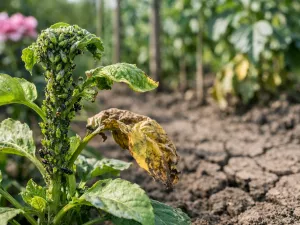
- Yellowing and premature drop: Leaves lose function and may fall sooner than normal.
- Sooty mold: Black fungal growth develops on honeydew-coated surfaces.
- Stunted shoots: Internodes stay short and the plant loses its normal shape.
- Bud failure: Flower buds dry, distort, or open poorly.
How severity changes what you should expect
With light damage, the plant often recovers quickly once the infestation is controlled and basic care is steady. With advanced damage, recovery is slower because the plant has lost leaf area and spent energy on stress responses. New healthy growth may take 2–4 weeks outdoors in active season, or longer indoors if light levels are low.
Do not judge severity only by insect numbers on one day. A plant with few visible aphids but heavily twisted new leaves may already have experienced a larger earlier population.
How to confirm aphids are the real cause

The best diagnosis comes from direct inspection, not guesswork. Aphids are usually visible without magnification, though their color can vary from green and yellow to black, brown, pink, or gray. They often gather in protected spots where leaves are folded, at the base of buds, or along soft stems. If you only look at the top surface of mature leaves, you can miss them.
Confirmation means matching leaf symptoms with physical evidence. A distorted leaf alone is not enough; you want to find the insects or the traces they leave behind.
Where to inspect first
Start with the most vulnerable parts of the plant and work methodically. Morning light or a bright handheld light makes small colonies easier to spot.
- Check the undersides of the youngest leaves.
- Inspect shoot tips and the junction where leaves meet stems.
- Open curled leaves gently to look inside hidden folds.
- Examine flower buds and soft stems for clusters.
- Look for sticky honeydew on leaves below the feeding site.
Signs that strongly confirm aphids
Several clues together make the diagnosis much more reliable than any single symptom.
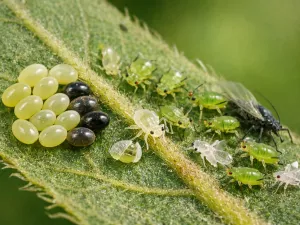
- Live insects: Pear-shaped, soft-bodied pests grouped on tender growth.
- Cast skins: Tiny white shed skins left behind as colonies grow.
- Honeydew: A sticky coating that can feel tacky to the touch.
- Ant attendance: Ants moving repeatedly over the same shoots to collect honeydew.
- Localized distortion: Damage concentrated where the insects are feeding, especially on new growth.
Simple tests that help
If the colony is small or hidden, a couple of practical checks can make detection easier. Hold a white sheet of paper or a light-colored tray under a stem and tap it gently. Aphids often drop or become easier to see against the pale background. For indoor plants, rotating the pot and checking from below can reveal colonies missed from above.
If you use a hand lens, 10x magnification is usually enough. You do not need specialist equipment to identify most aphid infestations, but magnification helps separate them from tiny mites or immature thrips.
Do not inspect only once. Recheck the same plant 2–3 days later if symptoms continue but you found little evidence the first time. Small colonies can stay tucked inside curled leaves and become obvious only after they expand.
How damage affects plant growth over time
Aphid damage is more than a cosmetic issue when it persists. Repeated sap loss reduces the plant’s ability to support strong new growth, maintain flowers, and recover from normal stresses such as heat or inconsistent watering. A single light infestation may leave only a few twisted leaves, but ongoing feeding can gradually reshape the entire plant.
The long-term effect depends on plant age and vigor. Established shrubs and large outdoor plants often tolerate short infestations better than seedlings, vegetable starts, or small houseplants in limited root space. Young plants have fewer reserves, so even modest feeding can slow them noticeably.
Effects on leaves, stems, and flowering
As damage accumulates, the plant shifts from producing quality growth to merely maintaining itself. That change can show up in several ways.
- Reduced leaf area: Curled and undersized leaves capture less light for photosynthesis.
- Shorter shoots: Stem extension slows, giving the plant a cramped appearance.
- Weaker flowering: Buds may be fewer, smaller, or fail to develop normally.
- Lower crop quality: On edible plants, fruit set and overall yield can drop.
Secondary problems that follow aphid feeding
Honeydew creates conditions for extra trouble. Sooty mold growing on sticky surfaces blocks light from reaching the leaf and makes the plant look dirtier and weaker. In some cases, aphids can also spread plant viruses, especially in vegetables and ornamentals. Not every colony transmits disease, but the risk is one reason repeated infestations should be taken seriously.
Stress compounds stress. A plant already struggling with low light, compacted soil, or inconsistent moisture has less capacity to replace damaged foliage. In a pot that dries very fast, for example, aphid feeding and drought stress together can lead to leaf drop much sooner than either problem alone.
What recovery usually looks like
After control, the plant does not rebound all at once. Existing twisted leaves may stay distorted, but new growth should begin to look more normal if care is supportive. Keep watering even, avoid sudden heavy fertilizer applications, and make sure the plant receives appropriate light for its species. For many actively growing plants, visible improvement begins within 7–14 days, though full shape recovery can take a month or more.
What to do after identifying aphid-related damage
Once you know aphids are responsible, the goal is to stop active feeding, reduce stress on the plant, and monitor for return. The exact response depends on the size of the plant and the severity of the infestation, but quick action is usually simple and effective. You do not need to overcorrect with harsh treatments if the problem is caught early.
Start by isolating affected houseplants or focusing attention on the infested area outdoors. Then remove as many aphids as possible before deciding whether follow-up treatment is needed.
Immediate actions
These first steps are practical for most garden and indoor situations.
- Rinse the plant: Use a firm but not damaging stream of water to dislodge colonies, especially from undersides of leaves. For potted plants, lukewarm water is safest indoors.
- Prune badly infested tips: Remove heavily curled shoots or leaves that are packed with insects. Dispose of them rather than composting if the infestation is active.
- Wipe or wash honeydew: Cleaning sticky leaves helps reduce sooty mold and makes follow-up inspections easier.
- Recheck in 2–3 days: Eggs are not the main issue with aphids, but missed insects can restart the colony quickly.
Support the plant after treatment
Recovery is faster when growing conditions are steady. Avoid pushing weak plants with strong fertilizer immediately after an infestation. Soft, lush growth can attract another wave of sap-feeding pests. Instead, focus on balanced care.
- Water evenly: Keep the root zone consistently moist but not soggy.
- Improve light: Move indoor plants closer to bright, indirect light if appropriate for the species.
- Check airflow: Space plants so new growth is easier to inspect and dries normally after rinsing.
- Feed moderately: Resume fertilizer only when active healthy growth returns, and use it at a sensible rate.
When more control is needed
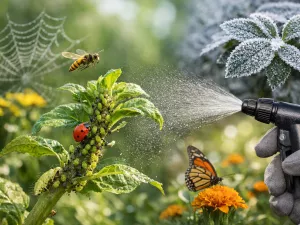
If colonies return after washing, a repeatable low-impact approach often works well. Insecticidal soap or neem-based products can help when used according to label directions and applied thoroughly to contact the insects. Coverage matters more than force. Spray in cooler parts of the day outdoors, and test a small area first on sensitive plants.
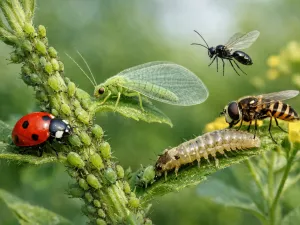
For severe recurring problems, inspect nearby plants too. Aphids move easily between clustered pots, greenhouse benches, or dense garden plantings. Outdoors, encouraging natural predators such as lady beetles, lacewings, and hoverflies can improve long-term control, especially if broad-spectrum insecticides are avoided.
Do not rush to remove every damaged leaf. If a leaf is still green and functioning, it can continue helping the plant recover. Prune only what is heavily infested, badly deformed, or clearly declining.
Finally, keep watching the newest growth. That is where success shows first. If fresh leaves emerge smooth and normal over the next couple of weeks, your plant is moving past the infestation even if some older foliage still carries the scars.