Tall Low-Light Plants for Empty Corners

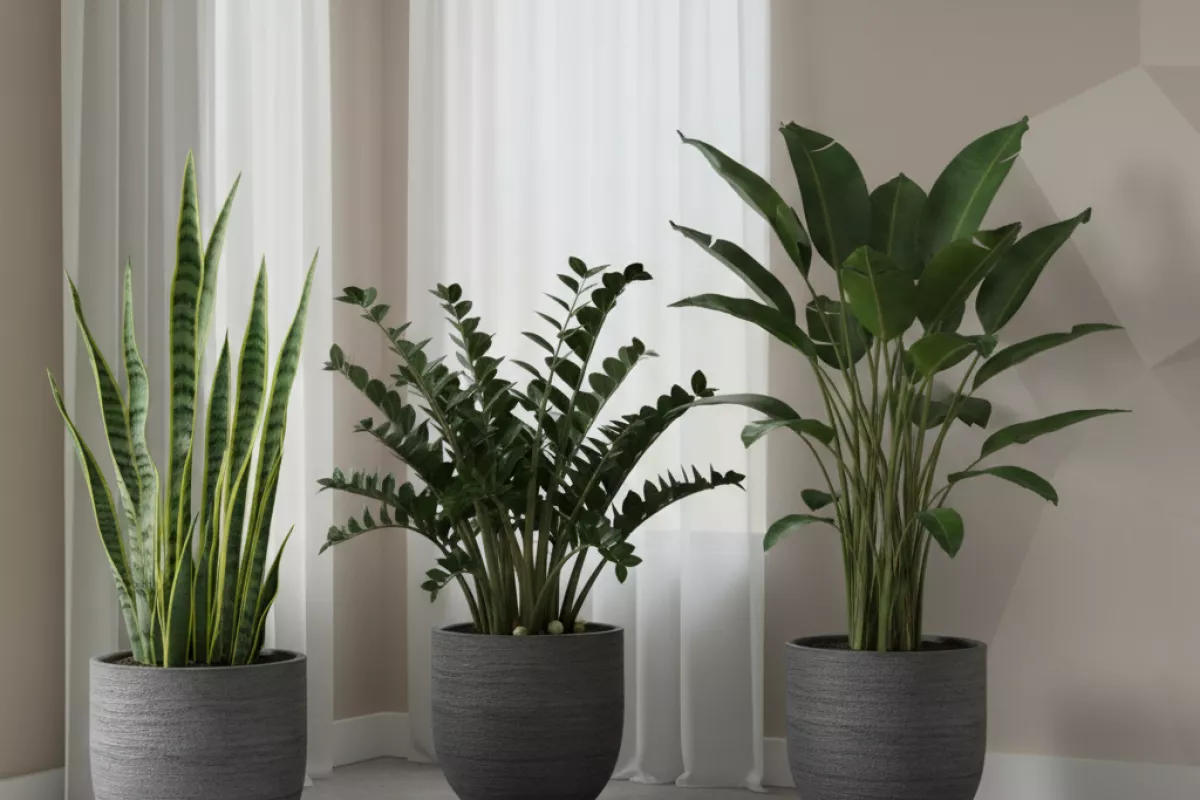 Learn why tall plants are great for filling empty corners, which vertical varieties handle low light best, and how to pick the right height and spread. It also covers stability and container support, light placement, maintenance for upright growth, and design tips for visual balance.
To fill a bare corner with height in a low sun room, choose tall plants that tolerate low light and keep an upright shape indoors. Match the plant to your watering routine, pot size, and indoor conditions like temperature and drafts. With the right fit, the plant stays full, stable, and attractive without needing constant attention.
Why tall plants work in corners
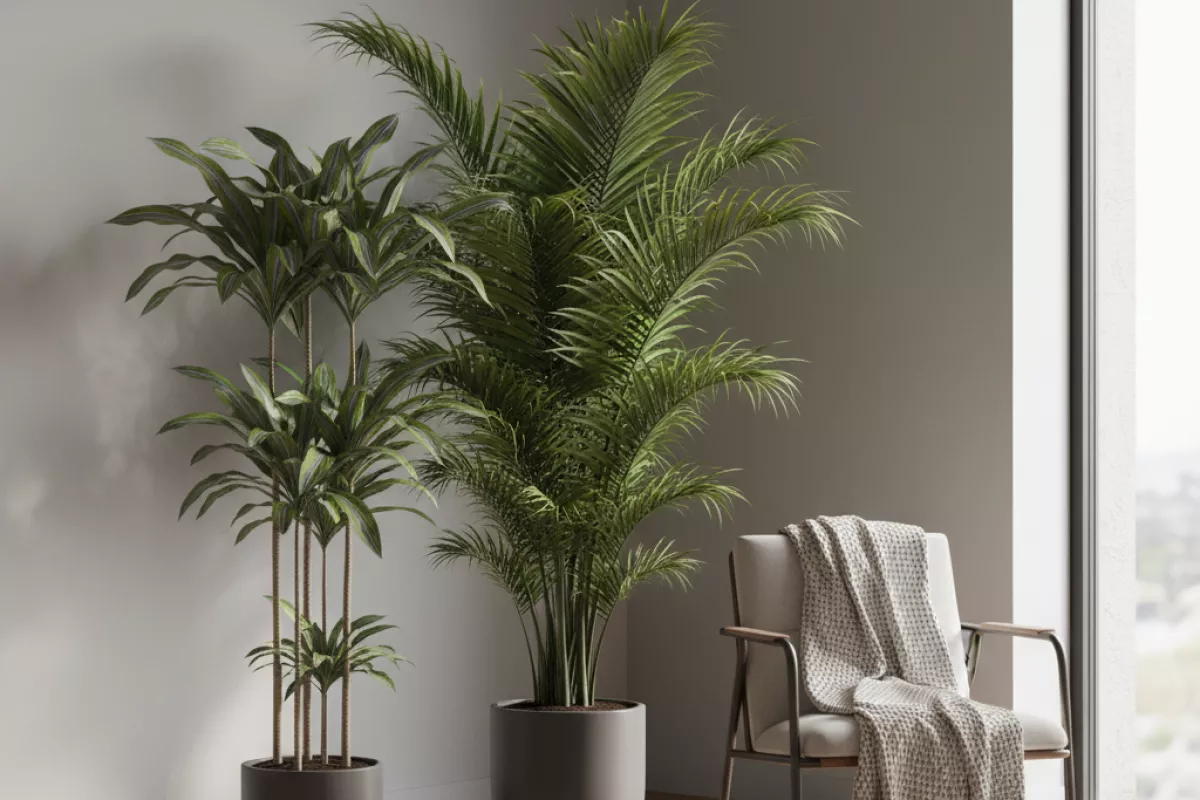
Empty corners tend to feel awkward because the eye reads them as “unfinished” vertical space. A tall plant fixes that fast: it adds height, softens hard angles, and creates a clear focal point without needing extra furniture. In low light, going upward also helps you place more foliage closer to the brightest part of the room, even if that light is still indirect.
- They turn dead space into a vertical anchor. Corners are mostly about height, not floor area. A cane-form dracaena, palm, or upright sansevieria fills the visual gap while keeping the footprint small.
- They make dim light feel more intentional. A corner that can’t support sun-loving plants still looks “designed” when you choose a shade-tolerant, tall specimen and give it a defined spot.
- They soften harsh lines and improve flow. Upright leaves and arching fronds break up the 90° angle where two walls meet, which can make a room feel less boxy.
- They can sit closer to usable light. Even in low-light rooms, the upper portion of a plant may be nearer to a window’s spill of brightness than the floor area. A plant that reaches 120–180 cm (4–6 ft) can capture more of that ambient light than a short tabletop plant.
- They help with scale next to furniture. Corners beside a sofa, console, or reading chair often look squat if everything stays low. A taller plant balances the height of lamps, shelves, and curtains without adding clutter.
- They’re easier to maintain than a cluster. One larger low-light plant is often simpler than juggling several small pots with different watering needs. Fewer containers also means fewer chances for overwatering in a darker spot.
To keep a tall corner plant looking natural, leave a little breathing room from the walls so air can move around the leaves and you can rotate the pot. A quarter turn every 1–2 weeks can help prevent the plant from leaning toward the room’s brightest direction.
Best vertical plants for low light
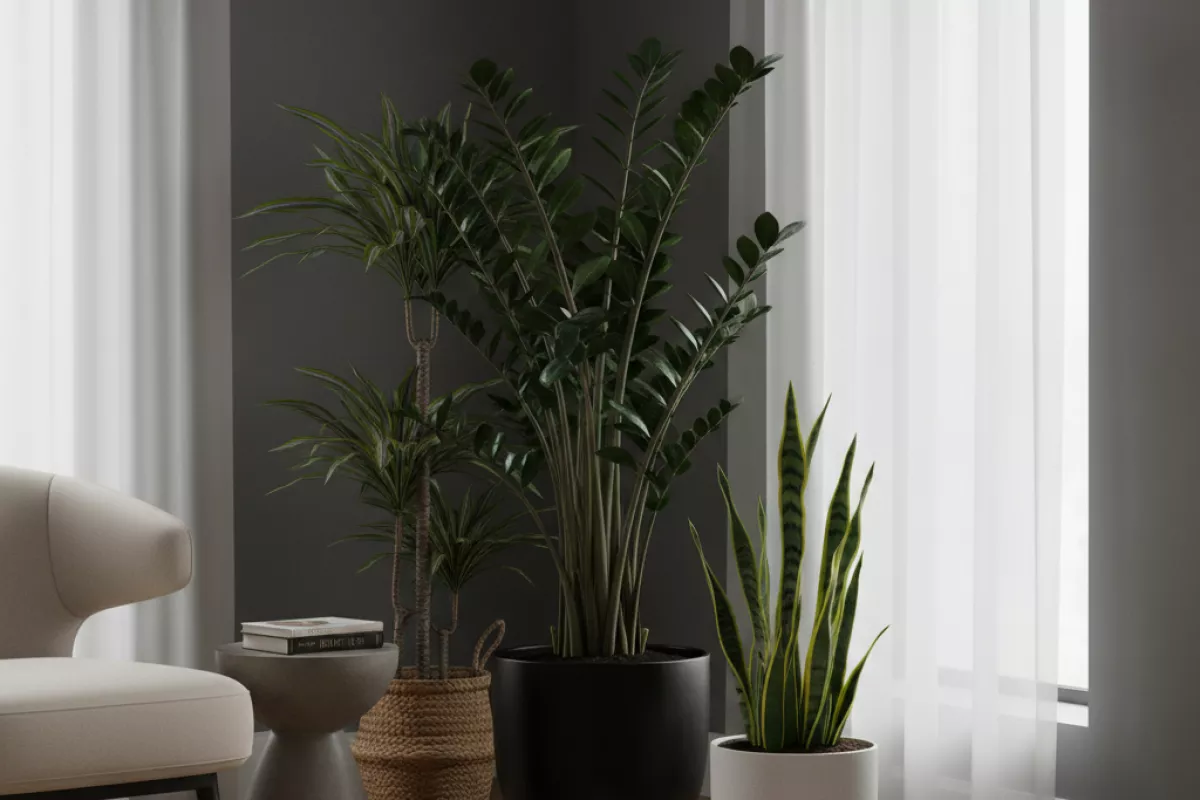
For a dim corner, the easiest wins are plants that naturally grow upright, tolerate slower growth, and don’t demand direct sun. Think “architectural” foliage that holds its shape and still looks intentional when light is limited. The options below are reliable choices for height, structure, and low-drama care.
| Plant | Why it works in low light | Typical indoor height | Care notes for tall growth |
|---|---|---|---|
| ZZ plant (Zamioculcas zamiifolia) | Handles shade well; stores water in rhizomes so it’s forgiving | 60–120 cm (2–4 ft) | Let soil dry most of the way down; rotate quarterly so stems don’t lean |
| Snake plant (Dracaena trifasciata) | Stays upright even with low light; slow, steady growth | 45–150 cm (1.5–5 ft) | Water sparingly; choose taller cultivars and a heavier pot to prevent tipping |
| Cast iron plant (Aspidistra elatior) | One of the most shade-tolerant houseplants; tough leaves | 60–90 cm (2–3 ft) | Keep evenly moist but not wet; wipe leaves so they can use limited light efficiently |
| Chinese evergreen (Aglaonema) | Adapts to medium-to-low light; dense, vertical clumps | 45–90 cm (1.5–3 ft) | Water when top 2–5 cm (1–2 in) dries; pinch older leaves to keep a tidy silhouette |
| Peace lily (Spathiphyllum) | Tolerates shade and still looks lush; upright leaf stalks fill corners | 45–120 cm (1.5–4 ft) | Water when it slightly droops; avoid cold drafts below 15°C (59°F) |
| Dragon tree (Dracaena marginata) | Vertical cane form; copes with less-than-bright rooms | 120–180 cm (4–6 ft) | Let top half of soil dry; trim and re-root tops to manage height and fullness |
- Pick the right “low light.” If you can comfortably read a book there for a few hours, most of these will manage; in very dim spots, growth slows and spacing between leaves increases.
- Use height without spindliness. Rotate the pot every 2–3 months to keep the plant from reaching toward the nearest window, and keep it within 1–3 m (3–10 ft) of a light source when possible.
- Water less than you think. In shade, soil dries slowly. A simple rule: check moisture 5–7 cm (2–3 in) down before watering, especially for ZZ and snake plants.
- Stability matters for corners. Tall low-light plants look best when they stand straight; use a heavier cachepot or add a support stake early rather than after the plant starts leaning.
Choosing the right height and spread
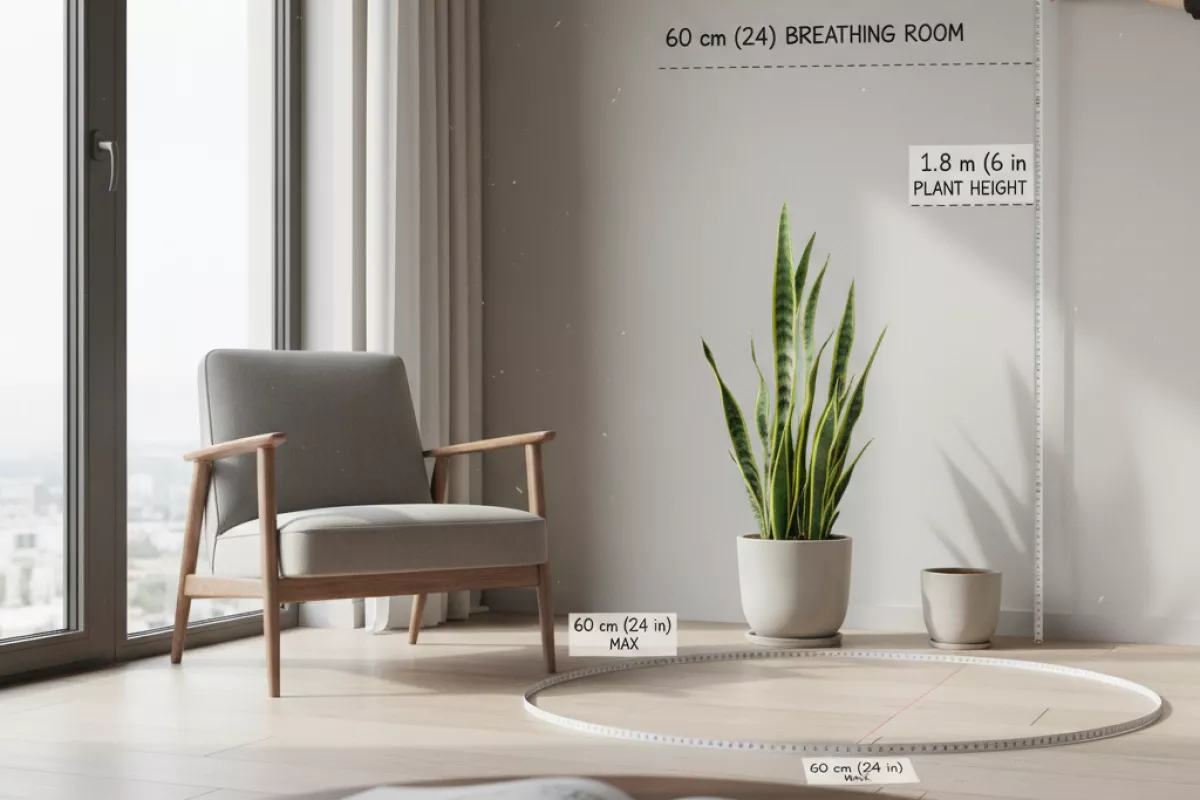
Start by measuring the corner, not by picking a plant. The goal is to fill vertical space without letting leaves block walkways, doors, vents, or lamps. A tall low-light plant can look “wrong” simply because its canopy is too wide for the footprint you actually have.
- Measure two things: ceiling height and usable floor space. For floor space, note the maximum diameter you can spare—60 cm (24 in) is very different from 90 cm (35 in) once the plant matures.
- Leave breathing room at the top: aim for 20–30 cm (8–12 in) between the tallest foliage and the ceiling so growth doesn’t get cramped and dusty.
- Plan for the pot, not just the plant: add 25–45 cm (10–18 in) to the listed plant height if you’ll use a planter + saucer or a stand. That “extra” height can be what makes a corner plant feel intentional.
- Account for spread at maturity: many upright plants still widen over time. If the tag says 60 cm (24 in) wide, assume 75 cm (30 in) in a comfortable indoor setup unless you’re pruning.
- Mind traffic lanes: keep at least 45–60 cm (18–24 in) of clear passage next to the corner if people regularly walk by. Narrow, columnar growers are better here than arching types.
- Use the wall to your advantage: a plant with a naturally vertical habit can sit 10–15 cm (4–6 in) from the wall; plants with outward-arching leaves usually need 20–30 cm (8–12 in) so foliage doesn’t constantly rub and brown.
| Corner situation | What to look for (height/spread guidance) | Why it works |
|---|---|---|
| Narrow corner by a doorway | 150–210 cm (5–7 ft) tall, under 60 cm (24 in) wide | Gives height without brushing shoulders or catching on doors |
| Empty corner in an open-plan room | 180–270 cm (6–9 ft) tall, 75–120 cm (30–47 in) wide | Reads as a “feature” and balances large furniture |
| Corner next to a sofa or reading chair | 120–180 cm (4–6 ft) tall, 60–90 cm (24–35 in) wide | Fills the gap without looming over seated eye level |
| Low ceiling or soffit nearby | Keep foliage 20–30 cm (8–12 in) below the ceiling; choose slower growers | Prevents constant pruning and avoids a cramped look |
| Corner with a floor vent/radiator | Place pot 30–60 cm (12–24 in) away; pick plants with tighter canopies | Reduces leaf stress from hot/cold drafts and keeps airflow clear |
If you’re between sizes, go slightly taller rather than wider. In dimmer spots, a taller silhouette usually looks cleaner, while an oversized spread can feel messy as leaves reach for light. You can also “cheat” scale by raising a medium plant on a 30–45 cm (12–18 in) stand instead of forcing a giant specimen into a tight corner.
Stability and container support
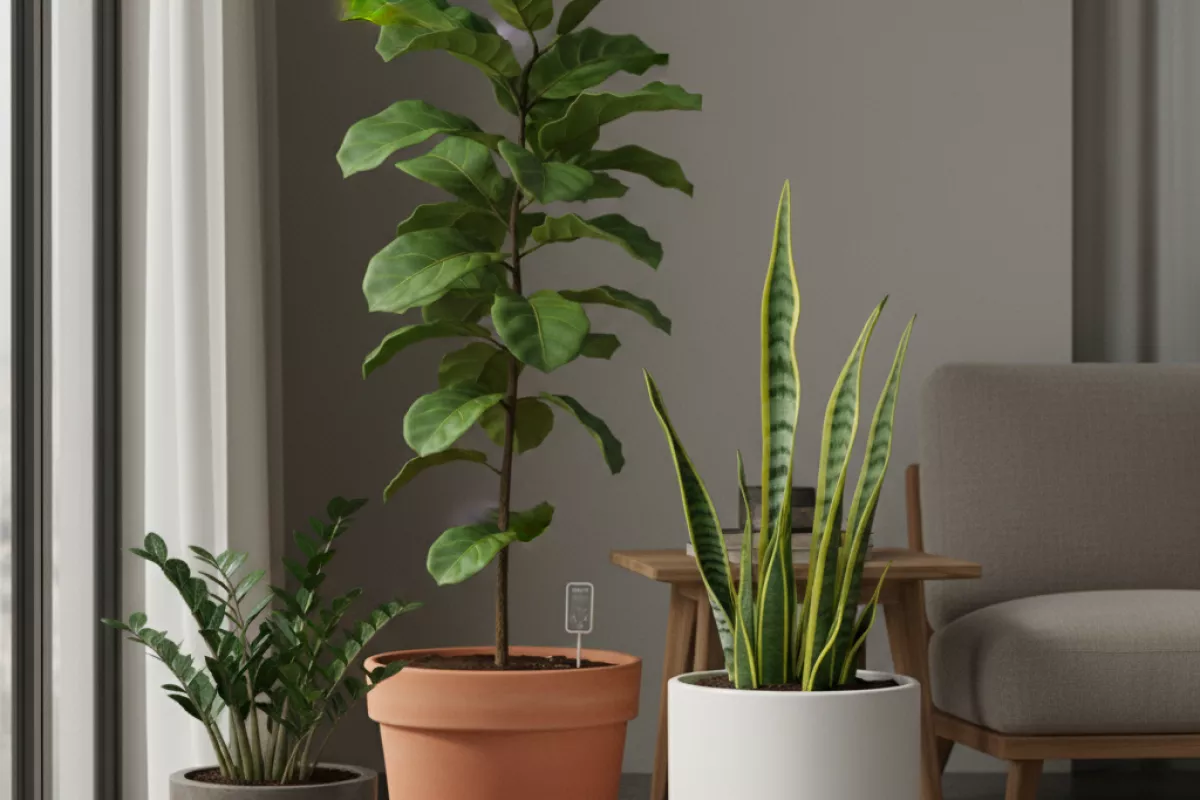
Top-heavy, tall plants in dim corners tend to lean toward the nearest window and can tip more easily than you’d expect. The goal is to give the root ball enough weight and grip to counter that pull, without trapping water around the roots.
- Choose a pot with a wide footprint. A low, broad base is usually steadier than a narrow, tall pot of the same volume. If you love the look of a slim planter, place the nursery pot inside a heavier cachepot for extra ballast.
- Size up carefully. Move up just 2–5 cm (1–2 in) in diameter at a time; jumping to an oversized container can leave too much wet soil around the roots.
- Add weight in the right place. For extra stability, put a layer of rinsed gravel or lava rock in the bottom of the outer cachepot (not mixed into the potting soil) so drainage and aeration stay consistent.
- Use a snug inner pot with drainage holes. A plastic nursery pot inside a decorative cover pot makes it easier to water thoroughly, then drain fully before returning it to the corner.
- Anchor tall canes and trunks. For plants like dracaena, yucca, or larger palms, insert a stake and tie with soft plant tape. Make the tie loose enough to allow slight movement, which helps stems strengthen.
- Rotate on a schedule. Turn the pot a quarter turn every 7–14 days (1–2 weeks) to reduce one-sided growth and leaning toward light.
- Mind the top growth. If a plant is consistently lopsided, prune or thin the canopy instead of forcing it upright; less sail area means less wobble.
| Situation in an empty corner | Container/support fix | Why it helps |
|---|---|---|
| Plant leans toward the room’s brightest side | Rotate 90° every 7–14 days (1–2 weeks) | Balances growth so the center of mass stays over the base |
| Pot feels tippy when bumped | Switch to a wider pot or add a heavier cachepot | Lowers the tipping risk by widening and weighting the base |
| Canes/trunks sway in loose mix | Stake and tie; firm the soil surface gently | Reduces wobble while roots re-establish and grip |
| Soil stays wet for too long in low light | Use a draining inner pot; avoid oversizing; empty runoff after 10–15 min (0.17–0.25 hr) | Prevents waterlogging, which weakens roots and makes plants unstable |
If you’re placing a tall low-light plant on a stand, treat the stand as part of the support system: ensure all feet sit flat, and consider a stand with a wider top ring than the pot’s base so the container can’t slide. In high-traffic areas, a heavier pot plus a simple stake often does more than frequent repositioning.
Light positioning for tall foliage
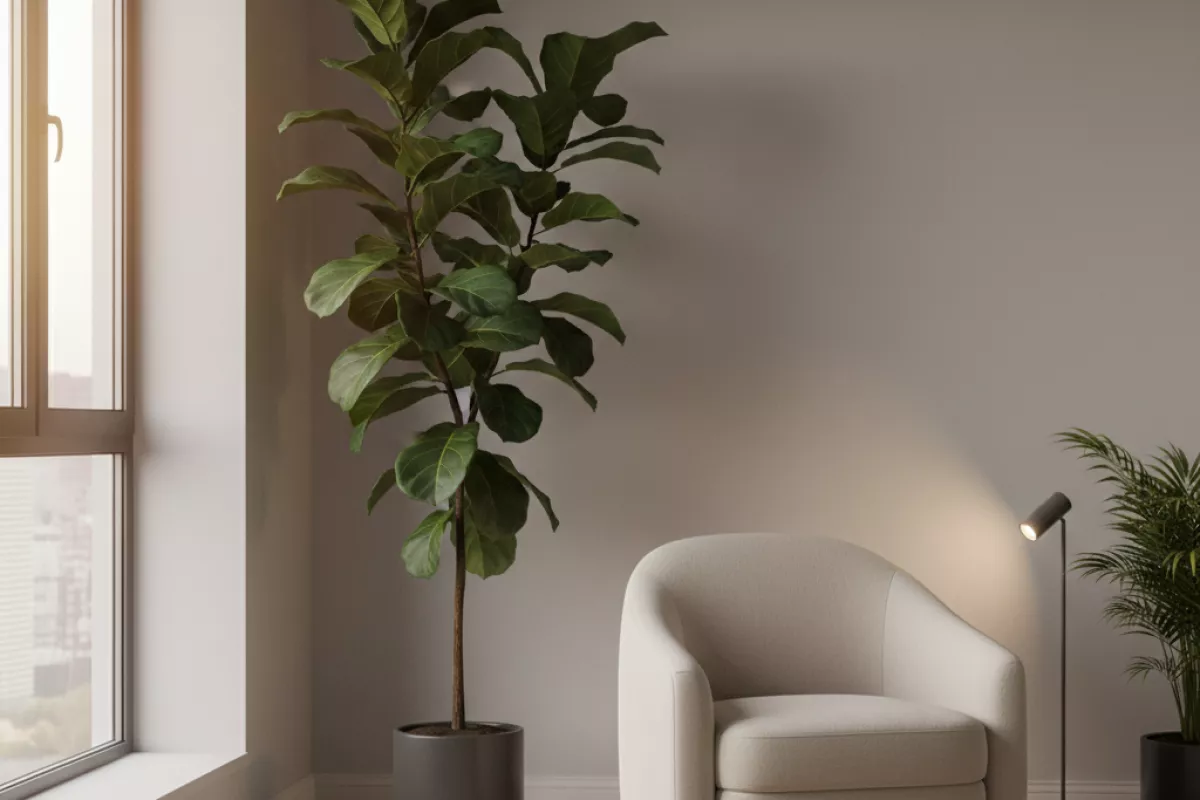
For big, upright plants in dim rooms, the goal is to get light onto the upper leaves without leaving the lower half in permanent shade. Corners are tricky because walls block side light, so small changes in distance and angle can make a noticeable difference in how evenly the plant grows.
- Start with distance, then fine-tune. Place the plant so its brightest side faces the window, usually about 60–120 cm (24–48 in) away for low to medium indoor light. If growth stretches or new leaves shrink, move it 15–30 cm (6–12 in) closer; if leaves fade or crisp, move it back.
- Rotate for balanced growth. Turn the pot 90° every 7–14 days (1–2 weeks) so the crown doesn’t lean hard toward the light. This is especially helpful for canes and palms that otherwise develop a “one-sided” silhouette.
- Use height to your advantage. If the top is near the ceiling, it may be in a darker pocket. Pull the plant forward so the top clears the shadow line, or elevate it slightly on a stable stand 10–20 cm (4–8 in) to bring mid-level leaves into better exposure.
- Angle the plant, not just the lamp. In a corner, nudging the pot a few degrees so the fullest side faces the room can help light reach deeper into the foliage. Aim for “light across the front,” not straight at one edge.
- Keep reflectors simple. A light-colored wall already helps. If the corner is dark, a matte white surface nearby (like a pale planter or a light-toned side table) can bounce some light back into the lower leaves without creating hot spots.
- Supplement from above when needed. If natural light is weak, a grow light positioned above the canopy usually looks cleaner than a bright lamp at eye level and reduces lopsided growth. Start around 30–45 cm (12–18 in) above the top leaves and adjust based on leaf response.
- Match timing to the room, not a strict rule. Many tall low-light plants do well with 10–12 hours of supplemental light. If the room already gets decent daylight, 6–8 hours may be enough; if it’s a truly dim corner, longer duration is often better than pushing the light very close.
- Watch the lower leaves for clues. Yellowing at the bottom can be normal aging, but if it’s rapid and paired with long gaps between new leaves, it often means the lower canopy isn’t receiving enough light. Increase brightness gradually or thin a few older leaves to let light penetrate.
A quick check: stand where the plant sits and look toward the window. If you can’t see much sky, the plant probably can’t either. In that case, pulling it 30–60 cm (12–24 in) out of the corner often improves exposure more than any other single change, while still keeping the space feeling filled rather than cluttered.
Maintenance for upright growth
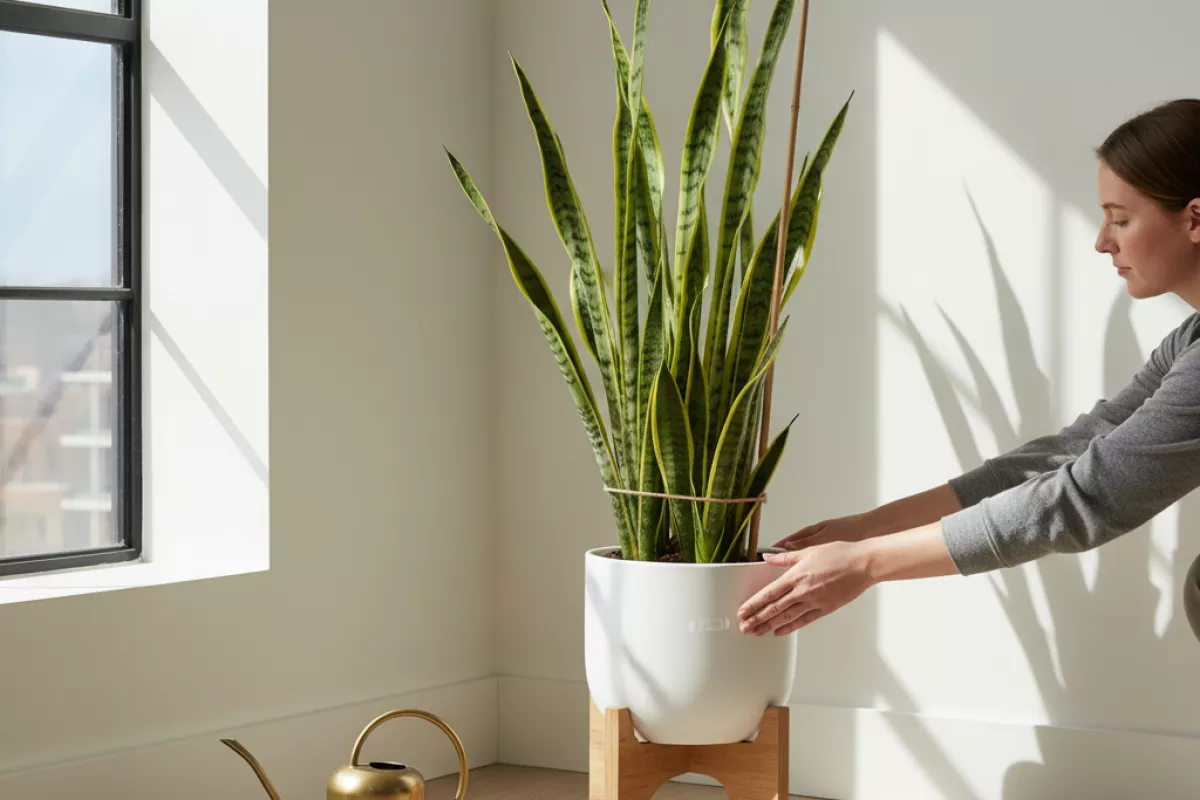
Keeping tall, low-light plants looking vertical comes down to a few small habits: stable light direction, balanced watering, and occasional support before stems start to lean. Corners are especially tricky because light is usually coming from one side, which encourages slow, sideways reach over time.
- Rotate for even growth. Turn the pot a quarter turn every 7–14 days (1–2 weeks) so the plant doesn’t permanently bend toward the window. If the plant is already leaning, rotate more gradually—an eighth turn every 7 days (1 week)—to avoid stressing stiff stems.
- Use the right pot weight and shape. Tall plants stay straighter in heavier containers. A wide, stable base (think “low and broad”) resists tipping better than a narrow, tall pot. If you’re using a cachepot, add a layer of pebbles or sand at the bottom to increase weight without raising water level.
- Stake early, not late. Add a bamboo stake, moss pole, or discreet plant support while stems are still flexible. Tie with soft plant tape or fabric strips, leaving a little slack for thickening. Re-tie every 4–6 weeks (1–1.5 months) as the plant grows.
- Prune or pinch to prevent top-heaviness. If the plant is getting tall but sparse, trim back leggy shoots to a node to encourage branching. For cane-type plants, cutting the top can redirect growth into side shoots, making the silhouette fuller and more stable.
- Manage watering to avoid weak, floppy growth. Alternating drought and soaking can lead to thin stems. Water thoroughly, then let the mix dry to the appropriate depth before watering again (for many indoor trees, the top 2–5 cm (1–2 in) is a useful checkpoint). Empty saucers so roots aren’t sitting in water.
- Keep light consistent, even if it’s low. A plant that “hunts” for light will lean. If you can, place it where it gets steady ambient light from more than one direction (for example, a corner near a bright wall that reflects daylight). If using a grow light, position it above the canopy rather than off to the side.
- Watch the soil line and re-pot at the right time. A plant that wobbles may be root-bound or planted too high. When repotting, set the root ball so the crown sits at the same level as before, and firm the mix gently to remove air pockets without compacting it.
- Reduce draft-related leaning. постоян airflow from a vent can push foliage in one direction. Move the pot 30–60 cm (12–24 in) away from heating/cooling vents, or redirect the airflow so stems aren’t being “trained” sideways.
If your plant is already noticeably tilted, correct it in steps: add support first, then rotate gradually over several weeks. Trying to force a mature stem upright in one go can crack tissues, especially in woody or cane-forming species.
Design tips for visual balance
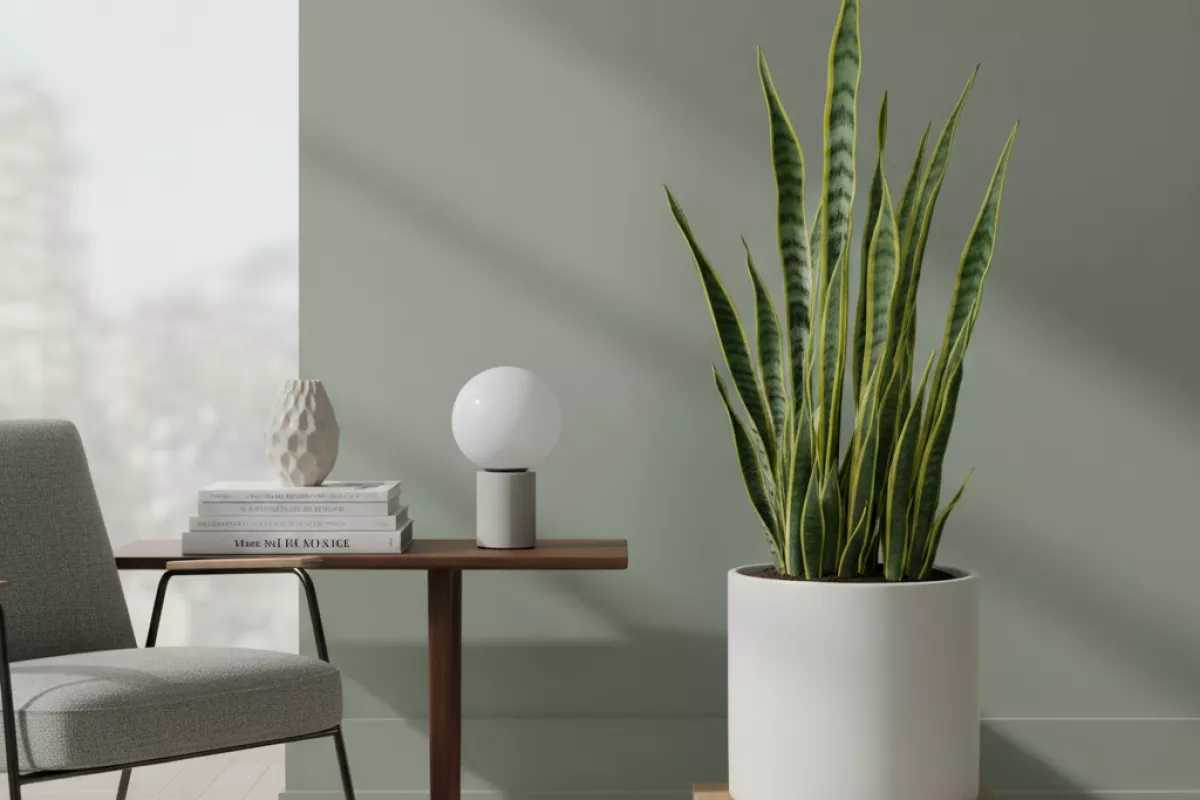
Make a tall plant feel intentional by relating it to the room’s “visual weight.” A single upright silhouette can stabilize an empty corner, but it looks best when its height, pot size, and nearby objects share a clear proportion rather than competing for attention.
- Match plant height to nearby furniture. As a rule of thumb, aim for the foliage top to land around 30–60 cm (12–24 in) above the highest adjacent surface (like a console or chair back). This keeps the corner from looking either stunted or top-heavy.
- Use the pot to anchor the vertical line. Taller, low-light plants often look more balanced in a heavier base. Choose a planter with a wider footprint or add a cachepot so the container visually “holds” the height.
- Offset the corner with a secondary shape. Pair a narrow, upright plant with something low and broad—like a small stool, basket, or short plant—so the corner reads as a composed cluster instead of a single spike.
- Leave breathing room behind the leaves. Give the plant a little negative space from walls and curtains so the outline stays crisp. Even 10–20 cm (4–8 in) of clearance can prevent a crowded look and reduce leaf scuffing.
- Repeat one element elsewhere in the room. Echo the planter material (black metal, terracotta, woven fiber) or leaf tone in another spot to avoid the “random corner plant” effect.
- Balance direction and lean. If the plant naturally reaches toward a window, rotate the pot a quarter turn every 1–2 weeks (7–14 days) to keep the silhouette centered and the corner from looking lopsided.
- Use lighting to control emphasis. In dim rooms, a small uplight or floor lamp placed 30–60 cm (12–24 in) away can create gentle shadowing that makes the plant read as a feature without overpowering the space.
- Keep the “visual triangle” in mind. When styling a corner, aim for three heights—low, mid, tall—so the eye moves smoothly. The tall low-light plant is the peak; everything else should support it rather than match it.
If the corner still feels heavy, scale down the container or choose a plant with finer leaves. If it feels empty, go the other direction: a slightly larger pot, a taller specimen, or one additional object at mid-height usually fixes the proportion without clutter.