Heat-Resistant Plants for Full Sun Areas

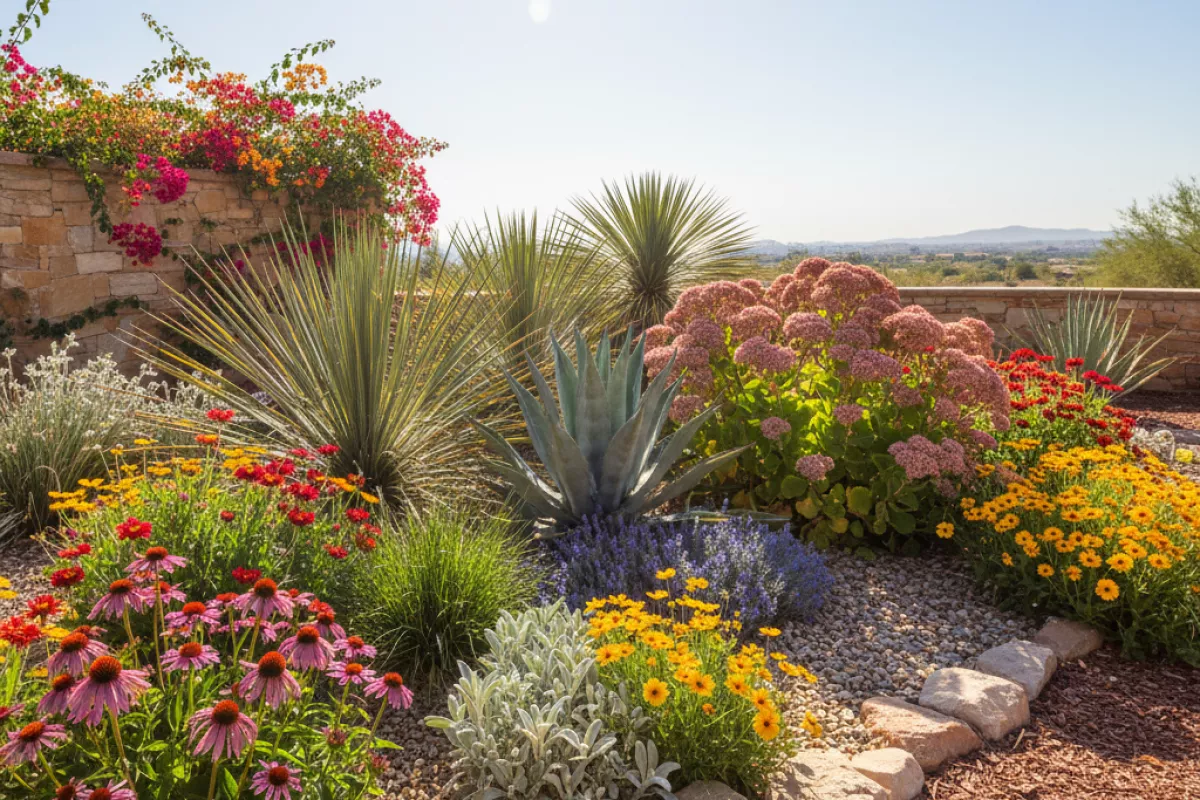 Covers why heat tolerance matters in sunny spots, the plant traits that prevent heat damage, and the best species for hot climates. Explains soil prep for heat resistance, how to water during heat waves, how to spot heat stress, and protective steps in extreme temps.
Choosing sun-tough, heat-tolerant plants for bright, exposed spots can save time, water, and frustration when summer peaks. This guide highlights reliable choices that hold their color and shape in full sun, explains how to match them to your soil and local climate, and shares simple care habits like smart watering, mulching, and light pruning to keep them thriving through long hot spells.
Why heat tolerance matters in sunny locations
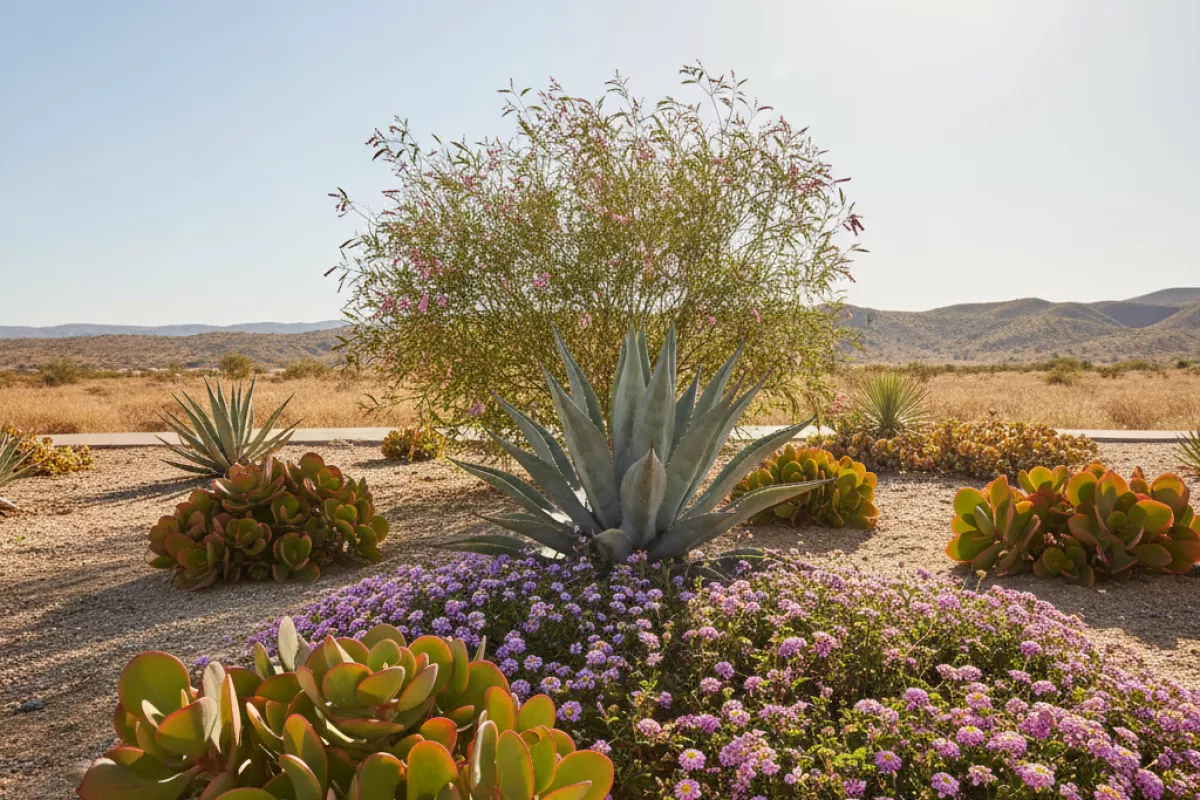
In bright, exposed beds, the challenge isn’t just “more light”—it’s the combination of intense sun, hot air, and drying winds that can push plants past their comfort zone. When a plant can’t keep up with water loss through its leaves, it closes its stomata to conserve moisture, which slows growth and flowering. Over time, repeated stress shows up as scorched leaf edges, dropped buds, and a general “tired” look even when the soil isn’t bone-dry.
Heat-tough choices handle these conditions with built-in strategies: reflective or fuzzy foliage, deeper or more efficient roots, and the ability to keep photosynthesizing when daytime highs hover around 32°C (90°F) and above. That resilience matters most in full sun areas because the soil surface can run much hotter than the air, especially in dark mulch, gravel, or near paving where radiant heat lingers into the evening.
- Sun plus heat amplifies water demand. A plant may tolerate full sun in mild weather, but struggle once temperatures climb because transpiration spikes and roots can’t replace moisture fast enough.
- Hot soil stresses roots first. Shallow-rooted plants can stall when the top few inches heat up, even if you water regularly. Warm root zones also reduce oxygen availability, which can weaken root function.
- Leaf scorch is often a heat symptom, not a “sunburn” mystery. Crispy margins and bleached patches commonly happen when water movement can’t match evaporation during peak afternoon heat.
- Flowering can pause in extreme warmth. Many ornamentals abort buds when nights stay warm, while heat-adapted species keep blooming with fewer interruptions.
- Pests and diseases shift in hot, dry weather. Spider mites and some chewing insects thrive during heat waves, and stressed plants are less able to outgrow damage.
| Sunny-site stressor | What you’ll notice | What heat-tolerant plants do differently |
|---|---|---|
| High afternoon temperatures (around 32°C/90°F+) | Wilting midday, slow recovery by evening | Maintain function at higher leaf temperatures; recover quickly overnight |
| Radiant heat from walls, rocks, or paving | Damage concentrated on the “hot side” facing hardscape | Thicker leaves, waxy coatings, or smaller leaf area to reduce heat load |
| Fast evaporation and drying winds | Frequent watering needed; crispy tips despite moist soil below | Better water-use efficiency; stomata control that limits moisture loss |
| Hot topsoil and shallow moisture | Stunted growth, poor establishment in the first season | Deeper or more aggressive rooting to reach cooler, steadier moisture |
Choosing plants with real heat tolerance also makes maintenance simpler. You’ll still water during establishment, but you’re less likely to get stuck in a cycle of daily rescue watering, heavy pruning of scorched growth, and replacing plants that never truly settle in. In other words, the right picks turn a full-sun spot from “survive the summer” into a space that looks steady through the hottest stretch of the year.
Plant traits that prevent heat damage
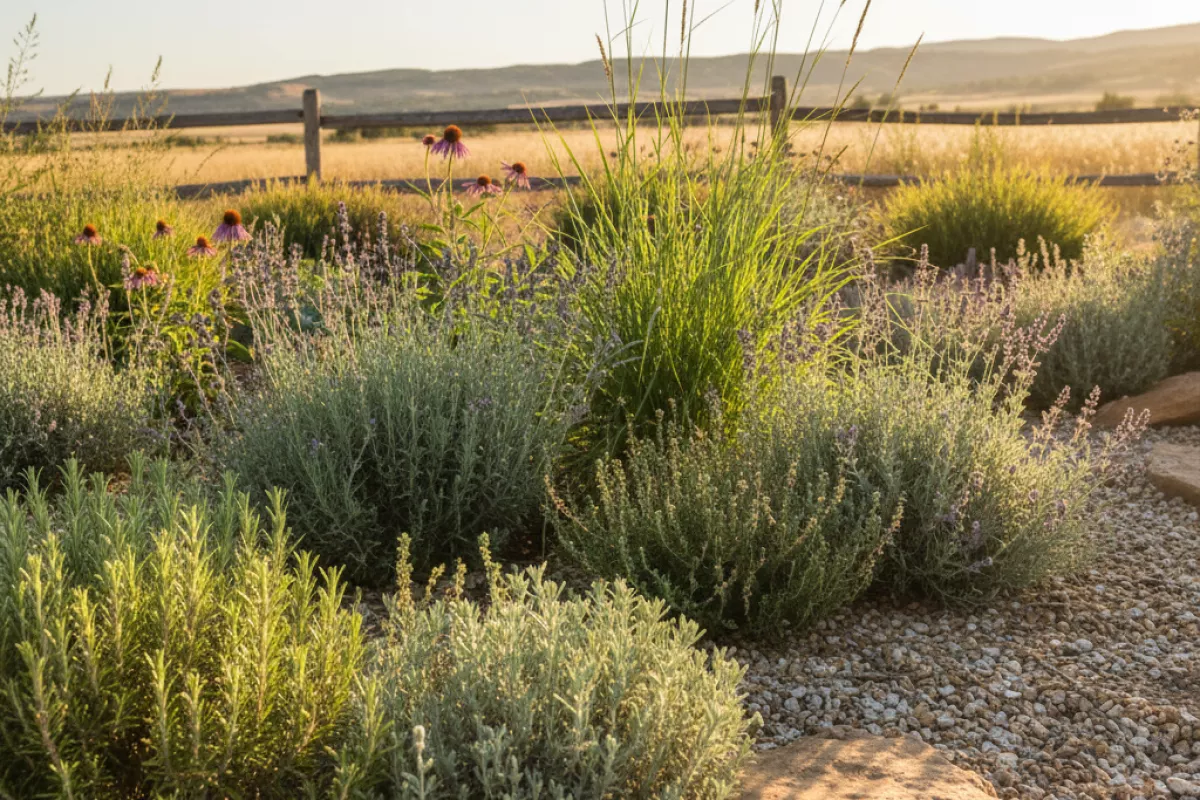
When a planting bed bakes all afternoon, the winners usually share a few built-in defenses: they limit water loss, keep leaf temperatures down, and protect cells from sun-driven stress. Knowing what to look for helps you pick varieties that stay attractive through heat waves instead of scorching or collapsing.
- Small, narrow, or finely divided leaves reduce the surface area exposed to sun and hot wind, which lowers transpiration demand. Many Mediterranean herbs and prairie plants use this strategy.
- Thick, leathery (sclerophyll) foliage resists wilting because it holds water better and has tougher cell walls. These plants often look glossy or feel firm to the touch.
- Waxy coatings or a bluish “glaucous” bloom reflect some radiation and slow evaporation. You’ll notice a slightly powdery or silvery cast on leaves and stems.
- Leaf hairs (pubescence) create a thin insulating layer of still air and can reflect light, helping prevent sunscald. This is common in many drought-tough perennials.
- Succulent tissues store water in leaves or stems, buffering the plant during hot, dry spells. This doesn’t mean “no watering,” but it does mean the plant can ride out short gaps more safely.
- Deep or wide-ranging root systems access moisture below the hottest, driest soil layer. Deep-rooted plants cope better when the top 5 cm (2 in) dries quickly.
- Efficient stomatal control lets plants partially close leaf pores during peak heat to conserve water, then reopen when conditions improve (often morning or evening).
- Light-colored foliage (silver, gray-green) reflects more sunlight than dark green leaves, reducing leaf temperature in full exposure.
- Growth habits that shade their own crowns (mounding forms, dense basal foliage) protect the plant’s “growing point,” which is where heat damage can be most fatal.
- Heat-stable flowering and fruiting shows up as blooms that don’t “melt” or drop quickly when daytime highs reach 32°C (90°F) or more—often paired with thicker petals or shorter bloom stalks.
| Trait you can spot | How it helps in hot, sunny sites | What it looks like in the garden |
|---|---|---|
| Waxy or glaucous leaf surface | Reflects radiation; slows water loss | Blue-green or slightly powdery leaves |
| Leaf hairs (fuzzy texture) | Creates insulation; reduces sunscald risk | Soft, silvery, or velvety foliage |
| Thick, leathery leaves | Holds moisture; resists wilting | Firm leaves that don’t flop easily |
| Small or narrow leaves | Lowers heat load and transpiration demand | Needle-like, strap-like, or finely cut foliage |
| Succulent stems or leaves | Stores water for short dry spells | Plump leaves; stems that feel juicy |
| Deep or spreading roots | Finds moisture below the hottest soil layer | Established plants stay steady when the surface dries |
One practical tip: even heat-adapted plants can scorch if they’re pushed into sudden exposure. If you’re moving a plant from partial shade to full sun, harden it off over 7–14 days (1–2 weeks) so the leaves can thicken and adjust their protective pigments.
Best species for hot climates
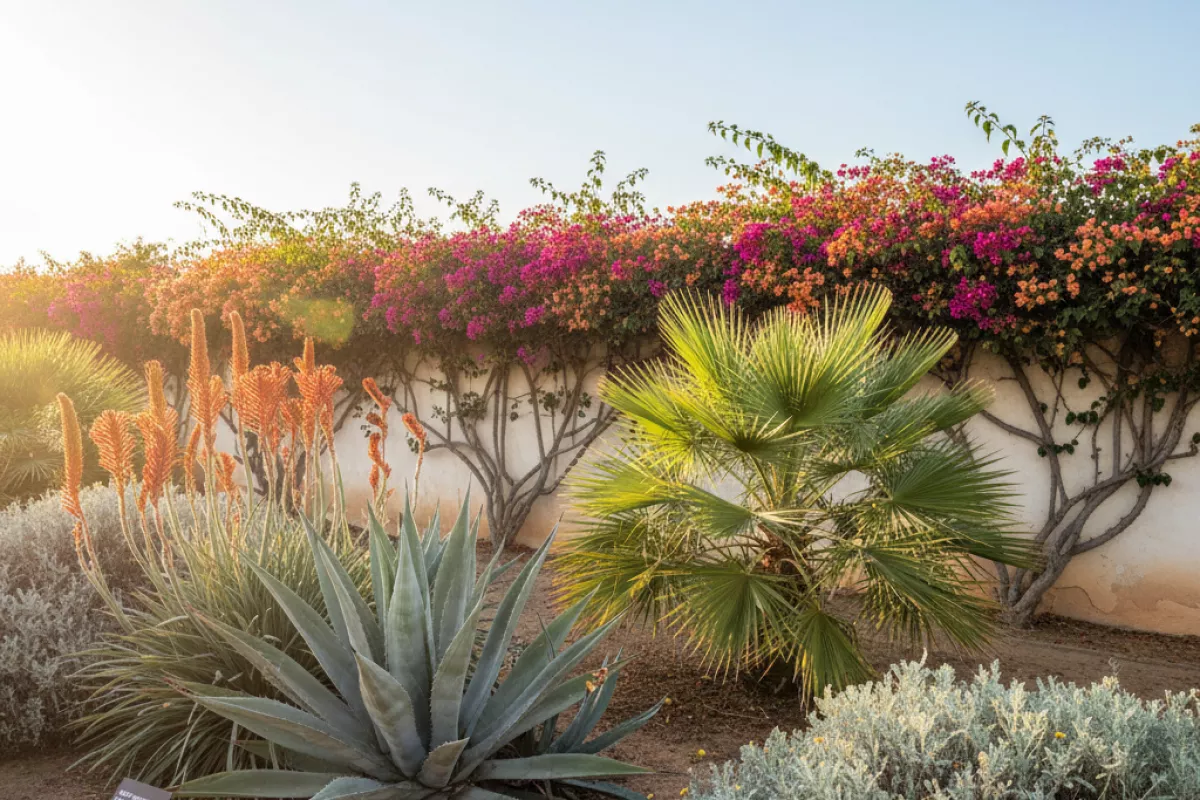
For scorching summers and reflective, sun-baked spots, the most reliable choices are plants that handle intense light, dry air, and warm nights without constantly wilting. Look for traits like silvery or leathery leaves, deep roots, and a naturally compact habit that reduces moisture loss. Even “tough” plants establish faster with a deep soak once or twice a week during the first 4–6 weeks (28–42 days), then less often as roots settle in.
| Plant (common name) | Why it holds up in heat | Sun & water notes | Best use in full-sun areas |
|---|---|---|---|
| Agave (Agave spp.) | Succulent leaves store water; thrives in radiant heat | Full sun; water sparingly after establishment | Architectural focal points, gravel gardens |
| Lantana (Lantana camara) | Blooms through hot spells; handles drought once rooted | Full sun; moderate water early on, then low | Colorful borders, pollinator-friendly beds |
| Rosemary (Salvia rosmarinus) | Resinous, narrow leaves reduce water loss | Full sun; let soil dry between waterings | Edible landscaping, low hedges |
| Lavender (Lavandula spp.) | Silvery foliage reflects light; prefers dry conditions | Full sun; avoid soggy soil, water lightly | Path edges, fragrance plantings |
| Texas sage (Leucophyllum frutescens) | Designed for heat and low humidity; tough evergreen shrub | Full sun; minimal irrigation once established | Foundation plantings, screening |
| Bougainvillea (Bougainvillea spp.) | Handles high temperatures; flowers best with lean watering | Full sun; deep, infrequent watering | Walls, trellises, hot courtyards |
| Oleander (Nerium oleander) | Evergreen and resilient in heat; tolerates poor soils | Full sun; moderate water, drought-tolerant later | Privacy screens, roadway buffers |
| Portulaca (Portulaca grandiflora) | Succulent groundcover; blooms in intense sun | Full sun; low water, excellent drainage | Edging, containers that bake |
- For the hottest reflected-heat zones (next to concrete, stone, or metal): prioritize agave, portulaca, and rosemary, and give them fast-draining soil so roots don’t cook in wet ground.
- For long flowering in high temperatures: lantana and bougainvillea keep color when many annuals stall, especially if you avoid frequent shallow watering.
- For low-maintenance structure: Texas sage and oleander fill space with minimal fuss once established; prune after bloom or during mild weather to avoid stressing plants during peak heat.
- Planting tip that matters more than variety: mulch 5–8 cm (2–3 in) deep to cool the soil surface, but keep it a few centimeters (about 1–2 in) back from stems to prevent rot.
Soil preparation for heat resistance
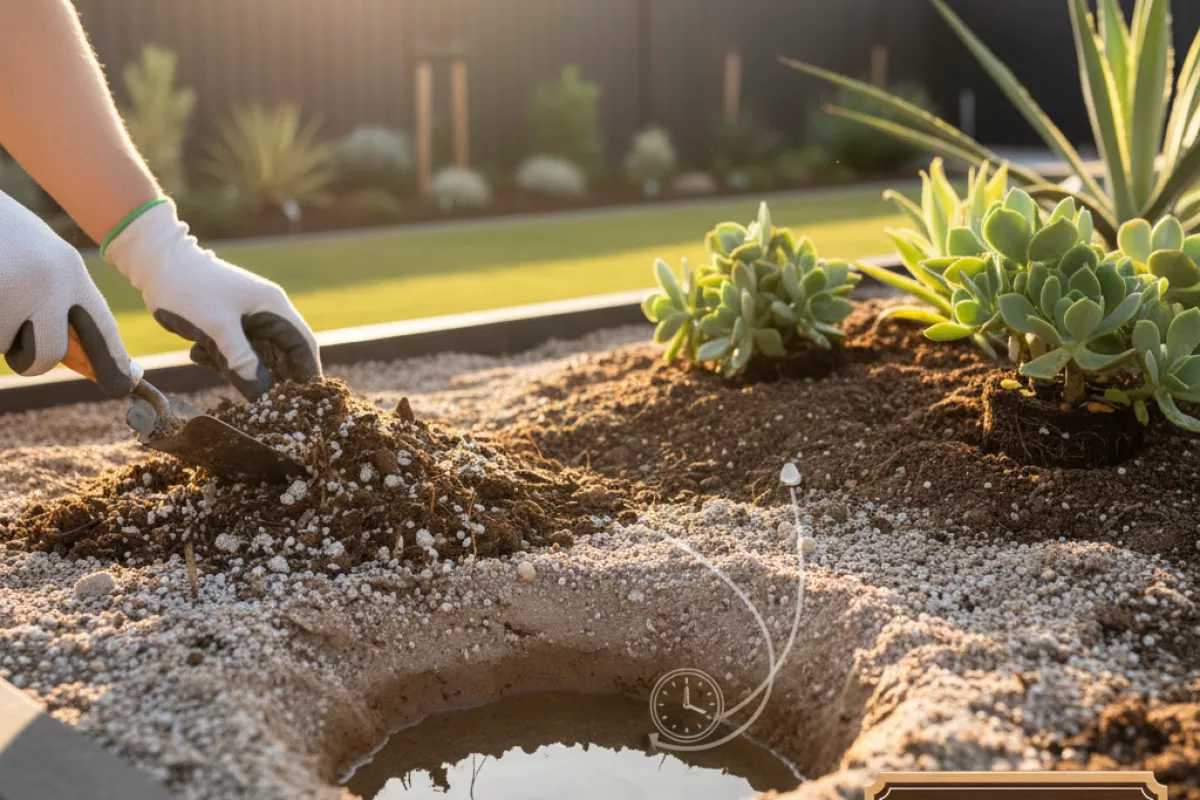
Heat-tough plants still struggle if the ground bakes into a crust or drains so fast that roots can’t keep up. The goal is simple: build a soil profile that holds moisture evenly, drains excess water, and stays cooler around the root zone during long, bright afternoons.
- Check drainage before you amend. Dig a hole about 30 cm (12 in) deep, fill it with water, and see how long it takes to drain. If water is still sitting after 4 hours, you’ll get better results by planting on a low mound or in a raised bed rather than just adding compost on top.
- Add organic matter for “water buffering.” Mix in 5–10 cm (2–4 in) of finished compost across the top 20–30 cm (8–12 in) of soil. This increases pore space so water soaks in instead of running off, and it helps the root zone stay evenly moist between irrigations.
- Match amendments to your soil type. In sandy ground, compost plus a small amount of well-aged leaf mold helps reduce how quickly water slips through. In heavy clay, compost improves structure, but avoid adding sand unless you can add a lot of organic matter too; small amounts can make clay set up harder.
- Mulch deeply to cut heat stress. After planting, apply 5–8 cm (2–3 in) of mulch (shredded bark, pine needles, or straw). Keep it 5 cm (2 in) back from stems to prevent rot. Mulch lowers surface temperatures and slows evaporation, which is often the difference between “survives” and “thrives” in full sun.
- Reduce compaction so roots can chase moisture. If soil is hardpan-like, loosen it to 25–30 cm (10–12 in) where possible, and avoid working it when it’s wet. Even drought-tolerant shrubs perform better when roots can penetrate deeper layers that stay cooler.
- Water in a way that trains deeper roots. Use slow, deep soakings rather than frequent sprinkles. As a starting point, aim to wet the top 15–20 cm (6–8 in) of soil each time, then let the surface dry slightly before the next watering. This encourages roots to grow down, where temperatures fluctuate less.
| Soil situation in full sun | What you’ll notice | What to do (practical fix) |
|---|---|---|
| Sandy, fast-draining soil | Plants wilt quickly; water disappears in minutes | Work in 5–10 cm (2–4 in) compost; mulch 5–8 cm (2–3 in); water slower and deeper |
| Clay that holds water then cracks | Puddles after watering; surface crusts and splits in heat | Incorporate compost into 20–30 cm (8–12 in); avoid foot traffic; consider raised rows 10–15 cm (4–6 in) |
| Compacted or construction-fill soil | Roots stay shallow; plants scorch even with irrigation | Loosen to 25–30 cm (10–12 in); top-dress compost annually; keep a permanent mulch layer |
| Sloped beds with runoff | Water beads and runs downhill; dry spots at the top | Create shallow basins or swales; terrace if needed; use mulch and drip lines to prevent waste |
If you do only two things, make them compost plus mulch. Together they improve moisture retention, keep soil temperatures steadier, and give heat-resistant plants the root environment they need to handle full sun without constant rescue watering.
Watering during heat waves
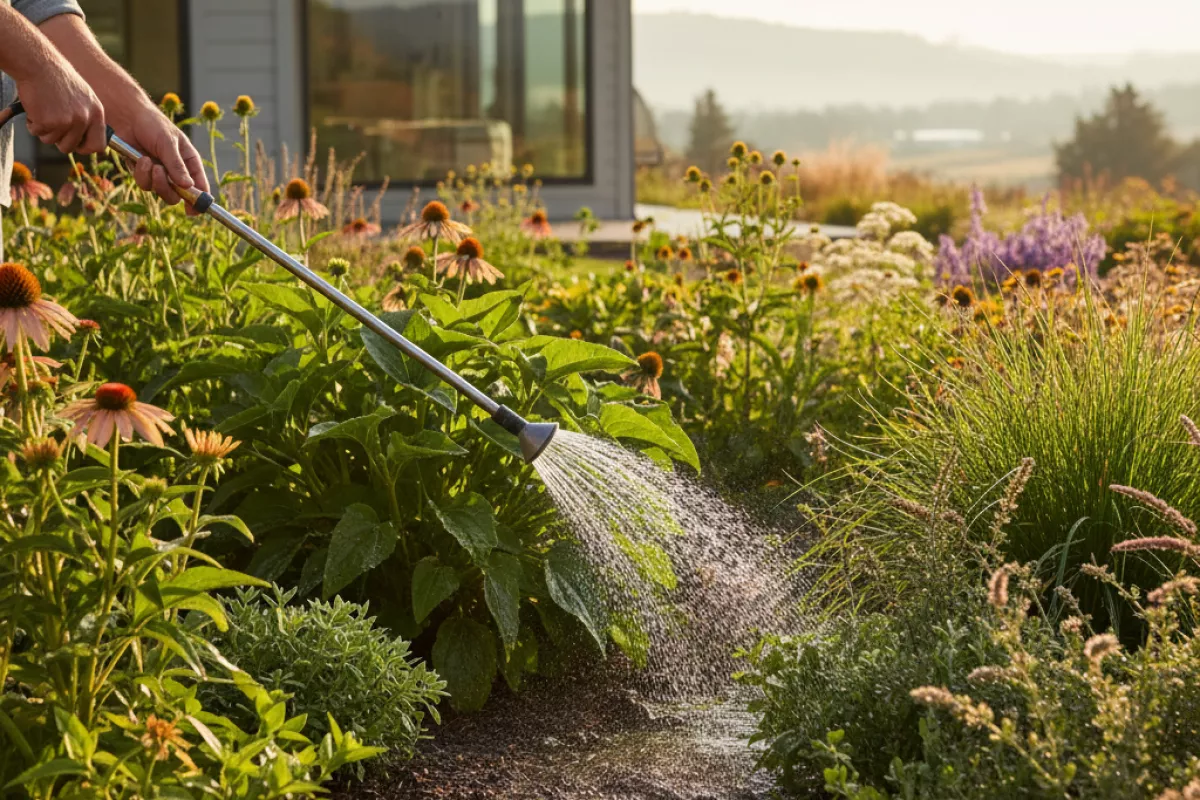
During extreme heat, the goal is to keep roots evenly moist without turning the soil into a swamp. Most “full sun” plants handle bright light better than they handle repeated shallow sips, so focus on fewer, deeper soakings that reach the root zone and reduce evaporation.
- Water early: Aim for dawn, when temperatures are lowest and wind is calmer. Evening watering can work too, but avoid leaving foliage wet overnight if your area is prone to mildew.
- Soak the root zone, not the leaves: Direct water at the base. Wet leaves don’t cool the plant for long, and droplets can contribute to leaf spotting in some species.
- Go deep, then pause: Apply water slowly so it penetrates 15–30 cm (6–12 in) into the soil, then wait and check moisture before repeating. This encourages deeper rooting and better heat tolerance.
- Use mulch as a “lid”: A 5–8 cm (2–3 in) layer of organic mulch (kept a few cm/in away from stems) reduces surface evaporation and moderates soil temperature.
- Adjust for containers: Pots can dry out in a single hot afternoon. Check once in the morning and again late afternoon; water when the top 2–3 cm (1 in) is dry, and make sure excess drains freely.
- Skip frequent light sprinkling: It wets only the surface, training roots to stay shallow, which makes plants more vulnerable during the next hot spell.
- Watch for “false wilt”: Some heat-resistant plants droop at midday even with adequate moisture. If they perk up in the evening, don’t automatically add more water—confirm soil moisture first.
| Situation | What to do | Why it helps |
|---|---|---|
| New plantings (first 2–4 weeks) | Check daily; water when the top 2–5 cm (1–2 in) dries, soaking to 15–20 cm (6–8 in) | Young roots sit near the surface and overheat quickly |
| Established in-ground plants | Water less often but deeper, targeting 20–30 cm (8–12 in) of penetration | Deep moisture buffers plants through the hottest part of the day |
| Heat wave with wind | Increase soak frequency slightly; add or refresh 5–8 cm (2–3 in) mulch | Wind accelerates transpiration and dries soil faster than heat alone |
| Containers in full sun | Water thoroughly until it drains; consider moving pots to morning sun/afternoon shade for 2–3 days | Potting mix heats up and loses moisture rapidly; brief shade reduces stress |
| Clay soil | Water slowly in cycles (e.g., half now, half 30–60 min later) | Prevents runoff and improves absorption into dense soil |
| Sandy soil | Use shorter, more frequent deep waterings; add compost and mulch | Sand drains quickly and benefits from added water-holding capacity |
If you’re unsure whether to irrigate, check the soil before you act: dig 10–15 cm (4–6 in) down with a trowel. If it’s cool and slightly damp, hold off. If it’s dry and dusty at that depth, a slow, thorough watering is usually more helpful than a quick splash.
Signs of heat stress in plants
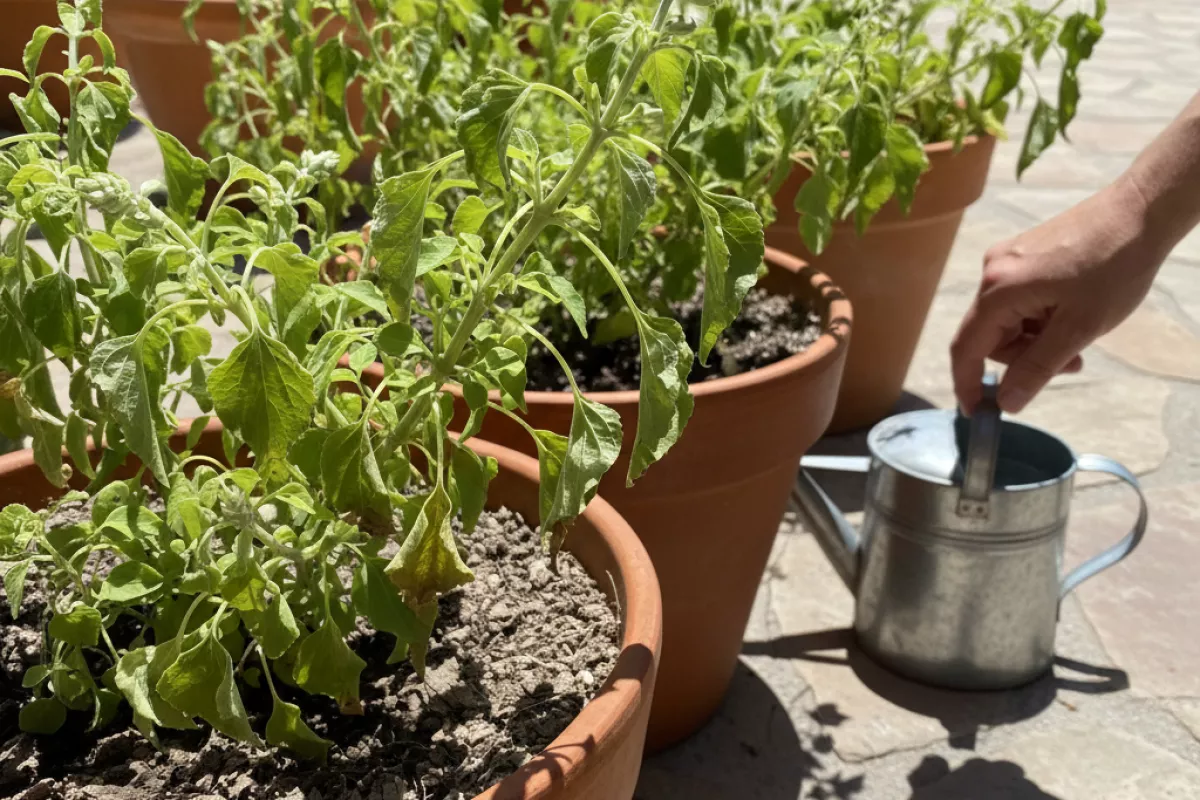
Heat strain often shows up first as subtle changes in leaf posture and color, especially during the hottest part of the day. Catching these early signals helps you decide whether to water deeply, add temporary shade, or simply wait for evening recovery.
| What you notice | What it usually means | What to check next |
|---|---|---|
| Leaves droop at midday but look better by evening | Temporary water stress from high transpiration; the plant is conserving moisture | Feel soil 5–10 cm (2–4 in) down; if dry, water slowly and deeply |
| Leaf edges curl, roll, or “taco” upward | Heat and sun exposure are reducing leaf surface area to limit water loss | Look for reflected heat from walls/paving; consider afternoon shade cloth for a few days |
| Bleached, pale, or silvery patches on sun-facing leaves | Sunscald; tissues are being damaged by intense light and heat | Check if damage is on the hottest side only; protect with temporary shade and avoid overhead watering in peak sun |
| Brown, crispy margins or tips (especially on newer leaves) | Dehydration and/or salt buildup intensified by fast evaporation | Confirm irrigation coverage; if using fertilizer, flush with a deep soak and pause feeding |
| Flowers drop early, buds dry up, or fruit fails to set | Reproductive growth is sensitive to high temperatures; pollen can become non-viable | Provide consistent moisture; protect blooms during heat waves; harvest ripe fruit promptly |
| New growth is small, tight, or distorted; stems stop elongating | Growth slows as the plant prioritizes survival over expansion | Check root zone moisture and mulch depth; avoid pruning during extreme heat |
| Wilting that does not improve overnight | More serious stress: root damage, severe drought, or heat injury | Inspect for root binding, dry hydrophobic soil, or rot; water in the early morning and monitor for 48 hours |
| Leaf drop starting with older leaves | The plant is shedding leaves to reduce water demand | Review watering frequency and soil drainage; add 5–8 cm (2–3 in) mulch, keeping it off stems |
A quick rule of thumb: if the plant perks up after sunset, it’s often coping; if it stays limp into the morning, treat it as a warning that the root zone isn’t supplying enough water or oxygen. Also remember that containers heat up fast, so potted plants can show these symptoms sooner than the same species in the ground.
Protective measures in extreme temperatures
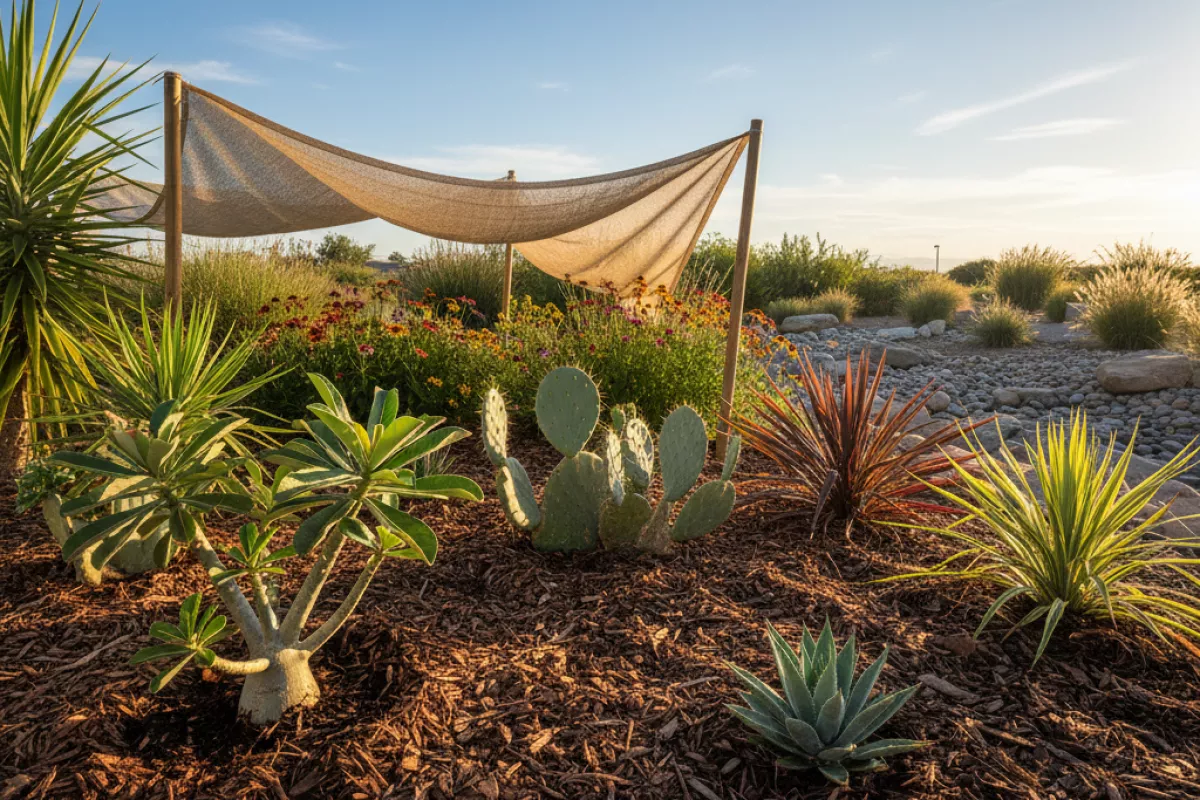
Heat-tough plants still benefit from a little help when the weather swings to the edges. The goal is to keep roots cooler and evenly moist, reduce stress during heat spikes, and prevent damage when a hot spell is followed by an unexpected cold snap.
- Mulch for root-zone stability: Apply 5–8 cm (2–3 in) of mulch to buffer soil temperature and slow evaporation. Keep mulch 5 cm (2 in) away from stems and crowns to avoid rot.
- Water deeply, not frequently: Give a thorough soak early in the morning so moisture reaches deeper roots. As a rough guide, aim to wet the top 15–20 cm (6–8 in) of soil, then let the surface dry slightly before the next watering.
- Use temporary shade during peak stress: Even full-sun choices can scorch during extreme heat. Drape shade cloth that blocks about 30–50% of light, set 30–60 cm (12–24 in) above foliage so air can move underneath.
- Protect containers from overheating: Pots heat up faster than ground soil. Move containers so they get morning sun and afternoon shade, or double-pot (set the nursery pot inside a larger one) to add insulation. Light-colored pots also reduce heat absorption.
- Wind management matters: Hot, dry wind can desiccate leaves quickly. Use a breathable windbreak (like lattice or a loose fabric screen) rather than a solid barrier that creates turbulence.
- Pause heavy feeding in heat waves: High nitrogen pushes tender growth that wilts easily. If plants look stressed, wait until temperatures settle before fertilizing again, and water well first.
- Prune with restraint: Avoid hard pruning during very hot periods because it removes the leaf cover that shades stems and soil. If you must tidy, do light trimming in the cooler part of the day.
- Plan for sudden cold after heat: Keep frost cloth on hand for nights near 0°C (32°F) after a warm spell. Cover before sunset and uncover once temperatures rise to prevent overheating in morning sun.
| Situation | What you may notice | Best response |
|---|---|---|
| Heat spike above 35°C (95°F) | Midday wilting, leaf curl, sunscald on exposed leaves | Deep morning watering, add temporary shade (30–50%), avoid pruning and fertilizing |
| Hot nights above 24°C (75°F) | Slower growth, flowers dropping, plants look “tired” even when watered | Keep soil evenly moist, increase mulch to 5–8 cm (2–3 in), improve airflow around plants |
| Dry wind with low humidity | Crispy edges, rapid wilting, buds drying out | Windbreak, water at root zone (not overhead), group containers to reduce exposure |
| Cold snap after warm weather below 2°C (36°F) | Blackened tips, soft new growth collapsing | Cover with frost cloth before sunset, water earlier in the day, delay pruning until damage is clear |
If you’re unsure whether a plant is thirsty or simply protecting itself, check the soil before reacting. If the top 5 cm (2 in) is dry but deeper soil is still cool and slightly damp, it may just be midday droop; focus on shade and wind protection rather than adding more water.