How to Water Plants Properly in Extreme Heat

 Here we how extreme heat raises plants’ water needs, speeds up soil moisture loss, and changes the best time and frequency for watering. It also explains ways to reduce evaporation, spot heat stress, and avoid common watering mistakes in hot weather.
- Why extreme heat increases water demand in plants
- How high temperatures affect soil moisture loss
- Best time of day to water during extreme heat
- Techniques to reduce evaporation and water loss
- Adjusting watering frequency in hot conditions
- Signs plants are suffering from heat stress
- Common mistakes when watering in extreme heat
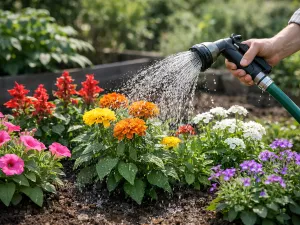
When temperatures spike, plants need the right amount of water at the right time, not just more frequent watering. In extreme heat, roots dry quickly and leaves lose moisture fast, so a steady, targeted routine helps reduce stress, prevent damage, and avoid waste. Water early in the morning or late in the evening, soak the soil deeply, and focus on the roots rather than the leaves. These simple adjustments can help garden beds, containers, and houseplants stay healthier during hot weather.
Why extreme heat increases water demand in plants

Plants use water for far more than simple hydration. In hot weather, water keeps cells firm, moves nutrients from the roots to the leaves, and helps cool the plant through transpiration. When temperatures rise sharply, that whole system speeds up. A plant that looked fine with a regular watering routine at 24°C (75°F) can begin drying out much faster at 35°C (95°F).
Heat also changes the balance between water uptake and water loss. Roots can only absorb moisture at a certain rate, but leaves may lose it very quickly when the air is hot, dry, or windy. If the roots cannot keep up, the plant starts to wilt, growth slows, and flowers or fruit may drop early.
Why transpiration rises in hot weather
Transpiration is the process by which plants release water vapor through tiny pores in their leaves. This is normal and necessary, but in extreme heat it becomes much more intense. The hotter the air, the greater the pull on moisture inside the plant, especially when low humidity and strong sun are involved.
- Leaf cooling: Plants release more water to cool themselves, much like sweating.
- Faster metabolism: Warm conditions can increase growth activity, which raises water needs.
- Greater leaf exposure: Large-leaved plants and fast-growing vegetables often lose water more quickly than woody shrubs.
- Container stress: Pots heat up faster than garden soil, so roots in containers face more rapid drying.
Which plants need the closest attention
Not all plants respond the same way. Newly planted shrubs, shallow-rooted annuals, vegetables, hanging baskets, and anything growing in small pots usually need the most frequent checks. Established trees and deep-rooted perennials are often more resilient, but even they can struggle during a prolonged heatwave if the soil becomes dry well below the surface.
Plants carrying fruit, large blooms, or lots of soft new growth are especially vulnerable because they are already using extra moisture. Tomatoes, cucumbers, hydrangeas, basil, and impatiens are common examples that often show stress quickly when heat and dryness arrive together.
A quick finger test still beats guessing. Push a finger 5 cm to 7.5 cm (2 in to 3 in) into the soil near the root zone; if it feels dry at that depth, many garden plants will benefit from a deep watering.
How high temperatures affect soil moisture loss

Hot weather does not only affect the plant above ground; it changes what happens in the soil as well. Moisture evaporates faster from the surface, and warm soil can dry down more deeply than many gardeners expect. This is why a bed may look slightly damp on top after a light sprinkle but still be dry around the roots a few hours later.
Soil type has a major influence on how quickly this happens. Sandy ground drains fast and loses moisture quickly, while clay holds water longer but can become hard and difficult to re-wet if allowed to bake in full sun. Loamy soil usually gives the best balance, but even good soil dries rapidly under intense heat if it is exposed and unmulched.
Surface evaporation versus root-zone drying
One of the most common misunderstandings is assuming that all water loss is visible at the surface. In reality, the top 2.5 cm to 5 cm (1 in to 2 in) may dry first, but repeated heat can also pull moisture from deeper layers where feeder roots are active. That matters because many vegetables and bedding plants rely on the upper 15 cm to 20 cm (6 in to 8 in) of soil.
When watering is too shallow, roots tend to stay near the surface where temperatures are highest. That makes plants even more vulnerable during the next hot spell. Deep watering encourages roots to grow downward into cooler, more stable soil.
Factors that speed up moisture loss
Temperature is only one part of the picture. Several conditions often combine to make the soil dry much faster than expected.
- Wind: Moving air strips moisture from both soil and leaves, even when the temperature is moderate.
- Direct afternoon sun: Beds against walls, fences, or paving often become heat traps.
- Bare soil: Exposed ground loses water much faster than soil protected with mulch.
- Crowded roots: Closely planted containers and raised beds can dry rapidly because many roots are drawing from a small volume of soil.
- Dark containers: Black or dark brown pots absorb more heat and warm the root ball quickly.
How different growing situations compare
The same weather can produce very different moisture conditions depending on where a plant is growing. This is why watering by schedule alone often fails in summer.
| Growing situation | How moisture behaves in heat | What to watch for |
|---|---|---|
| In-ground border | Usually dries more slowly because the soil volume is larger and cooler below the surface. | Check deeper than the top layer, especially around shallow-rooted plants. |
| Raised bed | Warms and drains faster than ground-level soil. | Vegetables may need more frequent deep watering during heatwaves. |
| Terracotta pot | Moisture escapes through the pot walls as well as the soil surface. | Expect quicker drying, particularly in windy spots. |
| Plastic or glazed container | Holds moisture longer than terracotta but can still overheat in direct sun. | Monitor root temperature and drainage, not just surface dryness. |
Best time of day to water during extreme heat

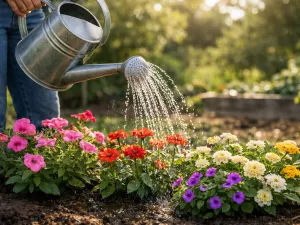
The best time to water during very hot weather is usually early morning. At that point, the soil is cooler, evaporation is lower, and plants have time to take up moisture before the hottest part of the day. Watering then also helps restore leaf and stem turgor after overnight respiration and prepares the plant for the stress of strong sun.
Late evening can work when mornings are not possible, but it is usually a second choice rather than the ideal. Water left sitting on foliage overnight may increase disease risk in humid climates, especially on plants prone to mildew or leaf spot. The goal is to get water into the root zone when the plant can use it efficiently, not simply to wet the surface.
Why morning watering works best
Morning irrigation gives the best balance between efficiency and plant health. Less water is lost to evaporation than at midday, and roots can absorb moisture before the soil becomes hot. This is particularly useful for vegetables, annual flowers, and potted plants that decline quickly once they begin to dry.
- Water as early as practical, ideally between sunrise and mid-morning.
- Apply enough to soak the root area rather than giving a quick splash.
- Aim water at the soil, not the leaves, unless you are briefly rinsing dust or pests.
- Recheck stressed containers in the afternoon if temperatures exceed 32°C (90°F).
Is midday watering ever acceptable?
Midday watering is not wasteful if a plant is genuinely at risk. The old idea that water droplets always burn leaves is overstated; the bigger issue is that much of the water may evaporate before it reaches the roots. If a plant is wilting hard, the soil is dry, and the heat is severe, it is better to water than to wait for evening.
That said, midday watering should be done carefully. Use a slow flow at the base of the plant, avoid splashing hot foliage, and focus on plants that actually need help rather than soaking the entire garden out of habit.
If a plant is wilted at 14:00 in 38°C (100°F) heat, check the soil before reacting. Some plants temporarily droop in intense sun even when the root zone is still moist, and overwatering them can create a second problem.
Techniques to reduce evaporation and water loss

Good watering in extreme heat is not only about how much water you apply. It is also about how well you keep that moisture in the soil once it is there. Small changes in technique can dramatically reduce waste and help plants stay evenly hydrated for longer between waterings.
The most effective approach combines deep watering, root-zone protection, and sensible plant care. This creates a more stable environment around the roots and reduces the repeated stress of drying out and rewetting.
Use mulch to protect the soil
Mulch is one of the best tools for hot weather gardening. A layer of organic material helps shade the soil, slow evaporation, and moderate temperature swings. It also reduces crusting, which makes it easier for water to soak in rather than run off.
- Depth: Apply about 5 cm to 7.5 cm (2 in to 3 in) of mulch around most garden plants.
- Materials: Compost, shredded bark, leaf mold, straw, or fine wood chips all work well depending on the planting area.
- Spacing: Keep mulch a few centimeters away from stems and trunks to avoid rot.
- Best use: Mulch is especially valuable around vegetables, roses, hydrangeas, and newly planted shrubs.
Water slowly and deeply
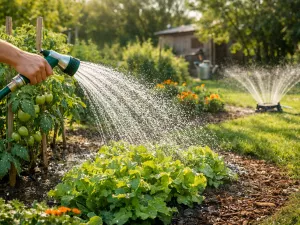
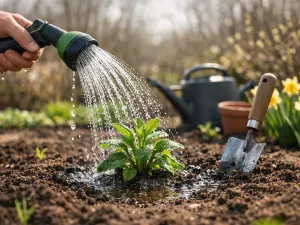
Fast watering often leads to runoff, especially on baked soil or sloped beds. A slow soak gives water time to move downward into the root zone. Soaker hoses, drip irrigation, or a hose set to a gentle trickle are usually better than a quick blast from a spray nozzle.
For many in-ground plants, the goal is to moisten the top 15 cm to 20 cm (6 in to 8 in) of soil. Larger shrubs and young trees may need water to penetrate 20 cm to 30 cm (8 in to 12 in) deep. In containers, water until excess begins to drain from the bottom, then stop and let the pot drain freely.
Reduce stress from light, feeding, and pruning
Water loss becomes harder to manage when plants are pushed into fresh growth during a heatwave. Heavy feeding, hard pruning, or transplanting can all increase stress at the wrong time. During extreme heat, it is usually better to maintain plants rather than encourage a flush of soft new growth that will need more moisture.
- Delay strong fertilizer: High-nitrogen feeding can trigger tender growth that wilts quickly.
- Avoid major pruning: Removing too much foliage can expose stems and fruit to sunscald.
- Provide temporary shade: Shade cloth or light screening can help sensitive crops during peak afternoon heat.
- Group containers: Pots placed close together create a slightly cooler, more humid microclimate.
When a potting mix has become bone dry, water may run straight down the sides and out the drainage holes. Apply water in two passes, waiting a few minutes between them, so the mix can rehydrate properly.
Adjusting watering frequency in hot conditions

There is no universal summer schedule that suits every plant. In hot conditions, watering frequency should be based on the plant type, root depth, container size, soil texture, and the actual weather pattern. A shallow-rooted lettuce crop in a raised bed may need attention every day in a heatwave, while an established shrub in the ground may only need a deep soak every several days.
The key is to shift from calendar watering to condition-based watering. Instead of asking, “Did I water yesterday?” ask, “How dry is the root zone today?” This leads to better plant health and avoids the common cycle of frequent shallow watering.
How to judge when to water again
Checking the soil is more reliable than judging by the look of the leaves alone. In heat, some plants wilt temporarily in the afternoon and recover by evening without needing more water. Others may stay upright while the root zone is already too dry. A quick inspection helps you tell the difference.
- Check soil moisture 5 cm to 10 cm (2 in to 4 in) below the surface for small plants and annuals.
- For shrubs and young trees, inspect deeper if possible, around 15 cm to 20 cm (6 in to 8 in).
- Lift containers when practical; a very light pot usually needs water.
- Watch how quickly the soil dries after a deep soak and adjust from there.
Typical patterns in very hot weather
The examples below are not fixed rules, but they give a practical starting point for adjusting care during extreme temperatures.
| Plant type | Likely watering pattern in heat | Practical note |
|---|---|---|
| Small containers and hanging baskets | Often daily, sometimes twice daily in severe heat above 35°C (95°F). | Check morning and late afternoon because pot size limits water reserves. |
| Vegetables in raised beds | Commonly every 1 to 2 days depending on mulch, crop density, and wind. | Keep moisture even to reduce blossom end rot and bitter growth. |
| Established perennials | Usually less often, but with deeper watering when needed. | Let the upper surface dry slightly, but do not allow prolonged root-zone drought. |
| Newly planted shrubs and trees | Need regular deep watering until roots spread into surrounding soil. | Do not rely on rainfall alone during the first season. |
When to hold back
Hot weather does not always mean more water every single day. If the soil remains damp below the surface, adding more can reduce oxygen around the roots and encourage rot. This is especially important in heavy clay, self-watering containers, or shady areas that do not dry quickly.
Plants with silver leaves, thick stems, or naturally drought-tolerant habits often prefer a thorough soak followed by some drying time. Lavender, rosemary, sedum, and many Mediterranean herbs can suffer if treated like thirsty bedding plants.
Signs plants are suffering from heat stress

Heat stress does not always look the same as simple thirst. A plant can be stressed by high temperatures even when the soil is not completely dry, especially if roots are damaged, the pot is overheating, or the plant is exposed to intense reflected light. Recognizing the signs early helps you respond correctly instead of reaching for water automatically.
Some symptoms appear within hours, while others develop over several days. The pattern matters. Temporary afternoon drooping that disappears by sunset is less serious than morning wilt, scorched leaf edges, or flowers collapsing despite recent watering.
Common visual symptoms
Plants under heat pressure often show changes in leaves, flowers, and overall posture. These signs are easiest to spot when you compare the plant with how it normally looks in milder weather.
- Wilting: Leaves and stems lose firmness, especially during the hottest hours.
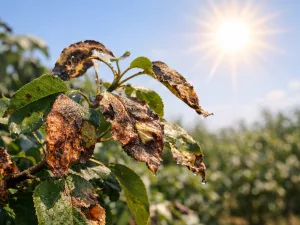
- Leaf scorch: Brown, crisp edges or bleached patches appear on exposed foliage.
- Curling or folding: Leaves roll inward to reduce water loss.
- Bud or flower drop: Blooms fail early when the plant cannot support them.
- Slow growth: New shoots become smaller, weaker, or stop developing.
- Sunscald on fruit: Tomatoes, peppers, and similar crops may develop pale, leathery patches.
How to tell heat stress from overwatering
Because both problems can cause limp leaves, gardeners sometimes make the situation worse by adding water to already saturated soil. The difference usually becomes clearer when you inspect the root zone and the timing of the symptoms.
Heat-stressed plants often perk up after evening cooling or after a proper deep watering if the soil was dry. Overwatered plants usually remain limp, may yellow from the bottom up, and sit in soil that feels wet or sour. If the plant is in a container, poor drainage can intensify heat damage because stressed roots cannot absorb moisture efficiently.
What to do when symptoms appear
Responding well means reducing stress from several angles at once rather than only watering more.
- Check soil moisture before taking action.
- Water deeply if the root zone is dry, aiming at the base of the plant.
- Provide temporary afternoon shade for sensitive plants.
- Pause fertilizer until the plant begins to recover.
- Remove only badly scorched leaves; avoid heavy pruning in the middle of a heatwave.
Common mistakes when watering in extreme heat
Even attentive gardeners can run into trouble during very hot weather because the usual routine stops working. The biggest mistakes tend to come from reacting too quickly, watering too lightly, or treating every plant the same. Good heatwave care is less about panic watering and more about accuracy.
Once you understand the common errors, it becomes much easier to keep plants stable through difficult spells of weather. Most problems are preventable with slower watering, better observation, and a little adjustment to feeding and maintenance.
Shallow, frequent watering
This is one of the most common habits in hot weather. A quick spray cools the surface for a short time, but it does little for deeper roots. Over time, it encourages roots to remain near the top of the soil where temperatures are highest and drying is fastest.
A better approach is to water thoroughly, then check again before repeating. Deep, less frequent watering usually builds stronger, more resilient root systems than constant surface wetting.
Watering by clock instead of by need
Automatic routines can be helpful, but they should not replace observation. A windy day at 31°C (88°F) may dry containers faster than a still day at 35°C (95°F). Rainfall can also be misleading if only the surface gets wet. Plants in shade, clay soil, or large pots may need less water than expected even during a heatwave.
- Check before watering: Feel the soil rather than relying on habit.
- Adjust by location: South-facing walls, balconies, and patios often need extra attention.
- Separate plant groups: Herbs, vegetables, shrubs, and bedding plants rarely need the same schedule.
Ignoring drainage, mulch, and overall care
Watering alone cannot solve every heat problem. If drainage holes are blocked, if the soil has become compacted, or if pots are root-bound, even generous watering may not help for long. Likewise, bare soil loses moisture quickly, and heavy feeding can push plants into soft growth that struggles in extreme conditions.
It is also a mistake to prune hard during intense heat unless you are removing dead or damaged material. Leaves provide shade for stems, fruit, and the soil below. Keeping that canopy intact often helps the plant conserve moisture naturally.
A quick checklist to avoid trouble
These practical checks help prevent the most common watering errors when temperatures stay high for days at a time.
- Water early: Morning is usually the most efficient time.
- Soak the root zone: Do not stop after wetting only the surface.
- Mulch exposed soil: A 5 cm to 7.5 cm (2 in to 3 in) layer can make a major difference.
- Pause strong fertilizer: Let stressed plants stabilize first.
- Watch containers closely: Small pots can shift from moist to dry in a single hot day.
- Do not assume wilt always means dryness: Confirm with a soil check before watering again.