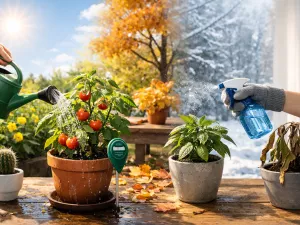
Watering Annual Plants During Fast Growth Phases

 This article explains why fast-growing annuals need more water, how rapid growth changes soil moisture demand, and how heat and sun raise water needs. It covers watering frequency, keeping moisture balanced to avoid root stress, healthy hydration signs, and common watering mistakes.
- Why annual plants need more water during rapid growth
- How fast growth affects moisture demand in soil
- Best watering frequency during active development stages
- Balancing water levels without causing root stress
- How temperature and sunlight impact water needs
- Signs annual plants are growing well with proper hydration
- Common mistakes when watering fast-growing annuals
As annuals enter their fast growth phase, their water needs can shift quickly, so paying close attention helps keep them strong, full, and productive. Too little water can slow development and cause stress, while too much can suffocate roots and encourage disease. The best approach is a simple routine that considers weather, soil type, and plant size, helping you maintain even moisture without watering more than necessary.
Why annual plants need more water during rapid growth

Annual plants move through their entire life cycle in one season, so when they enter a fast growth phase, everything speeds up at once. New leaves expand, stems lengthen, roots spread, and flower buds begin forming. All of that fresh tissue is built with water. During this stage, moisture is not just helpful for preventing wilting; it is part of the plant’s basic construction process.
As annuals put on size quickly, they also transpire more. A larger leaf canopy means more surface area releasing water into the air, which increases the need for steady uptake from the soil. If the root zone dries too much during this period, growth often stalls before the plant shows dramatic wilt. Gardeners may notice smaller leaves, fewer side shoots, or delayed flowering long before the plant collapses.
What the plant is doing with that extra moisture
Water supports several jobs at once during active development. It carries dissolved nutrients from the soil, helps maintain cell pressure so stems stay firm, and allows leaves to keep photosynthesizing efficiently. Fast-growing bedding plants such as petunias, zinnias, cosmos, impatiens, and marigolds can use moisture surprisingly quickly once they are established and pushing new growth.
- Cell expansion: New shoots and leaves rely on water pressure to enlarge properly.
- Nutrient transport: Nitrogen, potassium, and other nutrients move through moist soil into the roots.
- Cooling: Transpiration helps prevent overheating on bright days.
- Flower production: Bud formation is more reliable when moisture swings are not extreme.
Why shallow watering often fails
During rapid growth, roots need moisture deeper than the top few centimeters. A quick splash may darken the surface but leave the lower root zone dry. That encourages shallow rooting, which makes annuals even more vulnerable in warm weather. Deep, even watering trains roots to grow downward where conditions stay more stable.
Editor’s note: If a bed looks dry by afternoon, do not assume the whole root zone is empty. Check 5-8 cm (2-3 in) below the surface first. Many annuals wilt slightly in heat but recover by evening if the soil underneath is still adequately moist.
How fast growth affects moisture demand in soil

Fast growth changes the soil environment as much as it changes the plant. As roots expand, they occupy more of the available soil volume and draw water from a wider area. At the same time, the plant’s top growth shades some parts of the bed while exposing others to wind and sun, creating uneven drying patterns. This is why a watering routine that worked two weeks ago may suddenly feel insufficient.
Soil type strongly affects how quickly moisture is used and lost. Sandy ground drains fast and needs more frequent replenishment, while clay holds water longer but can become airless if kept too wet. Rich loam with compost tends to provide the most forgiving balance for annuals, especially when they are growing hard and flowering heavily.
Root expansion changes the pace of drying
As annuals establish, their roots stop behaving like those of a newly planted seedling. Instead of relying on a small pocket of damp soil, they begin extracting moisture from a larger zone. This often makes the bed dry faster overall, even though the plants are technically better rooted. Containers show this shift even more clearly because there is limited soil to draw from.
One practical result is that moisture should be checked at root depth, not judged by the crust on top. A dry-looking surface can sit above usable moisture, while a damp surface can hide dryness lower down if watering has been too light.
How different soils respond
The same annual can need very different watering schedules depending on what it is planted in. The table below shows how common soil conditions influence moisture demand during strong vegetative growth.
| Soil condition | How it behaves during fast growth | Watering implication |
|---|---|---|
| Sandy or gritty soil | Drains quickly and loses moisture fast in heat and wind | Check often and water more frequently, sometimes daily in containers |
| Loamy soil with compost | Holds moisture evenly while keeping air around roots | Usually allows deeper, less frequent watering |
| Heavy clay soil | Retains water longer but can stay dense after soaking | Water thoroughly, then wait longer; avoid repeated light applications |
| Raised beds with organic matter | Warms and dries faster than in-ground beds, especially at edges | Monitor more closely during hot spells and active blooming |
Mulch can slow evaporation from all of these soil types. A layer of compost, leaf mold, or fine bark about 2.5-5 cm (1-2 in) thick helps keep moisture more even, but it should not be piled against stems where air circulation is needed.
Best watering frequency during active development stages

There is no single perfect schedule for all annuals, but frequency should match the plant’s stage, the rooting depth, and the weather. Newly planted annuals often need more regular watering because their roots are still limited. Once they are established and growing strongly, the goal shifts toward deep watering that moistens the full root zone, followed by enough time for air to return to the soil.
Rather than watering by the calendar alone, use a simple check: feel the soil 5 cm (2 in) below the surface in beds and slightly deeper in larger containers. If it feels dry at that depth and the plants are in active growth, it is usually time to water. If it still feels cool and slightly damp, waiting is often better than adding more.
General timing by planting situation
Different growing setups lose water at different rates. Pots, window boxes, hanging baskets, and grow bags dry much faster than in-ground beds, especially once the foliage fills out.
- Seedlings and recent transplants: Often need light but consistent moisture for the first 7-14 days, depending on weather and root size.
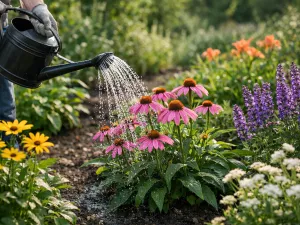
- Established annuals in beds: Usually do best with a deep soak when the upper root zone begins to dry, rather than daily surface watering.
- Containers in active bloom: May need water every day in warm weather, and sometimes twice daily during extreme heat above 32°C (90°F).
- Dense mixed plantings: Need closer observation because crowded roots use moisture quickly and can hide dry soil beneath foliage.
Morning versus evening watering
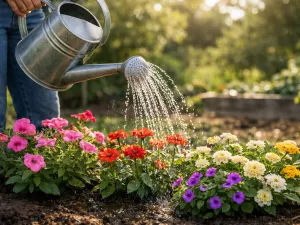
Morning is usually the best time to water annuals. It gives roots access to moisture before the hottest part of the day and allows leaves to dry quickly if they get splashed. Evening watering can work when necessary, but consistently wet foliage overnight may increase disease pressure in crowded plantings.
- Water early enough that the soil absorbs moisture before midday heat.
- Apply enough to wet the root zone, not just the surface.
- Pause briefly if water runs off, then resume so it can soak in.
- Recheck later in the day only during severe heat or in small containers.
Practical recommendation: If you are unsure whether to water, lift the pot. With experience, the weight difference between a well-watered container and a dry one becomes one of the fastest and most reliable checks.
Balancing water levels without causing root stress

Annuals grow best when roots experience a steady cycle of moisture and oxygen. Problems begin when the soil swings too far in either direction. Drought stress slows cell expansion and nutrient uptake, but waterlogged soil is just as damaging because roots need air spaces around them. When those spaces stay filled with water, roots weaken, and the plant may wilt even though the soil is wet.
Balancing water levels means aiming for consistency rather than constant saturation. The root zone should be evenly moist after watering, then gradually move toward slightly drier conditions before the next soak. This pattern encourages healthier root systems and better resilience during heat.
How to avoid overwatering while keeping growth strong
Overwatering is often caused by habit rather than plant need. Gardeners see fast growth and assume more water is always beneficial, but excessive moisture can reduce root vigor and increase fungal issues. The solution is not less care; it is more accurate observation.
- Water deeply, then stop: A thorough soak is better than several small applications close together.
- Use drainage to your advantage: Containers must have open drainage holes; decorative cachepots should not trap standing water.
- Match feeding to watering: Heavy fertilizer in dry soil can stress roots, while constant feeding in soggy soil can push weak, soft growth.
- Adjust after rain: Natural rainfall counts, but check how much actually reached the root zone under dense foliage.
Root stress warning signs
Plants under root stress can send mixed signals. A thirsty annual may wilt with dry soil, but an overwatered one can also droop because damaged roots are not functioning properly. Looking at the whole picture helps separate the two.
Watch for these combinations rather than a single symptom:
- Dry stress: limp leaves, dull color, crisp edges, and soil pulling away from the sides of a pot.
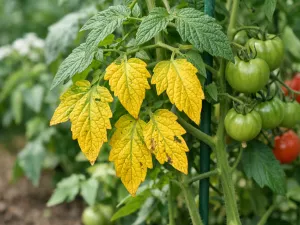
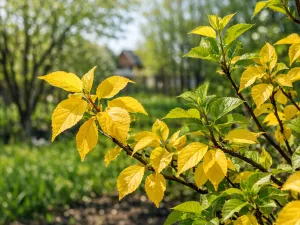
- Excess moisture: yellowing lower leaves, slow growth, soft stems, algae on the soil surface, or a sour smell in containers.
- Salt and fertilizer stress: leaf burn despite moist soil, especially when feed is applied too often in pots.
Good spacing, suitable potting mix, and occasional pinching or pruning also help. A plant with too much crowded top growth can lose water faster than the root system can keep up with, especially if it has been pushed with high nitrogen feed.
How temperature and sunlight impact water needs

Heat and light can change a plant’s water use from one day to the next. Annuals in cool, cloudy weather may use moisture slowly, while the same planting can dry much faster in bright sun, warm wind, and low humidity. Temperature affects both the rate of evaporation from the soil and the rate of transpiration from leaves, so water demand rises sharply as conditions become hotter.
Sun exposure matters just as much. Full-sun annuals such as zinnias, vinca, and portulaca are adapted to bright conditions, but they still need enough water to support rapid growth and flowering. Shade-tolerant annuals like impatiens and begonias generally dry more slowly, yet they can still suffer if warm air and root competition reduce available moisture.
Weather patterns that increase demand
Some conditions are more drying than gardeners expect. Wind can strip moisture quickly even when temperatures are moderate, and reflected heat from walls, paving, and balconies can make containers much hotter than the surrounding air.
- Hot afternoons: Water use rises quickly above about 27°C (81°F), especially in pots and raised beds.
- Windy days: Foliage loses water faster, and soil surfaces dry sooner.
- Low humidity: Plants transpire more aggressively, increasing root demand.
- Reflected heat: South- or west-facing hard surfaces can intensify stress around annuals.
Adjusting care by exposure
Plants grown in six or more hours of direct sun usually need more frequent checking than those in filtered light. However, more shade does not automatically mean less watering if roots are crowded by trees or shrubs. Nearby woody roots can outcompete annuals for moisture, especially in summer beds.
During heat waves, it can help to water thoroughly in the morning and then inspect containers again in late afternoon. If a potting mix has become very dry, water may run straight through. In that case, apply water slowly, wait a few minutes, and repeat until the root ball is fully rehydrated.
Editor’s note: Temporary midday wilt is common in intense sun, but repeated afternoon collapse can signal that the roots are not keeping pace. Check whether the plant recovers by sunset before assuming it needs more water every single day.
Signs annual plants are growing well with proper hydration

Well-watered annuals do not just avoid stress; they show it in their structure, color, and pace of development. When hydration is right, stems are firm, leaves expand to normal size, and the plant adds new growth without becoming weak or floppy. Flowering varieties also hold buds more reliably and recover faster after deadheading or light pruning.
Healthy hydration usually produces steady growth rather than sudden surges followed by setbacks. A plant that receives consistent moisture tends to branch better, fill out evenly, and maintain stronger leaf color because nutrient movement through the root zone remains dependable.
Positive growth indicators to watch for
Instead of focusing only on wilt, look for signs that the plant is using water efficiently and building strong top growth.
- Firm foliage: Leaves feel supple and full, not papery or limp.
- Even color: Green leaves appear clear and consistent for the variety, without widespread yellowing.
- Regular new growth: Fresh shoots appear at tips and side nodes during warm active periods.
- Bud retention: Flower buds develop and open without dropping prematurely.
- Stable posture: Stems stay upright between waterings instead of collapsing quickly.
What healthy soil moisture looks like in practice
The soil itself offers clues. In beds, properly hydrated soil below the surface should feel cool and lightly moist, not muddy. In containers, the potting mix should absorb water readily and drain freely, without remaining swampy for long periods. A white crust on the surface can indicate fertilizer salt buildup, which often interferes with good water balance even if the plant is watered often.
Plants that are growing well with proper moisture also respond better to feeding. If you apply a balanced liquid fertilizer at label rate during active growth, such as every 7-14 days, the plant should green up and continue flowering without sudden scorch or collapse. That response usually means the roots are healthy and functioning in a suitable moisture range.
Common mistakes when watering fast-growing annuals
Most watering problems with annuals come from inconsistency, not neglect alone. Fast-growing plants can forgive an occasional missed check, but repeated extremes of bone-dry soil followed by heavy soaking often lead to poor flowering, split stems, weak roots, or disease trouble. The aim is to avoid habits that make moisture levels swing too sharply.
Another common issue is treating all annuals the same. A crowded hanging basket of petunias, a shaded bed of impatiens, and a sunny patch of cosmos may all need very different watering approaches. Container size, soil volume, exposure, and plant density matter as much as the species itself.
Frequent errors that reduce performance
These mistakes are especially common during periods of rapid growth, when plants are using water quickly and gardeners may react too late or too heavily.
- Watering by habit instead of checking soil: A fixed daily routine can lead to chronic overwatering in cool weather and underwatering in hot weather.
- Only wetting the surface: Shallow watering encourages weak roots near the top of the soil.
- Ignoring drainage: Pots without proper drainage holes can suffocate roots even when the plant appears thirsty.
- Letting containers dry completely: Peat-based mixes can become hard to rewet once they shrink from the pot sides.
- Overfeeding to compensate for stress: Extra fertilizer will not fix poor watering and may worsen root damage.
- Sprinkling foliage late in the day: This can increase disease risk in dense plantings.
Better habits that prevent trouble
Improving results usually comes down to a few practical routines. Check soil depth, water early, mulch beds lightly, deadhead spent blooms, and adjust frequency when weather changes. If a planting seems to need water constantly, consider whether the root zone is too small, the bed is overcrowded, or the plant is competing with nearby shrubs.
When annuals are pruned, pinched, or cut back after an early flush, their water use may temporarily shift. Fresh regrowth often follows quickly, so continue monitoring rather than assuming reduced top growth means reduced need for long. Likewise, after heavy rain, do not resume normal watering until the root zone has begun to dry again.
Practical recommendation: Keep a simple note of which containers dry out first during warm weeks. The thirstiest pots are usually the ones in the brightest exposure, with the smallest soil volume, or with the densest planting. That pattern helps you water more accurately than a one-size-fits-all schedule.