African Violet — Compact Houseplant With Simple Indoor Care

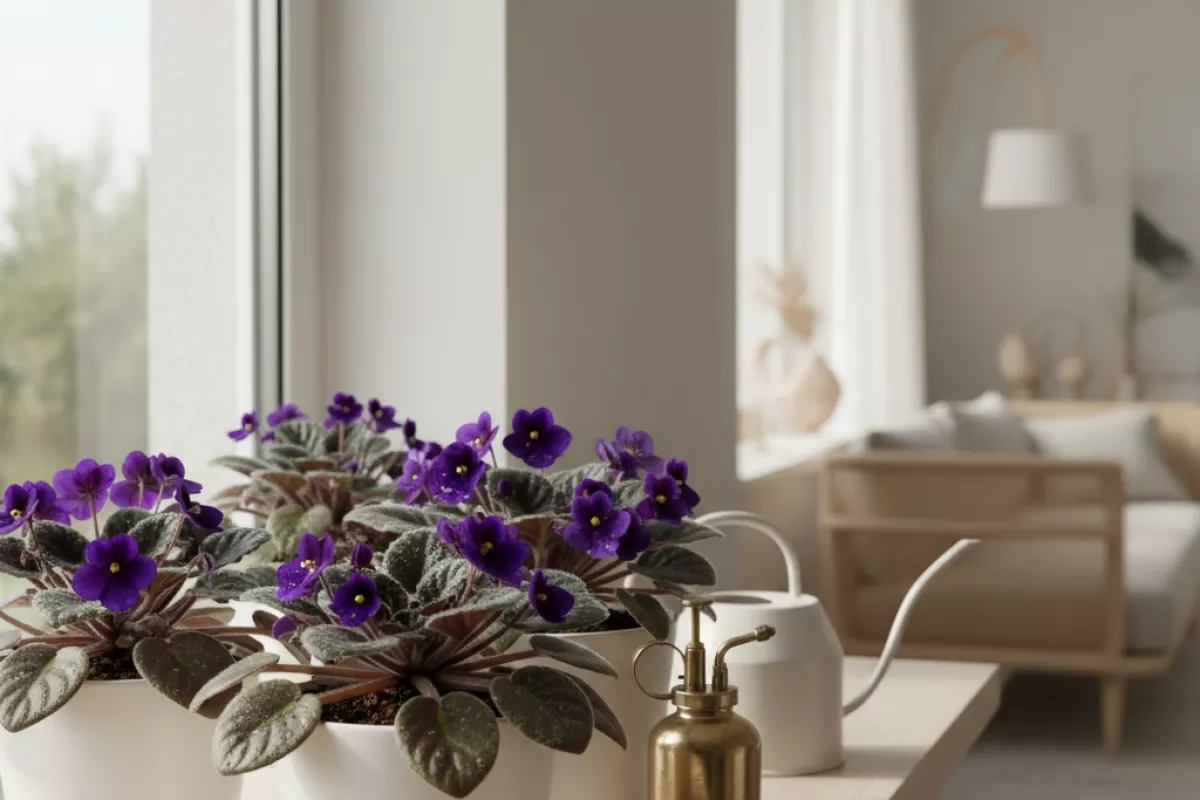 This article explains African violet basics for indoor growing, including native habitat, velvety compact leaves, light for steady blooms, soil mix and watering, and the right temperature range. It also covers a simple care routine, leaf-cutting propagation, seasonal flowering indoors, and common pests and problems.
- African violet overview and indoor plant traits
- Native habitats and natural environment
- Leaf texture and compact growth form
- Light needs for steady African violet flowering
- Soil mix and watering techniques for African violets
- Temperature range for African violet indoor cultivation
- General care routine for healthy plants
- Propagation from leaf cuttings
- Seasonal flowering patterns indoors
- Common pests and problems in African violets
African violets are small, dependable houseplants that reward basic indoor care with steady blooms on a bright windowsill. Ideal for adding color without a demanding routine, they suit tight spaces and typical home conditions. Provide bright, indirect light, water gently when the soil surface feels dry, and avoid wetting the leaves. With moderate humidity and occasional feeding, they can flower for months and stay neatly compact.
African violet overview and indoor plant traits
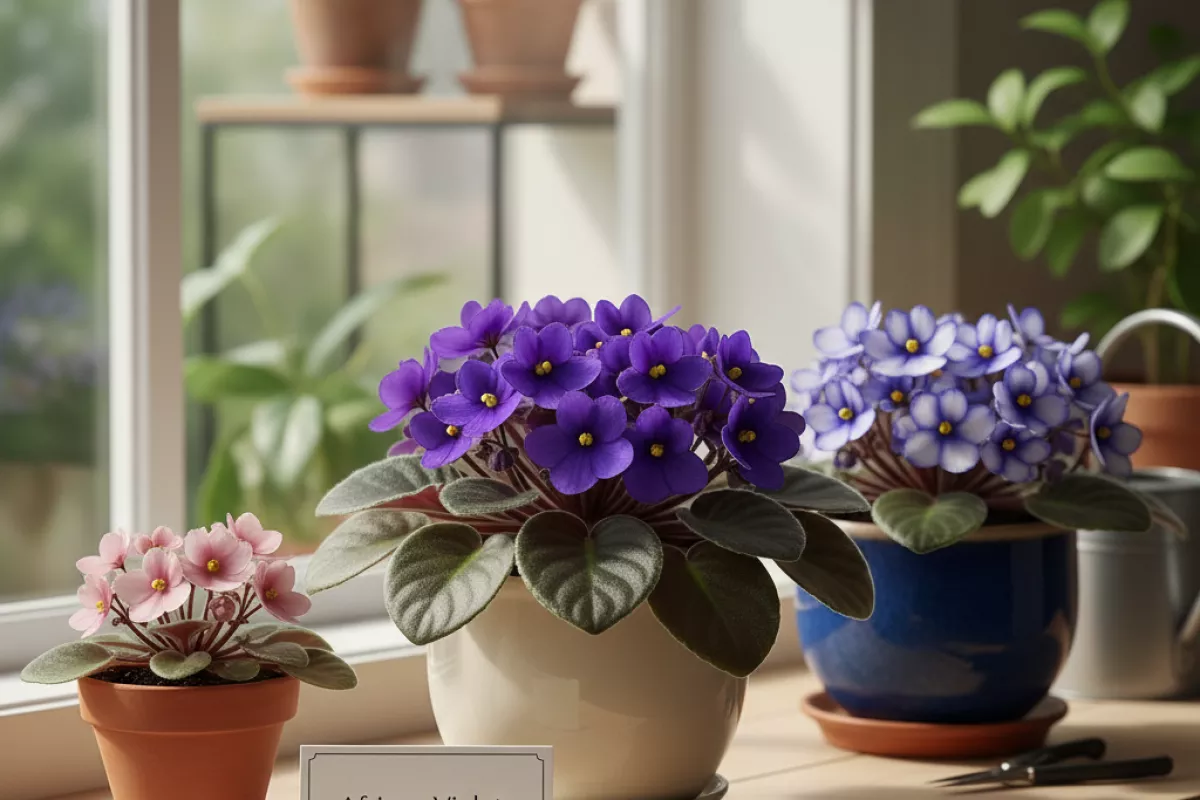
This small, rosette-forming houseplant is grown for its velvety leaves and steady supply of blooms in jewel tones. It stays naturally compact, fits well on shelves and windowsills, and responds quickly to small care adjustments—one reason it’s often recommended for indoor gardeners who want flowers without a large footprint.
Most varieties top out around 15–20 cm (6–8 in) across, though minis can be closer to 10 cm (4 in) and some standards can reach 25–30 cm (10–12 in) with age. Flowers typically rise just above the foliage on short stems, and with consistent light and watering, the plant can cycle through flowering for much of the year rather than only in a single season.
- Growth habit: A tight central crown that expands outward in a flat rosette; older plants may develop multiple crowns if not groomed.
- Leaves: Slightly fuzzy, soft-textured foliage that can spot or scar if water sits on it too long or if it’s handled roughly.
- Bloom style: Clusters of small, five-petaled flowers; many cultivars are single, semi-double, or double, and some have ruffled edges.
- Indoor strengths: Tolerates typical home humidity, stays tidy in small pots, and doesn’t need pruning beyond removing spent blooms and older leaves.
- Common sensitivities: Cold drafts below about 16°C (61°F), soggy soil, and harsh sun that can bleach leaves.
| Trait | What it means indoors |
|---|---|
| Compact root system | Prefers smaller containers; a pot around 10–12 cm (4–5 in) often suits a mature standard plant. |
| Evergreen foliage | Looks presentable year-round; regular leaf cleanup keeps the rosette symmetrical. |
| Continuous growth | Uses water and nutrients steadily, so consistent routines matter more than seasonal “rest.” |
| Light-responsive flowering | Blooming is closely tied to bright, indirect light; too little light reduces buds even if the plant stays green. |
| Leaf texture (fine hairs) | Bottom watering is often easier than overhead watering to avoid spotting and crown issues. |
Because the plant grows from a central crown, keeping that crown dry and unobstructed is part of what makes it such a reliable indoor bloomer. When its basic preferences are met—steady warmth, gentle light, and even moisture—it tends to reward you with frequent flowers while staying neatly contained.
Native habitats and natural environment
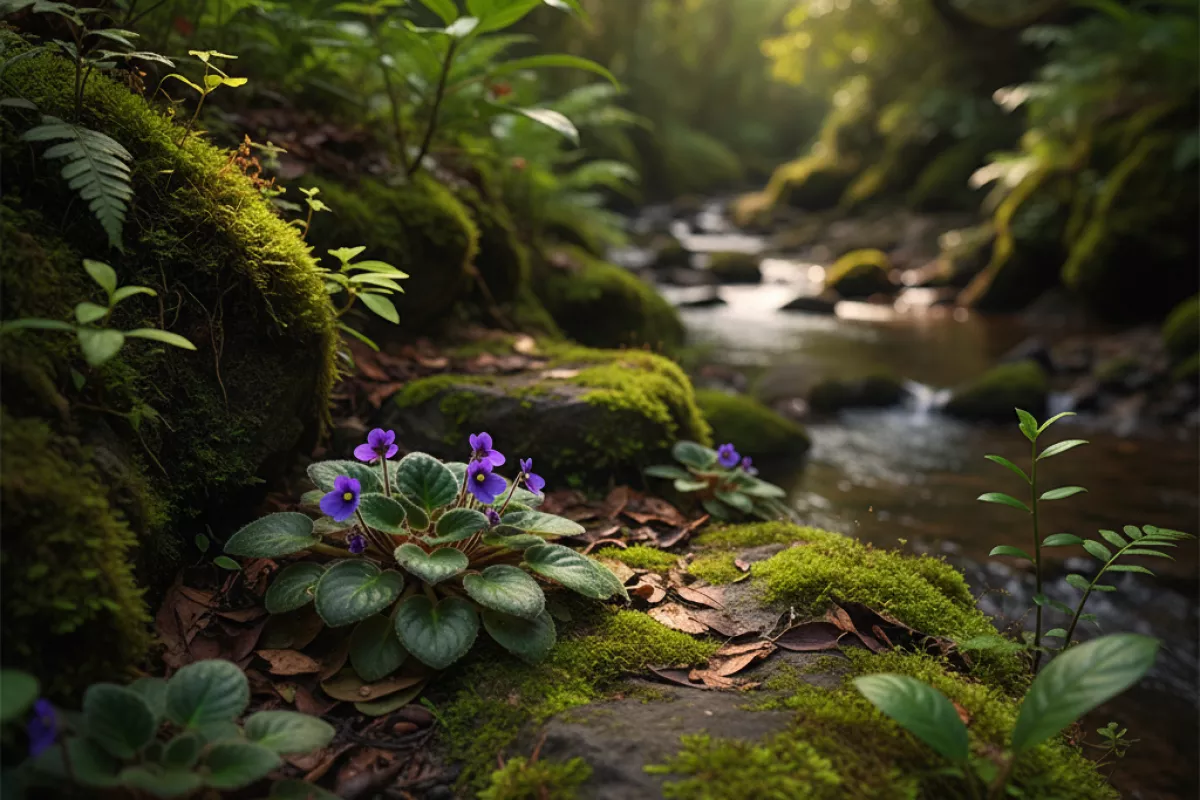
African violets (Saintpaulia, now usually classified within Streptocarpus) come from the humid, shaded forests of East Africa, especially the Usambara and Uluguru Mountains in Tanzania and nearby regions. In the wild they aren’t growing out in open sun; they tuck into protected spots where light is filtered, temperatures are steady, and moisture is available without waterlogging.
You’ll often find them as small rosette plants on mossy rocks, in leaf litter, or on thin soil over stone. These micro-sites stay damp from frequent mist and rain, but they also drain quickly. That combination explains why the plant likes evenly moist soil indoors yet reacts badly to heavy, soggy mixes.
- Light: Bright but indirect, like sun passing through a forest canopy. Direct midday rays can scorch the fuzzy leaves.
- Temperature: Mild, with limited swings—roughly 18–24°C (65–75°F) is close to what they experience in sheltered mountain forests.
- Humidity: Naturally higher than most homes, commonly around 50–70% (typical “humid forest understory” conditions), but with constant air movement rather than stagnant damp.
- Water pattern: Frequent light moisture from rain and mist, followed by drainage; roots are adapted to oxygen-rich, airy pockets.
- Growing surface: Shallow, organic debris and moss over rock or porous soil—nutrients arrive in small doses rather than in heavy, rich ground.
| Wild condition | What it means for indoor care |
|---|---|
| Filtered light under trees and along shaded cliffs | Place in bright, indirect light; use a sheer curtain or keep a little back from a sunny window. |
| Moist microclimates with quick drainage (moss, leaf litter, rocky crevices) | Use a light, airy potting mix and a pot with drainage; keep soil lightly moist, not saturated. |
| Moderate, stable temperatures in upland forests | Avoid cold drafts and hot blasts; aim for 18–24°C (65–75°F) and steady conditions. |
| Higher ambient humidity with airflow | Increase humidity if your home is very dry, but don’t trap the plant in still, wet air that encourages rot. |
One more detail from their natural setting: water rarely sits on the crown for long because airflow and the plant’s position help it dry. Indoors, that’s why it’s safer to water the soil rather than splashing the leaves, and why good ventilation matters even when you’re aiming for a slightly more humid room.
Leaf texture and compact growth form
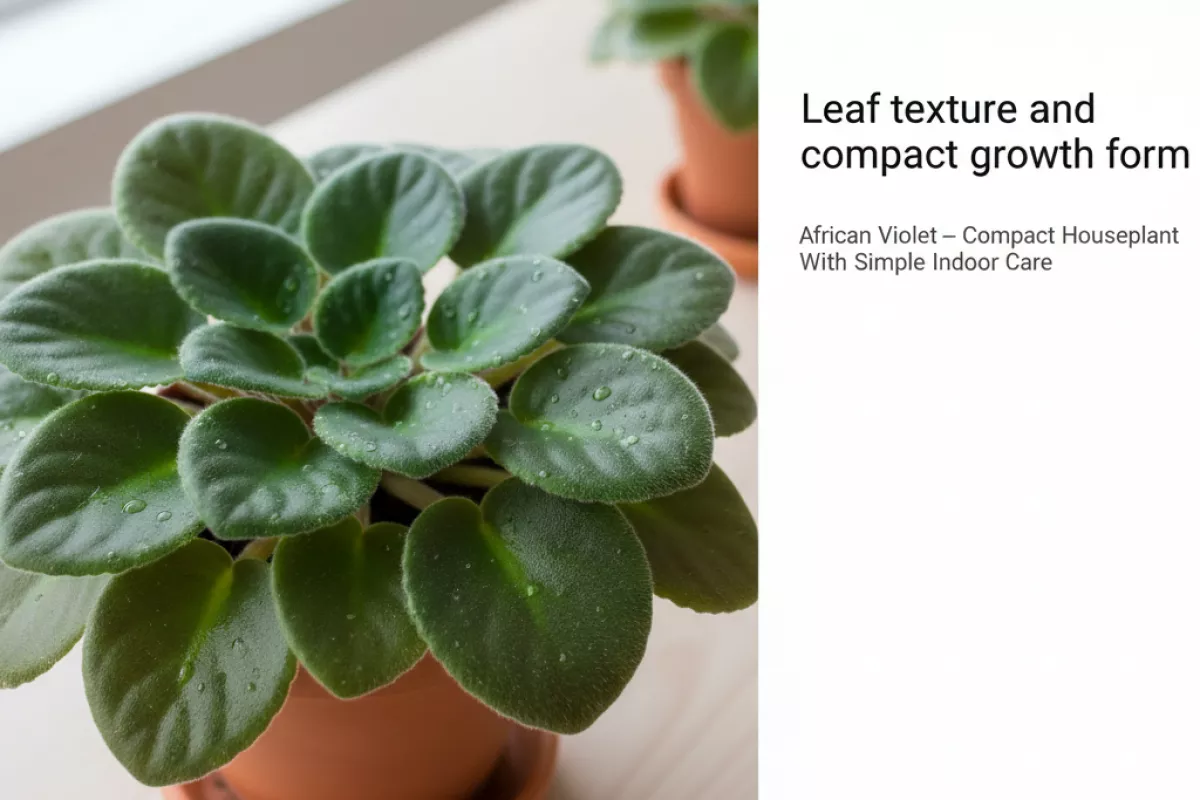
The appeal starts with the foliage: African violet leaves are thick, softly fuzzy, and slightly cupped, which gives the plant a plush look even when it isn’t blooming. Those tiny hairs (trichomes) help slow moisture loss, but they also trap water droplets and dust, so the way you handle and clean the plant matters.
Most varieties grow as a tight rosette, with leaves radiating from a short central crown rather than stretching into long stems. This naturally tidy habit is why the plant stays “windowsill-sized” for a long time and looks full without constant pruning.
- Velvety surface: The fine fuzz can bruise if you rub it, leaving darker marks. Pick up the pot, not the leaf stems, when moving the plant.
- Water sensitivity: Droplets sitting on the hairy leaf surface can cause spotting, especially in cooler rooms. Water at the soil line and keep the crown dry.
- Rosette balance: Even light keeps growth symmetrical. Rotate the pot about a quarter turn every 7–14 days (1–2 weeks) so the plant doesn’t lean.
- Compact spacing: A small container supports the dense growth form; oversized pots encourage extra soil moisture and fewer flowers. As a rule of thumb, choose a pot about one-third the width of the leaf spread.
- Grooming without damage: Dust with a soft, dry brush (like a clean makeup brush). If you must rinse, use lukewarm water around 20–25°C (68–77°F), then gently blot and let leaves dry out of direct sun.
If the plant starts to look less compact, it’s usually responding to low light or a stressed crown. Longer leaf stems, a looser rosette, or “reaching” growth are cues to move it to brighter indirect light and confirm the center isn’t staying damp after watering.
Light needs for steady African violet flowering
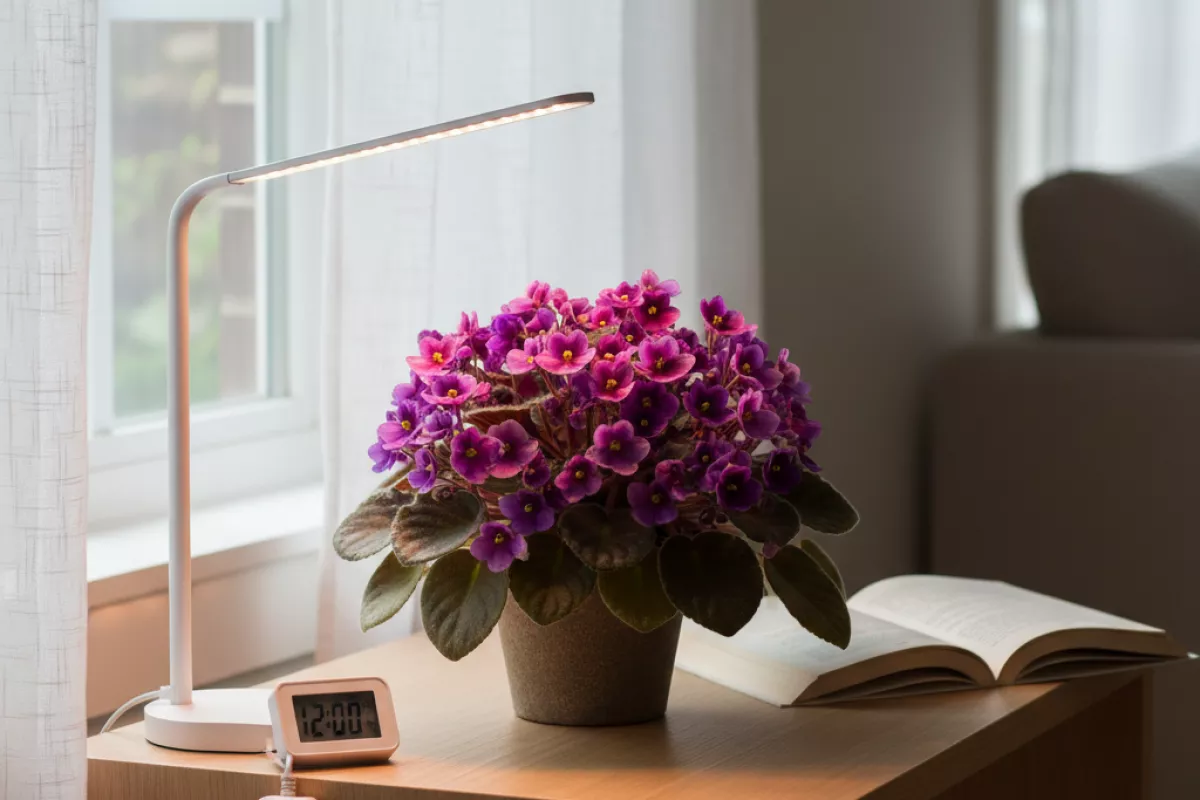
Consistent blooming comes down to giving African violets bright, gentle light for long enough each day. Too little and the plant stays leafy with few buds; too much and the leaves can scorch or the crown may tighten and stall.
- Best intensity: Bright, indirect light. Think “you can read comfortably nearby, but the sun isn’t hitting the leaves.”
- Best duration: Aim for 10–12 hours of light daily. If you use a timer for grow lights, 12 hours on and 12 hours off is a simple routine.
- Window direction: An east window is usually easiest. South or west exposures often need a sheer curtain or a step back from the glass (about 30–90 cm (12–36 in)) to prevent midday burn.
- Rotation: Turn the pot a quarter turn every week so the rosette stays symmetrical and flower stalks don’t lean.
Leaf signals tell you whether the plant is getting the right kind of brightness. Pale leaves and long, stretched petioles usually mean it’s reaching for more light; dark green leaves with little flowering can also point to low light. On the other hand, bleached patches, crisp edges, or a tight, flattened center often show the light is too strong or too direct.
| What you observe | What it usually means | What to do |
|---|---|---|
| Few blooms; leaves look healthy but growth is slow | Not enough light hours or intensity | Move closer to a bright window or add a grow light for 10–12 hours/day |
| Long leaf stems; plant looks “open” and stretched | Light is too weak or too far away | Shift the pot 15–30 cm (6–12 in) closer to the light source; rotate weekly |
| Bleached spots or crispy leaf edges | Direct sun or excessive intensity | Use a sheer curtain, or move back 30–90 cm (12–36 in) from the glass |
| Crown becomes very tight; new leaves small | Often too much light (sometimes combined with heat) | Reduce intensity slightly and keep the plant away from hot panes or vents |
If you rely on artificial lighting, keep the lamp close enough to be effective without overheating the plant. As a starting point, place the light about 20–30 cm (8–12 in) above the leaves, then adjust based on how the foliage responds over the next 2–3 weeks. Stable conditions beat constant tinkering: once you find a spot that produces buds regularly, keep the setup the same.
Soil mix and watering techniques for African violets
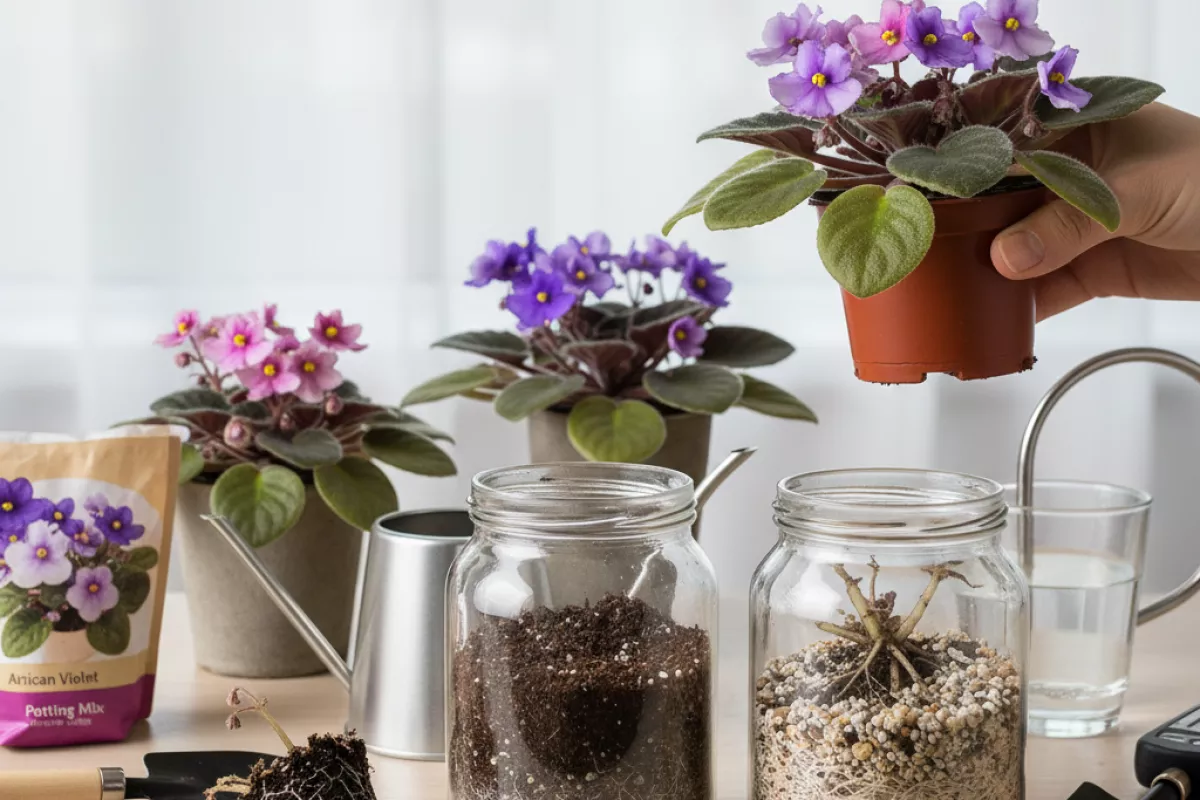
Healthy growth comes down to two things: a light, airy potting medium that drains fast, and a watering routine that keeps the roots evenly moist without staying soggy. African violets are prone to root rot in dense soil, so the goal is moisture retention with plenty of air pockets.
What the potting mix should do
- Drain quickly so water doesn’t sit around the roots.
- Hold some moisture so the plant doesn’t swing between bone-dry and soaked.
- Stay fluffy over time; compacted mixes suffocate roots.
Easy mix options
- Reliable store-bought route: Use an “African violet” potting mix and lighten it with perlite at about 2 parts mix to 1 part perlite.
- Simple DIY blend: 2 parts peat-based potting mix + 1 part perlite + 1 part vermiculite (or extra perlite if you prefer faster drainage).
- If your home is humid or you tend to overwater: Increase perlite so the blend feels noticeably airy and doesn’t clump when squeezed.
Choose a small pot with drainage holes; these plants generally bloom better slightly snug. As a rough guide, a 10 cm (4 in) pot suits many mature plants, while minis may prefer 5–7.5 cm (2–3 in).
Watering methods that work indoors
| Method | How to do it | Best for | Watch-outs |
|---|---|---|---|
| Bottom watering (tray) | Set the pot in 2–3 cm (0.8–1.2 in) of water for 15–30 minutes, then drain thoroughly. | Reducing crown and leaf wetness; consistent moisture. | Don’t leave it soaking for hours; empty the saucer after. |
| Top watering (careful pour) | Pour onto the soil surface until water runs out the bottom; avoid the crown. Use room-temp water around 20–24°C (68–75°F). | Flushing salts; quick check that drainage is working. | Water on leaves can spot them; cold water can shock roots. |
| Wick watering | Run a wick through the pot into a reservoir; the mix draws water as needed. | People who travel or forget; steady hydration. | Use a lighter mix (extra perlite) to prevent constant saturation. |
| Self-watering pot | Keep a small reservoir filled; the plant drinks through a wick or insert. | Stable routines and even moisture. | Check that the insert isn’t staying swampy; rinse the reservoir periodically. |
How to know when to water
- Finger test: Water when the top 1–2 cm (0.4–0.8 in) feels dry, but the pot still has a little weight.
- Pot weight: Learn the “light” feel of a thirsty plant versus a freshly watered one.
- Leaf cues: Slightly less firm leaves can mean it’s time; limp, mushy growth usually points to overwatering.
Small habits that prevent common problems
- Drain completely: Never let the pot sit in leftover water for more than a few minutes after watering.
- Use lukewarm water: Around 20–24°C (68–75°F) helps avoid root stress and leaf spotting.
- Flush occasionally: Every 4–6 weeks, top-water until it drains freely to wash out fertilizer salts (then empty the saucer).
- Adjust with seasons: In lower winter light, the mix dries slower; reduce frequency rather than volume.
Temperature range for African violet indoor cultivation
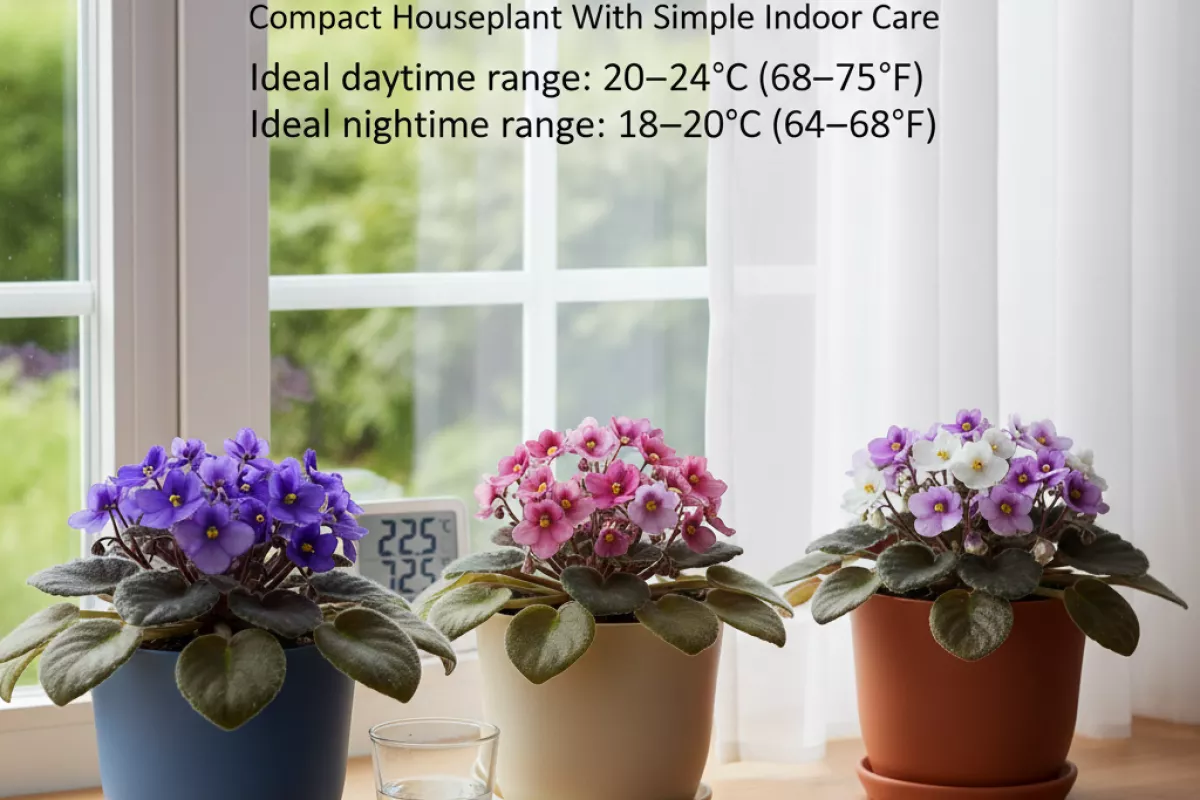
Keep African violets in a steady, “people-comfortable” zone and they’ll grow and bloom without fuss. Most homes already sit in the sweet spot; the main challenge is avoiding cold drafts at night and heat spikes from sun-baked windowsills or vents.
- Ideal daytime range: 20–24°C (68–75°F) for consistent leaf growth and reliable flowering.
- Ideal nighttime range: 18–20°C (64–68°F). A small drop after dark is fine, but big swings slow growth.
- Lower limit to avoid: below 16°C (61°F) for extended periods. Chilling can stall blooming and make leaves look dull or slightly limp.
- Upper limit to watch: above 27°C (81°F), especially with dry air. Plants may wilt midday, flowers fade faster, and new growth can look smaller.
| Situation | What you may notice | Simple fix indoors |
|---|---|---|
| Cold window glass in winter (near 10–15°C / 50–59°F at night) | Outer leaves droop or develop pale, stressed patches; buds may abort | Move the pot 10–20 cm (4–8 in) back from the pane, or place it on an interior table at night |
| Drafts from doors or AC (sudden drops to 16°C / 61°F or lower) | Growth slows; leaves feel less firm | Relocate away from airflow; aim for stable room temperatures rather than “perfect” numbers |
| Heat from a radiator or heater (often 27–32°C / 81–90°F nearby) | Wilting despite moist soil; crispy flower edges | Shift 30–60 cm (12–24 in) away from the heat source; use a pebble tray to buffer dryness |
| Direct sun through glass in summer (leaf surface can exceed 30°C / 86°F) | Faded, yellowed areas or scorched spots on leaves | Provide bright, indirect light with a sheer curtain; avoid midday sun on the rosette |
Try to keep day-to-night changes modest—about 2–4°C (4–7°F) is plenty. If your room regularly swings more than 6–8°C (11–14°F) between day and night, the plant often responds with slower growth and fewer blooms even if watering and light are correct.
A practical tip: measure the temperature where the pot sits, not across the room. A shelf by a window can be several degrees cooler than the rest of the space, while a spot above electronics can run warmer than you’d expect.
General care routine for healthy plants
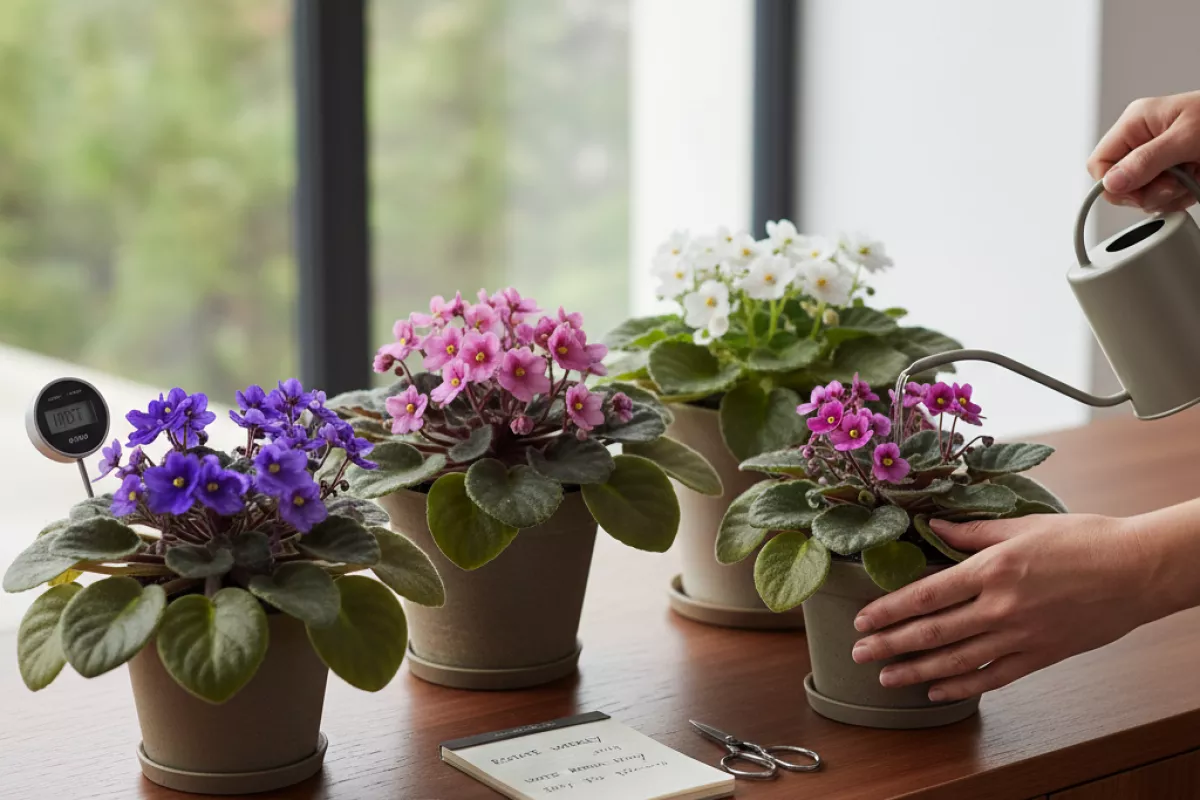
Keep African violets thriving by sticking to a steady rhythm: consistent light, careful watering, and a little grooming. They respond best when conditions don’t swing wildly from week to week, so small, regular check-ins beat occasional “big fixes.”
- Light check (daily or every few days): Give bright, indirect light. Rotate the pot about a quarter turn every week so the rosette grows evenly instead of leaning toward the window.
- Watering routine (typically weekly): Water when the top 1–2 cm (0.4–0.8 in) of mix feels barely dry. Use room-temperature water, and avoid splashing the crown. Bottom-watering for 15–30 minutes works well; then drain thoroughly so roots don’t sit in water.
- Humidity and airflow (ongoing): Aim for moderate humidity without stagnant air. If your home is dry, use a pebble tray or group plants, but keep leaves from staying wet for long periods.
- Temperature stability (ongoing): Most plants are happiest around 18–24°C (65–75°F). Keep them away from cold glass, heating vents, and sudden drafts.
- Fertilizing (light, regular feeding): During active growth, feed at a low dose more often rather than a heavy dose occasionally. If you notice crusty buildup on the soil or pot rim, flush with plain water and resume feeding more gently.
- Grooming (weekly): Remove spent blooms and yellowing outer leaves by snapping them off cleanly at the base. Wipe dust with a soft, dry brush; wet wiping can spot the fuzzy leaves.
- Pot and soil care (every 6–12 months): Refresh the mix and repot when the plant looks crowded or the soil compacts. Many do well in small pots; a container that’s roughly one-third the leaf-span is often enough.
- Quick pest scan (weekly): Check undersides of leaves and the crown for mites, thrips, or mealybugs. Isolate any plant that suddenly looks stippled, sticky, or distorted.
| Task | How often | What to look for | Simple adjustment |
|---|---|---|---|
| Moisture check | Every 3–7 days | Top 1–2 cm (0.4–0.8 in) slightly dry | Water from below; drain excess after 15–30 minutes |
| Light/shape check | Weekly | Leaning growth, long petioles, pale leaves | Move to brighter indirect light; rotate pot 90° |
| Grooming | Weekly | Spent blooms, yellow outer leaves, dust | Remove old growth; brush leaves gently |
| Feeding review | Every 2–4 weeks | Slow growth, few blooms, salt crust | Use lower-dose fertilizer; flush soil if crusty |
| Soil/pot check | Every 6–12 months | Compacted mix, crowded crown, poor drainage | Repot into fresh, airy mix; keep pot modest in size |
If something seems off, change only one factor at a time (light, then water, then feeding). African violets usually show improvement within 2–4 weeks once the main stressor is corrected, especially when you keep the crown dry and the roots evenly moist.
Propagation from leaf cuttings
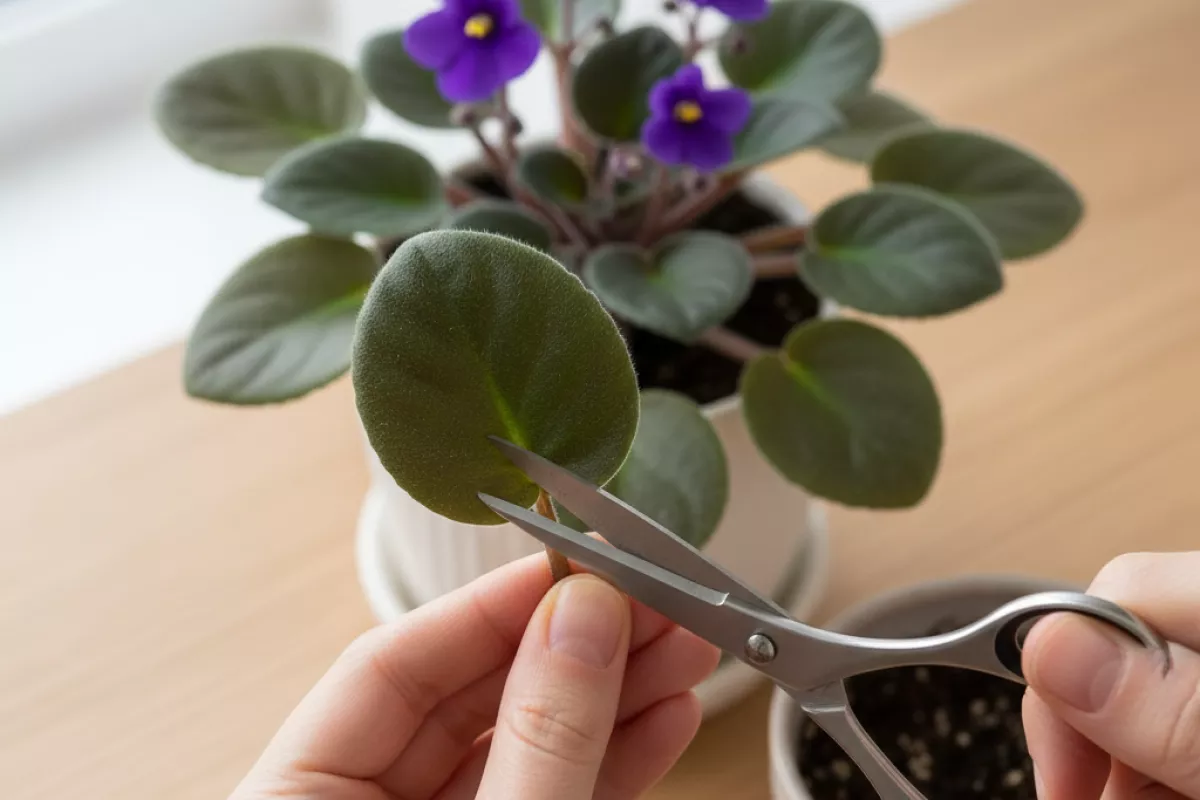
New African violet plants are easy to start from a single healthy leaf, and it’s one of the most reliable ways to clone a favorite variety. Pick a mature leaf from the outer ring (not the oldest, not the tiny center leaves), and use clean scissors or a blade so the cut stays crisp rather than crushed.
- Choose and cut the leaf: Select a firm, unblemished leaf with a sturdy stem (petiole). Trim the stem to about 2.5–4 cm (1–1.5 in) long, cutting at a slight angle to increase the rooting surface.
- Decide on water or soil:
- Water method: Stand the stem in a small container so only the petiole is submerged (keep the leaf blade dry). Change the water every 5–7 days.
- Soilless mix method: Insert the petiole about 1–1.5 cm (0.4–0.6 in) into a lightly moist, airy mix (for example, peat-based mix cut with perlite). Firm gently so it doesn’t wobble.
- Create gentle humidity: Cover with a clear bag or dome to keep humidity up, but leave a small gap for airflow. Condensation dripping constantly is a sign to vent a bit more.
- Give the right conditions: Bright, indirect light and warm temperatures help most. Aim for around 21–24°C (70–75°F). Avoid hot sun on the cover, which can overheat the cutting.
- Wait for plantlets: Roots often form in 3–6 weeks, and baby plants usually appear in 6–12 weeks. Tugging to “check” slows things down; look for new growth at the base instead.
- Separate and pot up: When plantlets have 3–4 small leaves each and are roughly 2.5–4 cm (1–1.5 in) across, separate them carefully and pot individually in small containers.
| Stage | What you’ll notice | What to do |
|---|---|---|
| Week 1–2 | Leaf stays firm; little visible change | Keep evenly moist (not wet) and maintain humidity; don’t disturb the stem. |
| Week 3–6 | Roots may appear (water method), or resistance in the mix | Continue bright, indirect light; vent briefly if you see persistent heavy condensation. |
| Week 6–12 | Small plantlets emerge near the base of the petiole | Begin opening the cover a little more each day to acclimate to normal room air. |
| After plantlets size up | Several baby crowns with multiple leaves | Separate, pot into small containers, and water gently to settle the mix. |
Common issues and quick fixes
- Leaf turns mushy: Usually too wet or too cold. Use a fresher leaf, reduce moisture, and keep temperatures near 21–24°C (70–75°F).
- Leaf wilts under the cover: The stem may not be in contact with moisture. Re-seat the petiole and lightly firm the mix; avoid packing it tight.
- Only roots, no babies yet: Light may be too low or the leaf may be very old. Move to brighter indirect light and be patient; plantlets can lag behind rooting.
- Multiple plantlets crowded together: That’s normal. Wait until each has a few leaves, then tease them apart slowly to keep roots intact.
Once the young plants are established, treat them like mature African violets: small pots, airy mix, and watering that keeps the soil lightly moist without leaving the crown wet.
Seasonal flowering patterns indoors
Indoors, African violets don’t follow a strict outdoor calendar, but they do respond to the same cues: light length and intensity, temperature, and how steadily you water and feed. Many plants bloom in waves, with a heavier flush when conditions are brightest and most stable, then a quieter stretch when light drops or the plant is recovering from a big show.
The most common “seasonal” shift in a home is winter light. Even on a sunny windowsill, day length shortens and the sun angle changes, so the plant may slow down, make smaller leaves, or pause buds. Under consistent grow lights, the plant can flower much more evenly year-round because the cue stays the same.
- Spring to early summer: Often the easiest time for repeat bloom. Brighter days and moderate indoor temperatures encourage new crowns and bud formation.
- Mid to late summer: Heat can reduce flowering. If your room regularly climbs above 27°C (81°F), blooms may be fewer and shorter-lived, and the plant may focus on foliage.
- Autumn: Many plants rebound if temperatures ease and light is still decent. This can look like a second flush after a summer slowdown.
- Winter: Lower light is the usual limiting factor. Cool windows, drafts, and short days can lead to fewer buds unless you add light and keep conditions steady.
| What you notice | Likely seasonal cause | What to do indoors |
|---|---|---|
| Lots of leaves, few or no blooms | Light intensity/day length dropped (common in winter) | Add a grow light or move to brighter exposure; aim for 12–14 hours of light daily |
| Buds form but stall or dry | Cold drafts or cool glass at night | Keep foliage from touching cold windows; maintain 18–24°C (65–75°F) |
| Flowers fade quickly | Hot, dry air during summer or heating season | Improve airflow, avoid heat sources; keep humidity moderate and soil evenly moist |
| Blooming comes in “bursts” every few months | Normal cycle of growth and recovery, amplified by changing light | Deadhead spent blooms, remove old outer leaves, and feed lightly but regularly during active growth |
If you want steadier flowering, the simplest approach is to make the plant’s environment less “seasonal” than your room. A small LED grow light on a timer, stable temperatures, and consistent watering usually smooth out the peaks and pauses more than any special trick.
One caution: avoid “fixing” a winter lull by overwatering or overfertilizing. In low light, the plant uses water more slowly, so soggy soil can stop blooming and invite root issues. Keep moisture even, let the plant set the pace, and it typically resumes buds as soon as light and warmth improve.
Common pests and problems in African violets
Most issues on Saintpaulia show up as leaf damage, stalled blooming, or a plant that suddenly looks “tired.” Start by isolating the pot, then check the undersides of leaves and the crown under bright light. Many problems overlap, so look for a combination of symptoms rather than a single clue.
| What you notice | Likely cause | What to do (practical steps) |
|---|---|---|
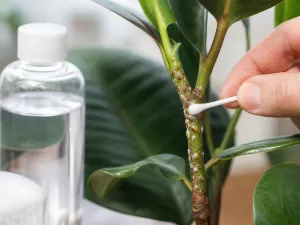
| Sticky residue, shiny leaves, tiny bumps on stems or leaf veins | Scale insects | Remove visible scale with a cotton swab dampened with isopropyl alcohol; repeat weekly. Prune heavily infested leaves. Keep the plant isolated until no new bumps appear. |
| White “cotton” in leaf joints or at the crown; distorted new growth | Mealybugs | Swab insects with alcohol, then rinse foliage with lukewarm water. Repot if they’re in the soil. Recheck every 5–7 days. |
| Fine webbing, pale speckling, leaves look dusty or bronzed | Spider mites | Rinse leaves thoroughly (especially undersides). Raise humidity modestly and keep the plant out of hot, dry drafts. Repeat rinsing every few days; severe cases may need a targeted miticide labeled for houseplants. |
| Silvery streaks on petals/leaves; deformed blooms; tiny fast-moving insects | Thrips | Remove flowers and buds (they hide there). Isolate the plant. Use yellow/blue sticky traps nearby to monitor. Treat repeatedly per label if using an insecticide, since eggs hatch in cycles. |
| Soft, collapsing crown; mushy stems; sudden wilt despite moist mix | Crown rot / root rot (often from cold, wet soil) | Stop watering, unpot, and trim all mushy tissue. Repot into fresh, airy mix and a clean pot. Keep warm at 20–24°C (68–75°F) and water lightly until new growth resumes. |
| Brown, water-soaked spots on leaves after watering; fuzzy gray growth | Botrytis (gray mold) and water-on-leaf damage | Remove affected leaves/flowers and improve airflow. Water the soil, not the foliage, and avoid cool, damp conditions. Let the top layer dry slightly between waterings. |
| Leaves curl down or look brittle; tan patches on the side facing the window | Too much direct sun / heat stress | Move back from the glass or use sheer light. Aim for bright, indirect light and steady temperatures. Rotate the pot weekly for even growth. |
| Yellowing lower leaves; weak flowering; crusty soil surface | Fertilizer buildup or tired potting mix | Flush the pot with room-temperature water (about 3× the pot’s volume), then let drain fully. Resume a gentle feeding routine. Repot every 6–12 months if the mix stays compacted. |
| Small leaves, tight center, stalled growth; plant looks “stuck” | Overcrowded crown, suckers, or pot too large | Remove suckers to keep one crown. Use a smaller pot if the root ball is small; African violets bloom better when slightly snug. |
- Quarantine first: Keep a suspect plant away from others for 2–3 weeks so pests don’t spread.
- Check the crown and undersides: Many insects hide where leaf stems meet the center.
- Be careful with sprays: Test any product on a single leaf first; some varieties spot easily.
- Prevent cold-water shock: Use room-temperature water; cold water can leave pale rings or blotches on foliage.
If the plant declines fast and you can’t find insects, take a few healthy leaf cuttings as insurance. Even when the mother plant is struggling, a clean leaf can often be rooted and grown on while you troubleshoot the original.