How to Water Indoor Plants During Winter Months

 This article explains how winter changes indoor plant watering: plants use less moisture in low light, indoor heating dries soil differently, and watering should be adjusted. It also covers good winter watering methods, stress signs, and common mistakes.
- Why indoor plants need less water in winter
- How low light affects moisture usage in plants
- Adjusting watering frequency during winter months
- How indoor heating impacts soil moisture levels
- Best watering techniques for winter indoor care
- Signs indoor plants are overwatered or underwatered
- Common mistakes when watering plants in winter
In the colder months, houseplants usually grow more slowly, receive less light, and face drier indoor air, so their watering needs often change. Most plants need water less often in winter, but they can still struggle if the soil stays dry for too long or becomes constantly soggy. Paying attention to soil moisture, temperature, humidity, and the specific needs of each plant can help you avoid many common seasonal care problems.
Why indoor plants need less water in winter

Most houseplants slow down when winter arrives, even if they stay indoors. Shorter days, weaker sunlight, and cooler windowsills reduce the rate at which plants grow, so they simply do not use water as quickly as they do in spring and summer. That change is easy to miss because the room may still feel warm, but the plant is reacting to seasonal light and growth patterns more than to your comfort level.
Water use is closely tied to activity inside the plant. When new leaves, stems, and roots are developing at a slower pace, moisture remains in the potting mix longer. If you keep watering on a summer schedule, the roots can sit in damp soil for too long, which raises the risk of rot, fungus gnats, and yellowing foliage.
Seasonal dormancy and slower growth
Not every indoor plant goes fully dormant, but many enter a period of reduced growth. Tropical foliage plants may continue growing a little, while cacti, succulents, and some bulbs can become almost inactive. During this slower phase, roots absorb less water and nutrients, so the soil should dry a bit more between waterings.
- Foliage plants such as pothos, philodendron, and peace lily often need less frequent watering, but they usually should not be left bone dry for long periods.
- Succulents and cacti may need only occasional drinks in winter, especially if kept in a cool room around 15°C to 18°C (59°F to 64°F).
- Flowering plants like African violets or winter-blooming orchids may still need steady care, but even they often dry out more slowly than in bright summer conditions.
Why the pot stays wet longer
In winter, several factors combine to hold moisture in the container. Less evaporation from the soil surface, lower transpiration through leaves, and reduced root activity all mean water lingers. A plant that dried in four days during July may take eight to ten days in January, depending on pot size, room temperature, and light exposure.
This is why fixed schedules are unreliable. A weekly routine can work in one season and become harmful in another. The better approach is to judge the soil before watering rather than the calendar alone.
Editor’s note: If you are unsure whether to water, wait a day and check again. For most indoor plants in winter, slight dryness is safer than constantly wet compost.
How low light affects moisture usage in plants

Light drives photosynthesis, and photosynthesis supports growth, root activity, and moisture uptake. When winter light levels fall, plants process less energy and use less water. Even a bright room in December can be far dimmer than the same room in June, especially in homes with short daylight hours, cloudy weather, or shaded windows.
Because of that, the top of the soil may look dry while the lower half of the pot remains damp. This is a common winter trap. Plants in low light cannot pull moisture upward and out of the mix as quickly, so overwatering often starts below the surface where it is harder to notice.
Transpiration slows in dim conditions
Plants lose water through tiny pores in their leaves. In lower light, these pores are less active, and the plant releases less moisture into the air. That means less water needs to move up from the roots. The result is a slower drying cycle from top to bottom.
Broad-leaved tropical plants placed far from a window are especially affected. A monstera or calathea on a shelf 2 m (6.5 ft) from the glass may need far less water than the same plant sitting directly in filtered daylight.
Placement matters more than many growers expect
Two identical plants can need very different care if one is near a south-facing or west-facing window and the other is in a dim corner. Winter watering should always reflect location, not just plant type.
| Indoor light situation | Effect on moisture use | Watering implication |
|---|---|---|
| Right beside a bright window | Moderate winter growth may continue | Check soil regularly; drying may still be fairly steady |
| 1 m to 2 m (3 ft to 6.5 ft) from a window | Reduced transpiration and slower root uptake | Allow more drying time between waterings |
| Low-light hallway or interior room | Very low moisture demand | Water cautiously and only after a deeper soil check |
| Under a grow light for 10 to 12 hours | More active growth than natural winter light alone | Needs may be closer to autumn than deep winter care |
If your plants are stretching, leaning, or producing smaller leaves, low light is likely part of the problem. In that case, reducing water is often just as important as improving the light source.
Adjusting watering frequency during winter months

Winter watering works best when it is based on observation rather than habit. Instead of sticking to a strict every-seven-days routine, check how dry the potting mix is, how heavy the pot feels, and whether the plant is still actively growing. Frequency should shift with the season, but it should also shift with the plant’s species, pot size, and room conditions.
A small terracotta pot in a sunny window may still dry quickly, while a large plastic pot in a cool spare room can stay damp for a long time. The goal is not to water less at all costs. The goal is to water only when the plant is ready for it.
How to decide when to water
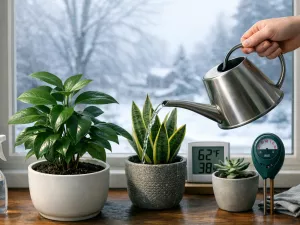
A practical check is more reliable than watering by memory. Insert a finger into the top 2.5 cm to 5 cm (1 in to 2 in) of soil for most foliage plants. For larger pots, use a wooden skewer or moisture meter to check deeper down. If the mix still feels cool and damp below the surface, wait.
- Lift the pot and notice its weight before watering and again after watering. Over time, the difference becomes easy to recognize.
- Check the top layer, then test deeper in the root zone.
- Look at the plant itself for signs of active growth, drooping, or stress.
- Water thoroughly only when the soil has reached the dryness level suited to that plant.
General winter patterns by plant type
There is no universal schedule, but some broad patterns are useful. Moisture-loving plants usually still need regular attention, while drought-tolerant plants often need long gaps between drinks.
- Peace lilies, ferns, and nerve plants: often need consistent moisture, though still less often than in summer.
- Pothos, philodendrons, spider plants, and dracaenas: usually prefer the top part of the mix to dry before watering again.
- Snake plants, ZZ plants, cacti, and succulents: should dry much more thoroughly, sometimes completely, before being watered in winter.
If you use a saucer or decorative cachepot, empty any collected water after about 10 to 15 minutes. Letting roots sit in standing water during winter is one of the fastest ways to create root problems.
Editor’s note: Put a simple label under any plant you tend to overwater, such as “check soil first.” That tiny pause is often enough to prevent winter root rot.
How indoor heating impacts soil moisture levels

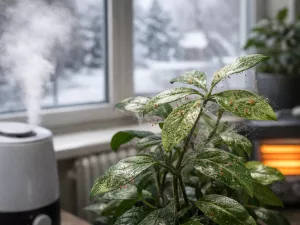
Indoor heating complicates winter plant care because it dries the air while not always increasing the plant’s actual need for water. Radiators, vents, wood stoves, and space heaters can make the soil surface dry quickly, but that does not mean the entire root ball is dry. In many homes, the top few centimetres may become crusty while the lower half of the pot remains wet.
This mismatch causes a lot of confusion. Growers see dry soil on top, assume the plant is thirsty, and water too soon. Meanwhile, the roots deeper in the container are still surrounded by moisture and have little oxygen available.
Dry air versus dry soil
Heating lowers humidity, which can increase leaf moisture loss in some plants, especially thin-leaved tropicals. But humidity loss and soil dryness are not the same thing. A calathea with brown edges may be reacting to dry air, not to a lack of water in the pot. In that case, watering more heavily can worsen the problem instead of solving it.
It helps to separate these issues clearly. If the leaves are crisping but the pot is still damp, focus on humidity support, plant placement, or airflow rather than adding more water.
Hot spots in the home
Plants placed near heat sources dry unevenly and often become stressed. The side facing a radiator may warm up much more than the shaded side, and roots can suffer if the pot repeatedly heats and cools.
- Near radiators: soil may dry faster at the edges, while leaves can scorch or curl.
- Above heating vents: warm moving air can dehydrate foliage quickly and destabilize moisture levels.
- On cold windowsills: the opposite problem can occur, with cooler soil staying wet for too long.
- In bathrooms or kitchens: added humidity may slow drying compared with living rooms or bedrooms.
If possible, keep plants at least 30 cm to 60 cm (12 in to 24 in) away from direct heat sources. That small change often makes watering patterns more predictable and reduces stress on roots and leaves.
Best watering techniques for winter indoor care

Good winter watering is not only about timing. Technique matters just as much. The aim is to moisten the root zone evenly without leaving the compost soggy for days. Because plants are less active, sloppy watering habits show up faster in winter than in the growing season.
Using room-temperature water is usually best. Very cold water can shock roots, especially in warm indoor conditions, while very warm water can damage delicate root tissue. A watering can with a narrow spout also helps you direct water onto the soil instead of soaking the crown or leaves.
Top watering done properly
For most houseplants, top watering remains the best method. It flushes the soil, helps distribute moisture through the pot, and reduces salt buildup from tap water and fertilizer residues. The key is to water slowly and stop once excess begins to drain from the bottom.
- Check that the plant actually needs water.
- Pour slowly around the soil surface, not in one fast stream.
- Continue until a little water drains through the holes.
- Let the pot drain fully before returning it to its saucer or outer pot.
- Discard any excess water left standing after 10 to 15 minutes.
When bottom watering helps
Bottom watering can be useful for plants with delicate crowns, compact root balls, or very dry mix that has pulled away from the pot edge. It is also helpful for African violets and some small nursery pots. Set the pot in shallow water for about 10 to 20 minutes, depending on size, then remove it and let it drain.
However, bottom watering should not be the only method forever. If used exclusively, salts can accumulate in the upper part of the mix. An occasional top watering helps rinse the soil more evenly.
Water quality and winter feeding
Many plants need less fertilizer in winter because growth slows. If you continue feeding heavily while watering less often, salts can build up in the potting mix. That can lead to brown leaf tips, root stress, and crusty soil surfaces.
- Reduce feeding for most non-flowering houseplants until active growth resumes.
- Use filtered or rested tap water if your water is heavily chlorinated or hard and sensitive plants show leaf-edge damage.
- Flush the pot occasionally during a needed watering to carry away excess mineral buildup.
Practical recommendation: If a potting mix has become dense and stays wet for more than 10 to 14 days, consider repotting in late winter or early spring rather than watering even less. Sometimes the real issue is poor drainage, not your technique.
Signs indoor plants are overwatered or underwatered

Winter watering problems can be tricky because overwatered and underwatered plants sometimes look similar at first. Both can droop, stop growing, or develop yellowing leaves. The difference usually becomes clear when you inspect the soil, roots, and pattern of decline rather than relying on one symptom alone.
Overwatering is more common in winter, but underwatering still happens, especially with plants near heaters, in small pots, or in very porous mixes. Learning to read the full picture will help you respond correctly instead of making the problem worse.
Typical signs of too much water
Plants sitting in wet soil often look limp even though moisture is abundant. That happens because damaged roots cannot absorb oxygen properly. The plant may appear thirsty, but adding more water only deepens the stress.
- Yellow lower leaves: especially if several drop in a short period.
- Soft stems or mushy leaf bases: a warning sign of rot.
- Persistent damp soil: the pot stays heavy for many days.
- Fungus gnats: these often appear when the surface remains moist too often.
- Musty smell from the pot: can point to sour, airless compost.
Typical signs of too little water
Underwatered plants usually feel lighter in the pot and the soil may pull away from the container edges. Leaves may become dry, papery, or crisp rather than soft and yellow. Some plants wilt dramatically but recover quickly after a thorough watering.
- Crisp brown edges: common on thinner leaves.
- Dry, compacted soil: water may run straight through without soaking in.
- Leaf curl or folding: often a water-conservation response.
- Sudden droop with dry soil: especially in peace lilies and ferns.
Quick comparison check
If you are unsure which problem you are dealing with, compare symptoms with the condition of the compost. Looking at both together gives a much more accurate diagnosis.
| Symptom | More likely overwatered | More likely underwatered |
|---|---|---|
| Leaf texture | Soft, limp, sometimes yellow | Dry, crisp, or thin |
| Soil condition | Wet for many days | Dry, shrinking from pot sides |
| Pot weight | Heavy | Light |
| Recovery after watering | Usually worsens or stays poor | Often improves within hours to a day |
If root rot is suspected, remove the plant from its pot and inspect the roots. Healthy roots are usually firm and pale. Rotten roots tend to be brown, soft, and may have an unpleasant smell.
Common mistakes when watering plants in winter
Many winter plant problems come from habits that work perfectly well in summer. The season asks for a slower, more responsive approach. Once you know the common mistakes, it becomes much easier to keep indoor plants healthy until spring growth returns.
The biggest issue is usually not neglect but over-attention. Well-meaning care can lead to too much water, too much fertilizer, and too little patience between checks. Winter is often the season when restraint produces better results than constant intervention.
Relying on a fixed schedule
Watering every Sunday or every seven days sounds tidy, but plants do not dry on a calendar. Light, temperature, pot size, and species all change how quickly moisture is used. A schedule can remind you to check, but it should not decide whether you water.
Judging only the soil surface
The top 1 cm to 2 cm (0.4 in to 0.8 in) can dry quickly in a heated room while the lower root zone stays wet. Surface dryness alone is not enough evidence. Always check deeper before watering larger pots.
Ignoring drainage and pot size
A plant in a pot that is too large for its root system often stays wet too long in winter. Decorative containers without drainage holes create similar problems. If excess water cannot escape, roots lose access to oxygen and decline quickly.
- Oversized pots: hold more damp compost than the roots can use.
- No drainage holes: make it hard to control moisture safely.
- Dense old potting mix: breaks down over time and dries more slowly.
Watering more to fix humidity problems
Brown tips, curled edges, and crispy foliage are often blamed on thirst when dry indoor air is the real cause. Adding more water to already damp soil will not raise humidity around the leaves in a useful way. Grouping plants, moving them away from heaters, or using a humidifier is more effective.
Continuing summer feeding and pruning routines
Heavy feeding encourages growth the plant may not be able to support in low winter light. Hard pruning can also reduce the plant’s ability to balance moisture use if done at the wrong time. Light grooming of dead leaves is fine, but major shaping is often better left for late winter or spring when growth resumes.
To avoid the most common winter care errors, keep this short checklist in mind:
- Check before watering instead of watering by date.
- Match care to light levels rather than room temperature alone.
- Reduce fertilizer unless the plant is actively growing or flowering.
- Empty saucers and cachepots after watering.
- Watch the whole plant including leaves, roots, and soil, not just one symptom.
Winter care is really about reading slower signals. When you adjust watering to lower light, reduced growth, and indoor heating patterns, houseplants are far more likely to come through the cold months with healthy roots and stronger spring growth.