Aeonium — Rosette Succulent Grown Best in Mild Conditions

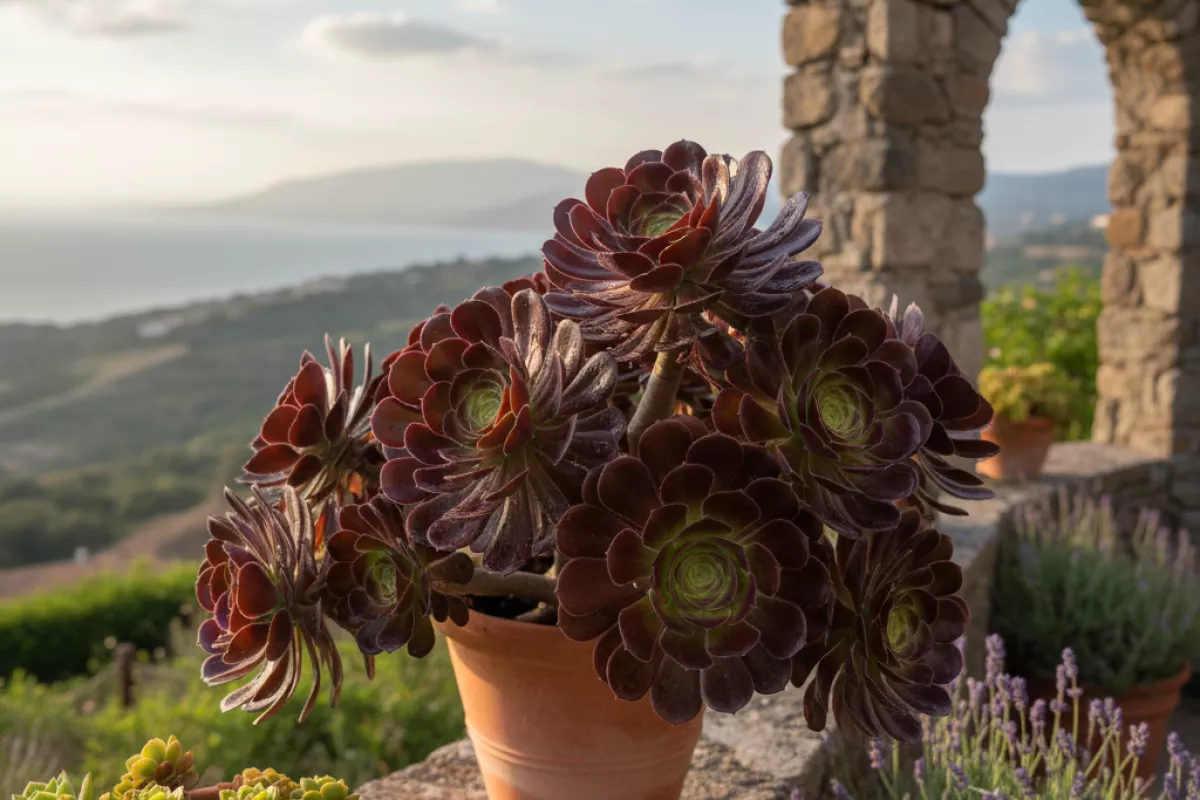 Covers Aeonium structure and island range, including rosette shape and branching. Explains light for compact rosettes, soil drainage and watering balance, and preferred temperatures. Adds a care routine, propagation from cuttings and offsets, seasonal growth and dormancy, plus common pests and stress signs.
- Aeonium succulent overview and structure
- Native island habitats and natural range
- Rosette form and branching habit
- Light exposure for compact Aeonium rosettes
- Soil drainage and watering balance for Aeonium
- Temperature range and Aeonium climate preferences
- Care routine for healthy succulent growth
- Propagation from cuttings and offsets
- Seasonal growth cycle and dormancy phase
- Common Aeonium pests and stress symptoms
Aeonium is a rosette-forming succulent that thrives in mild, steady temperatures. If it starts stretching, dropping leaves, or looking stressed during heat or cold, adjust a few basics: provide brighter light, water only when the soil has dried, and improve airflow. With the right balance, growth stays compact and rosettes hold sharper color.
Aeonium succulent overview and structure
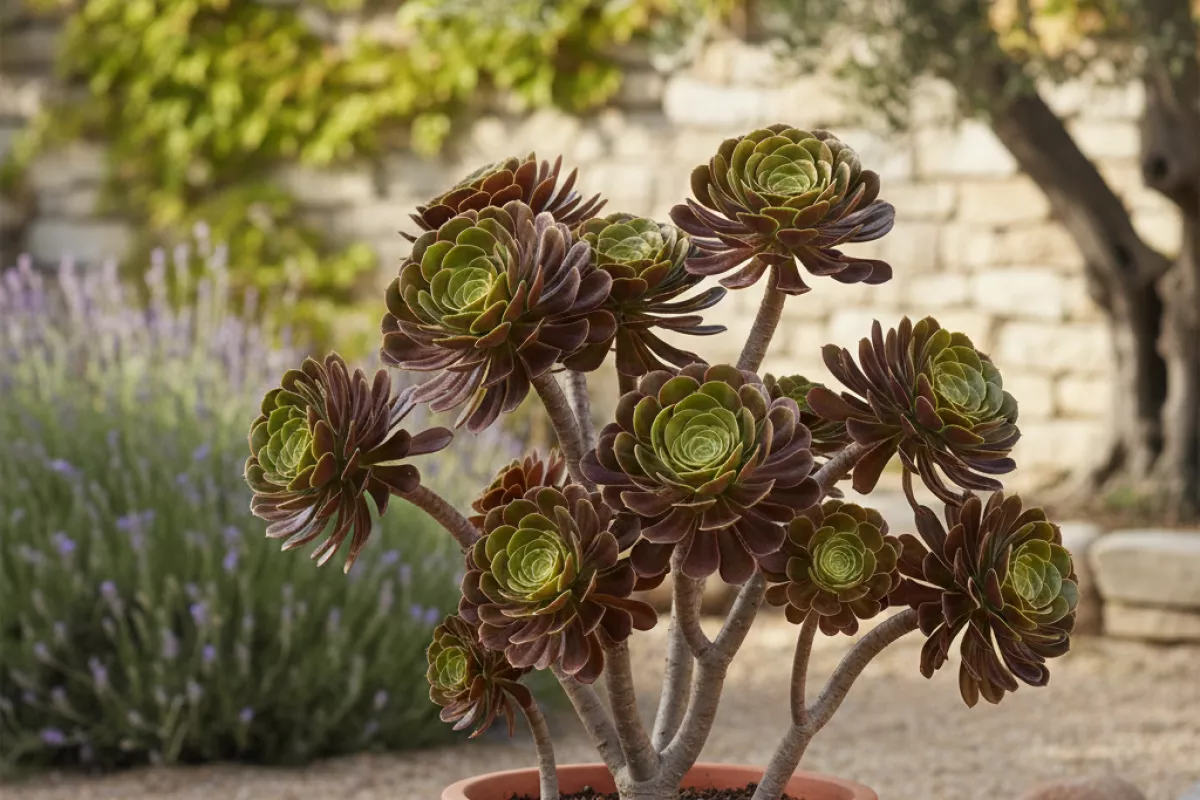
These rosette-forming succulents are built more like small, leafy shrubs than the typical ground-hugging “desert cactus” look. Most types grow on branching stems that end in a single rosette, so the plant develops a tiered, sculptural silhouette over time. In mild climates they can keep a tidy shape for years, while in harsher heat or deep shade they often stretch, lean, or drop older leaves.
The rosette itself is a tight spiral of fleshy leaves designed to store moisture and shed excess sun. Leaves are usually spoon-shaped to triangular, with smooth or slightly toothed edges depending on the species or cultivar. Many forms show color shifts—green to burgundy, or green with cream variegation—based on light intensity and seasonal temperature swings.
- Growth habit: typically a woody stem (or multiple stems) topped with rosettes; some stay compact while others become small shrubs.
- Rosette size: varies widely, from about 5 cm (2 in) to 25 cm (10 in) across depending on the variety and conditions.
- Leaf behavior: older leaves naturally yellow and drop from the bottom of the rosette, leaving a “palm-like” bare stem as it ages.
- Roots: relatively shallow and fine; they prefer airy soil and containers that dry evenly rather than staying wet at the base.
- Seasonal rhythm: many are most active in cooler months and slow down in hot weather; that shift affects how tight the rosettes look and how quickly stems elongate.
A key structural detail is how the plant responds after flowering. Aeonium blooms rise from the center of a rosette in a cone or dome of small starry flowers, often yellow. That flowering rosette is typically monocarpic—it dies after blooming—while the rest of a multi-headed plant can keep growing. On single-stem specimens, flowering can mean the entire plant finishes its life cycle, so it’s normal to see offsets (pups) encouraged beforehand if you want a replacement.
Because the stems can lengthen and the rosettes sit at the ends, these plants are also prone to “top-heaviness” in low light. If you notice long gaps between leaf scars or rosettes tipping toward a window, it’s a structural cue that the plant wants brighter conditions and a steadier rotation rather than more water.
Native island habitats and natural range
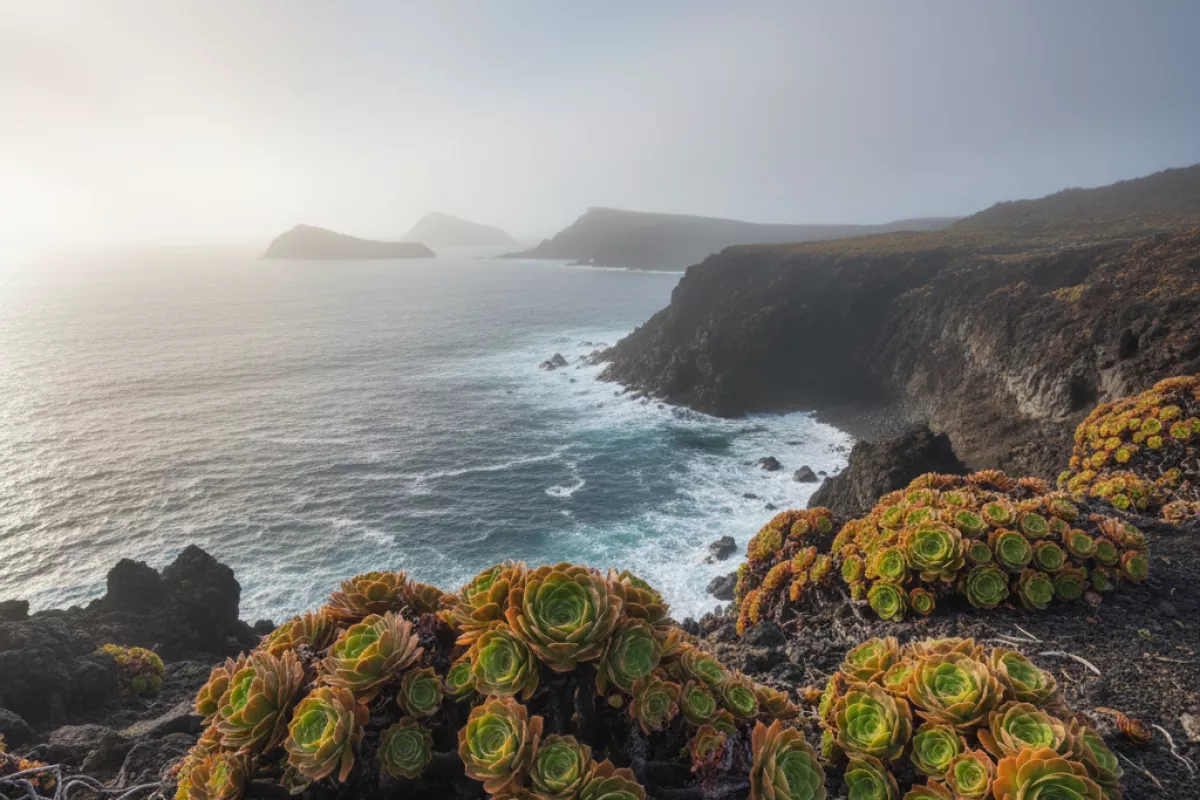
Aeonium comes from Atlantic islands where temperatures stay fairly even through the year and extremes are softened by ocean influence. Instead of hot, wet summers like many desert succulents, these plants evolved around a pattern of mild, often dry summers and cooler, moister winters, with frequent fog and breezes that reduce heat stress.
Most species are centered in the Canary Islands, with additional diversity on Madeira and the Cape Verde archipelago, and a few relatives on nearby parts of North Africa. On these islands they aren’t limited to “sand and sun” habitats; you’ll find them tucked into rocky slopes, cliff faces, and old lava flows where water drains fast but humidity can linger in the air.
- Coastal cliffs and bluffs: Windy, bright sites with salt-laden air; plants often grow in crevices that stay slightly cooler and avoid waterlogging.
- Volcanic scree and lava fields: Sharp drainage and mineral soils; roots anchor into pockets of grit and organic debris.
- Mid-elevation slopes: More cloud cover and dew; rosettes take advantage of regular moisture without sitting in soggy ground.
- Shaded rock walls and ravines: Filtered light, cooler days, and higher humidity; this is where many forms look their best and least stressed.
This island background helps explain why Aeonium is often happiest in the “in-between” conditions gardeners sometimes overlook: bright light without relentless heat, and moisture that arrives in pulses rather than constant saturation. If your climate regularly pushes above about 30°C (86°F) with hot nights, it’s closer to the stressful end of what many species experience in the wild, especially away from foggy coastal zones.
It also explains their seasonal rhythm. In habitats where summer drought is common, many aeoniums slow down or partially rest during the hottest months, then put on stronger growth when cooler weather and winter rains return. Matching that pattern at home—good airflow, fast-draining soil, and watering that follows active growth—usually feels more “natural” to the plant than treating it like a year-round desert cactus.
Rosette form and branching habit
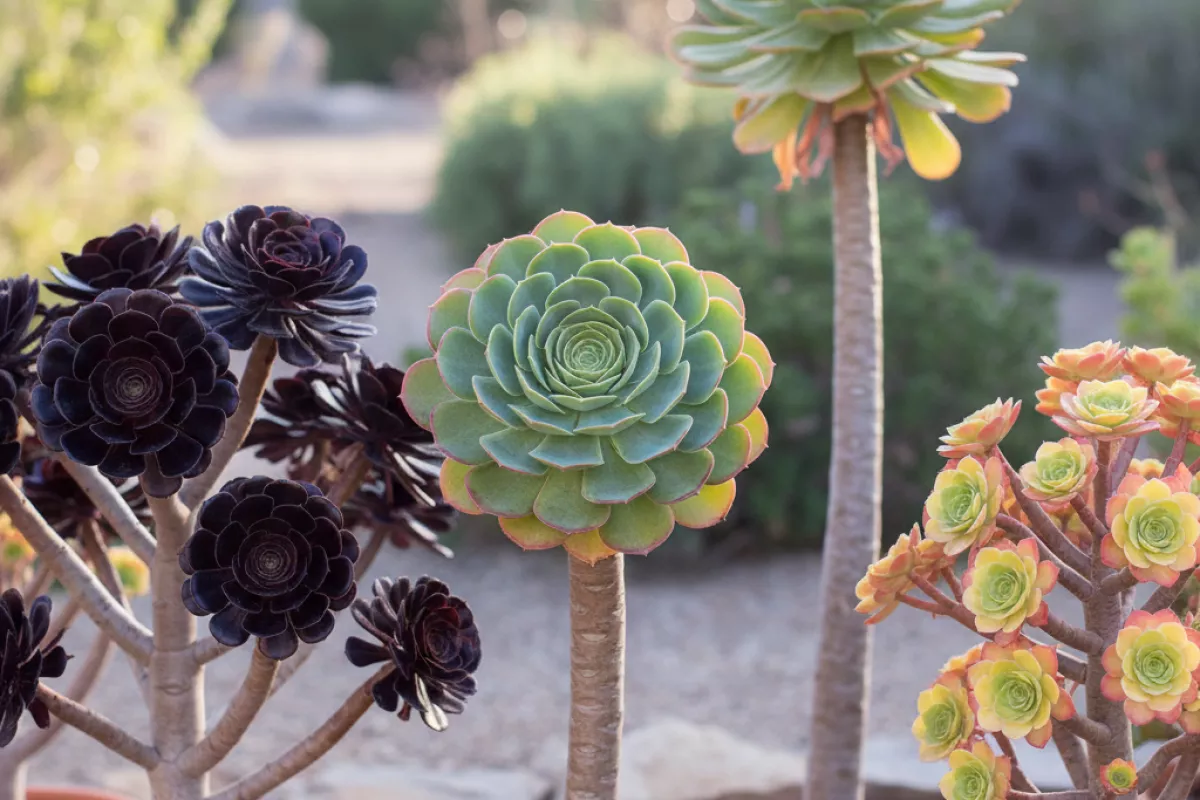
The first thing you notice on an Aeonium is the pinwheel-like leaf cluster at the end of a stem. New leaves emerge from the center while older ones age out on the outside, so the plant keeps a tidy, layered look even as it grows. In good light, the leaf spacing stays compact; in lower light, the same head stretches and loosens as the stem elongates.
How the plant “builds” itself depends on the species and on how you treat it. Some stay as a single trunk topped with one head for a long time, while others naturally split into multiple stems and carry several leaf heads at once. Branching is also tied to the growth cycle: many types push most of their extension during the cooler, mild season, then pause or slow down when conditions get hot and dry.
- Single-headed growers: Often form one main stem with a solitary crown. They look architectural, but can become top-heavy as the stem lengthens.
- Multi-headed, shrubby types: Produce side shoots that end in smaller crowns, creating a rounded, bushy silhouette over time.
- Clumping forms: Send up several stems from the base, so the plant reads as a cluster rather than a “mini tree.”
Branching can be encouraged (or prevented) with simple choices. If you want a fuller, many-headed plant, removing the main growing tip usually triggers dormant buds along the stem to break and form side shoots. If you prefer a clean, single-stem look, avoid cutting the top and keep the plant in bright light so it doesn’t lean and stretch.
- To promote side shoots: Take a tip cutting during active growth, leaving at least 5–10 cm (2–4 in) of stem below the cut so there are nodes that can sprout.
- To keep heads compact: Give strong light and rotate the pot every 1–2 weeks so the crown stays centered instead of reaching.
- To manage legginess: If the stem has stretched, behead and re-root the top; the remaining stem can resprout, and the cutting becomes a new plant.
One more quirk to know: a flowering head typically dies back after blooming. On branching types, that’s not a disaster—the rest of the plant keeps going, and nearby shoots often take over visually. On single-stem plants, flowering can mean the end of that main growth point, so it’s worth enjoying the bloom and planning to propagate offsets or cuttings beforehand if you want to keep the same cultivar going.
Light exposure for compact Aeonium rosettes
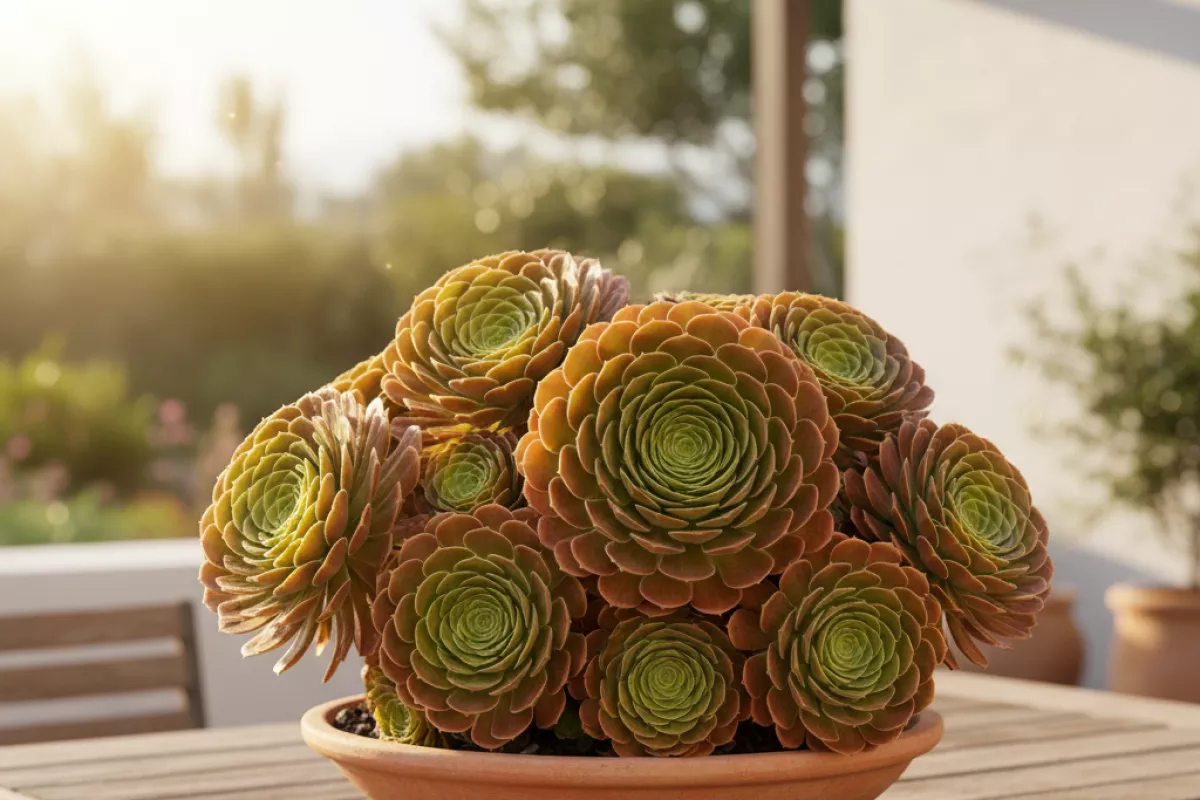
Keep rosettes tight and evenly colored by giving the plant bright light without long stretches of harsh midday sun. Too little light makes stems stretch (leggy growth) and the leaf whorls open up; too much intense sun, especially during heat, can scorch leaf edges and cause the plant to shut down.
Aeonium generally looks best with a few hours of direct sun and the rest as strong, filtered light. Morning sun is usually gentler than afternoon sun, and plants acclimated slowly to higher light handle it better than those moved abruptly from shade.
- Indoors: Place near the brightest window you have. A south- or west-facing window often works, but use a sheer curtain if the glass concentrates heat. Rotate the pot a quarter turn every 7–14 days (1–2 weeks) to prevent leaning.
- Outdoors: Aim for morning sun and light shade after midday. In very bright climates, dappled shade all day can still produce compact growth without sunburn.
- Seasonal adjustment: In mild, bright winters, give more sun; in hot summers, provide more protection. Aeonium may slow down or partially dorm in prolonged heat, so “more sun” isn’t always “better.”
- Acclimation: Increase sun exposure gradually over 7–10 days (1–1.5 weeks), adding about 30–60 minutes of direct sun per day to avoid sudden scorch.
| What you see | Likely light issue | What to change |
|---|---|---|
| Long bare stems, wide-spaced leaves, rosette “opens” | Not enough brightness | Move closer to the window or brighter shade outdoors; rotate weekly; consider a grow light 20–30 cm (8–12 in) above the plant |
| Bleached patches, crispy edges, sudden tan spots | Sunburn from intense direct sun | Shift to morning sun only or filtered light; acclimate gradually; avoid hot reflected surfaces like walls and patios |
| Rosette stays small, leaves tight but color looks dull | Bright but slightly insufficient light for coloration | Add 1–2 hours of gentle direct sun or increase grow-light duration; keep temperatures mild (around 15–24°C (59–75°F)) |
| Leaves droop midday, growth stalls during hot spells | Too much heat combined with strong sun | Provide afternoon shade and airflow; move to a cooler exposure; water only when soil dries to avoid stress |
If you’re unsure, watch the newest growth: tight, symmetrical centers usually mean the lighting is on target. When adjustments are needed, change one variable at a time (position, shading, or duration) and give the plant 2–3 weeks to respond.
Soil drainage and watering balance for Aeonium
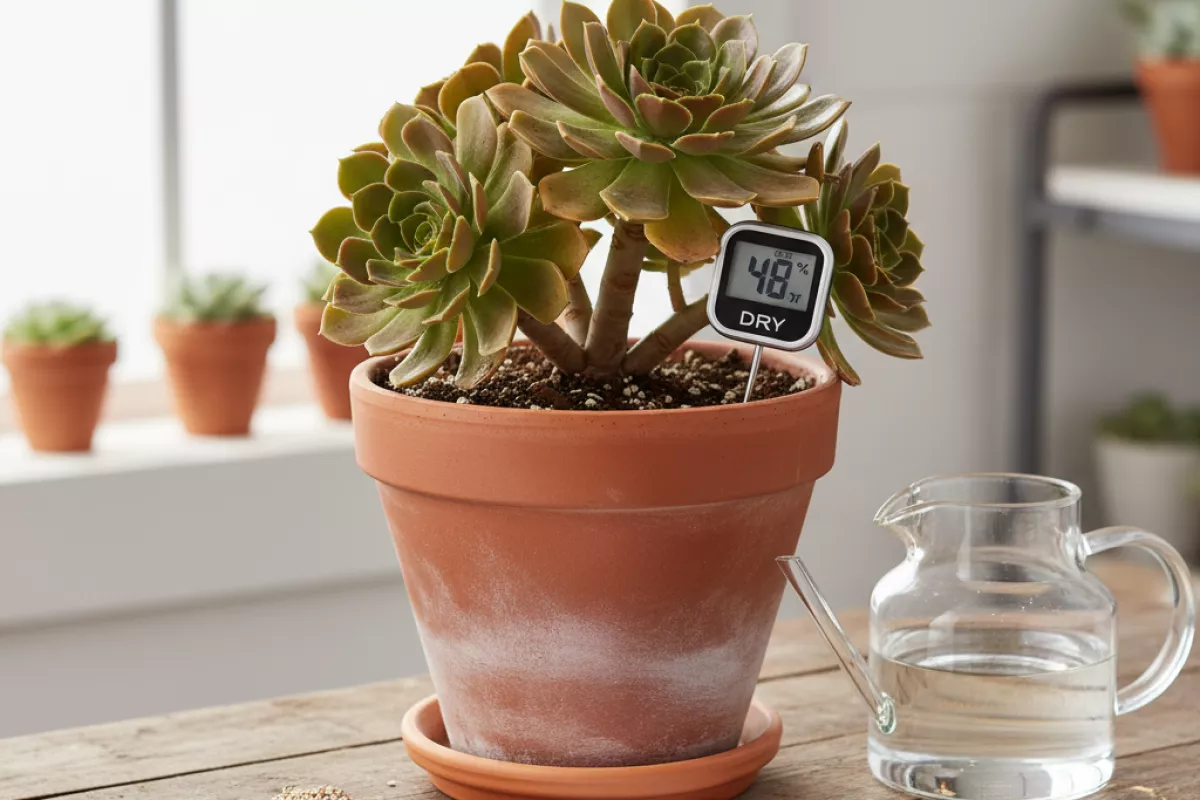
These rosette succulents do best when their roots get air quickly after a drink. The goal is a mix that drains fast but still holds a little moisture, so the plant can rehydrate without sitting in wet soil. If the pot stays damp for days, rot becomes more likely than dehydration.
Start with a gritty, open potting mix and adjust based on how quickly it dries in your home. A practical target is for the pot to dry out in roughly 2–5 days (48–120 hours) after a thorough watering in mild conditions; faster than that can mean the mix is too lean, and much slower usually means it’s too dense or the pot is oversized.
- Base mix idea: 1 part cactus/succulent soil + 1 part mineral grit (pumice, perlite, or coarse sand). This keeps water moving while leaving enough fine material for roots to anchor.
- For humid or cool rooms: Increase mineral content (for example, 2 parts grit to 1 part soil) so the root zone doesn’t stay cold and wet.
- For very dry, warm indoor air: Keep a bit more organic material (for example, 1 part grit to 2 parts soil) so the plant doesn’t crash-dry between waterings.
- Container choice matters: Use a pot with a drainage hole; unglazed terracotta dries faster than plastic. Avoid cachepots that trap runoff unless you empty them right away.
Watering should follow the plant’s growth rhythm rather than the calendar. Many Aeonium grow most actively in cooler, brighter months and slow down in hotter periods. During active growth, water deeply until excess drains, then wait until the mix is dry most of the way down before watering again. In slower phases, stretch the interval and avoid “small sips” that keep the top layer damp.
| What you observe | What it usually means | What to do next |
|---|---|---|
| Soil still cool and damp 4–7 days after watering | Mix too water-retentive, pot too large, or light/temperature too low | Increase grit, move to brighter spot, or downsize the pot; water less often |
| Leaves wrinkle and rosette feels slightly soft, but stem is firm | Normal thirst (often after a dry spell) | Water thoroughly once; don’t resume frequent watering until the mix dries again |
| Lower leaves yellow and drop while soil stays wet | Overwatering stress or early root issues | Let it dry fully; check roots if symptoms continue, and repot into a faster-draining mix |
| Stem or base feels mushy; rosette collapses | Rot (often from prolonged moisture) | Stop watering; take healthy cuttings above the damage and reroot in dry, gritty media |
A simple way to avoid guesswork is to check moisture below the surface. Push a wooden skewer 5–7 cm (2–3 in) into the mix; if it comes out cool/dark or with damp particles clinging, wait. If it comes out dry and clean, it’s usually safe to water, especially in active growth.
Finally, remember that “good drainage” is a whole system: fast-draining soil, a pot with a hole, and enough light and warmth for the plant to use water. When those pieces line up, Aeonium can be watered deeply without staying soggy, which is the balance they respond to best.
Temperature range and Aeonium climate preferences
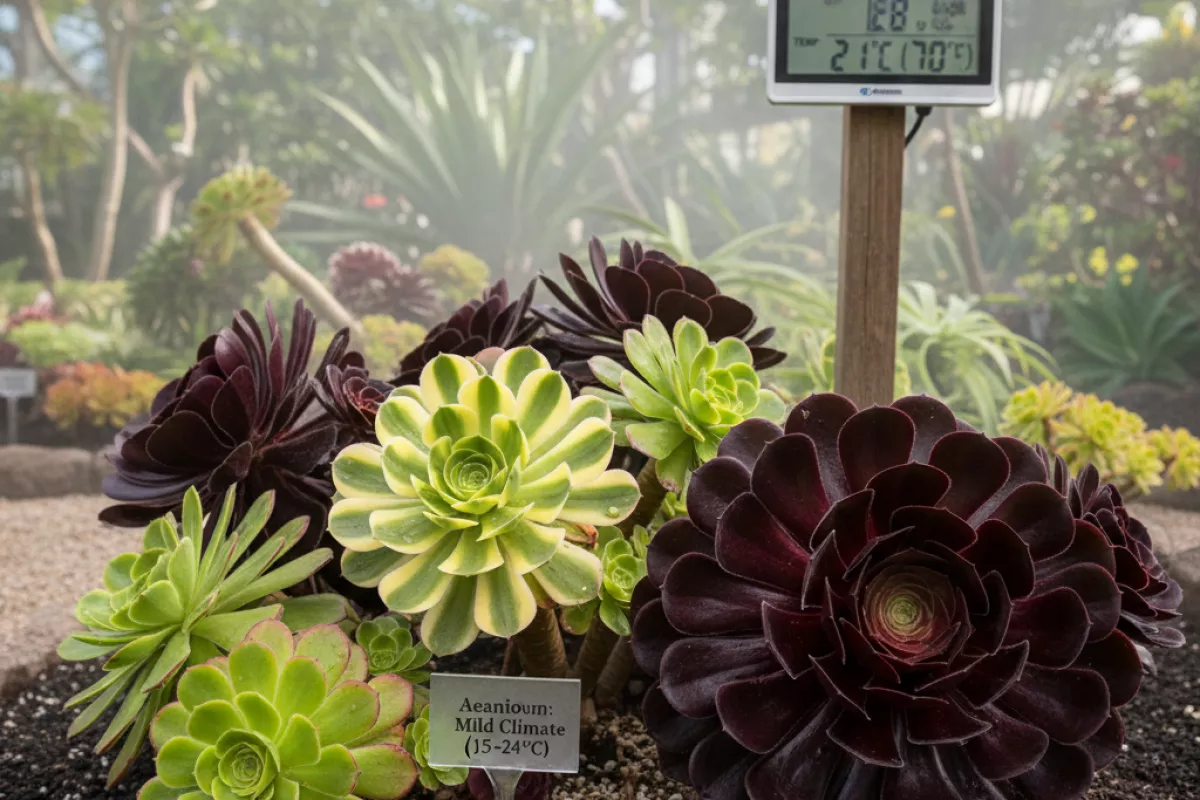
Aeonium tends to look its best when days are mild and nights are cool. In that kind of weather it keeps a tight rosette, holds color well, and grows steadily without the stress responses you see in heat waves or hard cold snaps.
Most types are happiest around 15–24°C (59–75°F). They can handle warmer afternoons, but once temperatures sit above about 30°C (86°F) for long stretches, growth often slows and the plant may shift into a semi-dormant mode to conserve moisture. On the other end, brief chills near 5°C (41°F) are usually tolerated, but frost can scar leaves and damage the growing point, especially in wet soil.
| Condition | Typical plant response | What to do |
|---|---|---|
| Ideal mild range: 15–24°C (59–75°F) | Compact rosettes, steady growth, good leaf retention | Give bright light and water when the mix is mostly dry |
| Warm but manageable: 25–30°C (77–86°F) | Slower growth; rosettes may loosen slightly | Increase airflow, avoid hot reflected sun, water earlier in the day |
| Hot spell: >30°C (86°F), especially with strong sun | Heat stress, leaf droop, partial dormancy; higher risk of sunburn | Provide afternoon shade, don’t overwater, keep the pot from overheating |
| Cool nights: 5–10°C (41–50°F) | Generally fine; growth may pause | Keep soil on the drier side and protect from cold wind |
| Near-freezing: 0–4°C (32–39°F) | Damage risk rises, especially if the mix is wet | Move under cover, keep dry, use frost cloth if planted outdoors |
| Frost: <0°C (32°F) | Leaf and crown injury; potential plant loss | Bring indoors or into a greenhouse; prioritize keeping the crown dry |
- Humidity and airflow matter more than “tropical” moisture. Aeonium prefers fresh air and drying cycles; stagnant, humid corners can invite rot even at comfortable temperatures.
- Light and heat aren’t the same thing. Bright light is useful, but intense midday sun combined with 30°C+ (86°F+) is when sunburn shows up fastest.
- Cold plus wet is the dangerous combo. If nights drop to 5°C (41°F) or below, letting the potting mix stay soggy is a common cause of stem and root problems.
- Microclimates help outdoors. A spot with morning sun and afternoon shade, or near a wall that buffers wind, often keeps plants in the comfortable band longer.
If you’re growing in a climate with hot summers, treat mid-summer like a “rest season”: keep the plant cooler and brighter rather than wetter. In colder regions, the simplest rule is to protect it before frost and let it run a bit dry until temperatures return to the mild zone.
Care routine for healthy succulent growth
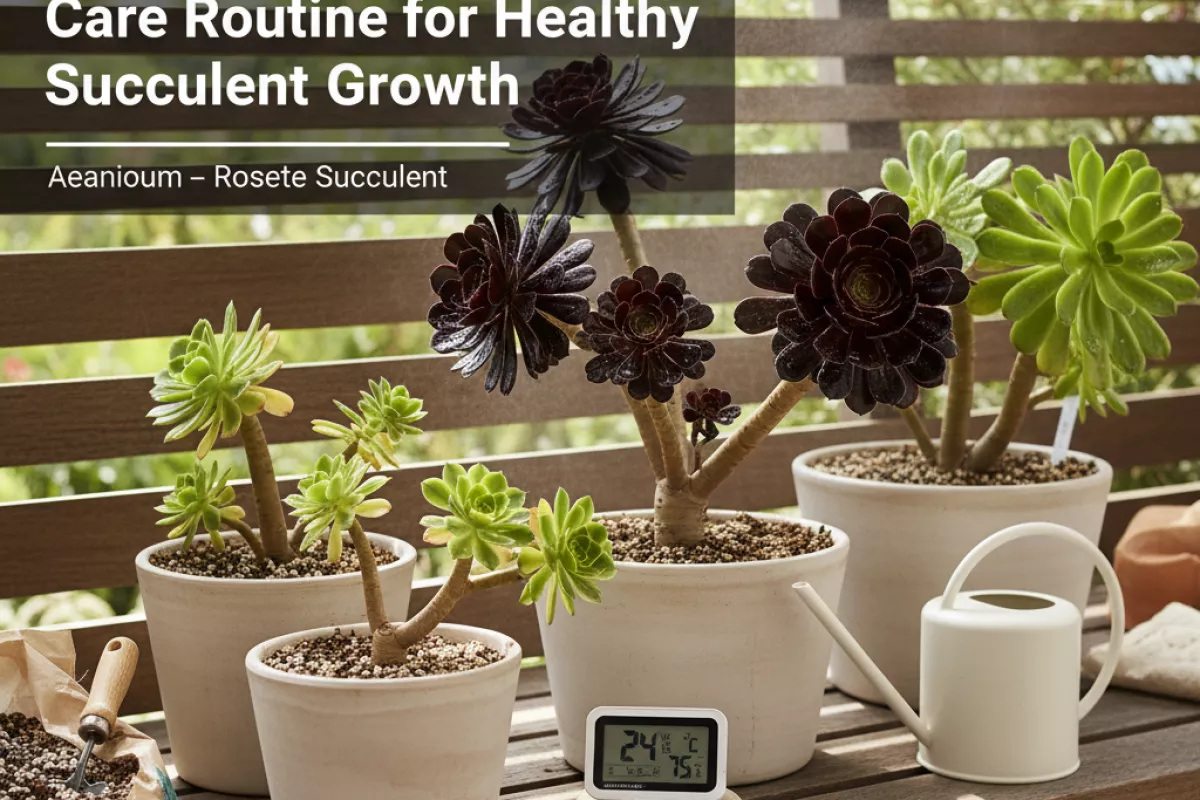
Keep Aeonium steady and stress-free by matching its mild-climate preferences: bright light without scorching, thorough but spaced watering, and a gritty mix that dries quickly. Most problems come from two extremes—staying wet too long or baking in intense heat—so the routine is mainly about timing and airflow.
- Light: Give bright light with some protection from harsh afternoon sun, especially when temperatures climb above 27°C (81°F). Indoors, place it close to a bright window and rotate the pot weekly so rosettes don’t lean.
- Watering: Water deeply, then wait until the mix is dry several centimeters down before watering again. In cooler, active growth periods, that may be every 7–14 days; during warm dormancy it can stretch to 2–4 weeks, depending on airflow and pot size. Empty saucers so roots never sit in water.
- Soil and pot: Use a fast-draining cactus/succulent blend amended with extra mineral grit (pumice, perlite, or coarse sand). Choose a pot with drainage holes; terracotta helps the root zone dry more evenly.
- Temperature and airflow: Aim for mild conditions: roughly 10–24°C (50–75°F). Brief dips near 4°C (39°F) can damage leaves, and prolonged heat above 32°C (90°F) often triggers dormancy. Provide gentle airflow to reduce rot and pest pressure.
- Feeding: Fertilize lightly only when it’s actively growing: a diluted balanced fertilizer at 1/4 strength about once every 4–6 weeks. Skip feeding during heat-induced rest or if the plant is dehydrated.
- Pruning and shaping: Remove dead lower leaves to improve airflow. If stems get leggy, behead and reroot the top; let the cut end callus for 2–5 days before planting, then water sparingly until new roots form.
- Repotting: Repot every 1–2 years, or when the plant becomes top-heavy. Move up only one pot size at a time (for example, from 10 cm to 12 cm, or 4 in to 5 in) to avoid excess wet soil around the roots.
- Pest checks: Inspect the rosette centers and leaf undersides for mealybugs and aphids. Rinse small infestations off with water, or dab mealybugs with 70% isopropyl alcohol; repeat weekly until gone.
| Situation | What you’ll notice | Likely cause | What to do next |
|---|---|---|---|
| Leaves dropping from the bottom | Older leaves yellow, then fall as the stem lengthens | Normal aging, especially during growth | Gently remove dry leaves and keep light bright to reduce stretching |
| Soft, translucent leaves | Rosette feels mushy; soil stays wet | Overwatering or poor drainage | Stop watering, improve airflow, repot into a gritty mix, trim any black roots |
| Wrinkled leaves but firm stem | Rosette looks deflated; mix is bone-dry | Underwatering or roots not taking up water | Water thoroughly once; if it doesn’t plump up in 48–72 hours, check roots for rot |
| Long gaps between leaves (leggy growth) | Stem elongates; rosette opens up | Not enough light | Move to brighter light gradually; consider pruning and rerooting the top |
| Brown, crisp patches | Scorched areas on sun-facing leaves | Sunburn from sudden intense sun | Provide afternoon shade and acclimate over 7–14 days; damaged leaves won’t heal |
| Growth pauses in hot weather | Little to no new leaves; rosette may tighten | Heat dormancy | Water less often, keep it cooler/brighter-but-shaded, resume normal watering when temperatures drop below 27°C (81°F) |
If you’re unsure whether to water, check the plant and the mix together: a slightly soft rosette with dry soil usually means it’s time, while a soft rosette with damp soil is a warning sign to pause and let it dry. Adjust slowly rather than making big changes overnight; Aeonium responds best to consistent, mild conditions.
Propagation from cuttings and offsets
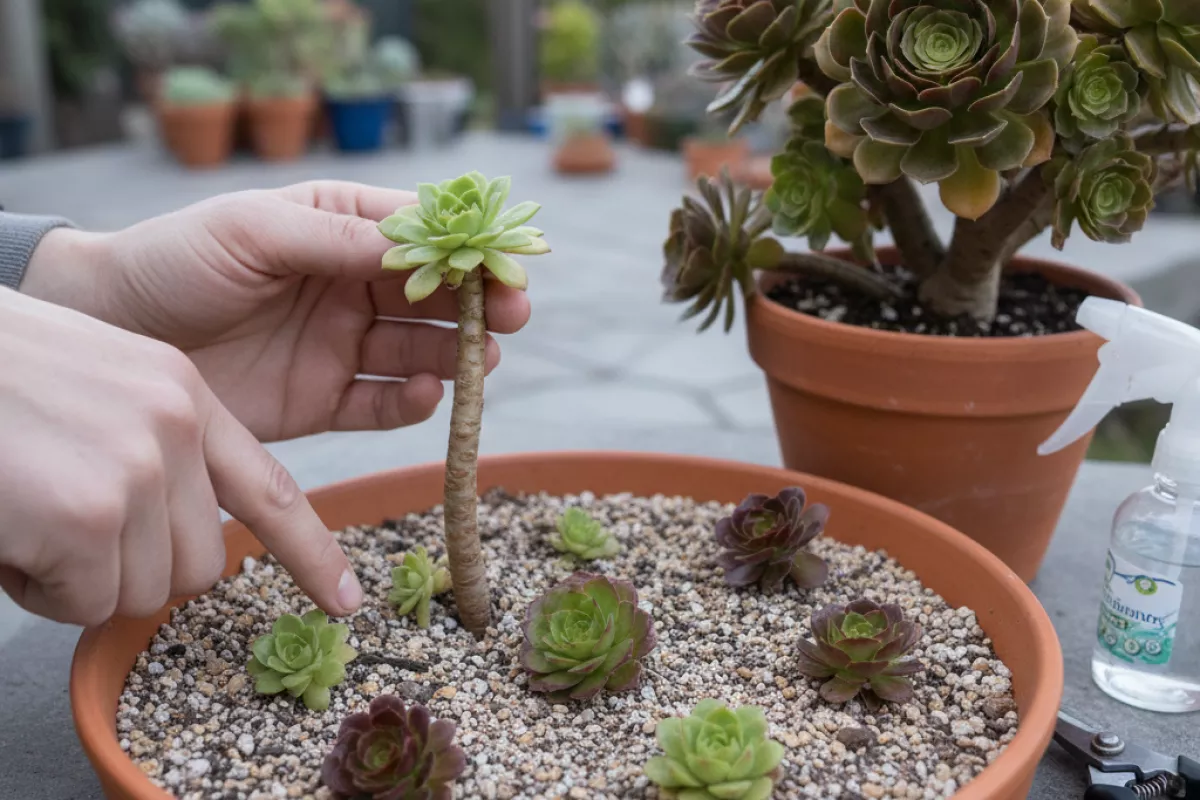
New plants are easiest to make from stem pieces or the small rosettes that form around the base. Aeonium roots readily when the cutting is allowed to dry and the mix stays lightly moist rather than wet. Because these succulents are most active in mild weather, you’ll usually get faster rooting in spring or autumn than in peak summer heat.
- Choose the right material: Pick a healthy rosette with a short length of stem attached. If you’re taking an offset, aim for one that’s at least 5–10 cm (2–4 in) across so it has enough stored energy to recover.
- Make a clean cut: Use a sterile blade and cut below the rosette, keeping the stem as intact as possible. Remove a few lower leaves if needed to expose 2–4 cm (1–1.5 in) of bare stem for planting.
- Let it callus: Set the piece in bright shade with good airflow until the cut end dries and seals. This typically takes 2–7 days, depending on humidity and stem thickness.
- Pot into a gritty mix: Use a fast-draining succulent medium (for example, roughly half potting mix and half pumice/perlite). Plant the stem deep enough to stand upright without burying the rosette.
- Water sparingly at first: After potting, wait about 3–7 days before the first light watering. Then moisten the mix and let it dry most of the way before watering again. Constant dampness is the main cause of failure.
- Give bright, gentle light: Keep in bright indirect light or morning sun while roots form. Avoid harsh midday sun until you see new growth, which usually signals rooting.
Temperature matters more than people expect. Aim for about 18–24°C (65–75°F) while the cutting is settling in. If nights drop below 10°C (50°F), rooting slows; if days climb above 30°C (86°F), the rosette may pause growth and sit without rooting for a while.
If you’re separating offsets from a clumping plant, don’t rush to pull them apart. Tease soil away and look for their own roots; if an offset has none, treat it like a stem cutting and let the cut surface dry before potting. For tall, leggy plants, “beheading” works well: cut the top rosette with 7–15 cm (3–6 in) of stem, root it, and leave the stump to resprout new heads.
Troubleshooting tips: If the rosette shrivels slightly, that can be normal while it redirects moisture to root production. If leaves turn mushy or the stem darkens, the mix is staying too wet or the cut wasn’t fully callused—unpot, trim back to firm tissue, dry for several days, and restart in drier medium.
Seasonal growth cycle and dormancy phase
Aeonium doesn’t follow the “summer is growing season” rule that many succulents do. Most types put on their best growth in the cooler, brighter parts of the year, then slow down when heat and long days arrive. Knowing which phase your plant is in makes watering and feeding decisions much easier.
| Time of year (typical) | What the plant tends to do | What to change in care |
|---|---|---|
| Fall to spring (cool, bright months) | Active growth: rosettes expand, stems elongate, new leaves form; colors often intensify in strong light | Water more regularly: soak, then let the mix dry most of the way before watering again. Light feeding is optional (about monthly) at 1/4–1/2 strength. |
| Late spring to summer (hot, dry spells) | Rest period: growth slows or pauses; older leaves may yellow and drop; rosettes can tighten and look “closed” | Reduce watering: give small, infrequent drinks only when the plant shows thirst (slight leaf softening). Skip fertilizer. Provide afternoon shade and airflow. |
| Heat wave conditions (above about 30°C (86°F)) | Stress response: drooping, leaf curl, sun-scorch risk; the plant may shed leaves to conserve moisture | Move to bright shade, avoid hot windows, and don’t “rescue” with heavy watering. If you water, do it early morning and keep the soil fast-draining. |
| Winter indoors (low light, cool nights) | Mixed behavior: may keep growing slowly, or stall if light is weak; stretching is common in dim rooms | Prioritize light. Water only after the potting mix dries well. Keep away from cold drafts; protect from near-freezing nights below 5°C (41°F). |
Dormancy in Aeonium is usually “soft,” meaning it may still take up a little water and keep a few leaves, but it won’t use moisture quickly. The classic mistake is treating a resting plant like it’s in full growth: frequent watering in warm weather can lead to weak roots and rot.
- Signs it’s actively growing: fresh leaves emerging from the center, rosettes widening, and the plant drying the pot faster than usual.
- Signs it’s resting: little to no new center growth, tighter rosettes, and slower soil drying even in the same pot and mix.
- Leaf drop isn’t always a problem: shedding a ring of older leaves during warm months can be normal; soft, translucent leaves or a mushy stem are not.
- Adjust gradually: when the weather shifts, change watering over 2–3 weeks rather than abruptly, especially if days swing between 18°C (64°F) and 32°C (90°F).
If you’re unsure which phase your plant is in, let the potting mix and the leaves guide you. In growth mode, the plant will “ask” for water by drying the pot and staying firm; in its rest period, it’s safer to err on the dry side and focus on keeping temperatures mild and light bright but not scorching.
Common Aeonium pests and stress symptoms
Most problems show up first in the rosette: sticky residue, distorted new leaves, sudden leaf drop, or a plant that stops growing when conditions shift. Because Aeonium often slows down in heat and grows more in mild weather, it helps to separate normal seasonal rest from true trouble.
| What you see | Likely cause | What to do | Prevention / notes |
|---|---|---|---|
| White, cottony clusters in leaf axils; sticky sheen; ants nearby | Mealybugs | Isolate the plant. Dab pests with isopropyl alcohol 70% (or 91%) on a cotton swab, then rinse after 10–15 minutes. Repeat weekly until clear. For heavy infestations, use insecticidal soap or horticultural oil, keeping spray out of intense sun. | They hide deep in rosettes and under dry leaves. Check new plants before placing near a collection. |
| Hard, tan/brown bumps on stems or leaf undersides; yellowing; sticky honeydew | Scale insects | Gently scrape off with a fingernail or soft brush. Follow with alcohol swabs or horticultural oil. Prune heavily infested stems if needed. | Scale can blend in with barky stems. Recheck every 7–10 days (1–1.5 weeks). |
| Fine webbing; speckled, dull leaves; bronzing in hot, dry air | Spider mites | Rinse the rosette thoroughly, then treat with insecticidal soap. Repeat 2–3 times, 5–7 days (1 week) apart. Improve airflow and avoid heat stress. | Mites thrive when it’s warm and dry. Outdoors, natural predators often help if you avoid broad-spectrum sprays. |
| Soft-bodied green/black insects on new growth; curled leaves; sticky residue | Aphids | Blast off with water, then use insecticidal soap if they return. Remove badly distorted tips and dispose of them. | Often appear on flower stalks. Early action prevents rapid population jumps. |
| Sudden leaf drop; mushy stem base; sour smell; rosette collapses | Root/stem rot from overwatering or poor drainage | Unpot and inspect. Cut away all soft tissue to firm, clean stem. Let cuts dry 2–3 days, then reroot in a gritty mix. Water lightly only after new roots form. | Cool, wet soil is the usual trigger. Use pots with drainage and let the mix dry between waterings. |
| Lower leaves shrivel evenly; rosette looks thinner; soil bone-dry | Underwatering (or roots not functioning) | Water deeply until it drains, then wait until the mix dries again. If it doesn’t plump up within 7–10 days (1–1.5 weeks), check for dead roots or compacted soil. | Some lower leaf loss is normal, but rapid, whole-plant shriveling signals a mismatch in watering or roots. |
| Elongated stem; wide gaps between leaves; rosette “opens up” and leans | Not enough light | Move to brighter light gradually over 7–14 days (1–2 weeks). Rotate the pot weekly. Consider taking cuttings and restarting compact heads. | Etiolation won’t reverse on the stretched section; new growth can be compact if light improves. |
| Brown, crispy patches on leaves, especially after a sudden move outdoors | Sunburn | Shift to bright shade, then reintroduce sun slowly. Remove badly damaged leaves once dry. | Acclimation matters more than “sun tolerance.” Morning sun is usually safer than harsh afternoon exposure. |
| Leaves curl inward; rosette tightens; growth pauses during hot spells | Heat stress / summer dormancy | Provide afternoon shade and airflow. Water sparingly but don’t keep bone-dry for weeks if the plant is actively dehydrating. Avoid fertilizing until mild weather returns. | This can be normal for many Aeonium types. The key is that the stem stays firm and the center remains healthy. |
| Blackened, translucent tissue after a cold night; collapse of outer leaves | Frost damage | Move to a protected spot. Wait a few days, then trim to healthy tissue. Keep the plant on the dry side while it recovers. | Even brief freezes can injure rosettes. If nights may drop near 0°C (32°F), protection is safer than “testing” hardiness. |
| White crust on soil or pot; leaf tips dry; slow growth despite watering | Mineral/salt buildup from hard water or frequent feeding | Flush the pot with 3–4 times the container volume of water (e.g., 1 L for a 250 ml pot volume / 34 fl oz for an 8.5 fl oz pot volume), letting it drain fully. Reduce fertilizer strength. | Use low-mineral water when possible. Light feeding during active growth is plenty for rosette succulents. |
- Quick check routine: Look into the center of the rosette and along stem joints; that’s where pests hide. Check undersides of leaves with a bright light.
- When to worry about leaf drop: A few older leaves drying at the base is normal. Rapid shedding plus a soft stem usually points to rot, while rapid shedding plus crispy leaves often points to heat or drought stress.
- After any treatment: Keep the plant out of strong sun for 24–48 hours (1–2 days) so soaps/oils don’t scorch leaves.