Agave — Drought-Tolerant Succulent With Minimal Care Needs

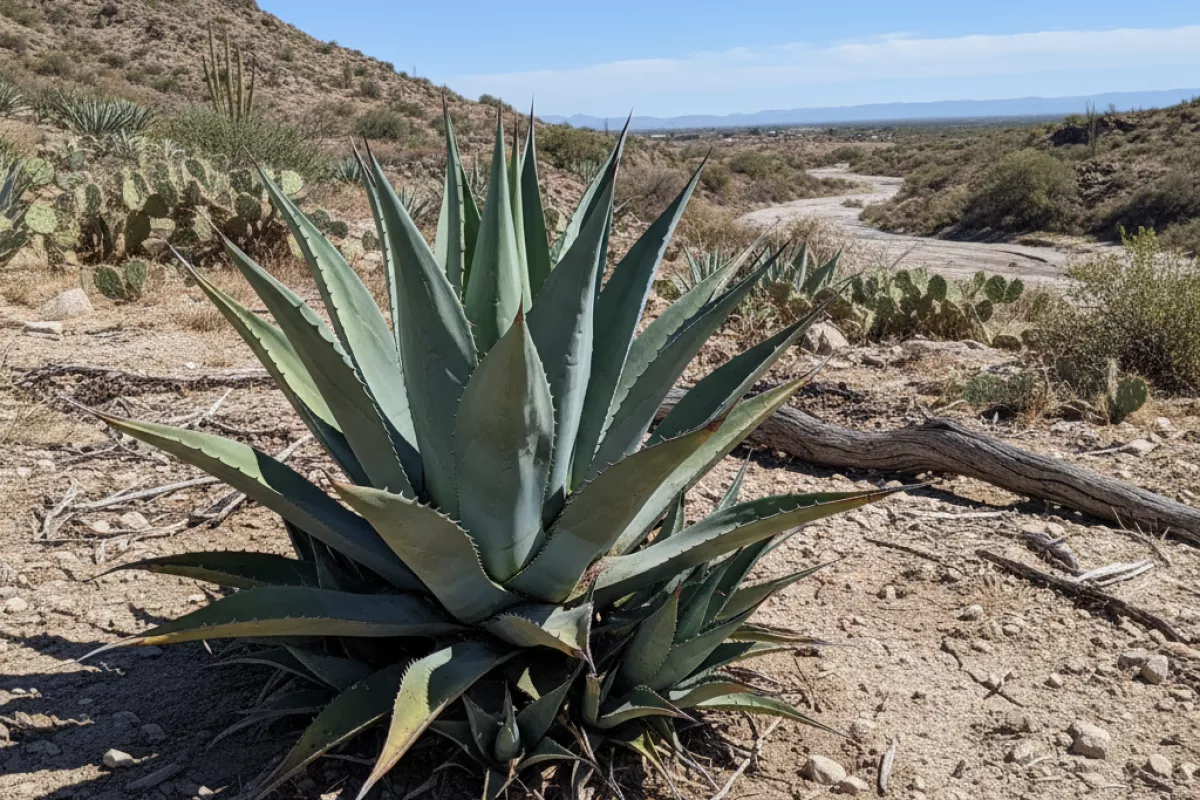 This article explains agave basics, its desert origins and range, and how its rosette shape grows. It covers light needs, fast-draining soil, strict watering limits, heat and temperature tolerance, long-term care, propagation by pups, seasonal growth cycles, and rot risks.
- Agave overview and structural traits
- Native desert habitats and distribution
- Leaf rosette form and growth habit
- Light requirements for strong Agave growth
- Soil drainage and Agave watering limits
- Temperature tolerance and Agave heat resistance
- Maintenance for long-lived agave plants
- Propagation through offsets and pups
- Seasonal growth rhythm in arid climates
- Common Agave problems and rot risks
Agave is a tough, water-wise succulent that thrives with minimal care, making it perfect for busy gardeners and dry climates. This guide explains how to pick the best variety for your space, plant it in fast-draining soil, and water correctly to prevent rot and slow growth. You will also learn simple tips for growing agave in pots or in a sunny landscape bed.
Agave overview and structural traits
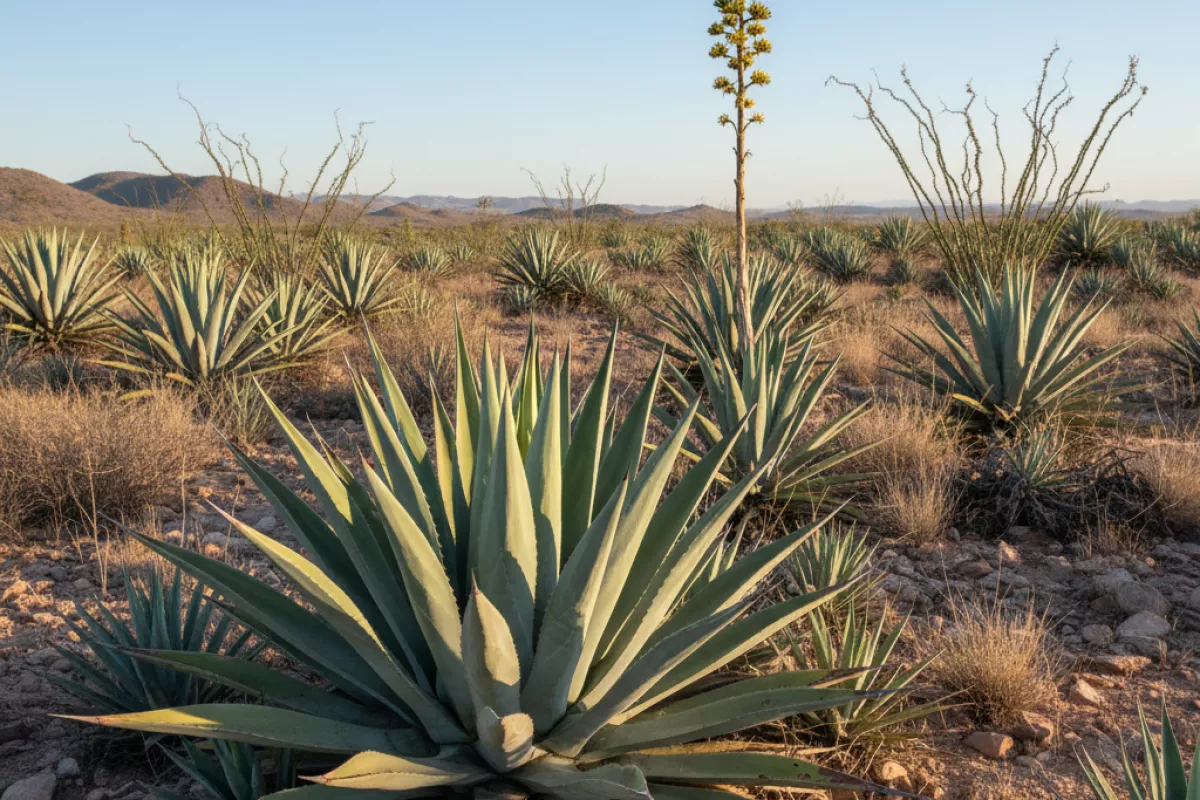
These desert-adapted rosette succulents are built to store water, shed heat, and keep browsing animals at a distance. Most types form a tight spiral of thick leaves that funnel rain and dew toward the center, then hold that moisture in fleshy tissues for long dry spells.
It helps to know that many species are monocarpic: they grow for years, then send up a single flowering stalk and decline afterward. Depending on the variety and conditions, that bloom can happen after roughly 10–30 years, and the stalk can rise several meters—often around 3–9 m (10–30 ft)—before setting seed. Some plants offset (“pup”) around the base, so the clump can continue even after the original rosette finishes its life cycle.
- Rosette architecture: Leaves radiate from a short stem, creating a low, stable form that resists wind and reduces sun exposure to the plant’s core.
- Leaf thickness and cuticle: A waxy surface and dense, water-storing leaf tissue slow evaporation and give many varieties their blue-green or gray cast.
- Spines and terminal tip: Marginal teeth and a sharp end spine discourage animals and also make placement important near walkways and play areas.
- Fiber-rich structure: Leaves contain strong internal fibers that help them stay rigid in heat and drought instead of collapsing as they dehydrate.
- Shallow, wide roots: Rather than digging deep, roots spread outward to capture brief rains quickly; this is why fast-draining soil matters more than frequent watering.
- CAM photosynthesis: Many open their stomata mainly at night, taking in CO2 when temperatures are cooler, which reduces water loss during hot days.
Visually, you can often tell a plant’s tolerance for sun and dryness by its leaf finish and armament: heavily glaucous (powdery) leaves and pronounced spines usually signal a tougher, more exposed habitat. Softer, greener leaves with fewer teeth can indicate a preference for a bit more protection from intense afternoon sun, especially in very hot climates.
Native desert habitats and distribution
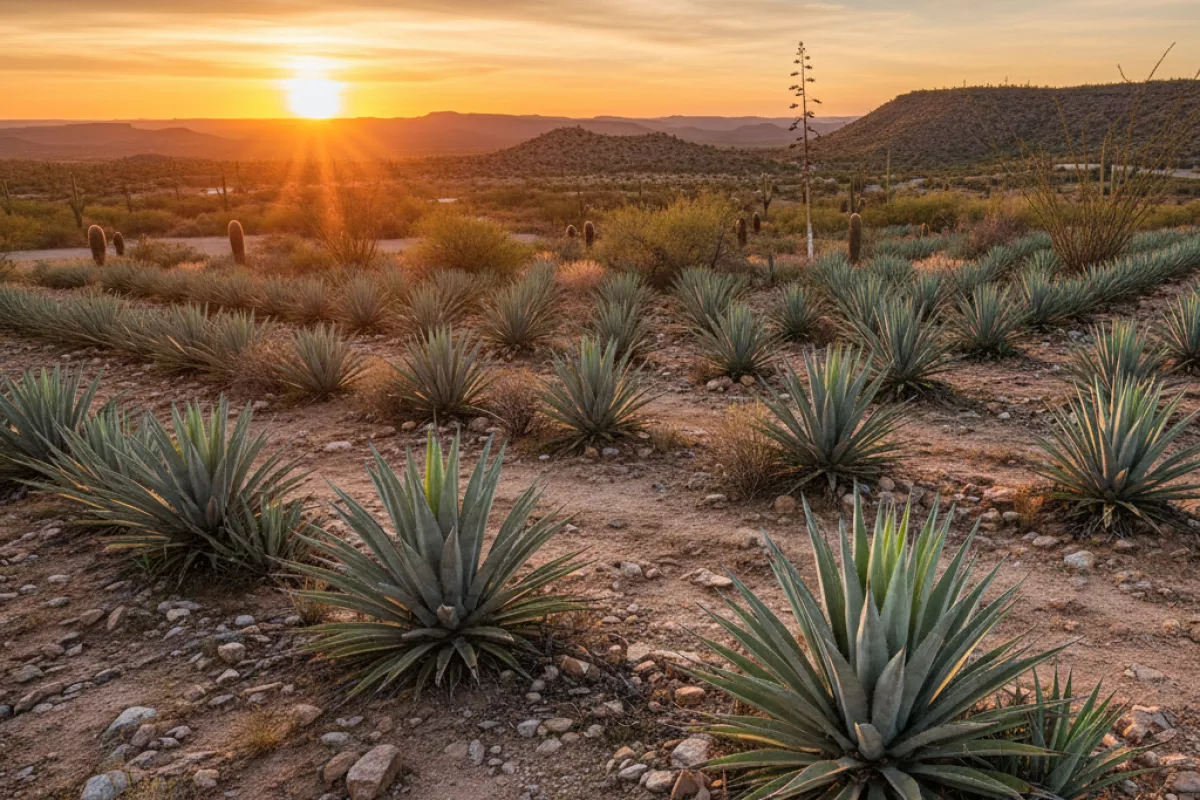
Agaves evolved in places where water is unreliable, sun is intense, and soils are often rocky or sandy. In the wild, they’re most common in arid and semi-arid landscapes where brief rains are followed by long dry stretches, and where fast drainage matters more than rich soil.
The center of diversity is Mexico, with many species also native to the southwestern United States and parts of Central America. Depending on the species, you’ll find them from coastal scrub and thorn forest edges to high desert slopes and canyon walls, often wedged into gravelly flats or growing between boulders where runoff disappears quickly.
- Typical terrain: alluvial fans, rocky hillsides, desert grassland margins, and open scrub where competition from taller plants is limited.
- Soil profile: lean, mineral soils with sharp drainage; many populations thrive in decomposed granite, limestone rubble, or sandy loam rather than heavy clay.
- Rain pattern: short wet seasons and long dry seasons; some regions get summer monsoon bursts, others rely on winter rains.
- Exposure: full sun is common, but certain species naturally take partial shade from shrubs or cliffs, especially in hotter low-elevation sites.
| Region / setting | What agaves are adapted to there |
|---|---|
| Sonoran & Chihuahuan Desert zones (U.S.–Mexico borderlands) | High heat, sparse rainfall, and rapid evaporation; thick leaves and tight rosettes reduce water loss. |
| Mexican plateau & high desert basins | Big day–night temperature swings and seasonal drought; many species tolerate cool nights and bright, dry air. |
| Rocky limestone or volcanic slopes | Shallow soils and fast runoff; roots spread wide to capture brief moisture pulses. |
| Coastal scrub and thorn-scrub edges | Salt-laced winds in some areas and intense sun; waxy leaf coatings help limit desiccation. |
Elevation also shapes where different agave species settle. Some stay near sea level, while others occur well upslope; a number of highland types handle occasional light frosts better than lowland relatives. This range of native conditions is why one agave may prefer blazing sun and very dry soil, while another looks best with a little afternoon shade and slightly more regular moisture.
For home growing, the most useful takeaway is to copy the “desert logic”: bright light, air movement, and soil that dries quickly after watering. When those basics match what the plant experiences in its natural range, agave usually stays compact, firm-leaved, and low-maintenance.
Leaf rosette form and growth habit
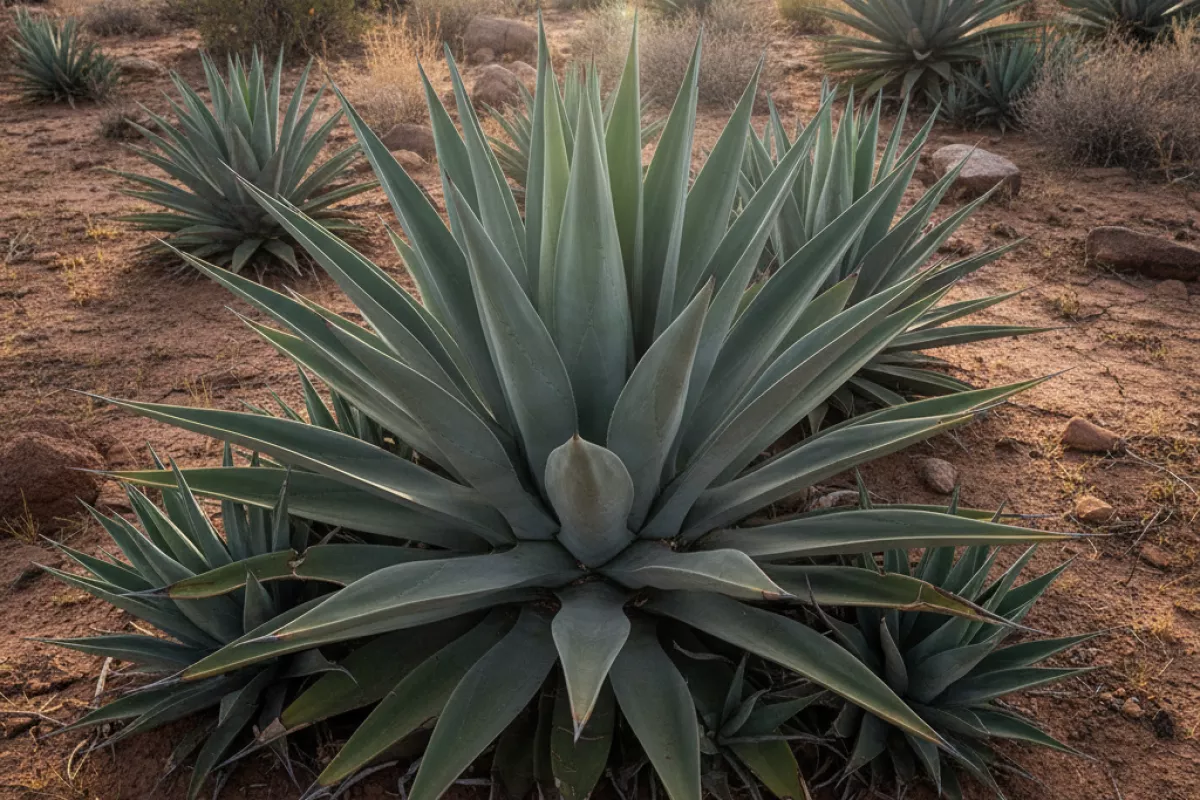
Agaves grow as a tight spiral of leaves that radiates from a central crown, creating a low, architectural silhouette. This arrangement isn’t just for looks: the overlapping leaves shade the plant’s core, reduce airflow over the soil surface, and help limit moisture loss in hot, dry conditions.
Most species expand outward more than upward, forming a broad footprint that can range from about 30 cm (12 in) across in compact types to 2.5 m (8 ft) or more in large landscape agaves. Leaves are typically thick and fibrous, often ending in a sharp terminal spine, with many varieties also carrying small teeth along the margins. Because the growing point sits in the center, damage there matters more than a few scarred outer leaves.
- Slow, steady enlargement: New leaves emerge from the crown, pushing older leaves outward. Growth is usually measured in a few leaves per season rather than rapid height gain.
- Space-first habit: The plant’s width is the main planning factor; give it clearance so the leaf tips don’t press into walkways or against walls.
- Water-shedding design: Many rosettes funnel rain and irrigation toward the base, which is helpful in sparse rainfall but can be a drawback in heavy, frequent watering.
- Sun response: In brighter light, rosettes tend to stay tighter and more compact; in lower light, leaves may stretch and open, making the plant look looser.
- Offsetting vs. solitary growth: Some agaves stay single, while others produce pups around the base, gradually forming a clump that spreads over time.
A key trait to know is that many agaves are monocarpic: after years of building the rosette, the plant eventually sends up a tall flowering stalk and then declines. Depending on the species and conditions, that bloom can happen in roughly 10–30 years, with some flowering sooner and others taking much longer. If the plant produces offsets, those pups often continue growing after the mother rosette finishes its life cycle.
For day-to-day care, the growth pattern suggests two practical habits: keep debris from collecting in the crown (especially in rainy climates), and rotate container plants occasionally so the rosette develops evenly. When handling or positioning an agave, treat the leaf tips like needles—give yourself a buffer zone and avoid placing it where people and pets brush past.
Light requirements for strong Agave growth
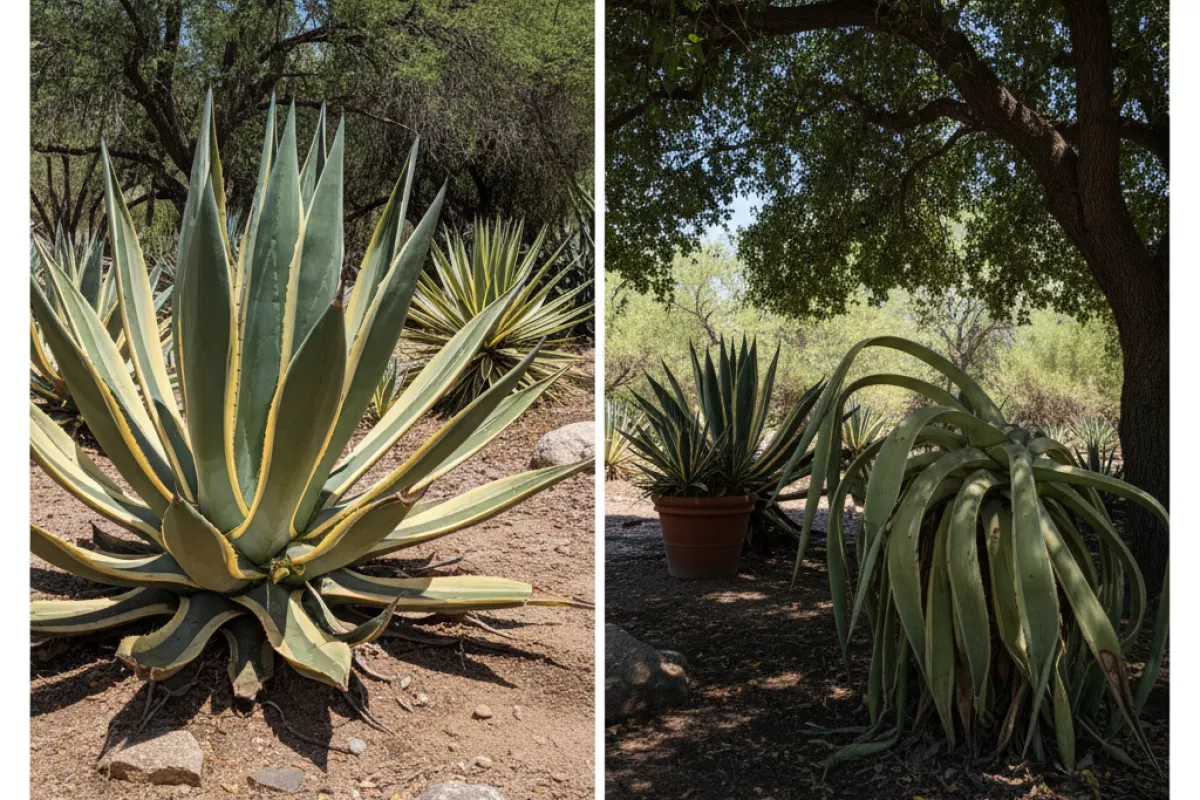
Agaves stay compact, colorful, and sturdy when they get plenty of sun. Too little light usually shows up as stretched, floppy leaves, wider gaps between leaf bases, and a plant that leans toward the brightest window or sky opening.
Most types do best with full sun to bright light, but the “right” amount depends on whether the plant is newly planted, grown in a pot, or moved from indoors to outdoors. Sudden exposure can scorch leaves, while long-term dim conditions weaken growth.
- Outdoors (best case for most agaves): Aim for 6–8 hours of direct sun daily. In very hot climates, light afternoon shade can prevent sunburn, especially for variegated or thin-leaved varieties.
- Indoors: Place near the brightest window available (often south- or west-facing). Rotate the pot about a quarter-turn every 1–2 weeks to keep rosettes symmetrical.
- Newly purchased or recently moved plants: Acclimate gradually over 7–14 days. Start with morning sun and filtered light, then increase direct exposure to reduce burn risk.
| Light situation | What you’ll see | What to do |
|---|---|---|
| Too little light | Elongated, paler leaves; rosette opens up; leaning toward light | Move to a brighter spot, increase sun exposure gradually, rotate the pot weekly |
| Good light | Compact rosette; firm leaves; strong color and defined leaf edges | Maintain current placement; protect from sudden changes if relocating |
| Too much sudden sun | Bleached patches or tan “scars,” especially on the sun-facing side | Provide temporary shade cloth, shift to morning sun, then reintroduce stronger sun over 1–2 weeks |
| Intense heat + reflective surfaces | Localized burn near walls, gravel, or concrete that radiate heat | Increase airflow, add light afternoon shade, or move the pot 30–60 cm (12–24 in) away from reflective heat |
If you’re using grow lights, keep the lamp close enough to be effective without overheating the plant. A common starting point is 20–30 cm (8–12 in) above the rosette for many LEDs, adjusting based on leaf response. Pair artificial lighting with a consistent day length rather than leaving it on around the clock.
One more practical cue: if the plant’s newest leaves are shorter and thicker than older ones, you’re moving in the right direction. If new growth is long and soft, it’s asking for brighter conditions rather than more water.
Soil drainage and Agave watering limits
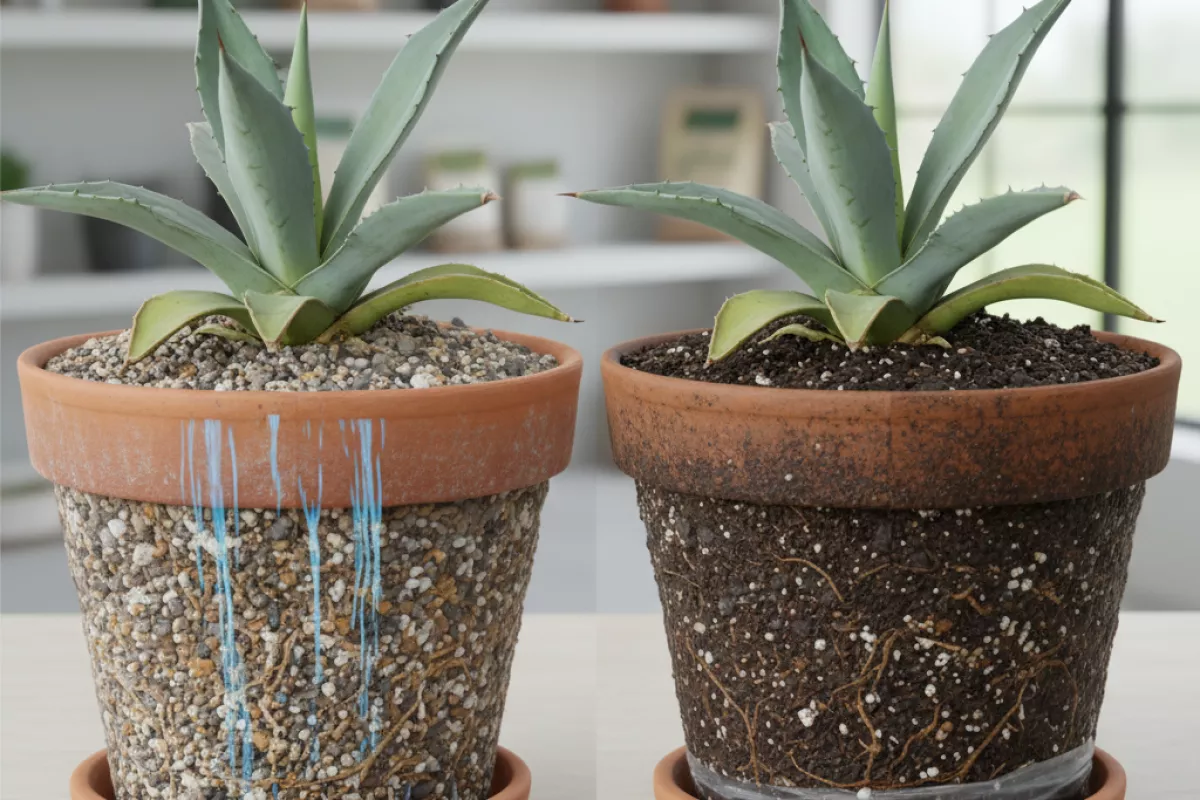
Most agave problems come from moisture that lingers around the roots, not from a lack of water. The goal is a fast-draining mix and a watering rhythm that lets the root zone dry out fully between soakings. If the pot or planting site stays damp for days, the plant can’t “drink and dry” the way it’s built to.
Start with drainage you can trust. In containers, that means a pot with a real drain hole and a gritty medium that doesn’t collapse into sludge over time. In the ground, it means avoiding low spots and heavy clay pockets that hold water after rain.
- Pot choice: Use a container with at least one unobstructed drainage hole. A shallow, wider pot often dries more evenly than a tall, narrow one for many rosette types.
- Soil texture: Aim for a mix that feels mineral and airy. If you squeeze a damp handful and it stays clumped like modeling clay, it’s too fine and likely to stay wet.
- Top-dressing: A thin layer of gravel can reduce splashing and keep leaves cleaner, but don’t use it to “hide” a water-retentive mix underneath.
- Planting height: Keep the crown slightly above the surrounding grade so water sheds away instead of pooling at the base.
Watering limits are less about a strict schedule and more about conditions. Heat, sun, pot size, and airflow change how quickly the medium dries. A good rule is to water deeply, then wait until the mix is dry several centimeters down before repeating.
| Situation | What to do | Why it works |
|---|---|---|
| Hot, bright weather (above 30°C (86°F)) | Soak thoroughly, then let it dry out completely; check dryness around 5–7 cm (2–3 in) down before the next watering. | High evaporation and active growth use water quickly, but constant dampness still risks rot. |
| Mild conditions (around 18–24°C (64–75°F)) | Water only when the pot feels light and the mix is dry below the surface; expect longer gaps between soakings. | Moderate temperatures slow drying, so spacing prevents soggy roots. |
| Cool or low-light periods (below 10°C (50°F)) | Greatly reduce watering; in many homes and climates, a small drink or none at all may be needed until warmth returns. | Cold, dim conditions reduce uptake, so extra moisture sits in the root zone. |
| After repotting or root disturbance | Wait 3–7 days before watering (or longer if it’s cool), then resume deep-but-infrequent soakings. | Dry time helps small root injuries callus, lowering the chance of infection. |
Use the plant’s signals to stay within safe watering limits. Wrinkling or slight leaf softening can mean it’s ready for a soak, while translucent, mushy bases or a sour smell from the mix point to excess moisture. If you’re unsure, wait another day—agaves handle an extra dry interval far better than a constantly wet root zone.
Temperature tolerance and Agave heat resistance
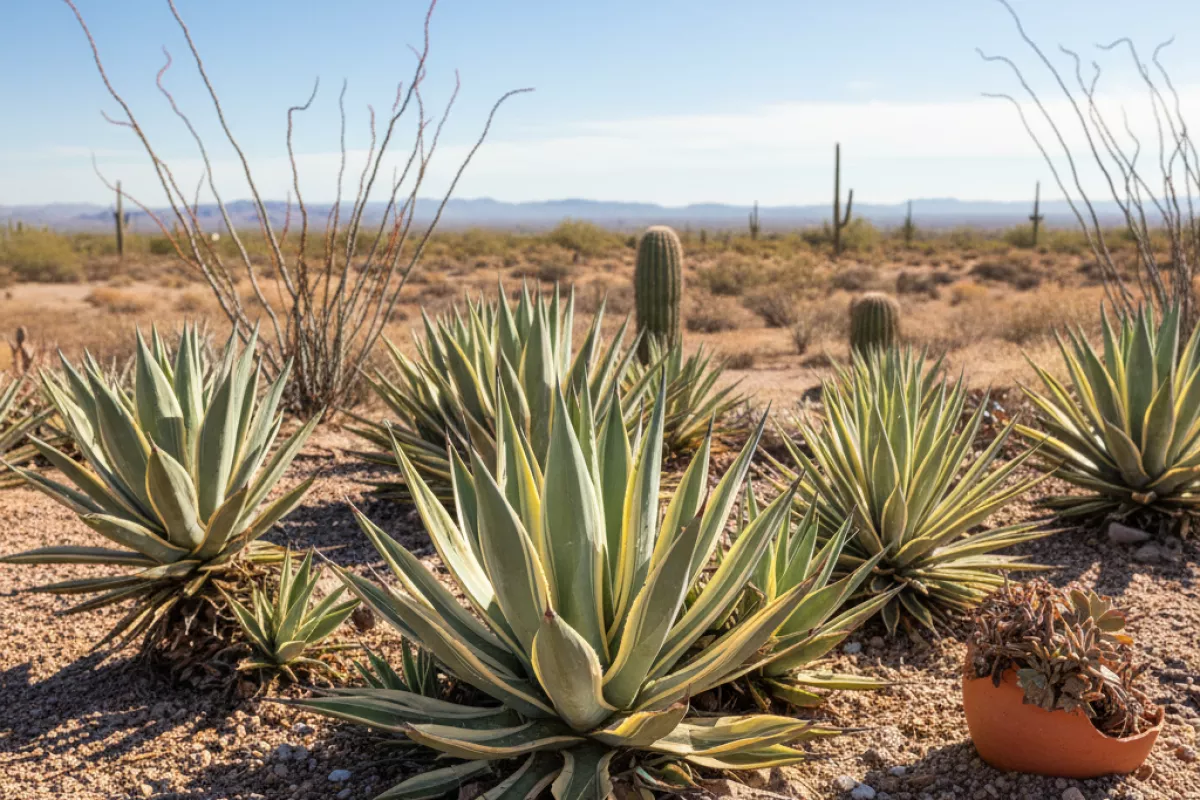
Agaves cope with temperature swings better than many succulents, but they still have limits. Most handle intense sun and hot, dry air once established, especially when their roots are in fast-draining soil. The bigger risk in summer is a mix of high heat and trapped moisture around the crown or roots, which can trigger rot even when the plant looks “drought-proof.”
Heat performance depends on species, exposure, and how quickly the soil dries. In-ground plants usually tolerate higher highs than container plants because their roots stay cooler and moisture levels change more gradually. Potted agaves can overheat when dark containers sit on hot concrete, where root-zone temperatures rise faster than air temperatures.
| Situation | What the plant is doing | What to do |
|---|---|---|
| Hot spell: 38–46°C (100–115°F) with strong sun | Leaf tips may bronze; growth slows to conserve water | Water deeply but infrequently at dawn; avoid splashing into the rosette; give light afternoon shade for newly planted specimens |
| Heat + humidity: nights stay above 24°C (75°F) | Higher rot risk; leaves can look dull or slightly translucent near the base | Increase airflow; keep mulch away from the crown; let soil dry fully between waterings |
| Container on hardscape: surface temps can exceed 49°C (120°F) | Roots overheat; plant may wilt despite adequate moisture | Move pot off concrete; use a light-colored container; provide shade to the pot (not necessarily the leaves) |
| Cold snap: -7 to -1°C (20–30°F) | Soft tissue can spot or collapse; damage often shows days later | Keep soil dry; cover with frost cloth; avoid fertilizing; remove mushy tissue only after weather stabilizes |
| Hard freeze: below -9°C (15°F) | Many common landscape types suffer severe injury, especially if wet | Prioritize protection for tender varieties; move containers under cover; consider planting cold-hardy species in exposed sites |
For cold tolerance, dryness matters as much as the thermometer. An agave that could survive a brief -6°C (21°F) may fail at the same temperature if the soil is wet or the crown stays damp. If you garden in a freeze-prone area, keep winter irrigation minimal and make sure the planting site sheds water quickly.
- Prevent sunburn during transitions: plants moved from shade to full sun can scorch; acclimate over 7–14 days (1–2 weeks) rather than changing exposure overnight.
- Watch the crown: after rain or watering, water sitting in the rosette in cool weather is a common starting point for rot; tip the plant slightly or improve airflow if this keeps happening.
- Use the “dry-first” rule in extremes: in heat, water only when the mix is dry several cm (a couple of in) down; in cold, keep it even drier.
Maintenance for long-lived agave plants
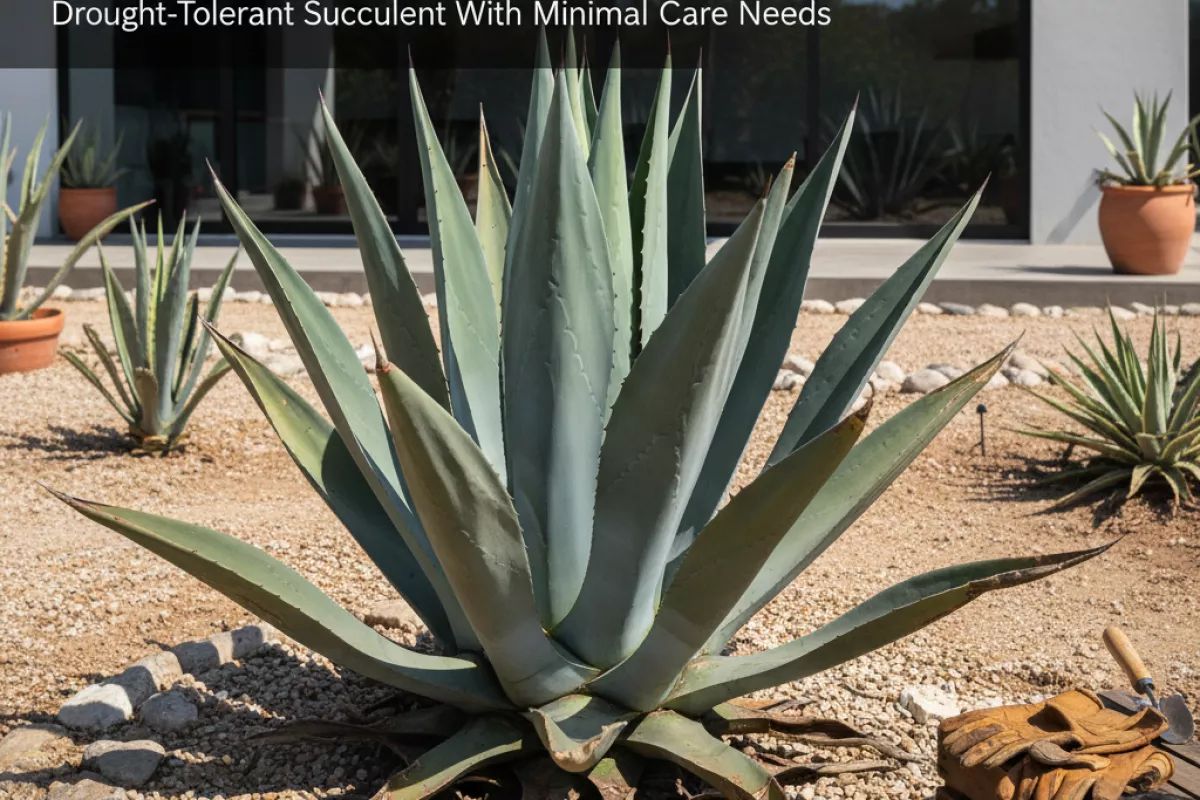
Keeping agave healthy for decades mostly comes down to resisting the urge to “care” too much. These succulents do best with bright light, fast-draining soil, and long dry spells between soakings. Once established, your main jobs are occasional deep watering during extended drought, removing spent leaves safely, and watching for early signs of rot or pests.
- Water deeply, then let it dry: In the ground, water only when the soil is dry several inches down—about 7–10 cm (3–4 in). In containers, wait until the potting mix is dry throughout. When you do water, soak the root zone and avoid filling the central rosette (“cup”), which can encourage crown rot.
- Prioritize drainage over frequency: If water lingers around roots for more than a day, improve drainage with mineral-heavy soil (pumice, gravel, coarse sand) and a planting mound. Aim for the crown to sit slightly above surrounding grade.
- Feed lightly, if at all: Too much fertilizer pushes soft growth that’s more prone to cold and rot. If growth is slow in a container, use a diluted, low-nitrogen cactus/succulent feed at 1/4 strength once in spring, around 4–6 weeks apart for 2–3 applications.
- Remove old leaves with care: Dead lower leaves can be trimmed to reduce hiding spots for pests. Use clean, sharp pruners and wear thick gloves and eye protection—many species have sharp spines and irritating sap. Cut close to the base without gouging the stem.
- Manage pups (offsets) intentionally: Some types produce many offsets that crowd the parent. For a clumping look, thin only when airflow is reduced. To propagate, detach pups when they’re at least 10–15 cm (4–6 in) tall, let the cut callus for 2–5 days, then plant in dry mix and wait about 7–10 days before the first light watering.
- Watch for rot after cold or rain: Mushy tissue at the base, a sour smell, or collapsing leaves usually means rot. Stop watering, improve airflow, and remove affected tissue. If the crown is compromised, saving pups may be the best option.
- Plan for size and sharpness: Give mature plants clearance from walkways—at least 60–90 cm (24–36 in) for medium species, more for large ones. This prevents accidental contact with spines and makes future maintenance easier.
- Cold protection is mostly about staying dry: Many agaves tolerate brief cold better than cold plus wet soil. Before a forecast freeze, keep the plant dry and consider a breathable cover that sheds rain. Avoid plastic touching leaves, which can trap moisture and cause damage.
| Task | When to do it | What to look for | What to do |
|---|---|---|---|
| Deep watering | During prolonged heat or drought | Leaves slightly dull, mild wrinkling; soil dry 7–10 cm (3–4 in) down | Soak soil, keep water out of the rosette, then allow full dry-down |
| Leaf cleanup | As lower leaves fully dry | Brown, papery leaves; debris collecting at the base | Trim with sanitized tools; remove litter to improve airflow |
| Offset control | Spring to early summer | Crowding, reduced airflow, pups leaning into the parent | Thin or transplant pups at 10–15 cm (4–6 in); callus 2–5 days before potting |
| Pest check | Monthly in warm seasons | Sticky residue, cottony clusters, scarring, sudden decline | Rinse, remove with alcohol-dabbed swabs, or treat with insecticidal soap; improve airflow |
| Rot check | After heavy rain or cold snaps | Mushy base, blackened tissue, foul odor | Stop watering; cut away damage; correct drainage; salvage healthy pups if needed |
One last practical note: agave is monocarpic in many species, meaning the main rosette may flower once after many years and then decline. If you see a flower stalk forming, shift your focus to supporting pups or collecting bulbils (if produced), and avoid heavy watering—keeping the soil on the dry side reduces the chance of rot during that final stage.
Propagation through offsets and pups
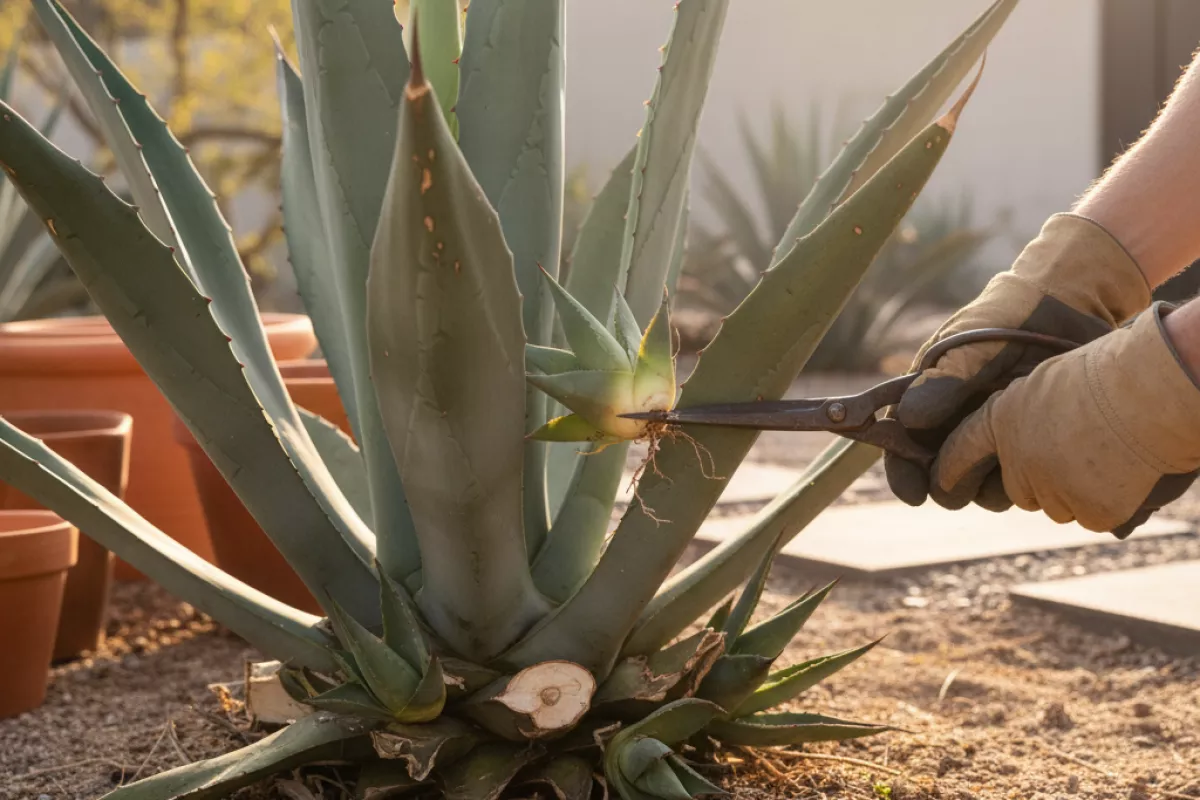
The easiest way to make new agave plants is to separate the small “baby” rosettes that form around the base of the mother plant. These offshoots are genetic clones, so you’ll get the same growth habit and leaf color as the original, and they typically establish faster than seedlings.
Timing matters because agaves hate staying wet. Do the separation when the plant is actively growing and conditions are warm and bright, so the cut surfaces dry quickly. In many climates that’s spring through early summer, when nights are reliably above about 10°C (50°F).
- Pick a pup with its own roots (when possible). Aim for an offset that’s at least 10–15 cm (4–6 in) across. If it already has visible roots, it will rebound faster after potting.
- Prepare tools and a safe workspace. Use a clean, sharp knife or pruning saw. Wear thick gloves and eye protection; many agaves have sharp terminal spines and serrated leaf margins.
- Expose the connection point. Brush away soil until you can see where the offshoot attaches to the mother plant. If the clump is tight, gently lever the pup outward to reveal the “neck.”
- Make a single, decisive cut. Slice through the connecting tissue as cleanly as possible. If roots tear, don’t worry—clean cuts heal better than ragged ones.
- Let the wound callus. Set the pup in a dry, shaded, airy spot for 2–7 days. Small offsets may only need 2–3 days; thicker bases can take a week. The goal is a dry, sealed cut surface that resists rot.
- Pot into a gritty mix. Use a fast-draining cactus/succulent blend amended with mineral grit. Plant at the same depth it was growing before; burying the crown invites rot.
- Hold off on watering at first. Wait about 7–14 days, then water lightly. After that, water only when the mix is fully dry. New roots form best in slightly dry, oxygen-rich soil.
- Give bright light, not harsh shock. Provide bright shade for 7–10 days, then gradually increase sun exposure. Sudden full sun can scorch a recently separated rosette.
If your offset has no roots, treat it like a cutting: callus well, pot it firmly so it doesn’t wobble, and keep it on the dry side until it anchors. You can test progress by gently tugging after 3–6 weeks; resistance usually means new roots have formed.
Common problems are almost always moisture-related. If the base turns soft or smells sour, the mix is staying too wet or watering started too soon. If leaves wrinkle severely, it may be too hot and bright before rooting, or the pup was taken too small. When in doubt, prioritize airflow, drainage, and patience.
Seasonal growth rhythm in arid climates
Agaves don’t grow at a steady pace year-round. In desert and semi-desert settings, they follow moisture and temperature cues: they put on most of their size when nights are cooler and soil stays lightly damp for longer, then slow down when heat and drought peak.
- Cool season (often fall through spring): This is when many agave species actively produce new leaves and expand their rosettes. If you’re going to water at all, this is usually the safer window—deep, infrequent soakings that dry out fully between cycles tend to match how rain arrives in arid regions.
- Hot, dry season (often late spring through summer): Growth commonly stalls. The plant relies on stored water and tight stomatal control, so extra irrigation can backfire by keeping roots warm and wet. Heat plus moisture is a common setup for rot, especially in heavy soils.
- Monsoon or summer-rain pattern areas: Some agaves respond to humid, stormy periods with a brief growth spurt, but only if drainage is sharp. In these climates, the rhythm is less about “summer dormancy” and more about avoiding prolonged soggy conditions.
Use the plant’s signals to time care rather than the calendar. A firm rosette with normal leaf spacing and a steady, slow push of new leaves suggests it’s in a growth phase. When the center stops advancing and the plant looks “locked in place,” it’s usually conserving energy—watering and fertilizing won’t speed it up, but they can increase risk.
| Seasonal cue | What you’ll notice | Care adjustment that fits the rhythm |
|---|---|---|
| Cooler nights, mild days | New leaves appear more regularly; rosette slowly widens | Water only when the mix is fully dry; protect from hard freezes below -4°C (25°F) for tender species |
| Heat waves and intense sun | Little to no new growth; leaves may look slightly tighter or more upright | Reduce or pause watering; give afternoon shade in extreme heat above 38°C (100°F) if scorching occurs |
| Sudden humidity or seasonal rains | Faster response in some types; risk of spotting or soft tissue if soil stays wet | Prioritize drainage and airflow; avoid watering on top of rain events |
| Cold snaps | Growth stops; tissue becomes more vulnerable to damage | Keep soil drier; cover plants or move containers to shelter when temperatures drop near 0°C (32°F) |
If your agave is in a pot, the seasonal pattern can be sharper because containers heat and cool quickly. A simple rule is to let the plant “tell you” when to resume watering: wait for dry soil plus clear signs of active growth, rather than watering on a fixed weekly schedule.
Common Agave problems and rot risks
Most issues with agave come down to moisture management: too much water, soil that stays wet, or water trapped in the crown. Because these succulents store water in their leaves, they tolerate drought far better than soggy conditions, and rot can move fast once it starts.
| Problem | Typical causes | What you’ll notice | What to do |
|---|---|---|---|
| Root or crown rot | Overwatering, poor drainage, pot without drainage holes, water sitting in the rosette, cool weather with wet soil | Soft base, sour smell, leaves collapsing from the center, blackened roots | Stop watering; unpot and remove mushy roots; let cuts callus 2–5 days; repot in fast-draining mix; keep dry 7–14 days after repotting |
| Fungal/bacterial leaf spots | Frequent overhead watering, poor airflow, wet leaves overnight | Brown or black spots, sometimes with a yellow halo; spots may merge | Keep foliage dry; improve airflow; remove badly marked leaves; water at soil level and only when mix is dry |
| Agave snout weevil | Adult weevils laying eggs at the base; larvae tunneling inside the core | Sudden collapse, oozing at the base, plant pulls out easily, internal tissue turns mushy | Remove and discard severely infested plants; avoid moving infested soil; keep area clean of rotting debris; for high-risk regions, consider preventative controls appropriate to your setting |
| Mealybugs and scale | Crowded plants, dusty conditions, stressed agave, ants “farming” pests | White cottony clusters in leaf axils, sticky residue, slow decline | Isolate the plant; wipe pests with 70% isopropyl alcohol; rinse and dry the crown; repeat weekly until gone |
| Sunburn after a light change | Moving from shade/indoors to intense sun too quickly | Bleached patches that turn tan and papery; damage stays as scars | Acclimate over 7–14 days; provide temporary shade cloth; keep watering conservative while the plant adjusts |
| Frost or cold damage | Temperatures below a variety’s tolerance, wet soil during cold snaps | Water-soaked, translucent leaves that later brown and collapse | Keep soil on the dry side in winter; protect with a cover; remove mushy tissue once temperatures rebound |
- Prevent rot by watering for the season, not the calendar. In warm growth periods, soak thoroughly, then let the mix dry out completely. In cool months, reduce frequency sharply; cold + wet is a common failure point.
- Use a gritty, fast-draining mix. A potting blend that stays damp for more than 3–4 days is a warning sign. In-ground plants do best on slopes or raised mounds so water moves away from the crown.
- Keep the rosette dry. If water collects in the center, tip the plant slightly (potted) or gently blot it out. This is especially helpful after rain or overhead irrigation.
- Don’t “clean up” by cutting healthy tissue. Trimming firm leaves creates wounds that can invite infection. Remove only leaves that are fully dead, mushy, or heavily infested.
- Quarantine new additions. Hold new agaves apart from the rest for 2–3 weeks to watch for mealybugs, scale, or hidden rot before placing them near established plants.
If you suspect rot, act early: a plant that is still firm at the core can often be saved by drying it down and improving drainage. When the center turns soft and foul-smelling, saving the main rosette is unlikely, but pups (offsets) may still be healthy—separate them with a clean blade, let them callus for a few days, and restart in a dry, well-aerated mix.