Achillea — Hardy Perennial With Simple Care and Long Bloom

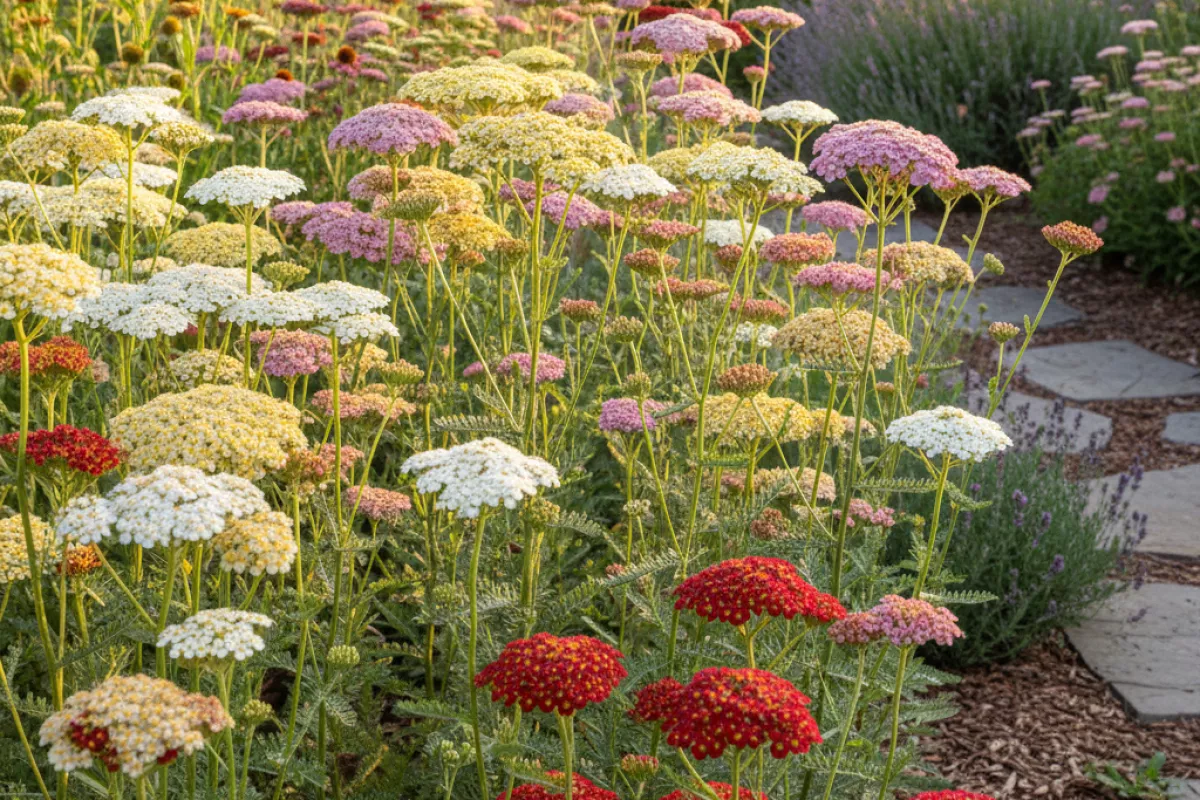 Here we Achillea’s key botanical traits, where it grows in the wild, and its flat-topped flower clusters and growth form. It explains light, soil, and watering for longer blooms, climate and drought tolerance, care routines, propagation, seasonal rest, and common pests.
- Achillea overview and botanical traits
- Natural habitats and wild distribution
- Flower clusters and growth form description
- Light needs for prolonged Achillea blooming
- Soil type and Achillea watering frequency
- Climate tolerance and Achillea drought resistance
- Care routine for long-lasting flowers
- Propagation by division or seed
- Seasonal blooming cycle and rest phase
- Common Achillea pests and plant health issues
Achillea is a tough, long-flowering perennial that brings steady color with little effort. It thrives in full sun, tolerates lean soil, and shrugs off occasional missed waterings, making it a dependable choice for borders and pollinator beds. Give plants good spacing for airflow and deadhead spent blooms now and then to encourage fresh flowers and keep growth neat for weeks.
Achillea overview and botanical traits
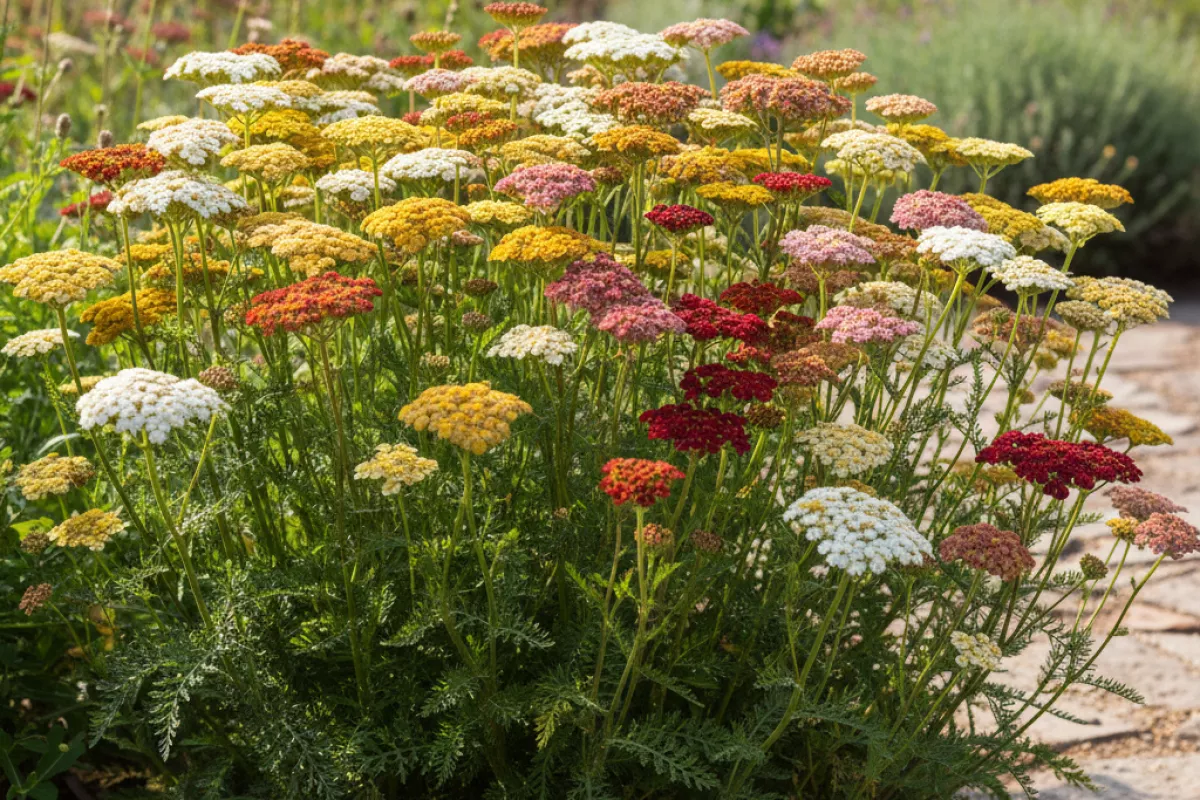
This genus, commonly called yarrow, is a group of tough, clump-forming perennials known for flat-topped flower clusters, finely divided foliage, and an easygoing nature in lean soils. Most garden types trace back to Achillea millefolium and its hybrids, which explains why you’ll see a wide range of flower colors while the overall plant shape stays familiar.
Plants typically form a basal mound of aromatic leaves, then send up upright stems that carry broad “plates” of many tiny blooms. Those small flowers are packed into composite heads (Asteraceae family), making each cluster long-lasting and attractive to beneficial insects.
- Growth habit: Herbaceous perennial that spreads by rhizomes or short stolons; forms expanding patches over time, especially in lighter soils.
- Leaves: Alternately arranged, ferny to feathery, often gray-green; the foliage can be lightly fuzzy and releases a distinctive scent when crushed.
- Flowers: Dense corymbs (flat-topped clusters) made of many small daisy-like heads; colors range from white and soft yellow to pink, red, and apricot depending on cultivar.
- Typical size: Many cultivars bloom at about 45–90 cm (18–36 in) tall with a spread around 30–60 cm (12–24 in), though compact and tall selections exist.
- Blooming pattern: Main flush in early to mid-summer, often with repeat flowering after deadheading; individual clusters age gracefully and can be left for seedheads.
- Roots and resilience: Fibrous roots plus spreading underground stems help with drought tolerance once established and make it useful on slopes or in gravelly beds.
| Trait | What to look for in the garden | Why it matters |
|---|---|---|
| Flat-topped clusters | Broad, level flower heads that act like landing pads | Easy access for pollinators; good cut and dried flowers |
| Feathery foliage | Finely cut leaves forming a soft, fernlike texture | Adds contrast next to bold-leaved plants and grasses |
| Spreading habit | Clumps slowly widen year to year | Fills gaps well, but may need division to keep it in bounds |
| Sturdy stems | Upright growth that usually stands without staking | Handles wind better than many summer bloomers |
One practical botanical note: many modern hybrids are bred for stronger stems and richer colors, but some can be a bit less long-lived than the straight species. If a planting starts to thin after a few seasons, it’s usually a cue to divide and replant the healthiest sections rather than a sign you did something wrong.
Natural habitats and wild distribution
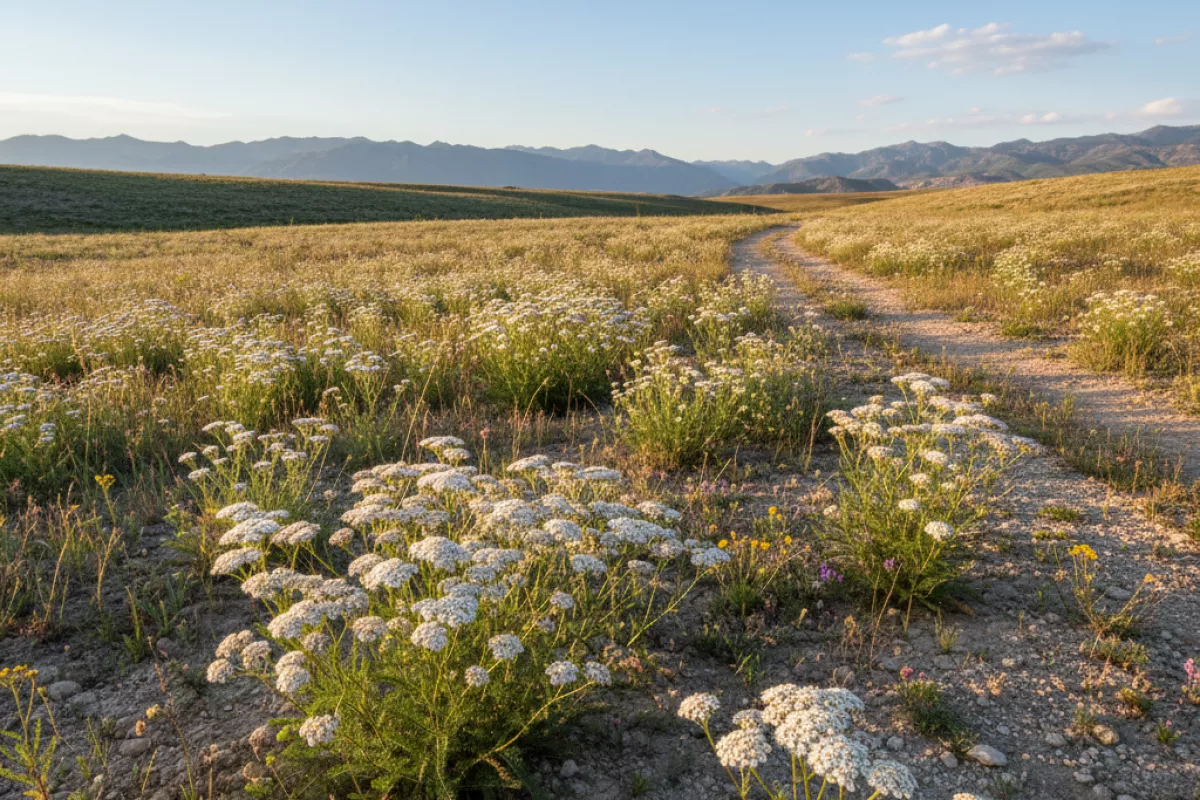
In the wild, Achillea (yarrow) shows up where the soil is lean, the sun is strong, and competition is low. It’s a classic plant of open ground: places that dry out between rains, get baked in summer, and don’t offer much organic matter. That toughness is why it settles in so easily in gardens once it’s established.
Most species are native across the Northern Hemisphere, with a long history in Europe and western to central Asia, and several species occurring naturally in North America. You’ll often see it along roadsides, in meadow edges, on rocky slopes, and in grasslands where grazing, mowing, or natural disturbance keeps taller plants from shading it out.
- Typical settings: dry meadows, prairie-like grasslands, steppe, dunes, open woodland margins, and disturbed sites like paths and field edges.
- Light exposure: full sun is the norm; many populations tolerate light, shifting shade at forest edges.
- Soil character: well-drained sand, gravel, or loam; it’s frequently found in low-fertility soils and can handle mildly acidic to alkaline conditions.
- Moisture pattern: prefers periodic drying; prolonged waterlogging is uncommon in its native haunts.
- Climate range: from cool-temperate regions to warmer continental areas, especially where summers can be dry and winters bring a true dormancy.
Ecologically, yarrow behaves like a “gap” species: it takes advantage of open patches created by trampling, erosion, fire cycles, or mowing. Spreading rhizomes help it hold ground once it finds a foothold, while its flat-topped flower clusters make it easy for a wide mix of small pollinators to feed efficiently in open landscapes.
One caution that comes straight from its wild behavior: in the right conditions it can expand quickly. If you garden near natural areas, it’s worth deadheading spent blooms and watching for creeping growth, especially in sandy soils that mimic its native, free-draining sites.
Flower clusters and growth form description
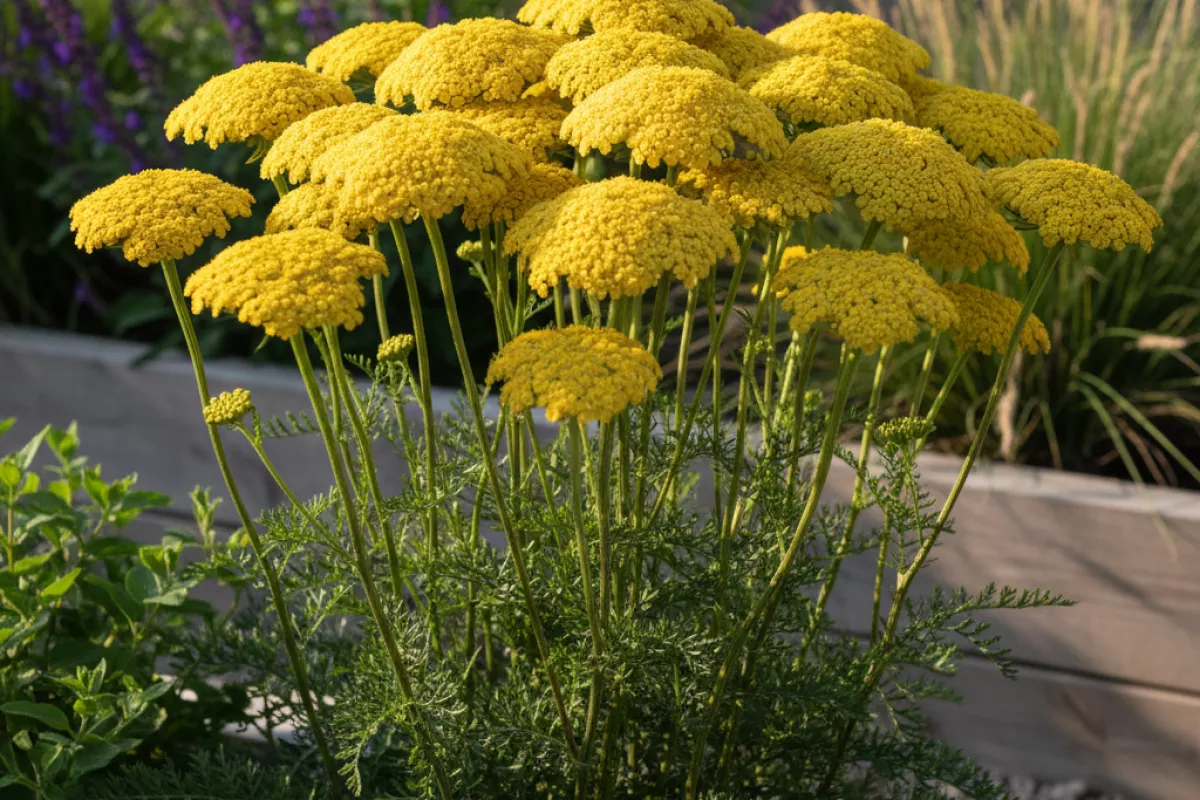
Achillea’s appeal comes from how it carries its blooms: many tiny, daisy-like florets are packed into broad, flattened heads that read as one big “plate” of color from a distance. These clustered umbels sit above the foliage on firm stems, so the plant looks tidy even when it’s in full flower.
The overall habit is clump-forming and upright, spreading gradually from the crown. Most garden types reach about 45–90 cm (18–36 in) tall, with a similar spread of roughly 30–60 cm (12–24 in), depending on cultivar and growing conditions. The leaves are usually finely cut and ferny, creating a soft, textured base that contrasts with the crisp, level flower heads.
- Bloom structure: Tight clusters of small florets form flat-topped or gently domed heads; this shape makes each stem look like a ready-made bouquet.
- Stem behavior: Stems are typically stiff and vertical, holding flowers above the foliage; taller selections may lean in rich soil or shade.
- Foliage form: Feathery, aromatic leaves create a low mound; foliage can be gray-green to deep green, depending on variety.
- Clump growth: Plants expand outward over time and can knit into a broader patch; dividing every 2–3 years helps keep the center vigorous.
- Seasonal look: After peak bloom, spent heads can be trimmed to encourage more flowering and keep the silhouette neat, or left to dry for a more natural, seed-head finish.
| Feature | What you’ll notice in the garden |
|---|---|
| Flower head shape | Mostly flat-topped clusters that create a strong horizontal line and read well from a distance |
| Typical height range | About 45–90 cm (18–36 in), with dwarf and tall cultivars falling below or above that range |
| Spread and spacing | Often 30–60 cm (12–24 in) wide; space to allow airflow and avoid crowding as clumps mature |
| Growth habit over time | Clump-forming perennial that slowly expands; older clumps may open in the center without division |
Light needs for prolonged Achillea blooming
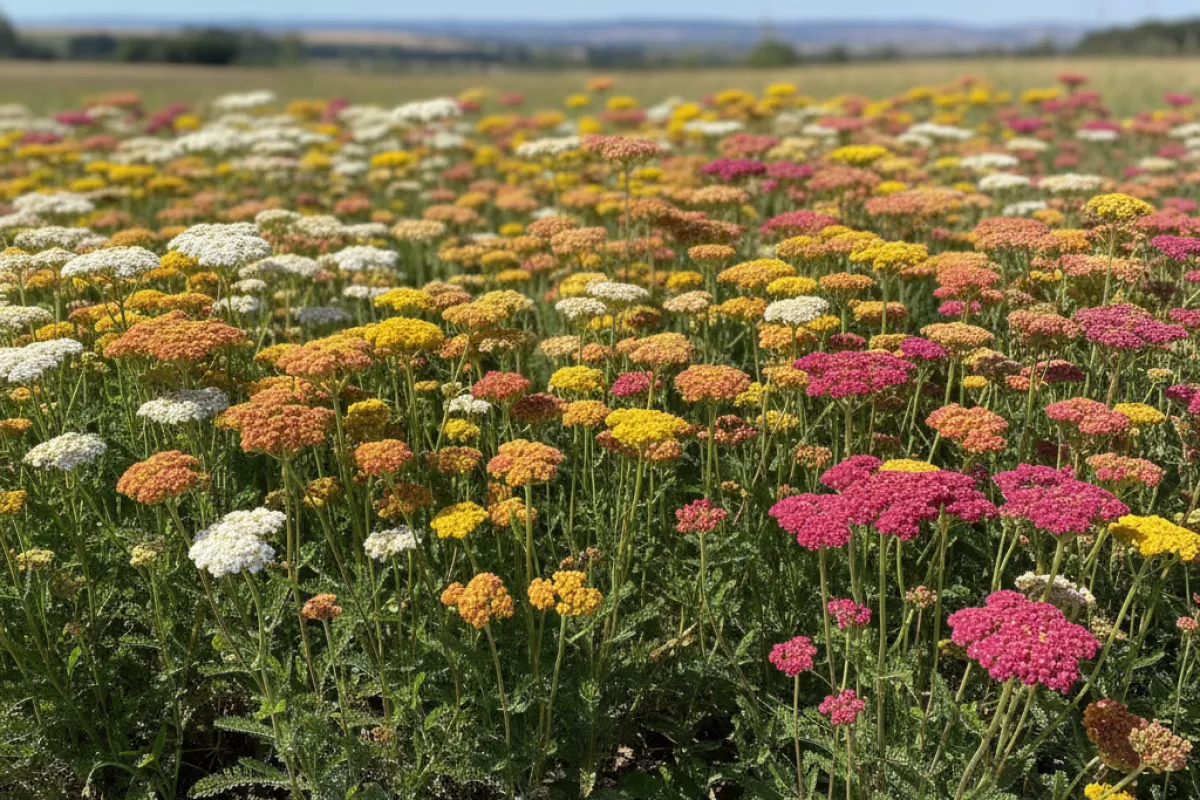
For the longest run of flowers and sturdy, upright stems, yarrow performs best with plenty of direct sun. In bright exposure, plants stay compact, foliage is denser, and the flat-topped blooms hold their color and form longer instead of stretching or flopping.
- Full sun is the sweet spot: Aim for 6–8 hours of direct light daily. This level typically produces the most buds and the tightest growth habit.
- Part shade is workable, with trade-offs: Around 4–6 hours of sun can still bloom well, but expect taller, looser stems and fewer flower clusters, especially if shade falls during the afternoon.
- Too much shade reduces flowering: Under 4 hours of sun, Achillea often prioritizes leafy growth and may bloom sparsely. If you notice long, leaning stems and smaller flower heads, light is usually the limiting factor.
- Morning sun beats late-day shade: If you can’t provide all-day sun, choose a spot with strong morning light and some afternoon protection. It supports good flowering while reducing stress in very hot climates.
- Heat and reflected light can be a bonus: In cooler regions, planting near a south- or west-facing wall can boost bloom production. In hot regions, reflected heat can speed fading, so a little afternoon shade may help colors last longer.
| Sun exposure | What you’ll likely see | How to keep blooms going |
|---|---|---|
| 8+ hours (full sun) | Most flowers, sturdy stems, compact clumps | Deadhead promptly; water only during extended dry spells |
| 6–8 hours (full sun) | Strong bloom cycle with good color and form | Remove spent heads to trigger repeat flowering |
| 4–6 hours (part sun) | Fewer blooms, taller growth, occasional flopping | Prioritize morning sun; consider light staking and avoid rich fertilizer |
| <4 hours (mostly shade) | Leggy stems, sparse flowering, slower rebloom | Relocate to a brighter site or thin nearby plants to increase sun |
If your Achillea is getting enough sun but still looks lanky, check what’s around it. Nearby perennials can shade it more each year as they fill in, turning a once-sunny bed into part shade. A simple fix is to divide and reposition yarrow to the front edge of the planting where it gets unobstructed light.
Soil type and Achillea watering frequency
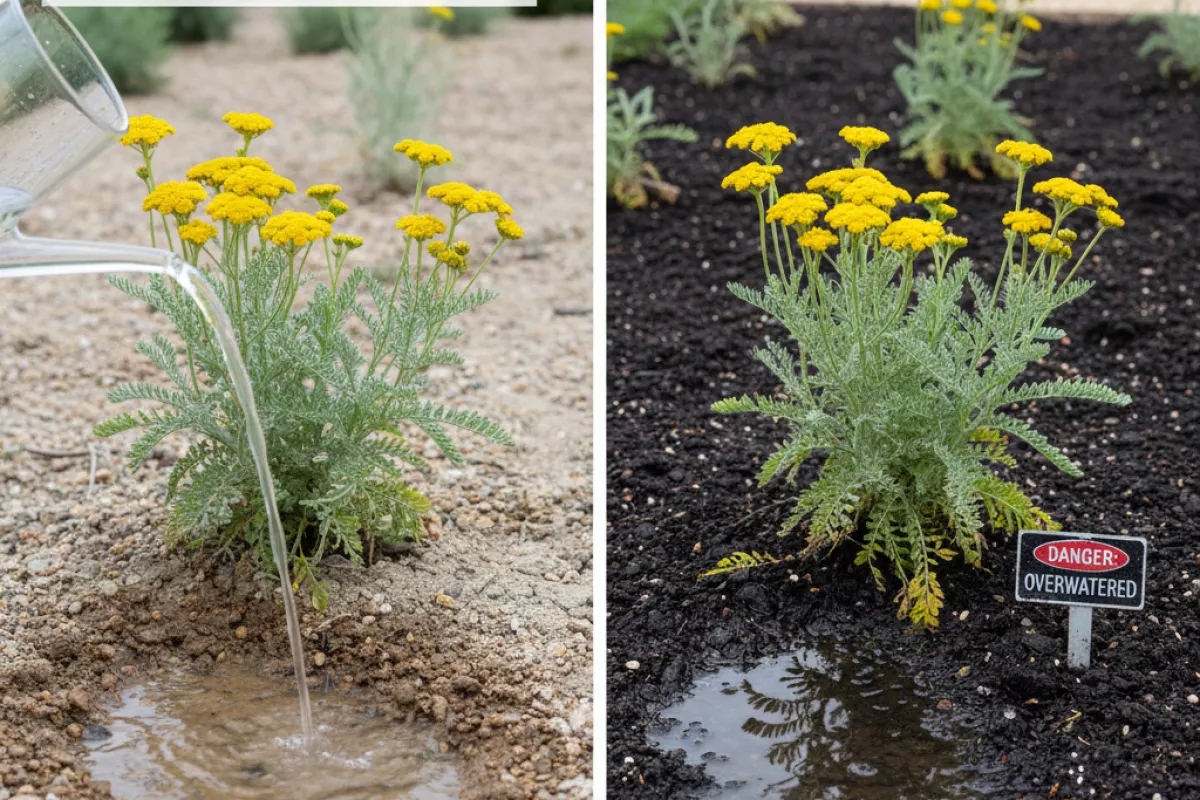
Watering yarrow is mostly about how fast the ground drains. In sandy or rocky beds, moisture disappears quickly and plants may need a deeper soak more often. In heavier clay, the same amount of water can linger around the crown and roots, which is where problems start. As a rule, it’s safer to water less and let the top layer dry than to keep the soil constantly damp.
| Soil / site condition | What to do with watering | What you’ll notice |
|---|---|---|
| Sandy or gravelly soil (fast-draining) | Water deeply, then wait until the top 5 cm (2 in) dries before repeating | Leaves may look slightly dull or droop in afternoon heat; rebounds after watering |
| Loam (moderate drainage) | Water when the top 5–8 cm (2–3 in) is dry; avoid “little sips” every day | Steady growth with fewer floppy stems |
| Clay or compacted soil (slow-draining) | Water sparingly; only after the top 8–10 cm (3–4 in) dries, and keep water off the crown | Yellowing lower leaves or soft stems can signal staying too wet |
| Raised bed or slope (extra drainage) | Expect to water more often than in flat ground; soak to 15–20 cm (6–8 in) depth | Plants stay sturdy but can dry out faster in wind |
| Container planting | Check frequently; water until it runs out the bottom, then let the top 3–5 cm (1–2 in) dry | Pots can go from moist to dry quickly in sun |
For established Achillea, “deep and infrequent” usually beats frequent light watering. Aim to moisten the root zone to roughly 15–20 cm (6–8 in), then let the surface dry again. This encourages roots to grow down, which improves drought tolerance and reduces the chance of rot.
- New plants: Keep evenly moist for the first 2–3 weeks, then start spacing out irrigation as you see new growth.
- Heat waves: In prolonged high temperatures, add an extra soak rather than daily sprinkles; morning watering is gentler on foliage.
- Rainy stretches: Skip watering entirely if the soil stays cool and damp; yarrow prefers a slight dry-down between rains.
- Mulch choice matters: A thin layer of gravel or coarse mulch dries faster than thick compost, which can hold moisture against the crown.
If you’re unsure, use a simple finger test or a trowel: check moisture 5–10 cm (2–4 in) down. If it’s still damp there, wait. If it’s dry at that depth and the plant looks a bit tired by midday, a thorough watering is usually the right move.
Climate tolerance and Achillea drought resistance
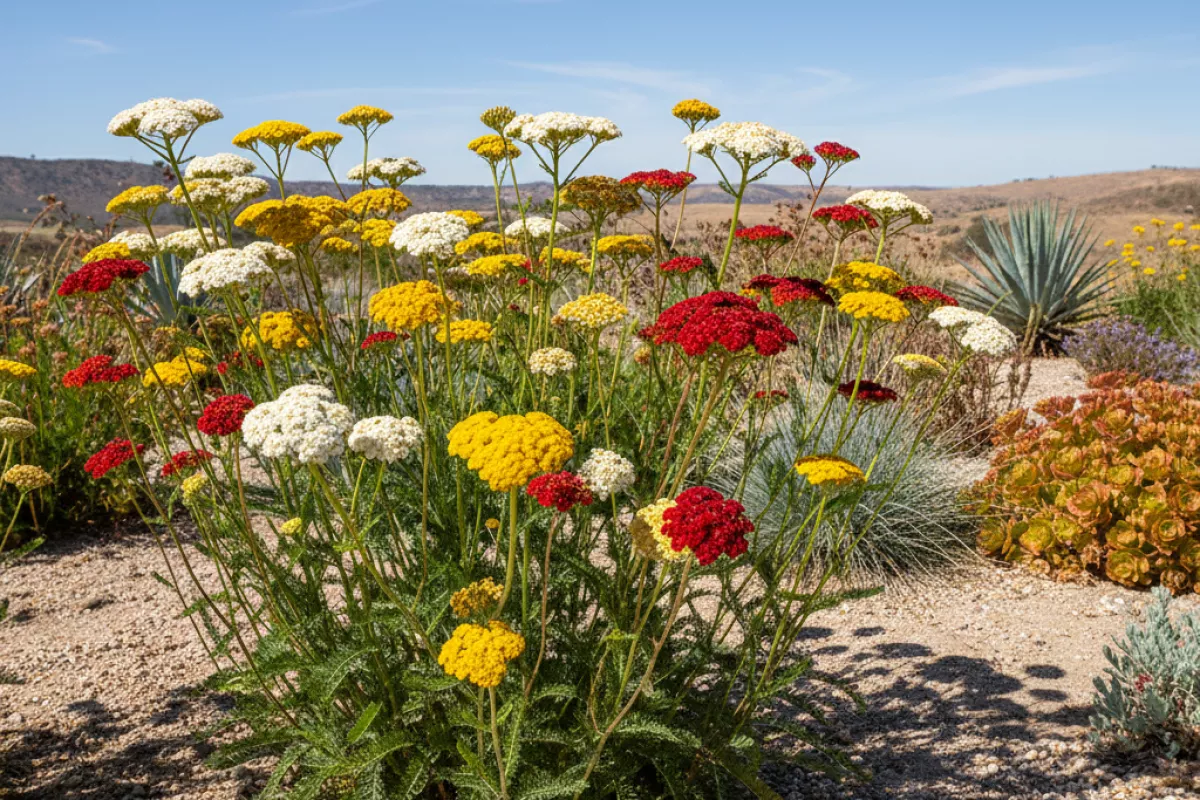
Yarrow (Achillea) earns its keep in gardens because it stays reliable through heat, wind, and lean watering. Once established, it behaves like a dryland perennial: it keeps flowering with far less fuss than thirstier border plants, especially in full sun and fast-draining soil.
Most types handle a wide range of seasonal swings, but performance depends on two things more than winter lows: drainage and summer humidity. Cold is usually manageable when roots aren’t sitting in wet soil, while muggy, poorly ventilated beds can invite foliar problems even if the plant survives.
- Heat tolerance: Generally strong. In hot spells, blooms may be smaller, but plants usually keep their structure if the soil isn’t constantly wet.
- Cold tolerance: Many cultivars overwinter well where the crown stays on the dry side. In freeze–thaw climates, avoid heavy mulches that trap moisture right at the base.
- Wind and exposure: Stems are typically sturdy, but tall varieties can lean in open sites; a slightly sheltered spot or a light support ring helps without changing the plant’s natural look.
- Humidity: In damp summers, give it space and sun so leaves dry quickly; crowded plantings are more likely to develop mildew.
| Situation | What you’ll notice | Practical adjustment |
|---|---|---|
| New planting in warm weather | Wilting in afternoons, slower rooting | Water deeply 1–2 times per week for the first 2–3 weeks, then taper; aim for 2.5–4 cm (1–1.5 in) total weekly moisture until established |
| Established clump during drought | Fewer flowers, tighter foliage, but plant stays alive | Soak every 10–14 days if you want better bloom; otherwise let it ride—avoid frequent light sprinkling |
| Heavy soil after rain | Flopping, yellowing at the base, crown stress | Improve drainage with grit and compost, plant on a slight mound 5–10 cm (2–4 in), and keep mulch pulled back from the crown |
| Humid summer with tight spacing | Powdery coating on leaves, reduced vigor | Thin or divide to increase airflow; water at soil level in the morning; cut back affected stems to fresh growth |
For the best drought performance, treat watering like a tool rather than a routine. Deep, infrequent soaking trains roots downward, while frequent shallow watering encourages surface roots and makes the plant less resilient when the weather turns dry.
If you garden in containers, yarrow can still be fairly water-wise, but pots dry faster than beds. Use a gritty mix and water when the top 2–3 cm (1–1.2 in) is dry; in peak heat that may mean every few days, even though in-ground plants nearby need much less.
Care routine for long-lasting flowers
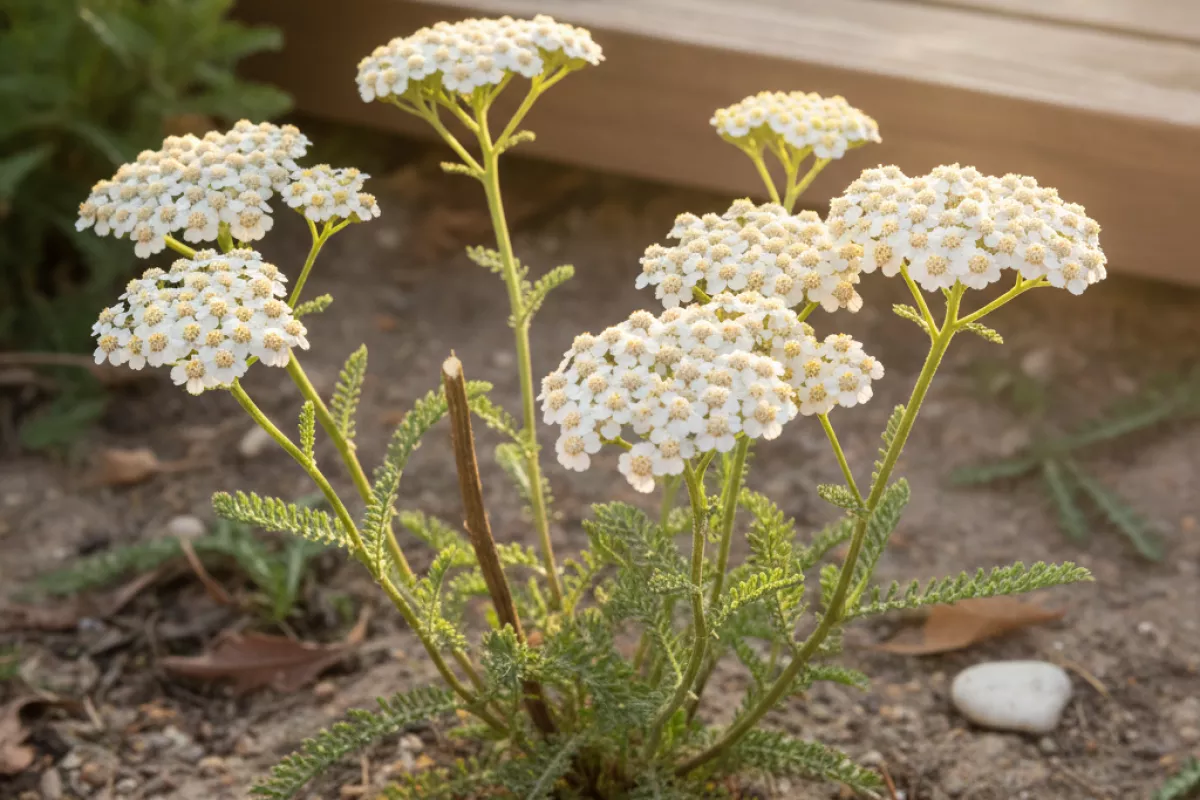
Keep Achillea blooming by focusing on a few repeatable habits: plenty of sun, lean soil, and timely trimming. Once established, yarrow is more likely to suffer from too much attention than too little, so the goal is steady, light-touch care that supports continuous flowering without pushing soft, floppy growth.
- Light: Plant in full sun for the best flower production—aim for 6–8 hours daily. In hotter regions, light afternoon shade can help blooms hold color longer, but too much shade reduces flowering.
- Watering: Water deeply after planting, then taper off. Once established, irrigate only when the top 5–8 cm (2–3 in) of soil is dry. In heat waves, a thorough soak is better than frequent sips; avoid keeping the crown constantly wet.
- Soil and drainage: Yarrow prefers well-drained, average-to-lean soil. If your soil stays soggy, amend with grit or plant on a slight mound/raised bed to prevent root and crown rot.
- Fertilizer: Skip heavy feeding. If growth looks weak, use a light, balanced feed once in spring at half strength, or top-dress with 1–2 cm (0.4–0.8 in) of compost. Too much nitrogen can mean fewer flowers and more flopping.
- Deadheading for repeat bloom: Remove spent flower clusters as soon as they fade by cutting back to a strong leaf node or side stem. This redirects energy into new buds and keeps the plant looking tidy.
- Midseason shear (the “reset”): When the first flush is mostly finished, shear the plant back by about one-third—roughly 10–20 cm (4–8 in), depending on height. This often triggers a fresh round of stems and a later bloom period.
- Staking and spacing: Most varieties stay upright in lean soil, but taller types may lean after rain. Space plants 30–60 cm (12–24 in) apart for airflow; crowding increases mildew risk and can shorten the display.
- Mulch with restraint: Use a thin layer (about 2–3 cm / 0.8–1.2 in) of gravel or coarse mulch in wet climates to keep crowns drier. Keep mulch pulled back a few centimeters (about 1–2 in) from the base to prevent rot.
- Division to keep clumps vigorous: Every 2–4 years, divide in spring or early fall. Replant the healthiest outer sections and discard woody centers. This refreshes flowering and prevents overcrowded, tired clumps.
- Winter cleanup: In cold areas, leave some stems standing for winter interest and cut back in early spring. In mild, wet winters, a fall cutback can help reduce disease by improving airflow around the crown.
If you notice fewer blooms, the usual fixes are simple: increase sun exposure, reduce fertilizer, and be more consistent with deadheading or the one-third shear. Achillea responds quickly when its growing conditions stay bright, airy, and on the dry side.
Propagation by division or seed
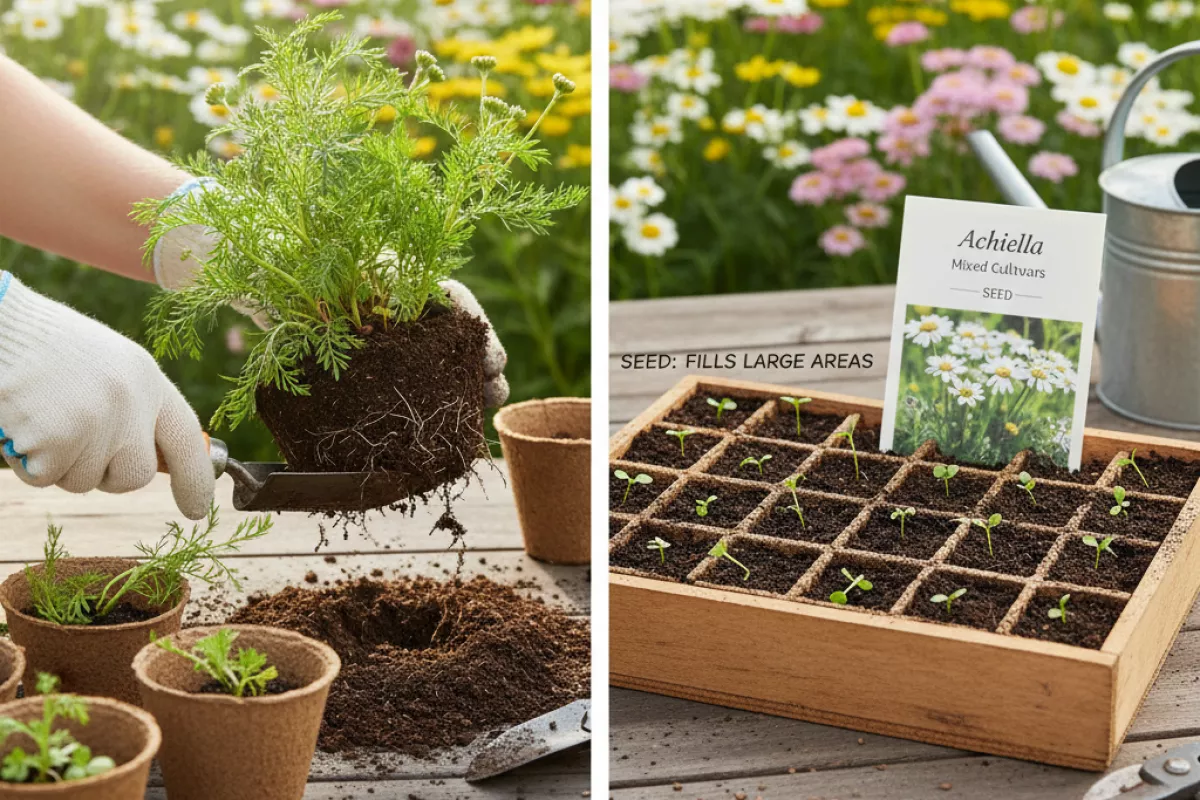
The easiest way to get more Achillea is to either split an established clump or start new plants from seed. Division gives you a near-identical copy of the parent and flowers sooner; seed is useful for filling larger areas, but named cultivars may not come true.
| Method | Best time | What you’ll get | Notes |
|---|---|---|---|
| Division | Early spring as growth starts, or early fall while soil is still warm | Clones of the parent; typically blooms the same season | Also helps prevent a bare, woody center and keeps plants vigorous |
| Seed (indoors) | Start 8–10 weeks before last frost | Many seedlings; bloom time varies (often later) | Surface-sow; light helps germination |
| Seed (direct-sown) | After danger of frost, or in fall for natural chilling | Naturalized patches over time | Keep the top layer evenly moist until sprouts appear |
| Self-seeding | Late summer to fall | Volunteer seedlings nearby | Deadhead if you want fewer surprise plants |
How to divide yarrow
- Water the plant the day before so the root ball is easier to lift.
- Dig around the clump and lift it, keeping as many roots intact as possible.
- Pull or cut into sections, each with several shoots and a healthy root mass. If the center is thin or dead, discard that part and keep the outer, younger growth.
- Replant divisions at the same depth, spacing them about 30–45 cm (12–18 in) apart for most garden types.
- Water in well, then water only when the top 2–3 cm (1 in) of soil dries; once established, they prefer lean, well-drained conditions.
Plan to split clumps every 2–3 years if they start to flop, thin in the middle, or lose bloom strength.
Starting from seed (indoors or outside)
- Sowing depth: Scatter on the surface and press in; cover only lightly (about 1–2 mm / 0.04–0.08 in) if you cover at all.
- Temperature: Aim for 18–21°C (65–70°F) for steady sprouting.
- Moisture: Keep the surface consistently damp, not soggy, until germination; then let the mix dry slightly between waterings.
- Thinning/transplanting: Move seedlings when they have 2–3 true leaves, harden off for 7–10 days, and plant out after frost.
If you’re growing a specific named variety for color or height, division is the reliable route. Seed-grown plants can be great for meadow-style mixes, but expect some variation and a more relaxed, natural look.
Seasonal blooming cycle and rest phase
Achillea follows a predictable yearly rhythm: fresh basal growth in spring, a long flowering stretch through summer, then a gradual slowdown as days shorten. Knowing what the plant is trying to do in each phase makes pruning, watering, and dividing feel straightforward rather than guesswork.
| Time of year | What you’ll see | What to do (and why) |
|---|---|---|
| Early spring | New shoots from the crown; quick leaf expansion | Cut back old stems to 2–5 cm (1–2 in) above the crown once new growth is visible. Water only if the top 5 cm (2 in) of soil is dry; this encourages deep rooting instead of soft, floppy growth. |
| Late spring to early summer | Stems elongate; buds form; first flower heads open | Stake only if the site is windy or the variety is tall. Avoid heavy nitrogen; too much lush growth can reduce flowering and increase flopping. A thin mulch layer of 2–3 cm (1 in) helps even moisture without keeping crowns soggy. |
| Mid to late summer | Peak bloom; continuous flowering when spent heads are removed | Deadhead regularly by cutting flowering stems back to a strong side shoot or basal leaves. For a bigger second flush, shear the plant by about one-third after the main wave (for example, reduce 60 cm to 40 cm, 24 in to 16 in). Water during prolonged heat only when soil is dry 7–10 cm (3–4 in) down. |
| Early fall | Bloom slows; seed heads form; foliage may stay tidy | Decide whether to leave seed heads for winter interest and wildlife or trim for a cleaner look. Stop fertilizing and ease up on irrigation so stems can harden before cold weather. |
| Late fall to winter | Top growth browns; crown rests; roots stay alive | Either leave stems standing for protection or cut back to 5–10 cm (2–4 in) after hard frost. In wet-winter climates, prioritize drainage over mulch thickness; crowns dislike sitting in cold, waterlogged soil. |
During the rest period, the plant isn’t “doing nothing” so much as conserving energy in the crown and roots. If you plan to divide, aim for early spring as shoots appear or early fall when temperatures cool to about 10–18°C (50–65°F); both windows let roots re-establish before extremes. Dividing every 2–4 years keeps clumps vigorous and helps prevent a sparse center.
- Want longer flowering? Deadhead promptly and consider that one-third shear after the first big wave.
- Want self-seeding? Leave some late-season heads to mature, then thin seedlings in spring.
- Not blooming well? Check for too much shade, overly rich soil, or frequent shallow watering; Achillea generally flowers best when it’s not pampered.
Common Achillea pests and plant health issues
Yarrow is usually tough, but most problems show up when plants stay too wet, too crowded, or stressed by heat and drought swings. The good news is that issues are typically easy to spot early and correct with small changes to airflow, watering habits, and cleanup.
| Problem | What you’ll notice | Likely cause | What to do (practical fixes) |
|---|---|---|---|
| Aphids | Clusters of soft-bodied insects on tips; sticky residue; distorted new growth | Flush of tender growth, excess nitrogen, or nearby infested plants | Rinse with a strong water spray; pinch off heavily infested tips; encourage beneficial insects; avoid high-nitrogen feeding. |
| Spider mites | Fine stippling on leaves, faint webbing, bronzing in hot weather | Hot, dry conditions and dusty foliage | Hose off undersides of leaves; water at the base to reduce drought stress; remove badly affected stems; keep plants from drying to the point of wilting. |
| Powdery mildew | White, dusty coating on leaves; slower growth; leaves may yellow | Poor airflow, crowding, shade, and damp nights | Thin or divide clumps; water early in the day at soil level; remove infected leaves; avoid overhead watering. If it returns yearly, choose more open spacing (about 30–45 cm / 12–18 in between plants). |
| Root/crown rot | Sudden collapse, blackened crown, mushy roots, weak regrowth | Waterlogged soil, heavy clay, or mulch piled against the crown | Improve drainage (raise the bed or amend soil); let soil dry between waterings; keep mulch a few cm (1–2 in) away from the crown; replant healthy divisions into better-draining spots. |
| Leaf spot (various fungi) | Brown or black spots, sometimes with yellow halos; premature leaf drop | Wet foliage and poor air circulation | Remove affected leaves; clean up debris; water at the base; space plants so foliage dries quickly after rain. |
| Flopping stems | Stems lean or sprawl, especially after rain | Too much shade, rich soil, or overwatering leading to soft growth | Grow in fuller sun; avoid heavy feeding; consider a “Chelsea chop” by cutting stems back about 10–15 cm (4–6 in) in late spring to encourage sturdier branching. |
- Quick triage tip: If leaves look dusty-white, think airflow and crowding; if they look stippled and bronzed in heat, check for mites; if the whole plant collapses from the base, suspect soggy soil and crown issues.
- Watering that prevents trouble: Water deeply at the soil line, then let the top few cm (1–2 in) dry before watering again. Frequent light watering keeps roots shallow and can invite stress and pests.
- Sanitation matters: Remove spent, diseased, or heavily infested stems promptly and discard them. Leaving infected foliage in place can keep problems cycling through the season.
- When to divide for health: If the center of the clump thins or mildew becomes routine, divide every 2–3 years. Replant divisions with good spacing so foliage dries quickly after rain.