What Is Potting Soil vs Garden Soil Explained

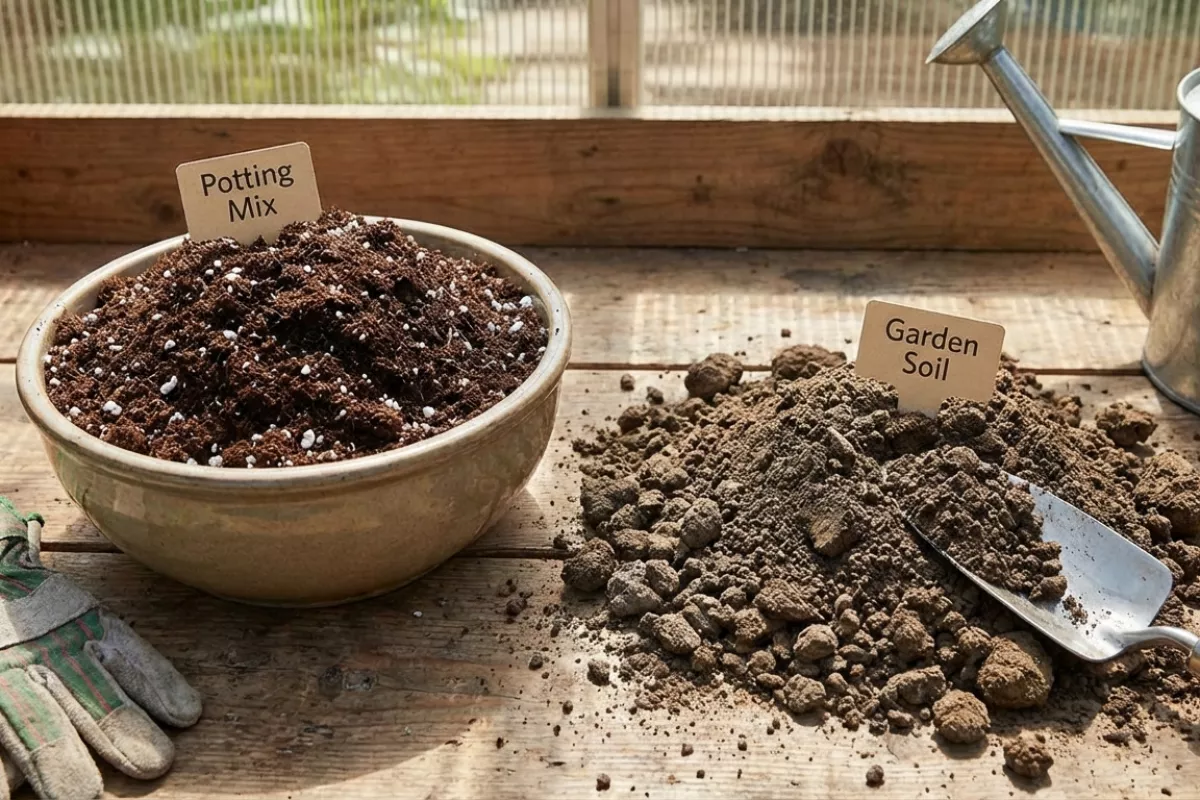 This article explains what potting soil is made of versus what garden soil naturally contains, and the key structural differences between them. It also covers when to use each, how drainage and aeration compare, common selection mistakes, and whether you can mix them safely.
Choosing between potting mix and garden soil affects how plants root, drain, and absorb nutrients. Potting soil is formulated for containers, staying light and airy to manage moisture and encourage healthy roots. Garden soil is denser and designed to blend with native earth, supporting plants in beds and landscapes. Using the right one helps avoid waterlogged roots, slow growth, and unnecessary work.
What potting soil is made of
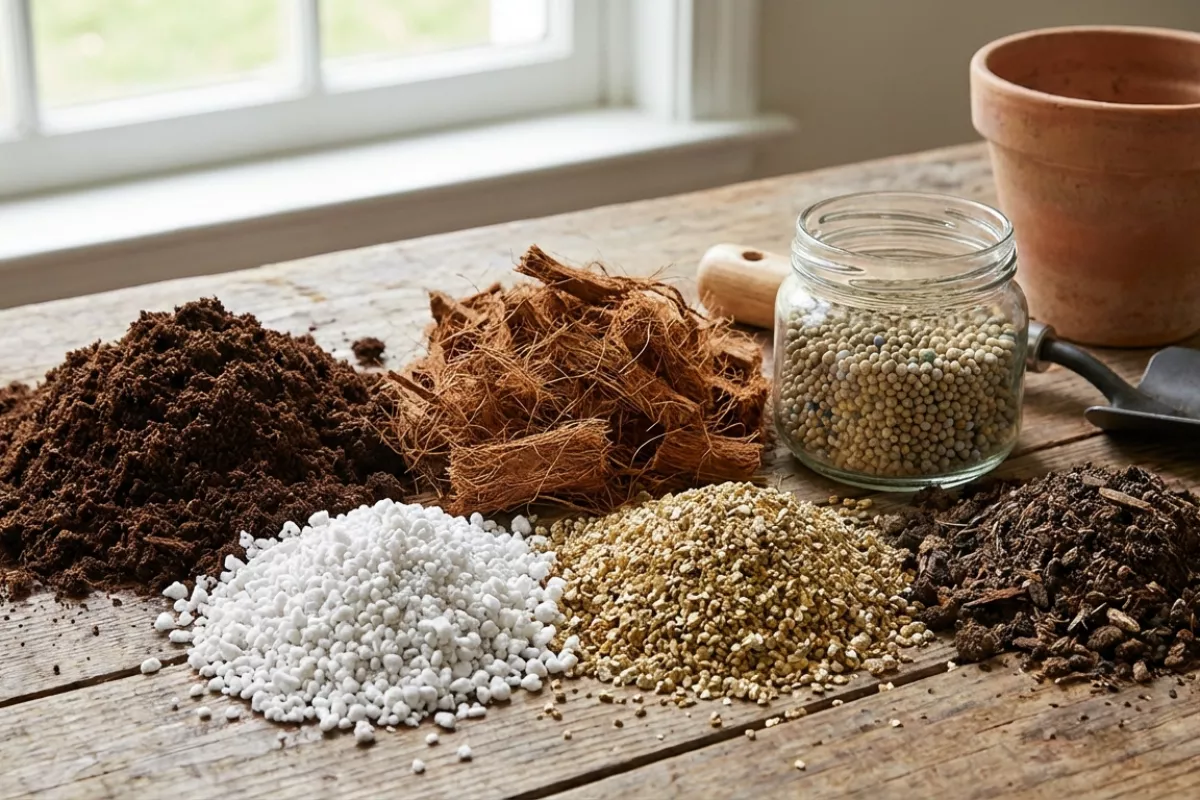
Container mixes are built to stay light, drain well, and still hold enough moisture and nutrients for roots in a limited space. Unlike native ground soil, they’re usually a blend of several ingredients, each chosen for a specific job: structure, water management, airflow, and fertility.
- Base organic material (often peat moss or coconut coir): Provides the main body of the mix and helps retain moisture. Peat tends to hold water longer; coir is often a bit more re-wettable after drying out.
- Aeration components (perlite, pumice, or coarse sand): Create air pockets so roots can breathe and excess water can drain. Perlite is very light; pumice is heavier and can improve stability in larger pots.
- Compost or aged bark: Adds texture and some slow, gentle nutrition. Bark fines also help keep the mix from compacting too quickly.
- Fertilizer (slow-release granules or a starter charge): Supplies nutrients for the first weeks or months. Many mixes include a mild initial feeding, but it rarely lasts an entire growing season.
- Wetting agent: Helps water soak in evenly, especially in peat-heavy blends that can repel water when very dry.
- pH adjusters (like lime in peat-based mixes): Balances acidity so common ornamentals and vegetables can take up nutrients properly.
- Optional add-ins (worm castings, biochar, mycorrhizae): Can improve nutrient cycling or root relationships, but results depend on plant type and how you water and fertilize.
Not every bag contains all of these, and the ratios matter as much as the ingredients. A mix designed for houseplants may lean more moisture-retentive, while one meant for outdoor containers often includes more chunky material for faster drainage after rain.
If you’re troubleshooting, the ingredient list can explain a lot: a peat-heavy blend may dry into a hard, water-shedding block, while a mix with lots of fine compost can stay too wet in a small pot. Adjusting with extra perlite/pumice or adding a bit more moisture-holding material is often easier than starting over.
What garden soil contains naturally
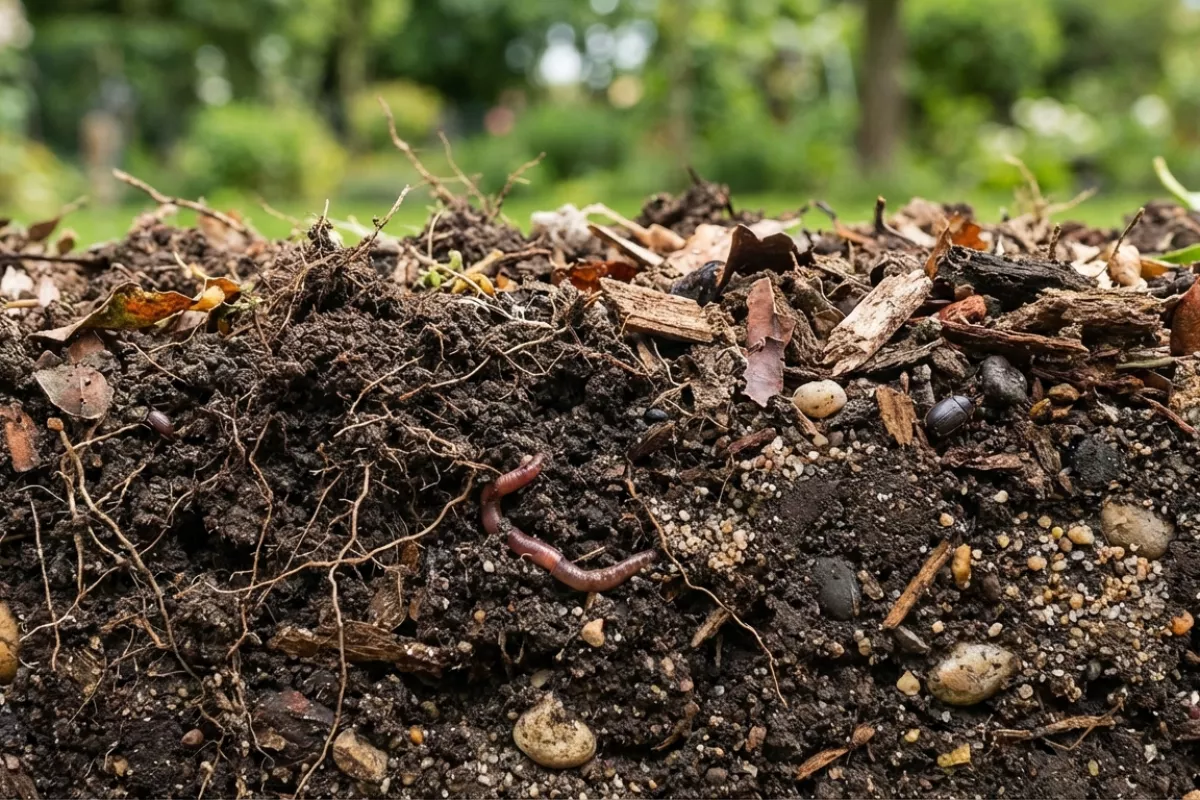
In-ground soil is a living, mixed material built by weather, plants, and soil organisms over time. Because it comes straight from the yard or landscape, it usually includes both helpful components and a few “wild card” ingredients that make it less predictable than potting mix.
- Mineral particles (sand, silt, and clay) that determine texture, drainage, and how tightly roots can push through. A clay-heavy bed holds more water; a sandy bed drains faster and warms sooner.
- Organic matter such as decayed leaves, old roots, and composted debris. This is what gradually improves structure and nutrient-holding capacity, but the amount can vary a lot from one spot to another.
- Native microbes and fungi that help cycle nutrients and, in healthy soils, support plant roots. This “soil food web” is one reason garden beds can become more fertile over the years.
- Soil organisms like earthworms, mites, springtails, and beneficial nematodes that break down residues and create channels for air and water.
- Natural nutrients (nitrogen, phosphorus, potassium, plus calcium, magnesium, sulfur, and trace elements). These aren’t always in plant-ready form, and availability depends on moisture, temperature, and pH.
- Salts and pH characteristics shaped by local geology and irrigation water. Some areas naturally run alkaline; others are more acidic, which changes which nutrients plants can actually use.
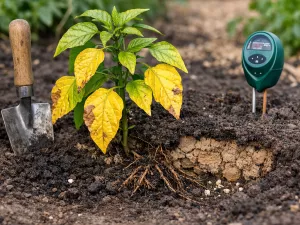
- Small rocks, grit, and compacted clods that can slow root growth and reduce drainage until the soil is loosened and amended.
- Weed seeds and plant fragments that can sprout after you disturb the ground, especially in beds that haven’t been mulched or covered regularly.
- Occasional pests and pathogens (grubs, root-rot organisms, fungal spores). Many gardens have a low background level that only becomes a problem when plants are stressed or drainage is poor.
- Human-made leftovers depending on the site’s history: bits of mulch, fertilizer residues, or even construction debris. This is one reason two “garden soils” from different yards can behave very differently.
All of that complexity is why garden soil can be excellent for beds and borders, yet inconsistent for containers. If you’re deciding between garden soil and potting soil, the big takeaway is that native ground material is variable and biologically active, while potting mixes are engineered to be uniform and predictable.
Key structural differences between them
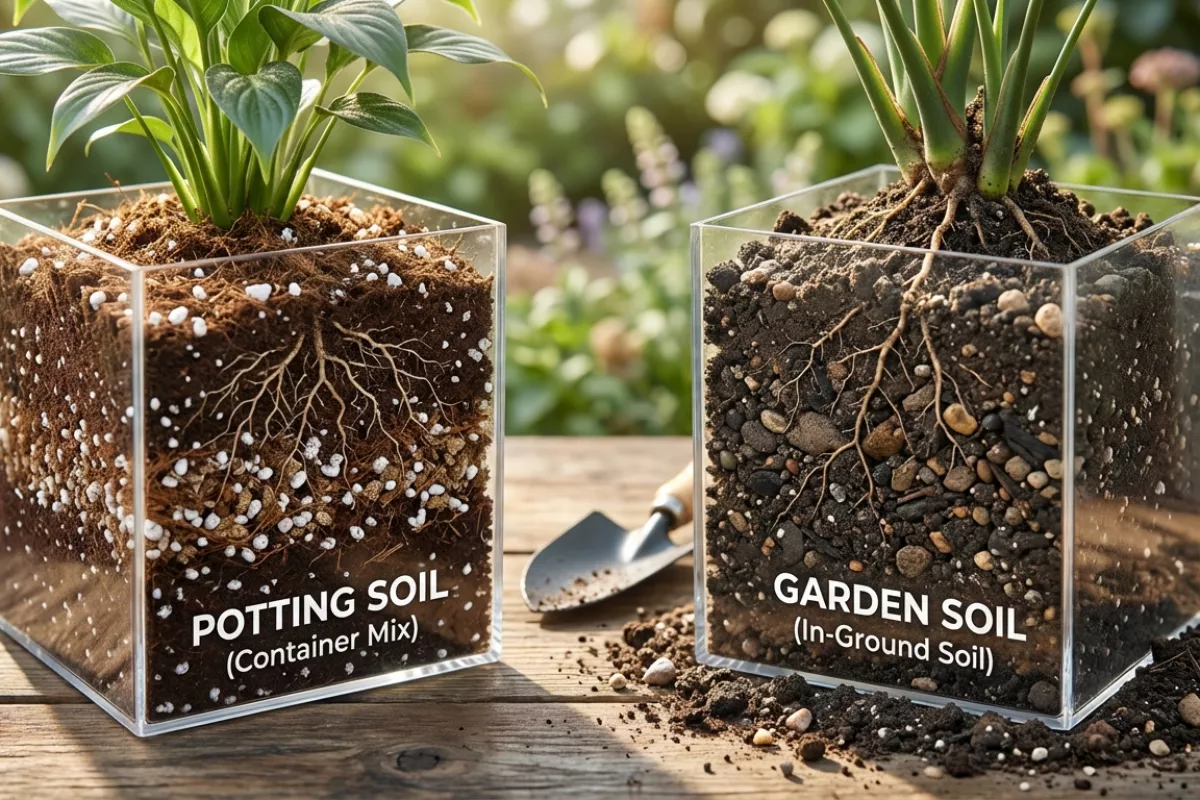
The biggest contrast comes down to how each medium is built to handle air, water, and stability around roots. One is engineered to stay light and drain predictably in a container; the other is a mineral-rich, heavier material meant to integrate with the ground and its existing biology.
| Structural feature | Potting soil (container mix) | Garden soil (in-ground soil) |
|---|---|---|
| Typical base ingredients | Often soilless components like peat/coco coir plus perlite/vermiculite and composted organics | Mineral soil (sand/silt/clay) blended with compost or topsoil; may include native soil from the site |
| Particle size and “feel” | More uniform, fluffy particles designed to keep pore spaces open | More variable; can be gritty, loamy, or clay-heavy depending on location and amendments |
| Porosity and aeration | High air space so roots don’t suffocate in pots | Depends on texture and compaction; can lose air space when walked on or worked wet |
| Drainage behavior | Drains quickly but holds moisture within fibers (helps in small volumes) | Drains according to clay content and structure; can puddle or crust if poorly structured |
| Water-holding capacity | Balanced for containers: holds water without staying saturated too long | Ranges widely; clay holds a lot but can stay wet, sandy soils dry fast |
| Weight and settling | Lighter and compresses over time in a pot, which is why mixes may need refreshing | Heavier and more stable in the ground; structure improves with organic matter and roots |
| Nutrient “buffering” (CEC) | Often moderate and dependent on ingredients; nutrients can wash out faster in containers | Usually higher buffering from clay and humus; nutrients can be retained longer in beds |
| Biology and ecosystem role | More controlled and “starter” biology; microbes depend on what you add and how you water | Part of a larger soil food web with fungi, worms, and long-term organic matter cycling |
| Compaction risk | Lower if the mix is well-made; still compacts if overwatered or packed down | Higher risk, especially with clay; foot traffic and heavy rain can tighten pores |
- Why it matters in containers: A pot is a limited volume with no deep soil profile, so you need a mix that keeps oxygen available after watering and doesn’t turn into a dense plug.
- Why it matters in beds: In-ground soil has depth and drainage pathways, so structure is about long-term aggregation, resisting compaction, and supporting a stable root zone season after season.
- Practical takeaway: If you put garden soil into a container, it often ends up heavy and air-poor; if you put potting mix into the ground, it can dry out faster and break down sooner than a well-amended native bed.
When to use each soil type
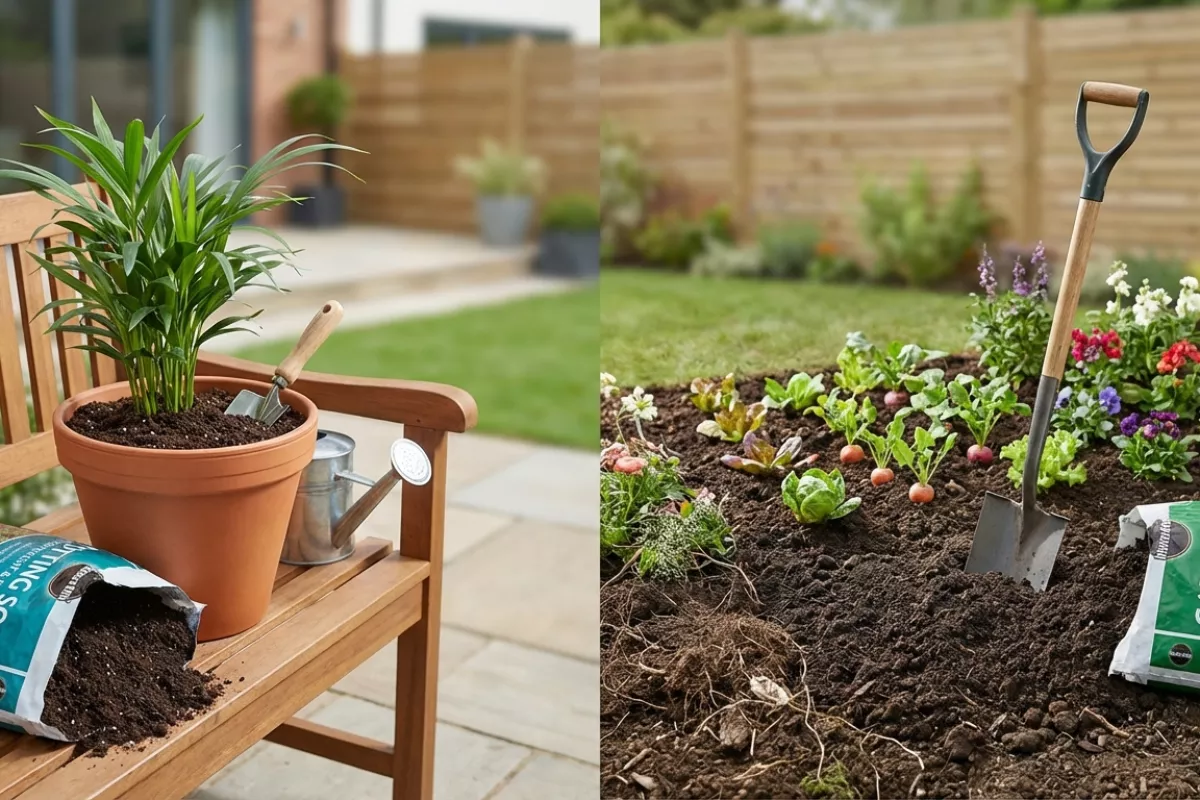
Pick based on where the plant will live and how water needs to behave. Containers need a mix that drains and stays airy over time, while in-ground beds need soil that integrates with what’s already there and can hold structure through weather and foot traffic.
| Situation | Use potting soil | Use garden soil |
|---|---|---|
| Indoor houseplants and planters | Yes. It’s formulated to be lightweight, drain well, and reduce compaction in pots. | No. It can pack down in containers and stay too wet, increasing root stress. |
| Outdoor containers (patio pots, hanging baskets) | Yes. Better for frequent watering cycles and temperature swings in exposed pots. | Usually no. It’s heavier and can become dense after repeated watering. |
| Raised beds | Sometimes. Useful as part of a blend if the bed is shallow or you want extra drainage. | Often yes. Designed for in-ground-style growing; mix with compost for best results. |
| In-ground vegetable gardens and flower beds | Not ideal as a full replacement; it’s expensive and can dry unevenly in large areas. | Yes. Work it into the top 15–20 cm (6–8 in) along with organic matter. |
| Filling holes for trees and shrubs | No. A “different” soil pocket can discourage roots from moving into native soil. | Usually no as a straight backfill; use mostly native soil, plus compost if needed. |
| Lawn repair and leveling | No. Too light and can wash or dry out quickly on the surface. | Yes. Use a screened topsoil/garden-soil type and topdress lightly. |
| Improving heavy clay or very sandy ground | Only in small amounts; it won’t fix underlying texture on its own. | Yes, but pair it with compost and mix into the top 15–20 cm (6–8 in) for meaningful change. |
- Rule of thumb: if it’s in a pot, go with potting mix; if it’s in the ground, use garden soil or topsoil amended with compost.
- For raised beds: avoid filling the entire bed with straight potting soil. A blended approach (garden soil/topsoil + compost, with some potting mix for drainage) tends to stay more stable season to season.
- If drainage is the concern: choose a potting mix with added aeration ingredients (like perlite) for containers, and use compost plus proper bed shaping in the landscape rather than trying to “swap” the soil.
How drainage and aeration compare
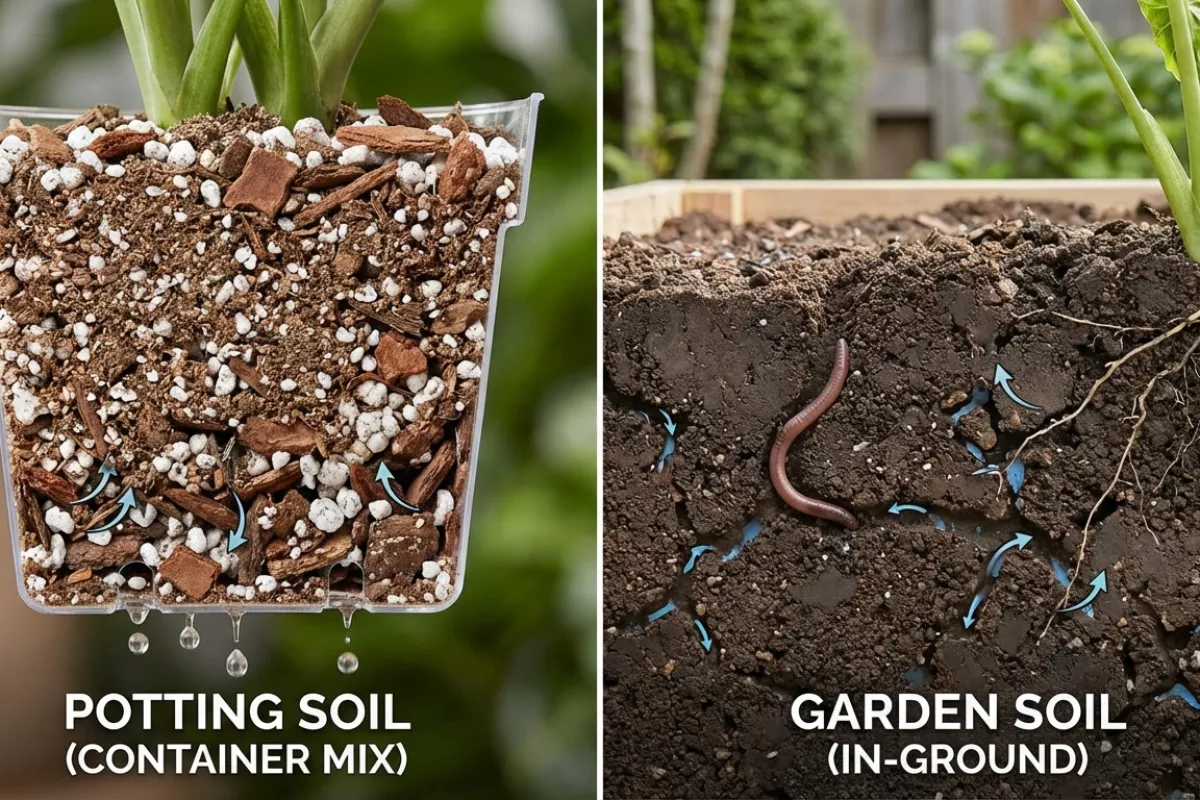
Water movement and airflow are where potting mixes and in-ground soil feel most different in daily use. Containers have a hard wall and a single exit (the drainage hole), so the mix has to stay open and springy to avoid turning into a soggy, airless mass. Garden soil, on the other hand, is part of a larger system where structure, roots, worms, and freeze-thaw cycles can create channels for water and oxygen over time.
| Factor | Potting soil (container mix) | Garden soil (in-ground) |
|---|---|---|
| Typical pore space | Higher proportion of large pores, so excess water drains and roots get oxygen soon after watering. | More small pores (especially in clay), so it can hold water longer but may stay saturated after heavy rain. |
| What “good drainage” looks like | Water runs through, then the mix stays evenly damp without pooling at the bottom of the pot. | Water soaks in rather than puddling; after a storm, the top dries and you can dig without hitting sticky, smeared soil. |
| Compaction risk | Lower at first, but it can settle over weeks; fine particles and repeated watering can reduce airflow. | Higher under foot traffic and machinery; compaction can persist for seasons without remediation. |
| Oxygen to roots | Designed to re-aerate quickly after watering, which helps prevent root stress in pots. | Depends on texture and structure; loam with stable aggregates breathes well, while dense clay can suffocate roots when wet. |
| After heavy watering or rain | If the mix is too fine, it can develop a perched water layer near the bottom, keeping roots wet for too long. | Water can move downward and sideways through the soil profile, but poor structure can lead to standing water at the surface. |
| How to improve it | Use a chunkier blend (bark, perlite, pumice) and avoid packing the pot; refresh or repot when it collapses. | Add organic matter, reduce traffic, and consider broadforking/aeration; mulch helps protect structure from crusting. |
A practical way to think about it: in a pot, the mix must provide its own “air plumbing” because there’s nowhere else for oxygen to come from once the pores fill with water. In the ground, the soil can rely more on natural structure and depth, but it’s also easier to accidentally ruin that structure with compaction or working it when it’s wet.
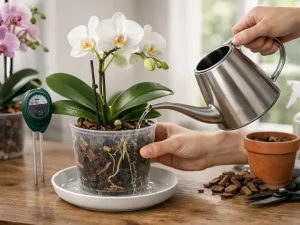
- If a container stays wet for days, the mix is likely too dense or broken down; roots may struggle even if you water “normally.”
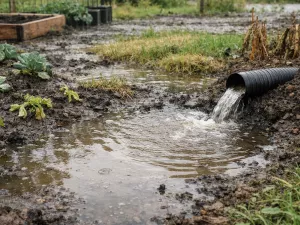
- If a garden bed puddles or crusts, the issue is often surface sealing or compaction; improving aggregation usually helps more than “lightening” it with random additives.
- If plants wilt in wet conditions, suspect low oxygen around roots rather than drought—both potting media and garden soil can cause this when drainage is poor.
Common mistakes when choosing soil
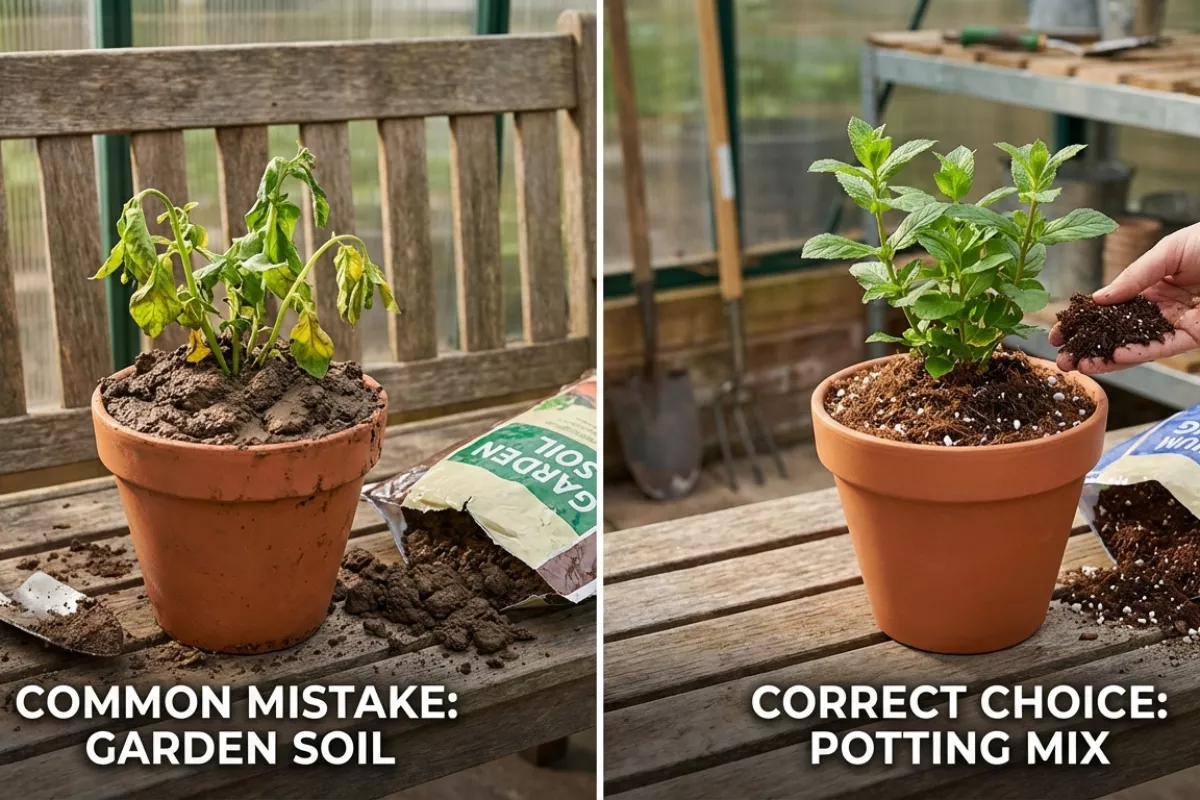
Most soil problems come from using the right product in the wrong place. Potting mixes and in-ground soils are built for different jobs, so a mismatch can lead to soggy roots, stunted growth, or constant watering even when you “did everything right.”
- Filling containers with garden soil. In pots, native soil compacts and drains poorly, which can suffocate roots and invite rot. Use a potting mix for containers, then adjust with perlite, bark, or coco coir if you need more airflow.
- Using potting mix as a garden “top-up” layer. Potting soil is lighter and can dry out fast in open beds, especially in wind and sun. For in-ground planting, improve existing soil with compost and other amendments rather than replacing the top layer with a container blend.
- Assuming “topsoil” and “garden soil” are the same as potting soil. Bag labels can be confusing: topsoil and garden blends are typically meant for landscapes and beds, not pots. If the bag doesn’t mention containers or indoor use, it’s usually not formulated for that.
- Buying based on the word “organic” alone. “Organic” doesn’t guarantee good structure or drainage. Check what’s inside (compost, peat or coco, bark, perlite) and whether it matches your plant’s needs.
- Ignoring drainage and aeration needs. Plants like succulents and many herbs need a faster-draining mix than leafy houseplants. If water sits on top for more than a minute or two after watering, the blend may be too dense for that container.
- Over-amending without a goal. Adding sand, extra compost, or “a little of everything” can backfire. For example, sand mixed into clay can create a cement-like texture. Amend based on what you’re fixing: drainage, water-holding, or nutrients.
- Not accounting for climate and season. A mix that works in a humid area may stay too wet in cool weather, while the same mix can dry out quickly in hot, arid conditions. In summer heat above 30°C (86°F), you may need more water-holding ingredients; in cool, rainy periods below 10°C (50°F), prioritize aeration.
- Reusing old potting mix without refreshing it. Over time it breaks down, holds less air, and can accumulate salts. If you reuse it, remove old roots, loosen it, and blend in fresh mix and compost; if it smells sour or stays wet for days, replace it.
- Skipping a quick moisture check before watering. Many people water on a schedule, then blame the soil. Check the top 2–5 cm (1–2 in) first; if it’s still damp for plants that prefer drying between waterings, wait.
- Planting directly into “hot” manure or unfinished compost. Fresh materials can burn roots and tie up nitrogen. Use fully finished compost that smells earthy and has a crumbly texture, or keep fresh manure composting until it’s mature.
If you’re unsure, match the medium to the setting first (container vs. in-ground), then fine-tune for drainage and water retention. That single decision prevents most of the headaches people blame on “bad soil.”
Can they be mixed safely
Yes—combining potting mix with garden soil can work, but it depends on where you’re using it and what you’re trying to fix. The main goal is to balance drainage, air space, and moisture retention without creating a heavy, compacted blend that roots struggle to grow through.
- In raised beds: Mixing is usually fine because the bed has better drainage and you can control the ingredients. A common approach is to use garden soil as the “body” and add potting mix to lighten it and improve root aeration.
- In containers and pots: Be cautious. Straight garden soil often compacts in pots, reducing oxygen around roots and slowing drainage. If you want to use some, keep it a smaller portion and rely on potting mix for most of the volume.
- For in-ground planting: Blending a little potting mix into the planting hole can create a “different texture pocket” that holds water differently than the surrounding native soil. Instead of heavily amending just the hole, it’s usually better to improve a wider area or top-dress with compost and let biology incorporate it over time.
Use the soil’s behavior as your guide. If the mix forms a tight ball when squeezed and stays that way, it’s likely too dense for many potted plants. If water runs through instantly and the surface dries very fast, it may be too light and need more organic matter.
- Start with small test batches: Mix a bucketful and water it to see how quickly it drains before you commit to filling a whole bed or several containers.
- Watch for “muddy” texture: If garden soil is clay-heavy, adding typical peat/coir-based potting mix can sometimes make a paste-like texture when saturated. In that case, use less garden soil and add coarse amendments (like pine bark fines) rather than more fine material.
- Skip mixes with herbicide risk: If your garden soil or compost source is questionable (persistent herbicide contamination), don’t blend it into potting mix for containers where sensitive plants will show damage quickly.
As a practical starting point, many gardeners keep container blends mostly potting mix and reserve garden soil for beds. When you do combine them, aim for a crumbly texture that holds together lightly but breaks apart easily—roots tend to reward that balance.