Aechmea — Tropical Bromeliad With Colorful Bracts and Easy Care

- Aechmea overview and bromeliad characteristics
- Native tropical habitats and epiphytic nature
- Rosette shape and decorative bracts
- Light conditions for vibrant Aechmea coloration
- Soil medium and watering approach for Aechmea
- Temperature and humidity preferences for Aechmea
- Maintenance for healthy bromeliad growth
- Propagation through offsets and pups
- Seasonal blooming cycle and life stages
- Common problems in Aechmea plants
Aechmea is a dependable tropical bromeliad for indoor growing, staying neat while producing bold, long-lasting bracts. It tolerates average home humidity, does best in bright filtered light, and needs simple watering with occasional feeding. Use a fast-draining mix and provide good airflow, and it will reward you with weeks of color and very little fuss.
Aechmea overview and bromeliad characteristics
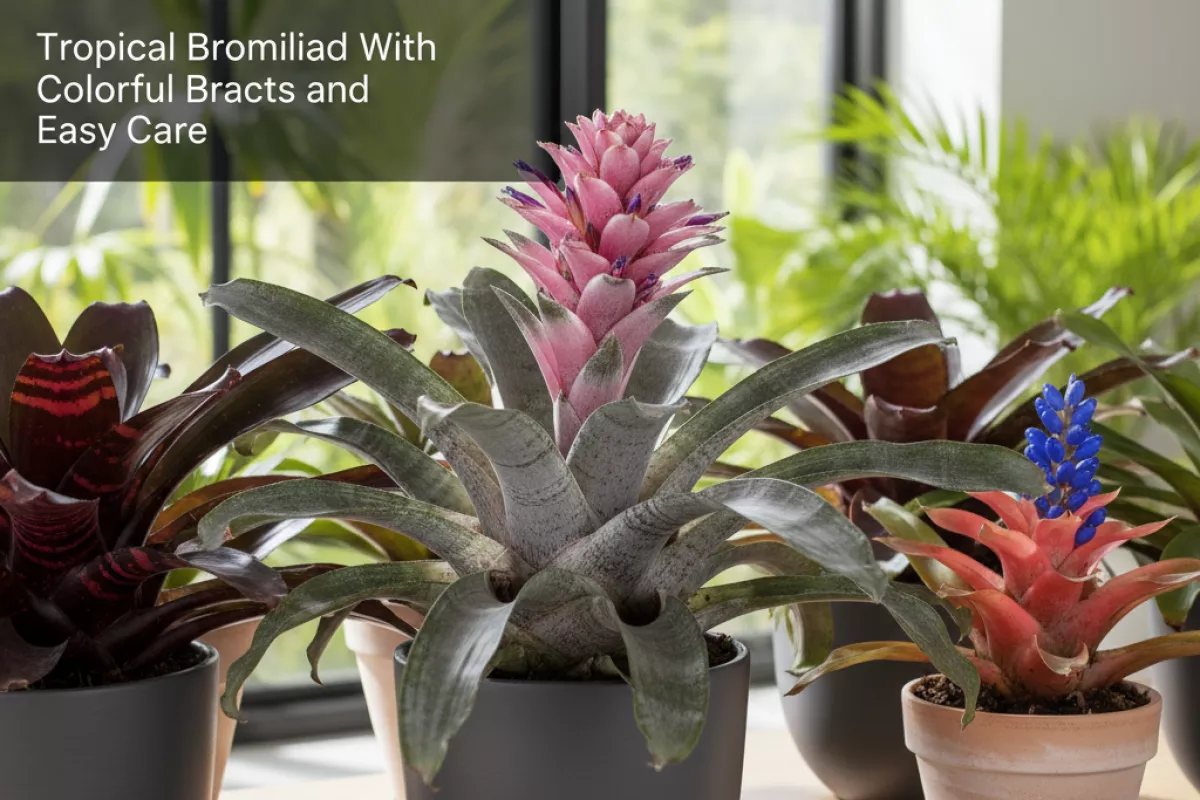
Aechmea is a genus of bromeliads best known for bold, long-lasting bracts that can look like flowers for weeks or even months. Many types form a tidy rosette of arching leaves that creates a natural “cup” in the center, which is both a visual feature and a key part of how the plant lives. In homes, these plants are often grown for their sculptural shape, patterned foliage, and the way their colorful inflorescences hold up indoors.
Like other bromeliads, most aechmeas are epiphytes in nature—plants that perch on tree branches or rocks rather than rooting in soil. That doesn’t make them parasites; they use their roots mainly to anchor themselves, while moisture and nutrients are collected from rain, dust, and leaf litter. This explains why they prefer airy potting mixes and why overwatering heavy soil can cause trouble.
- Rosette growth habit: Leaves radiate from a central point, forming a vase-like shape. The rosette helps funnel water and debris toward the plant’s center.
- “Tank” (cup) behavior: Many species hold water in the central cup. Indoors, it’s common to keep a small amount of clean water there and refresh it regularly rather than letting it stagnate.
- Bracts vs. flowers: The showy pink, red, or coral parts are usually bracts (modified leaves). The true flowers are often smaller and short-lived, appearing between or above the bracts.
- Leaf texture and edges: Leaves can be smooth or stiff and may have small spines along the margins. This is normal—handle with care when repotting or cleaning.
- Slow, steady lifecycle: A mature rosette typically blooms once, then gradually declines while producing offsets (“pups”) around the base, which become the next generation.
| Trait | What it means for indoor care |
|---|---|
| Epiphytic roots (anchoring more than feeding) | Use a chunky, fast-draining mix and a pot with drainage; avoid keeping the root zone constantly wet. |
| Central cup (“tank”) in many species | Keep the cup lightly filled with fresh water and flush it periodically; empty it if your home is cool, e.g., below 18°C (65°F). |
| Color comes mainly from bracts | Bracts last longer than the small flowers; bright, filtered light helps maintain color without scorching leaves. |
| Monocarpic rosette (blooms once) | After flowering, expect gradual decline of the mother plant; focus on raising pups until they reach about 10–15 cm (4–6 in) before separating, if desired. |
Another classic bromeliad feature is their ability to cope with irregular moisture. Thick leaves and the rosette structure help them ride out short dry spells, but they still appreciate humidity and good airflow. If you understand the “tree-dweller” mindset—air around the roots, water collected in the cup, and bright but filtered light—most aechmea varieties become straightforward, forgiving houseplants.
Native tropical habitats and epiphytic nature
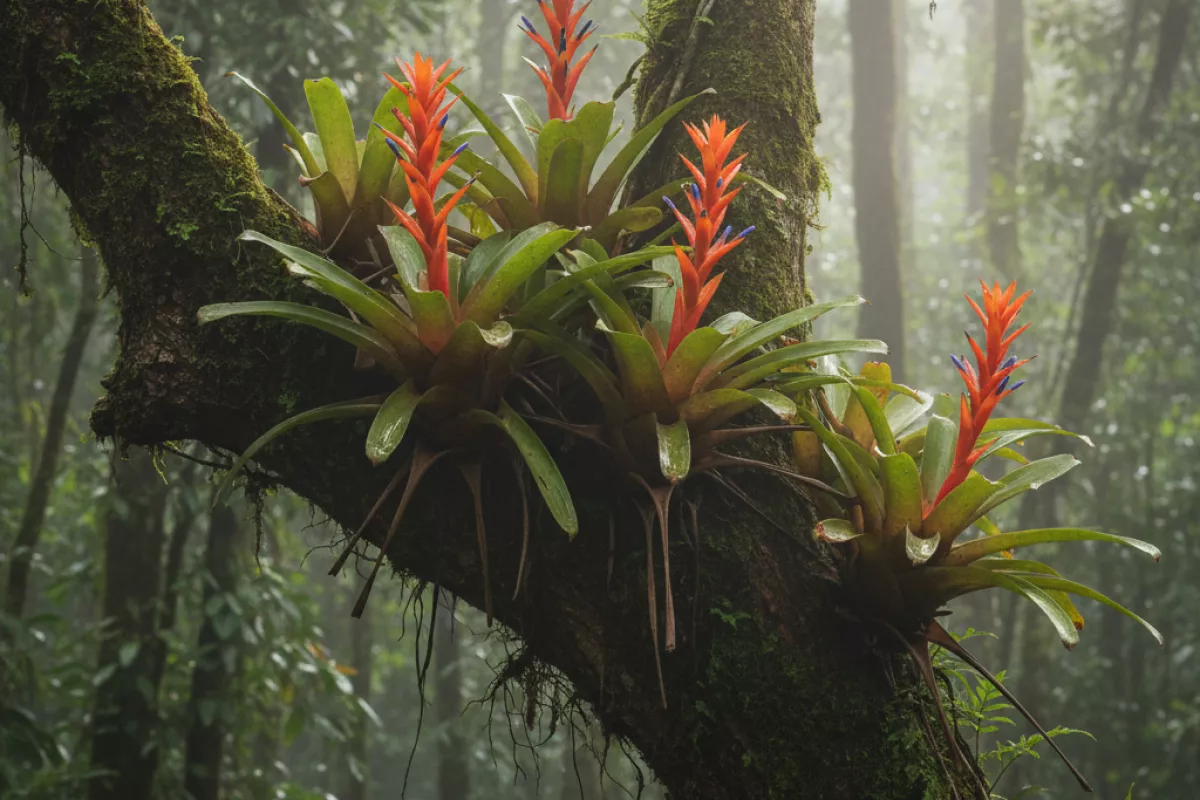
Aechmea comes from warm, humid parts of the Americas, where many species live up in trees rather than rooted in soil. In these forests, rain arrives in bursts, mist hangs in the canopy, and air movement dries surfaces quickly afterward. That combination explains why the plant tolerates brief dryness but dislikes staying soggy.
As an epiphyte, it uses branches and bark mainly as a perch. Roots act more like anchors than drinking straws, while the rosette of leaves forms a “tank” that holds water and fallen debris. Over time, this little reservoir collects nutrients from leaf litter, dust, and rainwater, which is why Aechmea can look perfectly happy in a small pot with an airy mix.
- Light in the wild: bright, filtered sun through tree leaves; indoors this translates to strong indirect light, with gentle morning sun often being fine.
- Water pattern: frequent wetting followed by airflow-driven drying; at home, it prefers thorough watering and then a chance to drain, rather than constant moisture.
- Humidity: typically moderate to high in its native range; it adapts to average rooms, but leaf tips stay nicer with extra humidity during dry seasons.
- Nutrition: light, steady feeding from organic debris; heavy fertilizer can be too much, especially if the potting mix stays wet.
This growth style also explains the “cup watering” habit many growers use: keeping a small amount of clean water in the central rosette, then refreshing it regularly so it doesn’t stagnate. In cooler conditions below about 18°C (65°F), it’s safer to keep the cup mostly dry and water the potting mix lightly instead, since cold, standing water can encourage rot.
When you picture Aechmea as a canopy plant clinging to bark—getting drenched, draining fast, and breathing in moving air—its easy-care rules make more sense: airy roots, good drainage, and a routine that mimics rain rather than a constantly wet “houseplant soil” setup.
Rosette shape and decorative bracts
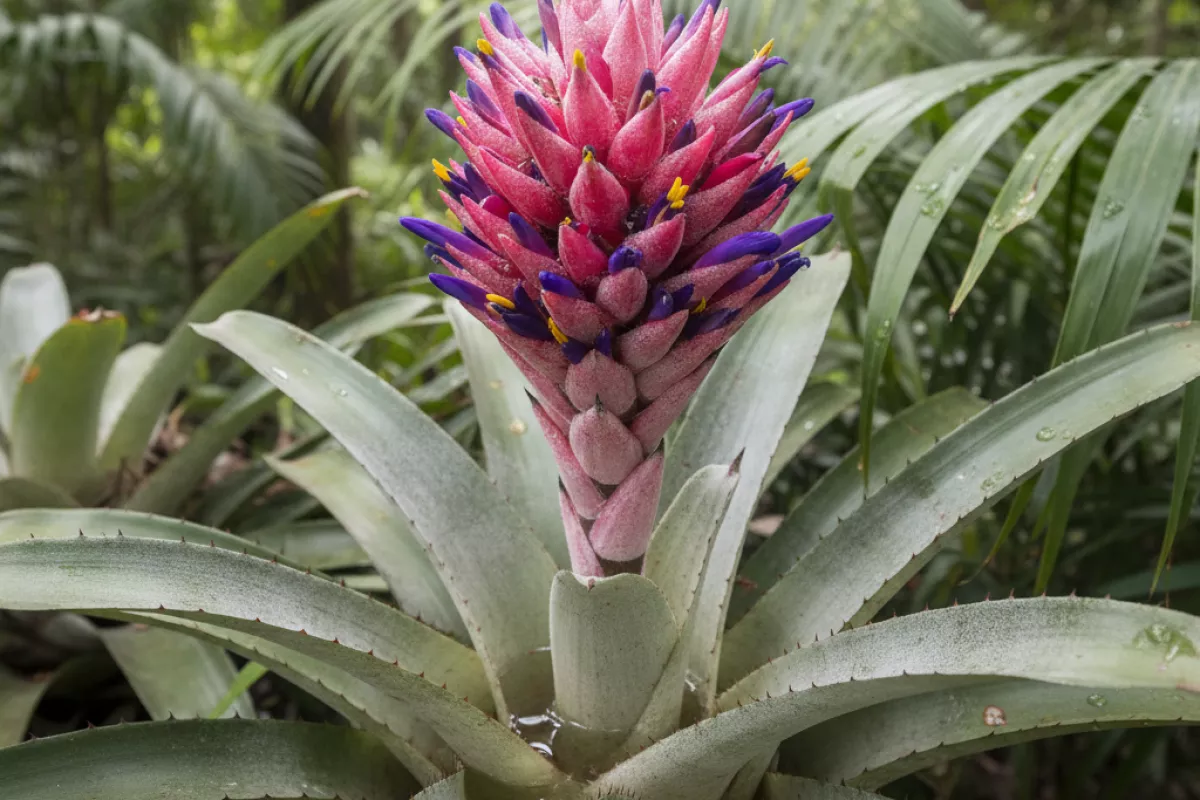
The plant’s leaves grow in a tight, vase-like spiral that naturally funnels water toward the center. This “tank” habit is more than a neat look: it’s how many Aechmea types collect moisture and nutrients in the wild, and it explains why the crown can hold a small reservoir after watering.
Leaf texture and markings vary by species and cultivar, but many forms have stiff, arching blades with fine spines along the edges. Silvery banding or a dusty, gray-green cast is common, caused by tiny scales that help the plant cope with bright light and occasional dryness.
- Central cup: The inner funnel can retain water; keep it fresh rather than stagnant, and avoid letting debris accumulate.
- Layered symmetry: Outer leaves spread wider while inner leaves stay more upright, creating the classic sculptural outline.
- Textural contrast: Smooth leaf surfaces, faint striping, and toothed margins make the plant look “designed” even when it isn’t blooming.
What most people call the “flower” is often the long-lasting, colorful display of bracts. These modified leaves can stay attractive for weeks to months, while the true flowers are smaller and usually short-lived, opening in sequence. Bract color ranges from pink and coral to red, orange, or yellow, sometimes with a frosted or metallic sheen.
Bracts also act like a backdrop: they lift the bloom above the leaf funnel and make the plant visible to pollinators. Indoors, that same structure is why Aechmea looks showy for so long—your display doesn’t disappear the moment the tiny blossoms fade.
- Don’t cut too early: If the inflorescence is still firm and colorful, let it age naturally; trimming is best once it browns and dries.
- Handle with care: Spiny leaf edges can scratch; use gloves or wrap the plant in a towel when repotting.
- Expect change after bloom: The mother rosette slowly declines after flowering, but it typically produces pups at the base that carry on the same architectural look.
Light conditions for vibrant Aechmea coloration
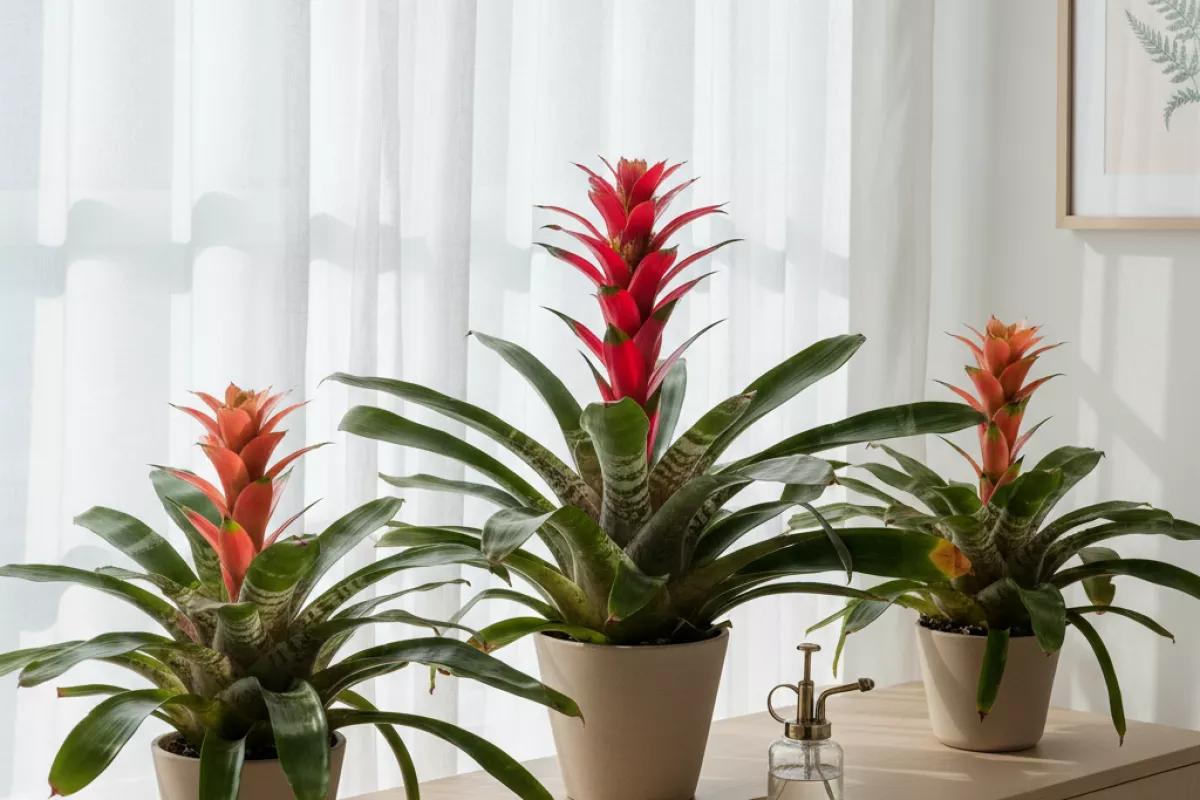
To bring out strong bract color and keep the leaves nicely patterned, Aechmea generally needs bright, filtered light. Too little light often leads to greener bracts and softer contrast, while harsh sun can bleach foliage or leave dry, tan patches.
- Best indoor placement: Near an east-facing window for gentle morning sun, or a few steps back from a south- or west-facing window where the light is intense. If the sun hits the plant directly for long stretches, diffuse it with a sheer curtain.
- How much direct sun is “safe”: Early sun is usually fine; midday sun is the risky one. If you can comfortably read a book in the spot without squinting, it’s often in the right range for this bromeliad.
- Signs it wants more light: Bracts developing slowly, color looking muted, longer and looser leaf growth, or the plant leaning toward the window.
- Signs it’s getting too much: Faded or washed-out areas, crispy leaf tips despite normal watering, or sharply defined scorch marks on the side facing the glass.
- Rotate for even color: Turn the pot about a quarter turn every 7–14 days so the rosette colors up evenly instead of developing a “sunny side.”
| Light situation | What you’ll notice | Simple adjustment |
|---|---|---|
| Low light (dim room, far from windows) | Greener bracts, slower growth, softer leaf markings | Move closer to a bright window or add a grow light placed about 30–45 cm (12–18 in) above the plant |
| Bright indirect light (sheer curtain, bright room) | Best balance of color, firm leaves, steady growth | Maintain position; rotate the pot every 7–14 days |
| Strong direct sun (especially midday) | Bleaching, crispy patches, scorched leaf areas | Pull back 30–60 cm (12–24 in) from the glass or filter with a sheer curtain |
| Seasonal drop in light (winter) | Color intensity may fade; growth slows | Give the brightest available spot and extend light with a grow lamp for 10–12 hours daily |
If you’re using artificial lighting, aim for consistency rather than intensity spikes. A steady 10–12 hours per day under a grow light (kept about 30–45 cm (12–18 in) away) often maintains good bract coloration without stressing the leaves.
Soil medium and watering approach for Aechmea
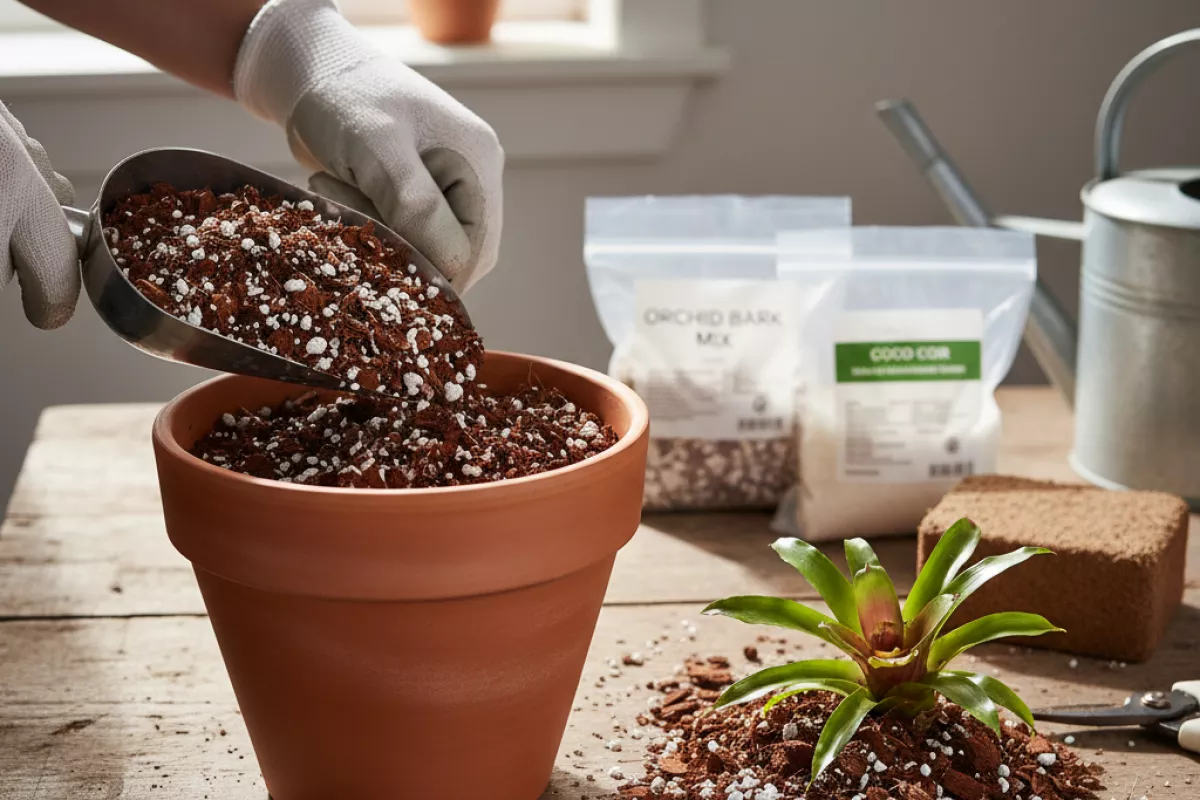
These bromeliads do best when their roots get plenty of air and water drains fast. Think “support and stability” rather than rich, moisture-holding potting soil. Overly dense mixes stay wet around the base and can lead to rot, while a loose, chunky medium keeps the plant hydrated without suffocating it.
Potting mix that works (and why)
- Aim for an airy, fast-draining blend. A good starting point is orchid bark + perlite + a little peat/coco coir for moisture buffering. The bark creates air pockets; perlite prevents compaction; the small moisture-retentive portion keeps the mix from drying instantly.
- Skip heavy garden soil and “water-retentive” mixes. Anything that packs down or stays soggy can stress the roots and the crown.
- Choose the right pot. A pot with drainage holes is non-negotiable. Terra cotta can help if you tend to overwater; plastic holds moisture longer if your home is dry.
- Keep the plant slightly snug. Aechmea often prefers a pot that isn’t oversized; too much unused mix stays wet. As a rule of thumb, step up only 2–5 cm (1–2 in) in diameter when repotting.
How to water: cup vs. soil
Most Aechmea form a central “tank” (the rosette cup). In warm, bright conditions, you can use that cup as part of the watering routine, while still keeping the root zone lightly moist, never saturated.
- Rosette (tank) watering: Fill the central cup with clean water, then flush and refresh it regularly so it doesn’t go stale. In typical indoor conditions, refreshing every 7–14 days is a practical rhythm.
- Root-zone watering: Water the potting mix thoroughly, then let excess drain fully. Wait until the top 2–3 cm (1–1.2 in) feels dry before watering again. The roots mainly anchor the plant, so constant wetness is more harmful than brief dryness.
- Seasonal adjustment: In cooler months or lower light, keep the cup less full and water the mix less often. In warm periods around 24–29°C (75–84°F), the plant can use more frequent refreshes.
- Water quality matters: If your tap water is very hard, mineral buildup can mark leaves and stress the plant. Using filtered or rainwater can help, especially for the rosette.
Quick troubleshooting cues
| What you notice | Likely cause | What to change |
|---|---|---|
| Base feels soft; musty smell from the crown | Water sitting in the crown too long; mix staying wet | Empty and flush the cup, increase airflow, switch to a chunkier medium, and let the top 2–3 cm (1–1.2 in) dry between waterings |
| Leaf tips brown and crispy | Low humidity, irregular watering, or mineral-heavy water | Refresh the rosette more consistently, consider filtered water, and raise humidity (aim for 40–60%) |
| Wrinkled, dull leaves; cup frequently dry | Underwatering or very warm, dry air | Keep a small amount of water in the cup during warm spells and water the mix when the top layer dries |
| Gnats or sour-smelling soil | Medium staying too wet and breaking down | Let the mix dry more between waterings, use a bark-forward blend, and remove any decomposed, fine material |
If you’re unsure which approach to favor, prioritize a breathable potting medium and controlled root watering, then treat the rosette cup as a bonus hydration reservoir that you keep clean. That balance matches how many Aechmea live in nature: anchored in airy debris, catching water in the center, and drying quickly between rains.
Temperature and humidity preferences for Aechmea
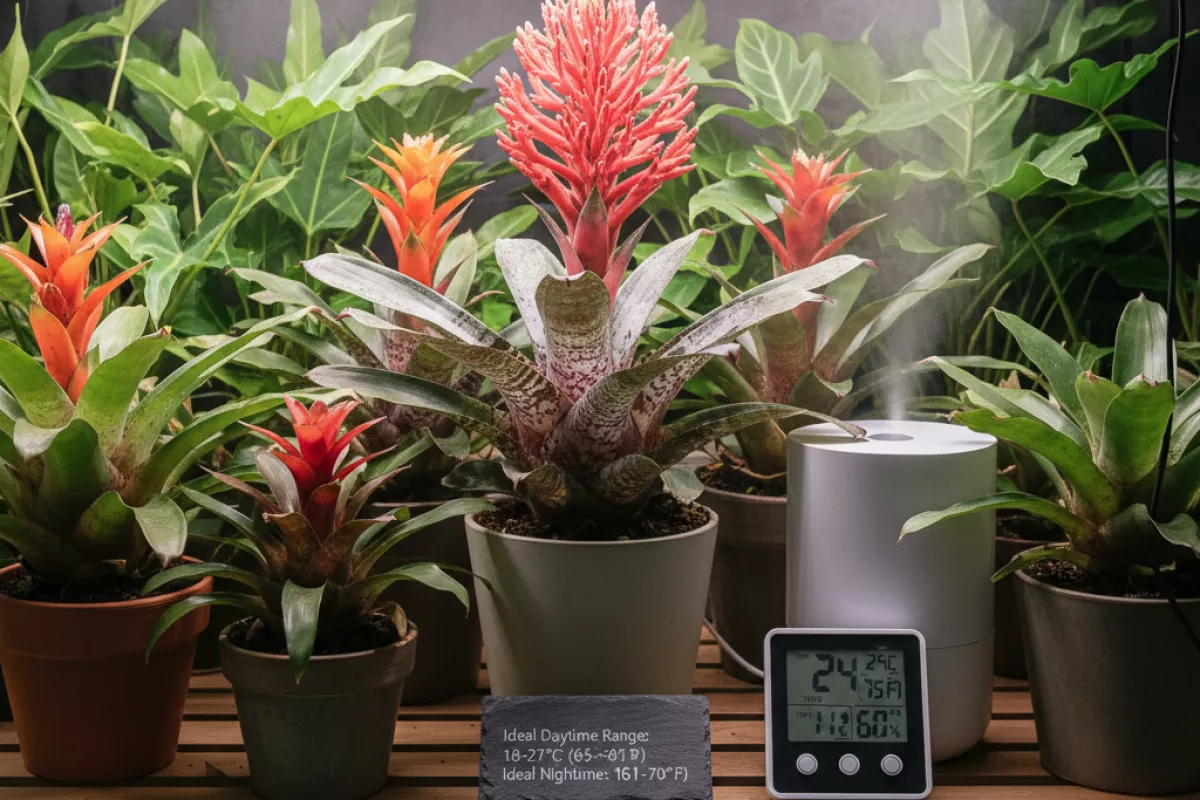
Keep this bromeliad in a warm, steady range and it will stay colorful and compact. Most Aechmea types are happiest at 18–27°C (65–81°F) during the day, with slightly cooler nights. Short dips are usually tolerated, but prolonged chills slow growth and can trigger leaf damage.
- Ideal daytime range: 18–27°C (65–81°F).
- Ideal nighttime range: 16–21°C (61–70°F).
- Lower limit to avoid: sustained temperatures below 12–13°C (54–55°F), especially in damp conditions.
- Upper heat caution: above 32°C (90°F) the plant can dehydrate quickly; increase air movement and humidity and keep it out of harsh sun.
Humidity matters most for leaf quality. Aim for moderate-to-high moisture in the air: around 50–70% is a comfortable target for most homes, while 60–80% suits greenhouse-like conditions. Very dry air often shows up as browning tips or a dull, dusty look to the foliage.
| Situation | What you’ll notice | Adjustment that helps |
|---|---|---|
| Dry indoor air (winter heating), ~30–40% RH | Brown tips, slower growth, leaf edges crisping | Group plants, use a humidifier, or place near a pebble tray; keep 50–70% RH if possible |
| Warm + low humidity, 28–32°C (82–90°F) | Leaves curl inward, cup dries fast | Increase humidity and airflow; check moisture more often without leaving the potting mix soggy |
| Cool + wet, 12–16°C (54–61°F) | Soft spots, higher risk of rot in the central cup | Keep the “tank” mostly dry in cool spells; water the mix lightly and warm the room |
| High humidity + stagnant air, 70–85% RH | Musty smell, spotting, slower drying after watering | Add gentle air circulation; avoid water sitting on leaves overnight |
A practical routine is to treat the central rosette like a seasonal reservoir: in warm weather, you can keep a little clean water in the cup and refresh it every 7–10 days; in cooler weather, let it stay mostly dry to prevent rot. If your home sits around 20–24°C (68–75°F) with average household humidity, Aechmea usually adapts well as long as it isn’t placed next to cold windows, radiators, or blasting air-conditioning.
Maintenance for healthy bromeliad growth
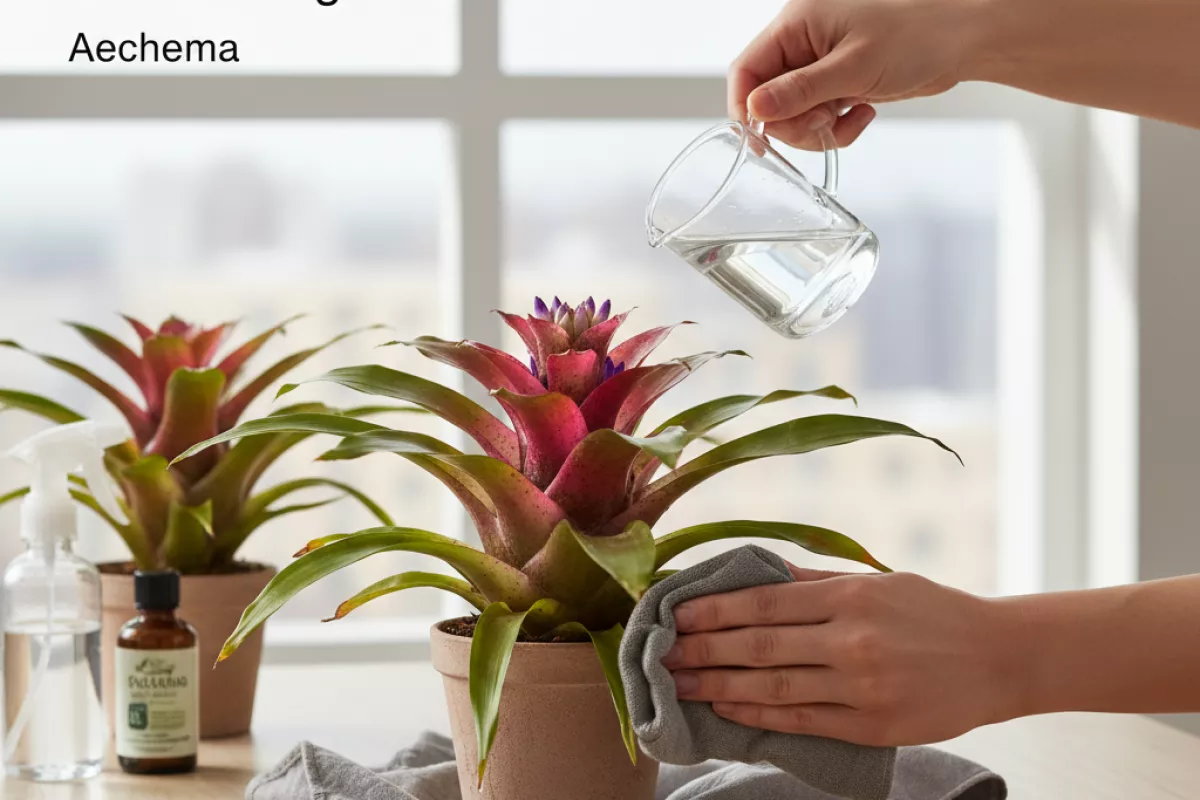
Keep Aechmea looking its best by focusing on three routines: steady light, clean water in the central cup, and gentle feeding. Most problems come from stale water, low airflow, or trying to treat it like a typical potted houseplant.
- Refresh the “tank” regularly: If your Aechmea forms a central cup, empty and refill it with clean water every 7–14 days. In warm rooms above 24°C (75°F), lean toward weekly changes to prevent odor and rot. Use room-temperature water; if your tap water is very hard, let it sit overnight or use filtered water.
- Water the potting mix lightly: The roots mainly anchor the plant, so keep the mix barely moist, not wet. Water when the top 2–3 cm (1 in) feels dry, then let excess drain completely. Never leave the pot standing in water.
- Flush salts out of the mix: Once a month, run water through the pot for 30–60 seconds to rinse fertilizer salts, then drain well. This helps prevent brown tips and slowed growth.
- Feed sparingly: During active growth (often spring through early fall), use a balanced liquid fertilizer at 1/4 strength every 4–6 weeks. Apply to the potting mix, not a constantly full cup, and skip feeding in cooler, low-light months.
- Groom for airflow and appearance: Remove fully brown leaves by trimming close to the base with clean scissors. If only the tips are dry, trim just the brown portion to keep the leaf shape.
- Manage humidity without trapping moisture: Aim for moderate humidity around 40–60%. If you use a pebble tray, keep the water level below the pot base. Good air movement matters more than misting, which can leave water sitting in leaf axils.
- Rotate for even growth: Turn the pot 1/4 turn every 1–2 weeks so the rosette stays symmetrical under window light.
- Support the bract, don’t “fix” fading: The colorful bracts naturally fade over time. Keep care consistent; cutting the bract early won’t extend bloom, but you can remove the spent flower stalk once it dries.
| Common issue | Likely cause | What to do |
|---|---|---|
| Brown leaf tips | Low humidity, salt buildup, or hard water | Flush the mix monthly, reduce fertilizer, use filtered/settled water, and raise humidity to 40–60% with airflow. |
| Soft base or sour smell | Stagnant water in the cup or waterlogged mix | Empty and rinse the cup, refresh water weekly, let the mix dry more between waterings, and improve ventilation. |
| Pale leaves, weak color | Light too low | Move to brighter indirect light; a few hours of gentle morning sun can help if leaves don’t scorch. |
| No pups after flowering | Low light, underfeeding, or cool conditions | Increase brightness, feed lightly every 4–6 weeks in growth season, and keep temperatures around 18–27°C (65–81°F). |
When pups (offsets) appear at the base, let them grow until they reach about 1/3 to 1/2 the size of the mother plant before separating. Use a clean blade, keep a small piece of the base attached if possible, and pot into an airy bromeliad mix. After dividing, go easy on watering for 7–10 days so cut surfaces can callus.
Propagation through offsets and pups
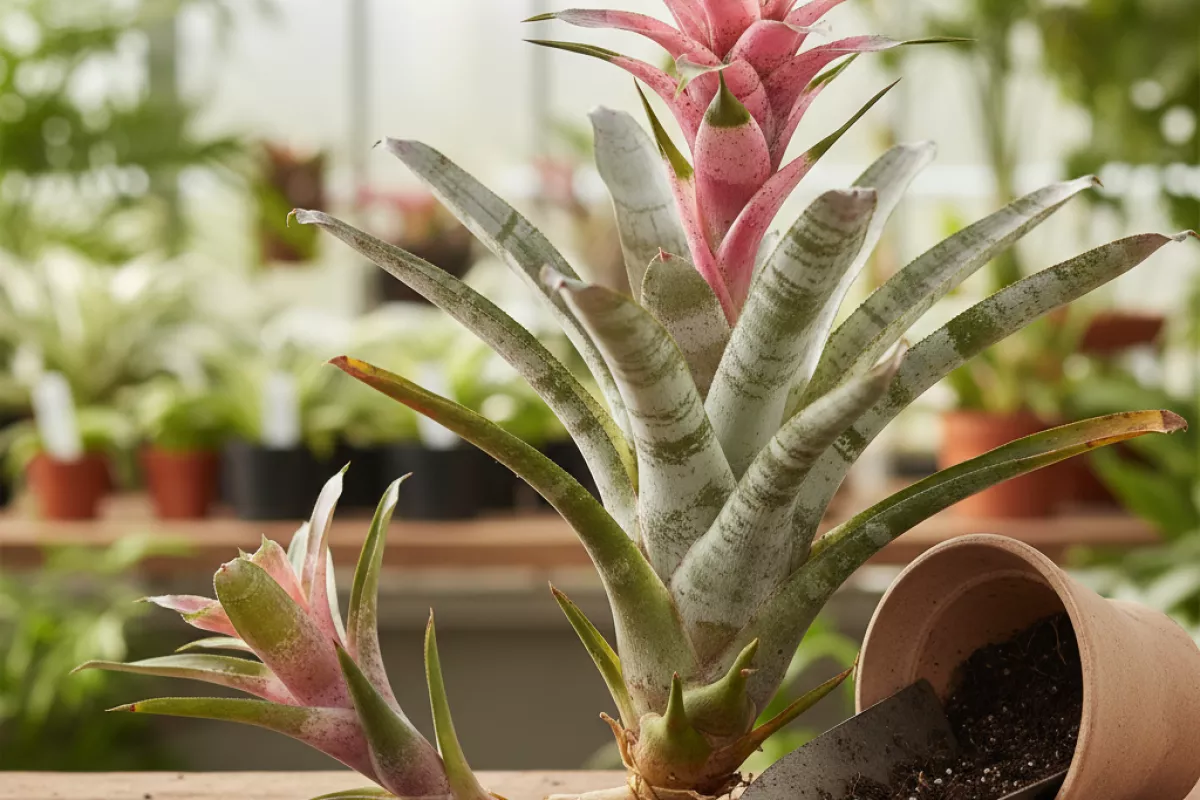
New plants are easiest to get from the small side rosettes (often called pups) that form at the base after the mother rosette blooms. This method is reliable, keeps the same look as the parent plant, and is much faster than starting from seed.
- Wait for a good-sized offset. Separate only when the pup is about 1/3 to 1/2 the size of the parent, or roughly 10–15 cm (4–6 in) tall. Smaller starts can survive, but they stall more easily.
- Choose the right moment. Do it when the potting mix is slightly dry and the plant is actively growing (spring to early summer is usually easiest). Avoid dividing right after repotting or during cold, low-light periods.
- Remove the plant and expose the base. Slide the Aechmea out of the pot and gently brush away mix so you can see where the pup attaches. If roots are tangled, tease them apart rather than ripping.
- Separate cleanly. Use a clean, sharp blade to cut the connection as close to the parent as possible. Keep any roots the pup already has, but don’t worry if it has few—many offsets root after potting.
- Let the cut dry. Allow the separated pup to callus for 12–24 hours in a shaded, airy spot. This reduces the chance of rot at the cut surface.
- Pot into a small container. Use a snug pot with drainage and a chunky, fast-draining bromeliad-style mix. Set the rosette upright and keep the base just at the surface—burying it too deep is a common cause of rot.
- Aftercare for rooting. Keep warm and bright (indirect light), aiming for about 21–27°C (70–81°F). Water the mix lightly, and if the species/cultivar normally holds water in the “cup,” keep a small amount of clean water there, refreshing it regularly.
Expect the parent rosette to slowly decline after flowering, but it often supports the pups while they establish. You can leave offsets attached until they’re larger for a fuller clump, or remove them to start separate plants—both approaches work, depending on whether you want a single specimen or a multi-rosette display.
- Pup wobbles in the pot: use a slightly smaller pot or add a few pieces of bark around the base for support; avoid packing the mix tightly.
- Soft base or sour smell: the mix is staying too wet—repot into drier, chunkier media and keep the base higher.
- No growth for weeks: normal while roots form; keep temperatures steady and light bright but filtered.
Seasonal blooming cycle and life stages
Aechmea follows a simple rhythm: it grows as a leafy rosette, puts on a long-lasting display of colorful bracts, then slowly declines while producing new offsets (“pups”) that carry the plant forward. The timing varies by species and indoor conditions, but the overall pattern is consistent and helps you decide when to feed, when to divide, and when to stop trying to “revive” an aging mother rosette.
- Juvenile growth (establishing the rosette)
The plant focuses on roots and leaf production. In bright, filtered light it typically takes about 2–4 years to reach flowering size indoors. Keep the central cup (tank) lightly filled with clean water and refresh it regularly; steady moisture and warmth encourage faster maturation. - Initiation (getting ready to bloom)
As the rosette nears maturity, growth slows and the center tightens. Many Aechmea bloom in late winter through summer indoors, but they can shift with day length, temperature, and light. If your plant is mature but stalled, slightly brighter light and consistent temperatures around 18–27°C (65–81°F) often help more than extra fertilizer. - Bloom and bract display (the “show” phase)
The true flowers are usually short-lived, but the bracts can stay attractive for weeks to months. During this period, avoid heavy feeding; a diluted fertilizer at 1/4 strength is plenty. Keep water in the tank, but don’t let it go stale—empty and refill every 7–14 days, and flush sooner if it looks cloudy. - Post-bloom decline (normal, not a failure)
After flowering, the mother rosette gradually weakens over several months. Leaves may yellow from the outer ring inward. This is expected; the plant is redirecting energy into pups. Maintain normal care, but don’t overcorrect with constant repotting or strong fertilizer, which can stress the offsets. - Pup production and succession (the next generation)
Offsets appear at the base (sometimes along short stolons). Let pups reach about 1/3 to 1/2 the size of the mother before separating, which often means 10–20 cm (4–8 in) tall, depending on the species. Separation is easiest when each pup has some roots; use a clean blade and pot into a chunky bromeliad mix. - Division timing: when to cut vs. when to cluster
If you want a fuller specimen, leave pups attached and grow a clump. If you want more plants, divide once pups are sturdy. Either way, keep the old rosette until it’s mostly brown and dry; it can still support the young plants while it fades.
One practical cue: if the bracts are fading and pups are actively growing, shift your attention to the offsets rather than trying to push the mother rosette back into growth. With Aechmea, the “end” of one rosette is simply the handoff to the next.
Common problems in Aechmea plants
Most issues with Aechmea show up as changes in leaf color, a collapsing rosette, or a bloom that never really develops. The good news is that the plant usually tells you what it needs: light problems look different from water problems, and pests leave their own clues.
| Symptom you notice | Likely cause | What to do |
|---|---|---|
| Leaf tips turn brown; edges look dry or crispy | Low humidity, mineral-heavy water, or fertilizer buildup | Use rain/filtered water; flush the pot with clean water monthly; raise humidity with a pebble tray; trim only the dead tip. |
| Rosette (center “cup”) smells sour; base turns soft | Crown/root rot from stagnant water plus cool temperatures or poor airflow | Empty and rinse the cup; let it dry for 24–48 hours; keep nights above 18°C (65°F); repot into a fast-draining mix and remove mushy roots. |
| Leaves are pale, stretched, or the bracts are dull | Not enough bright light | Move to brighter indirect light; a few hours of gentle morning sun can help; rotate the pot weekly for even growth. |
| Bleached patches or tan “burn” spots on leaves | Too much direct sun, especially midday | Shift back from harsh sun; use a sheer curtain; remove only fully dead tissue (damaged areas won’t green up). |
| No bloom after a long time; plant looks healthy | Insufficient light, too much nitrogen, or the plant is not mature | Increase light; switch to a low-nitrogen bromeliad/orchid feed at 1/4 strength; be patient—many Aechmea bloom once when ready. |
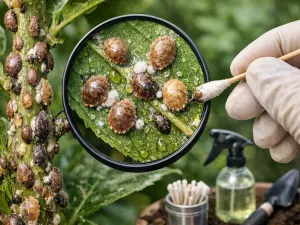
| White cottony clusters in leaf axils; sticky residue | Mealybugs | Isolate the plant; wipe with cotton swabs dipped in 70% isopropyl alcohol; repeat weekly 3–4 times; rinse the cup afterward. |
| Hard brown bumps on leaves; yellowing around them | Scale insects | Gently scrape off with a fingernail or soft brush; treat with horticultural soap/oil; check undersides and the leaf bases. |
| Fine webbing; silvery stippling on leaves | Spider mites (often in dry indoor air) | Rinse foliage thoroughly; increase humidity; treat with insecticidal soap, repeating every 5–7 days. |
| Pups form but the mother plant declines | Normal life cycle after flowering | Keep caring for the mother until it fully browns; separate pups when they reach about 10–15 cm (4–6 in) tall or 1/3–1/2 the parent’s size. |
If you’re unsure whether the issue is watering or light, check the center cup first. In warm conditions, it can hold a little fresh water, but it should be emptied and refreshed regularly; in cooler rooms, keeping the cup mostly dry often prevents rot.