How to Get Rid of Aphids on Houseplants

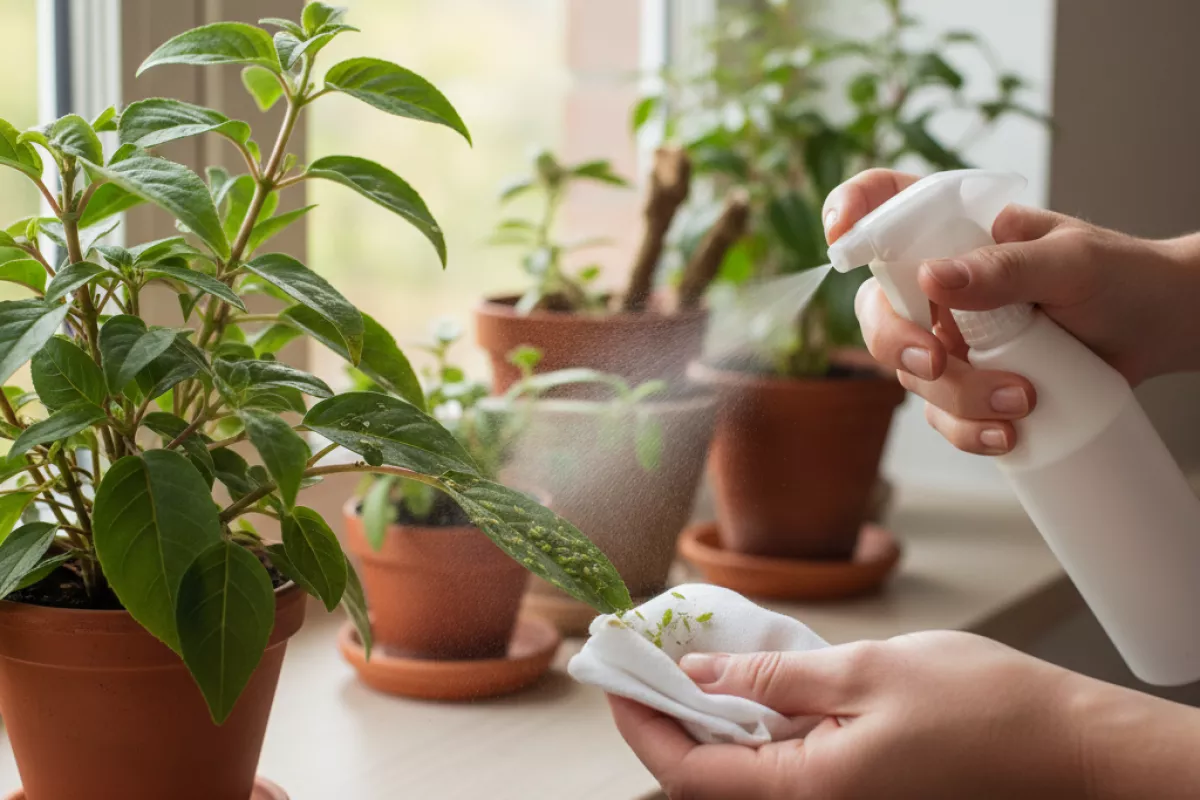 Explains why indoor plants attract aphids and how infestations start indoors, then covers manual removal, safe household treatments, and the best insecticidal options for indoor use. Also shows how to clean leaves after treatment and prevent spread to nearby plants.
To clear aphids from indoor plants, act quickly but gently to stop pests without stressing your greenery. These soft-bodied sap suckers multiply fast, causing sticky residue, curled leaves, and weak new growth. Inspect stems and leaf undersides, then rinse plants, wipe clusters, or use insecticidal soap or neem. Isolate affected pots, repeat treatment weekly, and prune heavily infested tips to prevent return.
Why indoor plants attract aphids
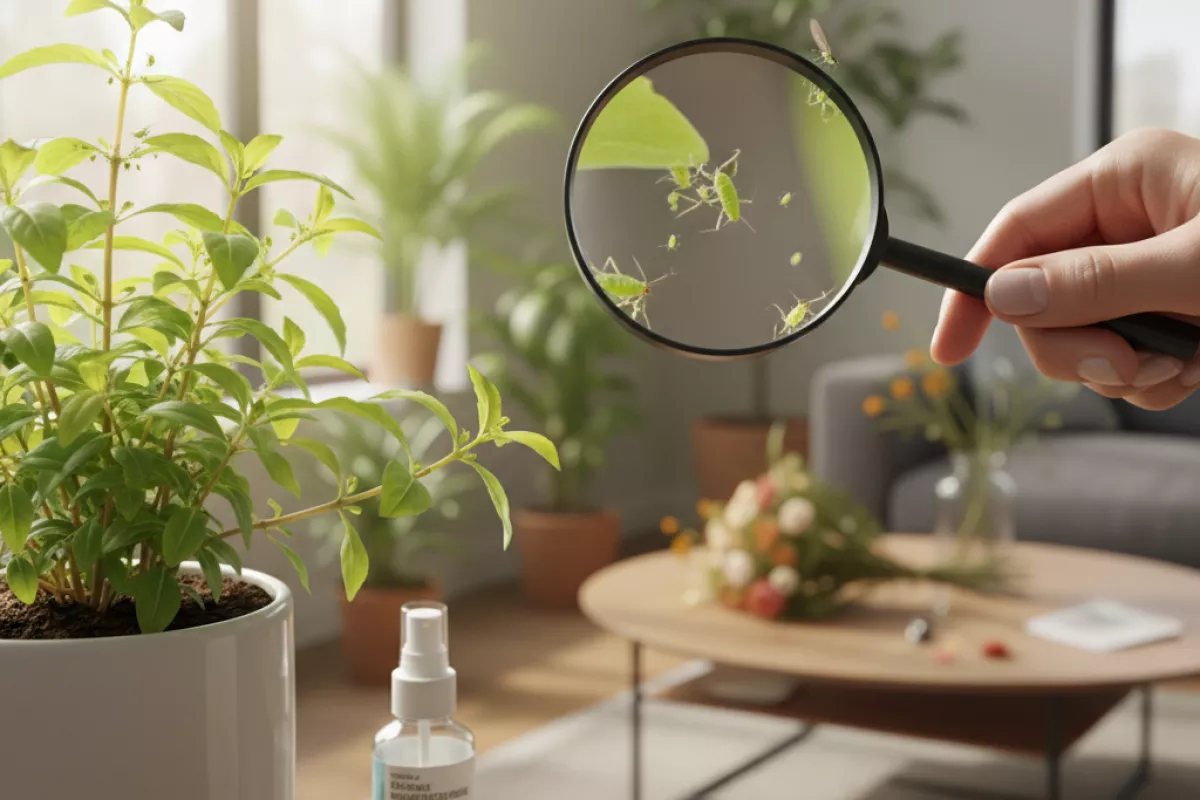
Aphids don’t show up indoors by magic; they usually arrive as hitchhikers and then stick around because the conditions are comfortable. A warm room, steady moisture, and lots of tender new growth can turn a single unnoticed insect into a cluster on stems and leaf undersides.
- They get inside on “clean-looking” plants. New houseplants, cuttings, gifted bouquets, and even outdoor plants brought in for a night can carry a few aphids or eggs. Because they’re small and often hide in new growth, it’s easy to miss them during a quick glance.
- Indoor temperatures speed up reproduction. Many homes stay in a mild range day and night, which helps aphids develop faster than they would outdoors where weather swings slow them down.
- Soft, nitrogen-rich growth is easy to feed on. Overfertilizing (especially with high-nitrogen formulas) pushes lush, tender shoots. Aphids prefer that soft tissue because it’s easier to pierce and has more sap flow.
- Plants under stress are more vulnerable. Low light, irregular watering, compacted soil, or root-bound pots can weaken a plant’s defenses. Stressed plants can produce more of the amino acids aphids seek in sap.
- Airflow is limited. Crowded windowsills and still air give pests safe hiding spots and make it harder for you to notice early infestations. Outdoors, wind and rain can physically knock them off; indoors, nothing does.
- Natural predators are missing. Lady beetles, lacewings, and parasitic wasps help keep populations in check outside. Indoors, aphids face fewer threats, so numbers climb quickly once they find a suitable host.
- Ants can “farm” them. If ants are getting in, they may protect aphids to harvest honeydew (the sticky residue aphids produce). That protection can make an infestation harder to slow down.
In practice, indoor outbreaks often come from a combination: a newly purchased plant plus a warm, low-airflow spot and a recent fertilizer boost. Spotting those patterns helps you prevent repeat problems while you treat the current one.
How infestations start indoors
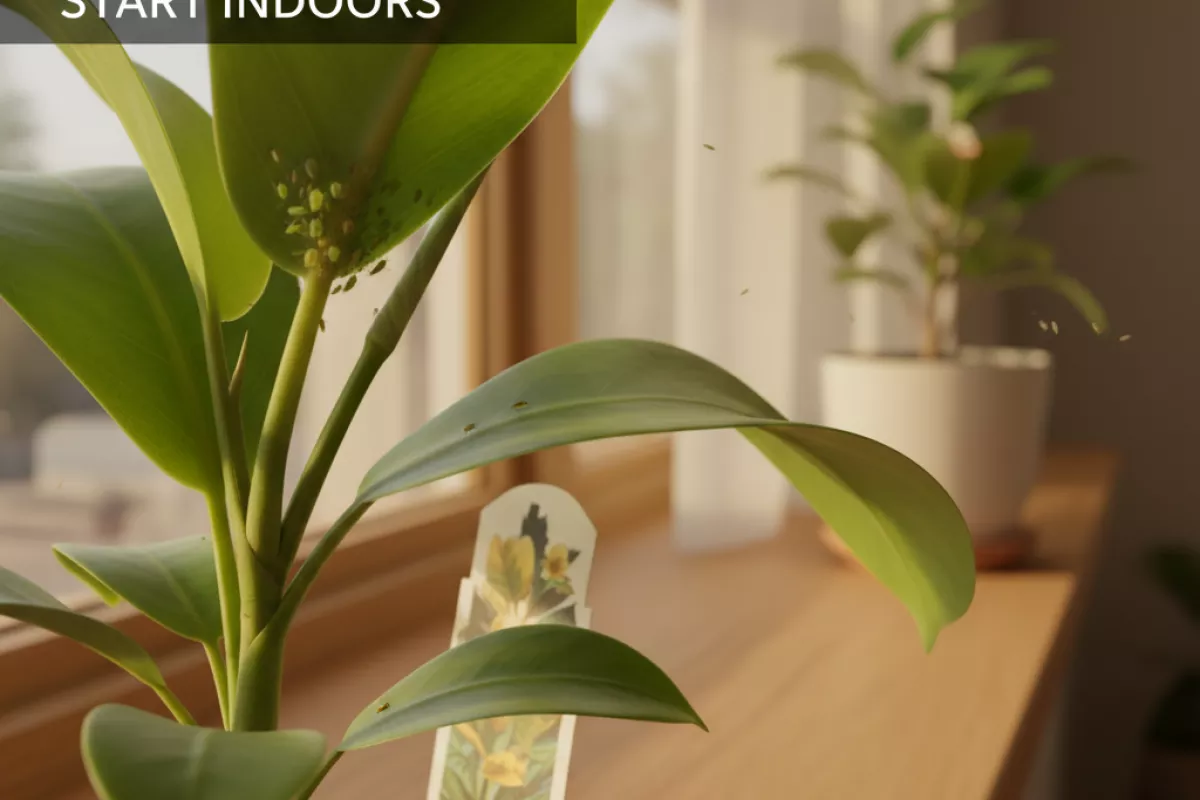
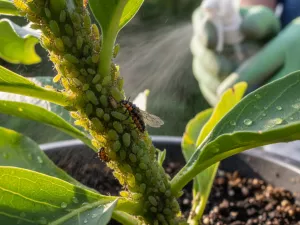
Most outbreaks on houseplants begin with a small “hitchhiker” population that goes unnoticed for days or weeks. Aphids don’t need much time to build numbers: many species reproduce without mating, and the young start feeding right away. Once they find tender growth and steady indoor temperatures, they can spread from one pot to the next surprisingly fast.
- New plants brought home already carrying pests. Garden centers and plant swaps are common sources. Aphids often hide on the undersides of leaves, in tight leaf curls, or deep in new growth where you don’t look during a quick inspection.
- Cuttings and bouquets placed nearby. Fresh cut flowers and outdoor cuttings can harbor aphids that crawl onto nearby foliage, especially if the vase sits next to your plant shelf.
- Outdoor exposure in warm months. Plants set on a balcony, patio, or even near an open window can pick up winged adults. A single winged aphid can start a colony on soft new leaves.
- Ants “farming” them indoors. If ants are present, they may transport aphids to new shoots to harvest honeydew. You’ll often notice sticky residue first, then the insects.
- Crowded plants and touching leaves. When pots are grouped tightly, aphids can simply walk across overlapping foliage. Dense canopies also make it harder to spot early clusters.
- Overly lush, nitrogen-heavy growth. Frequent high-nitrogen fertilizer pushes soft, juicy new shoots that aphids prefer. The plant isn’t “causing” the issue, but it makes the buffet more appealing.
- Hidden eggs or nymphs in crevices. While many indoor populations are live-bearing, tiny nymphs can still be tucked into leaf axils, along stems, or around the crown where leaves emerge.
If you’re wondering why the problem seems to appear “overnight,” it’s usually because the first few insects stayed out of sight until the colony reached the tips and buds. Checking the newest growth, leaf undersides, and any curled leaves is where you’ll catch an early aphid problem before it spreads to the rest of your collection.
Manual removal techniques
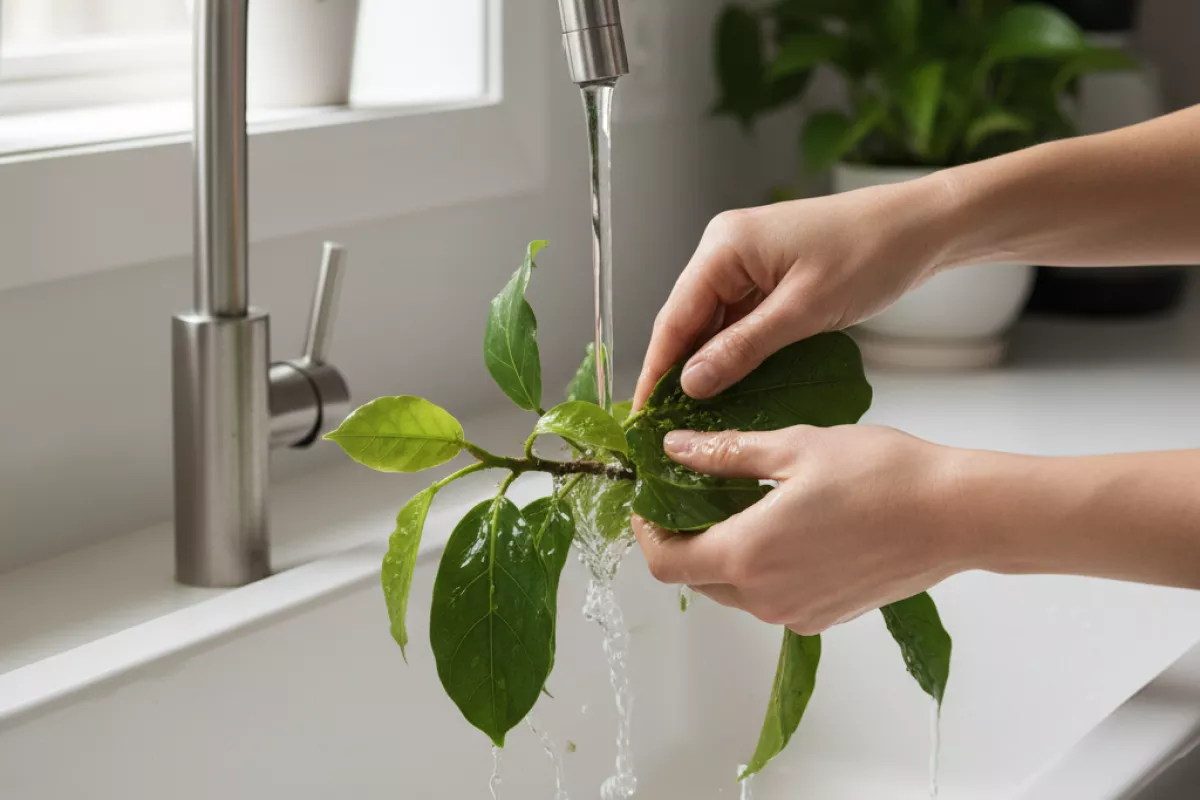
Physical control works best when you catch aphids early and can reach most of the plant. The goal is simple: knock them off, wipe them away, and remove the worst-infested growth so the population can’t rebound as quickly.
- Rinse with a strong stream of water. Take the plant to a sink or shower and spray stems and the undersides of leaves where colonies cluster. Use cool to lukewarm water around 20–30°C (68–86°F). Repeat every 2–3 days for 1–2 weeks, since missed nymphs can repopulate.
- Wipe or pinch off clusters. For small outbreaks, use your fingers to gently pinch aphids off tender tips, or wipe leaves with a damp cloth. This is especially helpful on thick-leaved plants where insects cling tightly.
- Use a cotton swab with diluted alcohol for spot treatment. Dip a swab in 70% isopropyl alcohol and dab individual insects, then wipe the area with plain water after a few minutes to reduce leaf stress. Test on one leaf first and wait 24 hours before treating the rest.
- Prune heavily infested tips and buds. If new growth is covered, snip it off with clean scissors and discard it in a sealed bag. Removing a few centimeters can be enough, such as 5–10 cm (2–4 in), depending on where the colony is concentrated.
- Rinse away sticky honeydew. Aphids leave a sugary residue that can attract ants and encourage sooty mold. Wash leaves with water and gently wipe; if needed, use a small amount of mild soap in 500 ml (17 fl oz) of water, then rinse thoroughly.
After any hands-on removal, isolate the plant for about 7–14 days and check it every couple of days. Focus inspections on soft new growth and leaf undersides; if you keep finding a few survivors, repeat the rinse-and-wipe routine until you go a full week without seeing live insects.
Tip: If ants are present, address them too. Ants often “farm” aphids for honeydew and can move them back onto your houseplants after you’ve removed them.
Safe household treatments
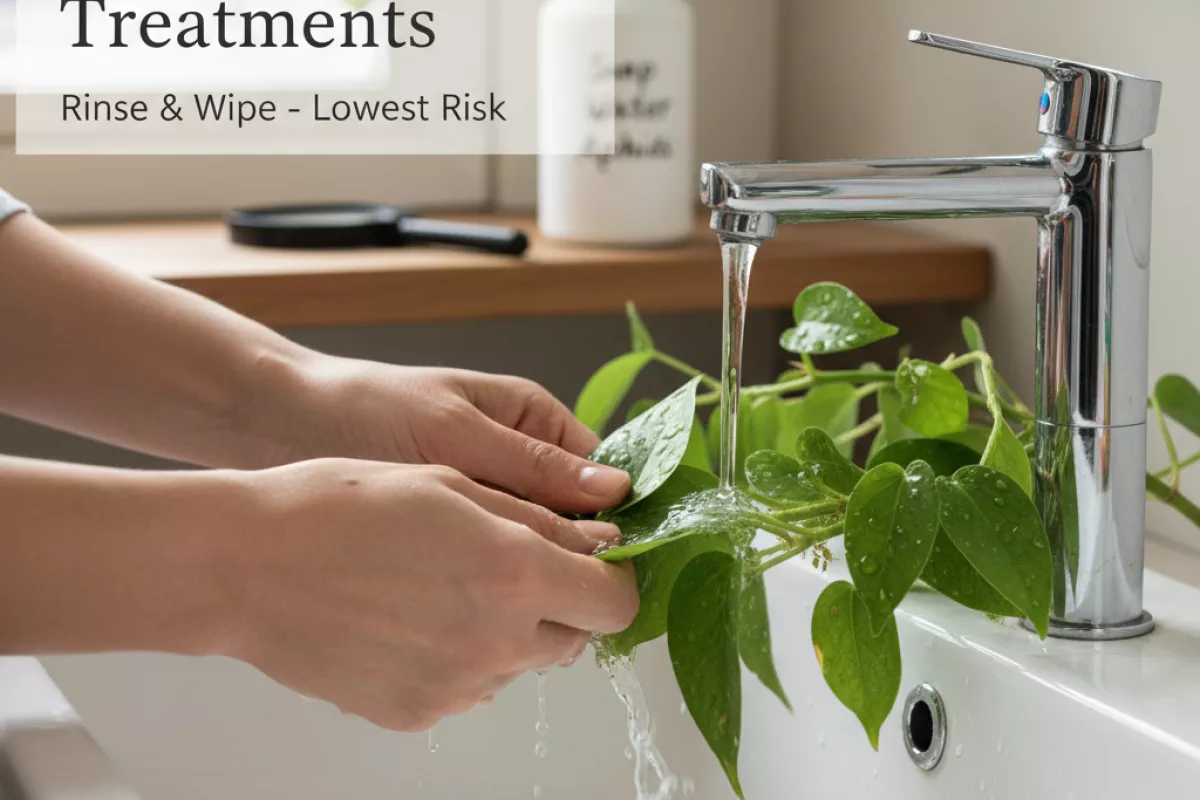
Start with the least risky options and scale up only if you still see clusters of soft-bodied insects on new growth. Most home remedies work by physically removing pests or disrupting their outer coating, so coverage matters more than using a strong mix. Before treating the whole plant, test any spray on a small area and wait 24 hours to check for spotting or leaf curl.
- Rinse and wipe (fastest, lowest risk): Take the plant to a sink or shower and rinse leaves and stems with a firm stream of lukewarm water. Then wipe the undersides of leaves with a damp cloth or cotton pad. Repeat every 2–3 days for 1–2 weeks.
- Soapy water spray (gentle contact option): Mix 5 ml (1 tsp) of mild liquid soap in 500 ml (17 fl oz) of water. Mist stems and both sides of leaves until evenly wet, avoiding saturated soil. Leave for 15–20 minutes, then rinse with clean water to reduce leaf residue. Reapply every 4–7 days as needed.
- Isopropyl alcohol spot treatment (for tight clusters): Dab pests with 70% rubbing alcohol using a cotton swab; don’t drench the plant. This is best for small infestations or hard-to-reach crevices. Rinse the area after 10–15 minutes if the plant is sensitive (thin-leaved varieties can react).
- Neem oil (use carefully indoors): If you want a plant-based spray, follow the product label exactly; neem can burn leaves if overmixed or used in bright light. Apply in the evening or out of direct sun, and don’t combine with other sprays the same day.
- Sticky traps (supporting tool, not a cure): Yellow sticky cards help catch flying adults and tell you whether the population is dropping. Place one trap per small pot or one per 30 cm (12 in) of plant canopy, and replace when covered.
| Treatment | Best for | How to use | Watch-outs |
|---|---|---|---|
| Water rinse + wipe | Early infestations; weekly maintenance | Rinse thoroughly, then wipe leaf undersides; repeat every 2–3 days | Protect soil from washing out; avoid cold water shock |
| Soapy water | Moderate outbreaks on sturdy foliage | 5 ml (1 tsp) soap in 500 ml (17 fl oz) water; spray, wait 15–20 min, rinse | Too much soap can scorch; always test a leaf first |
| 70% alcohol dab | Small clusters; leaf joints and stems | Apply with cotton swab; limit to pests; rinse if needed | Can damage delicate leaves; avoid open flames and heat sources |
| Neem oil (label rate) | Repeat problems; mixed life stages | Apply at dusk; cover both sides of leaves; repeat per label schedule | Leaf burn in sun; strong odor; don’t overapply |
| Sticky traps | Monitoring; reducing flyers | Place near foliage; replace when full | Won’t remove pests already feeding on leaves |
Whichever method you choose, treat again because eggs and hidden nymphs can survive the first pass. If you still see new colonies after 2–3 rounds, it’s usually a sign you’re missing the undersides of leaves, the plant is stressed (too little light or uneven watering), or nearby plants are acting as a source—quarantine and inspect everything within about 1 m (3 ft).
Best insecticidal solutions for indoor use
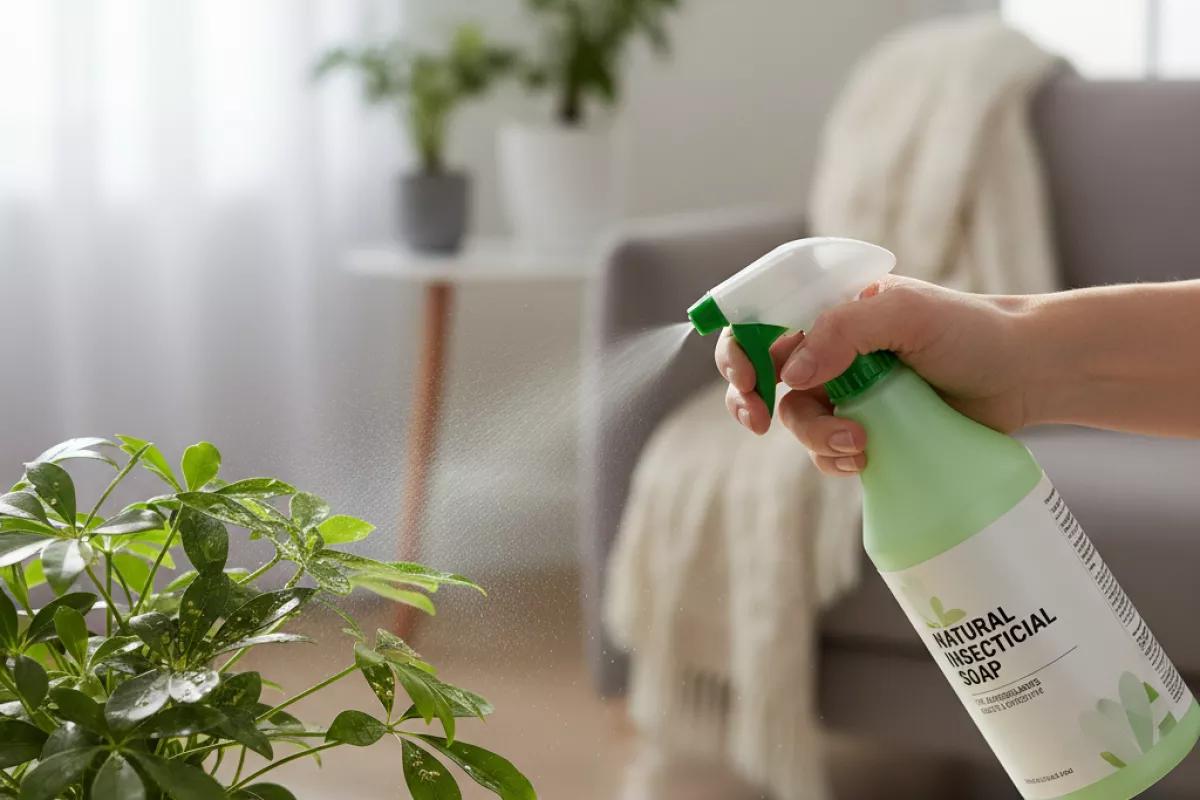
Start with the least disruptive option that still works for your infestation level, then step up only if aphids keep returning. Indoors, the goal is good coverage on soft-bodied pests without leaving harsh residues on leaves, furniture, or air.
| Option | How it works | How to use indoors | Pros | Watch-outs |
|---|---|---|---|---|
| Insecticidal soap (ready-to-use or concentrate) | Disrupts aphids’ cell membranes on contact; best on nymphs and adults. | Spray to wet both sides of leaves and stems until just before runoff. Reapply every 4–7 days for 2–3 rounds. | Reliable for aphids, low residual, generally plant-friendly when used correctly. | Can spot sensitive plants (ferns, some succulents). Test on 1–2 leaves and wait 24 hours. Works only when it hits the insect. |
| Neem oil (clarified hydrophobic extract) or azadirachtin products | Interferes with feeding and growth; some smothering effect depending on formulation. | Apply in the evening or away from bright windows. Repeat every 7 days. Wipe overspray from nearby surfaces. | Helps with repeat outbreaks; can reduce new generations. | Strong odor for some people; can burn foliage under strong light or on stressed plants. Don’t combine with sulfur products. |
| Horticultural oil (light mineral or plant-based oils) | Smothers aphids and eggs by blocking spiracles (breathing openings). | Use a fine mist and cover thoroughly. Keep the plant out of direct sun for 24 hours after treatment. | Good knockdown; minimal long-lasting residue. | Overapplication can clog leaf pores; avoid on heat-stressed plants or when indoor temps exceed 27°C (81°F). |
| Pyrethrin (botanical contact insecticide) | Fast-acting nerve toxin; quick knockdown on contact. | Use targeted sprays, ventilate the room, and keep people/pets out until dry. Repeat in 5–7 days if needed. | Works quickly when aphids are widespread. | More irritating to inhale; toxic to fish and can harm beneficial insects if used outdoors later. Not a long-term prevention tool. |
| Systemic insecticide (houseplant granules or drench) | Plant absorbs active ingredient; aphids ingest it while feeding. | Apply only to non-edible indoor ornamentals and follow label timing. Water in with the specified amount (for example, 250 ml (8.5 fl oz) to 500 ml (17 fl oz) depending on pot size). | Useful for persistent infestations and hard-to-spray plants. | Not suitable for herbs/edibles; can affect pollinators if the plant later flowers outdoors. Takes days to fully kick in. |
- Coverage matters more than product choice. Aphids hide in leaf curls and at growing tips, so aim sprays into crevices and along stems.
- Rinse after contact products when appropriate. For soaps and some oils, a gentle rinse 2–4 hours later can reduce leaf spotting (only if the label allows it).
- Rotate approaches if they keep coming back. For example, use insecticidal soap for the first two treatments, then switch to neem/azadirachtin the next week to reduce rebound populations.
- Protect your space. Put the pot in a sink or tub, or lay down a towel and a tray; wipe any residue from windowsills and floors once dry.
If you’re unsure which route to take, a good indoor default is insecticidal soap plus repeat applications, paired with pruning heavily infested tips and isolating the plant for 10–14 days. That combination usually breaks the aphid life cycle without turning your living room into a chemical zone.
Cleaning leaves after treatment
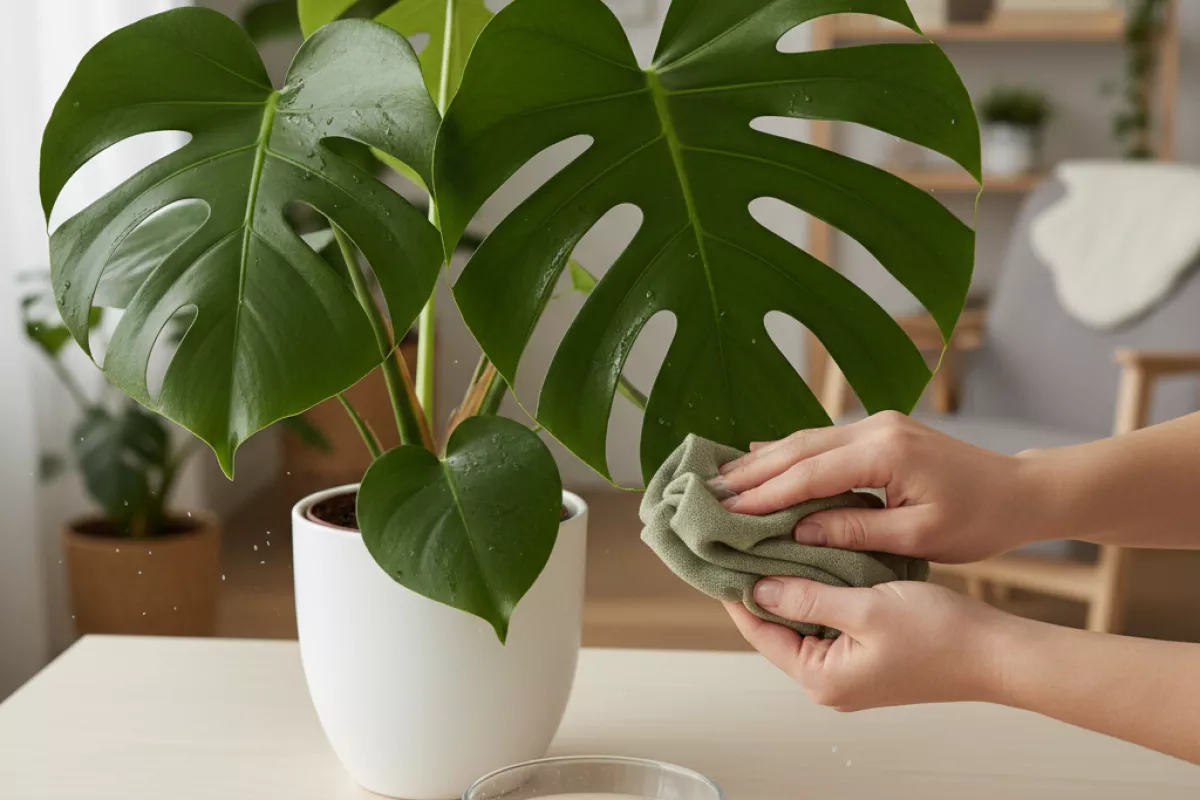
Wiping the plant down soon after you’ve controlled the aphids helps remove sticky honeydew, shed skins, and any leftover spray residue. It also makes it easier to spot stragglers before they rebuild a colony.
- Wait for the spray to dry. Give most products at least 2–4 hours to set, or until the foliage is fully dry. If you used a soap or oil, cleaning the next day is often gentler on leaves.
- Start with a plain-water rinse. For sturdy plants, use lukewarm water around 20–25°C (68–77°F) and a gentle shower setting. Angle the pot so runoff doesn’t saturate the soil.
- Wipe leaf by leaf for delicate plants. Use a soft microfiber cloth or cotton pads dampened with clean water. Support each leaf from underneath to avoid tearing, and wipe both the top and underside where aphids hide.
- Use mild soap only when needed. If honeydew is stubborn, mix 1–2 ml of mild liquid soap per 1 L (0.03–0.07 fl oz per 34 fl oz) of water. Wipe, then follow with a plain-water wipe to reduce the chance of residue spotting.
- Don’t forget stems and petioles. Aphids often cluster along new growth and where leaves meet the stem; a quick pass here can remove survivors and eggs laid nearby.
- Keep water out of crowns and fuzzy leaves. Plants like African violets and some succulents can spot or rot if water sits in the center. For these, stick to careful wiping rather than rinsing.
- Dispose of debris. Toss used pads, rinse cloths, and empty drip trays so honeydew doesn’t attract ants or encourage sooty mold.
After you clean the foliage, place the plant in bright, indirect light and good airflow so it dries quickly. Over the next 7–10 days, check new growth every couple of days; if you see fresh sticky spots or tiny pale skins, repeat a gentle wipe-down and re-treat according to the product’s interval.
Preventing spread to nearby plants
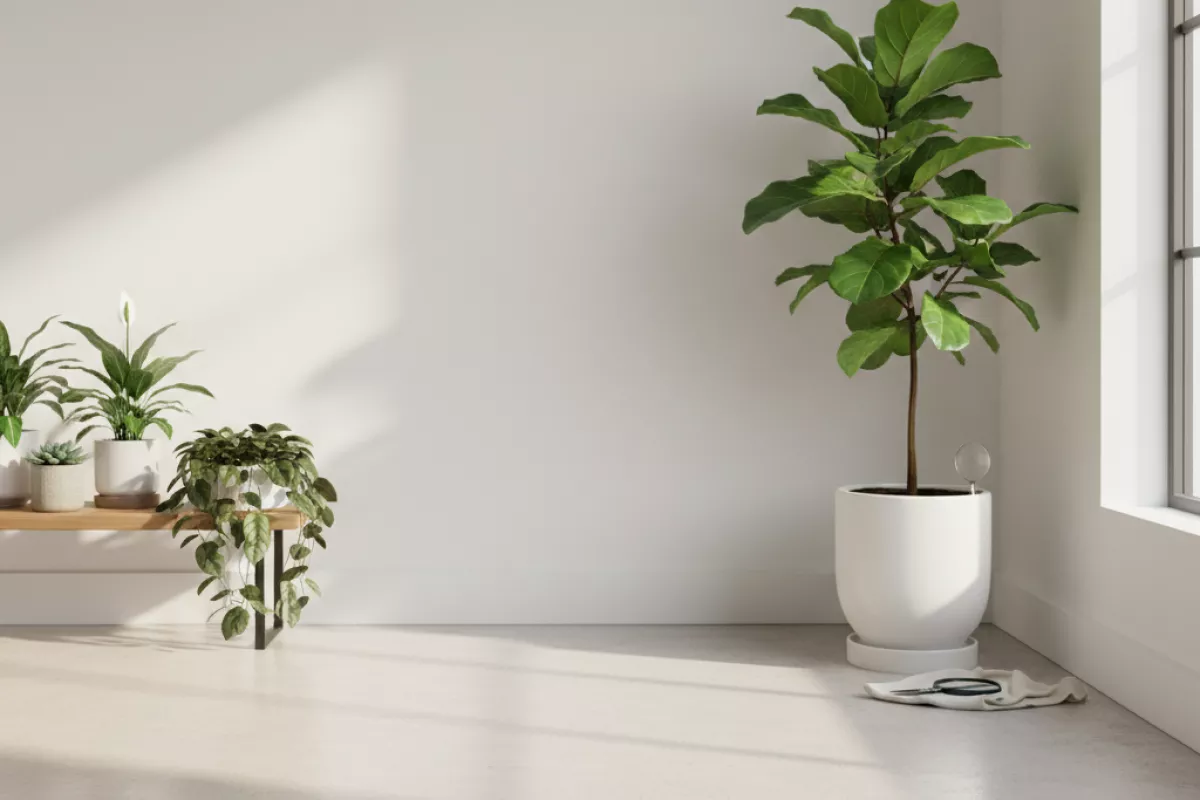
Stop the hitchhikers first: aphids move plant-to-plant on your hands, tools, and even by crawling across touching leaves. The goal is to break those easy pathways while you treat the affected houseplant.
- Quarantine immediately. Move the infested plant to a separate room if possible, or at least 1–2 m (3–6 ft) away from other plants. Keep it there until you’ve gone 7–14 days (1–2 weeks) without seeing live aphids.
- Create “no-contact” spacing. Trim or reposition plants so leaves don’t touch. Aphids often spread simply by walking across overlapping foliage.
- Inspect nearby plants on a schedule. Check the closest plants every 2–3 days for 2 weeks, focusing on new growth, the undersides of leaves, and along stems. Catching a few early is much easier than dealing with a colony.
- Wash up between plants. Rinse hands and forearms after handling an infested plant, and change gloves if you use them. If you mist or wipe leaves, use fresh cloths/paper towels for each plant.
- Disinfect tools and supports. Pruners, stakes, and plant ties can transfer pests and honeydew. Wipe tools with 70% isopropyl alcohol (or wash with hot soapy water), then let them dry before moving to the next plant.
- Control ants. Ants “farm” aphids for honeydew and can transport them to fresh growth. Clean sticky honeydew from pots/shelves and use an ant barrier or bait away from plants if ants are active.
- Avoid shared runoff and standing water. Don’t let drainage from an infested pot flow into saucers used by other plants. Empty saucers promptly and rinse them before reuse.
- Be careful with fans and drafts. Strong airflow can dislodge aphids and spread them to nearby foliage. If you use a fan, aim it away from the quarantine area until the outbreak is under control.
- Isolate new plants, too. Keep new arrivals separate for 14 days (2 weeks) and inspect them before placing them with your collection—many indoor outbreaks start with one “new” plant.
If you’re treating multiple plants, work from the cleanest to the most infested, and finish by cleaning the area (shelf, windowsill, grow tent floor). That simple order reduces accidental transfer while you’re in the middle of aphid control.