Small Low-Light Plants for Compact Rooms

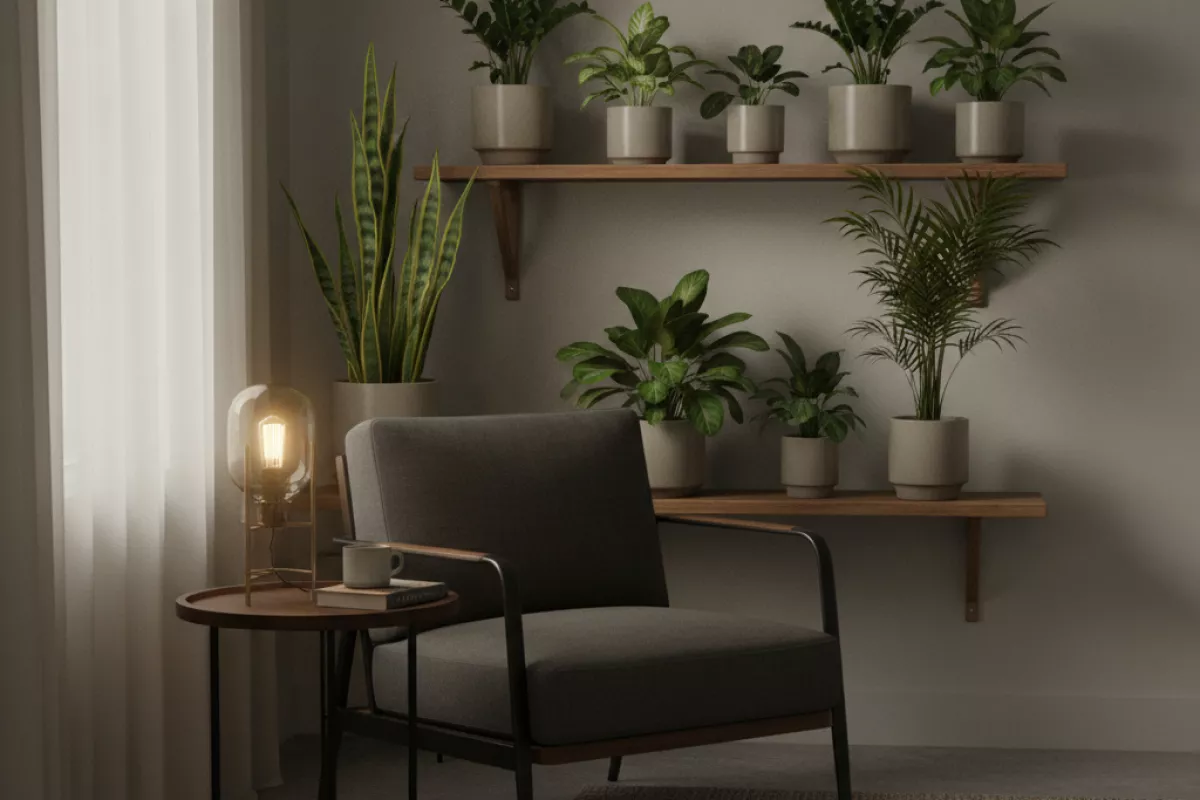 Learn why small plants work in tight spaces, which compact varieties tolerate shade, and where to place them on shelves or desks. It also covers choosing the right pot size, simple care tips, how to prevent overcrowding, and decor styling ideas.
Small houseplants that tolerate dim corners can make a compact room feel greener without battling limited light. This guide highlights low-light, space-saving choices that stay neat on shelves or desks, along with easy care tips to avoid leggy stems, overwatered soil, and pest problems in tight indoor spaces. It also covers watering rhythm, pot size, and occasional rotation to keep growth balanced.
Why small plants suit tight spaces
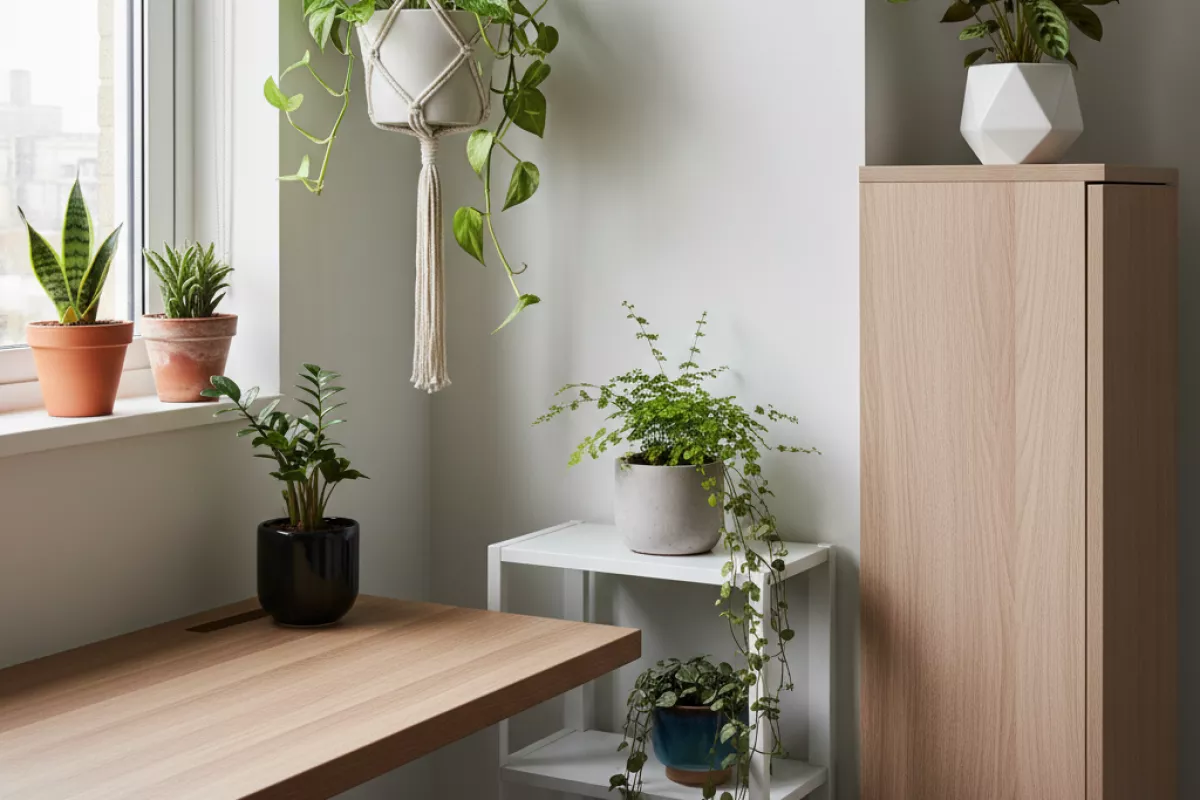
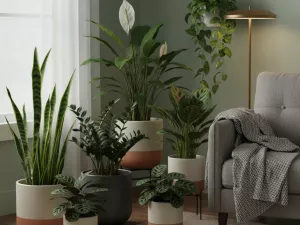
In compact rooms, the biggest constraint is usually surface area, not your willingness to care for plants. Smaller, low-light choices let you add greenery without blocking walkways, crowding desks, or turning every shelf into a jungle. If you want a short shortlist first, start with easy low-light plants for small spaces. They’re also easier to move around as you learn where the light actually falls during the day.
- They fit where light is available. In a tight layout, the best light might be a narrow windowsill, the corner of a bookcase, or the top of a cabinet. Petite plants can live in those “leftover” spots that larger pots can’t use.
- Less visual clutter. A few small pots can soften a room without making it feel busy. This matters in studios, small bedrooms, and home offices where your eyes already have a lot to process.
- More flexibility with containers. Smaller root systems stay happy in compact pots, so you can use slim planters, hanging cups, or shallow bowls (with drainage) instead of bulky floor containers.
- Easier to manage in low light. Lower light usually means slower growth and slower drying soil. Small plants typically need less water at a time, which reduces the risk of overwatering and soggy mix in dim corners.
- Simple to rotate and regroup. When seasons shift, you can rotate a plant 90° every week or two, or move it 30 cm (12 in) closer to a window without rearranging furniture. Grouping a few small plants together can also make care routines faster.
- Better for microclimates. Tight spaces can have drafts from doors, dry air near heaters, or humidity pockets in bathrooms. Smaller plants are easy to relocate a short distance—about 1 m (3 ft)—to find a steadier spot.
Another practical perk: small plants let you experiment. If one corner turns out to be too dim or too dry, you’re not stuck with a heavy pot and a stressed plant. You can swap positions, test a different shelf, or try a new low-light species without committing a lot of space or maintenance time.
Compact varieties that handle shade
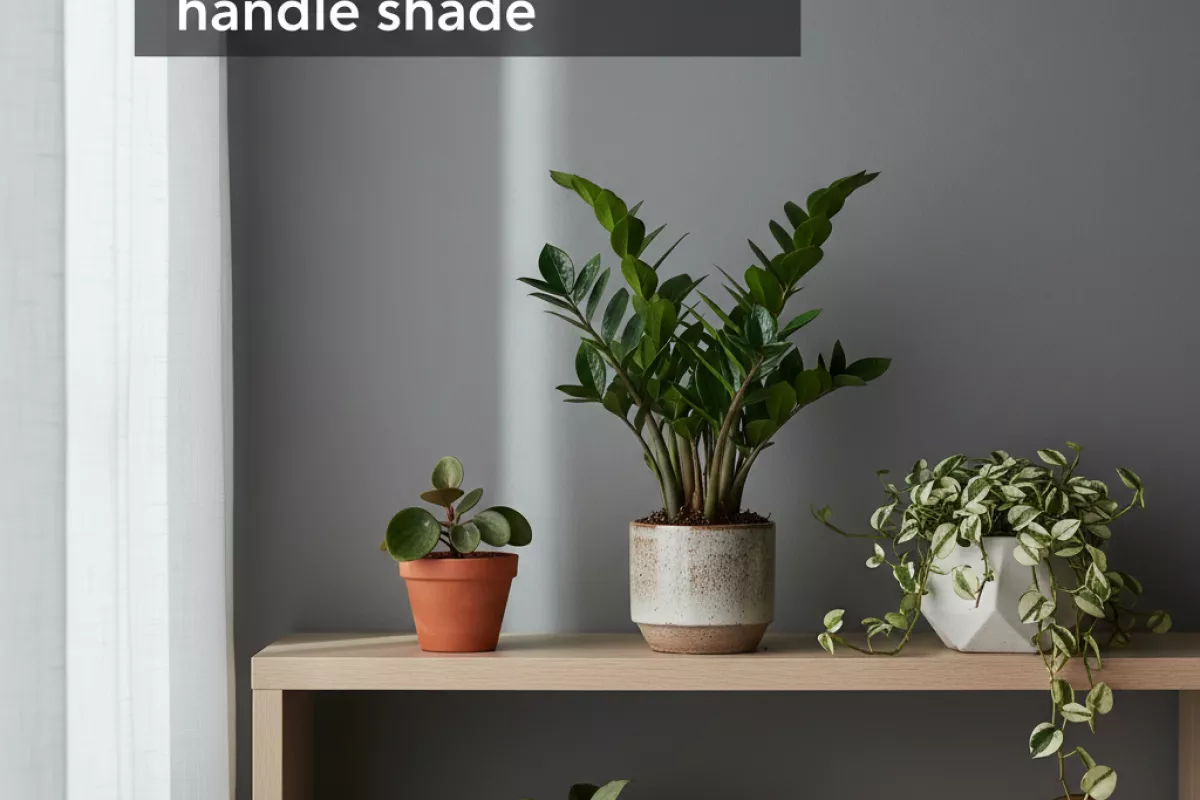
For tight spaces with dim corners, the easiest wins are plants that stay naturally small, tolerate indirect light, and don’t demand constant pruning. Look for varieties that keep a tidy footprint on a shelf or nightstand, and that won’t sulk if they sit a few steps back from a window.
| Plant (compact pick) | Why it works in low light + small rooms | Typical size indoors | Watering rhythm (general) |
|---|---|---|---|
| ZZ plant ‘Zenzi’ (Zamioculcas) | Handles shade well and grows slowly; thick stems store water so it forgives missed waterings. | 30–45 cm (12–18 in) | Let soil dry most of the way; often every 14–28 days (2–4 weeks). |
| Snake plant ‘Hahnii’ (bird’s nest sansevieria) | Stays in a compact rosette; tolerates low light and dry air without much fuss. | 15–25 cm (6–10 in) | Water sparingly after full dry-down; about every 21–35 days (3–5 weeks). |
| Pothos ‘N’Joy’ or ‘Pearls and Jade’ (Epipremnum) | Small leaves, easy trailing habit for shelves; adapts to medium-to-low indirect light (growth slows in deeper shade). | Trail 60–120 cm (24–47 in) with trimming | When top 2–5 cm (1–2 in) is dry; roughly every 7–14 days (1–2 weeks). |
| Heartleaf philodendron ‘Micans’ or ‘Brasil’ (Philodendron hederaceum) | Flexible, compact vine; tolerates lower light and looks full with occasional pinching. | Trail 60–150 cm (24–59 in) with pruning | When top 2–5 cm (1–2 in) is dry; about every 7–14 days (1–2 weeks). |
| Peperomia obtusifolia (baby rubber plant) | Stays small and neat; thicker leaves hold moisture, so it’s forgiving in apartments. | 20–30 cm (8–12 in) | Let at least the top half dry; often every 10–21 days (1.5–3 weeks). |
| Cast iron plant (Aspidistra), young plant | One of the most tolerant options for shade; slow growth keeps it manageable for years. | 30–60 cm (12–24 in) | Water when top 5 cm (2 in) dries; about every 14–21 days (2–3 weeks). |
| Chinese evergreen ‘Silver Bay’ (Aglaonema), smaller cultivars | Reliable in low-to-medium light; patterned leaves brighten dark rooms without needing sun. | 30–60 cm (12–24 in) | When top 2–5 cm (1–2 in) is dry; around every 10–21 days (1.5–3 weeks). |
| Peace lily ‘Petite’ (Spathiphyllum) | Compact form that copes with shade; leaves droop a bit when thirsty, making timing easier. | 25–40 cm (10–16 in) | Keep lightly moist, not soggy; often every 7–10 days (1–1.5 weeks). |
- Keep expectations realistic in darker spots. In low light, most plants survive well but grow slower; that’s a plus for compact rooms, but it also means fewer new leaves.
- Prioritize the right pot size. A 10–12 cm (4–5 in) pot dries faster than a 15–18 cm (6–7 in) pot, which helps prevent overwatering when light is limited.
- Rotate for even shape. Turning the pot a quarter turn every 7–14 days (1–2 weeks) keeps growth balanced without taking up extra space.
- Watch for “too dark” signals. Long gaps between new leaves, stretched stems, and smaller new growth usually mean the plant wants brighter indirect light.
Placement ideas for shelves and desks
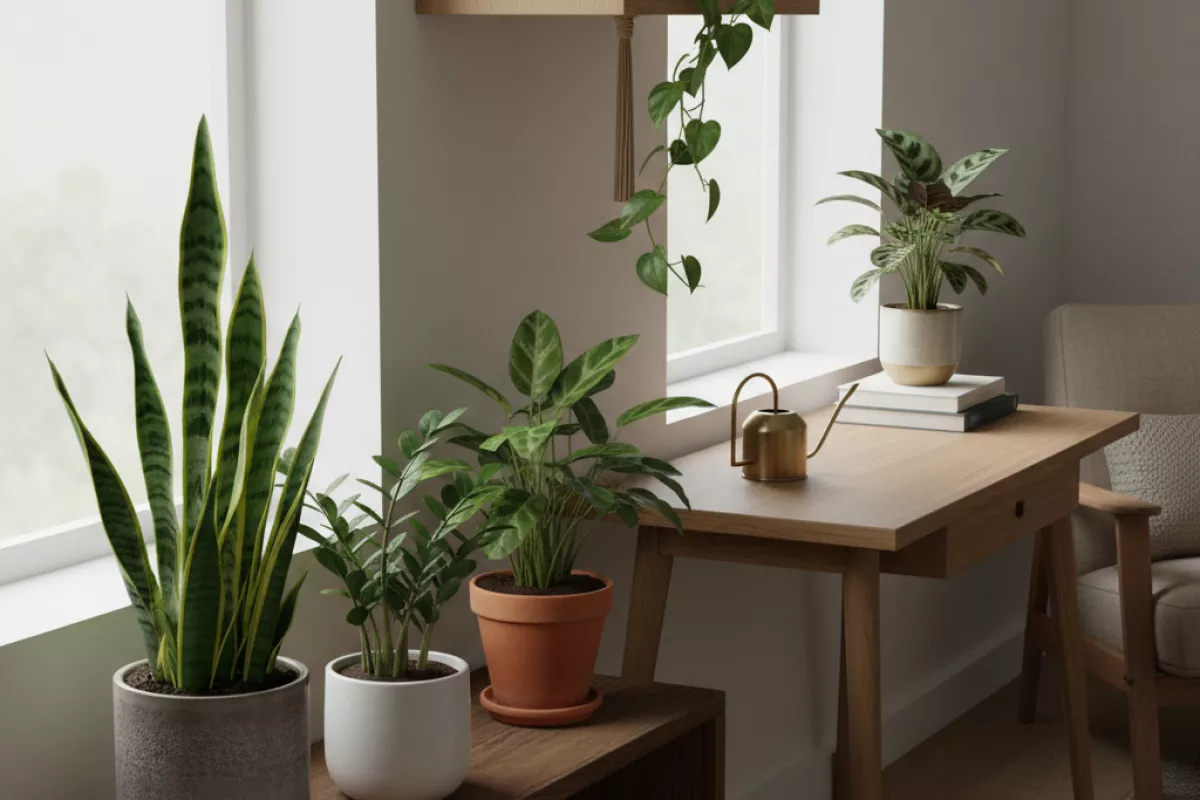
Use your existing surfaces to “borrow” the best available light without crowding the room. In compact, dim spaces, the goal is consistency: a plant that gets the same gentle exposure every day will look better than one that’s shuffled around.
- Put the most tolerant plants on the lowest shelves. Snake plant, ZZ plant, cast iron plant, and pothos handle the darker lower tiers well — ideal plants for dark corners. Save brighter spots for fussier picks.
- Use the front edge of a shelf, not the back. Even in low light, moving a pot 10–20 cm (4–8 in) closer to the room can make a noticeable difference, especially if the shelf is deep.
- Angle plants toward the light source. If the window is off to one side, rotate the pot a quarter turn every 1–2 weeks to keep growth even and prevent leaning.
- Keep leaves out of “shadow zones.” Avoid tucking plants directly under the overhang of the shelf above; a clearance of about 15–25 cm (6–10 in) above the tallest leaves helps them catch ambient light and reduces leaf scuffing.
- On desks, prioritize stability and elbow room. Choose compact, upright plants (snake plant pups, small ZZ, peperomia) for corners. Trailing plants (pothos, heartleaf philodendron) work best on a back corner or on a nearby shelf so vines don’t drag across your workspace.
- Mind heat and drafts. Keep pots 30–60 cm (12–24 in) away from radiators, space heaters, and AC vents; low-light plants already grow slowly, and temperature swings can show up as yellowing or crispy tips.
- Match pot weight to the perch. For high shelves, use lighter nursery pots inside cachepots so you can lift them down safely for watering. If a shelf wobbles, skip heavy ceramic and use plastic or resin.
- Protect surfaces from slow leaks. Add a saucer or waterproof tray, and let the pot drain fully before returning it to a shelf or desk. This matters more in dim rooms because soil stays wet longer.
- Create a “watering lane.” Group plants that need similar drying time together (for example, ZZ and snake plant), and keep thirstier ones (peace lily, some ferns) separate so you don’t water everything on the same schedule.
| Spot in the room | What tends to work well there | Common mistake to avoid |
|---|---|---|
| Top shelf near a window | Peace lily, pothos, philodendron; rotate weekly for even growth | Letting leaves press against cold glass in winter |
| Middle shelf with open front | ZZ plant, cast iron plant, peperomia; steady low-to-medium light | Overwatering because the plant “looks dry” from above |
| Lower shelf or bookcase interior | Snake plant, ZZ plant; slow growers that tolerate dim corners | Placing directly under a shelf lip where light is blocked |
| Desk corner (away from monitor heat) | Compact snake plant, small ZZ, peperomia; minimal spread | Choosing a wide, trailing plant that interferes with work space |
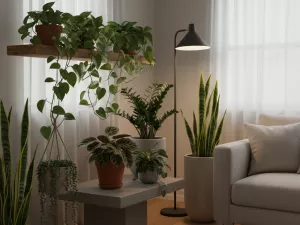
| Floating shelf above a desk | Trailing pothos/philodendron; vines can hang without cluttering the surface | Hanging vines where they snag on chair backs or cables |
If the room is very dim, treat shelves as “light ladders”: put your toughest plants on the bottom, and reserve the brightest perch for anything that shows stress first (faded color, stretched stems, or smaller new leaves). That way you’re using your limited light where it actually changes the outcome.
Pot size considerations
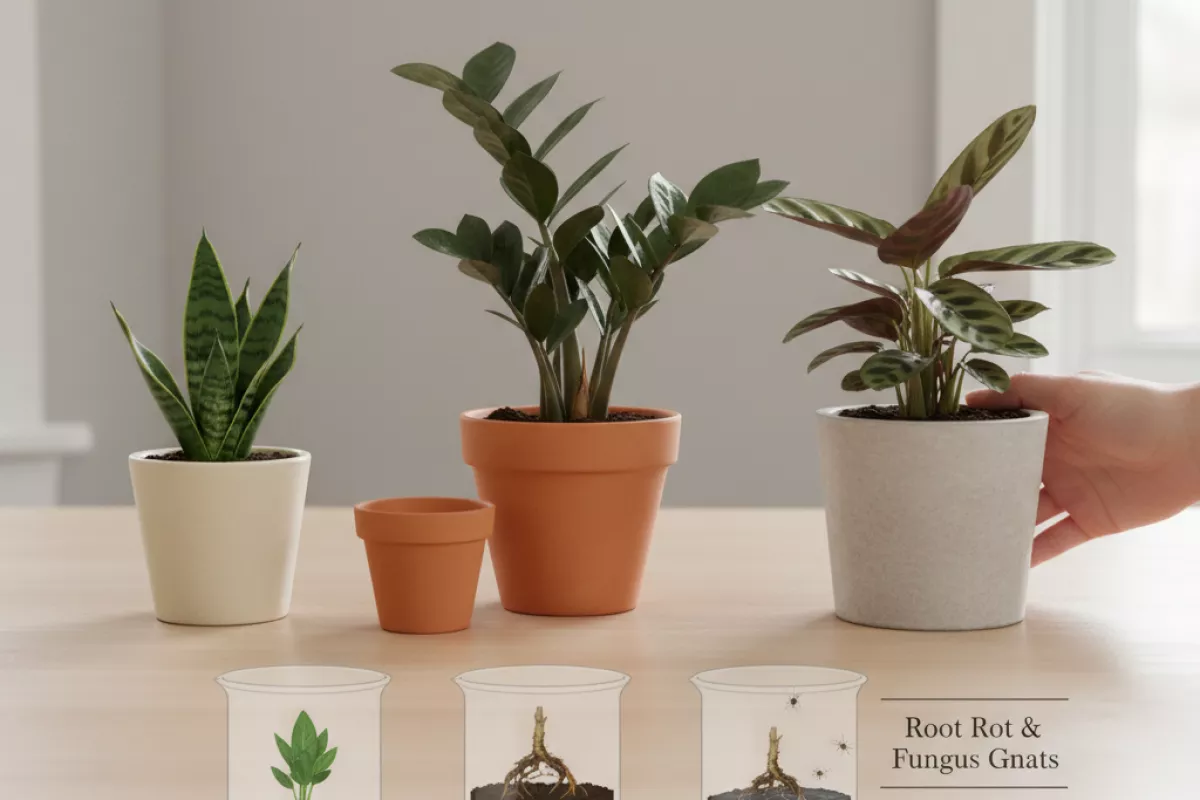
Choose a container that matches the plant’s root system, not the leaf size. In compact, low-light rooms, most small houseplants grow slowly, so an oversized pot tends to stay wet longer than the roots can use—one of the easiest ways to invite root rot and fungus gnats. If you’re unsure about your setup, check your plant’s overwatering risk before sizing up.
- Start small, then step up gradually. A good rule is to move up just one size at a time: about 2–5 cm (1–2 in) wider than the current pot. This keeps the soil volume in balance with the plant’s water uptake.
- Match pot depth to root type. Shallow-rooted plants (many peperomias and some begonias) often do better in a wider, shallower pot, while upright growers with deeper roots (some dracaenas) appreciate a bit more depth.
- Use drainage as non-negotiable. Pick a pot with at least one drainage hole. If you love a cachepot (decorative outer pot with no holes), keep the plant in a nursery pot inside it and empty any runoff after watering.
- Consider material and how it changes watering. Terracotta dries faster and can be forgiving in dim spaces; plastic and glazed ceramic hold moisture longer, which can be helpful if you forget to water but risky if the room is cool and the plant is slow-growing.
- Stability matters in tight quarters. Top-heavy plants in small rooms tip easily. If the foliage makes the pot wobble, choose a slightly heavier container or add a thin layer of gravel at the bottom only if it doesn’t block drainage (it won’t “create” drainage on its own).
- Repot based on roots, not the calendar. Signs it’s time include roots circling the bottom, water running straight through, or the plant drying out unusually fast. For slow growers in low light, that might be every 18–36 months rather than yearly.
- Don’t overpot after dividing or pruning. After you reduce foliage or split a plant, keep it in a snug container so the remaining roots can manage moisture while it recovers.
| Plant size (typical small indoor) | Common pot diameter range | When to size up |
|---|---|---|
| Cuttings / tiny starters | 5–8 cm (2–3 in) | When roots hold the soil together and watering frequency increases noticeably |
| Desktop plants | 9–12 cm (3.5–5 in) | When roots appear at drainage holes or the plant becomes unstable |
| Small floor or shelf plants | 13–17 cm (5–7 in) | When water runs through too quickly or growth stalls despite appropriate light and feeding |
| Compact “statement” plants (still room-friendly) | 18–25 cm (7–10 in) | When the root ball is dense and the plant dries out in 2–3 days in mild conditions |
If you’re unsure between two sizes, pick the smaller one and focus on a well-aerated mix. When you’re planning the amount of substrate, use how much potting mix do I need to match pot volume and avoid excess wet soil in low light. In low light, the safest setup is usually a snug pot, fast-draining soil, and a watering routine that waits until the top 2–3 cm (1–1.25 in) dries out for most foliage plants.
Care tips for miniature plants
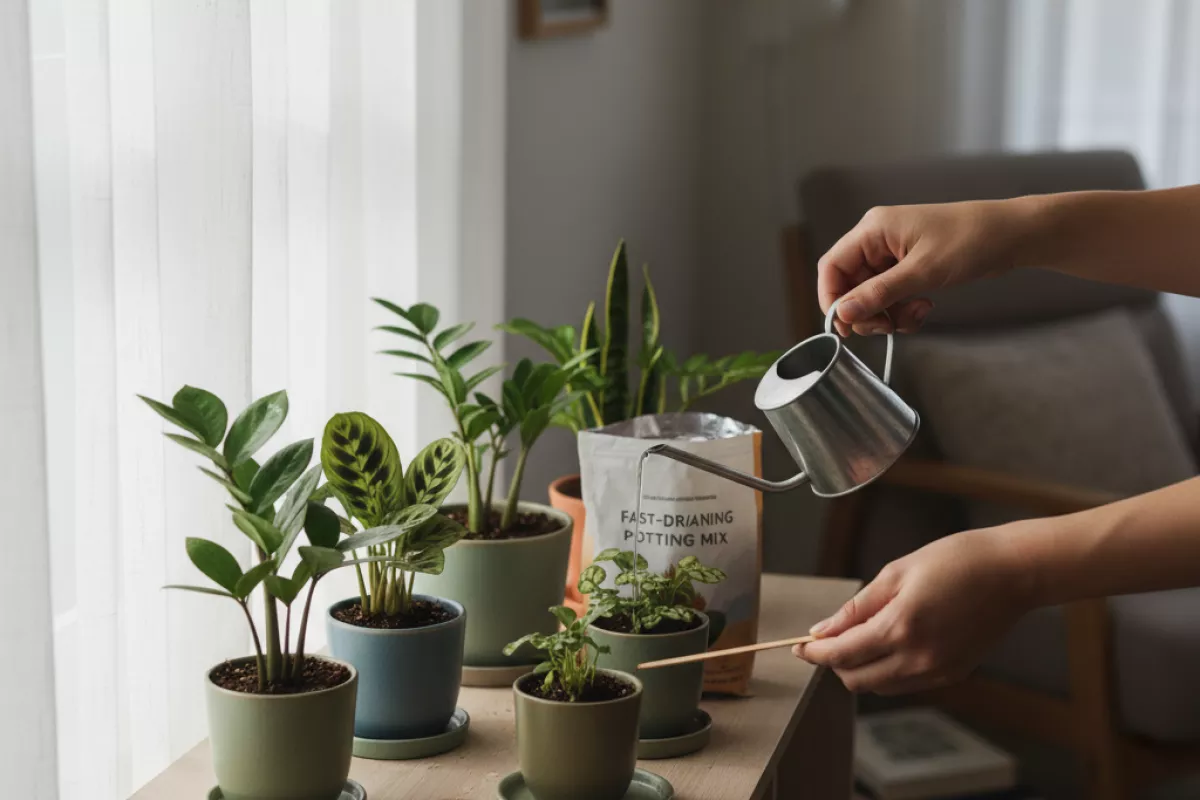
Small houseplants in dim rooms usually fail for predictable reasons: too much water, soil that stays soggy, or being placed where “low light” is actually near-dark. Focus on steady, gentle conditions and you’ll get compact growth without constant fuss.
- Water less, but water well. Mini pots dry unevenly, so check the top 2–3 cm (1–1.2 in) of soil before watering. When it’s time, water thoroughly until a little drains out, then empty the saucer so roots aren’t sitting in water — a simple way to prevent overwatering in houseplants.
- Use a fast-draining mix. For most miniature foliage plants, a light potting mix amended with perlite or pumice helps prevent root rot. If the pot feels heavy for days after watering, the mix is holding too much moisture.
- Pick the right pot size and add drainage. A pot that’s only 2–5 cm (0.8–2 in) wider than the root ball encourages stable moisture. Always choose a drainage hole; if you must use a cachepot, keep the plant in a nursery pot inside it.
- Rotate for even growth. In low light, plants lean quickly. Turn the pot a quarter-turn every 7–14 days (1–2 weeks) so growth stays balanced and compact.
- Keep light “low,” not “none.” Place them within 0.5–1.5 m (1.6–5 ft) of a window or near a bright interior source. If you can comfortably read a book there in daytime, it’s usually workable for many low-light minis.
- Feed lightly and seasonally. In slower light, fertilizer builds up. Use half-strength liquid fertilizer about once every 4–6 weeks during active growth, and pause if the plant isn’t putting out new leaves.
- Mind humidity without over-misting. Instead of constant misting, group plants together or use a pebble tray. Aim for stable indoor comfort levels around 40–60% relative humidity; avoid placing tiny plants right next to heating vents.
- Prune and pinch to keep them small. Snip leggy stems just above a node to encourage branching. Remove yellowing leaves promptly so the plant doesn’t waste energy.
- Watch for pests early. Miniature plants hide problems fast. Check undersides of leaves weekly for spider mites, thrips, or mealybugs; wipe leaves with a damp cloth and isolate any plant that shows spotting or sticky residue.
- Repot only when necessary. If roots circle the pot or water runs straight through, move up one size. For many compact species, refreshing the top 2–3 cm (1–1.2 in) of soil is enough between repots.
| Common issue in compact, low-light setups | What to do |
|---|---|
| Soil stays wet for more than 7–10 days (1–1.5 weeks) | Switch to a chunkier mix, confirm drainage holes, and water only after the top 2–3 cm (1–1.2 in) dries. |
| Leggy, stretched growth | Move 0.3–0.6 m (1–2 ft) closer to the light source, rotate weekly, and prune back to a node. |
| Yellow leaves with soft stems | Reduce watering, increase airflow, and check roots; trim any mushy roots and repot into fresh, airy soil. |
| Brown, crispy tips | Check for underwatering, salt buildup, or dry air; flush the pot with water occasionally and keep humidity steadier. |
| Gnats around the pot | Let the top layer dry, use sticky traps, and top-dress with 1–2 cm (0.4–0.8 in) of coarse sand or pumice. |
If you’re unsure, adjust one variable at a time (light placement, then watering rhythm, then soil). Mini plants respond quickly, so small changes are easier to read than a full reset.
How to prevent overcrowding
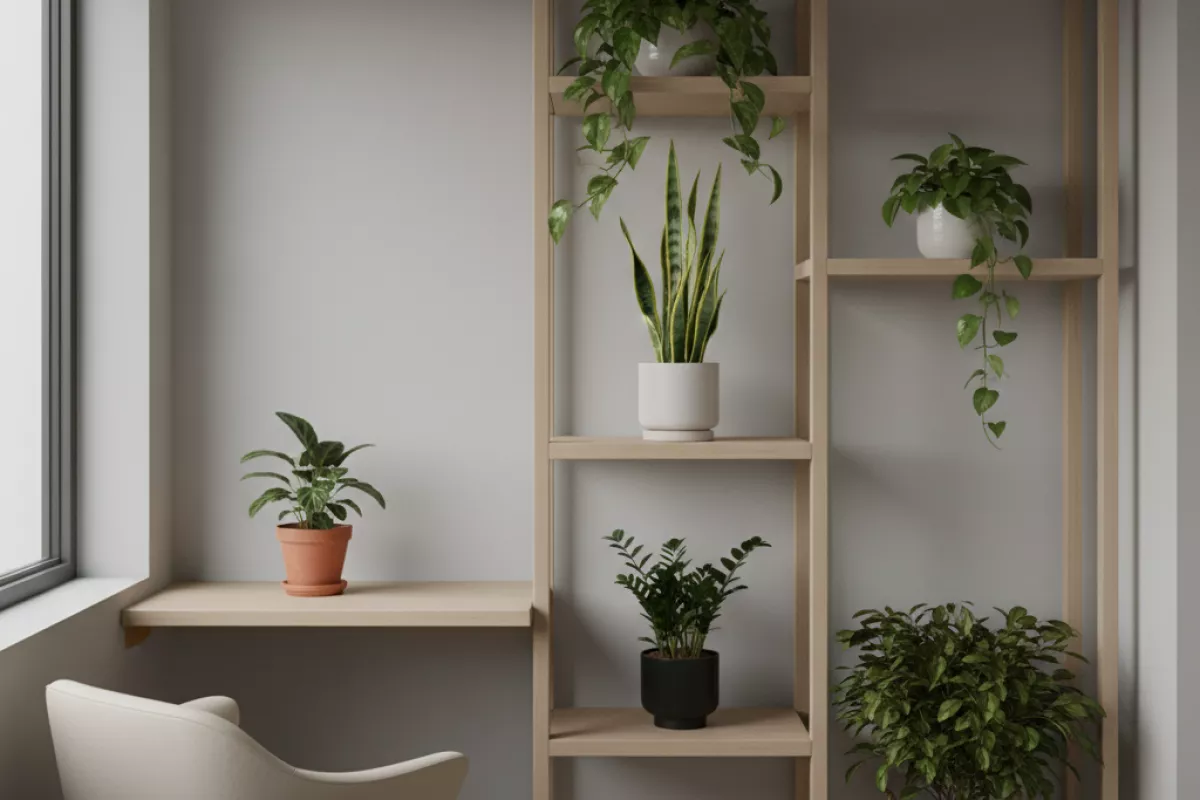
Keep compact rooms feeling calm by treating plants like furniture: each one needs its own footprint, a bit of breathing space, and a clear purpose (height, texture, or color). Low-light options are often slow growers, but they still widen over time, especially when they’re healthy.
- Assign each plant a “parking spot.” Decide where it lives (shelf corner, desk edge, floor by the sofa) and avoid letting pots migrate into walkways or work surfaces.
- Use vertical layers, not more floor area. A narrow plant stand, wall shelf, or hanging planter adds greenery without shrinking the usable footprint. Leave at least 5–10 cm (2–4 in) between pots so leaves don’t mash together.
- Match pot size to the room, not the plant’s potential. For most small low-light plants, a 10–15 cm (4–6 in) pot is plenty for a long time. Oversized pots take space and can keep soil wet too long indoors.
- Group by care needs, not by “filling space.” Put similar-light plants together so you’re not scattering extra containers around the room to chase brighter spots.
- Rotate instead of accumulating. If you like variety, keep a small “swap shelf” and rotate one plant in and one out every few weeks, rather than adding a new pot each time.
- Prune for shape, not just size. Snip leggy stems back to a node to keep a tidy silhouette. For trailing plants, guide vines along a hook line or trim to keep them from draping over lamps, monitors, or doorways.
- Plan for mature spread. Before buying, picture the plant at roughly 2× its current width. If the tag says it can reach 30 cm (12 in) across, don’t squeeze it into a 20 cm (8 in) gap.
- Choose multi-plant solutions carefully. A mixed planter looks neat at first, but crowding happens fast. If you do it, limit it to plants with similar growth rates and leave visible soil between them.
- Keep a “one in, one out” rule for tiny rooms. When your surfaces feel full, adding a new plant means gifting, propagating, or relocating another—simple, but it prevents clutter creep.
If the room already feels packed, start by clearing the visual midline: move the tallest plants to the floor or the highest shelf, keep mid-height pots grouped, and leave the center of desks and side tables mostly open. The space will read larger even with the same number of plants.
Decor styling with small plants
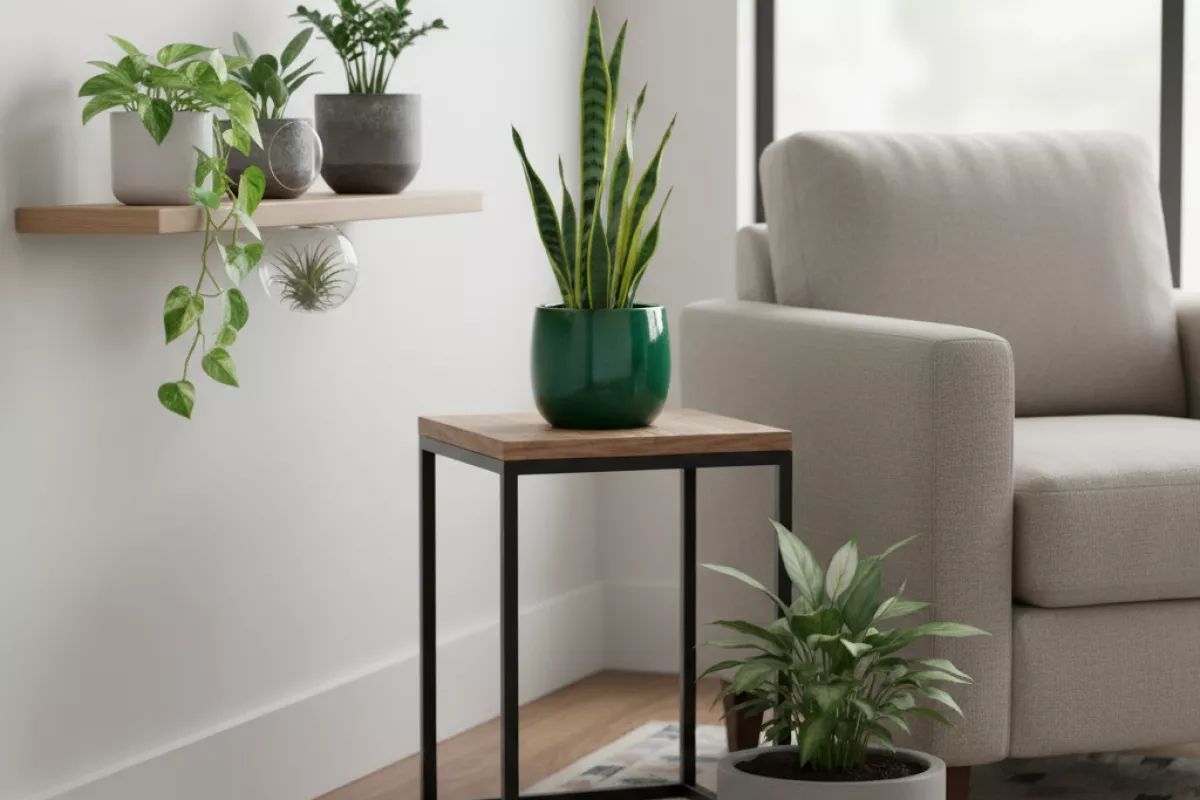
Use tiny, shade-tolerant greenery to add depth without stealing floor space. In compact rooms, the goal is to create a few intentional “resting points” for the eye: one at about eye level, one mid-height, and one low, so the room feels layered rather than cluttered.
Start by matching the container to the room’s finishes. Matte ceramic and stoneware read calm and modern, while glass and glazed pots bounce what little light you have. If the room already has a lot of visual texture (patterned rug, busy shelves), keep planters simple so the foliage becomes the detail.
- Go vertical first: Use a narrow wall shelf or a rail shelf to lift small pots up and free surfaces for daily use. Keep the shelf depth around 10–15 cm (4–6 in) so it doesn’t feel bulky.
- Cluster in odd numbers: Groups of 3 or 5 look natural. Vary height by placing one pot on a small riser or turned-over saucer so leaves don’t merge into one flat shape.
- Use “bookend” placement: A small plant at each end of a shelf or windowsill frames objects in the middle and makes the arrangement feel finished.
- Pick one repeating element: Repeat a single planter color (like off-white) or a single material (like terracotta) across the room to tie separate corners together.
- Mind the negative space: Leave at least 5–8 cm (2–3 in) between pots and decor so each plant reads as intentional, not squeezed in.
- Choose shapes that suit the spot: Trailing plants soften hard edges on high shelves; upright, compact plants work better on desks and nightstands where you need clear reach.
| Small-space spot | What works well there | Simple styling cue |
|---|---|---|
| Bookshelf | Compact rosettes or slow growers that won’t crowd books | Place one pot per shelf “zone,” leaving a gap of 5–8 cm (2–3 in) around it |
| Desk or bedside table | Neat, upright plants with minimal leaf spread | Use a small tray to contain the pot and keep the surface looking tidy |
| Bathroom counter | Humidity-tolerant minis in low to medium light | Choose a glazed pot and a saucer to protect surfaces from moisture |
| High ledge or top of cabinet | Trailing varieties that can drape without needing frequent access | Let vines fall in one direction to avoid a tangled, messy silhouette |
Keep maintenance in the design plan. If a plant sits higher than about 180 cm (71 in), plan a safe way to water it (a small watering can with a narrow spout helps) and use a saucer so you’re not wiping drips off furniture. In very tight rooms, fewer pots with healthier growth usually looks better than many small plants that are struggling.