Hardy Indoor Plants for Dark Corners

Learn why dark corners stress most plants, what makes certain species tougher, and which ones handle deep shade. It also covers where to place them, how to track low-light health, a simple maintenance routine, and when to rotate pots for recovery.
Looking for tough houseplants that handle low light in dim corners? You have more options than you might expect. Choose species that tolerate shade, occasional missed watering, and dry indoor air, then place them where conditions stay consistent. This guide highlights dependable plants and simple care habits that help them stay healthy and attractive year-round.
Why dark corners challenge most plants
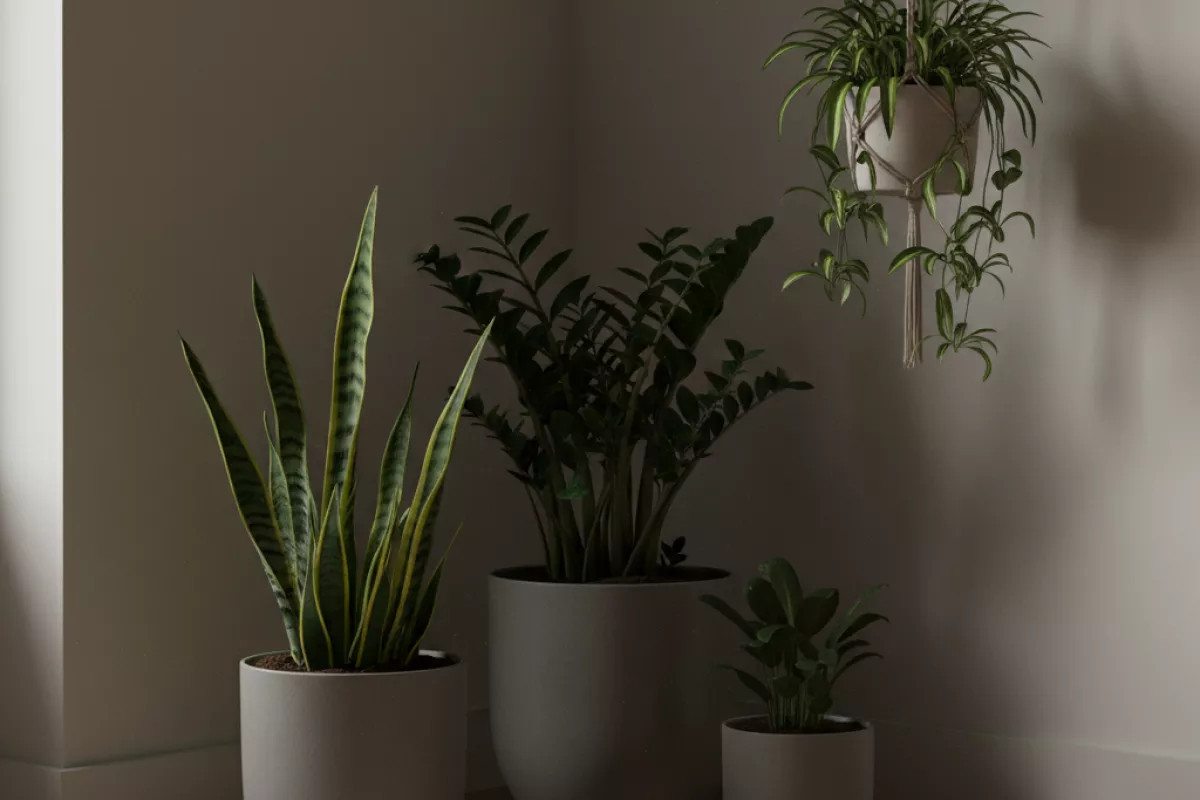
Low-light spots indoors don’t just look dim to us; for many houseplants they’re effectively a slow-down zone. With less usable light, photosynthesis drops, so the plant has less energy to grow new leaves, maintain roots, and recover from everyday stress like repotting or a missed watering.
What makes a shaded corner tricky is that it often comes with other “quiet” stressors: still air, cooler temperatures, and uneven moisture in the pot. Together, these conditions can push plants into survival mode, where they prioritize staying alive over looking full and lush.
- Not enough light to fuel growth: In dim areas, plants may stretch toward the nearest window (leggy growth), produce smaller leaves, or lose older foliage because they can’t support it.
- Water hangs around longer: With slower growth, the plant uses less water. Soil that stays wet for days can reduce oxygen around roots, raising the risk of root rot and fungus gnats. In these conditions, checking an overwatering risk score helps estimate how easily moisture builds up around the roots.
- Cooler microclimates: Corners away from sun and vents often run a few degrees cooler, which further slows water use and metabolism. A room at 20°C (68°F) can feel fine to you, but a plant tucked against an exterior wall may experience a noticeably cooler pocket.
- Lower airflow: Stagnant air means moisture evaporates more slowly from soil and leaves, which can encourage mildew and make pests harder to notice until they’re established.
- Light quality is different: Indoor shade isn’t the same as forest shade. Many “low-light” plants are adapted to bright, filtered light; a deep interior corner may be below their comfort range even if it seems “not that dark.”
- Fertilizer can backfire: When light is limited, extra feeding won’t create more energy. It can instead build up salts in the potting mix, stressing roots and causing leaf tip burn.
The takeaway is that darkness itself isn’t the only issue; it changes the whole care equation. Hardy indoor plants for dark corners are the ones that tolerate slower growth, cope with longer drying times, and stay attractive even when light is mostly indirect and limited.
Traits of especially hardy species
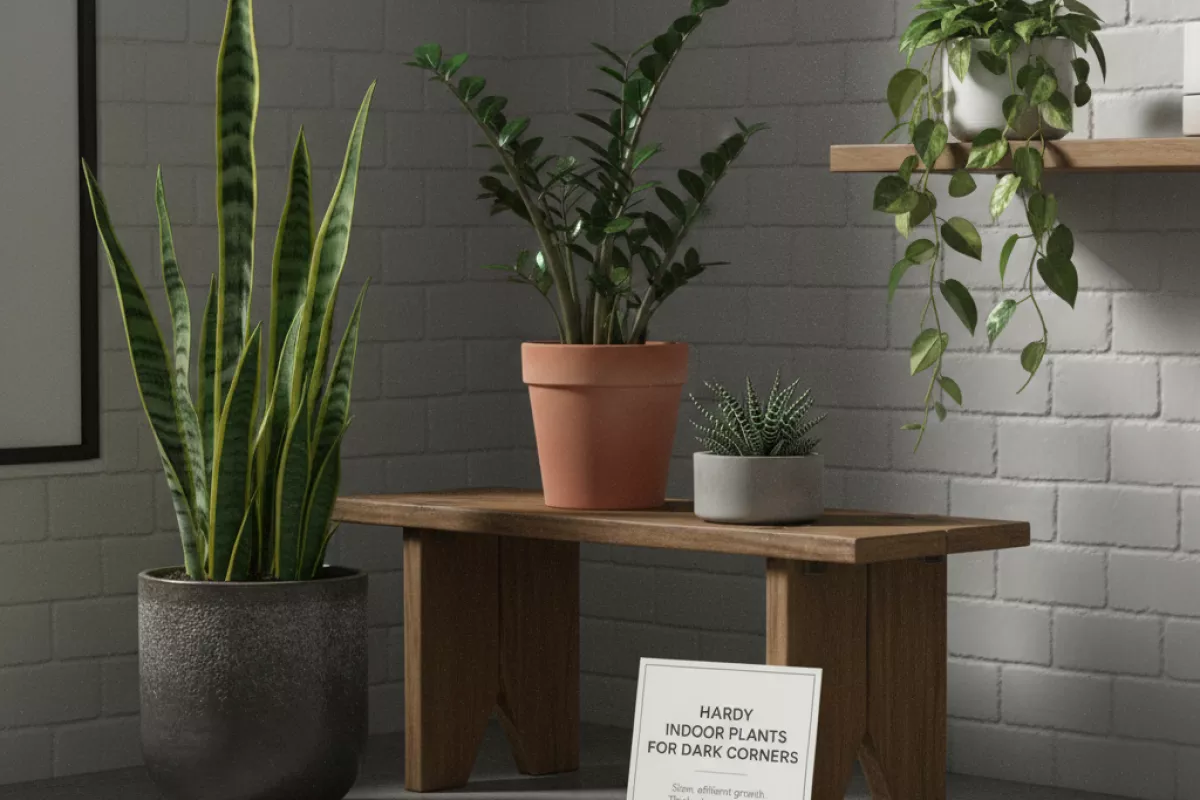
The plants that cope best with dim rooms tend to share a few practical survival tricks. They’re built to waste less water, keep photosynthesizing under weak light, and shrug off the occasional missed watering without collapsing.
- Slow, efficient growth: Many low-light survivors grow at a measured pace, which means they need less energy day to day. That’s why they can sit a few feet from a window—about 1–2 m (3–6 ft)—and still hold their shape.
- Thicker leaves or stems: Waxy, leathery, or succulent-leaning tissues store moisture and reduce evaporation. This helps in dark corners where soil stays damp longer and overwatering is a bigger risk than underwatering.
- Tolerance for irregular watering: The hardiest indoor options can handle a dry spell and also recover from a one-time “too much” watering, as long as the pot drains well.
- Roots that dislike sitting wet: Even tough plants fail in stagnant soil. Species that do well in shade often still need air around the roots, so they’re typically happier in a chunky mix and a pot with drainage holes.
- Leaves that manage low light well: Broader, darker leaves can capture more available light, while some plants adjust by producing fewer new leaves rather than dropping old ones.
- Flexible temperature comfort zone: The most forgiving houseplants tolerate typical indoor swings, roughly 16–27°C (61–81°F), without dramatic leaf drop.
- Resilience to neglect-related pests: Stressed plants attract problems faster. Hardy choices often keep going even if humidity is low or air is still, making them less likely to spiral after a minor pest flare-up.
- Clear “feedback” signals: Many reliable low-light plants show early warnings—slight droop, dulling color, slower growth—before serious damage, giving you time to adjust watering or move them 30 cm (12 in) closer to light.
If a plant matches several of these traits, it usually means it can handle the two biggest challenges of dark spaces: limited energy from light and slower-drying soil. The goal isn’t perfection—just a plant that stays steady when conditions aren’t. Light-demanding outdoor species such as Aconitum napellus lack these adaptations and decline quickly when placed in deep shade or indoor conditions.
Plants that tolerate deep shade
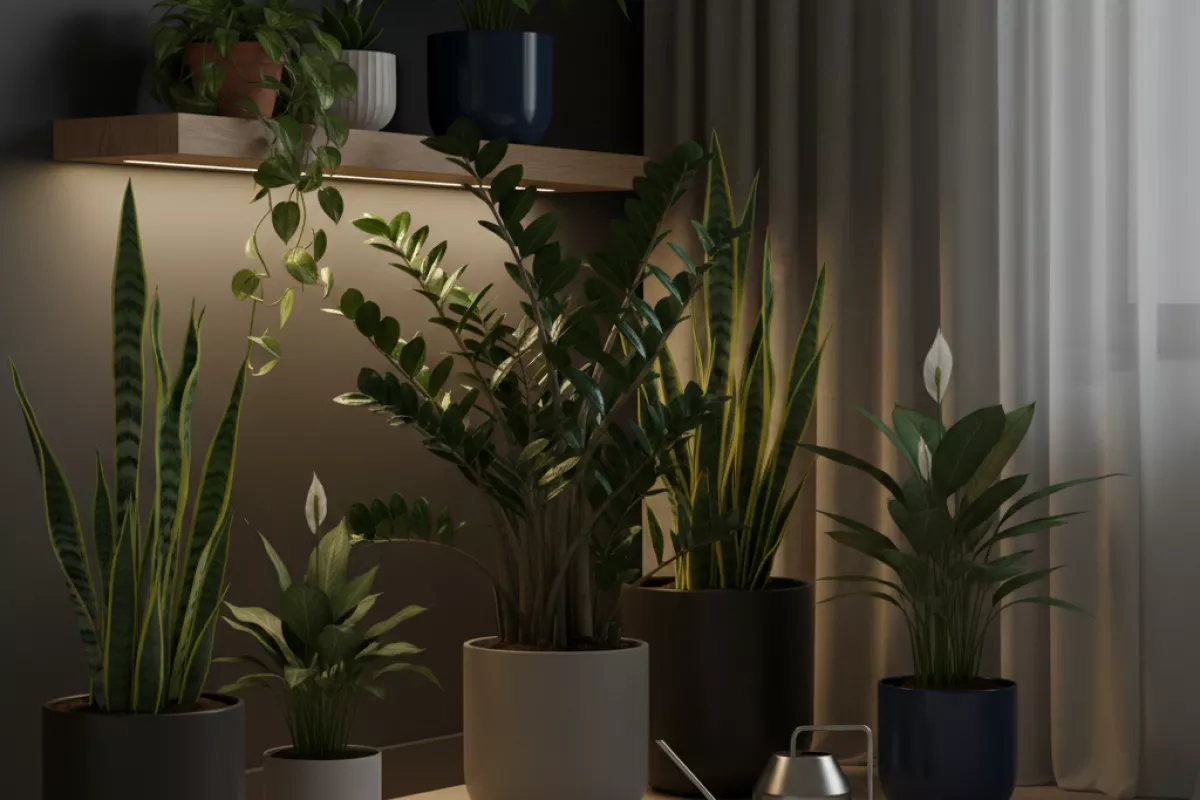
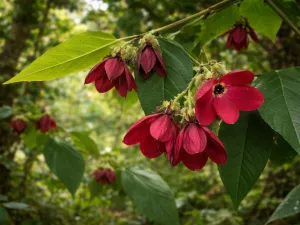
Some houseplants can cope with rooms where daylight is weak, indirect, or only reaches the space for a short part of the day. Decorative foliage types usually perform best, while flowering plants like Abutilon Flowering Plant need brighter positions to keep blooming consistently. In these conditions, the goal is steady, slow growth and healthy leaves rather than rapid new shoots. Keep expectations realistic: even the toughest low-light options do best when you avoid overwatering and keep them away from cold drafts.
| Plant | What it’s good at in low light | Watering in dark corners | Notes for best results |
|---|---|---|---|
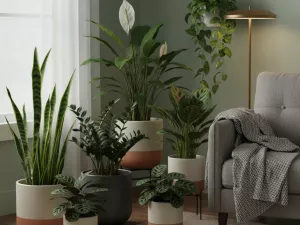
| ZZ plant (Zamioculcas zamiifolia) | Stays presentable with minimal light; slow, steady growth | Let soil dry out most of the way before watering | Overwatering is the main risk; rotate the pot every 2–4 weeks (14–28 days) for even growth |
| Snake plant (Dracaena trifasciata) | Tolerates dim conditions without dropping leaves | Water sparingly; allow full dry-down between waterings | Handles neglect well; use a pot with drainage to prevent root issues |
| Cast iron plant (Aspidistra elatior) | Keeps leaves intact in shade and temperature swings | Water when the top 2–5 cm (1–2 in) is dry | Dust leaves occasionally so the plant can use what little light it gets |
| Chinese evergreen (Aglaonema) | Reliable foliage even when light is weak | Keep lightly moist, not soggy; reduce in winter | Variegated types usually need brighter conditions than green-leaf forms |
| Pothos (Epipremnum aureum) | Vines keep going in shade; easy to prune and restart | Water when the top 2–5 cm (1–2 in) dries | Leaf markings fade in darker spots; trim leggy growth to encourage fuller vines |
| Heartleaf philodendron (Philodendron hederaceum) | Adapts to low light with minimal fuss | Allow partial dry-out; don’t keep constantly wet | Train on a pole or let trail; pinch tips to reduce long gaps between leaves |
| Peace lily (Spathiphyllum) | Stays leafy in shade; flowers may be less frequent | Water when leaves just begin to soften slightly | Prefers evenly moist soil; brown tips often point to dry air or inconsistent watering |
| Bird’s nest fern (Asplenium nidus) | Enjoys indirect light and can handle dim rooms | Keep soil lightly moist; don’t let it fully dry | Likes higher humidity; water the soil, not the central “nest” to avoid rot |
- Water less than you think. In very low light, soil dries slowly. If you’re unsure, wait 2–3 days (48–72 hours) and check again.
- Use the right potting mix. A mix that drains well helps prevent root problems when evaporation is slow; avoid heavy, compacted soil.
- Watch the leaves for feedback. Yellowing plus soft stems often means too much water; stretched, sparse growth usually means the plant wants a brighter spot or a small grow light.
- Keep leaves clean. A quick wipe every 2–4 weeks (14–28 days) helps plants make the most of limited light.
Placement strategies for corners
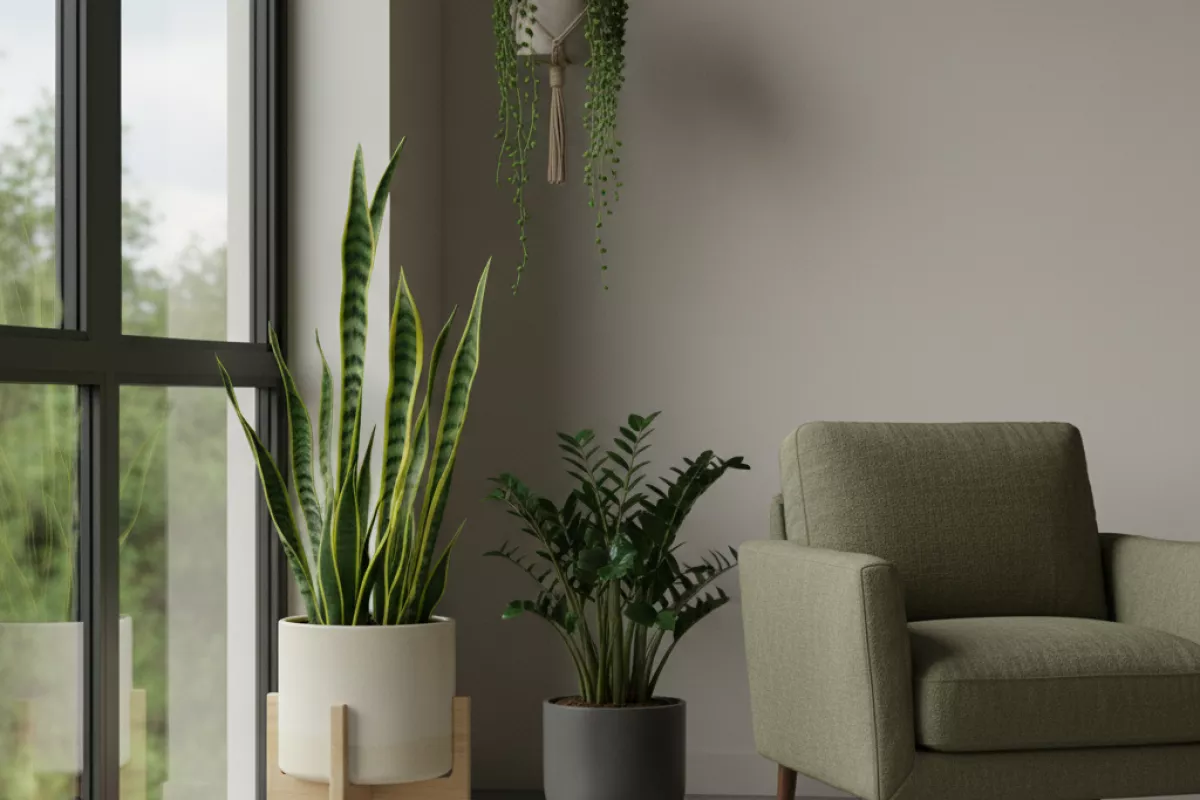
Start by reading the corner like a microclimate: light is usually dimmer, air can be still, and temperature swings can be stronger near windows, radiators, or exterior walls. The goal is to place the plant where it gets the most usable ambient light while avoiding the stress points that make “low light” feel harsher than it is.
- Use the brightest edge of the corner. Even in a dark nook, light falls off quickly as you move away from the window. Place the pot as close to the light source as practical, then rotate it a quarter turn every 1–2 weeks to keep growth even.
- Match plant height to where the light actually lands. Put taller plants on the floor and smaller ones on a stand or shelf so their leaves sit in the brighter “light band.” A lift of 20–30 cm (8–12 in) can make a noticeable difference.
- Avoid heat blasts and cold pockets. Keep foliage at least 30–60 cm (12–24 in) from radiators, baseboard heaters, and forced-air vents, and don’t press leaves against cold glass in winter. Exterior-wall corners can run cooler; choose tougher plants there and water a bit less.
- Give the plant breathing room. Corners trap stagnant air, which can invite fungus gnats and mildew. Leave a small gap between the plant and the wall (about 5–10 cm / 2–4 in) and avoid crowding multiple pots tightly together.
- Control watering by position, not habit. Soil dries slower in low light and still air. Check moisture at 5 cm (2 in) down before watering, and use a pot with drainage so excess water can escape rather than pooling in the corner’s cooler zone.
- Use reflective surfaces to “borrow” light. A light-colored wall, a mirror, or a pale planter can bounce some ambient light back onto leaves. This won’t replace bright light, but it can reduce lopsided growth over time.
- Plan for access and maintenance. If you can’t comfortably reach the pot, you’re more likely to overwater or ignore pests. Make sure you can pull the plant out for inspection, wiping leaves, and occasional repotting.
| Corner situation | What to do | Why it helps |
|---|---|---|
| Near a window but set back in shade | Move the plant 30–60 cm (12–24 in) closer, or raise it 20–30 cm (8–12 in) on a stand | Reduces the steep drop-off in usable light |
| Next to a radiator or vent | Keep foliage 30–60 cm (12–24 in) away; water less often and check soil moisture first | Prevents leaf scorch and rapid drying that stresses roots |
| Exterior-wall corner that feels chilly | Pull the pot 5–10 cm (2–4 in) off the wall and avoid letting leaves touch cold surfaces | Limits cold damage and reduces condensation-related issues |
| Very still air (no airflow) | Space plants apart and occasionally run a fan on low for 15–30 minutes (0.25–0.5 hr) | Lowers pest and mildew risk without drying the plant excessively |
If you’re unsure whether the spot is workable, it helps to measure usable light rather than rely on how bright the room feels. Slow new growth can be normal in dim areas, but yellowing older leaves, mushy stems, or consistently wet soil signal that the corner is below the plant’s tolerance.
How to monitor plant health in low light
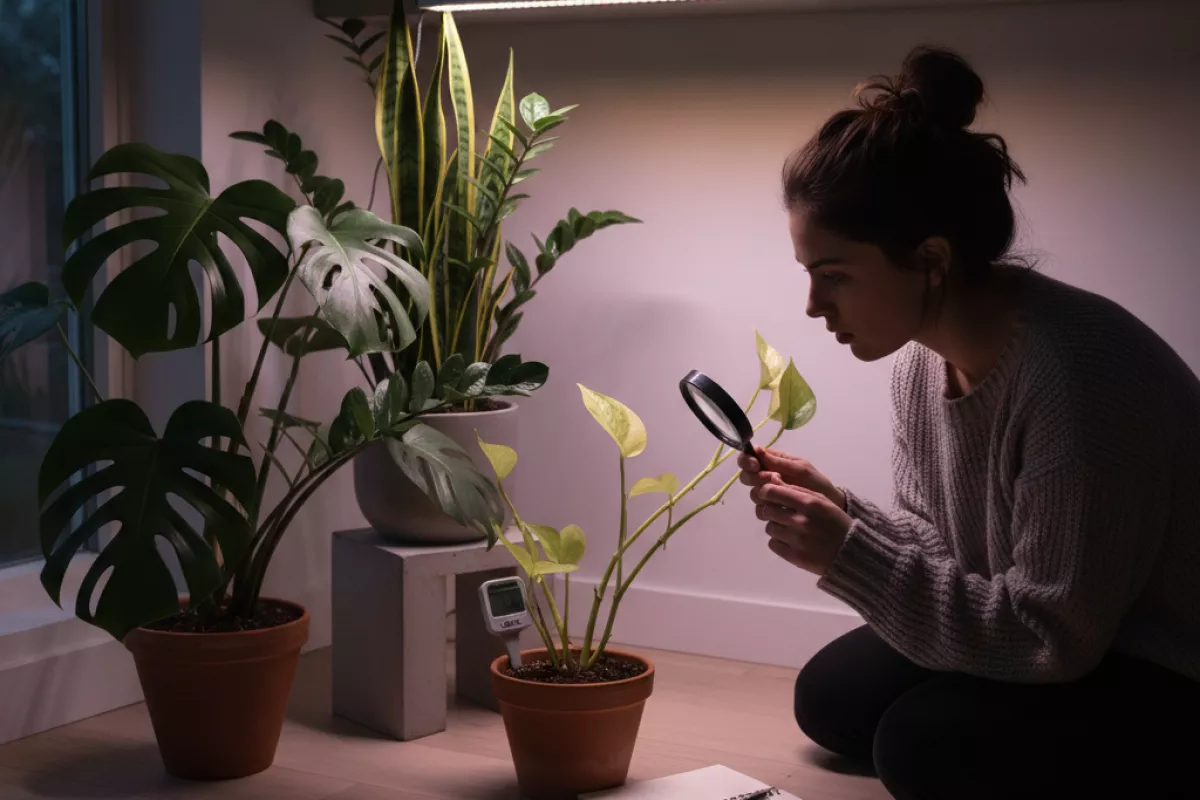
In dim rooms, plants often decline slowly, so the goal is to spot small changes early. Check the newest growth and the soil first: low-light stress usually shows up as stretched stems, smaller leaves, and potting mix that stays wet longer than you expect.
- Track new growth, not just old leaves. A few older leaves yellowing can be normal, but repeated pale, undersized new leaves or long gaps between leaves (leggy growth) often mean the plant is reaching for light.
- Watch leaf angle and “posture.” Many hardy indoor plants hold leaves flatter and more open when light is limited. Sudden drooping that doesn’t improve after watering adjustments can point to root issues from staying too wet.
- Use the “dry-down time” as a health signal. In darker corners, pots should take longer to dry, but if the top 2–3 cm (0.8–1.2 in) stays damp for more than 7–10 days, reduce watering, improve drainage, or move the plant slightly closer to a window.
- Check for soft stems and a sour smell. Mushy bases, blackened roots, or a swampy odor are classic overwatering symptoms that are more common in low light because evaporation and growth slow down.
- Rotate and compare. Turn the pot a quarter turn every 1–2 weeks to prevent one-sided stretching. If one side consistently grows longer internodes, it’s a clear sign the light is directional and weak.
- Dust and pests matter more in shade. Dust reduces the little light that’s available. Wipe leaves monthly with plain water. Also inspect undersides for spider mites or scale; stressed plants in low light can be more vulnerable.
| What you notice | Likely cause in a dark spot | What to do next |
|---|---|---|
| Long, thin stems; wide gaps between leaves | Not enough light for compact growth | Move 30–60 cm (12–24 in) closer to the brightest window; rotate weekly; prune back leggy stems to encourage fuller regrowth |
| Leaves smaller and paler than usual | Low photosynthesis and slow nutrient use | Hold fertilizer until you see steady new growth; if feeding, use half strength during active growth only |
| Soil stays wet; fungus gnats appear | Overwatering relative to low evaporation | Let the top 2–3 cm (0.8–1.2 in) dry before watering; empty saucers; consider a chunkier mix for better airflow |
| Yellow leaves plus soft stems near the base | Root stress/rot from prolonged moisture | Unpot and inspect roots; trim mushy roots; repot into fresh mix; water less and increase light slightly if possible |
| Leaves curl or crisp at edges even though soil is damp | Low light + cool drafts or inconsistent watering | Keep temps steady around 18–24°C (65–75°F); water thoroughly, then allow proper dry-down; avoid cold windowsills |
A simple routine helps: once a week, look at the newest leaf, feel the top of the mix, and scan stems at the soil line. If you want a quick benchmark, take a photo from the same angle every 2 weeks—slow changes are easier to spot side by side than from memory.
Maintenance routine for survival
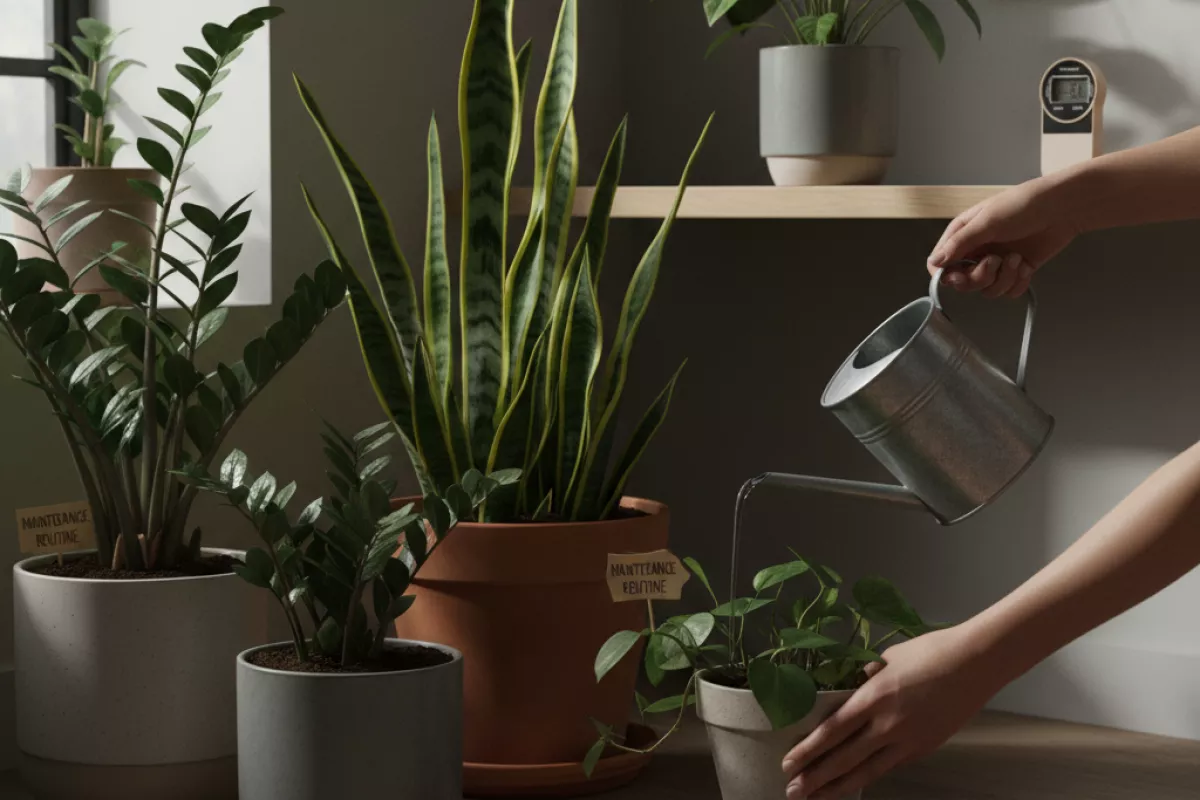
Keeping low-light houseplants alive is mostly about resisting the urge to “care” too much. In dark corners, growth is slower, water use drops, and problems show up later—so a simple, consistent rhythm beats frequent tinkering.
- Water less often, but water well. Let the top 2–5 cm (1–2 in) of soil dry for most hardy foliage plants, then water until a little drains out. Empty the saucer after 10–15 minutes to avoid soggy roots. If the pot feels heavy days after watering, you’re likely overdoing it.
- Use the pot weight test. Lift the pot right after watering, then again a few days later. In low light, this quick comparison is more reliable than a calendar.
- Prioritize drainage and an airy mix. A container with drainage holes matters more in a dim spot than in bright light. If soil stays wet for more than 7–10 days, adjusting airier potting mix ratios with added perlite or bark helps keep oxygen moving around the roots.
- Rotate for even growth. Turn the pot about a quarter turn every 2–4 weeks so the plant doesn’t lean toward the nearest lamp or window.
- Keep leaves clean so they can work. Dust blocks light. Wipe foliage with a damp cloth every 3–4 weeks, or rinse in the shower with lukewarm water around 20–25°C (68–77°F). Let it drain fully before returning it to its corner.
- Feed lightly, only when there’s active growth. In low light, many plants need little to no fertilizer in winter. When you do feed, use half-strength fertilizer (for example, dilute to 50%) every 6–8 weeks in spring and summer. If you see pale new growth but the soil is staying wet, fix watering first before adding nutrients.
- Repot on a slow schedule. Most tough indoor plants in shade do fine being slightly snug. Repot every 2–3 years, or when roots circle the pot and water runs straight through. Size up gradually—about 2–5 cm (1–2 in) wider than the current pot.
- Watch for “dark-corner” warning signs. Yellowing lower leaves plus wet soil points to excess water; long, stretched stems suggest it’s too dim; crispy tips often mean low humidity or inconsistent watering. Adjust one variable at a time so you can tell what helped.
| What you notice | Most likely cause in low light | What to do next |
|---|---|---|
| Soil stays damp longer than 10 days | Overwatering, dense mix, or no drainage | Extend dry time, switch to a pot with holes, and add perlite/bark to improve airflow |
| Yellow leaves, especially near the base | Roots staying wet; sometimes natural leaf drop | Check moisture before watering; remove yellow leaves; ensure excess water can drain |
| Leggy, leaning growth | Not enough usable light | Rotate the pot; move 30–60 cm (12–24 in) closer to a light source or add a lamp |
| Brown, crispy tips | Dry air, irregular watering, salt buildup | Water more consistently, flush soil with clean water occasionally, and avoid heavy feeding |
| Slow growth for months | Normal in shade, especially in cooler seasons | Reduce fertilizer, keep care steady, and only adjust if the plant is declining |
If you want one “set it and forget it” habit: check moisture first, then decide. In dark corners, that single pause prevents most losses and keeps hardy indoor plants steady for the long haul.
When to rotate plants for recovery
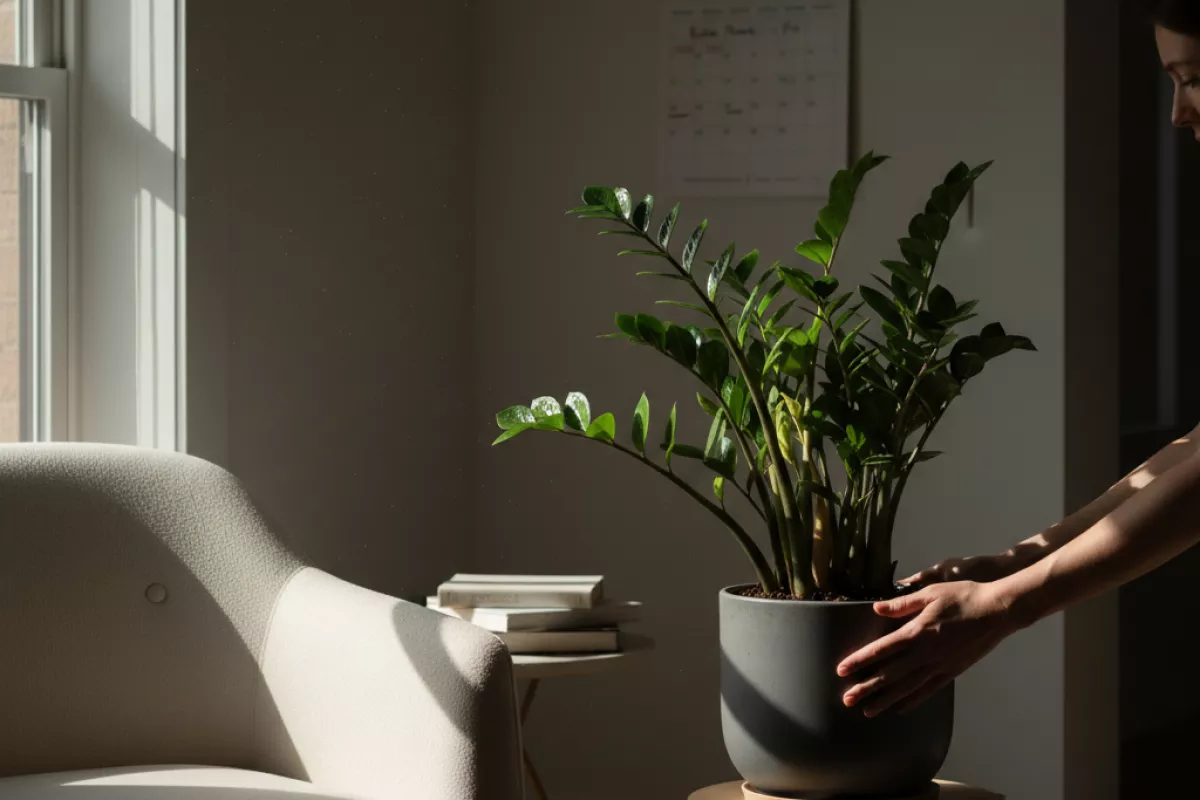
In a dark corner, most houseplants will slowly lean toward the nearest light source, even the hardy ones. Turning the pot is a simple way to keep growth balanced and to help a stressed plant rebuild leaves evenly instead of stretching in one direction.
Rotate only when the plant is actively growing and has enough light to respond. If it’s already struggling, small, consistent adjustments are better than a big change that forces it to re-orient all at once.
- Rotate on a schedule when stems are reaching or the plant looks lopsided: a quarter turn every 7–14 days is usually plenty for low-light spots.
- Rotate sooner if you see new growth bending toward a window or lamp, or if one side is noticeably thinner than the other.
- Hold off if the plant is in shock (recent repotting, pest treatment, or a big temperature swing). Give it 2–4 weeks to settle before you start turning it regularly.
- Pause rotation during flowering if buds are dropping or blooms are short-lived; some plants respond better when their light angle stays consistent until flowering finishes.
Use the plant’s signals to decide how often to adjust. These cues are more reliable than a calendar, especially in winter when indoor light drops.
| What you notice | What it usually means | How to rotate (and what else to do) |
|---|---|---|
| Leaning stems or a “one-sided” canopy | Phototropism: growth is chasing the brightest direction | Quarter turn every 7–10 days; keep distance from the light consistent. Add a small reflector (a light wall or pale surface) if possible. |
| Long gaps between leaves, thin new growth | Light is too weak; rotation alone won’t fix legginess | Rotate more slowly (every 10–14 days) and move 30–60 cm (12–24 in) closer to a window or add a grow light for 8–10 hours/day. |
| Leaves yellowing mostly on the darkest side | Older leaves are being sacrificed where light is lowest | Half turn every 14 days; check watering (let the top 2–5 cm (1–2 in) dry for many common hardy plants) and avoid cold drafts. |
| Leaf scorch or crispy patches on the light-facing side | Too much direct sun or the lamp is too close | Rotate only after you reduce intensity: move back 30 cm (12 in) or diffuse the light; then resume with quarter turns weekly. |
| Plant looks stable but growth is slow and compact | It’s coping fine in low light; no strong directional pull | Rotate lightly every 2–4 weeks, or just turn it when you water to keep dusting and inspection consistent. |
A practical tip: mark the pot with a small piece of tape so you can track turns without overthinking it. Also rotate after watering, not before, so you’re not tempted to water “by the light side” and accidentally soak one area of the root ball more than another.