Sudden Yellow Leaves on Healthy Plants Explained

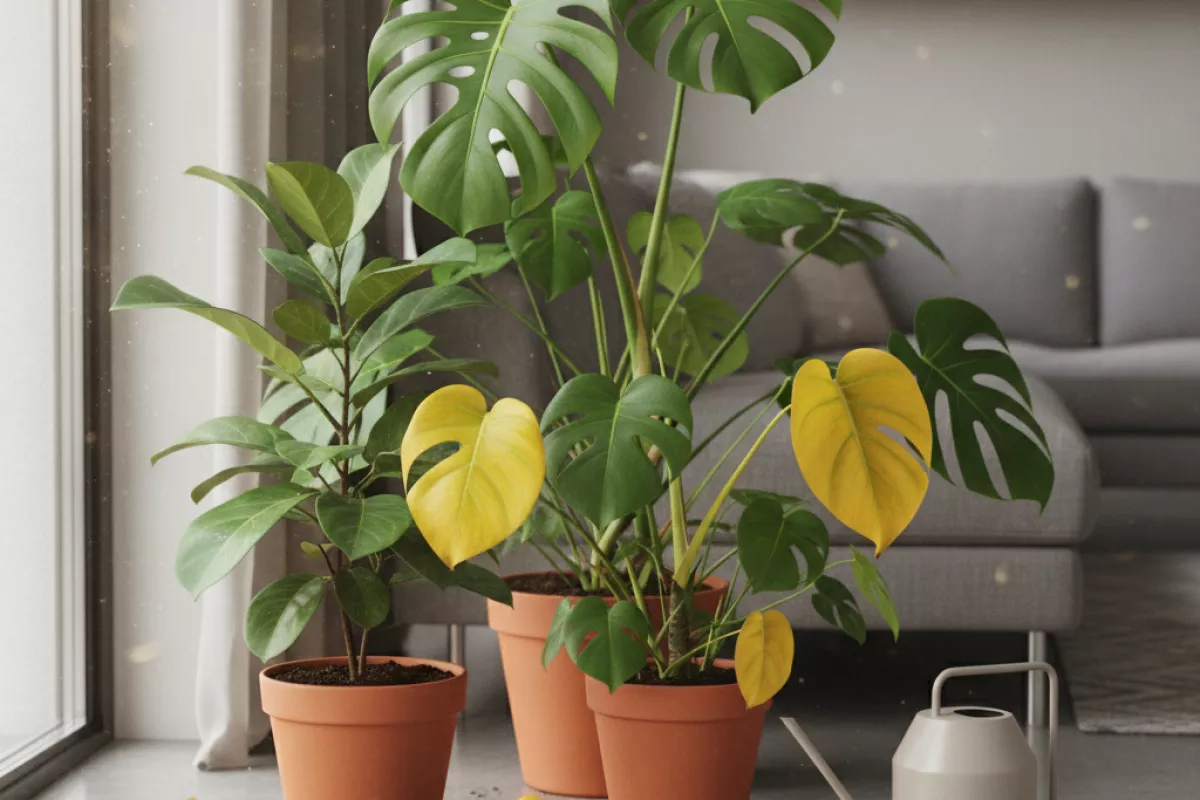 Covers why leaves can turn yellow overnight, the first stress signals to watch, and recent care changes that cause shock. It also looks at root disturbance, light shifts, how to stabilize conditions fast, and signs the plant is recovering.
When a healthy plant suddenly develops yellow leaves, it rarely happens without a reason. The change usually points to a shift in light, watering habits, soil drainage, nutrients, temperature, or root health, even if the plant still seems vigorous. Check conditions step by step, then make small adjustments so you fix the cause without stressing the plant further.
Why sudden yellowing happens overnight
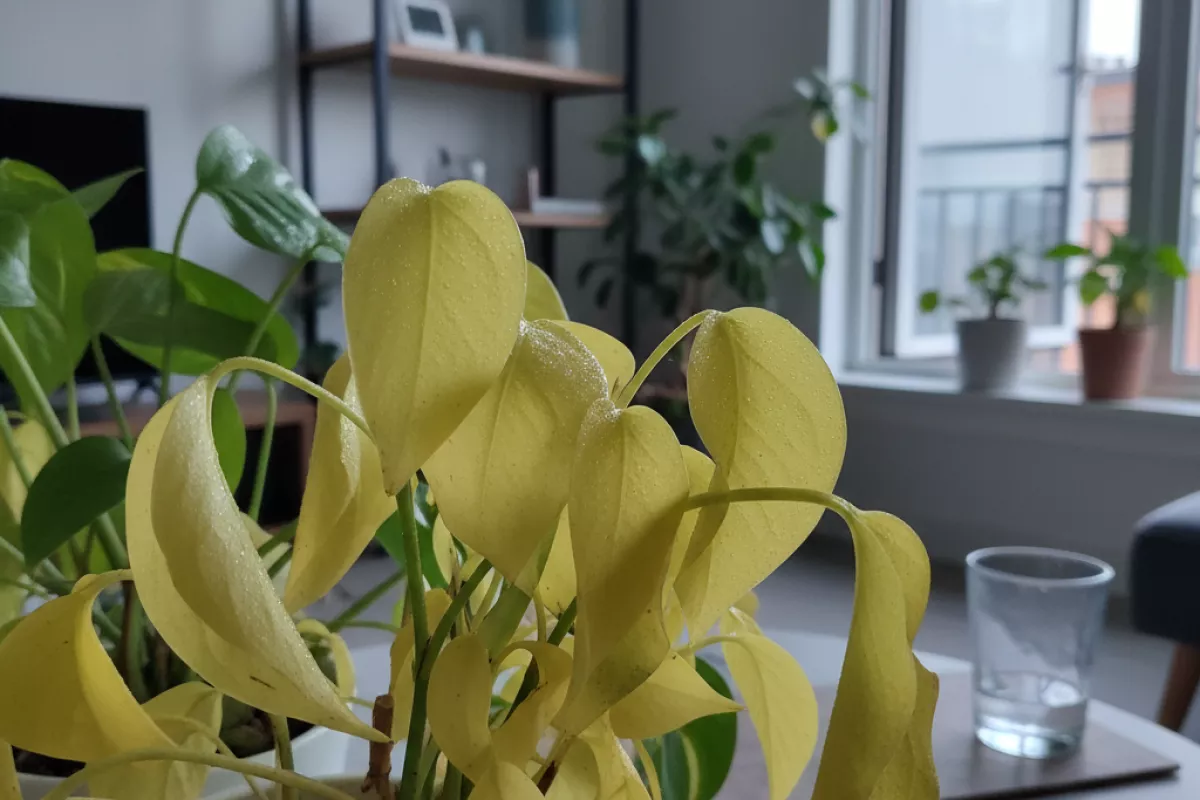
When a plant looks fine at dinner and washed-out by morning, it usually isn’t “instant” damage so much as a fast shift in what your eyes can see. Leaves can lose chlorophyll quickly under stress, and overnight conditions (cooler temperatures, longer leaf wetness, and lower airflow) can push a borderline issue over the edge.
Another reason it feels sudden is that plants often show symptoms all at once after a delay. The trigger might have happened days earlier, often due to lighting problems, but the leaf only turns yellow once internal reserves are depleted or transport inside the plant is disrupted.
- Cold night or a big temperature swing: A drop from 24°C to 10°C (75°F to 50°F) can slow nutrient movement and cause chlorosis, especially on tender tropicals. Damage may be most obvious the next morning because the leaf cells were stressed for hours while metabolism was slowed.
- Overwatering that turns into overnight oxygen starvation: Soil that stays saturated can suffocate roots. Roots need oxygen to take up nitrogen and iron; when they can’t, leaves can yellow rapidly even though the plant looked “healthy” the day before.
- Sudden intense light after low light: Moving a plant from shade to strong sun can bleach tissue. The injury happens quickly, but the paling is often most noticeable after a full day-night cycle when the leaf fails to recover.
- Fertilizer or salt shock: A heavy feed or a buildup of salts can pull water out of roots. The plant may wilt first, then show yellowing as it reallocates nutrients away from older leaves to protect new growth.
- Root disturbance or a hidden root issue: Repotting, compacted soil, or early root rot can interrupt water and nutrient flow. Leaves may stay green until the plant hits a threshold, then several leaves fade together.
- Pests you don’t notice at night: Fine stippling and pale yellow patches may be caused by spider mites on plants. Damage often becomes visible all at once once feeding accumulates across the leaf surface.
- Natural leaf turnover that becomes obvious in a cluster: Some plants drop older leaves in batches. If several leaves were already aging, they can cross the yellowing point within the same 12–24 hours.
| What you notice in the morning | Most likely category | Quick check (no tools) |
|---|---|---|
| Yellowing is widespread, soil feels cold and wet | Waterlogged roots / low oxygen | Press a finger 5 cm (2 in) down; if it’s soggy and heavy, pause watering and improve drainage/airflow |
| Leaves look pale or bleached on the sun-facing side | Light stress / sunscald | Check if the plant was moved closer to a window or outdoors; shade it for a week and re-acclimate gradually |
| Yellowing follows a chilly night or draft | Temperature shock | Feel for cold air near windows/doors; move the pot 30–60 cm (12–24 in) away from the draft source |
| Yellowing plus crispy edges after feeding | Fertilizer/salt burn | Recall recent fertilizing; flush with plain water until it drains freely, then let the mix dry slightly |
| Speckled yellowing, fine webbing, or silvery patches | Pest feeding | Inspect the underside of leaves and along veins; wipe with a damp cloth and isolate the plant while you confirm |
If the yellowing is limited to one or two older leaves and new growth stays green, it’s often a manageable stress response rather than a crisis. If many leaves change color at once and the plant also droops, focus first on roots, temperature, and recent changes—those are the fastest ways a “healthy” plant can look different by sunrise.
Stress reactions plants show first
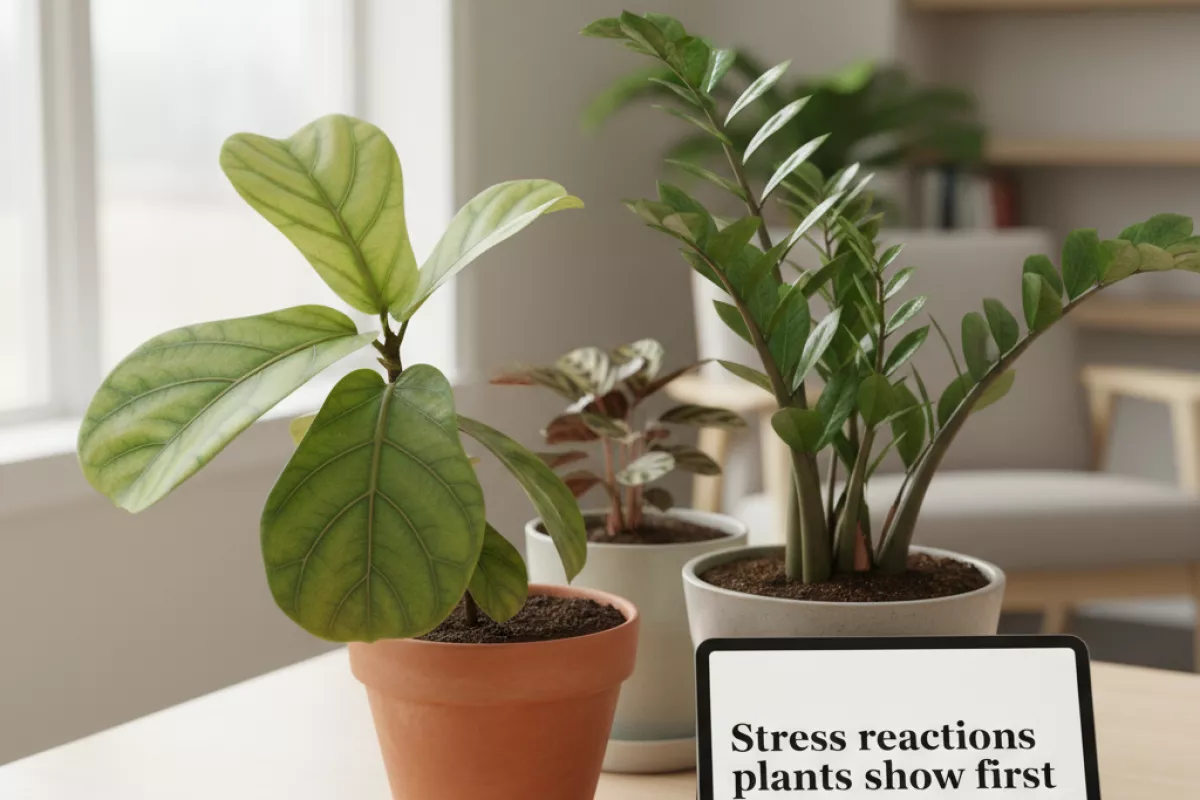
When a plant that looked fine suddenly starts yellowing, the earliest clues are usually small changes in texture, posture, and where the color shift begins. These “early warning” signs often show up before widespread yellow leaves, because the plant is reallocating water, nutrients, and energy to protect new growth and vital tissues.
- Leaf droop that doesn’t match the soil: Leaves hang limp even though the potting mix feels moist, or they stay stiff and slightly curled even when the mix is dry. This mismatch often points to root stress (poor oxygen, rot, or sudden temperature swings) rather than simple thirst.
- Subtle paling between veins: The leaf surface lightens while veins stay greener, especially on newer leaves. That pattern can be an early hint of micronutrient lockout (often from pH shifts) or a sudden change in water quality.
- Yellowing that starts in a specific zone: Lower, older leaves fading first suggests the plant is moving mobile nutrients upward; yellowing that begins on the newest leaves can signal issues with iron or other less-mobile nutrients, or damage to the growing tips.
- Edges crisping or “burnt” tips: Brown margins or dry tips can appear quickly after fertilizer spikes, salty tap water, or a missed watering followed by heavy watering. It’s a common first reaction when the plant can’t regulate water movement through the leaf.
- Leaves turning dull, then blotchy: A matte look followed by irregular patches can show up after sun shock (moving from low light to direct sun) or cold drafts. The tissue may yellow later as damaged cells are shed.
- New growth comes in smaller: Shorter internodes, smaller leaves, or “stalled” new tips often happen early in stress cycles because the plant slows expansion to conserve resources.
- Soft stems or a faint “give” at the base: If the crown or lower stem feels less firm than usual, check roots and drainage. This can precede rapid yellowing because compromised roots can’t supply oxygen and water consistently.
- Sudden leaf angle changes: Leaves may tilt away from a window, fold slightly, or twist after a quick light change. Even without scorch marks, the plant may later drop chlorophyll in the most exposed leaves.
- Patchy yellowing after a recent move: Relocating a plant a few feet can change light intensity, day/night temperature, and airflow. The first response is often uneven chlorosis on the side facing the new conditions.
| Early sign you can spot | What it often points to | Quick check to confirm |
|---|---|---|
| Droop with moist soil | Low oxygen at roots, early root rot, or cold/wet mix | Smell the potting mix; inspect drainage holes; feel if the pot stays heavy for >48 hours (2 days) |
| Lower leaves yellow first | Normal shedding, low nitrogen, or prolonged low light | Count how many leaves are affected; if only 1–2 older leaves at a time, it’s often normal |
| New leaves pale or yellow between veins | Iron/micronutrient uptake issue (often pH-related) | Recall recent changes: new fertilizer, new water source, or repotting into a different mix |
| Crispy tips and edges | Salt buildup, fertilizer burn, inconsistent watering | Look for white crust on soil/pot; consider flushing with 1–2 L (34–68 fl oz) water for a medium pot, if the plant tolerates it |
| Blotches after a light change | Sun shock or temperature stress | Check exposure: direct sun through glass can be intense; note if nights dropped below 10°C (50°F) |
If you catch these early reactions, you can usually prevent the “all-at-once” yellowing phase. Focus on what changed in the last 7–14 days: watering rhythm, light intensity, temperature (including cold windows), fertilizer, or repotting. Plants tend to tolerate one change at a time; multiple shifts stack up fast.
Recent changes that trigger leaf shock
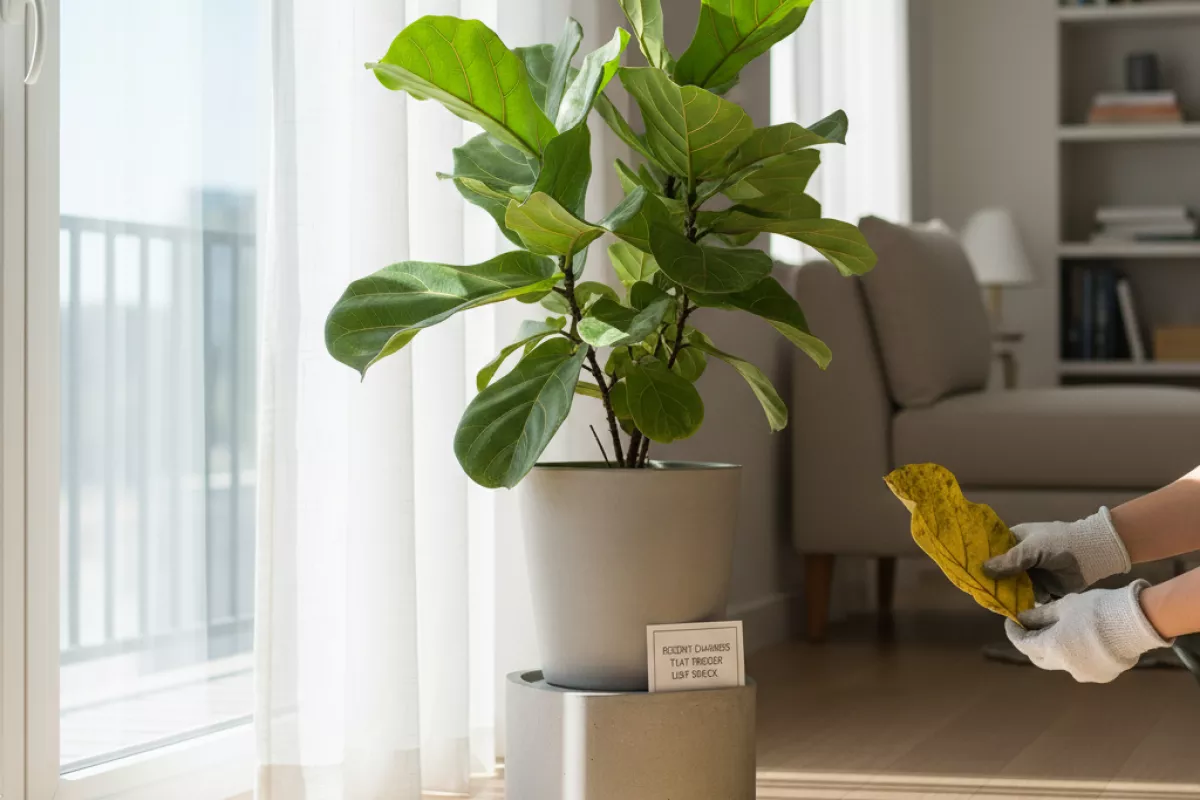
When a plant looks fine one week and starts yellowing the next, the cause is often a sudden shift in conditions rather than a slow-building deficiency. Leaves are built for the environment they grew in; change that environment quickly and the plant may drop older foliage, fade between veins, or yellow in patches while it rebalances water use, light capture, and nutrient flow.
- Moving the plant to a new spot (especially brighter light): A jump from low light to direct sun can bleach or yellow leaves, while a move to dimmer light can trigger older leaves to yellow as the plant sheds “extra” leaf area it can’t support. Transition over 7–14 days, starting with 1–2 hours of gentler light and increasing gradually.
- Temperature swings: Drafts, heaters, and cold windows can stress roots and slow uptake. Many houseplants react when nights drop below about 13°C (55°F) or when hot air pushes leaf temperatures above about 29°C (84°F). Sudden chills often show up as rapid yellowing plus soft, droopy leaves.
- Repotting or root disturbance: Even a careful repot can break fine feeder roots. The top stays the same size, but the root system temporarily can’t keep up, so the plant sacrifices some leaves. Expect a short adjustment period; keep light moderate and watering conservative until new growth resumes.
- Switching potting mix types: A move from a peat-heavy mix to a chunky bark mix (or the reverse) changes how fast the pot dries and how much air roots get. If you keep the same watering schedule, you can accidentally overwater or underwater, and yellow leaves follow.
- A sudden change in watering pattern: Going from frequent small sips to deep, infrequent soaks (or vice versa) can shock roots. Another common trigger is letting a pot go bone-dry, then soaking it repeatedly; roots that died back during drought can’t handle the rebound.
- Fertilizer changes: Starting fertilizer after a long pause, doubling the dose, or using a “bloom booster” on a foliage plant can cause salt stress and yellowing along edges or tips. If you fertilize, use a diluted rate and apply to already-moist soil.
- Water source changes: Switching from rain/filtered water to hard tap water can raise mineral buildup, while softened water can add sodium. Both can interfere with nutrient uptake and show as yellowing that doesn’t match your feeding routine.
- Humidity and airflow shifts: Moving a plant near an HVAC vent, dehumidifier, or open window can dry leaves faster than roots can supply water. The plant may yellow older leaves first to reduce demand.
- Recent pest treatment or leaf cleaning: Oils, soaps, and sprays can clog stomata or scorch leaves if applied in bright light or at high concentrations. Yellow spots that appear within 24–72 hours after treatment often point to product burn rather than a nutrient issue.
If yellowing is accompanied by necrotic patches or defined lesions, compare the pattern with typical brown spots on leaves. Spotting often points to burn, infection, or chemical damage rather than simple nutrient stress.
| Change | Typical timing of yellowing | Clues that point to it | What to do next |
|---|---|---|---|
| Light increase (new window, outdoors) | 1–5 days | Pale/yellow patches on the sun-facing side; sometimes crisping | Step back to bright indirect light; reintroduce sun over 7–14 days |
| Cold draft or heat blast | 1–7 days | Sudden overall yellowing, droop; damage near the draft source | Stabilize temps; keep away from vents and cold glass by 30–60 cm (12–24 in) |
| Repotting/root disturbance | 3–14 days | Yellowing of older leaves while new growth pauses | Hold fertilizer; keep evenly moist, not soggy; give moderate light until growth returns |
| Watering schedule shift | 3–21 days | Yellow leaves plus either soggy soil smell (too wet) or crispy edges (too dry) | Reset to a consistent cycle; water thoroughly, then wait for partial dry-down appropriate to the plant |
| Fertilizer increase or new product | 2–10 days | Tip/edge yellowing, white crust on soil, stalled growth | Flush with clean water; resume feeding at a lower dose after recovery |
| Sprays/oils/soaps applied in strong light | 1–3 days | Speckled yellowing where droplets sat; pattern matches spray coverage | Rinse foliage if safe for the plant; avoid treating in sun; dilute and test a small area first |
If the yellowing started right after a change you can name, don’t make five more changes to “fix” it. Pick one likely trigger, correct it, and give the plant 1–2 weeks to respond. Existing yellow leaves rarely turn green again, but you’re looking for the yellowing to stop spreading and for new growth to come in healthy.
Root disturbances and hidden damage
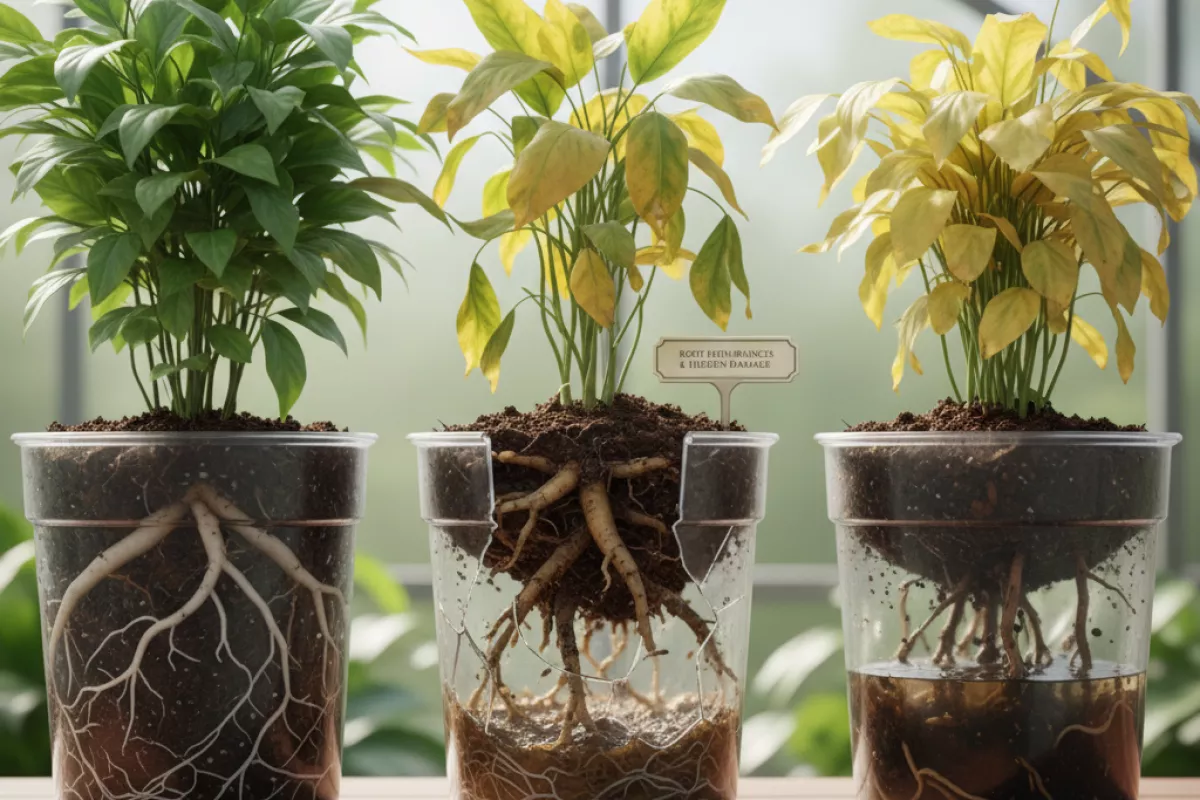
When a plant that looked fine yesterday suddenly shows yellow leaves, the problem is often happening below the soil line. Roots control water uptake, nutrient absorption, and oxygen exchange; when they’re bruised, suffocated, or partially lost, the top growth can fade fast even if the stems and foliage still look “healthy” at first glance.
- Recent repotting or transplant shock: Even careful handling can tear fine feeder roots. The plant may respond with quick chlorosis because it can’t pull in enough water and minerals to support all its leaves. Keep conditions steady, avoid fertilizing for 1–2 weeks, and water only when the top 2–3 cm (1–1.2 in) of mix dries.
- Root binding and sudden watering changes: A tight root ball can shed water (it runs down the sides), so the plant alternates between drought stress and soggy pockets. Yellowing can appear after a “normal” watering because part of the root zone stayed dry while another part stayed wet. Soak the pot thoroughly until water drains, then let it drain completely; consider stepping up one pot size by about 2–5 cm (0.8–2 in) in diameter if roots are circling heavily.
- Overwatering that leads to low oxygen: Roots need air to function properly. When soil remains saturated, air spaces collapse and oxygen levels drop, which explains how root rot develops in soil. Yellow leaves often appear before visible decay because nutrient uptake fails under low-oxygen conditions.
- Early root rot (often hidden): You may not see anything above ground until damage is underway. Warning signs include a pot that stays wet for days, a sour smell, or leaves yellowing while the soil is still damp. If you unpot and find brown, mushy roots, trim back to firm tissue and repot into fresh, airy mix.
- Compacted or degraded potting mix: Old media can break down into fine particles that hold too much water and too little air. If the mix looks like mud when wet or forms a hard crust when dry, it’s time to refresh it.
- Physical injury and pests at the roots: Rough handling, digging tools, or chewing insects can reduce uptake quickly. If you see wilting plus yellowing despite correct watering, inspect the root ball for damaged sections or larvae.
| What you notice above soil | Likely issue below soil | Quick check | What to do next |
|---|---|---|---|
| Yellow leaves after repotting; growth pauses | Feeder-root loss from transplant stress | Gently tug: plant feels loose; mix dries unevenly | Stabilize the plant, keep light moderate, water lightly; skip fertilizer for 1–2 weeks |
| Yellowing with soil that stays wet | Low oxygen from overwatering or compacted mix | Pot feels heavy 3–5 days after watering; no dry-down | Let it dry more between waterings; improve drainage; repot if mix is dense |
| Yellow leaves plus limp stems; musty odor | Developing root rot | Slide plant out: dark, soft roots; smell is sour | Trim rotten roots, repot into fresh airy medium, reduce watering frequency |
| Yellowing despite frequent watering; pot dries fast | Root-bound plant or hydrophobic root ball | Water runs through quickly; roots circle the pot | Soak thoroughly; consider potting up 2–5 cm (0.8–2 in) or loosening the root ball |
| Patchy yellowing and sudden decline without clear watering pattern | Root damage or root-feeding pests | Inspect roots for breaks, chew marks, or larvae | Remove pests if present; trim damaged roots; repot and keep conditions stable |
If you’re unsure, a careful “slide-out inspection” is often the fastest way to confirm what’s going on. Support the stem, tip the pot, and ease the root ball out; you’re looking for firm, pale roots and a mix that smells earthy, not sour. Catching below-ground stress early usually stops the yellowing before it spreads to the newest leaves.
Light exposure shifts and foliage response
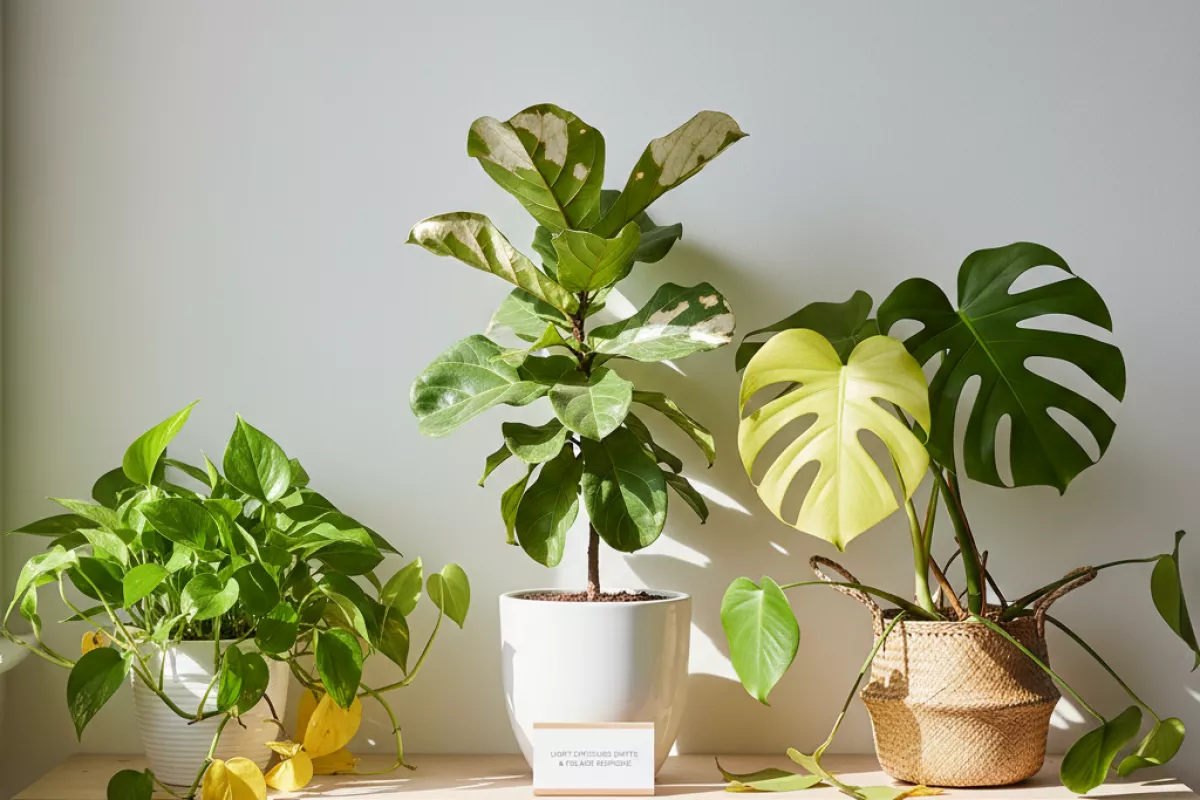
A sudden change in how much sun a plant gets can show up as yellowing even when everything else seems fine. Leaves are built for the light they grew under; when that baseline shifts quickly, the plant may shed older foliage, bleach exposed tissue, or reduce chlorophyll while it rebalances energy use.
Two patterns are common: moving a plant into stronger light (sunburn and bleaching) or into dimmer light (chlorosis and leaf drop). Either way, the yellowing often starts within a few days to a couple of weeks, especially on the leaves that formed before the move.
- Too much light too fast: Pale yellow patches that can turn tan or papery, usually on the most exposed surfaces (top leaves, window-facing side, outer canopy). This is typical after moving from shade to direct sun, or after pruning suddenly exposes inner leaves.
- Not enough light: A more even, soft yellowing that begins on older leaves, sometimes followed by drop. The plant is conserving resources when it can’t “pay for” all that leaf area in low light.
- Uneven exposure: Yellowing mostly on one side of the plant (the side facing the window or grow light) can indicate a lopsided light source rather than a nutrient issue.
- Seasonal angle changes: A window that was gentle in winter can become harsh in spring and summer as the sun angle changes, causing new yellow patches on previously fine plants.
| What changed | Typical yellowing pattern | Quick check | What to do next |
|---|---|---|---|
| Shade to direct sun (or stronger grow light) | Blotchy bleaching; may progress to tan, crisp spots on exposed leaves | Damage is worst on the brightest side; shaded leaves look better | Step up exposure over 7–14 days; use a sheer curtain or move back 30–60 cm (12–24 in) at first |
| Bright spot to dim room | Overall paling; older leaves yellow first, then drop | New growth is smaller, spaced farther apart, and greener than older leaves | Increase light gradually; rotate the pot weekly; consider a grow light 15–30 cm (6–12 in) above foliage |
| Sudden pruning or rearranging nearby plants | Inner leaves yellow after being exposed, or shaded leaves yellow after losing light | Yellowing aligns with newly exposed or newly shaded zones | Prune in stages; give 1–2 weeks between major cuts; reposition to restore even coverage |
| Seasonal sun shift through glass | New yellow patches near the window; may look like “burn” | Occurs on warm afternoons; leaf surface feels hot | Pull the plant back 30–90 cm (12–35 in) or diffuse light; avoid misting in strong sun |
If you suspect a light-related cause, don’t rush to fertilize. Nutrients won’t fix sunscald, and extra feeding in low light can stress roots. Instead, stabilize the plant’s exposure, keep watering consistent, and watch the newest leaves: fresh growth that stays green is a good sign the plant has adjusted.
How to stabilize plant conditions fast
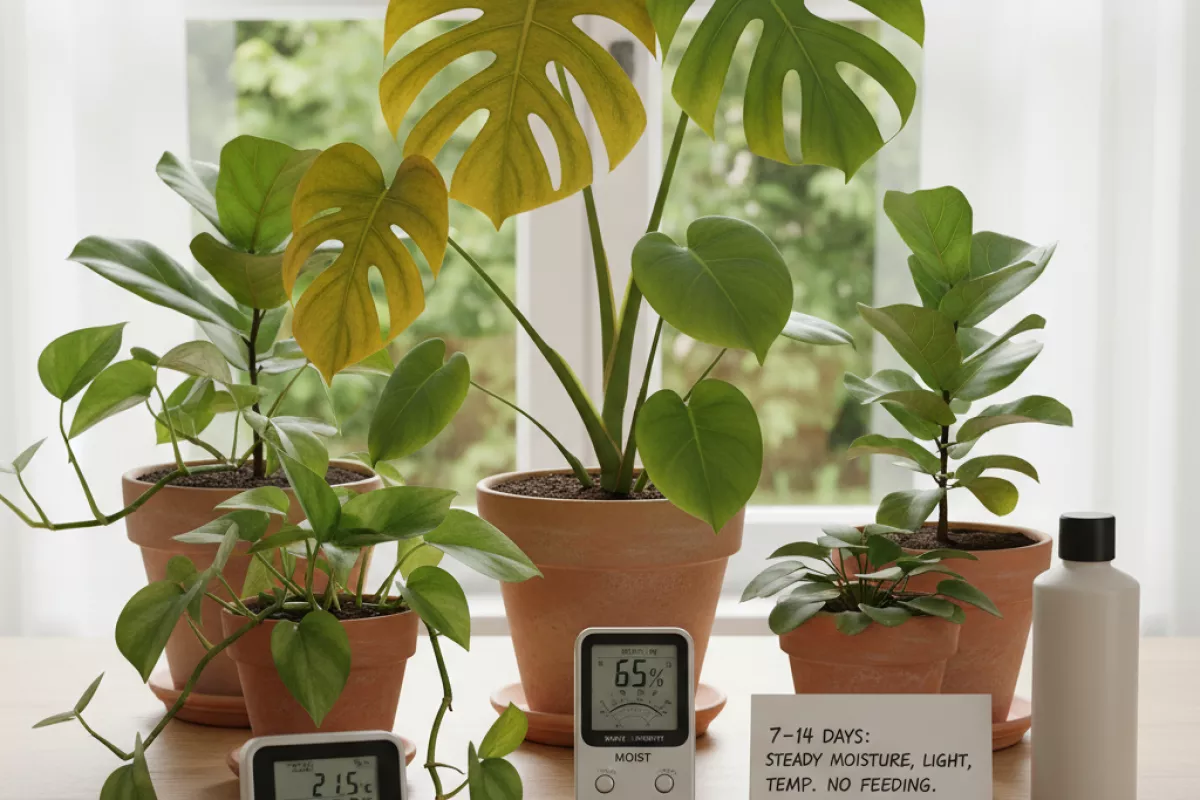
When a plant that looked fine suddenly throws yellow leaves, the quickest win is to stop “small” changes from stacking up. Your goal for the next 7–14 days is consistency: steady moisture, steady light, and a stable temperature range. Avoid big corrections (heavy feeding, hard pruning, repeated repotting) until you’ve confirmed the basic conditions are back in a safe zone.
If the cause is unclear and several risk factors overlap, using a root rot risk calculator can help you evaluate drainage, soil drying time, and watering habits before deciding whether urgent root inspection is necessary.
- Pause fertilizer and “tonics” for now.
Yellowing often worsens when stressed roots get extra salts. Hold feeding for 2–3 weeks, then restart at 1/4–1/2 strength once new growth looks normal.
- Reset watering with a simple check.
Feel the soil 5 cm (2 in) down. If it’s wet and cool, wait. If it’s dry at that depth, water thoroughly until a little drains out, then empty the saucer. This prevents both drought stress and oxygen-starved roots.
- Improve drainage and airflow without repotting.
Make sure the pot has a drainage hole, and keep it off a flat surface so water can escape. If the top stays soggy, gently loosen the top 2–3 cm (1 in) of mix and increase air movement in the room.
- Stabilize light exposure.
Sudden yellow leaves can follow a quick light change (moving closer to a window, or seasonal sun angle shifts). Keep the plant in one spot for a week, and if it needs more light, increase it gradually over 5–7 days instead of all at once.
- Lock in a reasonable temperature band.
Most houseplants do best around 18–24°C (65–75°F). Keep leaves away from heaters, radiators, and cold window glass, and avoid drafts from doors or vents.
- Check for pests with a quick routine.
Look under leaves and along stems for speckling, webbing, sticky residue, or tiny moving dots. If you find anything, isolate the plant and rinse foliage with lukewarm water around 20–25°C (68–77°F), then reassess before using stronger treatments.
- Remove only the leaves that are mostly yellow.
Leaves that are more than 50% yellow won’t recover and can drain energy. Snip them with clean scissors, but keep partially green leaves until you see whether the plant stabilizes.
| What you notice | Most likely instability | Fast, low-risk adjustment | What to avoid for now |
|---|---|---|---|
| Lower leaves yellowing first; soil stays wet | Overwatering or poor oxygen at roots | Let mix dry to 5 cm (2 in) depth; ensure drainage; empty saucer | More watering “on schedule”; adding fertilizer |
| Leaf edges crisping; mix dries very fast | Underwatering, heat, or low humidity | Water deeply; move 30–60 cm (12–24 in) away from heat; group plants | Small frequent sips that don’t soak the root zone |
| Yellow patches after moving to brighter sun | Light shock or mild scorch | Shift to bright indirect light; reintroduce sun over 5–7 days | Immediate full sun exposure |
| New growth pale; older leaves green | Nutrient lockout from stress or pH drift | Fix watering first; after 2–3 weeks, feed lightly if growth resumes | Doubling fertilizer to “correct” color quickly |
| Yellowing plus tiny specks/webbing/stickiness | Pest pressure | Isolate; rinse leaves; wipe stems; monitor every 3–4 days | Spraying repeatedly without confirming the pest |
If you make one change today, make it the one that reduces the biggest swing (usually watering). Then give the plant 7–10 days to respond before changing something else. Consistent care is what turns sudden yellowing into a short setback instead of a spiral.
Signs the plant will recover
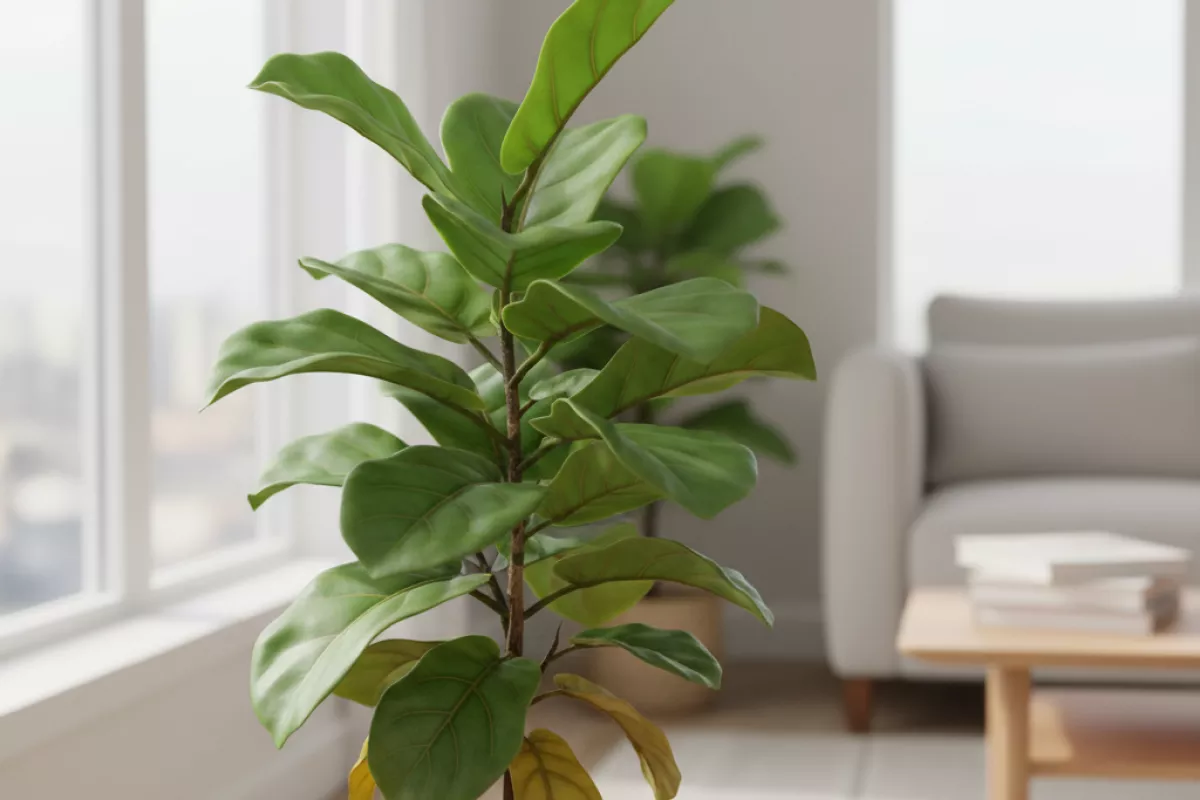
Recovery usually shows up as a mix of stable new growth and a slowdown in leaf loss. A few yellow leaves can still drop while the plant reallocates resources, but the overall trend should look “calmer” week to week rather than steadily worse.
- New growth looks normal. Fresh leaves emerge green and evenly colored, without mottling, scorched edges, or twisted shapes. On many houseplants, the newest leaves are the best indicator because they reflect current conditions.
- Yellowing stops spreading. The discoloration stays limited to a few older leaves instead of marching up the plant. It’s common for the lowest leaves to fade first after a shock, but the pattern shouldn’t accelerate.
- Stems stay firm and upright. Even if some foliage is pale, the plant holds its structure. Limp, collapsing stems are more concerning than a handful of yellow leaves.
- Roots show healthy cues. When you check (only if needed), roots look light-colored and crisp rather than brown/black and mushy, and the pot doesn’t smell sour. A neutral “earthy” smell is a good sign.
- Water use becomes predictable again. The potting mix dries at a steady pace, and the plant perks up after watering instead of staying droopy. Sudden yellow leaves often follow a watering mismatch; stability here is reassuring.
- No new spotting or fuzzy growth. You don’t see expanding leaf spots, webbing, sticky residue, or powdery/fuzzy patches. Existing cosmetic damage may remain, but it shouldn’t multiply.
- Leaf drop slows down. A brief “shed” after moving the plant or changing care can be normal. Improvement looks like fewer leaves falling each week, not a constant stream.
- Color returns in the right places. Some plants regain a deeper green on slightly pale leaves once stress is corrected, but fully yellow leaves rarely turn green again. The more reliable sign is that new foliage stays healthy.
If you want a simple checkpoint: give the plant 10–14 days to settle after you correct the likely trigger (watering, light shift, temperature draft, or recent repotting). If the newest leaves stay green and the yellowing doesn’t expand, you’re generally on the right track.