Aphids on New Growth – Why They Target Tips

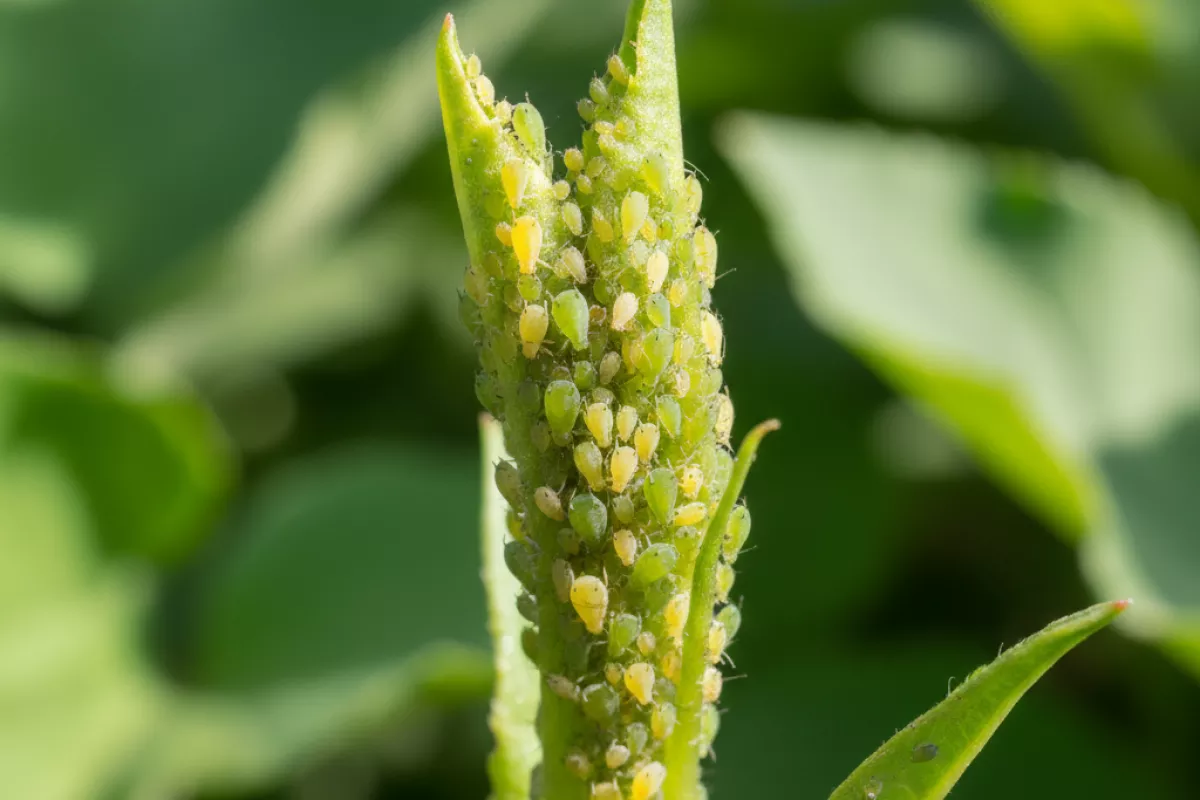 Explains why aphids target soft new growth first, focusing on high nutrient levels in young tissue. Covers how feeding alters development and branching, the damage signs on fresh shoots, risks to growth, plus strategies to protect new tips now and prevent future outbreaks.
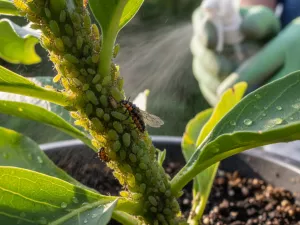
Aphids clustering on fresh shoots and tender tips isn’t random. New growth is softer, packed with sap, and easier to pierce, so colonies gather where feeding takes the least effort and gives the biggest payoff. Knowing this helps you inspect the right spots early and act before leaves curl, buds distort, and stems weaken.
Why soft growth attracts aphids first
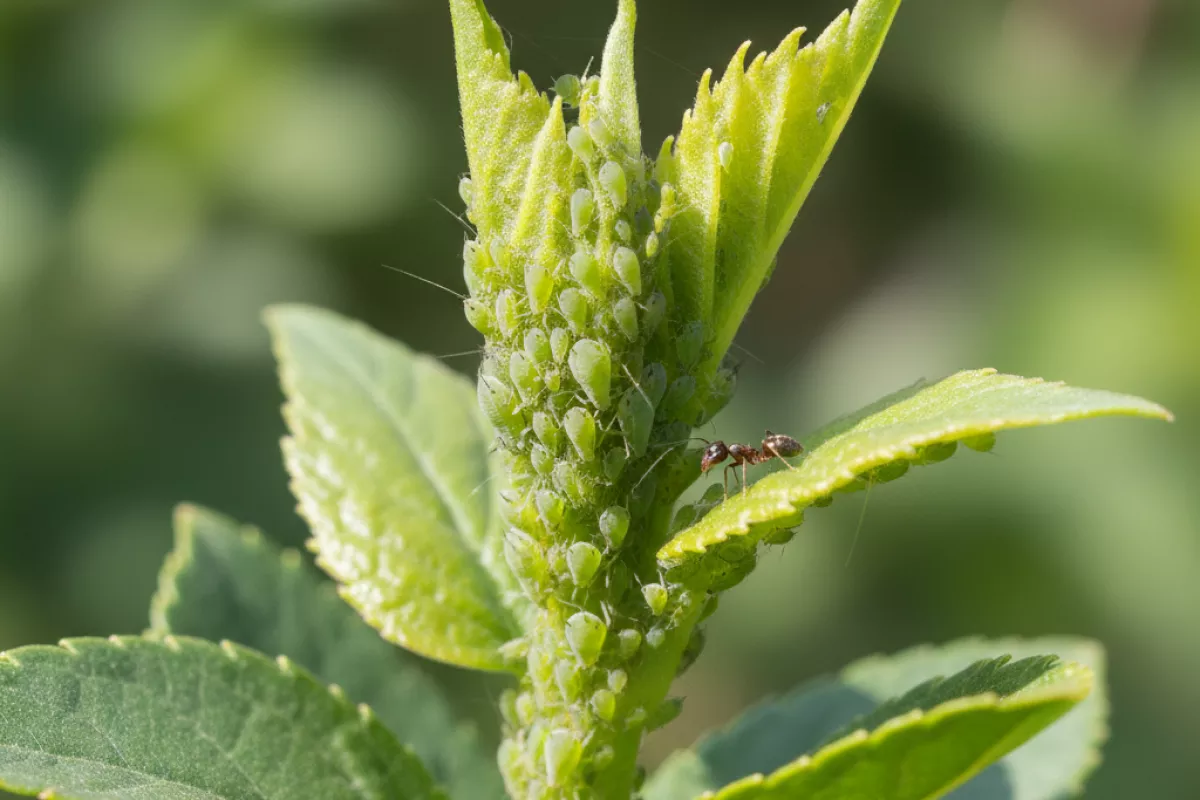
Tender shoot tips are basically an easy meal during an aphid infestation. The plant pumps sugars and amino acids into new leaves and stems, and aphids are adapted to tap directly into that flow with minimal effort. Compared with older, tougher foliage, sap in fresh growth is easier to access and often more nutritious, so colonies establish there first and spread outward later.
- Higher-quality sap in growing tips: New growth is a strong “sink” for nutrients, so phloem sap moving into it tends to be richer in soluble sugars and nitrogen compounds. Aphids need lots of sap to meet their protein needs, so they gravitate to tissue where the payoff is better.
- Soft tissue is easier to pierce: Their needle-like mouthparts can penetrate young stems and unfolding leaves with less resistance. Older leaves have thicker cuticles and more lignified tissue, which can slow feeding and reduce success.
- Weaker defenses early on: Many plants ramp up physical toughness and chemical defenses as tissues mature. Brand-new leaves may not have fully developed waxy coatings, hairs, or deterrent compounds yet, giving aphids a head start.
- Microclimate is gentler at the tip: Crowded, curled, or newly expanding leaves create sheltered pockets with slightly higher humidity and less wind. That protection helps small-bodied insects avoid drying out and makes it easier for nymphs to survive.
- Faster population growth where cells are dividing: Aphids reproduce quickly, and the steady stream of sap into actively growing tissue supports rapid nymph development. That’s why you often see clusters on the newest 2–5 cm (0.8–2 in) of a stem before anywhere else.
- Ants “farm” them on fresh shoots: Where ants are present, they often patrol young growth because it’s where honeydew producers are most concentrated. Ant protection can reduce predation and let aphid numbers climb faster.
This is also why heavy nitrogen feeding can make the problem look worse: it pushes lush, soft growth that stays tender longer, giving aphids more time to feed and reproduce on the tips before the plant toughens up.
Nutrient concentration in young tissue
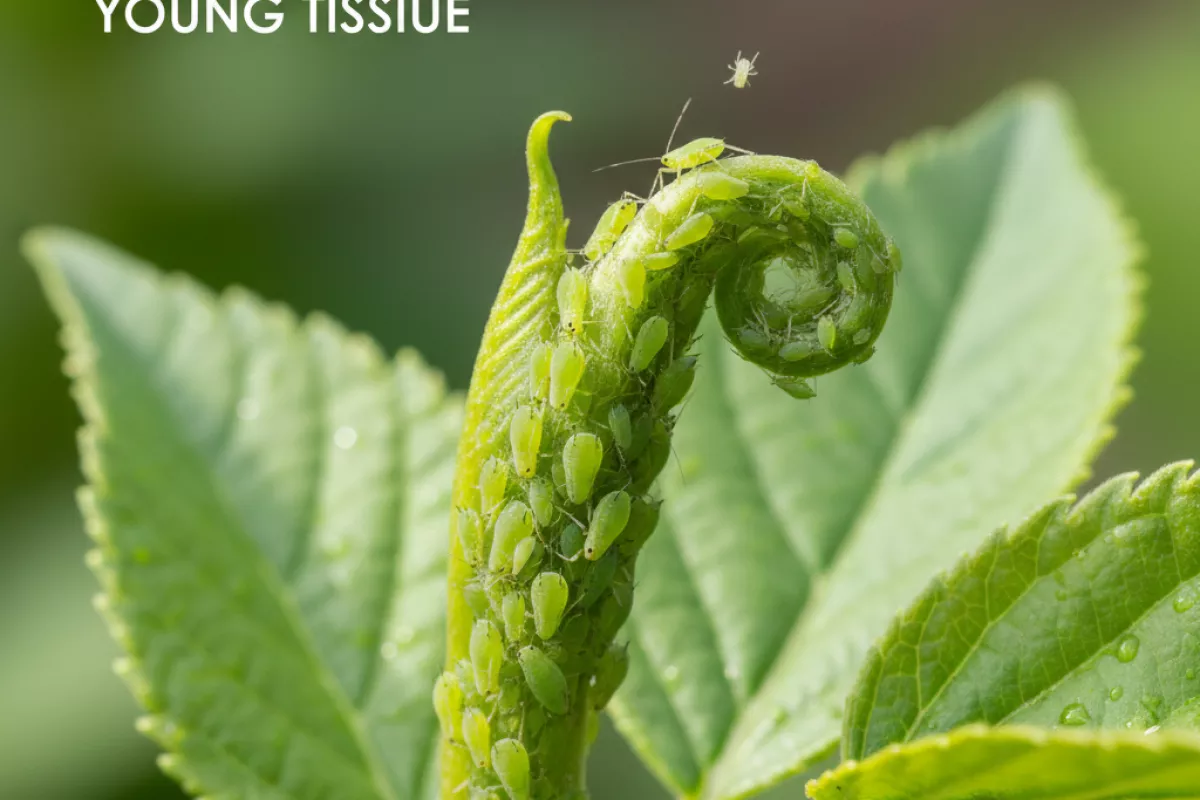
Fresh shoots and leaf tips are basically the plant’s “high-traffic” zones for sugars and amino acids. As new cells expand, the plant sends a steady stream of sap to those growing points, and that sap tends to be richer and easier to tap than what’s moving through older, tougher leaves and stems.
Aphids feed on phloem sap, and they do best where the flow is strong and the chemistry is favorable. On tender growth, they can insert their mouthparts with less effort, and the pressure in the phloem often helps keep food moving into them once they’ve found a good spot.
- More soluble nutrients per sip: Developing tissue pulls in sugars, nitrogen compounds, and other mobile nutrients. That means aphids may get more usable energy and building blocks without having to process as much dilute sap.
- Softer cell walls: New leaves and stems haven’t fully thickened or lignified, so penetrating to the phloem is typically faster and less risky than on mature growth.
- Stronger “sink” activity: Growing tips act like magnets for resources. This sink-driven transport keeps phloem moving toward the exact places aphids prefer to cluster.
- Lower early defenses: Some plants ramp up defensive compounds as tissues mature. Young growth can be comparatively under-defended for a short window, giving aphids time to establish colonies.
- Rapid reproduction payoff: When food quality is high, aphids can mature and reproduce faster, so a small group on a tip can turn into a noticeable infestation quickly.
This is also why you’ll often see ants patrolling new shoots: the same sap richness that benefits aphids leads to more honeydew, which attracts ant “bodyguards.” If you’re scouting a plant, checking the newest 5 cm (2 in) to 10 cm (4 in) of growth usually reveals problems earlier than inspecting older leaves.
How feeding affects plant development
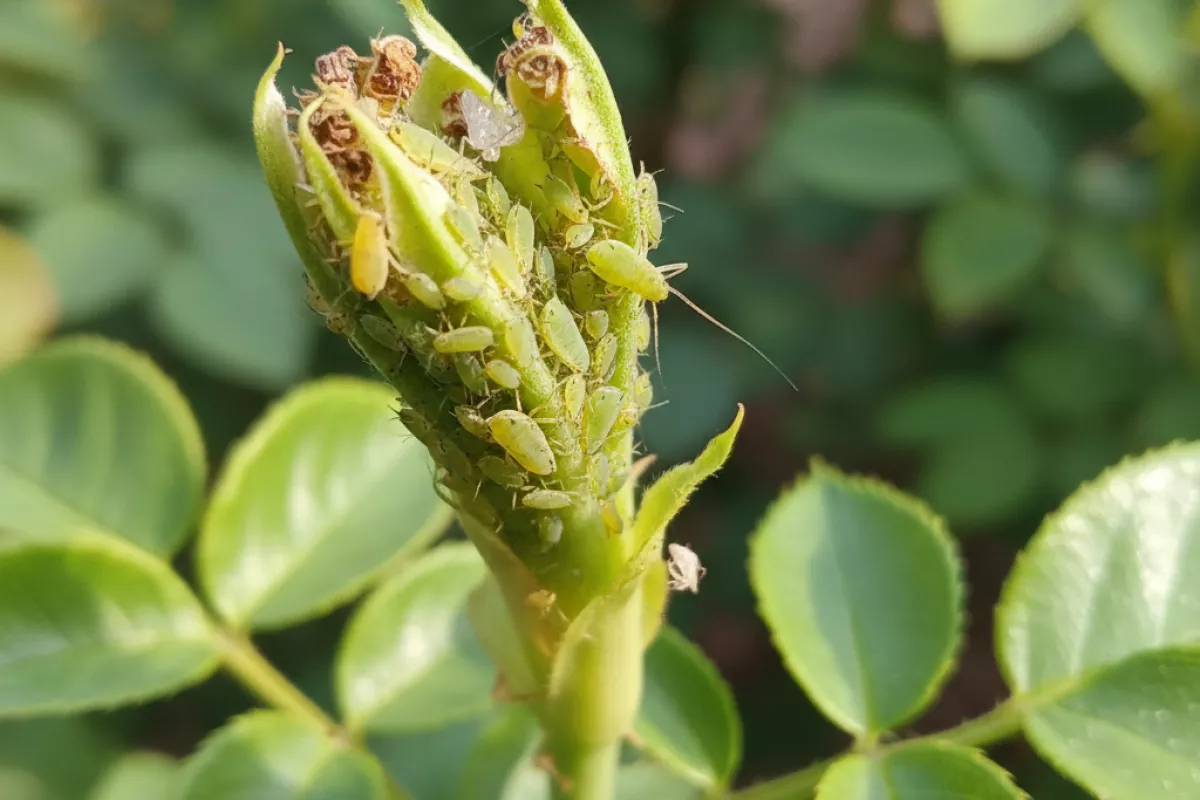
Aphids don’t just “sip” sap and move on. When they feed, they tap into the plant’s phloem (the sugar-transport system) and inject saliva that can interfere with normal growth signals. Because the newest tips are where cells are dividing fastest and tissues are still soft, that disruption shows up there first as misshapen leaves, stalled shoots, and weak flower or fruit set.
- They divert energy away from building new tissue. Phloem sap is rich in sugars and amino acids meant to fuel expanding leaves and elongating stems. Heavy feeding on a tender tip can leave less fuel for cell expansion, so new leaves stay smaller and shoots may “pause” between growth spurts.
- Saliva can scramble growth regulation. Aphid saliva contains compounds that help keep sap flowing, but it can also trigger hormone-like responses in the plant. The result is often twisted or cupped foliage, shortened internodes (the spaces between leaves), and a rosetted, bunched-up look at the growing point.
- New growth gets physically deformed as it unfolds. Leaves that are still folded or tightly rolled are easy to distort. Once they open, the damage is “locked in,” which is why older leaves may look fine while the newest ones emerge wrinkled or puckered.
- They weaken stems and buds at the exact time they’re forming. When colonies sit on shoot tips and flower clusters, buds may abort, petals can be misshapen, and stems may stay thin and floppy because the plant can’t allocate enough carbohydrates to strengthen tissues.
- Honeydew encourages secondary problems. Excess sugar excreted as honeydew coats nearby leaves and tips, making them sticky and reducing light capture. It also feeds sooty mold, which doesn’t infect the plant directly but can further cut photosynthesis and slow recovery.
- They can spread viruses that permanently alter growth. Some aphids transmit plant viruses while probing. Viral symptoms often concentrate in new leaves first, showing up as mottling, yellowing, ring patterns, or persistent distortion even after the insects are gone.
| What you see on tips | What’s likely happening inside the plant | Why it’s most obvious on new growth |
|---|---|---|
| Cupped, curled, or blistered young leaves | Saliva-triggered changes in cell expansion and hormone signaling | Soft, rapidly expanding tissues deform easily and keep that shape as they mature |
| Short, bunched shoots (rosetting) and tight internodes | Growth regulation shifts; reduced elongation | The growing point is where stem length is determined day by day |
| Stunted tips or “stalled” new leaves | Loss of sugars/amino acids from phloem reduces energy for building tissue | Developing leaves have the highest demand for transported sugars |
| Sticky residue, dull leaves, black film later | Honeydew buildup and sooty mold growth reduces photosynthesis | Honeydew drops from colonies clustered on upper shoots and leaf undersides |
| Persistent mottling or distortion even after aphids are controlled | Virus transmission during probing and feeding | Viruses express symptoms most strongly in newly forming tissues |
One useful clue is timing: if the plant’s older leaves remain fairly normal while the newest flush looks increasingly distorted, that pattern fits sap-feeding on the growing points. If the whole plant is uniformly pale or slow, you’re more likely dealing with a broader stress (root issues, low nitrogen, drought) rather than tip-focused feeding alone.
If yellowing starts spreading beyond the tips or appears evenly across older leaves, aphids may not be the main cause. In those cases, reviewing common yellow leaf causes can help rule out nutrient imbalance, watering stress, or root-related issues before focusing on pests alone.
Signs of damage on fresh shoots
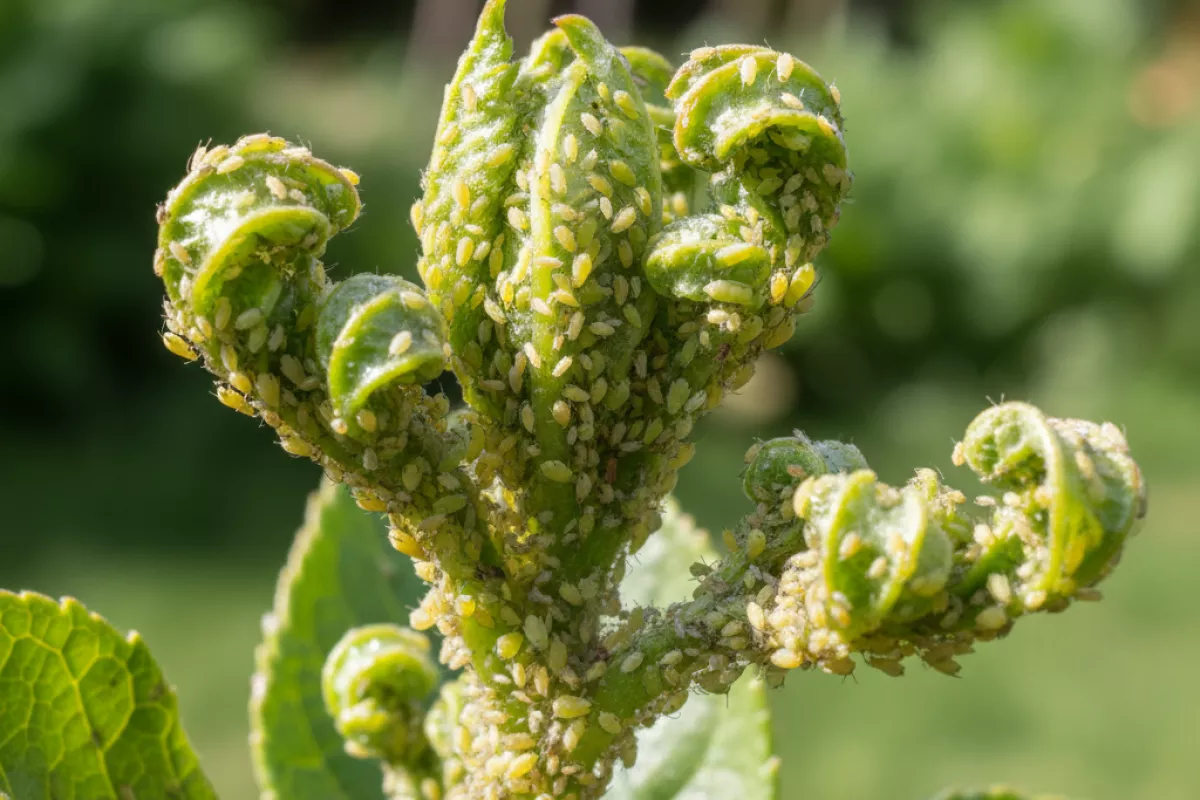
On tender tips, aphid feeding shows up fast because the tissue is thin and growing quickly. The first clues are usually subtle changes in texture and shape rather than obvious holes or chew marks.
- Curled or twisted new leaves that look crumpled, cupped, or tightly rolled. This happens when sap loss and saliva injection disrupt normal expansion.
- Stunted tip growth, where the shoot stops elongating and the newest leaves stay small and crowded.
- Sticky residue (honeydew) on the newest leaves or nearby surfaces. If you touch the foliage and it feels tacky, that’s a common early sign.
- Shiny or wet-looking patches on leaves, often paired with tiny pale specks where the insects have been feeding.
- Black, sooty film developing later on top of the sticky layer. This is sooty mold growing on honeydew, not the plant tissue itself.
- Yellowing along veins or mottled paling on the freshest leaves, especially when the infestation has been active for several days.
- Soft, weak stems at the tip that bend more easily than older growth, sometimes leading to drooping even when the plant is watered.
- Ant activity traveling up and down stems. Ants often “farm” aphids for honeydew, so increased ant traffic can be an indirect clue.
- Bud and flower distortion (on flowering plants): buds may fail to open, open misshapen, or drop early.
| What you notice on the tip | What it usually points to |
|---|---|
| Leaves tightly curled with clusters tucked inside | Aphids feeding in protected folds; colonies often hidden from quick inspections |
| Tacky feel on new leaves or nearby pots/benches | Honeydew buildup from sap feeding |
| Black coating on sticky areas | Sooty mold growing on honeydew (a follow-on issue) |
| New growth stays short; internodes look compressed | Ongoing sap loss and disrupted growth hormones in the shoot tip |
| Buds distorted or failing to open | Feeding concentrated at buds where tissues are most tender |
If you’re unsure, check the newest 2–5 cm (0.8–2 in) of growth with a close look. Aphids often sit on the underside of the youngest leaves, along midribs, or right at the junction where the leaf meets the stem, so damage can be obvious before the insects are.
Risks for growth and branching
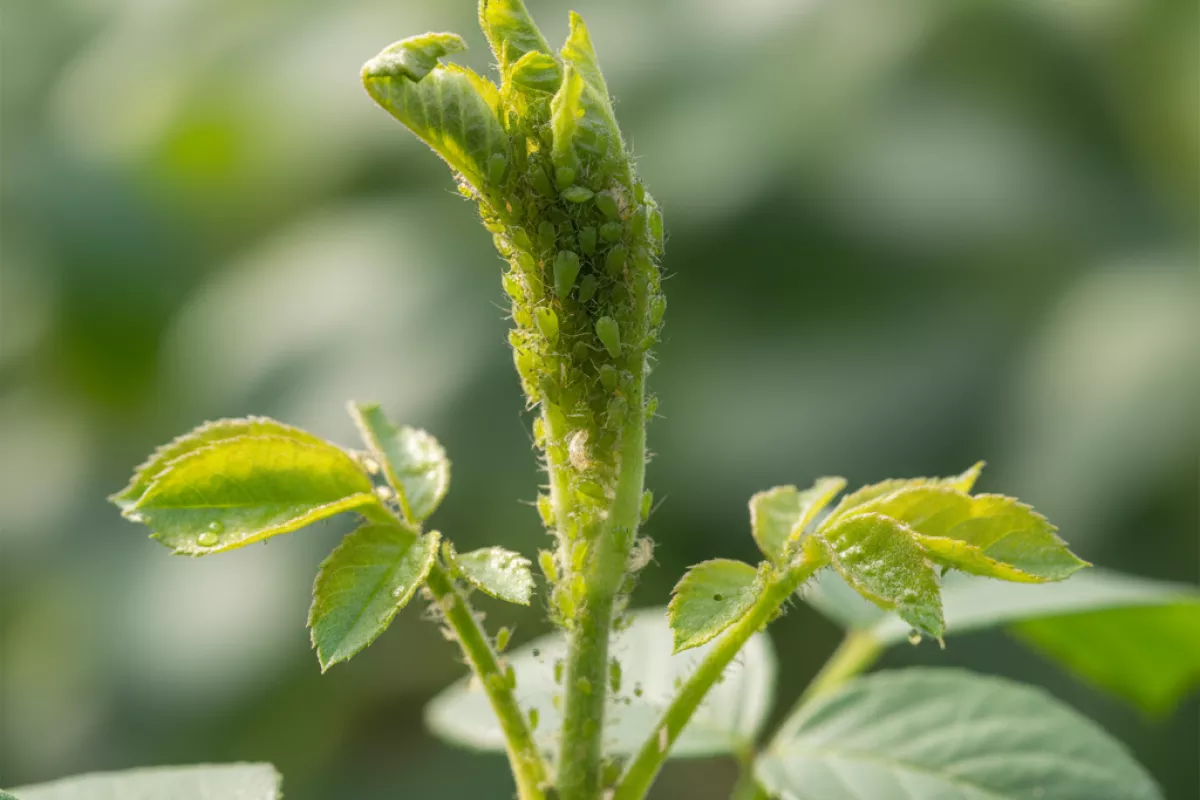
Tip feeding hits a plant where it’s most “in charge”: the soft, actively dividing tissues that set height, leaf size, and the pattern of side shoots. When aphids tap into those tender stems and buds, they don’t just remove sap; their saliva can disrupt growth signals, and the plant often responds with distorted, uneven development.
- Stunted extension growth: New shoots may elongate slowly or stop altogether because the colony is drawing resources from the same tissues that power rapid growth.
- Twisted or cupped leaves: Damage to expanding leaves shows up as puckering, curling, or a “crinkled” look that won’t flatten out later, even after the insects are gone.
- Misshapen tips and buds: Flower buds and fresh leaf clusters can deform or fail to open properly, which can reduce bloom and delay the next flush of growth.
- Reduced branching where you want it: If the terminal (top) growth is weakened, the plant may not build enough energy to push healthy lateral shoots, leading to sparse, uneven branching.
- Excess branching where you don’t: Sometimes the opposite happens—injured tips lose apical dominance and the plant throws out multiple weak side shoots, creating a “witches’ broom” look that’s brittle and hard to train.
- Higher risk of breakage: Soft, stretched new stems can become thin and fragile, so wind, handling, or the weight of wet foliage can snap tips more easily.
- Sticky honeydew and secondary problems: Honeydew coats young leaves and stems, attracting ants and encouraging sooty mold. That dark film blocks light and can further slow photosynthesis on already stressed new growth.
- Greater disease vulnerability: Feeding punctures and stressed tissue can make it easier for pathogens to gain a foothold, especially around crowded buds and curled leaves where moisture lingers.
The long-term effect is often a plant that looks “off” for the rest of the season: uneven internode spacing, lopsided structure, and weaker future shoots. Catching aphids early on the tips matters because once those tissues harden, the distortion is mostly permanent—even if the plant later resumes normal growth.
Protection strategies for new growth
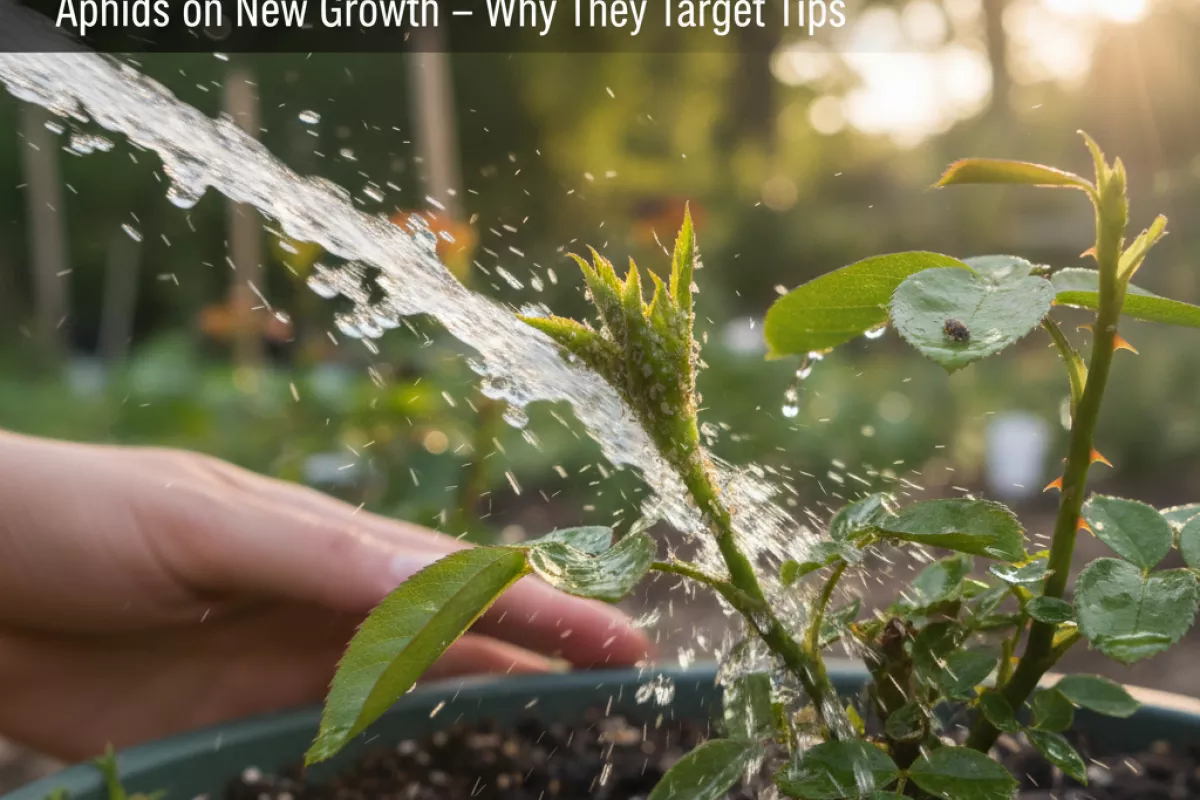
Focus on shielding the tender tips while the plant hardens off. The goal isn’t to sterilize your garden; it’s to keep sap-suckers from building a colony on the softest tissue long enough for leaves and stems to toughen and for natural predators to catch up.
Keeping healthy roots also plays an indirect role in pest resistance. Plants that receive consistent, balanced watering produce firmer growth and recover faster from minor feeding, while stressed roots often lead to softer, more aphid-friendly shoot tips.
- Inspect early and often. Check shoot tips, the undersides of the newest leaves, and flower buds every 2–3 days. Catching a few aphids before they cluster is the easiest “treatment” you’ll ever do.
- Use a firm water rinse. A sharp spray dislodges most aphids from new growth without chemicals. Aim at the underside of leaves and repeat as needed. Do it in the morning so foliage dries quickly.
- Pinch or prune the worst tips. If a shoot is heavily curled and packed with insects, remove that section and discard it. This works especially well on fast-growing annuals and many shrubs, where losing 2–5 cm (0.8–2 in) of a tip is less stressful than prolonged feeding.
- Block ants from “farming” aphids. Ants protect colonies in exchange for honeydew, which makes control much harder. Use sticky barriers on trunks or supports, or manage ant trails so predators can reach the insects.
- Encourage beneficial insects. Lady beetles, lacewings, hoverfly larvae, and tiny parasitic wasps often clean up outbreaks once they arrive. Avoid broad-spectrum insecticides that knock them back; a small aphid presence can actually help keep predators resident.
- Try insecticidal soap or horticultural oil when rinsing isn’t enough. These work by contact, so coverage matters—especially on leaf undersides and tight curls. Spray in mild conditions (avoid hot sun) and test on a small area first, since tender tips can be sensitive.
- Use a soft physical barrier for high-value plants. Lightweight row cover or fine mesh can protect vulnerable flushes on vegetables and young ornamentals. Keep the fabric from pressing on tips, and remove it during flowering if pollinators are needed.
- Dial in plant stress. Over-fertilizing (especially high nitrogen) can create extra-soft, aphid-friendly growth. Water consistently and feed moderately so the plant isn’t pushing overly lush shoots that stay tender longer.
- Manage nearby “aphid magnets.” Weedy mustards, volunteer seedlings, and certain ornamentals can act as reservoirs. Remove or monitor them so colonies don’t keep reinvading the same new shoots.
Long-term prevention methods
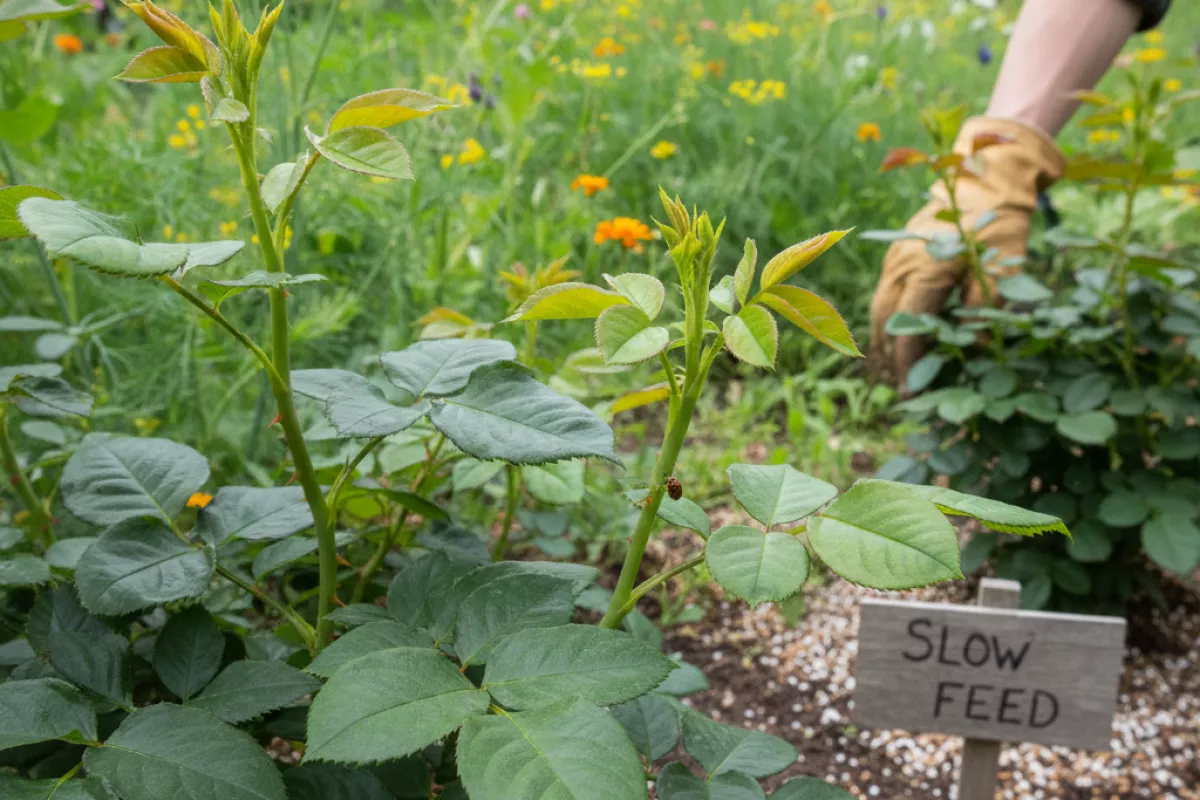
Reduce attacks on tender tips by making the plant less “inviting” during flushes of soft growth and by keeping natural enemies active. The goal isn’t a sterile garden; it’s steady growth, balanced nutrition, and a habitat where small outbreaks get cleaned up before they distort new leaves.
- Go easy on fast nitrogen. Heavy feeding (especially quick-release nitrogen) pushes lush, thin-walled shoots that sap-suckers prefer. Use slower-release fertilizers and avoid “rescue feeding” right after pruning, when plants are already primed to push soft tips.
- Water for consistency, not extremes. Cycles of drought then heavy watering can trigger a burst of tender regrowth. Aim for even moisture and improve soil structure with compost so plants don’t swing between stress and sudden flushes.
- Prune and pinch strategically. Frequent light pinching can create a constant supply of tender tips. Instead, time pruning so the plant produces a more synchronized flush you can monitor closely for 1–2 weeks, then let growth harden off.
- Keep ants from “farming” them. Ants protect colonies in exchange for honeydew, which makes infestations persist on shoot tips. Use sticky barriers on trunks or supports, and remove bridges (touching weeds, ties, or branches) that let ants bypass the barrier.
- Build a predator-friendly garden. Lady beetles, lacewings, hoverflies, and tiny parasitic wasps do best when there’s nectar, pollen, and shelter nearby. Plant small-flowered herbs and natives, and leave some non-problem plants to host harmless prey so beneficials stick around.
- Use physical disruption early. A firm water spray aimed at the growing tips knocks many off before they establish. Do it in the morning so foliage dries quickly, and repeat every few days during peak pressure.
- Choose resistant varieties when possible. Some cultivars produce tougher new growth or different sap chemistry that slows colonization. If one plant is repeatedly covered while others aren’t, consider replacing it with a less susceptible option.
- Manage nearby “source” plants. Weedy mustards, volunteer seedlings, and heavily infested ornamentals can act as reservoirs. Remove or thin them before they seed, or isolate them so outbreaks don’t spill onto your prized new shoots.
- Keep leaves clean and airy. Crowded, shaded growth is harder for predators to patrol and easier for colonies to hide. Thin dense interiors and avoid overhead fertilizing practices that create a soft, congested canopy.
- Use low-impact sprays only as a backstop. If you must intervene, insecticidal soap or horticultural oil works best on small colonies and needs thorough coverage of tips and leaf undersides. Spray in mild conditions (around 10–27°C (50–80°F)) and avoid stressing plants during heat or drought.
| Situation on new growth | Prevention focus | What to do routinely |
|---|---|---|
| Repeated outbreaks after feeding | Slow the “lush tip” cycle | Switch to slow-release nutrition, avoid high-nitrogen spikes, and time feeding after the main flush hardens |
| Colonies persist despite predators | Stop ant protection | Apply sticky barriers, prune contact points, and control aphid-tending ants on nearby plants |
| Problems peak after pruning | Synchronize and monitor flushes | Prune in planned waves, inspect tips every 2–3 days for 1–2 weeks, and knock off early colonies with water |
| Infestations move in from nearby plants | Reduce local sources | Remove weedy hosts, isolate chronically infested ornamentals, and encourage hoverflies/lacewings with small flowers |
If tip distortion is accompanied by general decline or poor recovery after aphids are controlled, it’s worth taking a moment to check root rot. Root stress can weaken new growth and make plants far more vulnerable to repeated pest pressure.
If you’re consistent with the basics—moderate feeding, steady watering, ant control, and a yard that supports beneficial insects—most plants outgrow minor sap-sucker pressure and the newest tips stay cleaner without frequent spraying.