Low-Light Plants That Need Minimal Care

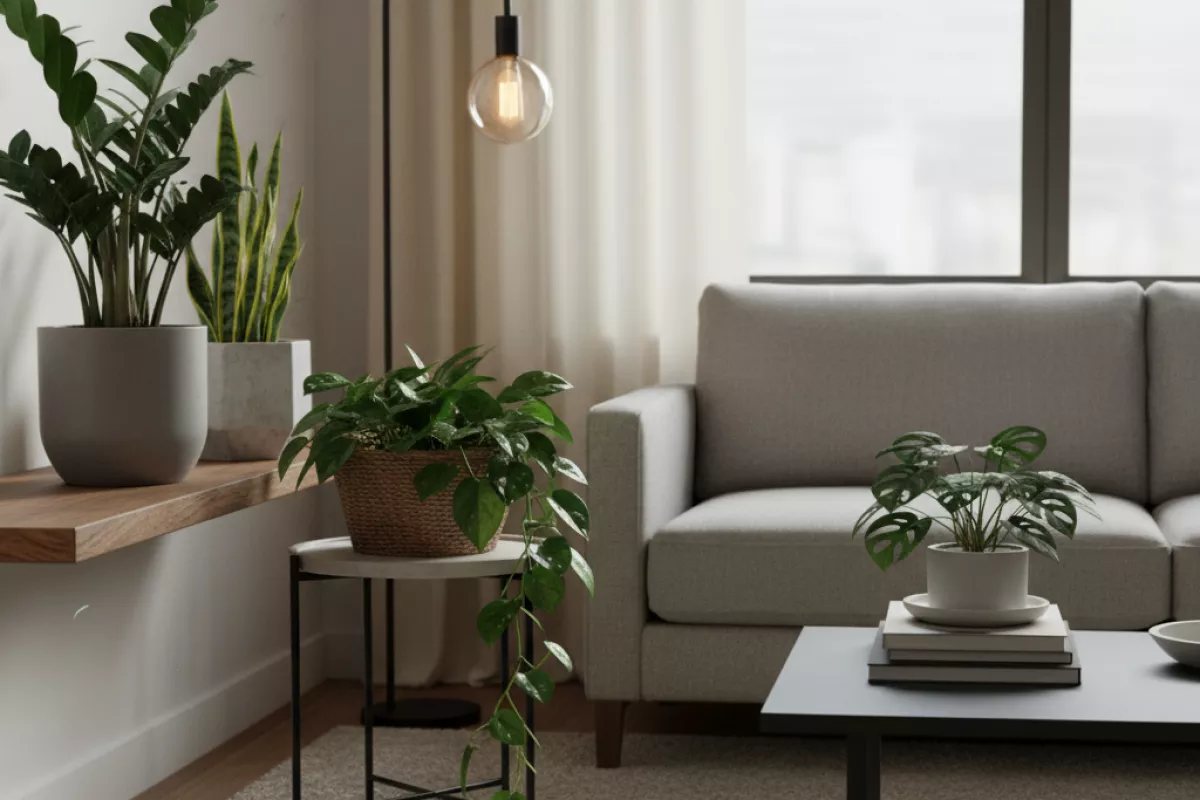 Learn what makes a plant truly minimal-care and which species cope with low light and little attention. It covers watering and fertilizing schedules, how to prevent neglect problems, the best low-maintenance containers, and long-term survival tips.
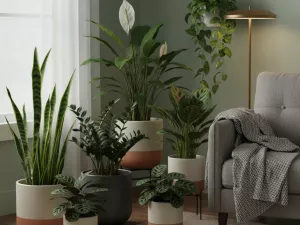
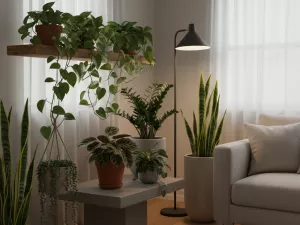
If your home has dim corners and you want greenery without constant fuss, low-light, low-maintenance houseplants are a smart fit. Many tolerate indirect light, missed waterings, and typical indoor air while still looking fresh. Good picks include snake plant, ZZ plant, pothos, cast iron plant, and peace lily. Place them away from harsh sun, water only when the top soil dries, and rotate occasionally for even growth.
What defines minimal-care plants
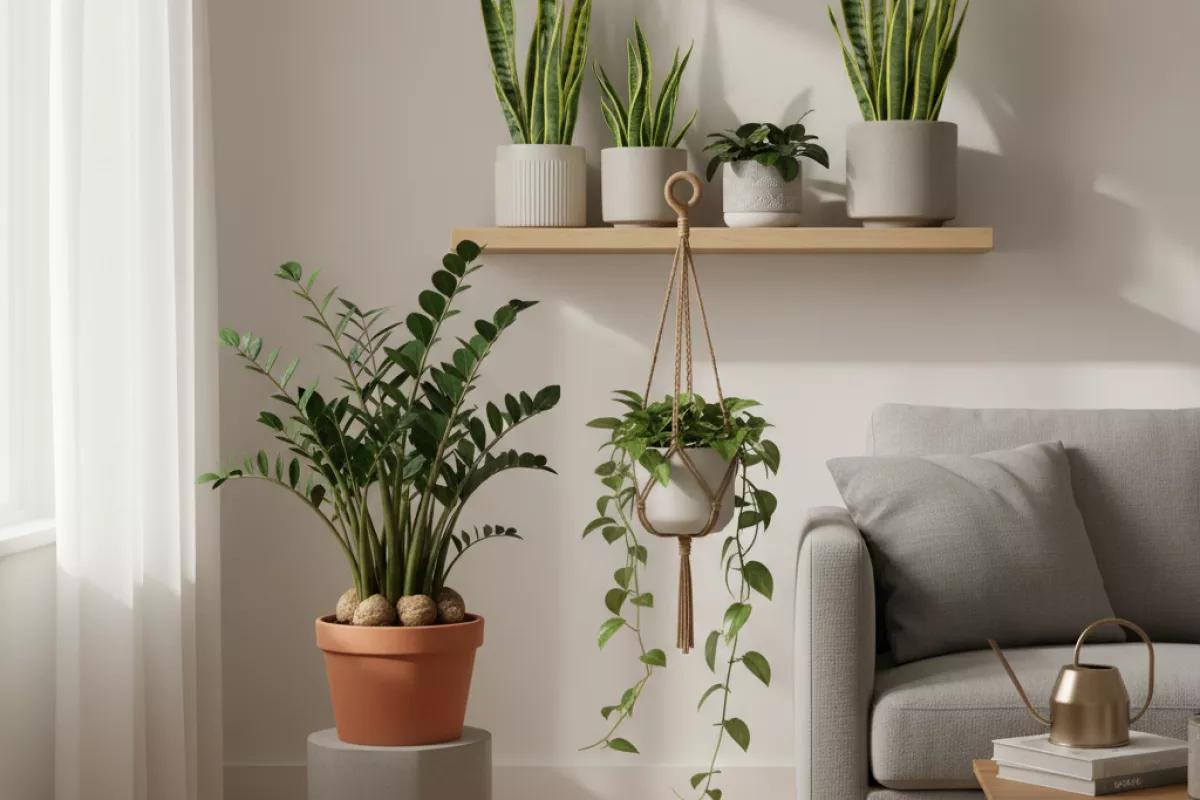
Low-effort houseplants are the ones that stay stable when conditions aren’t perfect. They tolerate dim corners, irregular watering, and the normal temperature swings of a home without turning into a constant troubleshooting project. In practice, that means they grow slowly, store water well, and don’t demand frequent feeding or pruning.
Some plants don’t just survive with less attention — they actually thrive in shade because their growth habits and water use are naturally suited to dim indoor spaces.
- They handle low light without stretching badly. These plants can photosynthesize in shade and still keep compact growth, even a few feet from a window (about 1–2 m / 3–6 ft).
- They’re forgiving about watering. Many have thick leaves, canes, or rhizomes that store moisture, so missing a watering by several days usually isn’t a crisis.
- They don’t need constant fertilizing. A light feeding during the growing season is typically enough, and some do fine with none for months.
- They’re not fussy about humidity. They cope with average indoor air rather than requiring humidifiers or pebble trays to prevent leaf damage.
- They resist common indoor pests and diseases. Tougher leaves and slower growth often mean fewer outbreaks, especially when the plant isn’t stressed.
- They fit “set-and-check” routines. If your care plan is basically “water when the pot feels light and the top layer is dry,” you’re in the right category.
A simple way to tell if a plant truly qualifies: it should look fine after a normal week of neglect. If it collapses after missing one watering, needs bright sun to avoid leggy growth, or demands frequent repotting, it’s probably not in the minimal-maintenance group.
| Trait to look for | What it means for your routine |
|---|---|
| Thick, waxy, or succulent-like leaves | Stores water; watering can be less frequent and more flexible. |
| Slow to moderate growth | Less pruning, fewer repots, and fewer “why is it drooping today?” surprises. |
| Strong stems/canes or rhizomes | Better tolerance of low light and occasional missed care. |
| Leaves that stay firm in shade | Maintains shape and color even away from direct sun. |
| Adaptable to average indoor humidity | No special equipment needed; normal home air is usually enough. |
One last note: “minimal care” doesn’t mean “no care.” Even the toughest low-light options do best with a quick monthly check for dust on leaves, a drain hole in the pot, and watering that matches the season (typically less in winter, more in active growth).
Species that require little attention
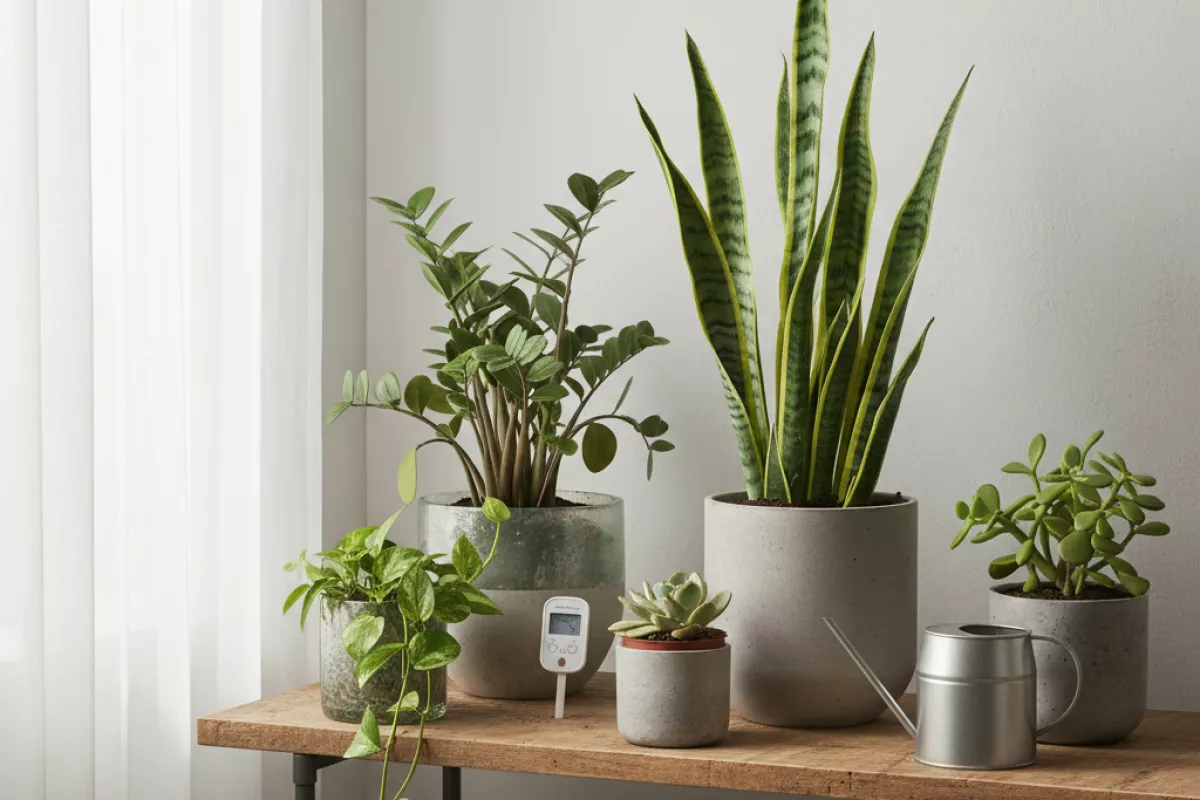
When light is limited, the easiest houseplants are the ones that grow slowly, store water, and don’t punish you for missing a watering. Choosing best plant types for dim interiors sets realistic expectations from the start: steady growth, fewer interventions, and less risk of decline. The goal is low-effort care — keep them out of harsh sun, water only when the potting mix has dried appropriately, and avoid over-fertilizing.
| Plant | Why it’s low-effort in low light | Watering rhythm (typical) | Simple “keep it happy” note |
|---|---|---|---|
| Snake plant (Sansevieria/Dracaena trifasciata) | Tolerates shade and irregular care; thick leaves hold moisture. | Every 2–4 weeks (14–28 days), after soil dries fully | Use a pot with drainage; too much water is the main risk. |
| ZZ plant (Zamioculcas zamiifolia) | Rhizomes store water; handles dim corners without drama. | Every 2–3 weeks (14–21 days), once the top 5 cm (2 in) is dry | Rotate the pot monthly for even growth. |
| Pothos (Epipremnum aureum) | Adapts to a range of light; bounces back after minor neglect. | About weekly to biweekly (7–14 days), when top 2–3 cm (1 in) is dry | Trim leggy vines; cuttings root easily in water. |
| Heartleaf philodendron (Philodendron hederaceum) | Forgiving growth habit; tolerates lower light than many vines. | Every 1–2 weeks (7–14 days), when the top 2–5 cm (1–2 in) dries | Wipe leaves occasionally so they can use available light. |
| Cast iron plant (Aspidistra elatior) | Slow-growing and tough; accepts low light and missed waterings. | Every 2–3 weeks (14–21 days), after the top half dries | Don’t overpot; slightly snug roots help prevent soggy soil. |
| Peace lily (Spathiphyllum) | Signals thirst by drooping; tolerates shade better than many bloomers. | About weekly (7 days), when top 2–3 cm (1 in) is dry | Prefers evenly moist, not waterlogged; empty saucers after watering. |
| Chinese evergreen (Aglaonema) | Handles low light and average indoor humidity; steady, slow growth. | Every 1–2 weeks (7–14 days), when top 5 cm (2 in) is dry | Keep away from cold drafts below 15°C (59°F). |
| Spider plant (Chlorophytum comosum) | Resilient and adaptable; tolerates moderate shade and missed care. | Every 1–2 weeks (7–14 days), when top 2–5 cm (1–2 in) is dry | Use filtered water if tips brown; salts can build up. |
- Water less in dim rooms. Lower light usually means slower drying, so check the mix before watering rather than following a strict calendar.
- Drainage matters more than fertilizer. A pot with holes and a fast-draining mix prevents the most common failure: root rot.
- Keep expectations realistic. In shade, growth is slower and leaves may be smaller; that’s normal and often a sign the plant isn’t being pushed too hard.
Watering frequency for low-light plants
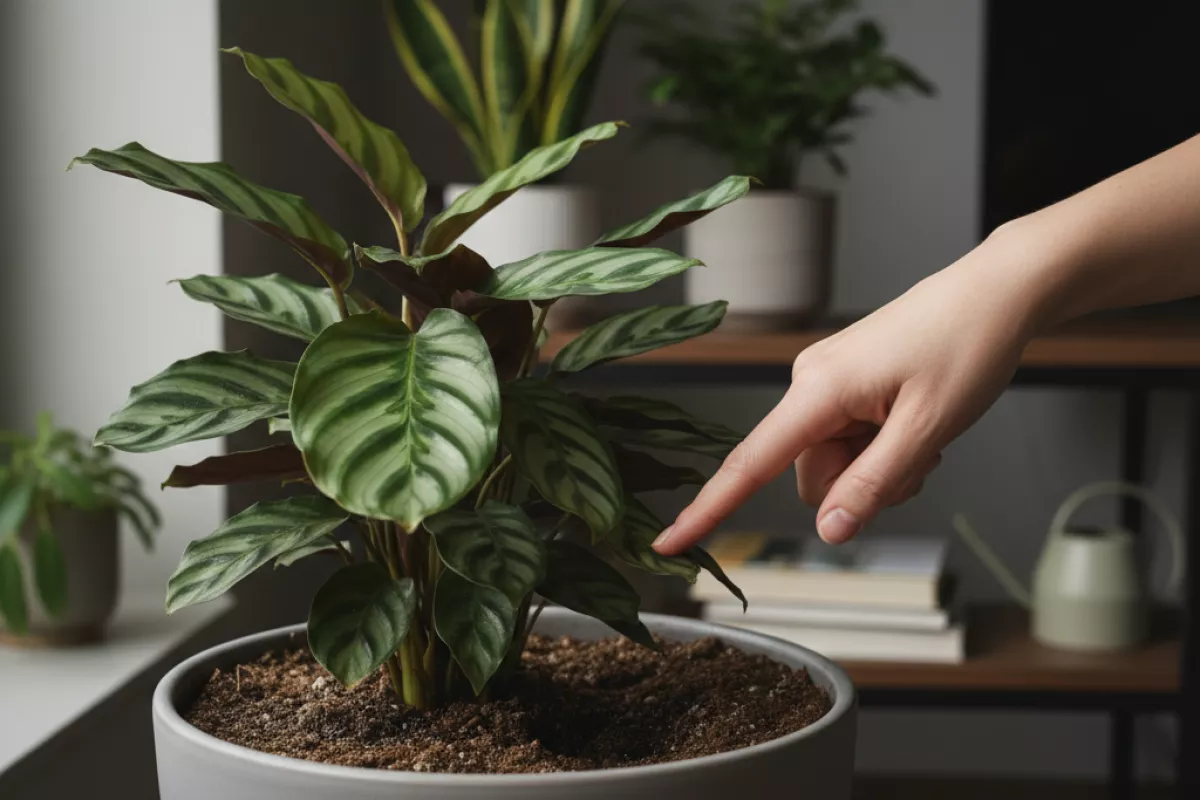
In dimmer rooms, soil dries more slowly because plants use less water and evaporation is reduced. That means the most common mistake is keeping the potting mix constantly damp. A simple rule: water only when the top layer has dried, then water thoroughly and let excess drain away.
Instead of watering on a fixed schedule, use quick checks that match low-light conditions:
- Finger test: If the top 2–5 cm (1–2 in) feels dry, it’s usually time; if it’s cool and moist, wait.
- Pot weight: Lift the pot after watering, then again a few days later. A noticeably lighter pot typically means the mix has dried down.
- Drainage check: Never let the pot sit in a saucer of water for more than 10–15 minutes (10–15 min), especially in low light.
| Plant type (common low-light picks) | Typical interval in low light | Dryness cue before watering | What overwatering often looks like |
|---|---|---|---|
| Snake plant (Sansevieria/Dracaena trifasciata) | Every 3–6 weeks (21–42 days) | Mix dry at least 5–8 cm (2–3 in) down | Soft base, yellowing, mushy roots |
| ZZ plant (Zamioculcas zamiifolia) | Every 3–5 weeks (21–35 days) | Top half of pot mostly dry | Drooping with yellowing, rotten rhizomes |
| Pothos / heartleaf philodendron | Every 1–2 weeks (7–14 days) | Top 2–5 cm (1–2 in) dry | Yellow leaves, soggy soil smell |
| Peace lily (Spathiphyllum) | Every 7–10 days (7–10 days) | Surface dry, pot slightly lighter | Constantly wet mix, brown/blackened stems |
| Cast iron plant (Aspidistra) | Every 2–3 weeks (14–21 days) | Top 5 cm (2 in) dry | Leaf yellowing and slow decline |
| Chinese evergreen (Aglaonema) | Every 10–14 days (10–14 days) | Top 3–5 cm (1–2 in) dry | Yellowing, limp stems, fungus gnats |
Season and indoor climate matter more than the calendar. In winter, many low-light houseplants need water less often because growth slows; in summer or near heating vents, the mix can dry faster. If your home sits around 18–21°C (65–70°F), expect longer gaps than a warmer space at 24–27°C (75–81°F).
If you’re unsure, it’s usually safer to wait an extra 2–3 days (2–3 days) than to water early. Most low-light, minimal-care plants handle slight dryness better than constantly wet soil.
Fertilizing needs and timing
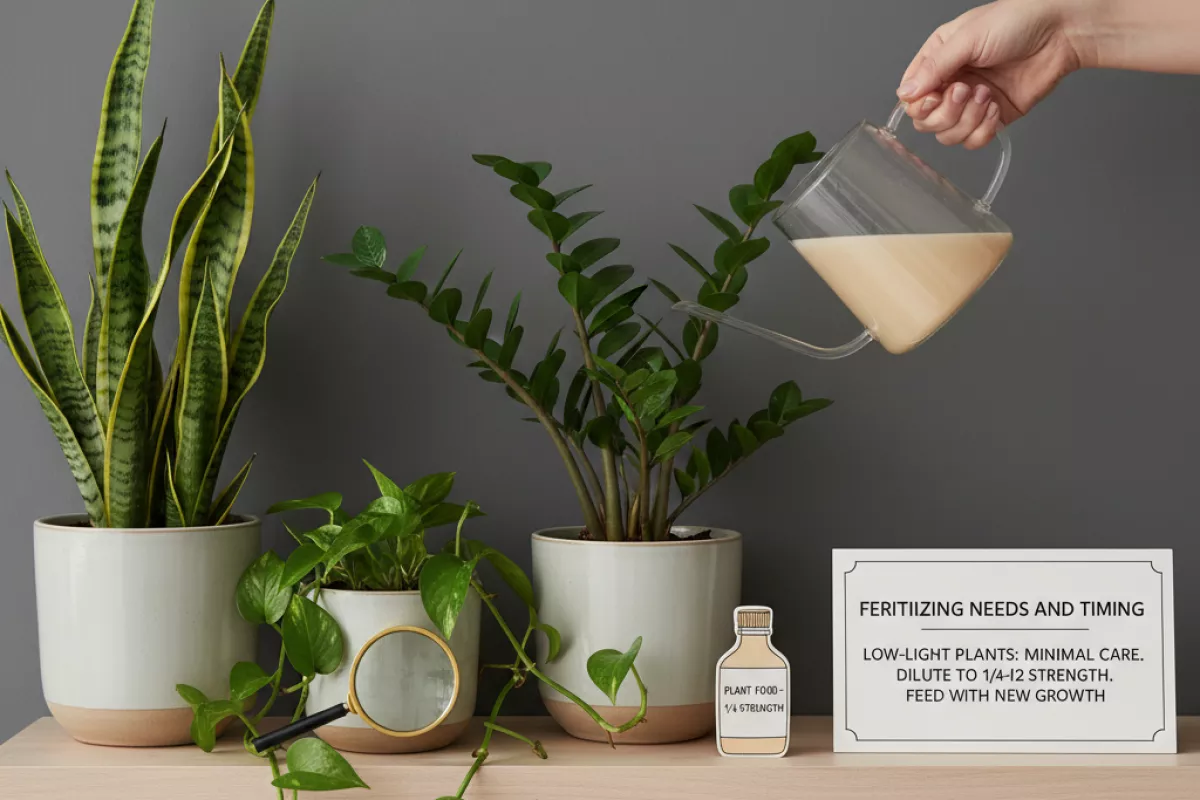
In low light, most houseplants grow slowly, so they use nutrients slowly too. That means overfeeding is a bigger risk than underfeeding: extra fertilizer salts can build up in the pot and stress roots, even when the plant looks “fine” at first.
- Use a light hand. If you fertilize, dilute to about 1/4 to 1/2 strength of the label rate. Low-light plants typically need less because they’re not producing as much new growth.
- Time it to growth, not the calendar. Feed only when you see fresh leaves or active growth. If your plant is holding steady (no new leaves for weeks), skip fertilizer.
- Most of the year, less is more. In many homes, late fall through winter is a “pause” period. If daylight is short or the plant is near a cool window, it’s usually best to stop feeding until growth resumes.
- Water first, then fertilize. Apply fertilizer to already-moist soil to reduce root burn. If the mix is bone dry, water, wait a bit, then feed.
- Choose gentle options. A balanced liquid fertilizer works well when diluted. Slow-release pellets can be convenient, but in low light they may release more than the plant can use, so apply sparingly.
- Flush occasionally. Every 2–3 months, run plain water through the pot to rinse out salts. A practical guide is using about 3–4 times the pot’s volume in water (for example, 1 L (34 fl oz) for a 250 ml (8.5 fl oz) pot volume).
| Plant type (common low-light picks) | When to feed | How often | Notes to avoid problems |
|---|---|---|---|
| Snake plant (Sansevieria/Dracaena) | Only during clear new growth | Every 8–12 weeks | Too much fertilizer can cause soft, weak growth; skip in winter. |
| ZZ plant (Zamioculcas) | Spring through early fall if pushing new shoots | Every 8–10 weeks | Rhizomes store nutrients; underfeeding is rarely an issue. |
| Pothos/heartleaf philodendron | When vines are actively adding leaves | Every 4–6 weeks | If leaves get smaller in low light, improve light first; fertilizer won’t fix it alone. |
| Peace lily | When producing new leaves or blooms | Every 6–8 weeks | Overfeeding can brown leaf tips; flush soil if tips worsen after feeding. |
| Cast iron plant (Aspidistra) | Only with steady growth | Every 10–12 weeks | Very tolerant of lean soil; focus on consistent watering instead. |
If you’re unsure, watch the plant: pale new leaves, slower-than-usual growth, and smaller leaves can suggest it’s time for a mild dose. But if you see crispy tips, a white crust on the soil, or sudden droop after feeding, pause fertilizing and flush the pot with plain water.
How to prevent neglect-related problems
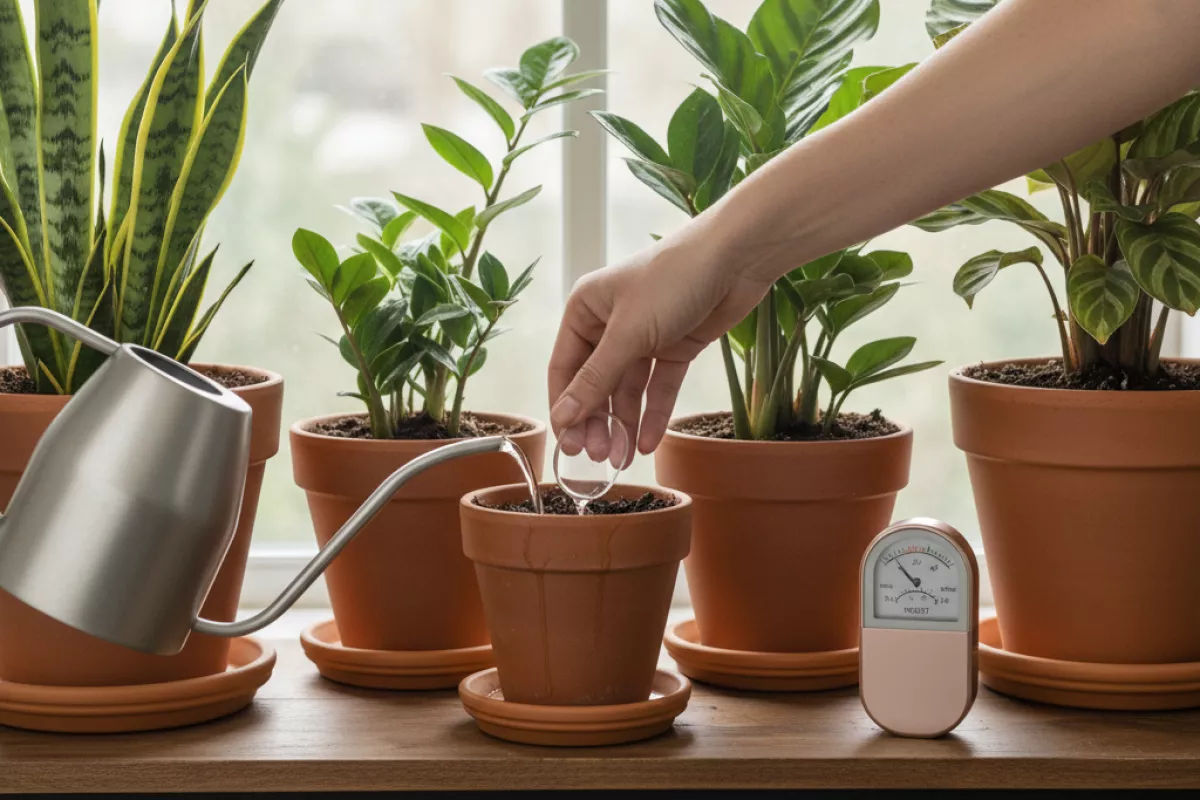
Most issues with low-light, minimal-care plants come from two extremes: staying wet for too long or getting so dry that roots and leaves start to fail. Regular checks for sticky residue signs help catch aphids early, before weak growth and pests start reinforcing each other.
- Use a pot with drainage and a saucer. If water can’t escape, low light slows evaporation and roots sit in moisture. Empty the saucer 10–15 minutes after watering.
- Pick the right soil texture for low light. Aim for a mix that dries in a reasonable time, not one that stays soggy. Dense soil blocks oxygen around roots, which is a common cause of decline in dim rooms.
- Water by checking the soil, not the calendar. Push a finger 5 cm (2 in) down. If it’s still damp, wait. If it’s dry at that depth, water thoroughly until a little drains out.
- Match pot size to the root ball. Oversized pots hold extra wet soil that roots can’t use. As a rule, size up by only 2–5 cm (1–2 in) in diameter when repotting.
- Give “low light” a consistent spot. Moving plants around often causes uneven watering needs. Keep them near a steady light source and rotate the pot a quarter turn every 2–4 weeks so growth stays balanced.
- Set a low-effort reminder system. A monthly phone reminder to do a quick soil check prevents long dry spells. If you travel, water right before leaving only if the soil is actually dry.
- Don’t fertilize a struggling plant. If growth is slow (common in dim rooms), extra fertilizer can build up salts. Feed lightly during active growth only, at half strength, about every 6–8 weeks.
| Neglect-related symptom | Most likely cause | Quick check | What to do next |
|---|---|---|---|
| Yellowing leaves, soft stems | Overwatering / poor drainage | Soil damp for more than 7–10 days | Let it dry, empty saucer, improve drainage; consider a chunkier mix |
| Brown crispy tips, leaf drop | Underwatering or very dry air | Soil dry below 5 cm (2 in) | Water deeply; then switch to soil-check watering to avoid long gaps |
| Drooping that doesn’t bounce back after watering | Root stress (often rot) | Musty smell, black/mushy roots | Trim damaged roots, repot into fresh airy mix; reduce watering frequency |
| Slow growth, pale leaves | Too little light or nutrient depletion | New leaves smaller; plant leaning toward light | Move a bit closer to a window; feed lightly only if the plant is otherwise healthy |
| Fungus gnats | Soil staying wet too long | Tiny flies near soil surface | Let top 5–8 cm (2–3 in) dry; reduce watering; use sticky traps if needed |
If you only adopt one habit, make it the soil check. It prevents both “forgot to water” and “watered to be safe” mistakes, which are the two most common ways low-light plants end up looking worse despite minimal care.
Best containers for easy maintenance
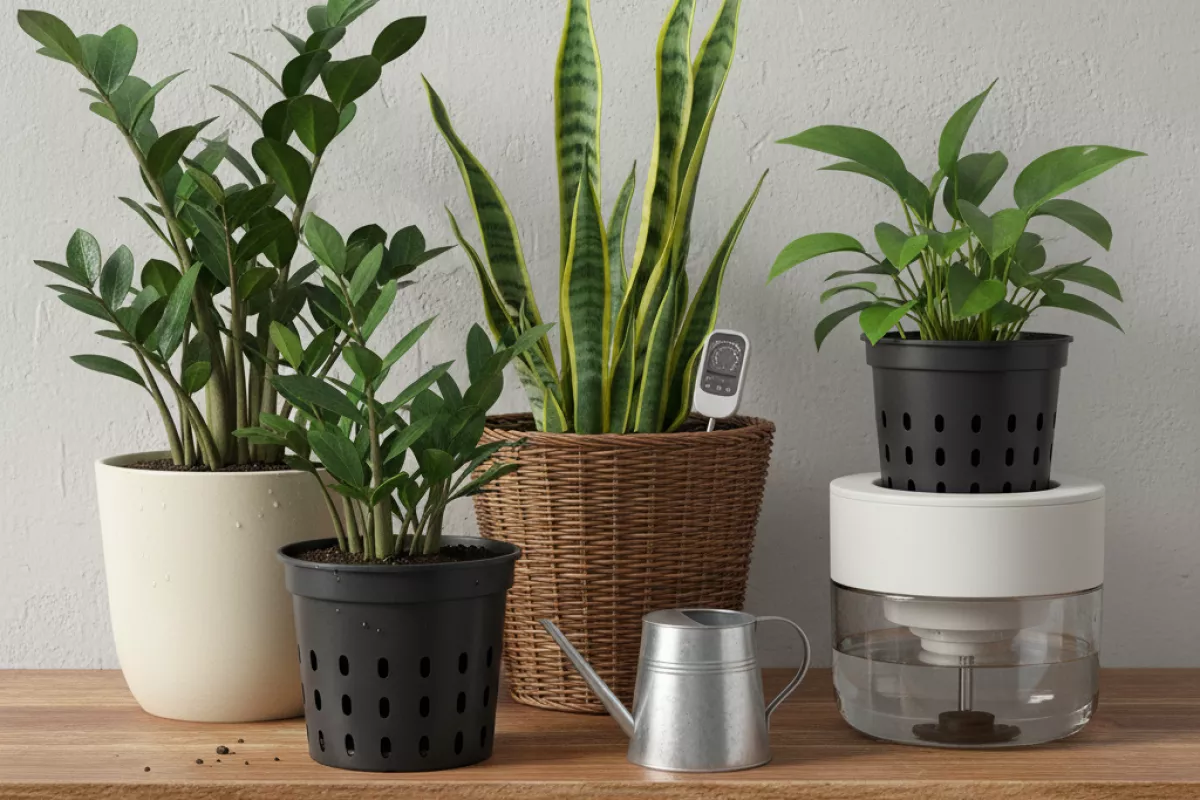
Low-light plants stay easiest when the pot does some of the work: steady moisture, reliable drainage, and a shape that makes watering and repotting simple. The goal is to reduce “guesswork” so you’re not constantly checking soil or dealing with soggy roots.
- Plastic nursery pots (inside a cachepot): Lightweight and forgiving, with consistent drainage holes. Slip the nursery pot into a decorative outer pot to catch drips and keep shelves clean. Just empty any standing water after 10–15 minutes.
- Self-watering planters with a reservoir: Helpful for pothos, peace lily, and many philodendrons because they buffer missed waterings. Choose models with a visible water window or float indicator so you don’t overfill.
- Terracotta (unglazed clay): Breathes and dries faster, which is useful if your space is cool or you tend to water too often. It can be a bit “thirsty,” so it’s best for plants that prefer drying slightly between waterings (many snake plants and ZZ plants do).
- Glazed ceramic with drainage: Holds moisture longer than terracotta and looks tidy, but only if it has a hole. If it doesn’t, treat it as a cover pot and keep the plant in a plastic inner pot for safe drainage.
- Hanging pots with saucers or drip trays: Great for saving surface space in dim rooms. Pick a design where the tray is easy to remove and empty, so you’re not dripping on floors or rugs.
| Container type | Why it’s low-effort | Watch out for | Best fit (examples) |
|---|---|---|---|
| Plastic pot + outer cover pot | Reliable drainage; easy to lift out and water in the sink | Don’t let water pool in the outer pot | Pothos, philodendron, Chinese evergreen |
| Self-watering reservoir pot | Buffers missed waterings; steadier moisture for low light | Can stay too wet if the plant is slow-growing | Peace lily, pothos, ferns (if you grow them) |
| Unglazed terracotta | Helps prevent overwatering by drying faster | Needs more frequent watering in warm, dry rooms | Snake plant, ZZ plant, jade (in bright shade) |
| Glazed ceramic with drainage hole | Neat look; moisture stays more stable than clay | Heavy; can trap water if drainage is small or blocked | Cast iron plant, dracaena, peace lily |
- Pick the right size to slow down maintenance. A pot that’s 2–5 cm (1–2 in) wider than the root ball is usually enough; oversized pots hold extra wet soil that low-light plants won’t use quickly.
- Prioritize drainage over aesthetics. If you love a pot without a hole, keep the plant in a holed inner pot and lift it out to water, letting it drain fully before returning it.
- Make cleanup easy. Use a saucer, tray, or felt pad under heavy pots; it prevents water rings and makes quick checks less annoying.
Long-term survival tips
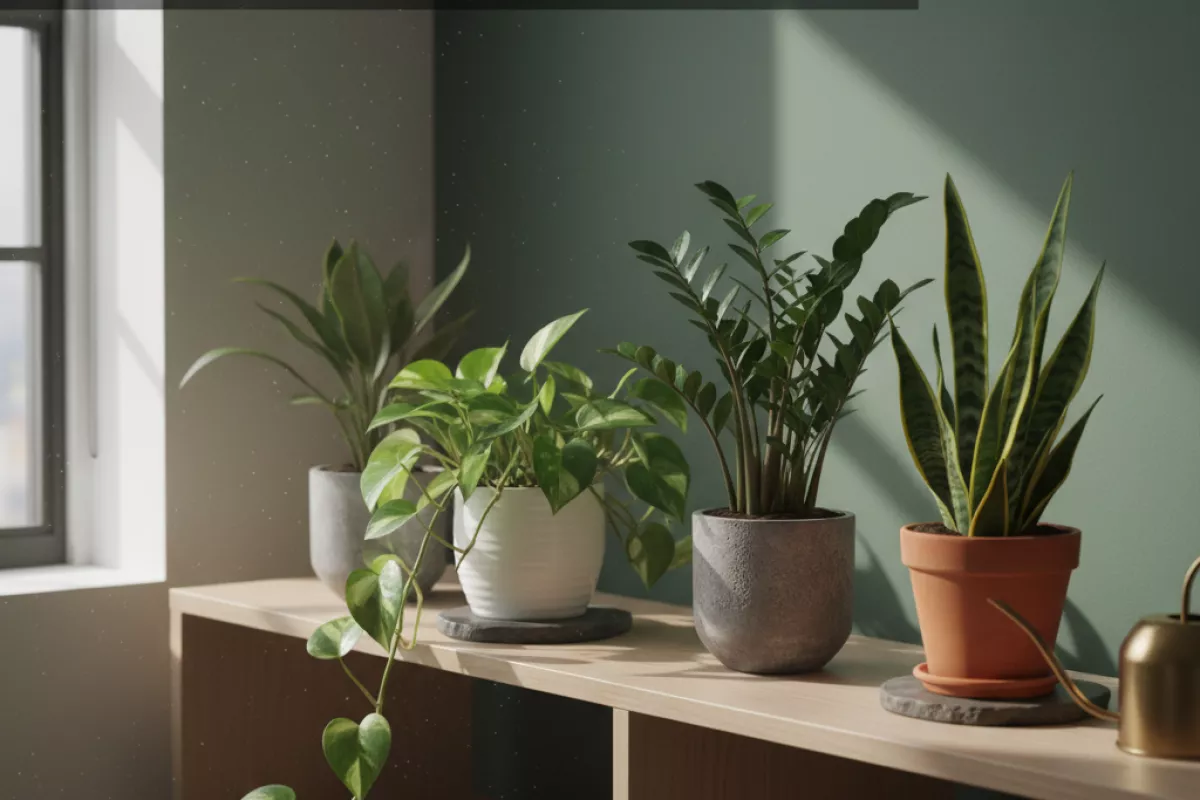
Keep low-light houseplants going for years by leaning into consistency: steady placement, cautious watering, and small course-corrections instead of big “rescues.” Most problems in dim rooms come from roots staying wet too long, not from the light itself.
- Pick a stable spot and stop rotating constantly. In low illumination, plants adjust slowly. Move them only when you see clear stretching (long gaps between leaves) or a persistent lean. If you do relocate, shift them gradually over 7–14 days.
- Water less often than you think, and confirm before you pour. Let the top 5 cm (2 in) of potting mix dry for most low-light favorites (snake plant, ZZ, pothos). For moisture-lovers like peace lily, wait until the top 2–3 cm (0.8–1.2 in) is dry, or the leaves just begin to soften slightly.
- Use the “soak and drain” method. Water until it runs out of the drainage holes, then empty the saucer after 10–15 minutes. Sitting water is a fast track to fungus gnats and root rot in darker corners.
- Match pot size to the root ball. Oversized pots hold extra wet soil. As a rule, repot only 2–5 cm (0.8–2 in) wider than the current pot, and only when roots are circling or pushing up.
- Refresh soil structure instead of upsizing too soon. If the plant is healthy but the mix stays soggy, replace part of the medium with chunkier material (bark, perlite, pumice) to improve airflow around roots.
- Dust leaves on a schedule. In dim spaces, every bit of light matters. Wipe broad leaves with a damp cloth every 2–4 weeks; rinse smaller-leaf plants in the shower with lukewarm water around 20–30°C (68–86°F).
- Feed lightly and only during active growth. Low-light plants don’t use much fertilizer. Use half-strength liquid feed 1× per month in spring and summer; pause in winter unless you see new growth.
- Prune for shape and to prevent weak growth. Trim leggy stems back to a node to encourage branching. Remove yellowing leaves at the base; they won’t turn green again and can invite pests.
- Watch humidity, but don’t overcomplicate it. Many easy indoor plants tolerate average homes. If leaf tips brown and the air is very dry, aim for 40–60% humidity; group plants or use a humidifier rather than misting daily (misting is brief and can encourage spots on some leaves).
- Do quick pest checks when you water. Look under leaves and along stems for fine webbing clues, sticky residue, or cottony clusters.
| What you notice | Likely cause in low light | Simple fix |
|---|---|---|
| Yellow leaves near the base, soil stays damp | Overwatering or slow drying | Extend the interval between waterings; switch to a faster-draining mix; ensure the pot has drainage |
| Long, bare stems and smaller new leaves | Not enough light for compact growth | Move 30–60 cm (12–24 in) closer to a window or add a grow light for 8–12 hours/day |
| Brown, crispy tips | Dry air, inconsistent watering, or salt buildup | Water more evenly; flush the pot with clean water every 2–3 months; aim for 40–60% humidity |
| Soft stems or a musty smell from soil | Root rot starting | Unpot, trim mushy roots, repot into fresh airy medium; reduce watering and increase airflow |
| Fungus gnats hovering near the pot | Soil kept wet too long | Let the top 5 cm (2 in) dry; use sticky traps; top-dress with sand or use BTI as directed |
If you want a simple routine: check moisture weekly, wipe leaves monthly, and reassess placement each season. Low-light plants reward patience—slow growth is normal, and steady care beats frequent tinkering.