Water Plants Correctly to Support Root Development

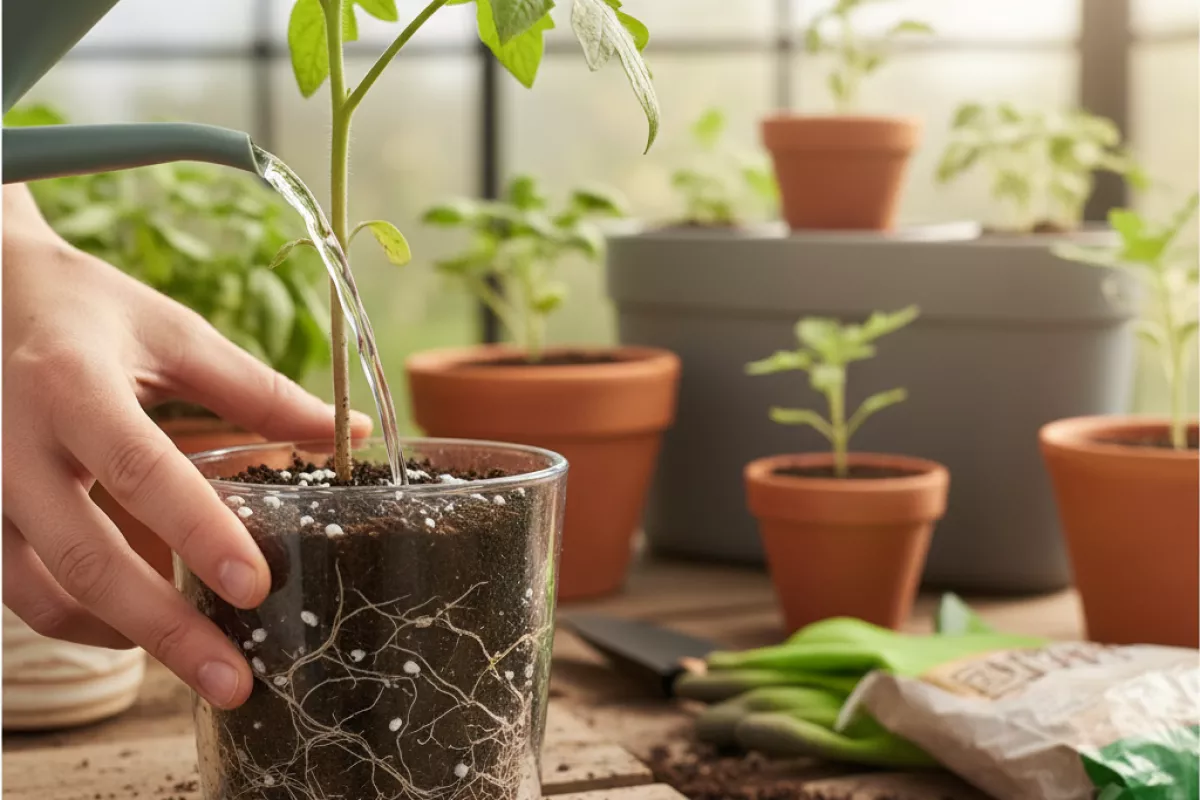 Covers how watering depth affects root systems, why shallow watering weakens plants, and techniques to drive deeper root expansion. Explains balancing soil moisture for root growth, how environment shifts water uptake, visual signs of healthy roots, and mistakes that block deep rooting.
Strong root growth comes from watering with intention, not routine. Plants often struggle when moisture stays near the surface or when soil shifts between waterlogged and bone dry. Water at the right time, soak the full root zone, then allow the soil to dry slightly and breathe between sessions so roots grow deeper, healthier, and more resilient.
How watering depth shapes root systems
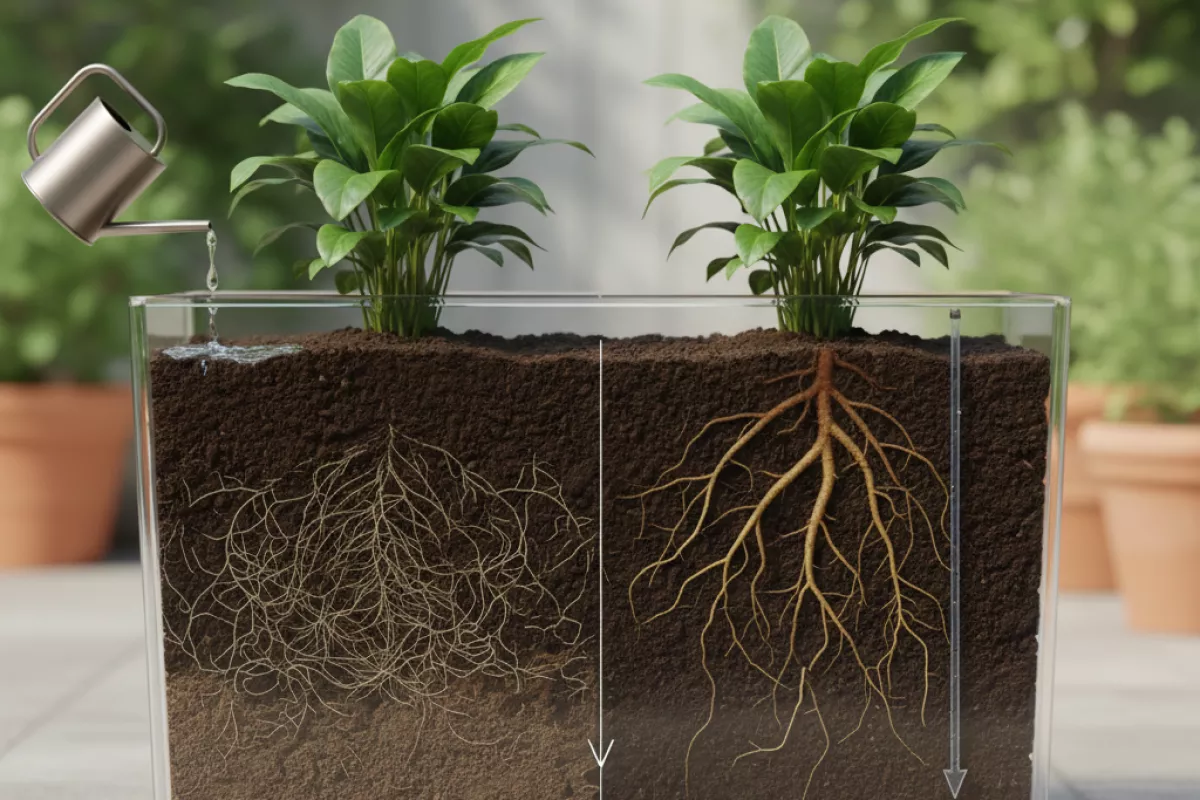
Where moisture sits in the soil profile largely determines where roots choose to grow. If the top layer is kept wet all the time, plants tend to build a dense mat of shallow roots because that’s where the easiest water is. When water regularly reaches deeper layers, roots are “invited” to explore downward, which usually improves stability and helps the plant handle short dry spells. In drought-adapted species like the acacia tree, this deeper moisture access plays a key role in long-term resilience.
Think of roots as following a moving target. After a thorough soak, the wet zone extends down into the root area. As that zone slowly dries from the surface downward, roots that can access deeper moisture keep functioning longer, while shallow-rooted plants feel stress sooner. This is why watering depth often matters as much as watering frequency.
- Shallow, frequent watering: Moisture stays near the surface, encouraging roots to concentrate in the top few centimeters (inches). That can make plants more sensitive to heat, wind, and missed waterings.
- Deep, less frequent watering: Water penetrates farther down, promoting a broader root system that can draw from a larger soil “reservoir.” The plant is less dependent on perfectly timed irrigation.
- Uneven soaking: If water only reaches part of the root zone (for example, a quick sprinkle that wets one side), roots may grow lopsided, which can reduce anchoring and overall uptake.
- Overly deep watering in poorly drained soil: If the soil stays saturated below, roots can struggle for oxygen. Depth is helpful only when the soil can drain and re-aerate between waterings.
A practical way to check your watering depth is to dig a small test hole after irrigating and look for how far the soil is evenly moist. For many garden plants, aiming to moisten the root zone to about 15–30 cm (6–12 in) is a useful starting point; larger shrubs and young trees often benefit from moisture reaching 30–60 cm (12–24 in), depending on soil type and root depth.
Soil texture changes the outcome and directly shapes how soil affects roots. Sandy ground lets water move down quickly but doesn’t hold it long, so you may need a slower, longer application to wet deeper layers without wasting water. Clay holds moisture well but absorbs it slowly; watering too fast can cause runoff, leaving the deeper root area drier than it looks from the surface.
Why shallow watering weakens plants
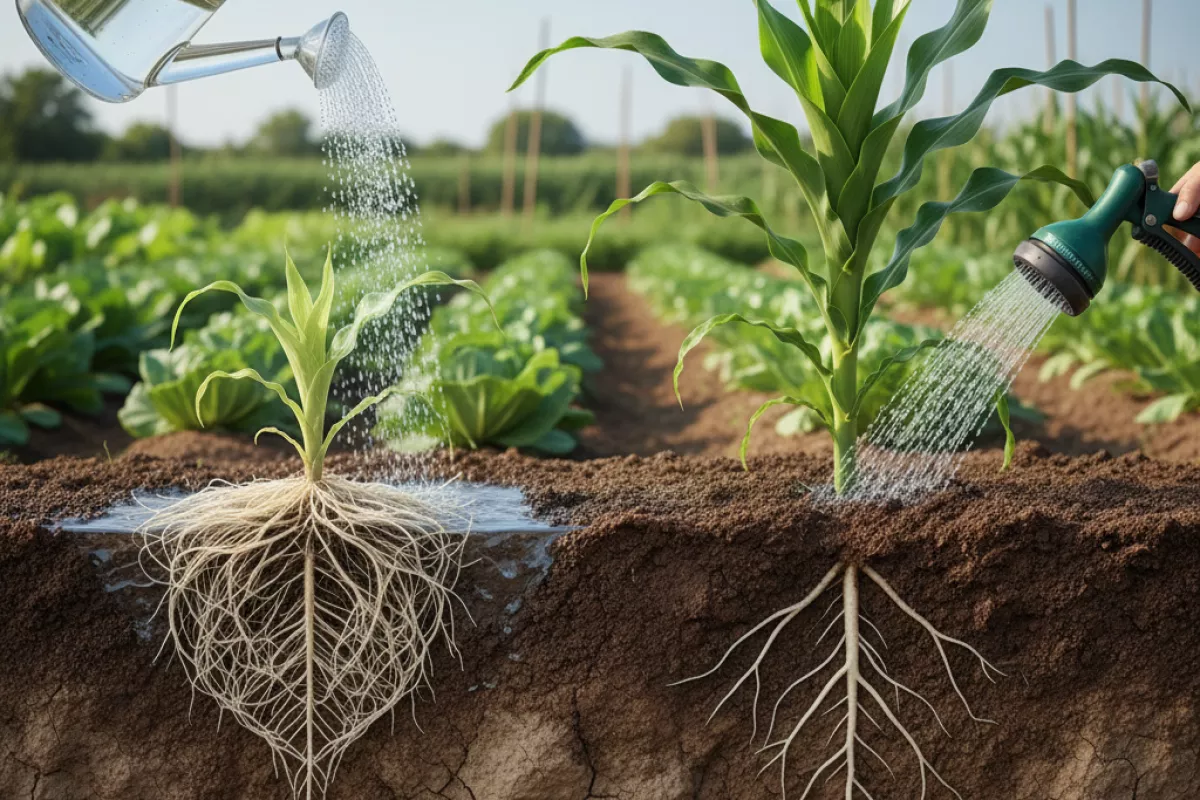
Frequent light sprinkling keeps moisture near the surface, so roots have little reason to grow downward. The plant ends up depending on a thin, fast-drying layer of soil instead of building a deeper, more stable root system that can access water stored below.
- Roots stay shallow and crowded. When only the top 2–5 cm (1–2 in) gets wet, most new roots form right there. That creates a dense mat near the surface rather than a spread-out network that anchors the plant and supports steady uptake.
- Soil dries out faster between waterings. The upper layer loses moisture quickly to sun and wind, so plants swing between “wet” and “dry” more often. Those rapid swings can lead to wilting even when deeper soil still has usable moisture.
- Heat stress hits harder. Surface soil warms and cools rapidly. Shallow roots are exposed to higher temperatures in summer and colder snaps in shoulder seasons, which can slow growth and reduce nutrient absorption.
- Nutrients can become harder to access. Many nutrients move with water through the root zone. If moisture never reaches deeper layers, roots don’t explore them, and the plant may show deficiency symptoms despite nutrients being present lower down.
- More disease and weed pressure near the surface. Constantly damp topsoil can encourage fungal issues around stems and crowns, and it also favors weed seed germination. A deeper soak that dries at the surface between sessions tends to be less inviting for both.
| Watering pattern | What the roots “learn” | Common result above ground |
|---|---|---|
| Light, frequent watering that wets only the top few centimeters | Stay near the surface where water appears | Wilts quickly on warm or windy days; needs constant attention |
| Deep watering that moistens the full root zone, then a pause to let it partly dry | Grow downward and outward to follow moisture | More even growth; better drought tolerance between waterings |
| Short watering cycles that run off or evaporate before soaking in | Limited expansion because water doesn’t penetrate | Patchy growth; dry spots despite “watering” |
| Overly wet surface kept damp day after day | Concentrate roots in oxygen-poor topsoil | Yellowing, slow growth, and higher risk of rot at the crown |
If you suspect your plants are stuck in a shallow-root routine, learn how to check soil moisture before watering. Push a finger, trowel, or soil probe down 10–15 cm (4–6 in): if it’s still cool and slightly damp, you can usually wait. This approach helps prevent rewarding shallow roots and encourages growth deeper into the soil profile.
Techniques that promote strong root expansion
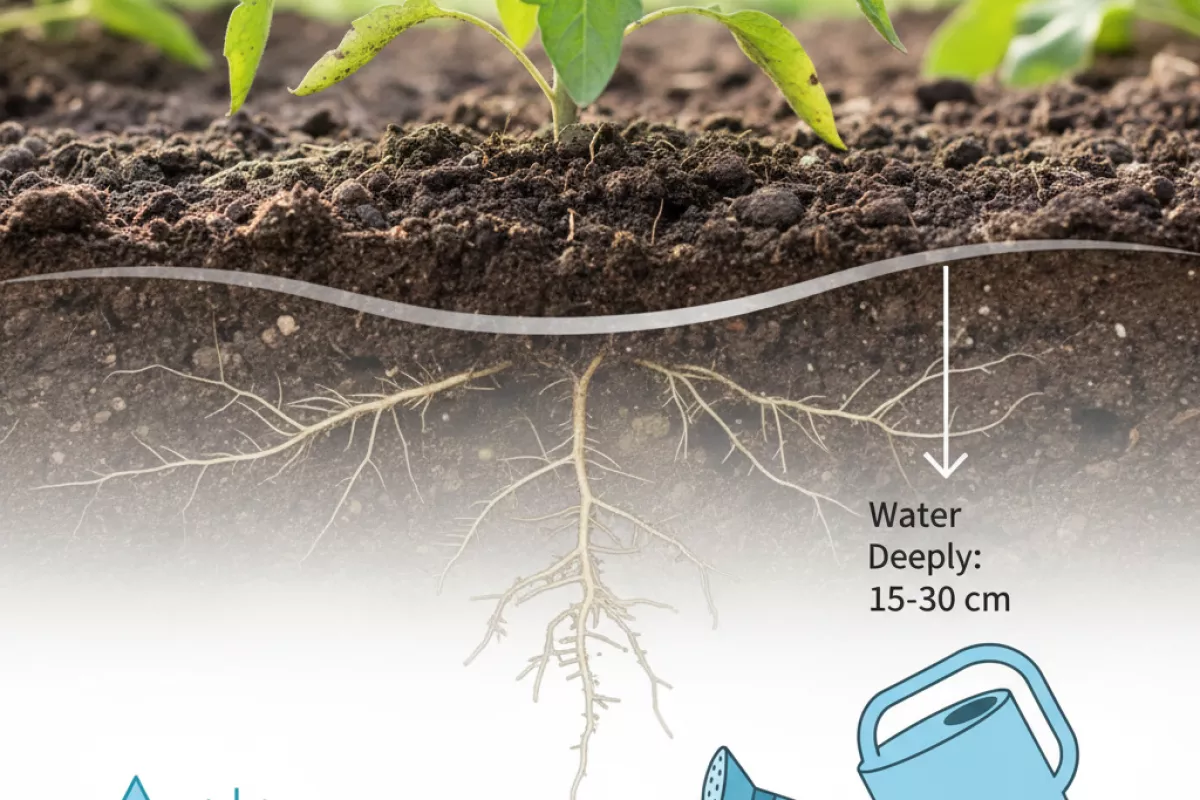
Root systems spread best when water encourages them to “search” without ever letting the plant hit a hard drought. This balance depends on using a proper watering technique that wets the full root zone, then allows partial drying so oxygen returns to the soil.
- Water deeply, not frequently. Apply enough water to moisten the soil to the depth where most roots should live, then pause until the top layer dries. For many garden plants, that means wetting roughly 15–30 cm (6–12 in) deep; for shrubs, 30–45 cm (12–18 in) is a common target. Deep cycles reward downward growth instead of shallow, surface-hugging roots.
- Use a “dry-down” check before rewatering. Don’t water by the calendar. Check moisture 5–8 cm (2–3 in) down with a finger or trowel. If it feels cool and damp, wait; if it’s dry at that depth, it’s usually time to water again. This simple habit prevents chronic sogginess that can stall root development.
- Water slowly so it soaks in. Fast watering often runs off or only wets the top few centimeters. A slow hose trickle, drip line, or soaker hose gives water time to infiltrate and reduces the “wet crust, dry below” problem that leads to weak rooting.
- Expand the watering ring as the plant grows. Concentrating water right at the stem trains roots to stay there. Instead, water in a wider circle around the plant, gradually moving outward toward the drip line. This encourages lateral spread and a sturdier anchor.
- Time irrigation to reduce stress. Morning watering gives plants the day to use moisture while leaves dry quickly. Evening watering can be fine for soil-level irrigation, but avoid routinely wetting foliage overnight, especially in humid conditions.
- Match the method to the soil. Sandy soils drain quickly and may need a bit more volume per session; clay soils need slower application and longer intervals. If water puddles for more than about 30 minutes, slow the flow and split the session into two passes separated by 30–60 minutes (0.5–1 hr) so it can soak deeper.
- Mulch to stabilize moisture swings. A 5–8 cm (2–3 in) mulch layer helps keep the root zone evenly moist and cooler, which supports fine root growth. Keep mulch a few centimeters away from stems (about 5 cm / 2 in) to avoid constant stem moisture.
- In containers, water to slight runoff, then empty saucers. For potted plants, water until a small amount drains out, ensuring the whole root ball is wetted. Then discard collected water so roots aren’t sitting in it, which reduces oxygen and can lead to root dieback.
- Adjust after transplanting. Newly planted roots are limited to the original root ball, so water that zone thoroughly at first. Over the next 2–4 weeks, start wetting a wider area around it so roots are encouraged to colonize surrounding soil instead of staying confined.
| Situation | Watering adjustment | Why it helps roots |
|---|---|---|
| Hot, windy week | Keep the same deep-soak approach but shorten the interval; recheck moisture at 5–8 cm (2–3 in) | Prevents excessive dry-back that can kill fine feeder roots |
| Heavy clay soil | Water more slowly and less often; split watering into two rounds 30–60 minutes (0.5–1 hr) apart | Improves infiltration and oxygen exchange, reducing rot risk |
| Very sandy soil | Use slightly more water per session and consider mulch 5–8 cm (2–3 in) deep | Extends moisture availability so roots keep expanding rather than stalling |
| Container plants | Water until runoff, then empty saucers; repeat only when the top 2–3 cm (1 in) dries | Fully wets the root ball while maintaining oxygen in the potting mix |
If you’re unsure whether you’re reaching the right depth, do a one-time “dig check” after watering: wait 30–60 minutes (0.5–1 hr), then dig a small hole to see how far the moisture traveled. Once you know how long your setup takes to wet 15–30 cm (6–12 in), you can repeat that duration and let the soil’s dry-down tell you when to water again.
Soil moisture balance for root growth
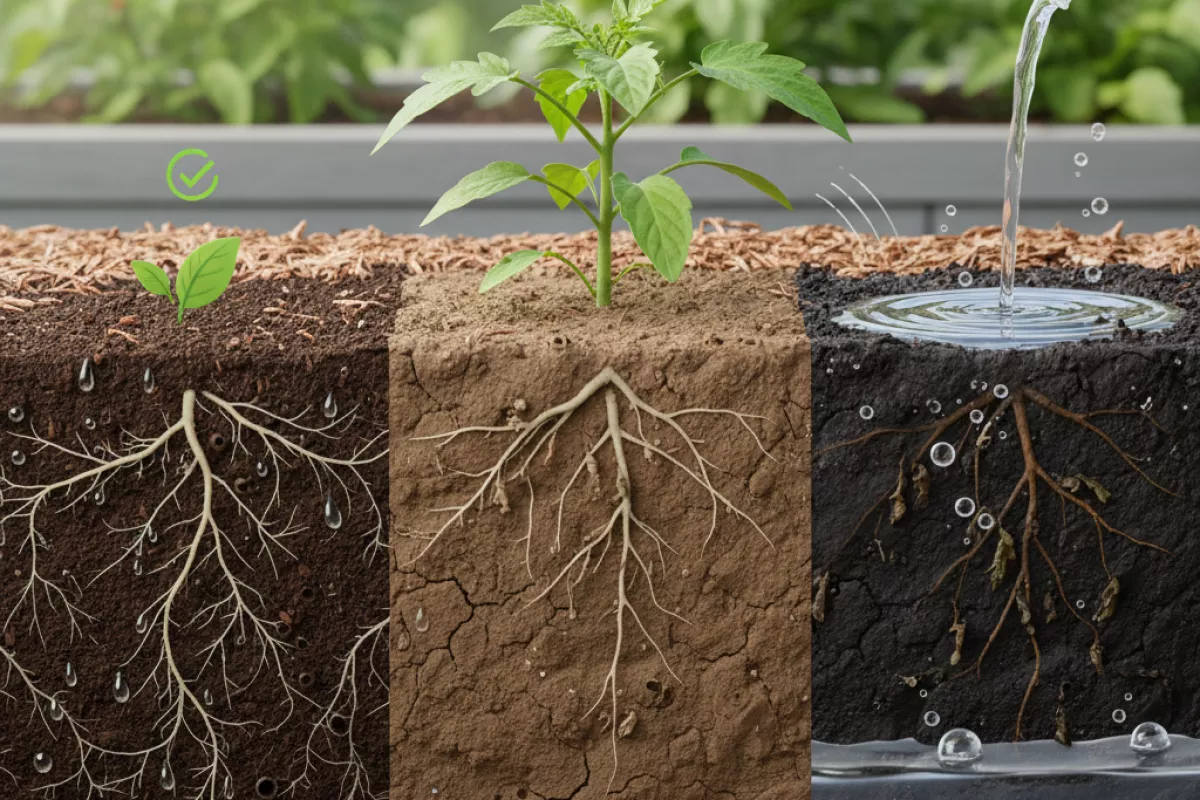
Roots develop best when the root zone cycles between “evenly moist” and “slightly drying,” rather than staying soggy or bone-dry. That gentle swing pulls oxygen into the soil, encourages fine feeder roots, and helps plants learn to search outward for water instead of sitting shallow near the surface.
A useful way to think about it is this: water should fill the pore spaces temporarily, then drain so air returns. If the soil stays saturated for long stretches, roots can’t breathe and growth slows, increasing root rot risk, especially in compacted or poorly draining soil. If it dries too far too often, root tips die back and the plant spends energy repairing instead of expanding.
| Soil moisture state | What it looks/feels like | Root impact | What to do next |
|---|---|---|---|
| Waterlogged | Soil smells sour, stays shiny-wet, pot feels heavy for days | Low oxygen; roots stall, may rot; fewer fine roots | Pause watering; improve drainage/aeration; ensure excess water can exit |
| Evenly moist | Cool and damp; clumps lightly; no free water pooling | Steady growth; good balance of water and air | Maintain this zone; water thoroughly, then let it begin to dry |
| Slightly dry (ideal “cue” point) | Top 2–5 cm (1–2 in) dry; below is still faintly cool | Promotes branching and deeper exploration | Water deeply enough to wet the root zone, then wait again |
| Too dry | Soil pulls from pot edges; leaves wilt; mix feels dusty | Root tips die back; stress reduces new root formation | Rehydrate slowly in stages; avoid a full flood if soil is hydrophobic |
- Water depth matters more than frequency. Aim to moisten the full active root area, then allow partial drying. For many containers, that means watering until a little drains out, then waiting until the top 2–5 cm (1–2 in) dries.
- Match the dry-down to the plant’s stage. Newly transplanted plants need a narrower swing (don’t let them dry far), while established plants benefit from slightly longer intervals that encourage deeper rooting.
- Use a simple check instead of guessing. A finger test works, or use a wooden skewer: if it comes out cool with a few damp crumbs, you’re close; if it’s muddy, wait; if it’s powdery, water.
- Adjust for soil type. Sandy mixes drain fast and may need smaller, more frequent soakings; clay-heavy soils hold water longer and need more time between waterings to restore air.
- Watch the plant, not the calendar. Heat, wind, and bright light can double water use, while cool weather slows it. A schedule is fine as a reminder, but let the root zone condition decide.
If you’re unsure where your plant sits, err toward “moist but airy.” Roots can tolerate a brief dry spell better than they can tolerate days of low oxygen, and the goal is a repeatable rhythm: soak, drain, breathe, then soak again.
How environment changes water uptake
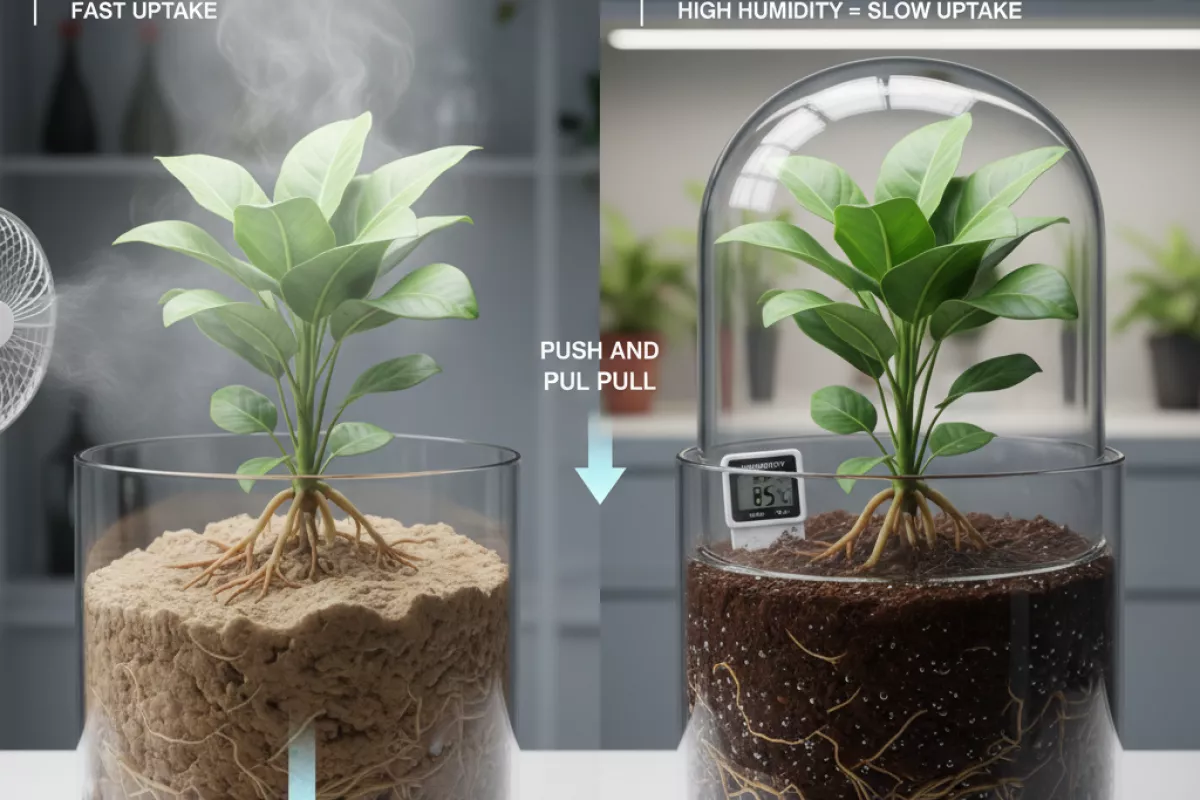
Water doesn’t move into roots at a fixed rate; it follows the push and pull created by light, temperature, humidity, airflow, and the growing medium. When the air encourages heavy transpiration, plants draw moisture faster and the root zone dries sooner. When conditions slow transpiration, the same watering routine can leave soil wet for longer, which reduces oxygen around roots and can stall new root growth.
| Environmental factor | What it changes | What you’ll notice | How to adjust watering |
|---|---|---|---|
| Light intensity and day length | More light increases photosynthesis and leaf “pull,” raising water demand. | Mix dries faster; plants perk up quickly after watering; pots feel lighter sooner. | Water a bit more often or slightly deeper, but still wait for the top layer to dry to the depth your plant prefers. |
| Temperature | Warm air speeds evaporation; cold slows root activity and uptake. | At 27°C (81°F), soil dries faster; at 16°C (61°F), it stays wet longer and growth slows. | In heat, check moisture earlier in the day; in cool spells, extend the interval and avoid soaking a sluggish root zone. |
| Humidity | Low humidity increases transpiration; high humidity reduces it. | At 30% RH, leaves may wilt sooner; at 70% RH, pots stay heavy longer. | In dry air, don’t let small pots fully dry out; in humid rooms, reduce frequency and prioritize aeration. |
| Airflow (fans, open windows) | Moving air strips the boundary layer on leaves, increasing water loss. | Edges dry quicker; you may see faster drying near vents. | Water based on the driest spot in the pot; rotate containers so one side doesn’t stay chronically wetter. |
| Seasonal shifts (winter vs. summer) | Winter often means lower light and cooler roots indoors; summer is the opposite. | In winter, the same volume leaves soil wet for days; in summer, it can dry within 24–48 hours (1–2 days). | Scale volume and timing with growth: less in slow seasons, more during active growth, while keeping drainage consistent. |
| Pot size and material | Small pots dry faster; terracotta wicks moisture; plastic holds it longer. | Terracotta feels dry on the outside sooner; plastic stays damp and heavy. | Terracotta may need smaller, more frequent drinks; plastic often needs fewer, deeper waterings with longer pauses. |
| Soil structure and compaction | Chunky mixes hold air; compacted or fine mixes stay saturated and reduce oxygen. | Water pools on top, slow drainage, sour smell, or persistent dampness. | If drying is slow, water less and consider loosening or repotting; aim for a mix that drains within minutes, not hours. |
| Plant size and leaf area | More leaves mean more transpiration and faster draw from the root zone. | A recently pruned plant dries slower; a fast-growing plant dries faster. | After pruning or leaf drop, reduce frequency; during rapid growth, check moisture more often. |
A practical way to respond to changing conditions is to adjust timing before you adjust volume. If the pot is still heavy and the mix is cool and damp a few centimeters down, waiting an extra day often helps more than giving a smaller splash “just in case.” When the pot feels light and the plant is actively growing, a thorough watering that reaches the lower roots supports deeper root development better than frequent shallow sips.
Visual signs of healthy root development
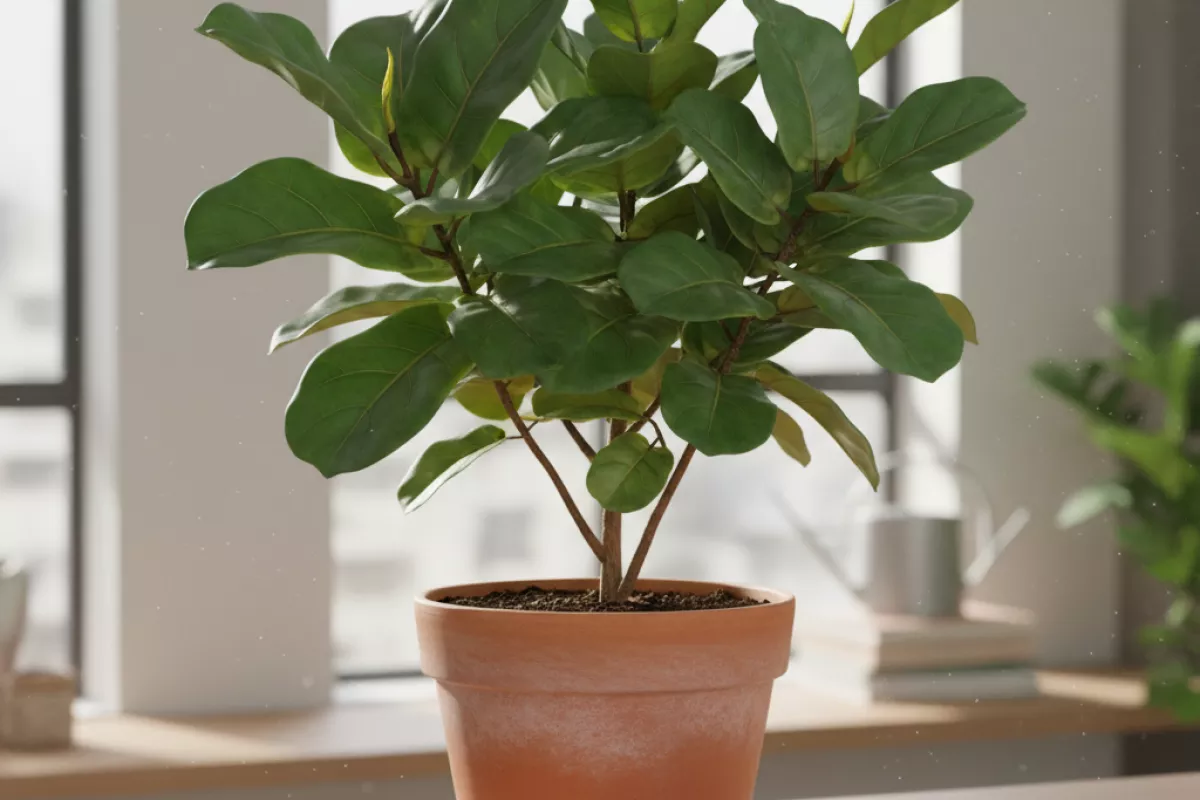
Healthy root growth shows up above the soil line long before you ever unpot a plant. When watering is on track, plants look steadily “settled” in their container, put out consistent new growth, and recover quickly after a drink without staying limp for long.
- Steady, even new growth: New leaves emerge at a predictable pace, and stems extend without sudden stalls. A plant that keeps pausing for days after watering often has roots that are struggling to take up moisture.
- Leaves hold their shape between waterings: Foliage stays firm and springy rather than repeatedly drooping, perking up, then drooping again. That “roller coaster” pattern can point to shallow or damaged roots.
- Balanced color and leaf size: New leaves are similar in size to older ones and show normal coloration for the species. Very small new leaves or pale growth can indicate the root system isn’t expanding enough to support demand.
- Quick response after watering: If the plant was mildly thirsty, it should look noticeably better within a few hours, not a full day or two. Slow rebound can mean poor root function, often tied to overly wet soil.
- Soil dries at a reasonable, repeatable pace: The potting mix goes from moist to lightly dry in a consistent window, rather than staying soggy for many days or drying bone-dry overnight. Big swings suggest the roots aren’t occupying the soil evenly.
- Roots visible at drainage holes look healthy: When you see them, they’re typically light-colored (white to tan), firm, and not slimy. Dark, mushy, or foul-smelling roots are a red flag for rot from excess moisture.
- Plant feels anchored: Gently nudged, the plant doesn’t wobble much. A loose, top-heavy feel can mean the root mass is sparse or has died back.
- No persistent fungus gnat boom: The occasional gnat happens, but ongoing swarms often track chronically wet mix, which can slow root expansion and invite decay.
If you’re unsure, a quick check can help: slide the plant out of the pot after the mix is slightly damp (not dripping). Healthy roots are firm and branching, and the soil holds together without smelling sour. If the root ball is very small for the pot, consider adjusting watering volume and frequency so the mix doesn’t stay wet for too long.
Mistakes that prevent roots from growing deeply
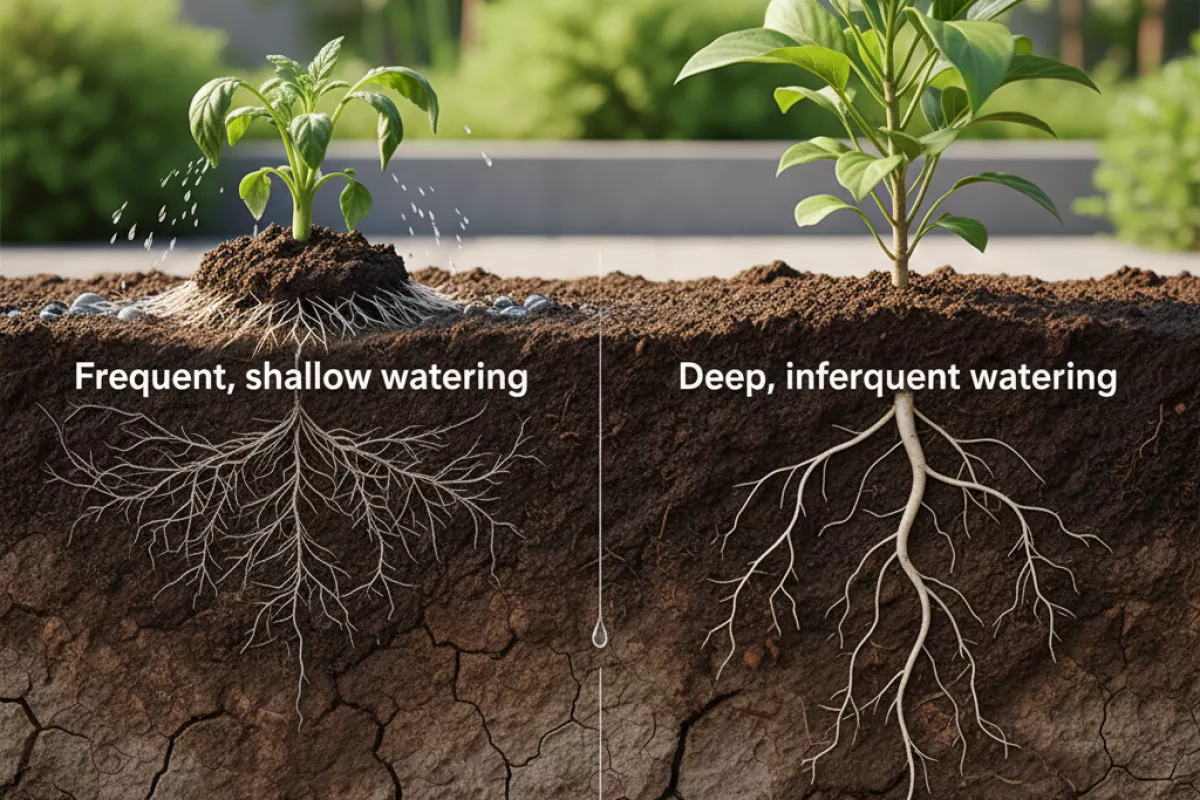
Deep, resilient root systems usually fail for a few predictable reasons: water is delivered too often, too lightly, or in ways that keep oxygen out of the soil. The result is plants that stay dependent on surface moisture, wilt quickly in heat, and struggle when watering is delayed.
- Frequent, shallow watering keeps moisture concentrated in the top few centimeters/inches, so roots have no reason to explore deeper layers. Instead of a daily sprinkle, aim for fewer sessions that wet the full root zone.
- “A little bit every day” with sprinklers or hoses often evaporates before it penetrates, especially when temperatures are warm or wind is high. If the surface dries quickly, roots tend to hover near the top where water briefly appears.
- Watering at the wrong time can waste a lot of moisture. Midday watering loses more to evaporation; evening watering can leave foliage and the soil surface damp for long periods. Early morning is usually the most reliable window for steady soak-in.
- Not watering long enough to reach the active root zone is common with drip lines and soaker hoses. A short run may only moisten the upper layer; a longer run (adjusted for your soil type) encourages roots to follow the wetting front downward.
- Overwatering and poor drainage suffocate roots by pushing out oxygen. If soil stays soggy for hours after irrigation, roots may stall or rot rather than grow. This is especially common in compacted clay and in containers without adequate drainage holes.
- Compacted soil or a crusted surface limits infiltration, so water pools and runs off instead of soaking in. Loosening the top 5–8 cm (2–3 in) where appropriate, and avoiding foot traffic near the root zone, can make watering far more effective.
- Mulch mistakes can backfire. No mulch often means rapid evaporation; too much mulch piled against stems can keep the crown overly wet. A moderate layer around (not on) the base helps keep moisture consistent without smothering.
- Letting containers dry out completely, then flooding them creates cycles that damage fine feeder roots. In pots, water should wet the entire mix evenly; if the mix becomes hydrophobic, re-wet slowly in stages so moisture penetrates instead of channeling down the sides.
- Relying on surface cues only leads to misreads: the top can look dry while deeper soil is still moist, or look wet while the root zone is dry. Checking moisture 5–10 cm (2–4 in) down (or deeper for shrubs) prevents both under- and overwatering.
If you fix just one habit, make it this: water in a way that moistens the soil profile, then allow it to partially dry before the next session. That wet-to-dry rhythm is what nudges roots to grow downward rather than lingering near the surface.