Spider Mite Damage vs Nutrient Deficiency

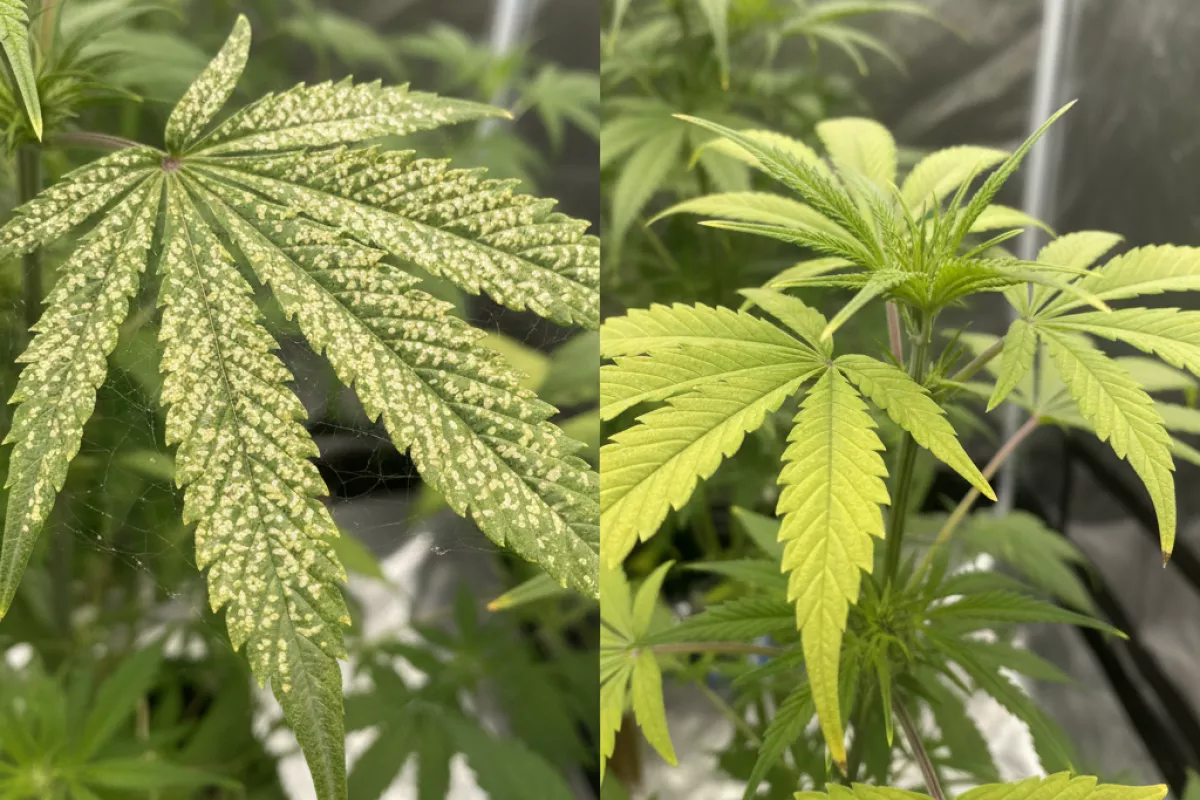 Mite damage and nutrient problems can look alike. This article explains mite leaf patterns vs nutrient discoloration, key visual differences to check, testing methods for an accurate diagnosis, common identification mistakes, and the correct treatment once the cause is confirmed.
Pale, speckled, or crispy leaves can come from spider mites or a nutrient deficiency, and the symptoms often look similar even though the solutions are not. Use this guide to spot key clues on leaves and stems, confirm the real cause, and respond fast. With a clear diagnosis, you can avoid trial and error and help your plants recover instead of slowly declining.
Why symptoms can look similar
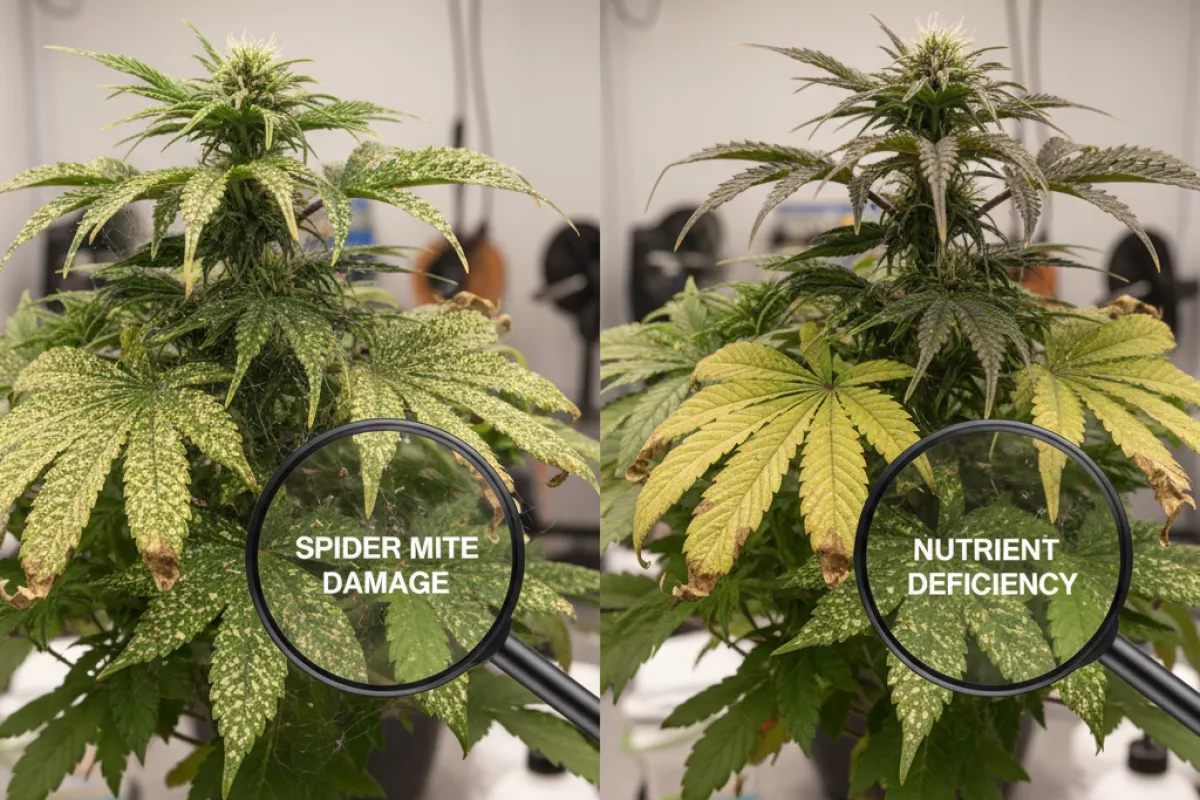
Leaf problems often funnel into the same few visible patterns: yellowing, speckling, browning edges, and slowed growth. Both sap-feeding pests and an unbalanced diet disrupt chlorophyll and water movement, so the plant “reports” stress in ways that can be hard to separate at a glance.
Another reason is timing. Spider mites can build up quietly, then symptoms seem to appear all at once. Nutrient issues can also look sudden when a plant crosses a threshold (for example, after a heavy watering that leaches nutrients or a pH swing that blocks uptake), even though the underlying cause has been developing for days or weeks.
- Shared early signs: Fine stippling, pale patches, and a dull, dusty look can come from mite feeding or from deficiencies that reduce chlorophyll production.
- Stress cascades: Mite damage reduces photosynthesis; nutrient shortages do the same. Once energy production drops, secondary symptoms like leaf curl, brittle tissue, and slow new growth can overlap.
- Location can mislead: Many deficiencies show first on older or newer leaves depending on nutrient mobility, but mites also concentrate where conditions suit them (often undersides and sheltered growth), creating patterns that mimic “top vs. bottom” nutrient clues.
- Environmental overlap: Hot, dry conditions encourage spider mites and also make nutrient uptake harder by increasing transpiration stress. So the same heat and low humidity can produce both problems at once.
- Multiple issues at the same time: A plant weakened by low nitrogen, magnesium, or iron is less resilient, so a small mite population can cause outsized symptoms. Likewise, mite feeding can trigger leaf drop and reduced uptake that looks like a deficiency.
| What you see | Why both causes can create it | Clue that leans toward mites | Clue that leans toward nutrient imbalance |
|---|---|---|---|
| Speckled, “sandblasted” stippling | Loss of functional leaf cells reduces green pigment and creates tiny pale spots | Spots are very fine and widespread; underside looks dusty; tiny moving dots may be present | Spots cluster with vein patterns or appear with more uniform interveinal chlorosis |
| General yellowing (chlorosis) | Chlorophyll production/use drops under feeding stress or nutrient shortage | Yellowing comes with bronzing and a slightly “dry” look; damage spreads unevenly across leaves | Yellowing follows a predictable pattern (older leaves first for mobile nutrients; newer leaves first for immobile ones) |
| Leaf curl or puckering | Disrupted water balance and damaged tissue cause deformation | Curling is paired with stippling and fine webbing in tight spaces | Curling appears alongside consistent edge burn or interveinal yellowing without webbing |
| Brown tips/edges | Cells at margins are sensitive to drought stress, salt buildup, and reduced transport | Edges crisp up after mottled stippling; damage often starts in hotspots (warm, dry areas) | Edge burn aligns with feeding schedule, fertilizer strength, or pH issues; pattern repeats across many leaves |
| Stunted growth | Less photosynthesis means less energy for new tissue | New growth looks weak while older leaves show stippling; pests may be visible on undersides | New growth is small but relatively clean; symptoms match a nutrient’s mobility pattern |
If you’re stuck between the two, focus on what’s hardest for a deficiency to fake: physical evidence. Webbing, cast skins, and live mites on the underside of leaves point strongly to spider mites. When there’s no pest evidence, and the pattern follows leaf age (older vs. newer) or veins (interveinal chlorosis), nutrient deficiency becomes the more likely driver.
Leaf patterns caused by mites
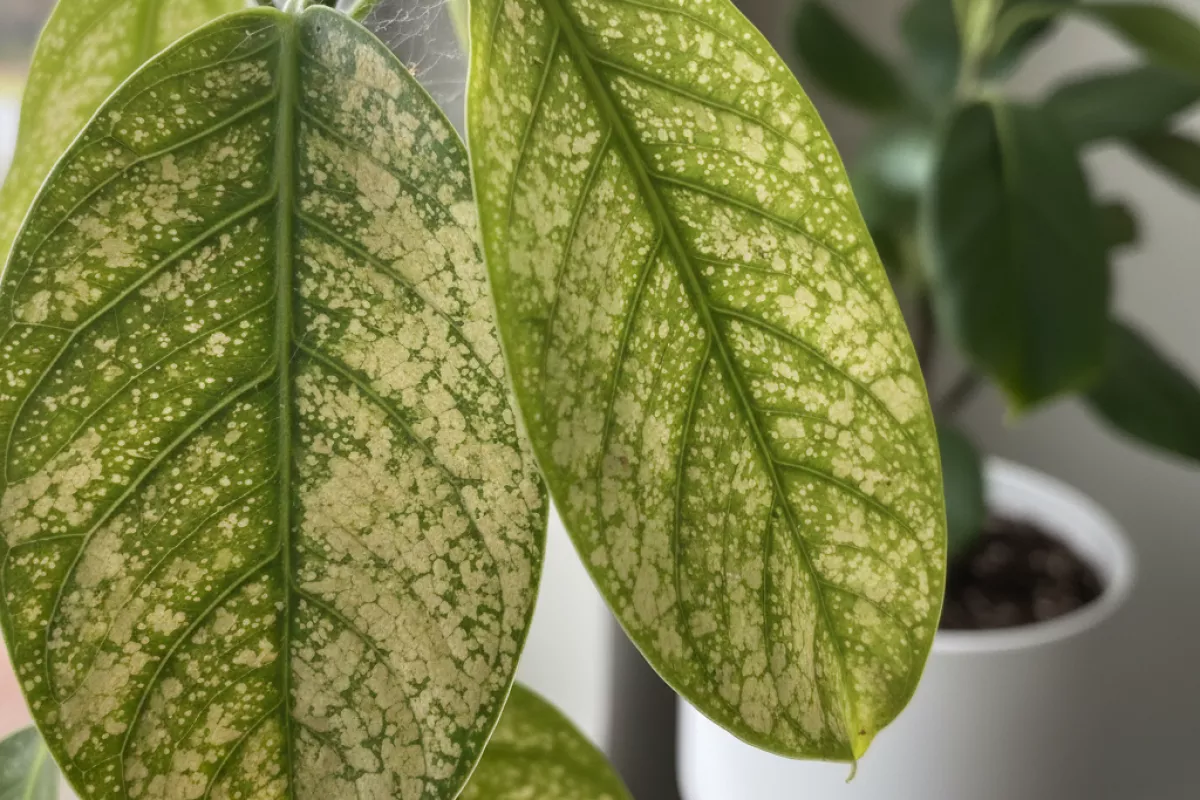
Mite feeding leaves a “mapped” look on foliage because they pierce individual cells and remove their contents. Instead of a smooth, even fade, you’ll usually see scattered pale dots that gradually merge into larger washed-out areas, especially on older leaves first. The pattern often looks uneven from leaf to leaf because colonies build up in pockets before spreading.
- Fine stippling (tiny pale specks): Pinpoint light dots across the blade, most visible when you tilt the leaf under bright light. As damage increases, the dots connect into a dull, sandblasted patch.
- Mottled or bronzed sections: Areas turn tan, coppery, or gray-green rather than a clean yellow. This “bronzing” is common along the midrib and between veins once feeding is heavy.
- Edge scorch that doesn’t follow a nutrient pattern: Margins may crisp, but it’s usually irregular—one side of a leaf can look worse than the other, and neighboring leaves may not match.
- Localized hot spots: Damage often starts in clusters (a few leaves look rough while others still look normal), then radiates outward as mites move.
- Leaf distortion under pressure: New growth can appear puckered, slightly cupped, or twisted if mites are feeding on tender tissue. This is more “textured” than the uniform small-leaf look you might see with some deficiencies.
- Webbing as a late clue: Fine silk may appear along petioles, leaf undersides, or between nodes once populations are high. By the time you see webbing, the stippling and dulling are usually well underway.
A quick way to separate this from many nutrient issues is to look for randomness: mite injury tends to be patchy and speckled, while deficiencies more often show a consistent pattern (like clean interveinal chlorosis or uniform yellowing) across similar-aged leaves. Also check the underside—if you see tiny moving dots, shed skins, or gritty-looking debris, the leaf pattern is likely pest-driven rather than a feeding imbalance.
Discoloration caused by nutrient issues
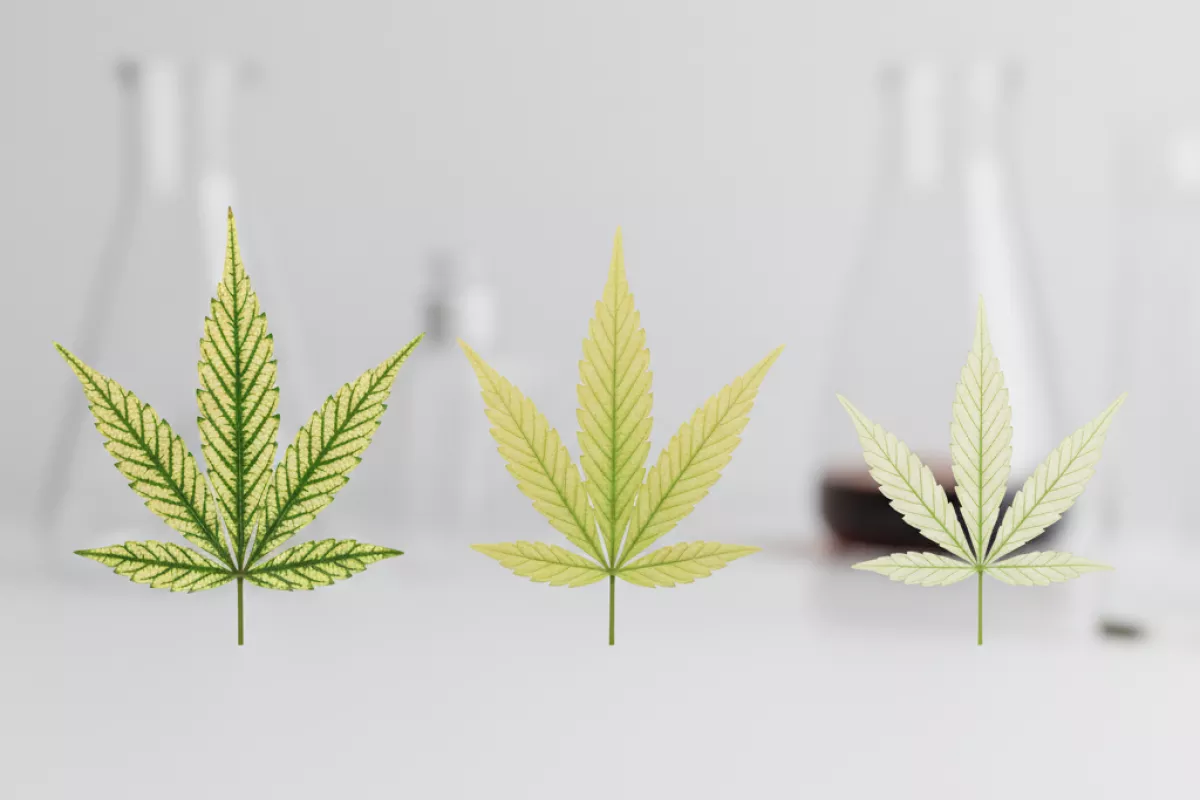
When a plant’s color shifts because it can’t access or move key minerals, the pattern is usually more organized than pest speckling. Instead of random pinpricks, you’ll often see yellowing between veins, darker green veins that stay put, or whole-leaf paling that follows a predictable “old leaves first” or “new leaves first” progression. That sequence matters because some nutrients are mobile in the plant (so symptoms show up on older growth first), while others aren’t (so new growth suffers first).
| Nutrient issue | Typical color pattern | Where it shows up first | Common triggers |
|---|---|---|---|
| Nitrogen (N) deficiency | Overall pale green to yellow leaves; slower growth | Older/lower leaves | Underfeeding, depleted potting mix, heavy leaching from frequent watering |
| Magnesium (Mg) deficiency | Interveinal chlorosis (yellowing between veins) with veins staying greener | Older leaves | Low Mg supply, high potassium or calcium competing, pH drift limiting uptake |
| Iron (Fe) deficiency | New leaves turn light yellow/near-white while veins remain green | Newest growth | High pH, cold/wet roots, over-liming, poor aeration |
| Potassium (K) deficiency | Yellowing then browning/scorching at leaf edges; weak stems | Older leaves, margins first | Low K, excess salts, drought stress followed by heavy watering |
| Phosphorus (P) deficiency | Dull, dark green foliage; purpling on undersides or stems | Older leaves (often subtle at first) | Cold soil/root zone, compacted media, low P availability |
| Calcium (Ca) deficiency | Distorted new leaves; tip burn; irregular necrotic spots | Newest growth and growing tips | Irregular watering, low transpiration (still air/high humidity), low Ca in feed |
- Check the “leaf age” rule. If older leaves fade first, think mobile nutrients like N or Mg. If the newest leaves look washed out or misshapen first, suspect immobile nutrients like Fe or Ca.
- Look for vein-based patterns. Nutrient problems commonly respect the vein structure (interveinal yellowing, green veins), while spider mite feeding tends to create fine, scattered stippling that doesn’t follow veins.
- Separate burn from bleach. Crispy brown edges often point to K issues or salt stress, while pale new growth with green veins leans toward Fe uptake trouble.
- Rule out pH and root stress before adding more fertilizer. A plant can show deficiency symptoms even with nutrients present if pH is off or roots are waterlogged. Correcting watering and root aeration can improve color without increasing feed strength.
If you’re deciding between mites and nutrition, inspect the undersides of leaves and petioles: nutrient-related color changes won’t come with moving dots, shed skins, or fine webbing. When color change is the main symptom and it follows a consistent pattern across similar-aged leaves, a feeding or uptake issue is usually the more likely explanation.
Key visual differences to check
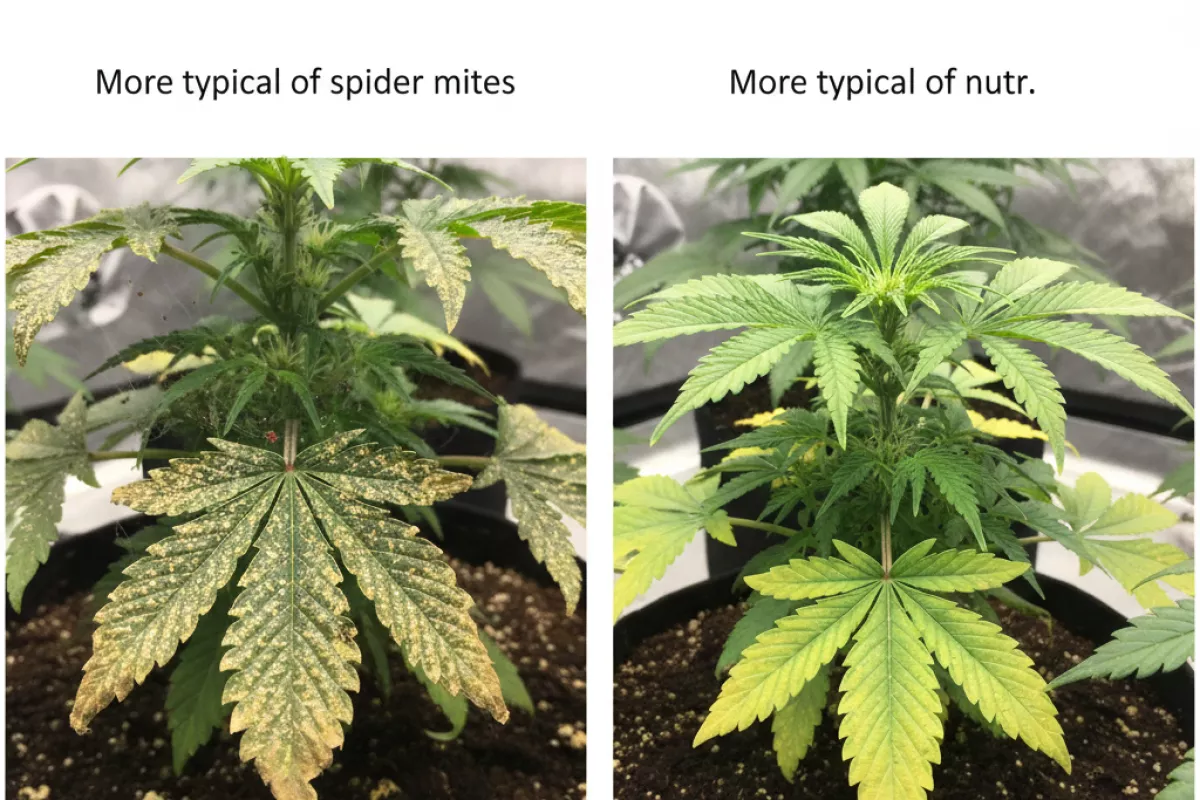
Start by looking at where symptoms appear and how they spread. Spider mite injury usually shows up as fine, scattered speckling that quickly turns into a dull, bronzed look, often starting on older, lower leaves and moving upward as populations build. Nutrient problems more often follow a predictable pattern (older leaves first for mobile nutrients, newer leaves first for immobile ones) and tend to look more uniform across the plant.
| What you see | More typical of spider mites | More typical of nutrient deficiency |
|---|---|---|
| Leaf pattern | Fine stippling (tiny pale dots) that can merge into bronzing; looks “dusty” or sandblasted | More even chlorosis (yellowing) or clear interveinal patterns; less “speckled” randomness |
| Where it starts | Often lower/inner foliage first; hotspots near warm, dry areas | Follows nutrient mobility: older leaves first (e.g., N, Mg) or new growth first (e.g., Fe, Ca) |
| Leaf underside clues | Fine webbing, shed skins, tiny moving dots; damage is usually worse underneath | No webbing; underside typically matches topside color changes without pests present |
| Speed of change | Can worsen fast in warm, dry conditions; new stippling appears day-to-day | Usually progresses more gradually unless the shortage is severe or the root zone is compromised |
| Distribution on the plant | Patchy clusters; one side or a few plants may look worse first | More consistent across similar plants in the same medium and watering routine |
| Leaf edge and tip effects | Edges may curl or cup as stress increases; leaves can look dry even when soil is moist | Tip burn or marginal scorch can happen with specific shortages/excesses; curling is less “patch-driven” |
| New growth appearance | New leaves may emerge smaller and dull if infestation is heavy, but the “dotting” is the giveaway | New growth may be pale, distorted, or weak depending on the nutrient (often without stippled dots) |
- Do the “tap test”: tap a leaf over white paper. If you see tiny moving specks, that supports mites; deficiencies won’t produce moving dots.
- Check the pattern against veins: interveinal yellowing (veins stay greener) points more toward nutrition, while mites create tiny, irregular dots that don’t respect vein boundaries.
- Look for a hotspot: if symptoms radiate from one stressed corner (near a heater, sunny window, or dry airflow), pest pressure is more likely than a balanced feeding issue.
Testing methods for accurate diagnosis
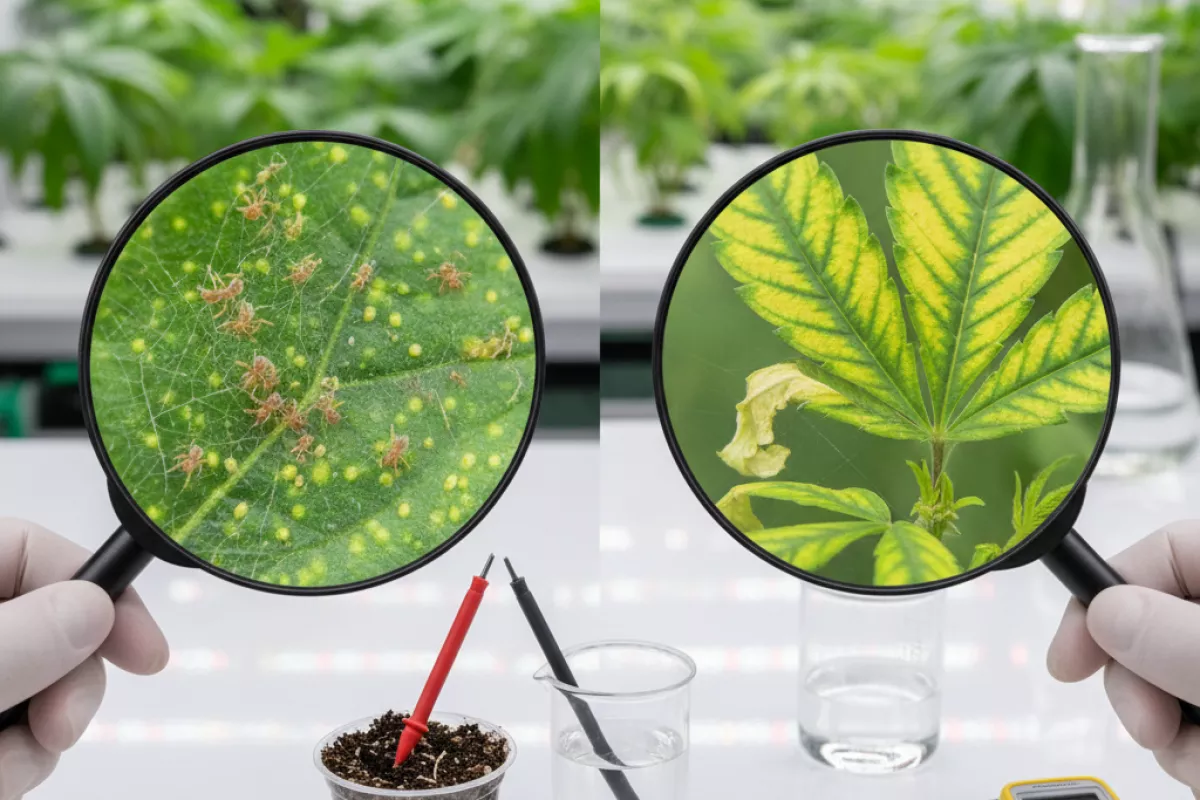
Start by separating “something is feeding on the plant” from “the plant can’t access a nutrient.” Spider mites leave physical evidence (mites, eggs, webbing, stippling), while deficiencies follow more predictable patterns tied to leaf age, vein color, and overall growth rate. The most reliable approach is to combine a close inspection with a few quick measurements of your water and root zone.
- Do a leaf-surface inspection (top and underside)
Look for fine pale speckling (stippling), bronzing, and tiny moving dots, especially on the underside of leaves. Use a hand lens around 10×–20× magnification. Webbing that looks like thin dust-catching threads is a strong clue you’re dealing with mites rather than a nutrient issue.
- Tap test on white paper
Hold a sheet of white paper under a suspect leaf and tap the leaf firmly. If small “pepper-like” specks fall and some begin to crawl, that points to spider mites. Nutrient problems won’t produce moving debris.
- Sticky card check (trend, not proof)
Place yellow sticky cards near the canopy and check daily. Spider mites aren’t strong fliers, so cards may catch fewer than you expect, but a sudden increase in tiny crawling dots can support what you saw on leaves. If cards stay clean while symptoms worsen, lean back toward nutrient or watering causes.
- Pattern mapping: which leaves show symptoms first?
Note whether damage starts on older leaves, newer growth, or scattered hotspots. Deficiencies often follow “mobile vs. immobile” nutrient behavior (older leaves first for nitrogen, magnesium; newer growth first for iron, calcium). Mite damage is usually patchy at first, often worse on stressed areas near heat, low humidity, or dusty leaves.
- Measure pH and EC/TDS of your input and runoff (or soil slurry)
Incorrect pH can lock out nutrients even when fertilizer is present. Use a calibrated meter to check:
- Water/feed pH and runoff pH (or a soil slurry made with 1 part soil to 2 parts distilled water by volume).
- EC (electrical conductivity) or TDS (total dissolved solids) to see if salts are building up or the mix is too weak.
If pH is out of range or EC/TDS is extreme, deficiency-like symptoms can appear quickly. Spider mites can still be present, but fixing the root-zone numbers often changes the symptom trajectory within several days.
- Check irrigation consistency and root-zone oxygen
Overwatering and poor drainage can mimic deficiencies by reducing oxygen at the roots. Confirm pot weight changes between waterings, inspect drainage holes, and look for sour smells. If the plant perks up after correcting watering rhythm, you’re likely dealing with uptake issues rather than pest feeding.
- Microscope confirmation (most decisive for mites)
If you have access to 30×–60× magnification, inspect the underside of affected leaves for adults, translucent larvae, and round eggs. Seeing eggs clustered along veins is a clear differentiator from nutrient deficiency, which won’t produce organisms or egg structures.
- Controlled “response test” with a short timeline
Make one change at a time and watch what happens over 3–7 days. Correct pH/feeding issues should slow new symptom development in fresh growth, while existing damaged tissue won’t heal. With mites, you may see continued stippling on new leaves unless you physically reduce the population (washing leaves, targeted treatment) and improve conditions that favor mites (hot, dry air).
| Test/observation | What you do | Findings that suggest spider mites | Findings that suggest nutrient deficiency or lockout |
|---|---|---|---|
| Underside leaf inspection (10×–20×) | Scan veins and leaf edges; look for webbing and speckling | Moving dots, eggs, fine webbing, patchy stippling | No pests/webbing; discoloration follows a consistent pattern |
| White paper tap test | Tap leaf over white sheet and watch specks for 30–60 seconds | Specks crawl; some may be reddish, tan, or translucent | No moving specks; only dust or dried residue |
| Symptom distribution map | Note whether older vs. newer leaves show issues first | Hotspots, uneven spread, worse near dry/heat zones | Older-first or newer-first pattern consistent with specific nutrients |
| pH + EC/TDS (input and runoff/slurry) | Measure with calibrated meters; compare input vs. root zone | May be normal or mildly off; doesn’t rule mites out | pH out of range or EC/TDS very high/low, suggesting lockout or underfeeding |
| Short “one-change” response window | Adjust only pH/feeding or only pest control; reassess in 3–7 days | New damage continues unless mites are reduced | New growth improves after correcting pH/EC and watering consistency |
If you’re torn between the two, prioritize confirming or ruling out mites first, because they can escalate fast and their damage can look like mottled nutrient stress. Once pests are excluded, pH/EC and watering checks usually explain the majority of “mystery deficiencies.”
Common mistakes when identifying causes
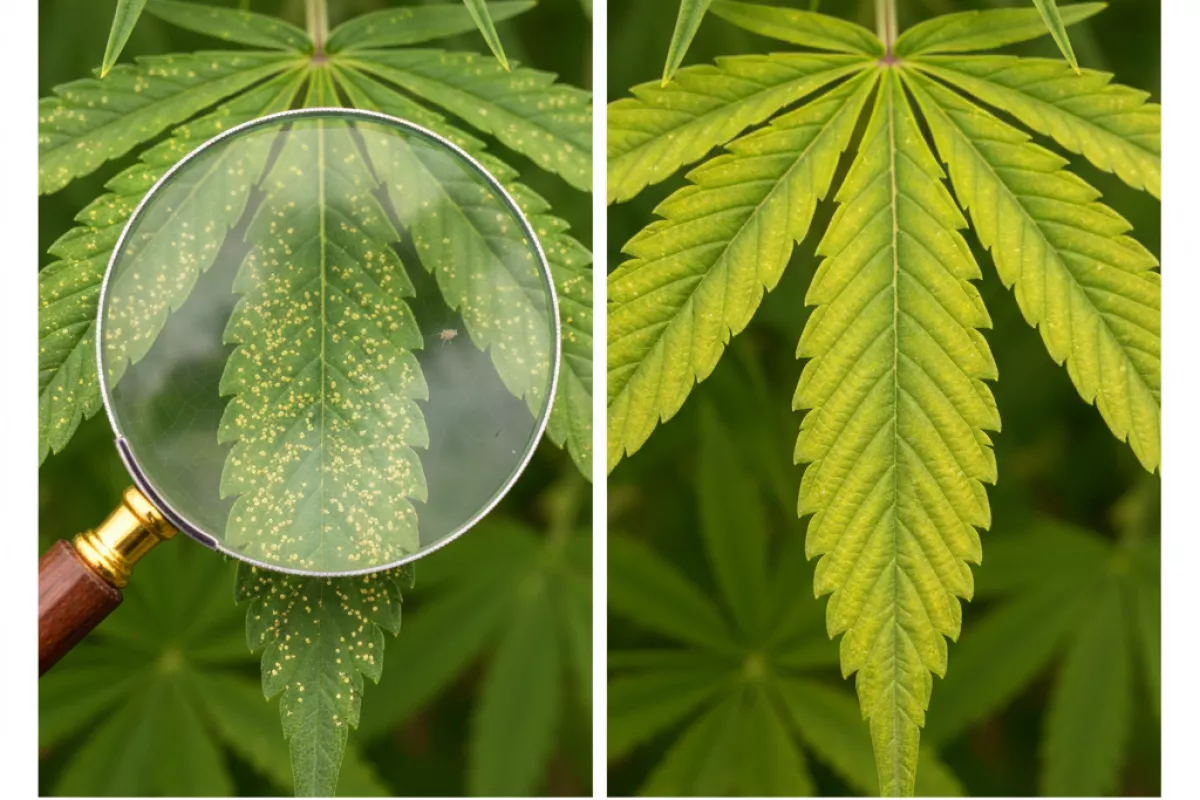
Misdiagnosis usually happens when you focus on leaf color alone and skip the simple checks that separate pest injury from a feeding issue. A few quick habits can prevent you from treating the wrong problem and losing time while symptoms spread.
- Assuming yellowing always means “needs fertilizer.” Spider mites can cause stippling that reads as pale speckling from a distance. Before adjusting nutrients, look closely for fine dotting, bronzing, and uneven “sandblasted” patches that don’t follow leaf veins.
- Not inspecting the undersides of leaves. Mites and their eggs cluster underneath, especially along midribs. Flip several leaves from different heights and use a hand lens around 10×. If you only check the top surface, you can miss an active infestation.
- Skipping the tap test. Tapping a suspect leaf over white paper can reveal tiny moving specks. If you see motion, it’s unlikely to be purely a nutrient deficiency.
- Overweighting one “tell” instead of the pattern. Nutrient problems often show consistent, repeatable patterns (for example, older leaves first, or symptoms between veins). Mite damage is typically patchy, with hotspots that expand and don’t respect leaf age or symmetry.
- Confusing dust, residue, or hard-water spots with stippling. Wipe a leaf gently with a damp cloth. If the “specks” lift off, it’s not tissue damage. True mite stippling won’t wipe away because cells have been punctured.
- Treating immediately after a recent change. After repotting, moving plants, or changing light intensity, leaves can show stress that mimics shortages. Give the plant a few days to a week to settle, but keep monitoring for pests during that window.
- Chasing deficiencies without checking pH and watering. Lockout from incorrect pH or chronic overwatering can imitate multiple nutrient issues at once. If runoff pH (or soil pH) is out of range, adding more fertilizer often makes symptoms worse.
- Using a “one-size” feed fix. Dumping a complete fertilizer can mask the real cause and create burn. If you suspect nutrition, confirm with where symptoms start (new vs. old growth) and whether veins stay green, then correct gradually.
- Ignoring environmental triggers that favor mites. Hot, dry conditions accelerate outbreaks. If the growing area sits around 27–32°C (81–90°F) with low humidity, mites can multiply fast, and leaf damage may outpace your nutrient adjustments.
- Not re-checking after the first intervention. A real nutrient correction should show steadier new growth over time, while mite activity can continue to create fresh stippling on new leaves. Reinspect every 2–3 days for 1–2 weeks to confirm you’re actually turning the corner.
If you’re torn between the two, prioritize confirmation: magnification, underside checks, and a quick tap test. Once you’ve ruled pests in or out, nutrient troubleshooting becomes much more straightforward and less guessy.
Correct treatment based on diagnosis
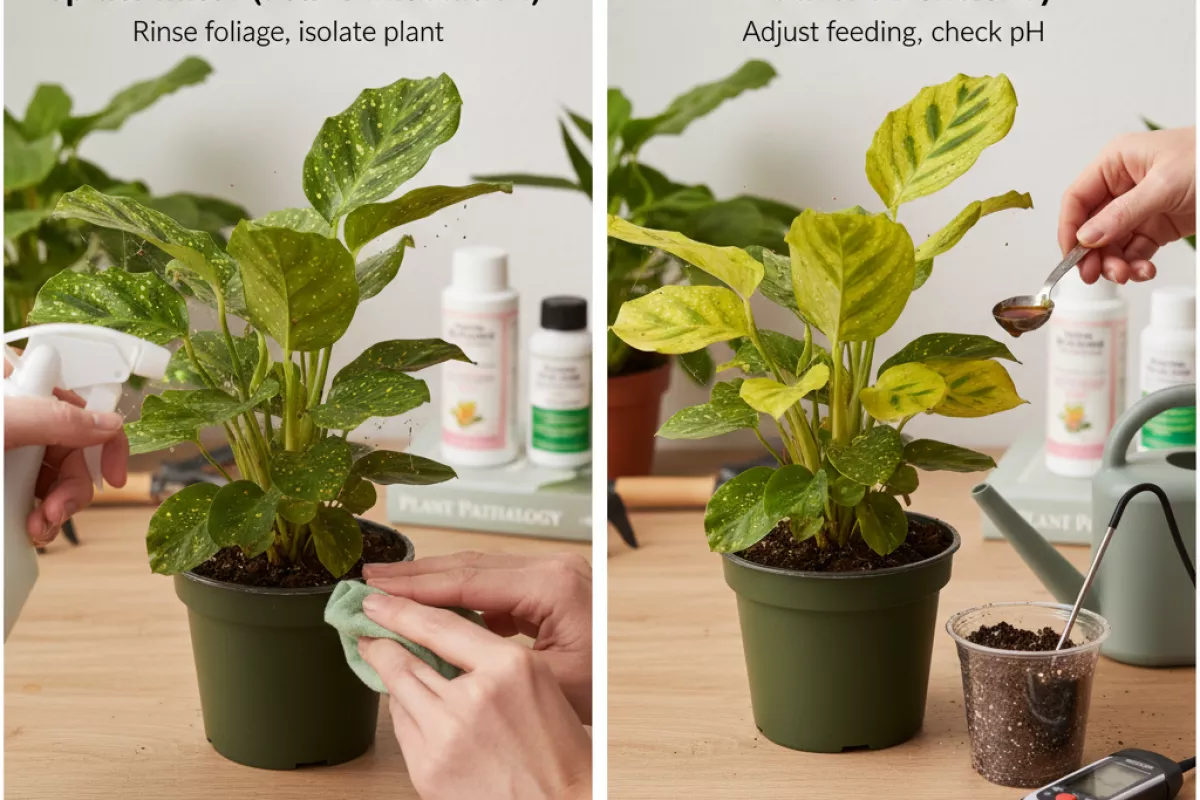
Once you’ve figured out whether you’re dealing with mites or a feeding issue, the fix gets much more straightforward. Pest problems call for physical removal and repeat control, while nutrient problems call for adjusting what the plant can actually take up (not just adding more fertilizer).
| What you diagnosed | What to do now (practical steps) | What to avoid |
|---|---|---|
| Spider mites (active infestation) |
|
|
| Spider mite look-alike damage (old infestation or mechanical stress) |
|
|
| Nutrient deficiency (true underfeeding) |
|
|
| Nutrient lockout (nutrients present, but unavailable) |
|
|
If you’re still unsure, treat it like a short investigation: check for live mites first (movement, fresh stippling, webbing), because pest damage can spread fast. If you can’t confirm activity, shift to root-zone and feeding checks, since most deficiency symptoms won’t “jump” to nearby plants the way spider mites do.
- Fast sanity check: New speckling on multiple leaves over a few days usually points to mites; a slow, even yellowing pattern often points to nutrition or uptake.
- Track new growth: Healthy new leaves are the best sign you picked the right fix, even if older damaged leaves never fully recover.