Aphids on Outdoor Plants – Safe Treatment Options

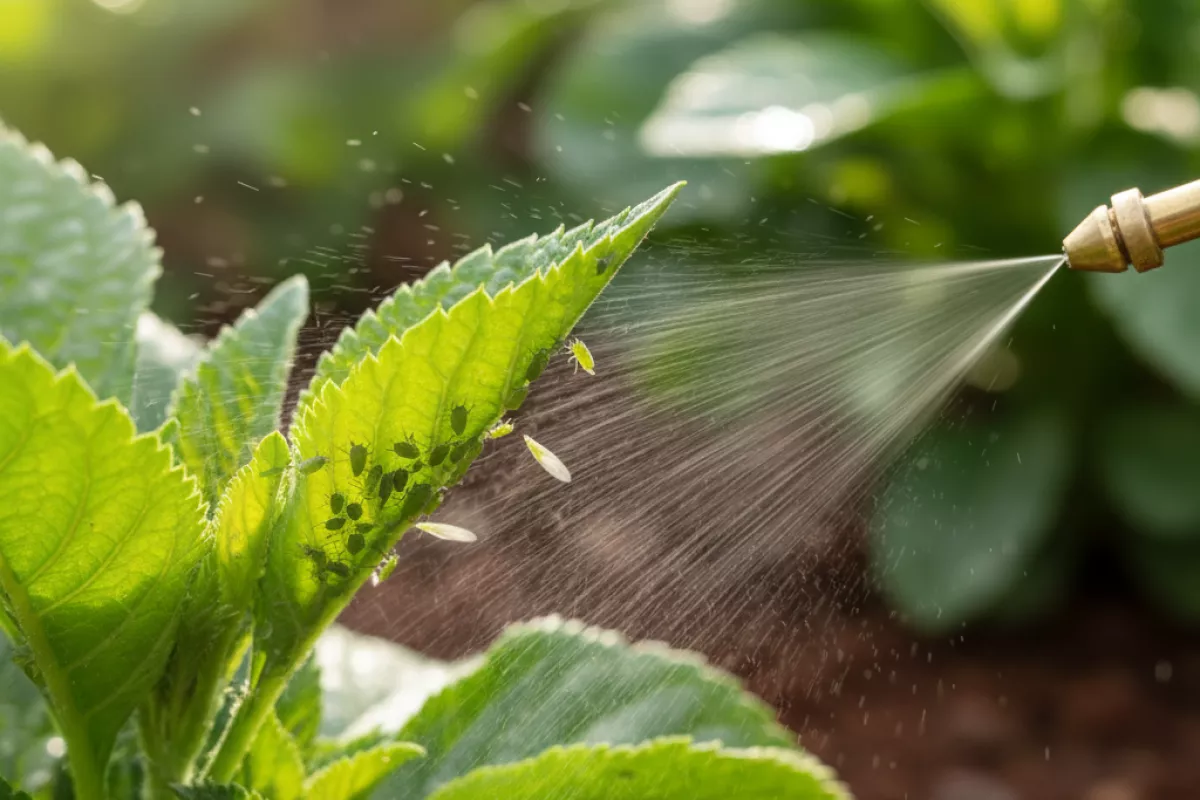 Learn how outdoor aphid infestations get started, which weather patterns help them spread, and which natural predators keep them in check. Covers safe garden treatments, when to apply them for best results, how to protect beneficial insects, and seasonal prevention steps.
When sap-sucking aphids appear on outdoor garden plants, acting quickly and safely can prevent curled leaves, sticky residue, and slowed growth. Use practical treatments that limit harm to beneficial insects, such as strong water sprays, low-toxicity insecticidal soaps, or horticultural oils. Support control with simple habits like removing heavily infested tips, encouraging predators, and checking plants often to stop rebounds.
How outdoor infestations develop
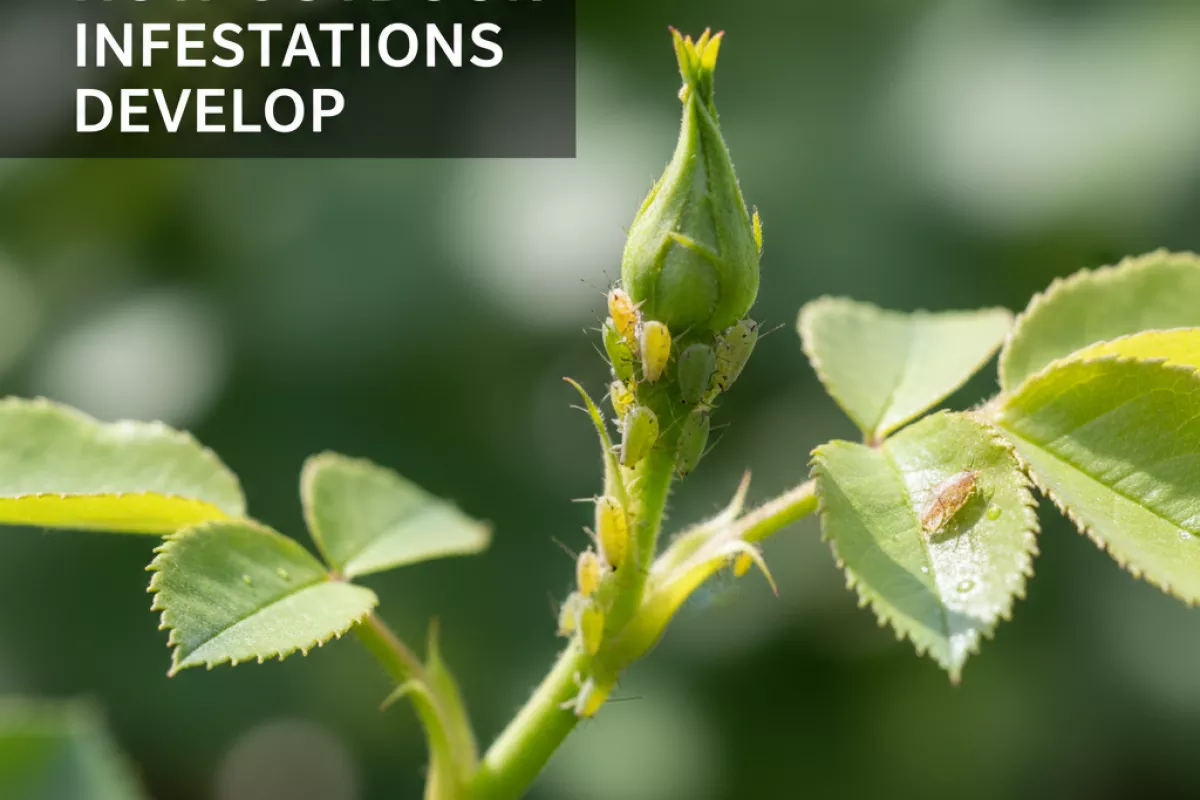
Outdoors, aphid problems usually start small and then snowball when conditions line up: tender new growth is available, predators are scarce, and the weather stays mild. A few individuals can turn into a noticeable cluster in days because most species reproduce quickly and don’t need much time to build a colony.
- They arrive quietly. Some are carried in on wind currents, some hitchhike on new plants, and others are “farmed” by ants that move them to fresh shoots for their sugary honeydew.
- New growth acts like a magnet. Soft stems and expanding leaves are easier to pierce and richer in sap, so colonies often begin on tips, buds, and the undersides of young leaves.
- Warm, steady weather speeds reproduction. When temperatures stay moderate (for example, around 15–25°C (59–77°F)), populations can rise fast because development and breeding cycles shorten.
- Overly lush plants are easier targets. Heavy nitrogen feeding or frequent high-nitrogen lawn fertilizer drift can push plants into producing extra-tender growth, which tends to be more attractive and less resilient.
- Ants can protect and spread them. If you see ants running up and down stems, they may be guarding aphids from lady beetles, lacewings, and hoverfly larvae, making the infestation harder to self-correct.
- Natural enemies don’t always show up in time. Early in the season or after broad-spectrum pesticide use, beneficial insects may be absent, letting sap-suckers multiply without much pressure.
- Stress makes plants less able to cope. Drought, heat spikes, root restriction in pots, or transplant shock can reduce a plant’s defenses, so feeding damage shows sooner (curling leaves, distorted buds, sticky residue).
It also helps to know that colonies don’t stay put. Once a plant gets crowded or tougher to feed on, some aphids develop wings and disperse to nearby hosts. That’s why you might see one shrub look fine while a neighboring plant suddenly gets speckled with clusters a week later.
In many gardens, the tipping point is a combination: lots of soft new growth plus ants plus a lull in predators. Spotting those ingredients early makes the “safe treatment” part easier later, because you can interrupt the cycle before numbers explode.
Weather conditions that favor aphids
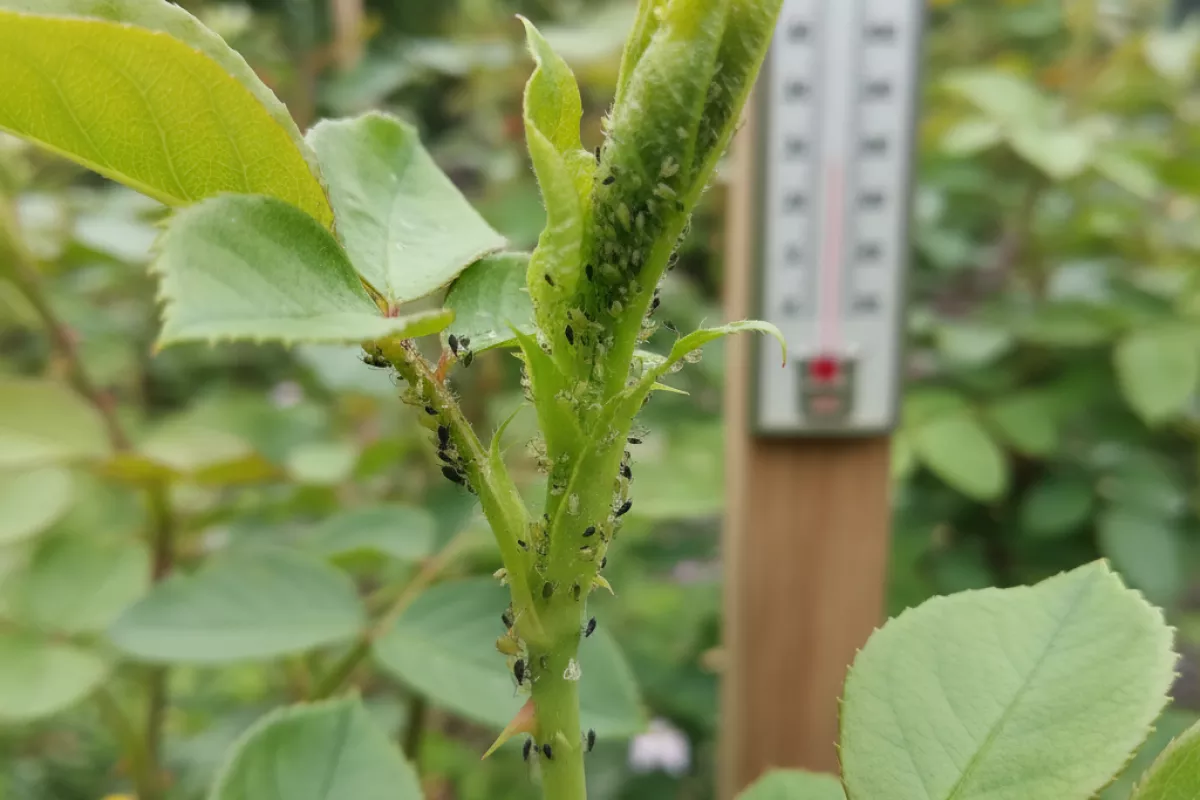
Mild temperatures and steady plant growth are what usually let these sap-suckers build up fast. When it’s warm but not scorching, and plants are pushing out soft new leaves, colonies can expand before you notice the first curled tips or sticky residue.
- Warm, moderate days: Many species reproduce quickly around 15–25°C (59–77°F). Extended stretches in this range often lead to sudden population jumps.
- Cool nights without hard freezes: Light chills may slow them down, but repeated nights above 0°C (32°F) help them persist and keep feeding.
- Dry spells and low humidity: Drier weather can reduce fungal diseases that naturally knock back aphid numbers, and drought-stressed plants may be less able to defend themselves.
- Rapid flushes of new growth: After spring warm-ups or a growth spurt following pruning, plants produce tender shoots that are easier to pierce and richer in sap.
- Overcast, calm conditions: Without heavy rain or strong wind to dislodge them, colonies stay put and keep multiplying on the undersides of leaves and at shoot tips.
- High nitrogen availability: Heavy feeding (or nitrogen-rich soil) can make foliage softer and more attractive, especially during warm weather.
Weather can also work against them. A few days of heavy rain can physically wash insects off plants, and heat spikes above about 30°C (86°F) may reduce survival on exposed foliage, particularly if the plant isn’t irrigated. If you’re monitoring outdoors, check most often after a warm-up followed by a burst of new growth—those are the moments when small clusters can turn into a widespread aphid problem quickly.
Natural predators that reduce numbers
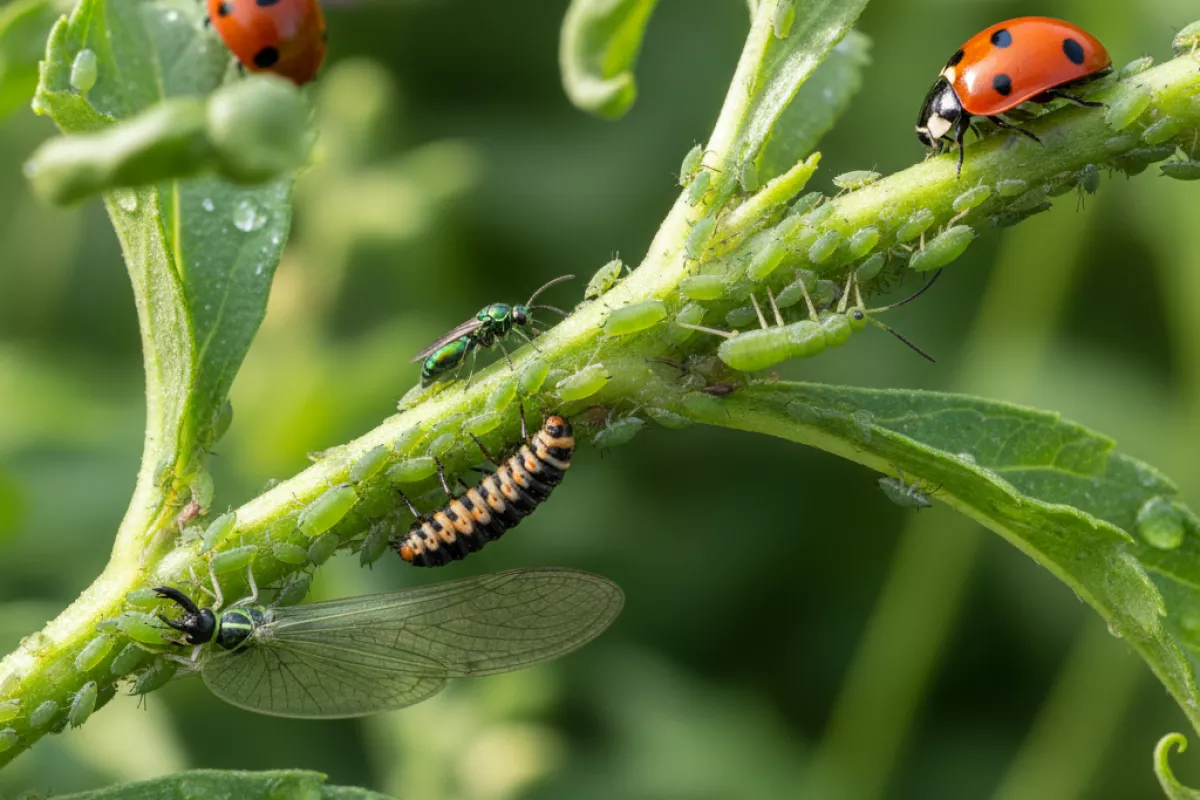
Letting beneficial insects do some of the work is often the safest way to bring an aphid outbreak back under control outdoors. Predators and parasitoids won’t “wipe them out” overnight, but they can steadily knock back colonies so your plants can keep growing without constant spraying.
The key is to recognize allies, avoid broad-spectrum pesticides that kill them, and give them a reason to stick around (water, shelter, and a small, ongoing food supply). If you’ve already used a strong spray, it may take a week or two for helpful insects to return from nearby areas.
- Lady beetles (ladybugs) and their larvae: Adults and especially the alligator-like larvae eat large numbers of aphids. If you see orange/yellow eggs in clusters or spiky larvae on stems, leave them be.
- Lacewing larvae: Sometimes called “aphid lions,” they’re tiny but aggressive feeders. Adults may be seen fluttering near lights at dusk.
- Hoverfly (syrphid) larvae: The adults look like small bees and visit flowers; the larvae are legless and blend in, but they vacuum up soft-bodied pests on leaves.
- Parasitic wasps: These are very small and non-aggressive to people. They lay eggs in aphids, creating mummies (swollen, tan/brown aphids). If you spot mummies, you’re already getting free control—hold off on spraying.
- Predatory midges: Their larvae feed on clusters, especially in humid, sheltered plantings.
- Spiders and predatory bugs (minute pirate bugs, damsel bugs): Generalist hunters that help keep populations from rebounding.
- Birds: Small insect-eaters can reduce infestations on shrubs and trees, though they’re less targeted than insects and may be seasonal.
To support these helpers, focus on small habitat tweaks rather than more products. Planting a strip of nectar and pollen flowers nearby helps adults of hoverflies, lacewings, and parasitoid wasps refuel, which increases egg-laying where aphids are present. Leaving a little ground cover or mulch can also provide shelter, while still keeping airflow around stems to reduce disease.
When you do need an intervention, choose options that are less disruptive. A firm water spray is selective and doesn’t leave residues; apply in the morning so foliage dries. If you use insecticidal soap or horticultural oil, spot-treat the worst clusters and avoid spraying when beneficial insects are actively feeding—this preserves the natural balance that keeps aphids from bouncing right back.
Safe treatment methods for gardens
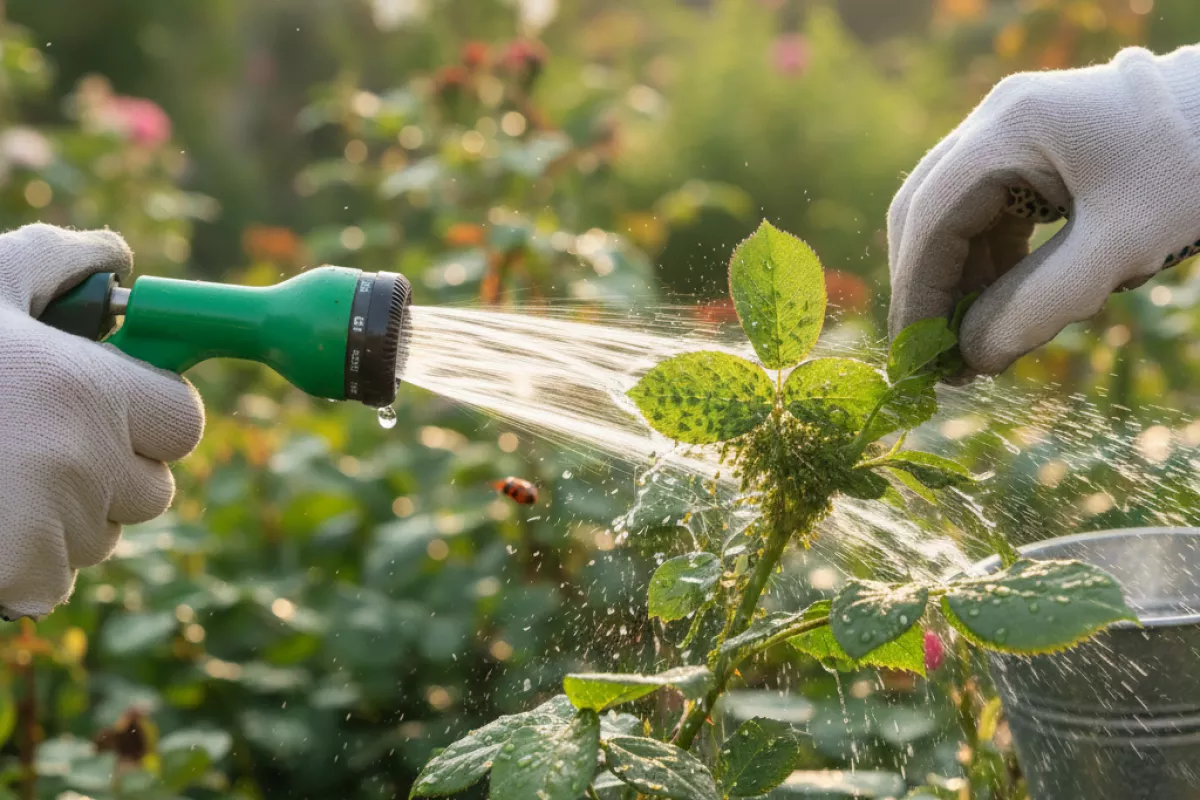
Start with the least disruptive options and only step up if the colony keeps expanding. Aphids multiply quickly, but you can usually get control without harsh chemicals by combining physical removal, targeted sprays, and support for beneficial insects.
- Blast them off with water: A firm spray from a hose knocks aphids off tender growth and buds. Aim at leaf undersides and stems, then repeat every 2–3 days for 1–2 weeks. Morning is best so foliage dries quickly.
- Hand removal and pruning: Pinch off heavily infested tips or buds and dispose of them in the trash (not compost if the pile runs cool). For small outbreaks, wipe stems with a damp cloth or gloved fingers.
- Insecticidal soap: Soap works by direct contact, so coat the insects thoroughly, especially on the underside of leaves. Mix and apply exactly as the label directs; reapply every 4–7 days as needed. Test on a small section first and avoid spraying in strong sun or heat above about 29°C (85°F) to reduce leaf burn.
- Horticultural oil or neem oil: Oils can smother aphids and may help with eggs on some plants. Spray in calm weather and cover all surfaces. Avoid applying when temperatures are near freezing 0°C (32°F) or when it’s very hot above 32°C (90°F), and don’t use on drought-stressed plants.
- Encourage natural predators: Lady beetles, lacewings, hoverfly larvae, and parasitic wasps can suppress outbreaks once they arrive. Provide small flowers (like dill, alyssum, or yarrow), avoid broad-spectrum insecticides, and leave a little habitat nearby rather than a perfectly “sterile” bed.
- Manage ants: Ants protect aphids for their honeydew, so control ants to make biological control work. Use sticky barriers on trunks, prune bridges to the plant, and place ant baits away from pollinator activity.
- Reduce plant stress: Over-fertilizing with nitrogen pushes soft new growth that aphids love. Use slow-release fertilizer sparingly and water deeply but less often (for many garden plants, about 2.5 cm (1 in) per week total from rain plus irrigation, adjusted for heat and soil).
- Use row covers for vulnerable crops: Lightweight fabric can prevent colonization on young plants. Secure edges well and remove during flowering for crops that need pollinators.
| Option | Best for | How fast it helps | Watch-outs |
|---|---|---|---|
| Water spray | Early infestations on sturdy plants | Immediate knockdown | Repeat often; can spread aphids to nearby plants if you don’t follow up |
| Pruning / wiping | Localized clusters on tips and buds | Immediate | Don’t remove too much growth at once; sanitize tools if moving plant to plant |
| Insecticidal soap | Dense colonies on leaves and stems | Hours to 1 day | Needs direct contact; avoid hot sun; test sensitive plants first |
| Horticultural or neem oil | Recurring problems; harder-to-wet surfaces | 1–3 days | Temperature limits; can affect some beneficials if sprayed directly |
| Beneficial insects | Long-term balance in mixed plantings | Days to weeks | Works best when ants are controlled and broad-spectrum sprays are avoided |
| Row covers | Seedlings and leafy greens | Preventive | Remove for flowering crops; check regularly so pests aren’t trapped inside |
If you’re unsure which step to try first, use this simple progression: water spray and pruning for a few days, then move to soap or oil if you still see active aphids. Once numbers drop, focus on ant control and predator-friendly planting so the problem is less likely to rebound.
When to apply treatments for best effect
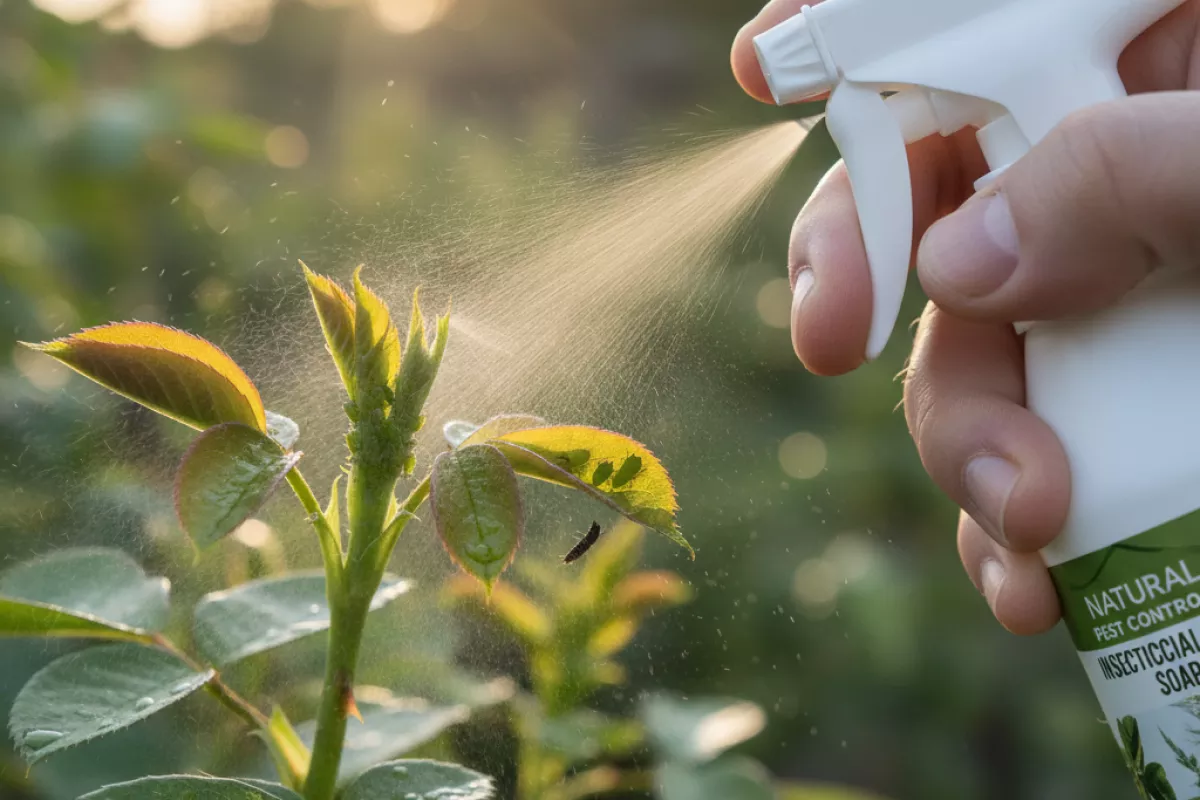
Timing matters because most safe options work by contact, not by lingering in the plant. Aim to hit aphids when they’re exposed, conditions are mild, and beneficial insects are least active. You’ll usually get better control with a couple of well-timed passes than with one heavy spray.
- Treat early in an outbreak. Start as soon as you notice curled new growth, sticky honeydew, or clusters on tender tips. Small colonies are easier to knock back before they spread to stems and undersides of leaves.
- Spray in the cool part of the day. Early morning or evening reduces leaf scorch and slows evaporation so soaps and oils stay wet long enough to work. Avoid midday sun and hot, dry wind.
- Choose a calm, dry window. Apply when there’s little wind and no rain expected for several hours. Rain can rinse off insecticidal soap or horticultural oil before it has time to affect the insects.
- Target the most vulnerable life stages. Nymphs are easier to control than winged adults. Check leaf undersides and growing tips, since that’s where young aphids often cluster.
- Repeat at sensible intervals. Many low-toxicity treatments don’t kill eggs, and new aphids can appear quickly. Recheck plants after 2–3 days and plan a follow-up application about 5–7 days later if you still see live insects.
- Work around pollinators. If the plant is flowering, avoid spraying open blooms. Treat after dusk or at dawn when bees are less active, and focus on stems and foliage rather than petals.
- Don’t treat stressed plants aggressively. If a plant is drought-stressed or heat-stressed, water first and wait until it perks up. Even gentle products can cause damage when leaves are already under strain.
- Use a quick “inspect and spot-treat” routine. Check the same plants every few days during warm spells. Spot-treating a few shoots is often enough and helps preserve lady beetles, lacewings, and other natural predators.
If you’re using a strong water jet instead of a spray, do it in the morning so foliage can dry quickly. For soap or oil, make sure you thoroughly wet the colonies (especially the undersides) without drenching the soil, and stop once the plant is evenly coated rather than dripping.
Protecting beneficial insects
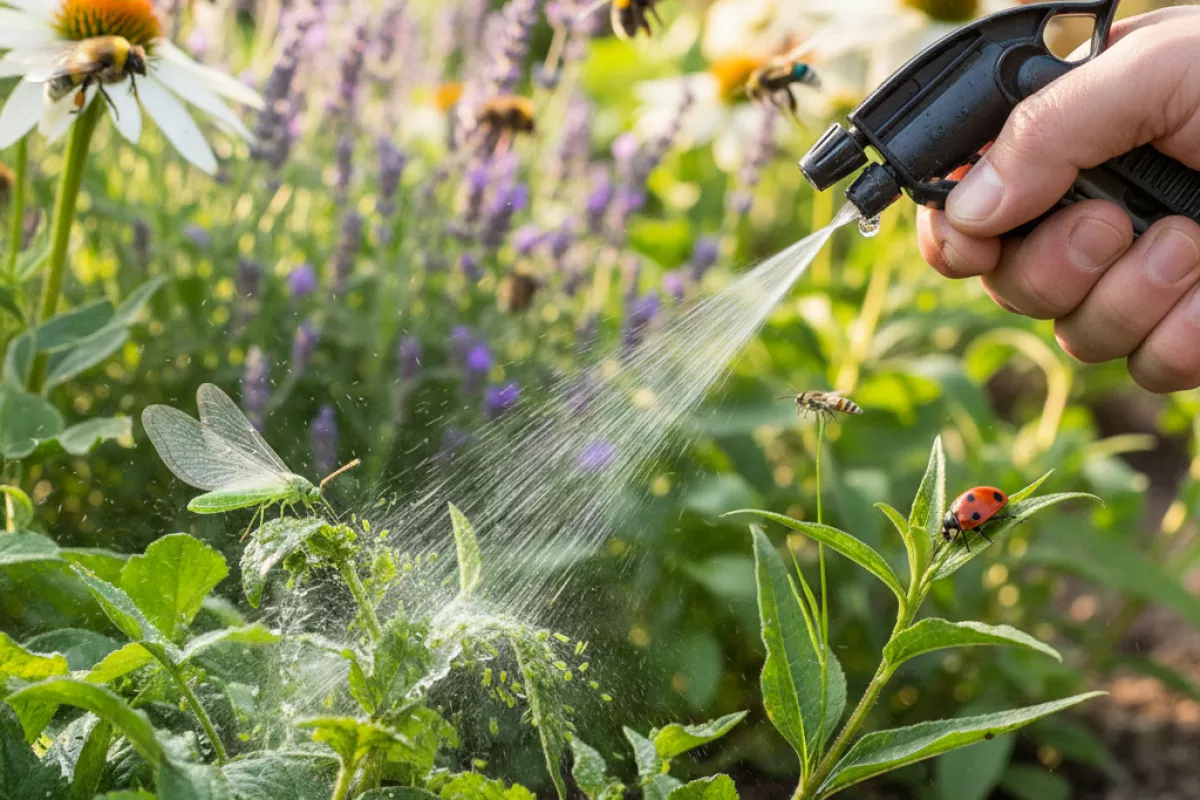
Keep predators and pollinators in mind when you treat aphids outdoors, because the same products that knock back pests can also reduce lady beetles, lacewings, hoverflies, parasitic wasps, and even bees. The goal is to target the colony on the plant while leaving the wider garden food web intact.
- Start with the least disruptive option. A firm water spray is often enough for light infestations and has minimal impact on helpful insects. Aim at the undersides of leaves where aphids cluster, and repeat as needed.
- Spot-treat instead of blanket-spraying. Apply soap or oil only to the affected stems and leaf undersides rather than coating the whole plant bed. This reduces accidental contact with predators that patrol nearby foliage.
- Spray at the right time of day. Treat in the evening or very early morning when bees are less active and temperatures are cooler. Avoid applying oils or soaps during hot, bright conditions, which can stress plants and increase non-target exposure.
- Protect blooms. If possible, avoid spraying open flowers. If aphids are on flower stalks, treat the stalk and nearby leaves carefully and wipe off residue from petals with a damp cloth after the product has done its job.
- Use “dry-time” to your advantage. Many beneficials are harmed by direct contact. Apply only enough to wet the aphids, then allow the plant to dry before beneficial insects become active again.
- Skip broad-spectrum insecticides. Products that kill “all insects” can wipe out natural enemies and lead to rebound outbreaks. If you must use a pesticide, choose a targeted approach and follow the label closely.
- Leave some habitat nearby. A small patch of flowering plants and undisturbed areas gives hoverflies and parasitic wasps nectar and shelter, helping them keep aphids in check after you’ve reduced the worst colonies.
| Approach | How it affects beneficial insects | How to make it safer |
|---|---|---|
| Water spray | Very low risk; mostly mechanical removal | Spray only infested areas; repeat every few days until numbers drop |
| Insecticidal soap | Moderate risk on direct contact (soft-bodied predators can be affected) | Spot-treat leaf undersides; avoid flowers; spray at dusk/dawn and let dry |
| Horticultural oil / neem oil | Moderate risk; can smother small insects if hit directly | Use a light, targeted application; avoid heat and full sun; don’t spray when bees are foraging |
| Broad-spectrum insecticide | High risk; can reduce predators and pollinators and trigger pest rebound | Avoid when possible; if used, treat only the specific plant and follow label timing and restrictions |
If you’re unsure whether you’re seeing “good bugs,” pause before spraying and look closely: aphid “mummies” (tan, swollen shells) often mean parasitic wasps are already working. In that case, a water spray or careful spot-treatment usually supports the natural cleanup rather than interrupting it.
Seasonal prevention practices
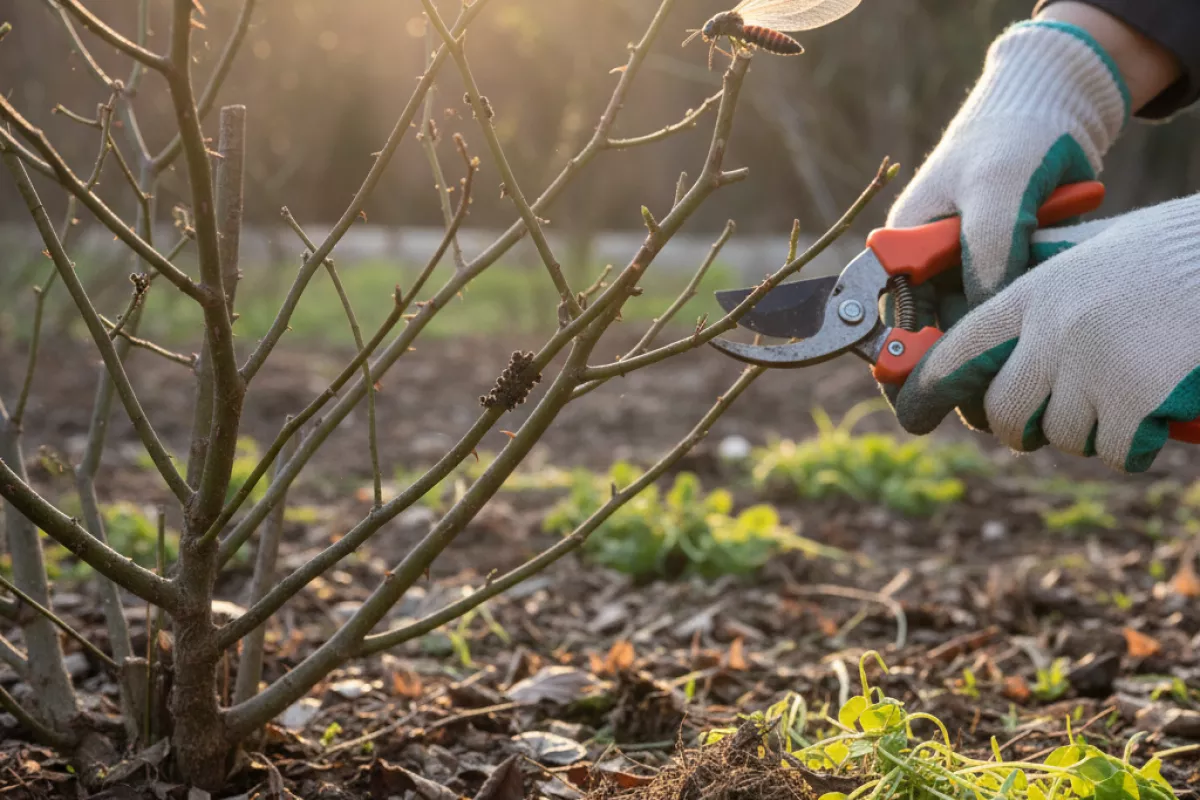
Keeping aphids off outdoor plants is easier when you match your routine to the time of year. The goal is to reduce tender, high-nitrogen growth that attracts sap-suckers, spot early colonies before they spread, and support predators (lady beetles, lacewings, hoverflies) that do the long-term cleanup.
| Time of year | What to do | Why it helps |
|---|---|---|
| Late winter to early spring |
|
Many outbreaks start on the first flush of soft growth; early removal prevents a population jump. |
| Spring to early summer |
|
Dislodging breaks feeding and reproduction, while balanced growth and predator support reduce repeat problems. |
| Mid to late summer |
|
Heat-stressed plants and ant protection can make infestations persist; targeted removal and gentle treatments keep damage from snowballing. |
| Fall cleanup |
|
Reducing host material limits places aphids and eggs can carry over, and planning prevents repeat hotspots. |
Two habits matter year-round: inspect early (a quick look at growing tips and leaf undersides) and avoid overfeeding (especially high-nitrogen products). If you do need to spray, treat the smallest area that works, and re-check after 24–48 hours so you can stop once the colony collapses rather than repeating on a fixed schedule.