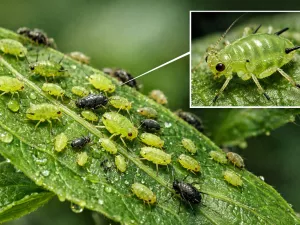
Aphids and Ants on Plants – What’s the Link

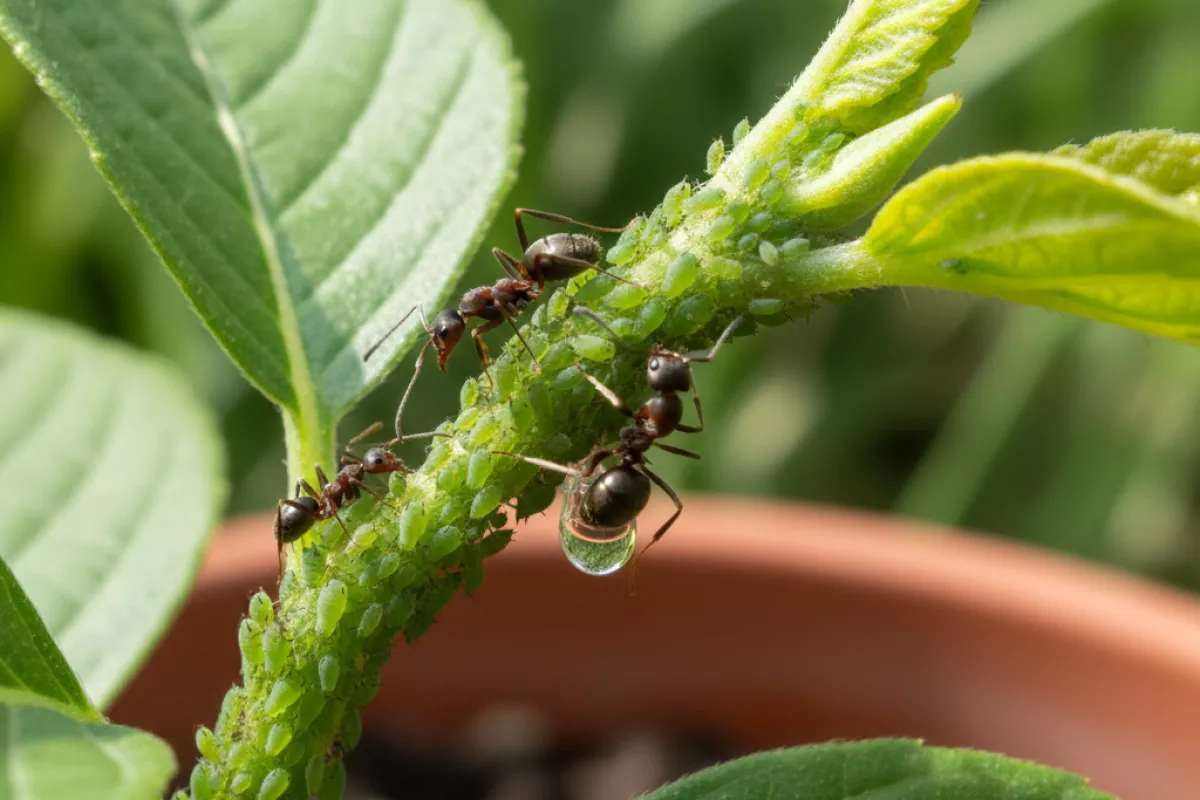 Learn why ants protect aphids and how honeydew makes it a win-win. Get clear signs ants are farming aphids, why stopping ants matters, and methods to break the partnership using ant control, plant barriers, and long-term prevention to protect plants.
When you see ants marching up plant stems, they are often tending aphids that feed on sap. Ants protect these pests from predators and harvest the sweet honeydew aphids excrete. Honeydew can attract sooty mold and weaken plant growth over time. Knowing this relationship helps you choose whether to control the aphids, the ants, or both for better plant health.
Why ants protect aphids
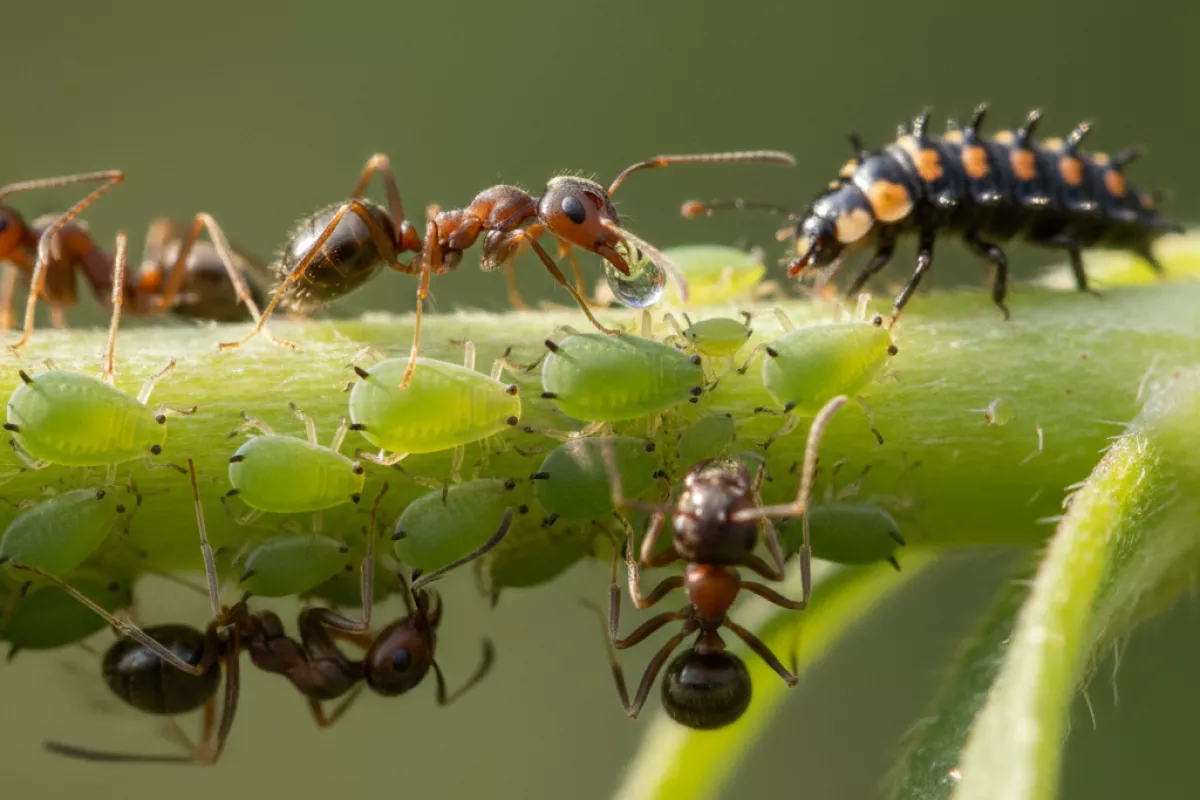
Ants stick close to aphid colonies because the insects pay them in food. Aphids tap into plant sap and excrete a sugary liquid called honeydew, and many ant species treat that steady supply like a dependable “farm” they can harvest day after day.
- Honeydew is an easy calorie source. It’s rich in sugars and can be collected quickly compared with hunting prey. Ants will often “milk” aphids by stroking them with their antennae to encourage more droplets.
- Protection keeps the food source stable. Lady beetles, lacewing larvae, hoverfly larvae, and parasitic wasps all attack aphids. Ants chase, bite, or spray defensive chemicals at these predators, reducing losses in the colony.
- Ants may move aphids to better feeding sites. If a plant shoot is crowded or drying out, workers sometimes carry aphids to fresh growth, where sap flow is higher and honeydew output tends to increase.
- They provide “maintenance” in exchange for rewards. Ants can remove debris and sometimes deter fungal growth by keeping the area active and patrolled, which helps the aphids stay productive.
- Some species even overwinter the partnership. In certain cases, ants shelter aphid eggs in the nest during cold periods and return the young to plants in spring, restarting the honeydew supply.
This relationship is mutualistic: the sap-feeders get bodyguards, and the ants get carbohydrates. The downside for your plants is that guarded colonies can grow larger and persist longer, because natural enemies have a harder time reaching them.
How honeydew creates mutual benefit
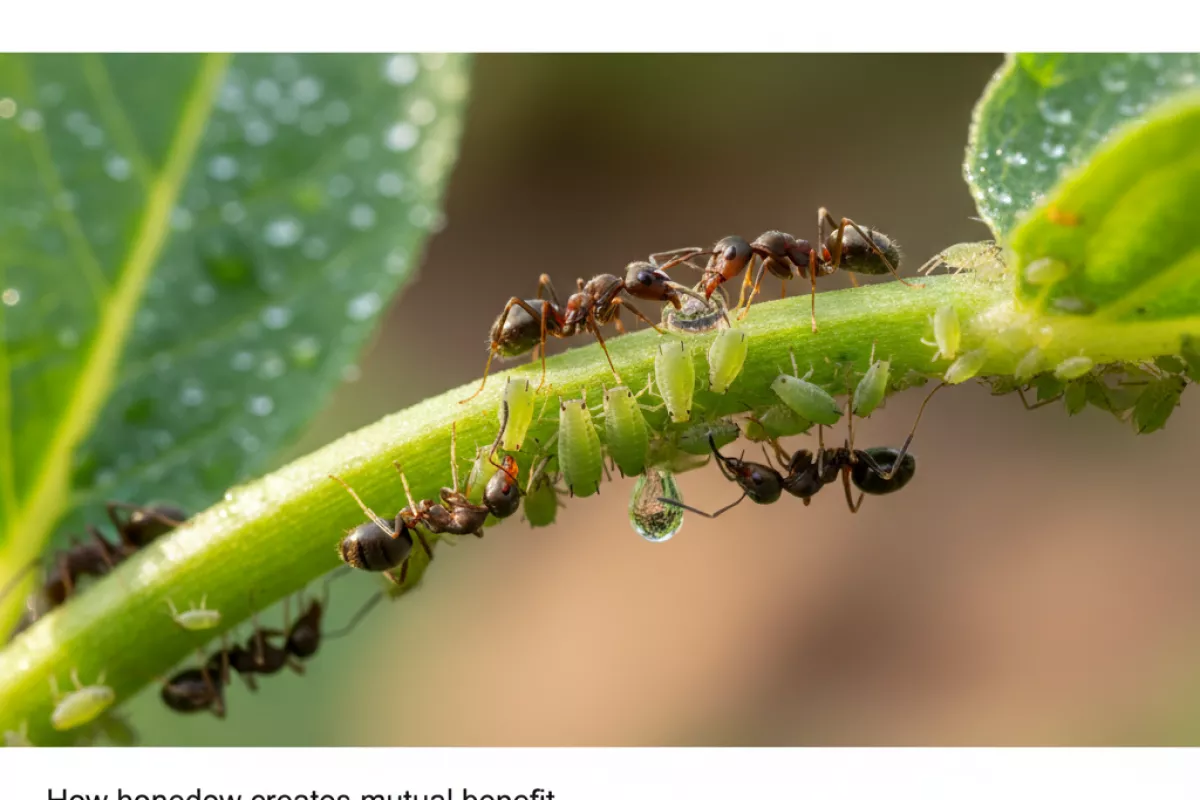
The relationship often starts with a simple trade: aphids excrete a sugary liquid called honeydew, and ants treat it like a dependable food source. Because that “sweet waste” is rich in carbohydrates, ants will actively seek out aphid colonies and return to them again and again, much like visiting a stable feeding spot.
Once ants begin harvesting honeydew, their behavior around the plant changes. Instead of just passing by, they patrol stems and leaves, touching aphids with their antennae to stimulate more droplets and chasing off anything that threatens the colony. From the aphids’ perspective, this can mean higher survival and more time feeding on plant sap.
- Aphids provide food: Honeydew offers quick energy, so ants invest time guarding the insects that produce it.
- Ants provide protection: Many ants deter or attack predators like lady beetles and lacewing larvae, and they may disrupt tiny parasitic wasps trying to lay eggs in aphids.
- Ants “manage” the herd: Some species move aphids to fresher shoots, shelter them in crevices, or carry them to new growth when old leaves decline.
- Plants feel the side effects: Ant defense can let aphid numbers rise, increasing sap loss and leaf distortion; extra honeydew can also encourage sooty mold, which blocks light and reduces photosynthesis.
It’s not a perfectly balanced partnership, though. Ant attendance can vary with weather, alternative food sources, and plant type. If nectar or other sugars are abundant, ants may abandon aphids, leaving the colony exposed. And if honeydew buildup becomes heavy, it can attract other insects or microbes that change the whole mini-ecosystem on the plant.
Signs ants are farming aphids
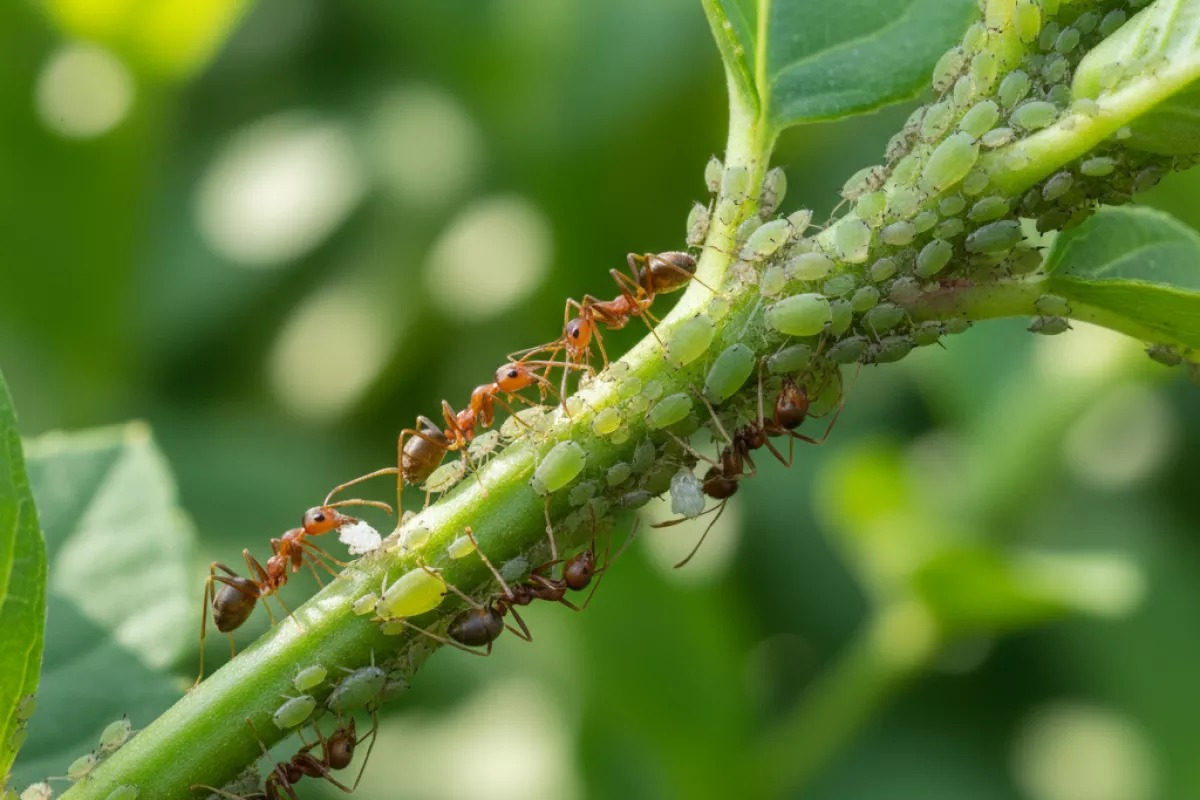
You can usually tell this partnership is happening by watching how ants behave around a sticky, clustered pest problem. When ants are “working” a plant, they don’t just wander across leaves at random—they patrol specific stems and growing tips where sap-suckers are feeding, and they react quickly to anything that threatens that food source.
- Ant “highways” up the plant: You’ll notice steady, repeated traffic along the same route from the soil or pot rim to particular shoots, buds, or the undersides of leaves.
- Ants clustered around aphid colonies: Instead of foraging broadly, they congregate where the insects are densest—often on tender new growth, flower stalks, or the base of leaves.
- Defensive behavior toward predators: If you disturb the colony or introduce a natural enemy (like a lady beetle larva), ants may rush in, bite, or shove it away. This “bodyguard” behavior is one of the clearest clues.
- “Milking” or tapping: Watch closely and you may see ants stroke aphids with their antennae to trigger honeydew release, then immediately drink the droplets.
- Sticky surfaces and sooty mold nearby: Honeydew can leave leaves shiny or tacky; over time it often supports black, powdery-looking sooty mold on foliage below the feeding site.
- Aphids persist despite predators or spraying: When ants are protecting them, colonies can rebound quickly. You may knock numbers down, then see them reappear in the same spots as ants continue to escort and defend them.
- Ants moving aphids to “better” feeding sites: Sometimes ants carry wingless individuals or nymphs to fresh, soft growth, especially after you prune, rinse, or otherwise disrupt the colony.
- More activity during warm, calm periods: You’ll often see the busiest tending on mild days around 20–30°C (68–86°F), when both ants and aphids are active and honeydew production is high.
If you’re unsure, try a simple check: gently shake a stem over white paper and look for aphids, then watch whether ants immediately return to that exact spot and begin patrolling again. Consistent guarding and “milking” behavior is a strong indicator the ants are actively managing the infestation rather than merely passing through.
Why controlling ants is essential
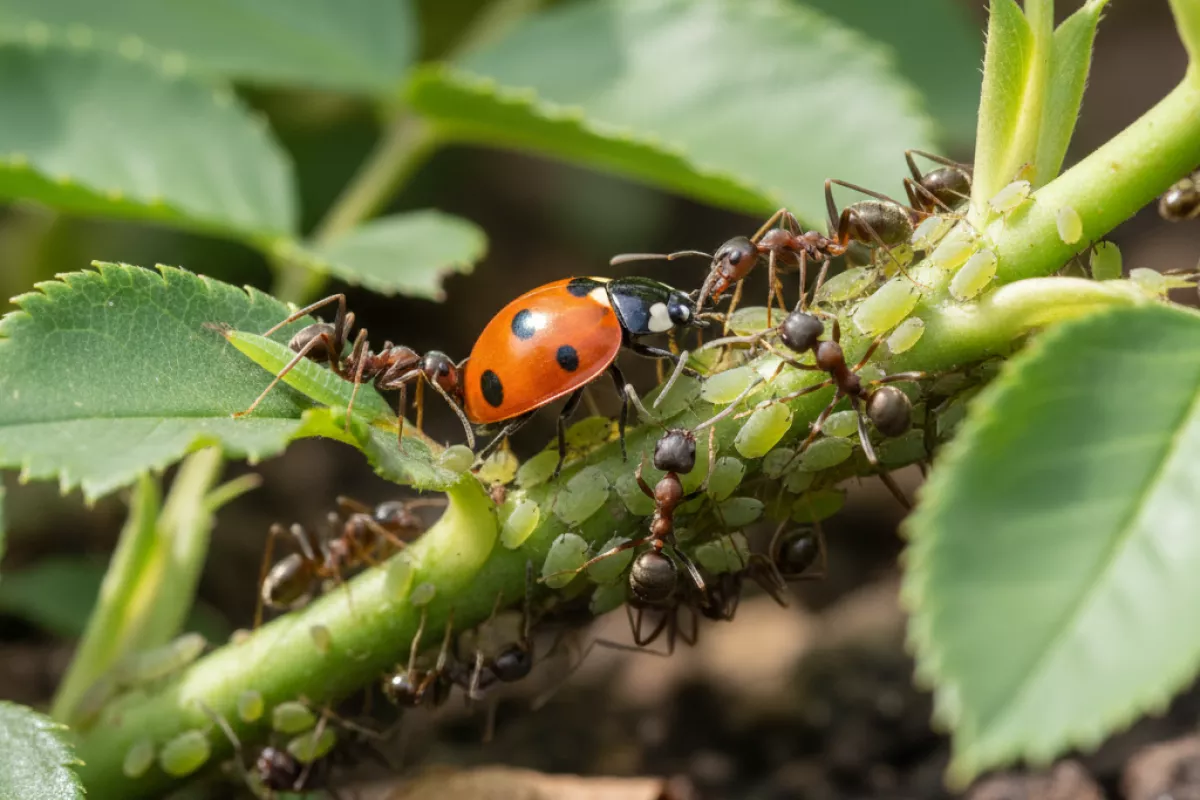
Managing ant activity around your plants often makes the biggest difference in how quickly an aphid problem grows. Ants aren’t eating your leaves in most cases, but they protect aphids because they want the sugary honeydew aphids produce. That protection can keep natural predators away and let colonies expand faster than they otherwise would.
When ants are patrolling stems and new growth, beneficial insects like lady beetles, lacewings, and hoverfly larvae are more likely to be chased off before they can feed. The result is a stubborn infestation: you can spray or rinse aphids off, but the “bodyguards” help the survivors re-establish and spread to fresh shoots.
- Ants interfere with biological control. Even a small ant trail can reduce the impact of predators and parasitoid wasps that normally keep sap-suckers in check.
- Honeydew leads to secondary issues. As ants encourage aphids to keep feeding, sticky residue builds up and can promote sooty mold, which blocks light and makes leaves look dirty.
- New growth stays under pressure. Aphids concentrate on tender tips and buds; with ants guarding them, distortion and stunting can continue through the season.
- Reinfestation becomes routine. Ants may move aphids to better feeding sites, essentially “resetting” the problem after you’ve knocked numbers down.
A practical approach is to break the ant-aphid partnership first, then reduce aphids. Blocking ant access with sticky barriers on trunks or stakes, pruning bridges (leaves touching walls, strings, or adjacent plants), and watering to disrupt trails can all help. Once ant traffic drops, gentle controls like a strong water spray, insecticidal soap, or horticultural oil tend to work more reliably because predators can finally do their job.
Methods to break the pest partnership
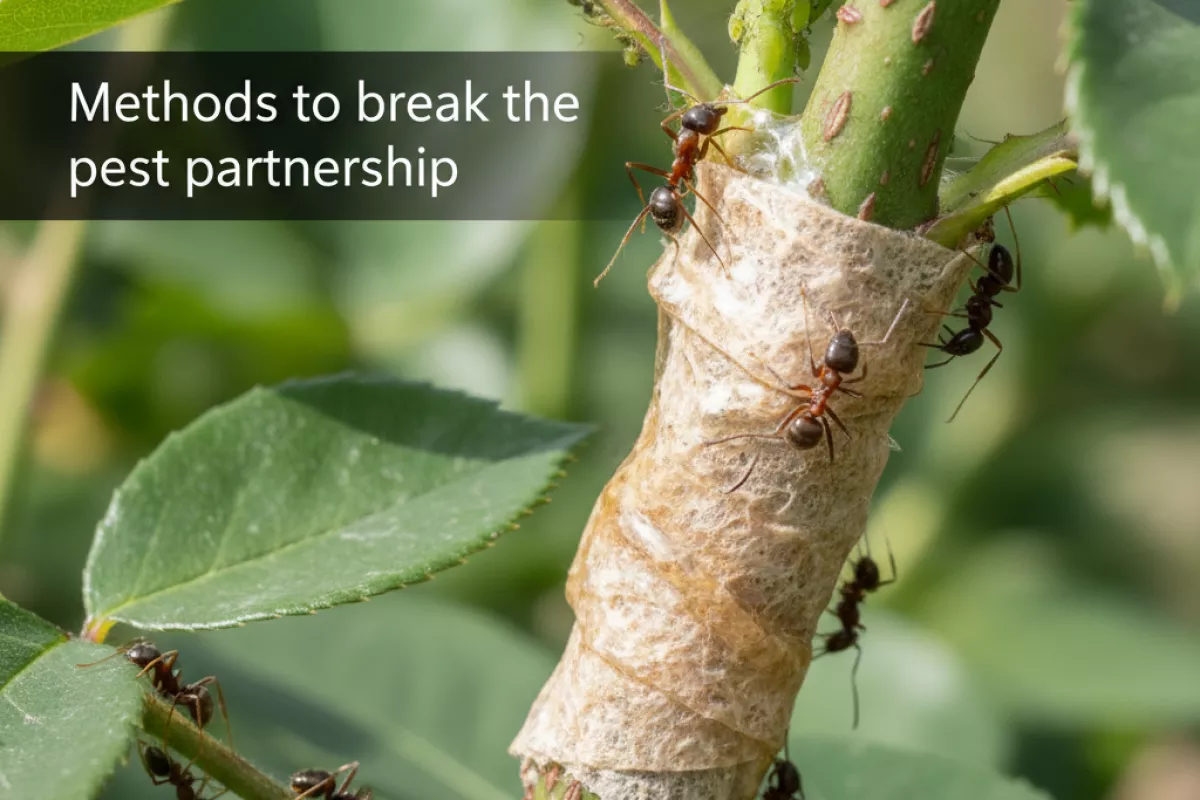
To stop ants from “farming” aphids, you usually get the best results by tackling both sides of the relationship: reduce the sap-suckers and make it harder for ants to guard them. If you only spray aphids while ants keep patrolling, the colony often rebounds because the ants defend survivors and move them to fresh growth.
- Block ant access to the plant. Wrap trunks or main stems with a sticky barrier band, or apply a tacky product to a band of tape so it doesn’t contact bark directly. Check it every few days and refresh when it’s dusty or bridged by debris. For plants in pots, place the container on a stand and keep the legs isolated with sticky material so ants can’t climb up.
- Remove “bridges” that let ants bypass barriers. Prune leaves or stems that touch walls, fences, neighboring plants, or the ground. Even a single leaning twig can become an ant highway back to the aphid clusters.
- Knock aphids off with water first. A firm spray dislodges many soft-bodied pests and breaks up the groups ants are guarding. Aim at shoot tips and the undersides of leaves; repeat as needed rather than relying on one heavy blast.
- Use low-impact contact controls that ants can’t easily “undo.” Insecticidal soap or horticultural oil works by coating the insects, so coverage matters. Spray in the cooler part of the day and hit hidden spots where ants tend to shelter aphids. Reapply based on label directions and after rain.
- Prune the worst infestations. If a few shoots are heavily curled and packed with aphids, cutting them out is often faster and more reliable than trying to spray into tight leaf rolls. Dispose of the clippings rather than dropping them at the base of the plant.
- Manage honeydew and sooty mold. Rinse sticky leaves so you can see new activity and reduce the sugary residue that keeps ants interested. Cleaning also helps beneficial insects move around and hunt.
- Encourage natural enemies, but protect them from ant interference. Lady beetles, lacewings, hoverfly larvae, and tiny parasitic wasps can suppress aphids well—unless ants chase them off. Ant barriers and pruning access routes make biological control noticeably more effective.
- Reduce tender new growth that attracts aphids. Avoid heavy nitrogen feeding during outbreaks; it can push soft, juicy shoots that are easy for aphids to tap. If you fertilize, keep it moderate and timed to the plant’s needs rather than to “green it up” quickly.
- Look for and address the ant colony nearby. Follow trails to nests under stones, mulch, pavers, or along foundations. Disturbing the nest area and removing shelter can reduce traffic. If you use baits, place them along trails where pets and children can’t reach, and be patient—baits work gradually as workers share food.
| Approach | What it targets | When it helps most | Watch-outs |
|---|---|---|---|
| Sticky bands / barriers | Ant movement to aphid colonies | Woody plants, fruit trees, roses; recurring ant trails | Needs maintenance; debris can create a bridge; avoid direct contact with delicate bark |
| Water spray | Aphids (physical removal) | Early infestations; tender annuals and vegetables | May need repeating; avoid blasting fragile blooms |
| Soap or horticultural oil | Aphids (contact kill) | Clusters on new growth; when you can thoroughly coat leaves | Can stress plants in heat; follow label guidance and test a small area first |
| Pruning infested tips | Aphids and eggs on heavily curled shoots | Localized hotspots; shrubs with a few badly affected stems | Don’t over-prune during heat or drought; discard clippings |
| Natural enemies + ant exclusion | Long-term aphid suppression | Gardens where you can avoid broad-spectrum insecticides | Ants can protect aphids unless access is blocked |
| Ant baits / nest management | Ant colony pressure | Persistent reinfestation despite aphid control | Slow acting; place safely; avoid spraying insecticides near baits |
A practical sequence is: block ant routes, knock down aphids, then follow up with a contact treatment if needed. Once the ants stop guarding, you’ll often see predators and parasitoids make a noticeable dent in the remaining aphids within days.
Barrier techniques for plant protection
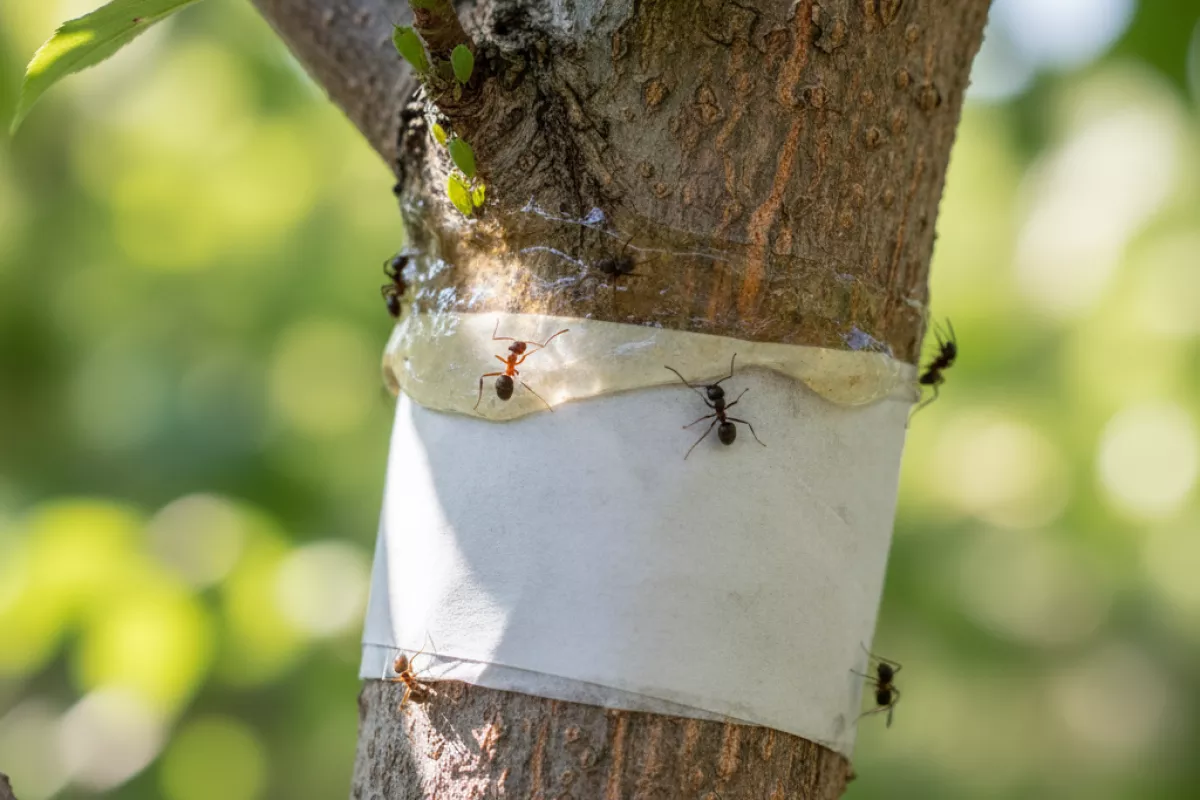
When ants are “farming” aphids for honeydew, breaking their access route can slow the whole cycle. Physical barriers don’t rely on spraying, and they work best when you install them early—before ants have established a steady trail up the stem or trunk.
- Sticky trunk bands (tree wraps): Place a sticky barrier around the trunk to stop ants from climbing. Wrap first with paper or tape so the adhesive doesn’t touch bark directly, then apply the sticky layer. Check every 7–14 days and refresh after heavy rain. Keep the band about 30–60 cm (12–24 in) above the soil so splashes and debris don’t clog it as quickly.
- Collars and guards for tender stems: For young trees, tomatoes, or cane fruits, a simple plastic collar can interrupt ant traffic. Make sure it fits loosely enough to avoid girdling as the plant thickens; recheck weekly during fast growth.
- Raised pots and “moats”: Container plants can be isolated by setting pots on stands and placing the legs in water cups, or by using a shallow tray with water under the pot (without letting roots sit in water). Even a 1–2 cm (0.4–0.8 in) water gap can deter many ant species if bridges (leaves, mulch, twigs) are removed.
- Pruning to remove bridges: Ants often bypass barriers via touching branches, stakes, or nearby walls. Prune or reposition so there’s a clear gap of about 5–10 cm (2–4 in) between foliage and any “ladder” surface. This also improves airflow, which can make aphid outbreaks less intense.
- Ground management around the base: Mulch piled against stems can hide ant trails and create alternate routes. Keep a small mulch-free ring of roughly 5–8 cm (2–3 in) around the trunk or main stem, and avoid letting weeds lean onto the plant.
- Row covers for vulnerable crops: Fine mesh fabric can physically exclude winged aphids from landing on greens and seedlings. Seal edges with soil or weights, and remove during flowering for crops that need pollinators. Inspect under the cover—if aphids get trapped inside, the cover can protect them too.
Barriers are most effective when paired with quick aphid knockdown on the plant itself (a firm water spray, pruning heavily infested tips, or insecticidal soap used carefully). If ants can’t reach the colony, they’re less likely to defend aphids from lady beetles, lacewings, and other natural predators, and the infestation often becomes easier to manage.
Long-term prevention strategies
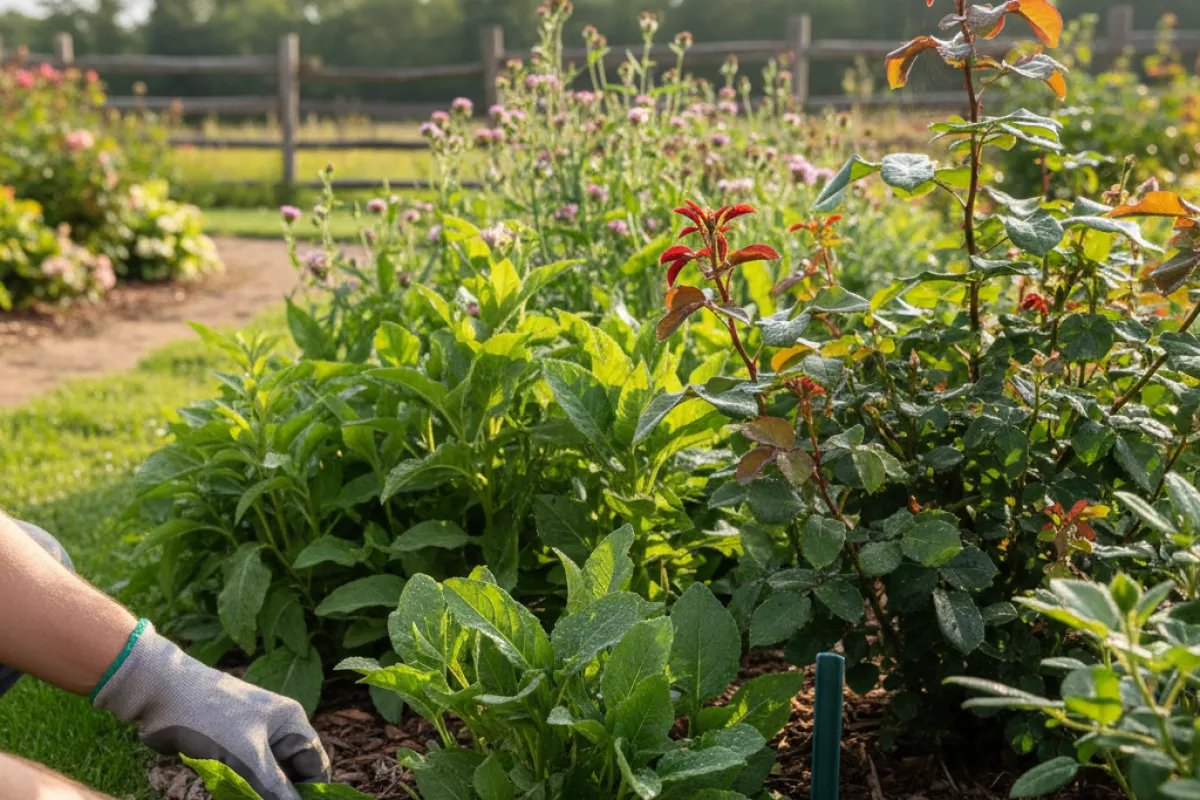
Break the aphid–ant partnership by making your plants less inviting to sap-suckers and by removing the “rewards” ants come for (honeydew). The goal isn’t perfection; it’s keeping populations low enough that natural predators and plant vigor do most of the work.
- Start with plant health and spacing. Stressed, over-fertilized plants push out tender new growth that aphids love. Use slow-release or moderate nitrogen, water consistently, and thin crowded stems so air moves through the canopy.
- Choose resistant varieties when you can. If one cultivar is repeatedly covered while another nearby stays clean, swap it next season. In edible beds, rotate susceptible crops so the same host isn’t in the same spot year after year.
- Manage ants as part of the plan. Ants “farm” aphids and will chase off lady beetles and lacewings. Reduce access by pruning branches that touch walls or fences and by using sticky barriers on trunks or stakes (keep the band clean and replace it when it’s clogged with dust or debris).
- Keep honeydew from building up. Sooty mold grows on the sugary residue and signals to ants that a food source is active. Rinse leaves with a firm spray of water, and remove heavily infested tips so the colony can’t rebound quickly.
- Encourage beneficial insects. A small, steady presence of predators prevents sudden explosions. Plant a mix of small-flowered herbs and natives, avoid broad-spectrum insecticides, and leave some shelter (mulch, leaf litter in non-problem areas) so helpers can overwinter.
- Monitor early and act small. Check the undersides of young leaves and new shoots weekly during rapid growth. Spot-treat early colonies with water sprays or insecticidal soap rather than waiting for a full-blown infestation that attracts more ants.
- Control weeds and alternate hosts. Many aphid species build up on weeds first, then move onto ornamentals and vegetables. Keeping the area around beds tidy reduces the “launch points” for new colonies.
| Situation you notice | What it usually means | Best long-game response |
|---|---|---|
| Lots of ants on stems, but few visible aphids | Ants may be tending small colonies in curled leaves or on roots | Inspect hidden growth, rinse foliage, and add/refresh sticky barriers to limit ant access |
| Sticky leaves and black sooty coating | Honeydew has been accumulating for a while | Wash residue off, prune the worst tips, and reduce excess nitrogen that drives soft growth |
| Aphids return quickly after spraying | Ant protection or repeated flushes of new growth are helping them rebound | Pair gentle aphid control with ant management and improve spacing/light to slow tender regrowth |
| Predators show up, then disappear | Ants may be harassing them, or broad treatments are knocking them back | Stop broad-spectrum products, limit soap/oil to targeted areas, and block ants so predators can feed |
If you want a simple seasonal rhythm: focus on prevention during spring flush, tighten ant control when you first see honeydew, and keep interventions targeted so beneficial insects can stabilize the system over the rest of the growing season.