Sticky Leaves From Aphids – What to Do

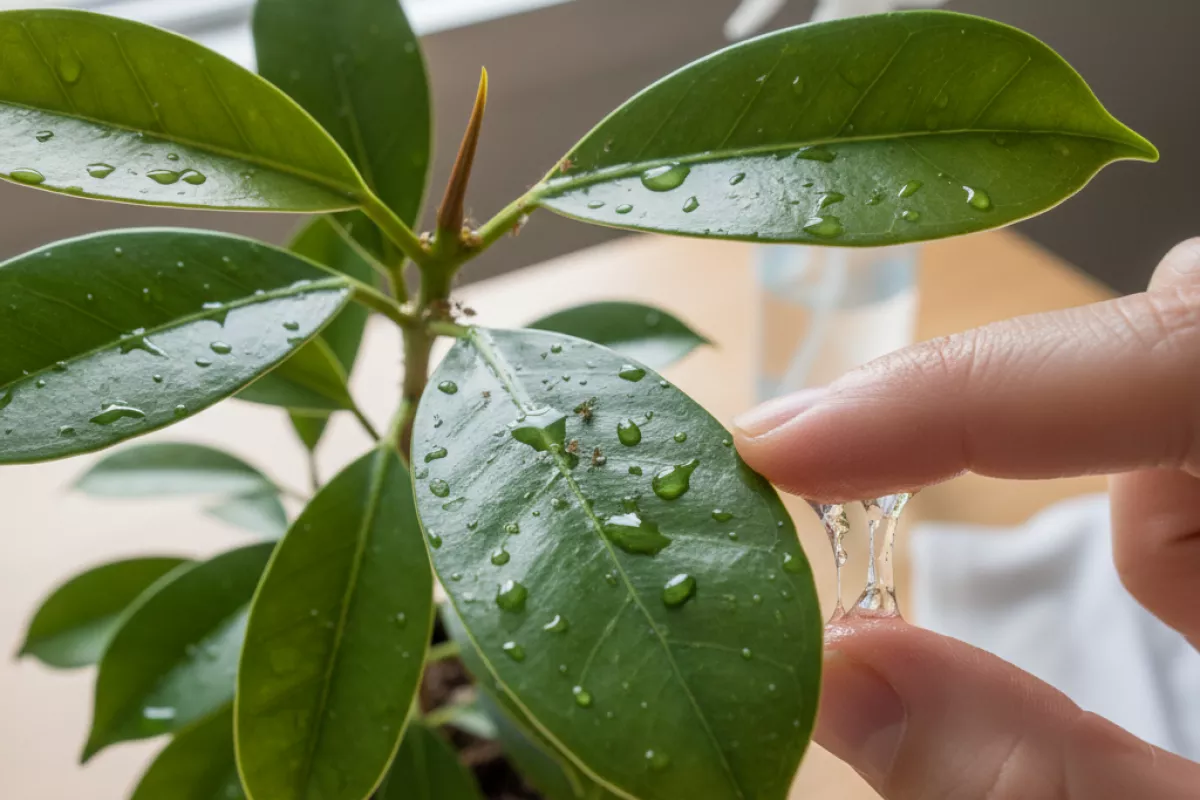 Learn why aphids leave sticky residue, what honeydew is and how it forms, and how it can lead to mold on leaves. Get safe cleaning steps, treatments to stop sap-sucking pests, signs stickiness means a severe infestation, and prevention tips.
Sticky, tacky leaves after aphids usually mean honeydew residue, which can draw ants and lead to sooty mold. Rinse the plant thoroughly with a gentle spray of water, especially under leaves, then treat remaining aphids with insecticidal soap or neem, following the label. Recheck every few days and repeat as needed. Improve airflow, remove heavily infested tips, and avoid excess nitrogen to reduce new outbreaks.
Why aphids cause sticky residue
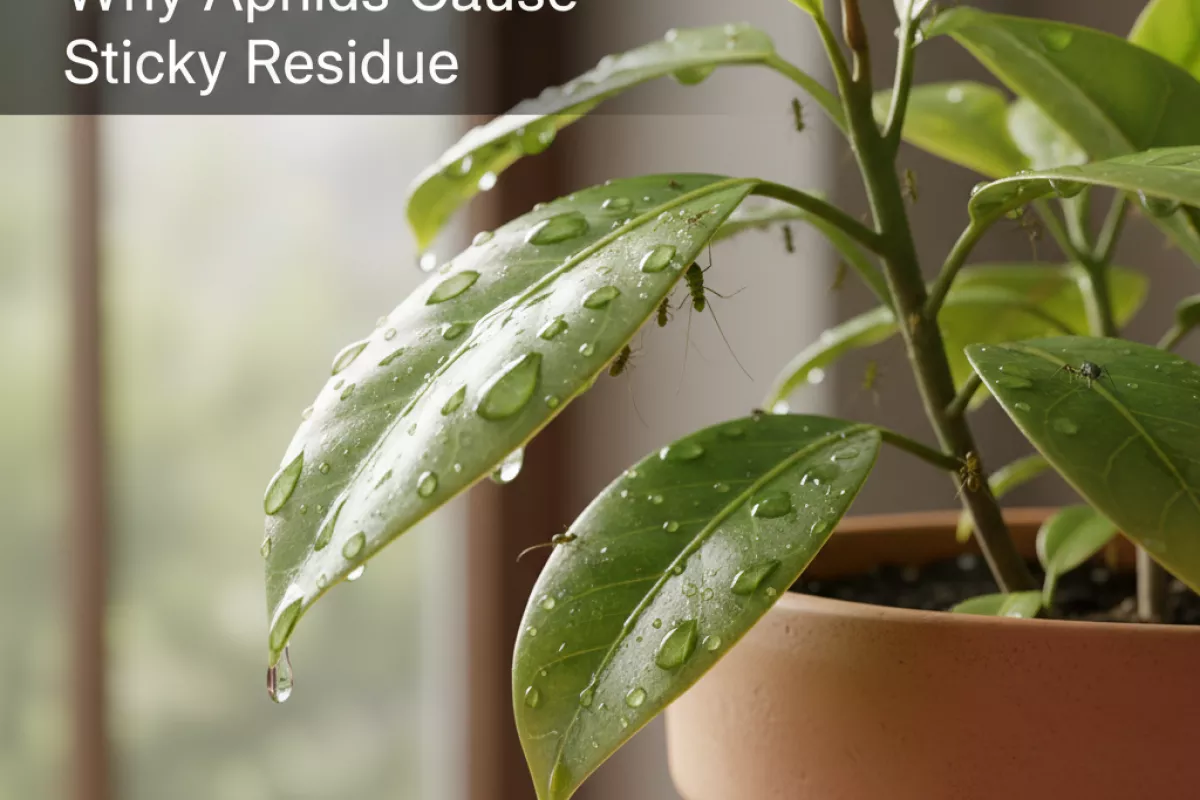
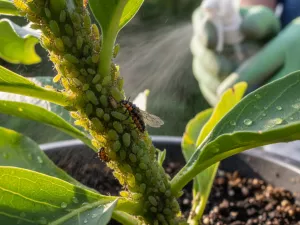
The tacky film on leaves usually comes from a sugary waste product called honeydew. Aphids feed by inserting needle-like mouthparts into plant tissue and tapping into the sap stream. Sap is rich in sugars but relatively low in the proteins aphids need, so they process huge amounts and excrete the excess sugars onto the leaf surface.
That residue doesn’t just sit there. It spreads into a shiny coating, drips onto lower leaves and pots, and can even make patios or windows beneath the plant feel sticky. In warm weather, it can dry into a thin glaze that’s harder to rinse off.
- High-sugar sap in, sugar out: Aphids take in more carbohydrates than they can use, so the extra is expelled as honeydew.
- Feeding sites are often on tender growth: New shoots and the undersides of leaves are common targets, which is why stickiness often starts near fresh growth and then spreads.
- Ants can make it worse: Ants “farm” aphids for honeydew, protecting them from predators and moving them to better feeding spots, which can increase the amount of residue you see.
- Sooty mold follows the sugar: The sweet coating is a food source for dark fungal growth (sooty mold). The mold itself isn’t usually infecting the plant tissue, but it can block light and make leaves look dirty.
- It can signal a larger sap-sucker problem: While aphids are a common cause, similar stickiness can also come from other sap-feeding insects, so it’s worth checking closely for the actual pest.
If you notice a sticky layer but can’t find aphids right away, look along stems, in curled leaf edges, and especially under leaves. The insects can be tiny, and the honeydew often shows up before the colony is obvious.
What honeydew is and how it forms
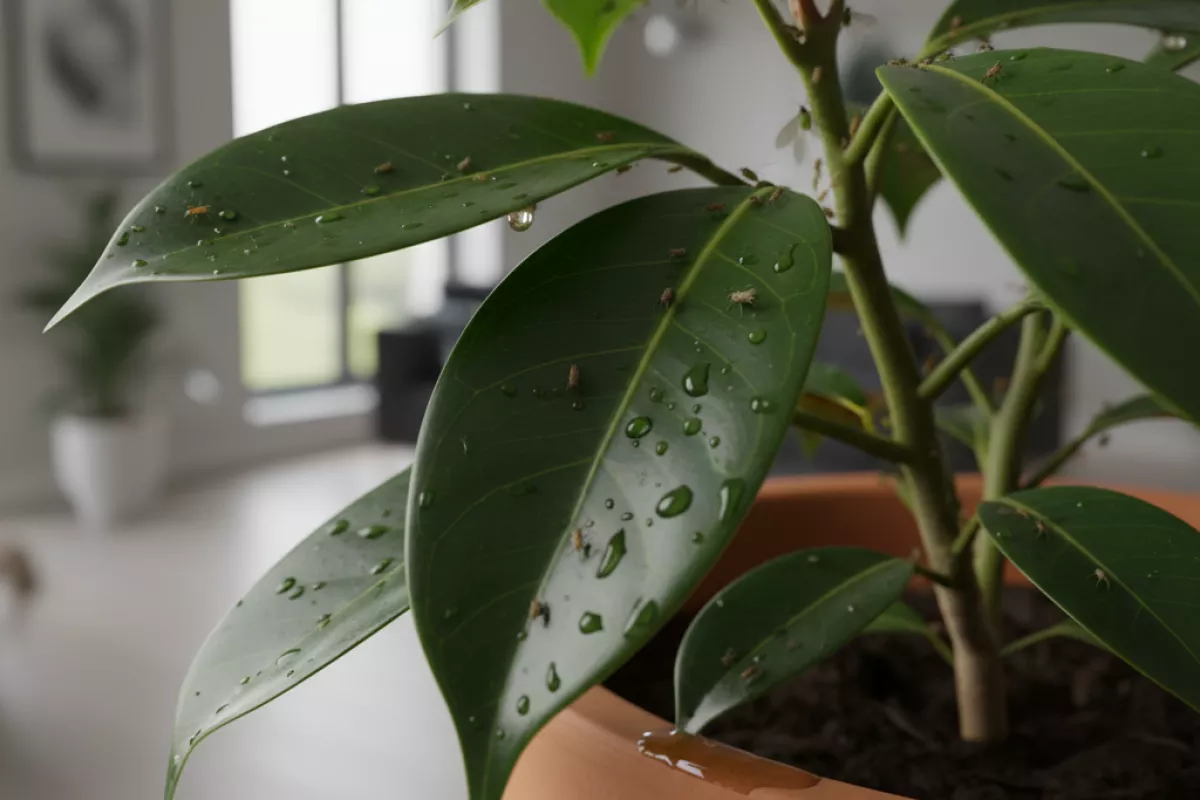
That shiny, sticky film on leaves isn’t plant sap leaking out—it’s usually a sugary waste product left behind by sap-feeding insects, especially aphids. As they drink from the plant’s phloem (the sugar-transport system), they take in far more sugar-rich fluid than they can use, then excrete the excess as clear-to-amber droplets. Those droplets spread into a tacky coating on foliage, stems, pots, and anything underneath the plant.
The process is simple: aphids tap into tender growth, process the liquid for amino acids and other nutrients, and “dump” the extra sugars and water. Warm, dry weather and fast new growth can make the residue seem worse because feeding rates go up and the droplets evaporate into a thicker syrup.
- Where it comes from: Aphids insert needle-like mouthparts into phloem tissues and feed continuously, often in clusters on new shoots and the undersides of leaves.
- Why it’s sticky: The excreted liquid is high in sugars (and small amounts of other compounds), so it clings to surfaces and dries into a glossy layer.
- Why leaves look dirty later: The sugary coating becomes a perfect landing pad for airborne spores, leading to sooty mold—a black, wipeable film that sits on top of the leaf surface rather than infecting it.
- Why ants show up: Ants harvest the sweet droplets as food and may protect aphids from predators, which can keep the infestation going.
- Where you’ll notice it: Upper leaf surfaces below an aphid colony, nearby furniture or windowsills, car roofs under trees, and the soil surface of potted plants.
Honeydew itself usually doesn’t “burn” leaves, but it can block light and clog stomata when it’s heavy, and the sooty mold that follows reduces photosynthesis. If you’re seeing a sticky sheen, it’s a strong clue that sap-feeders are active—even if the insects are hiding along stems, in curled leaves, or on fresh growth.
Risks of mold developing on leaves
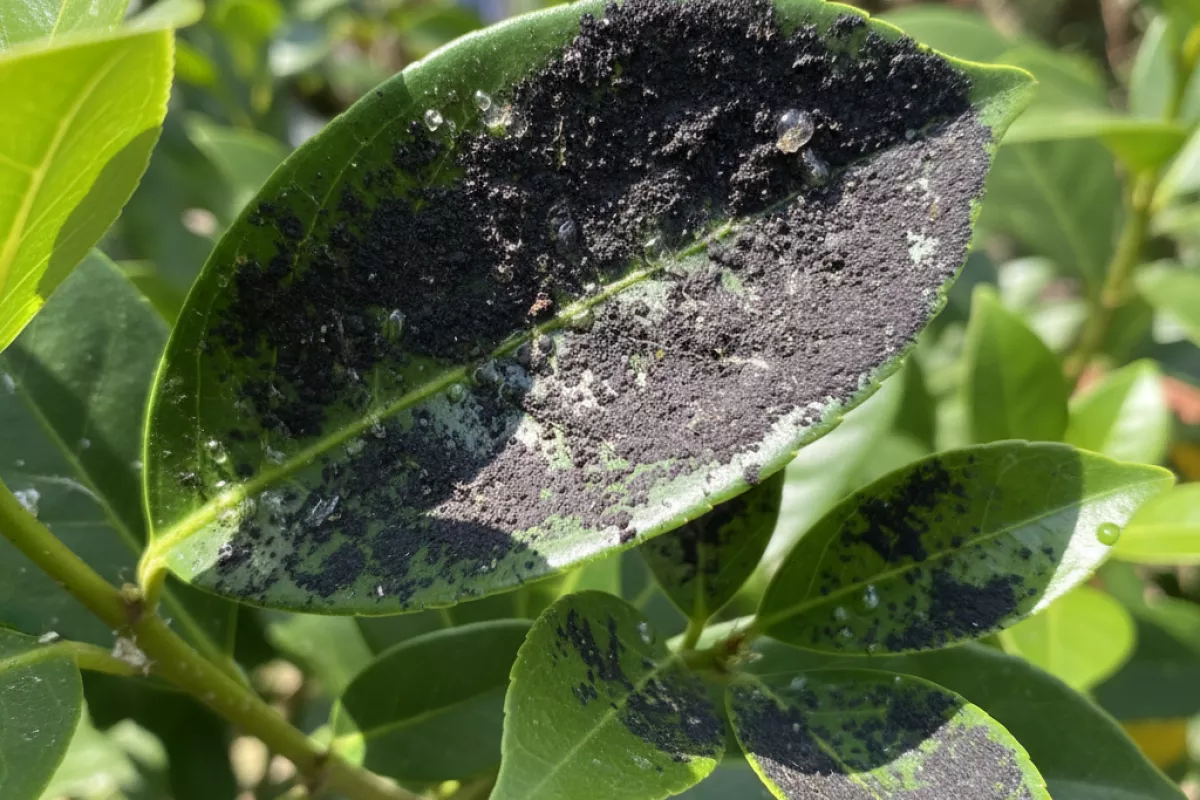
That sticky coating left behind by aphids (honeydew) doesn’t just look messy—it acts like a sugary film that helps fungi settle in. The most common result is sooty mold, a dark, powdery growth that spreads over leaf surfaces, stems, and even fruit.
- Reduced photosynthesis: A black film blocks light from reaching the leaf, so the plant makes less energy. Over time you may see slower growth, fewer blooms, and smaller yields.
- Weaker overall plant health: When leaves can’t “work” efficiently, plants become more prone to stress from heat, drought, or nutrient issues, even if the fungus itself isn’t invading plant tissue.
- Leaf yellowing and early drop: Heavy coverage can contribute to chlorosis (yellowing) and premature leaf loss, especially on already-stressed houseplants and tender garden plants.
- More pest activity: Honeydew can attract ants, and ants often protect aphids from natural predators. That protection can keep the infestation going, which keeps the sugary residue coming.
- Mess and staining: Sooty growth can rub off on hands, patio furniture, and nearby surfaces. On ornamentals, the cosmetic damage alone can be the biggest “risk,” even when the plant survives fine.
- Fruit and flower quality issues: On edible plants, the coating can make fruit look dirty and may encourage surface rot where moisture stays trapped. You can usually wash produce, but heavy buildup can still reduce quality.
| What you might notice | What it usually means | Why it matters |
|---|---|---|
| Thin, gray-black dusting that wipes off | Early sooty mold feeding on honeydew | Mostly cosmetic now, but it can spread fast if the sap-suckers remain |
| Leaves look dull, shaded, or “dirty” even after watering | Thicker fungal coating blocking light | Lower photosynthesis and slowed growth become more likely |
| Sticky leaves plus ants traveling up stems | Aphids producing honeydew and ants tending them | Infestation tends to persist longer, increasing fungal buildup |
| Yellowing leaves and reduced vigor | Plant stress from sap loss plus reduced leaf function | Higher chance of leaf drop and poorer flowering/fruiting |
The good news is that sooty mold is usually a surface problem: if you stop the aphids and remove the residue, new growth typically comes in clean. The longer honeydew stays on the plant, the more time fungi have to establish and spread to neighboring leaves.
How to clean sticky foliage safely
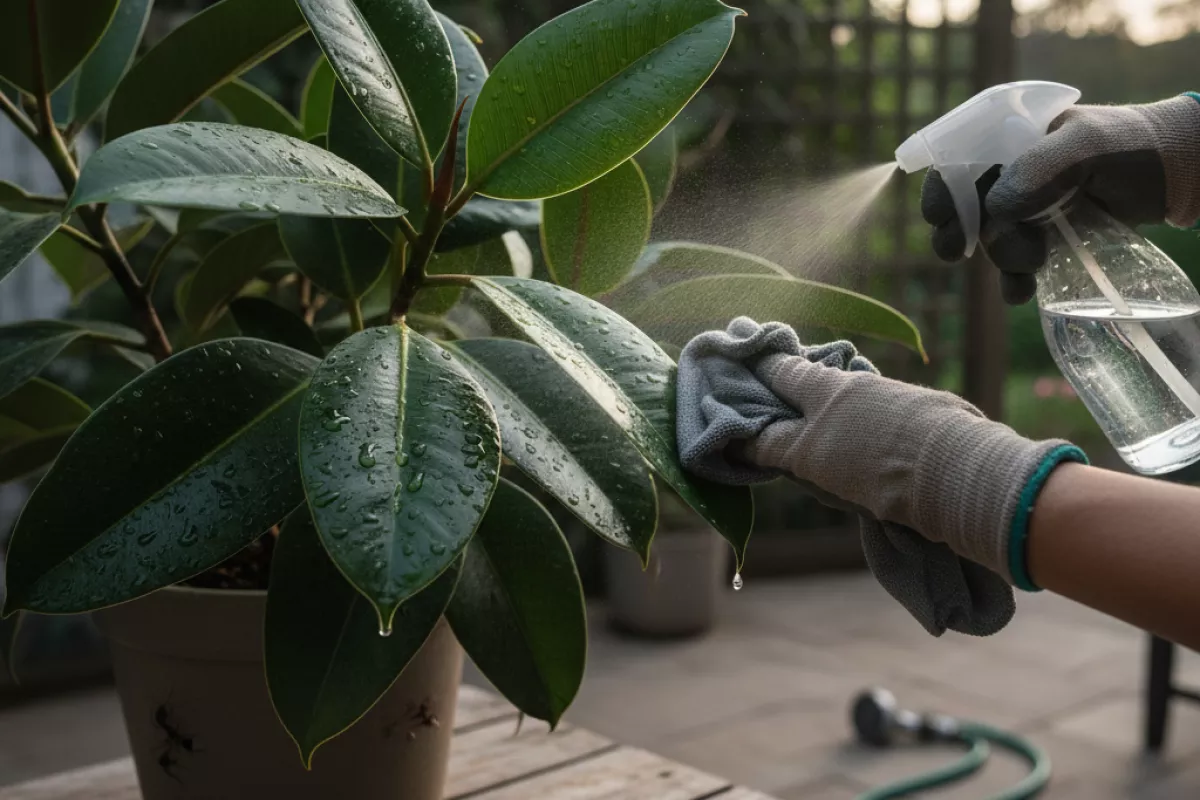
Start by removing the honeydew without stressing the plant. Sticky residue can block light, encourage sooty mold, and attract ants, so it’s worth cleaning once you’ve knocked aphid numbers down. Work in the shade or during cooler hours so leaves don’t scorch while wet.
- Rinse first with plain water. Use a gentle spray to wash the tops and undersides of leaves. A hand sprayer or hose set to a soft shower is usually enough; avoid a hard jet that can tear foliage or blast off tender buds.
- Wipe only what you can reach. For houseplants or a few prized stems, support the leaf with one hand and wipe with a damp microfiber cloth. This lifts the sugary film without scraping the cuticle.
- Use a mild soap solution if water isn’t enough. Mix 5 ml (1 tsp) of mild liquid soap in 1 L (34 fl oz) of water. Apply with a spray bottle or cloth, then rinse thoroughly after 2–5 minutes so soap doesn’t linger on the leaf surface.
- Spot-treat stubborn patches. If residue has turned tacky or you see early sooty mold, dab the area with the same diluted soap mix, wait a couple of minutes, and rinse again. Repeat on a different day rather than increasing concentration.
- Keep the plant comfortable afterward. Let it drip-dry with good airflow. For indoor plants, place them where they’ll dry within a few hours; for outdoor plants, avoid direct hot sun until leaves are dry.
- Test before you treat widely. Spray a small section and wait 24 hours to check for spotting, especially on ferns, succulents, and plants with fuzzy leaves.
- Avoid harsh cleaners. Household degreasers, alcohol wipes, and stronger detergents can strip protective waxes and cause burn.
- Don’t over-wet the soil. When rinsing potted plants, cover the potting mix with a plastic bag or foil to reduce soggy soil and fungus gnat issues.
- Clean nearby surfaces too. Honeydew drips onto windowsills and pots; wiping those areas helps reduce ants and makes it easier to spot fresh stickiness later.
If leaves become sticky again within a few days, that usually means aphids (or another sap-sucker like scale or whiteflies) are still feeding. In that case, focus on controlling the insects first, then do a final rinse to remove the remaining residue.
Treatments that stop sap-sucking pests
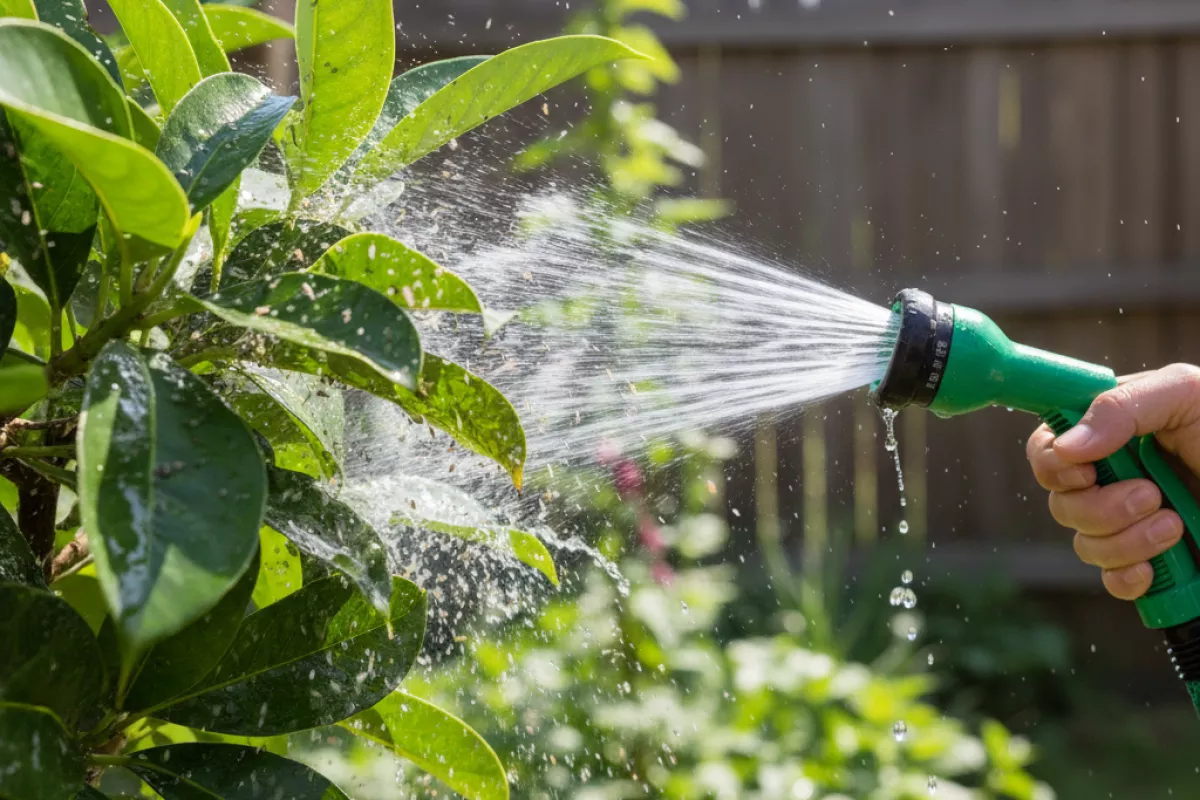
Stop the sticky residue by targeting the insects that make it: aphids, whiteflies, mealybugs, and soft scale. The goal is to knock down the population, then keep new arrivals from rebuilding. Start with the gentlest options and move up only if the infestation keeps spreading.
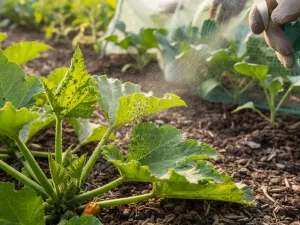
- Blast them off with water: A firm spray from a hose dislodges aphids and many whiteflies. Aim at the undersides of leaves and along tender stems. Repeat every 2–3 days for 1–2 weeks; this works best early, before leaves curl tightly.
- Prune the worst growth: If tips are heavily clustered with pests, snip them off and discard in the trash (not compost). This quickly removes a large portion of the colony and makes follow-up sprays more effective.
- Use insecticidal soap: Soap works by direct contact, so coat the insects thoroughly, especially under leaves. Spray in the cool part of the day and reapply every 4–7 days as needed. Test on a few leaves first and wait 24 hours to check for spotting, since some plants are sensitive.
- Apply horticultural oil or neem oil: Oils smother soft-bodied pests and can help with scale crawlers. Cover all surfaces evenly, but avoid spraying in heat or strong sun to reduce leaf burn risk. Re-treat on a 7–14 day schedule if you still see active insects.
- Spot-treat mealybugs and scale: Dab individuals with 70% isopropyl alcohol (or 100% ethanol diluted to about 70%) on a cotton swab, then wipe away. Recheck weekly; eggs can hatch later.
- Introduce or protect beneficial insects: Lady beetles, lacewings, and hoverfly larvae eat aphids. Outdoors, avoid broad-spectrum insecticides and leave some flowering plants nearby so predators stick around.
- Use sticky traps for flying adults: Yellow sticky cards help monitor and reduce adult whiteflies and fungus gnat bycatch. They won’t solve an aphid outbreak alone, but they’re useful as a supporting tool.
- Escalate carefully if the problem persists: For severe, recurring infestations (especially on ornamentals), a targeted systemic insecticide may be appropriate. Follow label directions exactly and avoid use on edible plants unless the product is specifically approved for them.
Whatever method you choose, plan on repetition. Honeydew problems often look “fixed” after one treatment, then return when hidden nymphs mature. Keep checking new growth, the leaf undersides, and stem joints, and clean off existing stickiness with a gentle rinse so you can tell whether fresh residue is still appearing.
When stickiness signals a severe infestation
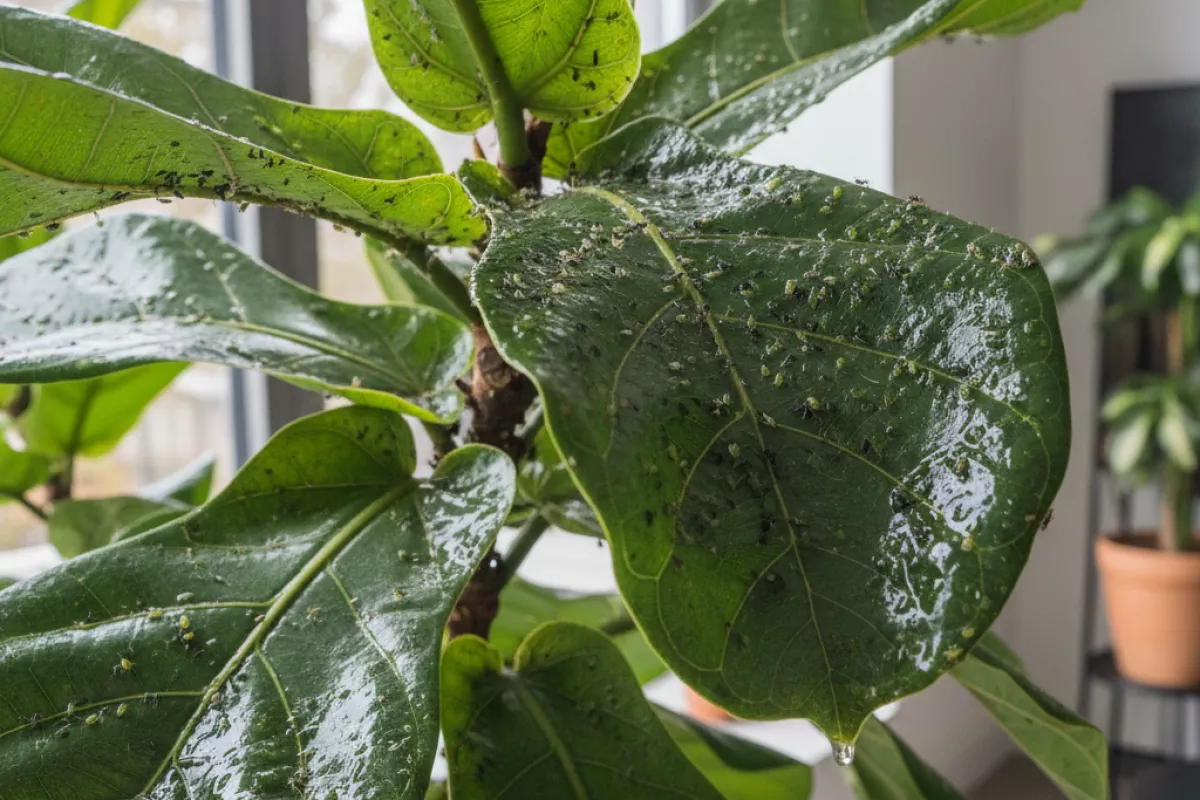
Sticky residue is normal with a few aphids, but it becomes a red flag when it shows up fast, spreads beyond a few leaves, or starts causing secondary problems. Honeydew builds up when sap-sucking insects are feeding heavily and the plant can’t “keep up” with the damage. At that point, cleaning the leaves isn’t enough—you’ll get better results by treating it like an outbreak and acting quickly.
- Leaves feel tacky on many stems, not just one tip. Widespread residue usually means multiple colonies, often on new growth, undersides of leaves, and along tender stems.
- Black, dusty-looking soot appears. Sooty mold grows on the sugary coating; it doesn’t infect the plant tissue, but it blocks light and can slow growth.
- New growth is distorted. Curling, puckering, or stunted tips suggest sustained feeding pressure, especially on roses, peppers, and houseplants with soft growth.
- Ants are “farming” the plant. A steady stream of ants going up and down stems often means they’re protecting aphids for the honeydew, making the problem harder to control.
- Sticky droplets show up below the plant. If tables, windowsills, patio stones, or lower leaves are getting speckled, the population overhead is usually high.
- Beneficial insects can’t keep up. You may see lady beetles or lacewing larvae present, but aphids still multiply quickly when conditions are favorable.
| What you notice | What it usually means | What to do next |
|---|---|---|
| Sticky film on most leaves and stems | Multiple active colonies feeding daily | Inspect undersides; treat the whole plant, not just the worst cluster |
| Sooty mold forming on the residue | Honeydew has been present long enough to support fungal growth | Control aphids first, then gently wash leaves to restore light exposure |
| Ant trails to buds and leaf joints | Ants are protecting aphids and moving them to new growth | Interrupt ants (barrier or bait) while treating the insects on the plant |
| New leaves are curled, cupped, or misshapen | Feeding is concentrated on tender growth; damage is accumulating | Target new growth carefully; prune heavily infested tips if practical |
If the plant is small, a strong rinse can still help, but repeated washdowns may be needed every 2–3 days (48–72 hours) until you stop seeing fresh residue and live insects. For larger plants or persistent outbreaks, focus on thorough coverage of leaf undersides and the newest shoots, since that’s where sap feeders cluster and where the stickiness tends to return first.
Preventing residue buildup in the future
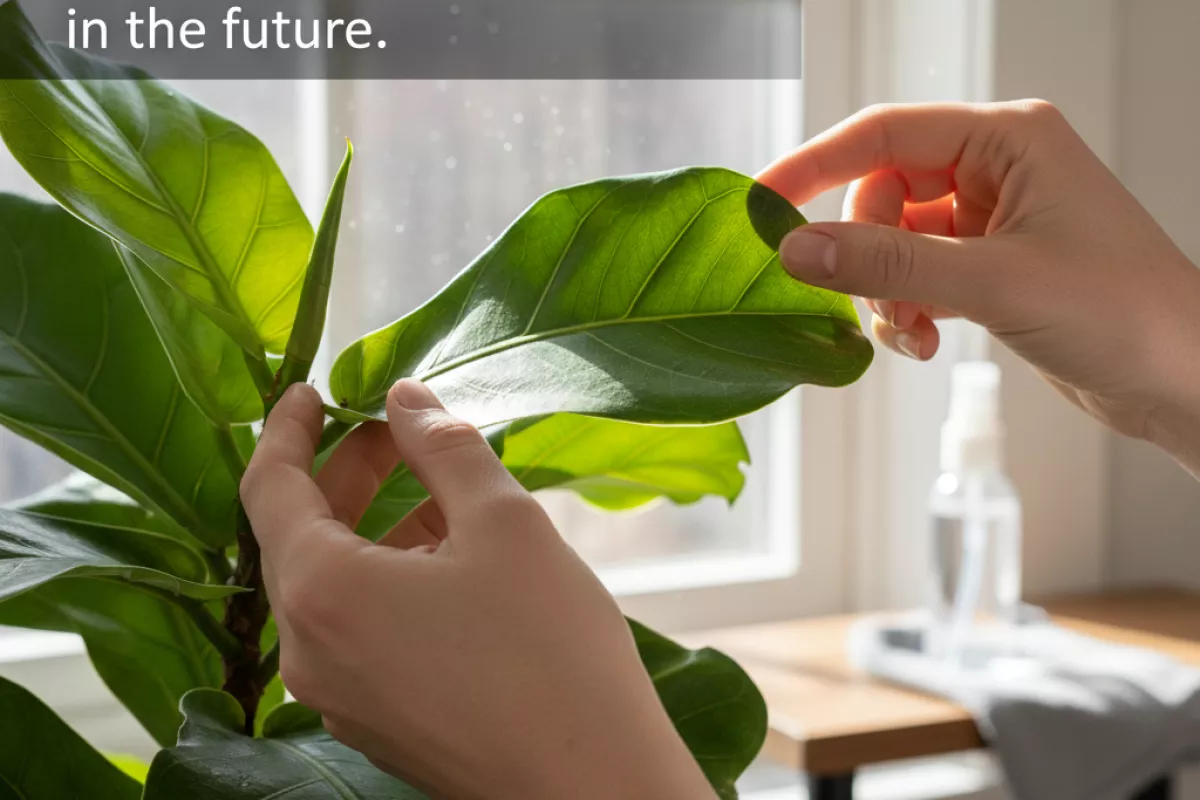
Stop the sticky film at the source by making your plants less inviting to aphids and by catching small infestations before they snowball into heavy honeydew. A little routine attention beats repeated leaf-washing later, and it also helps prevent sooty mold from getting established on that sugary coating.
- Inspect on a schedule. Check tender new growth, leaf undersides, and flower buds every 3–7 days during fast growth or warm spells. If you spot a few aphids early, a quick rinse is often enough.
- Rinse dust and early honeydew off. Use a firm spray of water in the morning so foliage dries by evening. On houseplants, wipe leaves with a damp cloth; on outdoor plants, a hose spray works well.
- Keep ants from “farming” aphids. Ants protect aphids in exchange for honeydew, which can make the residue problem return quickly. Use sticky barriers on trunks or pots, prune bridges (touching branches), and remove nearby ant trails.
- Avoid excess nitrogen. Over-fertilizing pushes soft, sappy growth that aphids love. Follow label rates and consider splitting feedings rather than applying one heavy dose.
- Prune and thin crowded growth. Better airflow and light make it harder for aphids to build hidden colonies. Remove heavily infested tips and discard them rather than composting if the population is high.
- Support beneficial insects. Lady beetles, lacewings, hoverfly larvae, and parasitic wasps can keep populations low. Limit broad-spectrum insecticides that wipe out predators along with pests.
- Use gentle controls when needed. If colonies keep returning, apply insecticidal soap or horticultural oil, coating leaf undersides. Reapply after 5–7 days if you still see live aphids, and avoid spraying in hot sun or above 29°C (85°F) to reduce leaf stress.
- Quarantine new plants. Keep new houseplants separate for 7–14 days and inspect them closely. A small hitchhiking colony is a common reason sticky leaves reappear indoors.
- Manage stress. Drought-stressed plants can be more vulnerable. Water deeply when the top 2–5 cm (1–2 in) of soil is dry (adjust for species), and mulch outdoor beds to even out moisture swings.
If you’re dealing with recurring stickiness on the same plant, treat it like a pattern: note when it starts (new growth, heat, indoor heating season) and target checks during that window. Consistent scouting plus ant control usually cuts the honeydew mess dramatically.