Yellow Leaves With Green Veins – Chlorosis Signs

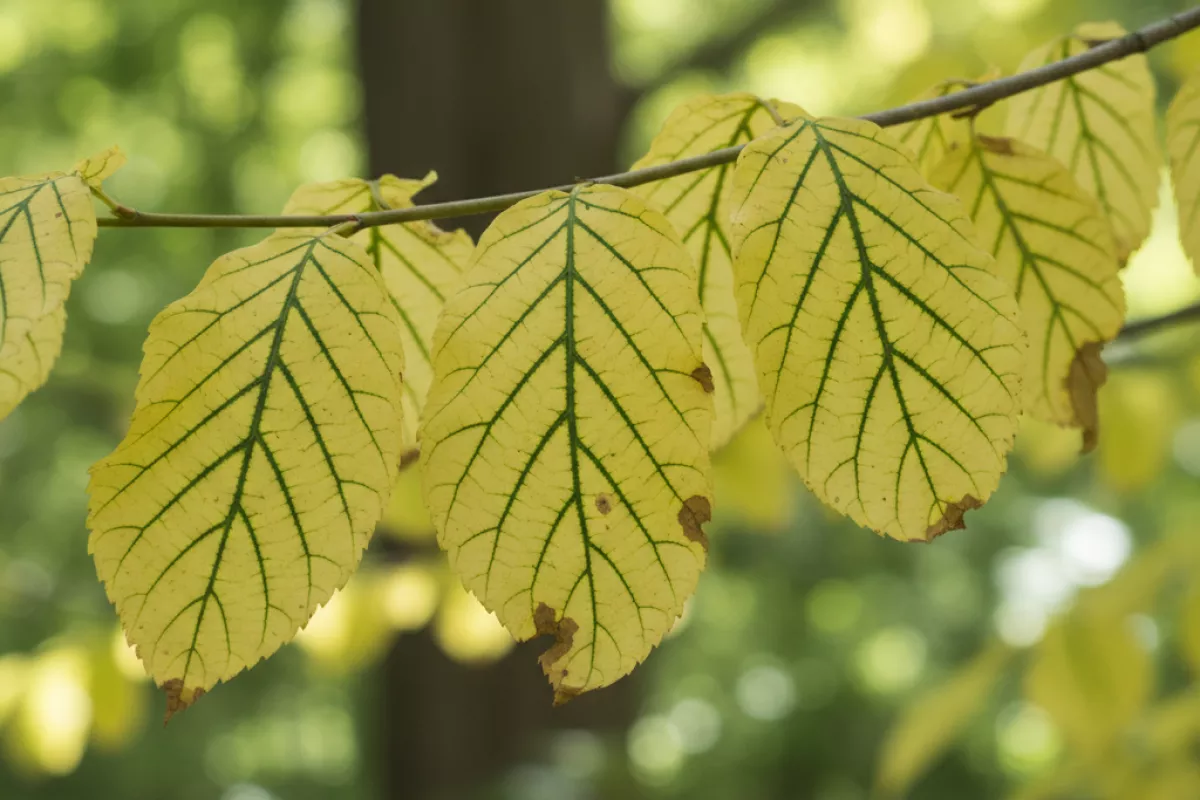 Covers what green veins on yellow leaves mean, how chlorosis develops, and how to tell iron deficiency from other nutrient issues. Explains how alkaline soil causes nutrient lockout, which plants are most prone, plus quick treatments and long-term prevention.
Yellow leaves with green veins usually signal chlorosis, meaning the plant is struggling to take up essential nutrients. Spotting it early can prevent slow growth, weak stems, and leaf drop. Start by reviewing light levels and watering, then check drainage and soil pH, since overly alkaline soil can block iron uptake. If needed, supply iron or magnesium and avoid overfertilizing.
What green veins on yellow leaves mean
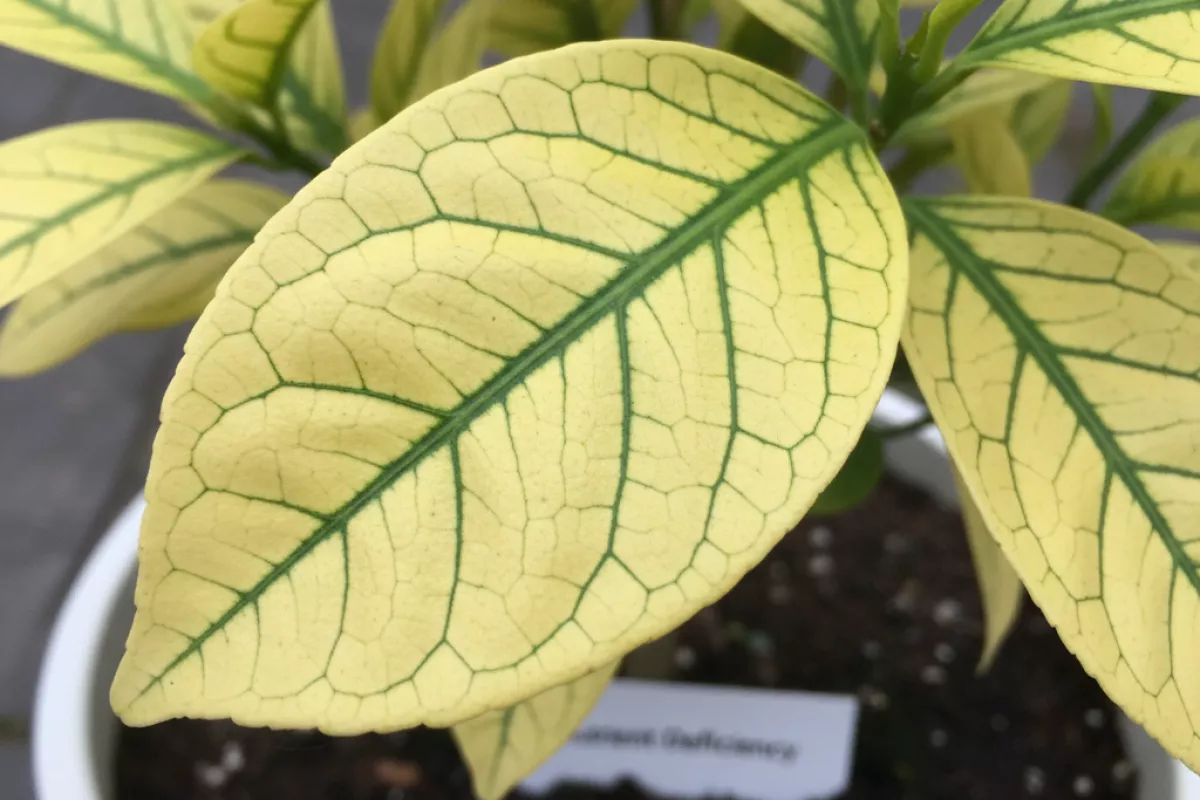
When the leaf blade turns pale or yellow but the veins stay green, you’re usually seeing interveinal chlorosis. In plain terms, the plant is still keeping chlorophyll in the veins (where transport tissues run), while the tissue between them can’t make or maintain enough chlorophyll. That pattern is a clue that the issue is less about “not enough light” and more about nutrient availability, uptake, or movement inside the plant.
This vein-and-blade contrast happens because some nutrients are needed directly for chlorophyll production, while others affect how well the plant can access those nutrients. It can also show up when roots are stressed (too wet, too dry, cold soil) and can’t supply the leaves evenly.
- It often points to a micronutrient problem. Iron (Fe) and manganese (Mn) shortages commonly cause yellowing between veins, especially when the soil or potting mix is too alkaline for the plant to absorb them.
- Leaf age helps narrow it down. If the newest leaves are paling first while older leaves stay greener, iron deficiency is more likely because iron doesn’t move easily from old tissue to new growth. If older leaves yellow first, magnesium (Mg) can be a better fit because it’s mobile and gets pulled to new growth.
- pH can be the real culprit even with “enough” fertilizer. A plant can sit in nutrient-rich soil and still show chlorosis signs if the pH locks nutrients up. Many garden plants struggle to take up iron as pH rises.
- Root conditions can mimic deficiencies. Waterlogged soil, compacted beds, or a pot with poor drainage can reduce oxygen at the roots, which limits nutrient uptake and triggers green-vein yellowing even when nutrients are present.
- It’s different from uniform yellowing. If the whole leaf turns evenly yellow (veins included), that’s more typical of general nitrogen shortage, low light, or overall stress rather than classic interveinal chlorosis.
| Pattern you see | Most likely explanation | Common triggers | What to check first |
|---|---|---|---|
| New leaves yellow between veins; veins stay green | Iron (Fe) deficiency or iron lockout | High pH, cold/wet roots, excess phosphorus | Soil/potting mix pH; drainage; recent fertilizer type |
| Older leaves show interveinal yellowing first | Magnesium (Mg) deficiency | Low Mg in mix, heavy potassium use, leaching from frequent watering | Fertilizer balance; watering frequency; runoff/leaching |
| Mottled yellowing with green veins, sometimes speckling | Manganese (Mn) deficiency | High pH, organic matter imbalance, over-liming | pH history; whether lime was added; mix composition |
| Yellowing between veins plus scorched edges on older leaves | Magnesium deficiency or salt stress compounding it | Fertilizer salt buildup, irregular watering | Pot drainage; salt crust on soil; flush practices |
| Veins green, leaf pale, growth stunted overall | Root stress limiting uptake (not just a missing nutrient) | Overwatering, root rot, compacted soil, rootbound pots | Root health; moisture level; container size and aeration |
If you’re diagnosing this at home, start with the “easy wins”: confirm whether it’s new or old leaves, check moisture and drainage, and consider whether pH could be blocking uptake. Those steps usually explain green-vein yellowing faster than adding more fertilizer blindly.
How chlorosis develops in plants
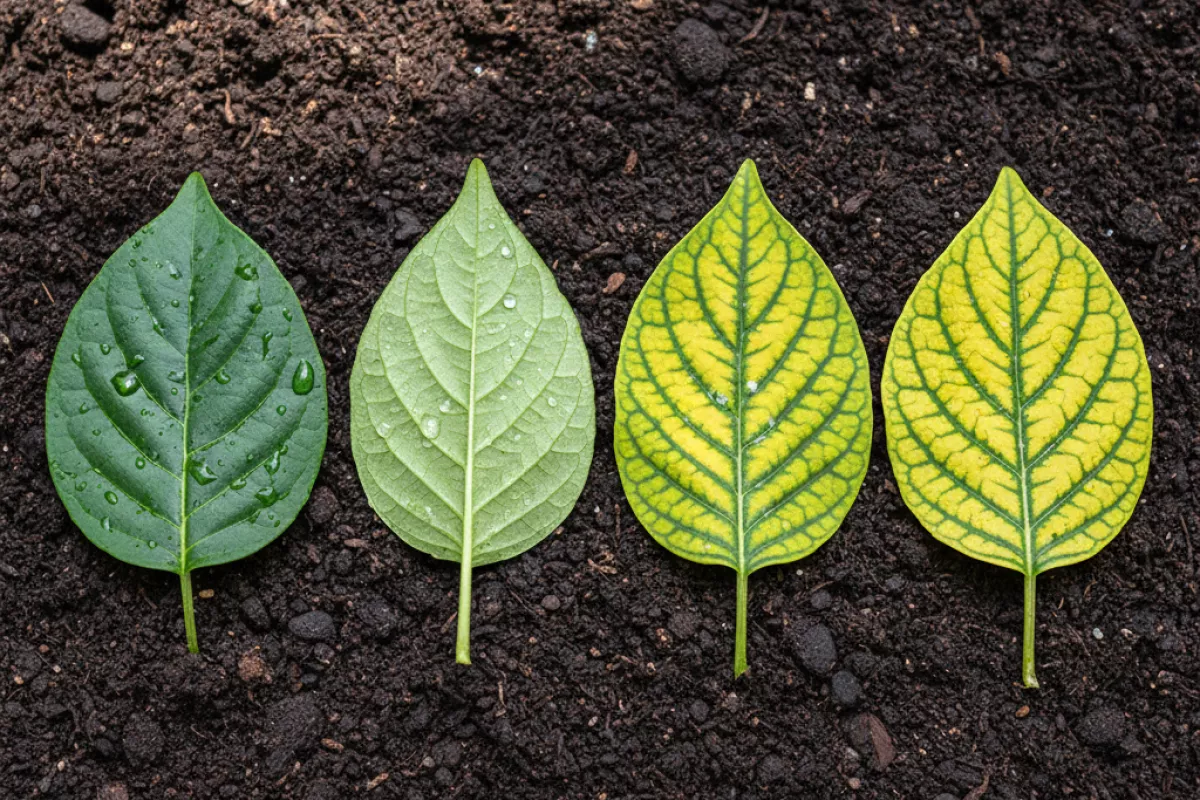
Yellowing with veins that stay green usually starts when a leaf can’t make or keep enough chlorophyll. Chlorophyll is the pigment that captures light for photosynthesis, and it depends on a steady supply of nutrients, oxygen at the roots, and a functioning transport system. When any part of that chain breaks, the leaf tissue between the veins pales first, while the veins remain greener because they’re closer to the plant’s “plumbing.”
The pattern you see is tied to how nutrients move. Some elements (like iron) are not easily moved from old leaves to new ones, so the newest growth shows symptoms first. Others (like magnesium) are mobile, so older leaves yellow before the plant sacrifices the newer growth. That’s why two plants can both look chlorotic but be missing different nutrients.
- Trigger: A nutrient becomes unavailable, not always absent. High soil pH, cold media, waterlogged roots, or excess salts can lock nutrients up even when the soil contains them.
- First response: Chlorophyll production slows. The leaf still expands, but the green pigment doesn’t keep up, so the blade lightens while veins stay more pigmented.
- Progression: Photosynthesis drops, so the plant makes less energy. Growth slows, stems may stay thin, and new leaves can emerge smaller or more fragile.
- Secondary stress: Weak roots and low energy make uptake even worse, creating a feedback loop. In severe cases, pale areas can turn tan or brown (necrosis) and leaves may drop.
| What you notice | What’s happening inside the plant | Common underlying reason |
|---|---|---|
| New leaves turn yellow between green veins | Chlorophyll can’t be built fast enough in young tissue | Iron becomes unavailable (often from high pH or cold, wet roots) |
| Older leaves yellow first, veins stay greener | Mobile nutrients are pulled from older leaves to support new growth | Magnesium shortage or imbalance (sometimes from excess potassium) |
| Overall pale plant, slow growth | Reduced chlorophyll and protein production across many leaves | Nitrogen deficiency or roots not absorbing well |
| Yellowing plus stunting, distorted new growth | Enzyme systems and cell division are disrupted | Manganese or zinc availability issues, frequently pH-related |
| Interveinal yellowing after heavy watering, soil smells “sour” | Roots lack oxygen; nutrient uptake and transport slow down | Waterlogging, compaction, or poor drainage leading to root stress |
One detail that helps interpret the timeline is temperature and moisture. In cool conditions around 10°C (50°F) or in saturated soil, roots absorb iron and other micronutrients poorly, so chlorosis can appear quickly even if you fertilized recently. Once the root zone warms and drains, the same plant may green up without changing anything else.
If the yellowing is limited to a few leaves, the plant can often recover once the underlying cause is corrected. When many leaves are affected, the reduced energy supply slows recovery, so improvement tends to show first in new growth, not in leaves that are already pale.
Iron deficiency vs other nutrient causes
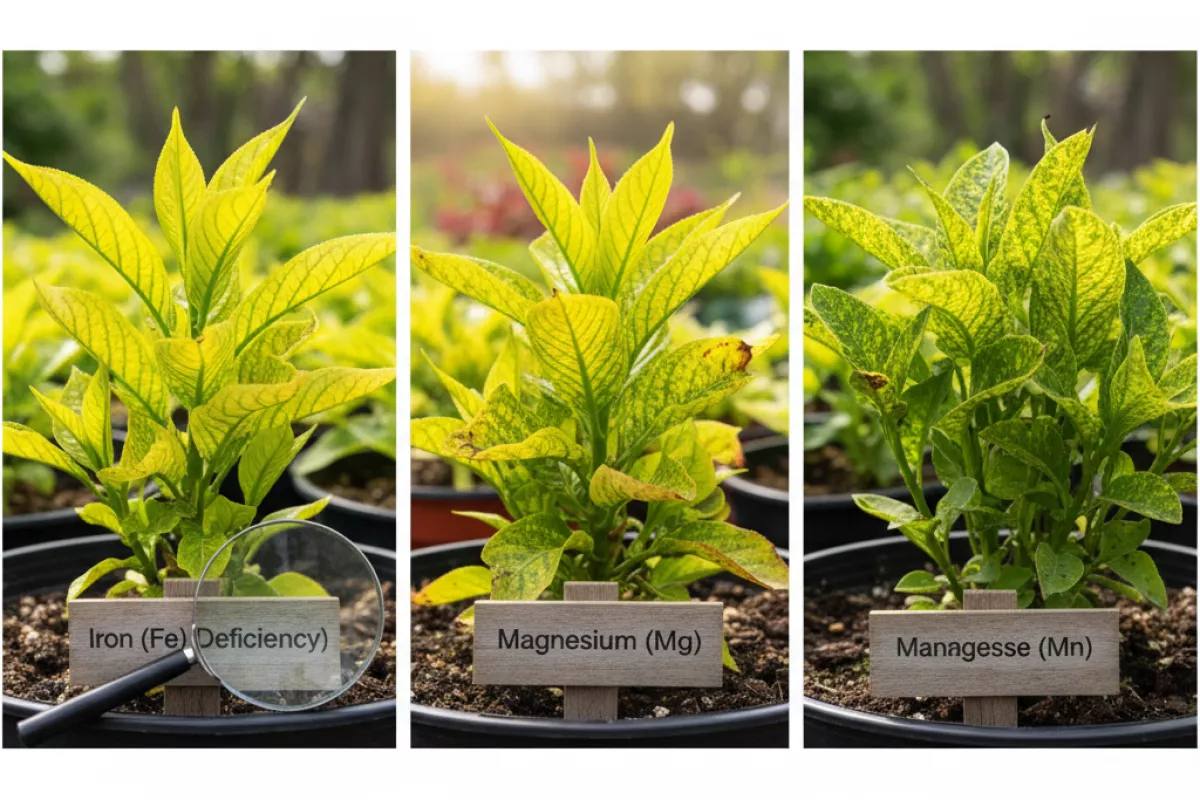
Not every case of yellow leaves with green veins comes from a lack of iron. Several nutrients create similar “interveinal chlorosis” patterns, and the quickest way to narrow it down is to look at which leaves show symptoms first, how sharp the green veins appear, and whether you also see spotting, edge burn, or distorted growth.
| Likely cause | Where it shows up first | Typical look | Common triggers |
|---|---|---|---|
| Iron (Fe) deficiency | Newest leaves and growing tips | Bright yellow tissue with crisp green veins; new growth may look pale or almost white in severe cases | High pH (alkaline) soil or water, cold/wet roots, poor drainage, excess phosphorus (P), compacted media |
| Magnesium (Mg) deficiency | Older leaves first | Interveinal yellowing that starts between veins; can progress to leaf edge scorch and early leaf drop | Low Mg in soil, high potassium (K) or calcium (Ca) competing with uptake, sandy/fast-draining mixes |
| Manganese (Mn) deficiency | Newer leaves (often just behind the very newest) | Yellowing between veins with a finer “netted” pattern; small brown specks may appear as it worsens | High pH, over-liming, organic matter extremes, cool root zones |
| Zinc (Zn) deficiency | New growth | Small leaves, shortened internodes (rosetted look), mild interveinal chlorosis; growth can look stunted | High pH, high phosphorus (P), cold soils, root damage |
| Nitrogen (N) deficiency | Older leaves first | Overall pale green to yellow leaf (more uniform than “green veins”); whole plant looks washed out | Under-fertilizing, leaching from frequent watering, low organic matter |
| Potassium (K) deficiency | Older leaves first | Yellowing and browning along leaf edges (marginal scorch) more than clear green veins | Low K, heavy fruiting/flowering demand, imbalanced feeding |
If the newest leaves are the ones turning yellow while the veins stay green, iron is a top suspect because Fe is relatively immobile inside the plant. When the oldest leaves fade first, magnesium or nitrogen is more likely, since the plant can move those nutrients from older tissue to support new growth.
- Check the pattern up close: Iron tends to produce a cleaner contrast (green veins, yellow in-between). Manganese often looks more “speckled” as it progresses.
- Look for size and shape changes: Zinc problems commonly come with smaller leaves and shortened spacing between leaves, not just color change.
- Don’t ignore pH: Many “deficiencies” are actually lockout. A plant can sit in nutrient-rich soil and still show chlorosis if pH is off, especially with iron and manganese.
- Watch for root stress: Cold, saturated, or compacted roots can mimic iron shortage because uptake slows. Improving drainage and avoiding overwatering can matter as much as feeding.
When symptoms overlap, a practical approach is to correct the likely lockout first (pH, drainage, and watering habits), then address the suspected nutrient with a targeted supplement rather than adding more of everything. That reduces the risk of creating new imbalances that can worsen yellowing with green veins.
Soil alkalinity and nutrient lockout
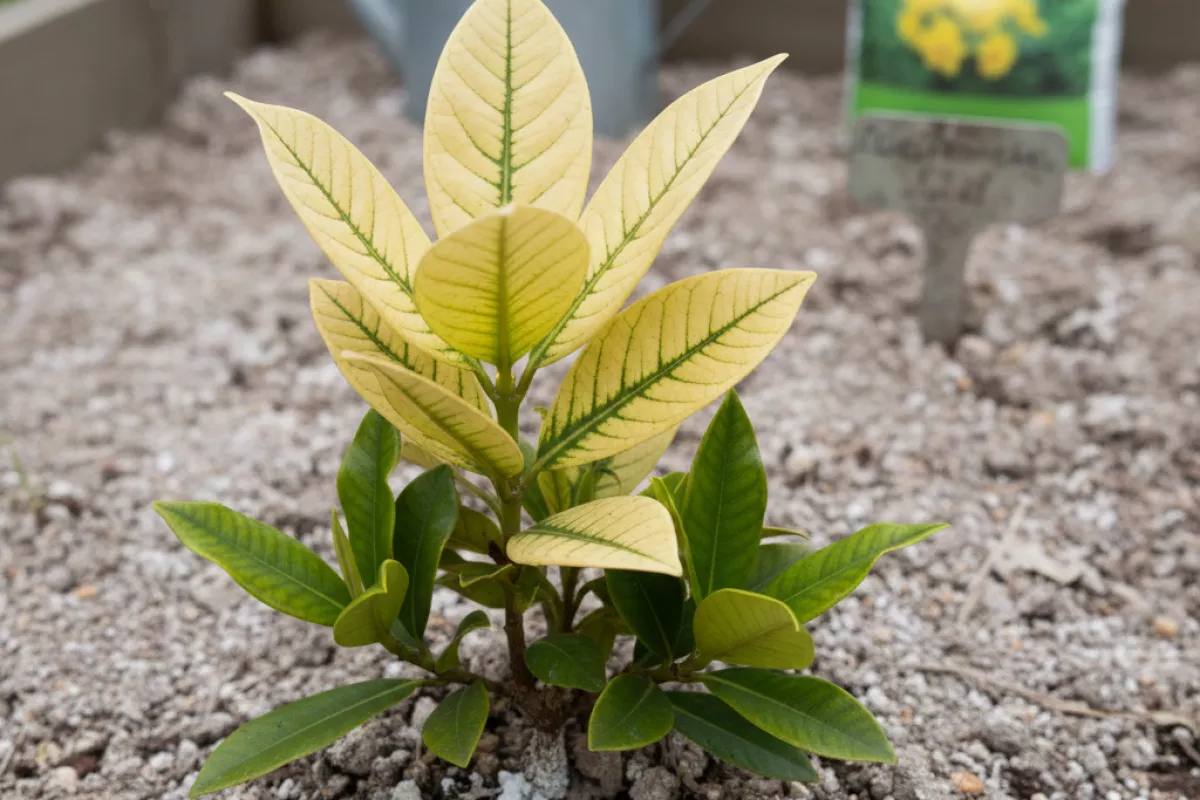
When the root zone runs too “sweet” (high pH), plants can show yellow leaves with veins that stay green because key micronutrients become hard to absorb. The nutrients may be present in the potting mix or garden soil, but the chemistry shifts them into forms roots can’t take up efficiently. The result often looks like iron chlorosis first: new growth turns pale while the leaf veins remain darker.
This is common in areas with calcareous (lime-rich) soil, frequent liming, or irrigation water that’s naturally alkaline. Container plants can run into it too when hard tap water slowly raises pH over time, especially if the mix doesn’t buffer well.
- Why it happens: As pH rises, iron (Fe), manganese (Mn), zinc (Zn), and sometimes phosphorus (P) become less available. Iron is the classic trigger for interveinal yellowing on young leaves.
- What you’ll notice: Newer leaves show the strongest yellowing first; older leaves may stay greener longer. In tougher cases, leaf edges can scorch and growth slows.
- What makes it worse: Overwatering (low oxygen reduces root function), compacted soil, cold soil temperatures, and excess calcium carbonate can all intensify the “locked out” look even if fertilizer is being applied.
| Clue you can check | What it suggests | Practical next step |
|---|---|---|
| Soil or potting mix pH reads above about 7.5 (pH test kit/meter) | Micronutrients (especially iron and manganese) are likely tying up | Confirm with a second reading; test the irrigation water too if possible |
| Chlorosis is strongest on the newest leaves | Iron is a top suspect; roots can’t access it fast enough | Use an iron chelate labeled for high pH (often EDDHA) and monitor new growth |
| Hard tap water used regularly | Gradual pH creep in containers and raised beds | Occasionally flush the pot with 3–4× the container volume in water (e.g., 3 L for a 1 L potting volume (0.8 gal for 0.3 gal)) and consider using rainwater when available |
| Recent liming or use of “sweetening” products | pH may have been pushed too high for the plant | Pause liming; recheck pH in 2–3 weeks and adjust gradually rather than all at once |
| Yellowing persists despite regular feeding | Not a lack of fertilizer, but poor availability/uptake | Address pH and root conditions first; fertilizer alone often won’t fix the pattern |
Fixing this usually means working on the root environment, not just adding more nutrients. If you’re in the ground, incorporating organic matter can help over time, and choosing fertilizers that are acid-forming may gently nudge pH downward. In containers, repotting into a fresh mix and switching to lower-alkalinity water can make a noticeable difference.
If you need a quick cosmetic rescue while you correct pH, a chelated micronutrient drench (or foliar spray, if the label allows) can green up new leaves faster. Aim for steady improvement: once a leaf has turned yellow, it may not fully re-green, so judge success by healthier new growth over the next 2–4 weeks.
Plant species most prone to chlorosis
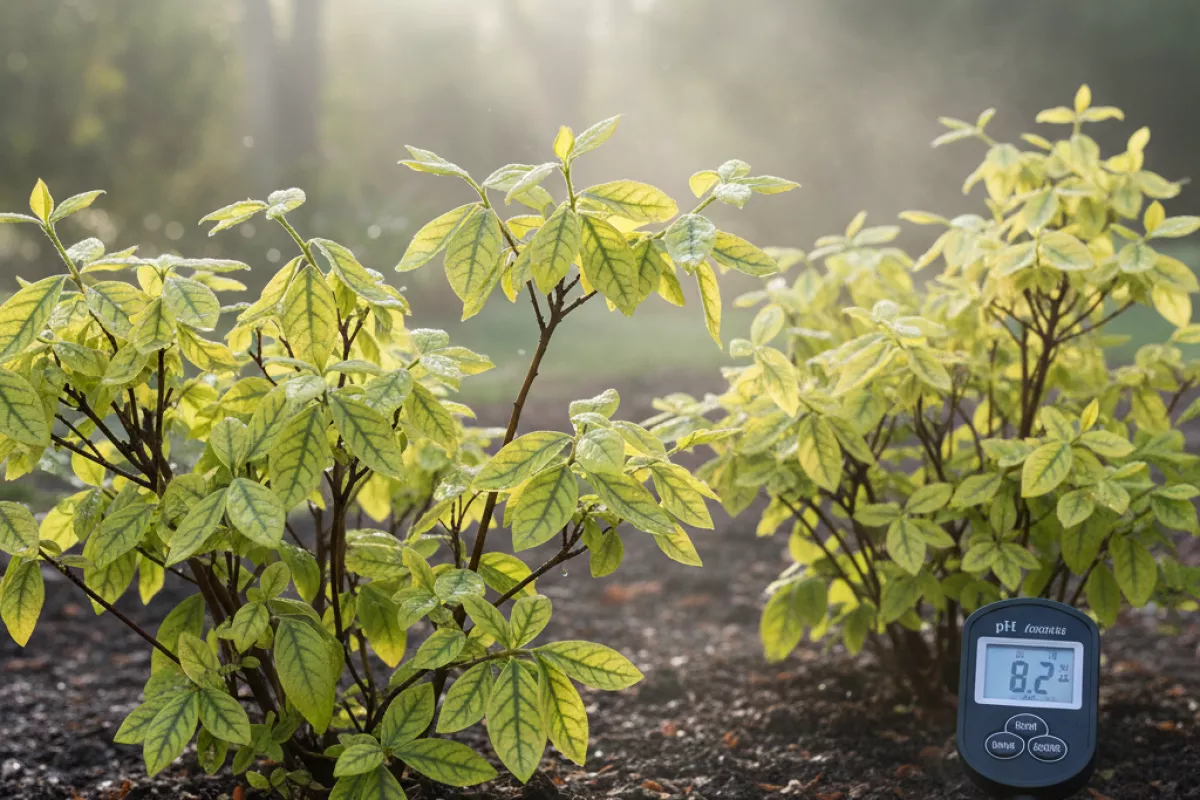
Some plants show yellowing between veins faster than others because of how they take up iron and other micronutrients, how sensitive they are to high pH, and how their roots react in cool, wet, or compacted soil. You’ll often see the pattern first on newest leaves when iron is the limiting factor, while older foliage may fade first when magnesium is involved.
| Plant group (examples) | Why they’re commonly affected | Where it shows up first | Typical triggers |
|---|---|---|---|
| Acid-loving shrubs (azalea, rhododendron, blueberry, camellia, gardenia) | Prefer acidic conditions; iron and manganese become less available as pH rises | New growth (young leaves) | Alkaline or limed soil, hard-water irrigation, planting near concrete or mortar |
| Fruit trees and vines (citrus, grape, peach, pear, apple) | High iron demand during active growth; some rootstocks struggle in calcareous soils | New leaves and shoot tips | High-pH or chalky soils, cool spring soils, waterlogged root zones |
| Roses | Can be sensitive to iron lockout and root stress; vigorous growth highlights deficiencies | New leaves | Overwatering, compacted beds, repeated high-phosphate feeding |
| Maples and other ornamentals (red maple, pin oak, birch, sweetgum) | Some species are notably pH-sensitive and show interveinal yellowing quickly | New leaves (often with green veins) | Alkaline soils, construction backfill, restricted rooting areas |
| Vegetables (tomato, pepper, eggplant, beans) | Fast growth makes micronutrient shortages obvious; container culture magnifies pH swings | Usually new leaves for iron; older leaves for magnesium | Cold soil, inconsistent watering, high pH potting mixes, salt buildup in pots |
| Houseplants (gardenia, hibiscus, citrus in pots, some palms) | Limited soil volume and frequent watering can shift pH and deplete micronutrients | New leaves | Hard tap water, exhausted potting mix, rootbound plants, poor drainage |
If your plant isn’t on the list, it can still develop chlorosis. The bigger clue is the setting: alkaline ground, frequent watering with mineral-heavy water, and restricted roots (like in pots or narrow planting strips) tend to produce the classic “yellow leaf with green veins” look.
- Plants in containers are more prone because pH and salts can change quickly in a small volume of mix.
- Plants growing near concrete often yellow because lime leaches into the soil and pushes pH upward.
- Recently planted trees and shrubs may show temporary chlorosis if roots are stressed or the planting hole drains poorly.
Treatment methods that work quickly
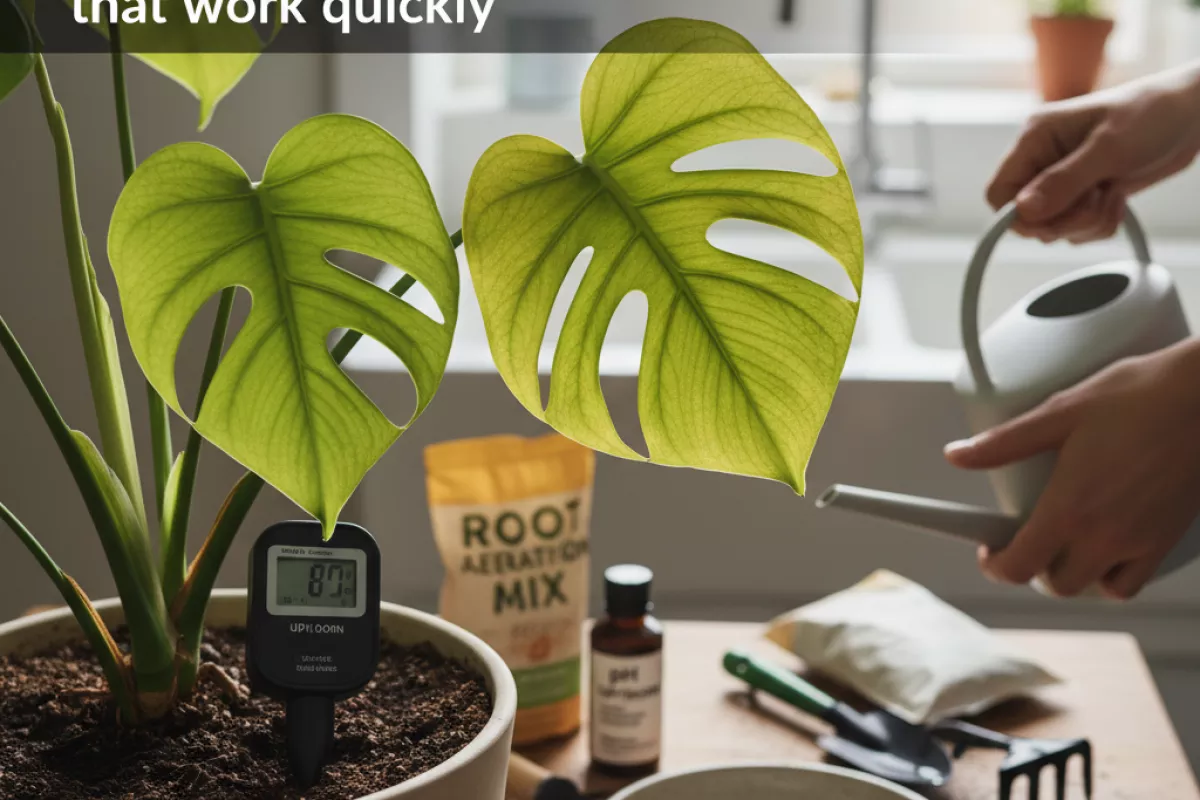
Act on the most likely bottleneck first: roots that can’t take up nutrients. Yellow leaves with green veins often improves fastest when you restore uptake (correct pH, fix watering, improve aeration) and then supply the missing element in a form the plant can actually absorb.
- Check moisture and drainage immediately. If the potting mix stays wet for more than 2–3 days, roots may be oxygen-starved. Let the top 2–5 cm (0.8–2 in) dry before watering again, empty saucers after 10–15 minutes, and make sure containers have open drainage holes.
- Flush built-up salts (containers). Fertilizer salts can lock out iron and magnesium. Run clean water through the pot equal to about 3× the container volume (for example, 3 L for a 1 L pot [0.8 gal for a 0.26 gal pot]) and let it drain fully. Resume feeding at a lower dose once the plant perks up.
- Correct pH to unlock iron. Many chlorosis cases are “iron present but unavailable” due to high pH. For most houseplants, aim roughly for pH 6.0–6.5. If you suspect alkaline water/soil, switch to rainwater or filtered water for a couple of weeks and avoid over-liming. For garden beds, incorporate elemental sulfur or acid-forming amendments gradually rather than trying to swing pH overnight.
- Use chelated iron for fast visual improvement. If new growth is pale with green veins, apply an iron chelate (often labeled Fe-EDDHA or Fe-DTPA). Foliar sprays can green up leaves sooner, while soil drenches tend to last longer. Apply in the cool part of the day (below about 27°C [80°F]) to reduce leaf burn risk, and follow label rates closely.
- Give magnesium when older leaves show interveinal yellowing. When lower/older leaves yellow between veins first, magnesium is a common culprit. Dissolve Epsom salt (magnesium sulfate) and apply as a soil drench; a typical gentle range is 5–10 g per 4 L (0.18–0.35 oz per 1.06 gal). Repeat after 10–14 days only if you see improvement and no tip burn.
- Provide nitrogen if the whole leaf pales evenly. Uniform yellowing (not just between veins) often points to nitrogen deficiency. Use a balanced fertilizer at half strength and water it in well. Avoid “stacking” products the same week; too much feed can worsen chlorosis by stressing roots.
- Warm up cold, sluggish roots. In cool conditions, uptake slows and leaves can yellow even with adequate nutrients. Move containers to a spot around 18–24°C (65–75°F) and avoid cold drafts. For outdoor plants, wait for soil to warm before heavy feeding.
- Remove the underlying stressor before pruning leaves. Yellow tissue rarely turns fully green again, but it’s still helping the plant. Wait until you see healthy new growth, then trim the worst leaves to reduce pest attraction and improve airflow.
| What you see | Most likely issue | Fastest helpful move | When you might notice change |
|---|---|---|---|
| New leaves turn yellow, veins stay green | Iron unavailable (often high pH or wet roots) | Improve drainage + apply chelated iron (soil drench or foliar) | 3–10 days (foliar fastest), 1–3 weeks for stronger new growth |
| Older leaves yellow between veins first | Magnesium deficiency or salt buildup | Flush salts, then magnesium sulfate drench if needed | 7–14 days (older leaves may not fully recover) |
| Whole plant looks pale, yellowing is fairly even | Nitrogen deficiency or low light | Half-strength balanced feed + brighter light (not hot sun) | 1–2 weeks, mainly in new growth |
| Yellowing plus wilting, soil stays wet, musty smell | Root stress/rot reducing nutrient uptake | Let dry, repot into airy mix if severe, trim rotten roots | Several days for turgor; 2–4 weeks for leaf color stability |
If you’re unsure which deficiency you’re dealing with, start with root-zone fixes (watering, drainage, salt flush, pH) before adding multiple supplements. Once uptake is restored, targeted nutrients work more predictably and the next set of leaves is usually the best indicator that chlorosis is resolving.
Long-term prevention strategies
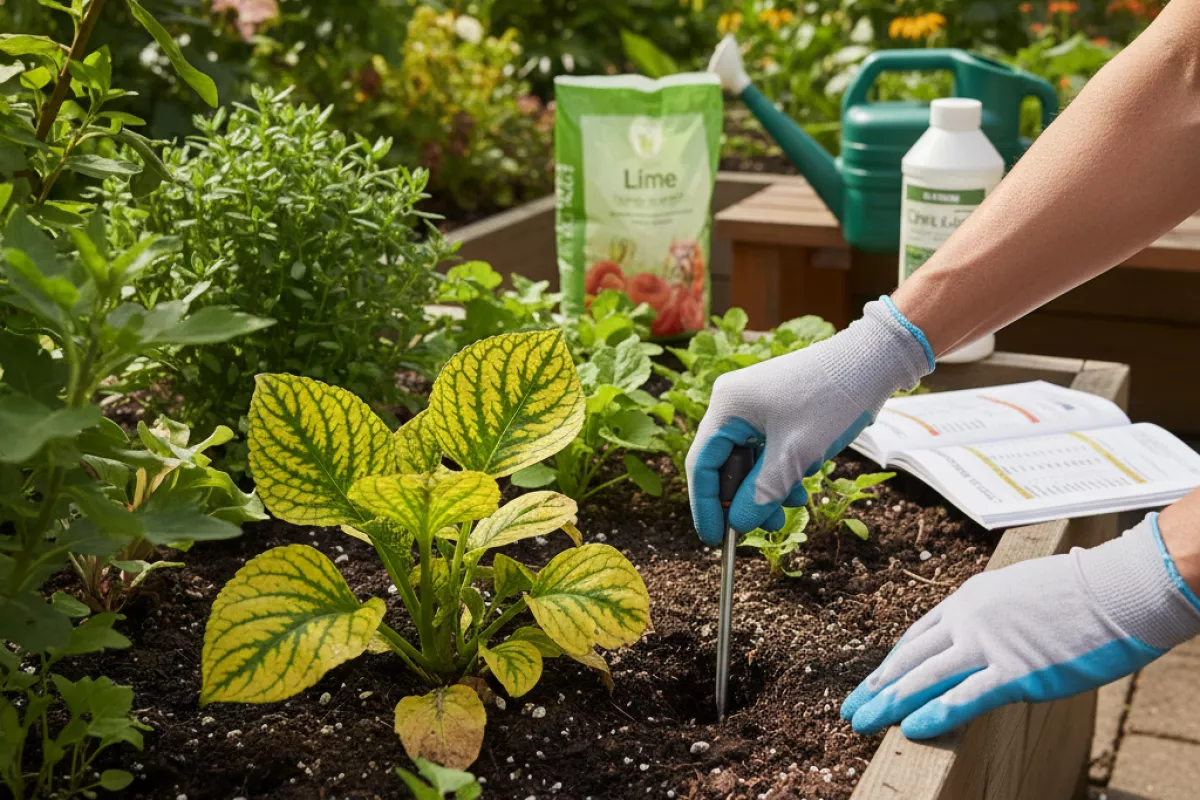
Preventing yellow leaves with green veins comes down to keeping nutrients available and roots functioning well. Most recurring chlorosis problems aren’t caused by a lack of fertilizer alone, but by pH, drainage, or watering habits that block uptake.
- Test and manage soil pH. Iron and manganese become hard to absorb when pH drifts too high, especially in lime-rich soils. Use a simple soil test once or twice a year and aim for the range your plant prefers (many ornamentals and vegetables do well around slightly acidic to neutral conditions). If you need to adjust, do it gradually rather than swinging pH quickly.
- Build a steady nutrient “baseline” instead of chasing symptoms. Mix in finished compost and use a balanced fertilizer at labeled rates during active growth. This supports nitrogen, magnesium, and micronutrients without creating spikes that can stress roots or wash out quickly.
- Prioritize iron availability in high-pH or calcareous areas. If your water is hard or your soil is naturally alkaline, plan ahead with iron sources that stay plant-available. Chelated iron products tend to work more reliably in alkaline conditions than simple iron salts, and they’re easier to use preventively than as an emergency fix.
- Water in a way that protects roots. Repeated waterlogging can trigger chlorosis by suffocating roots, while chronic drought reduces nutrient transport. Water deeply, then let the top layer dry slightly before watering again. In containers, empty saucers so pots aren’t sitting in water.
- Improve drainage and soil structure. For heavy clay, incorporate organic matter and avoid working soil when it’s wet. Raised beds can help where water pools after rain. In pots, use a well-aerated mix and make sure drainage holes are clear.
- Use mulch to stabilize moisture and temperature. A 5–8 cm (2–3 in) layer of organic mulch reduces evaporation and buffers heat swings, which helps roots stay active and improves nutrient uptake.
- Prevent salt buildup from fertilizers and hard water. Excess salts can mimic deficiency symptoms by damaging fine roots. In containers, flush the pot occasionally until water runs freely from the bottom; in garden beds, avoid frequent “little doses” of fertilizer and stick to a schedule.
- Choose varieties and rootstocks suited to your conditions. Some plants are naturally prone to iron chlorosis in alkaline soils (for example, certain blueberries and azaleas). Selecting tolerant species or appropriate rootstocks reduces repeat problems.
- Watch new growth and act early. Chlorosis often shows first on younger leaves when iron is the issue, and on older leaves when magnesium is low. Catching the pattern early lets you correct pH or nutrition before the plant loses vigor.
| Routine habit | What it prevents | How often to do it |
|---|---|---|
| Soil pH check (soil or potting mix) | Iron/manganese lockout that leads to interveinal yellowing | Every 6–12 months, or after major amendments |
| Compost or organic matter top-up | Poor nutrient buffering and uneven moisture that stresses roots | 1–2 times per year |
| Balanced feeding at labeled rates | Chronic underfeeding and “boom-bust” nutrient swings | During active growth, typically every 4–8 weeks |
| Drainage check (beds and containers) | Root oxygen loss and nutrient uptake failure | At planting, then seasonally after heavy rains |
| Container flush with clean water | Salt accumulation that damages fine roots and mimics deficiencies | Every 4–8 weeks, especially with hard water |
If you’re already seeing yellow leaves with green veins repeatedly in the same spot, treat it as a site issue: test pH, review drainage, and reconsider plant choice. Once those fundamentals are stable, corrective treatments (like iron supplements) become occasional tools rather than a constant routine.