Yellow Leaves After Repotting – Stress or Damage

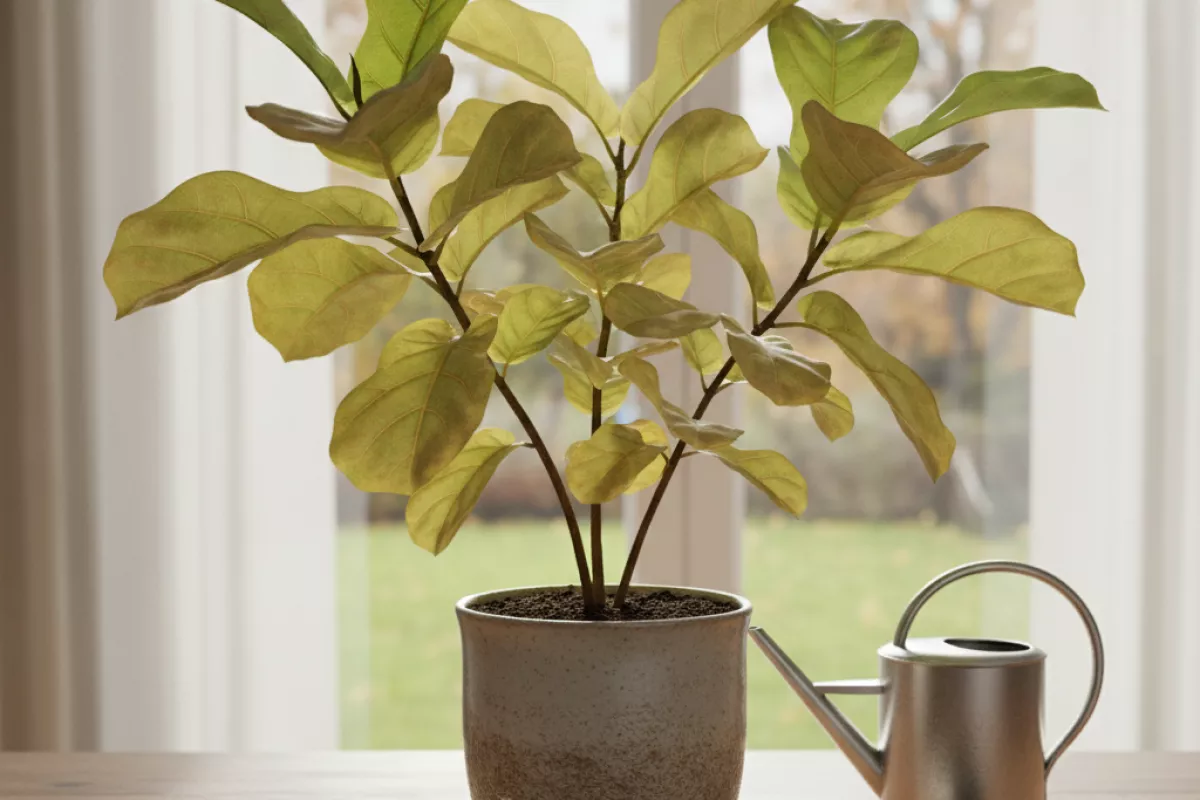 Explains why plants react after being repotted, focusing on root disturbance and transplant shock, how soil changes can affect leaf color, and common watering mistakes. Covers the normal recovery timeline, quick ways to reduce stress, and signs the repotting caused serious damage.
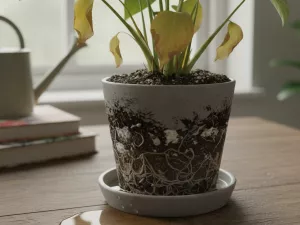
If your plant turns yellow soon after repotting, it may be normal transplant stress or a sign of root trouble. Watch when the yellowing starts, whether it spreads from older leaves or new growth, and how fast it progresses. Check soil moisture, drainage, and root firmness, then adjust watering or light only if symptoms keep worsening over several days.
Why plants react after being repotted
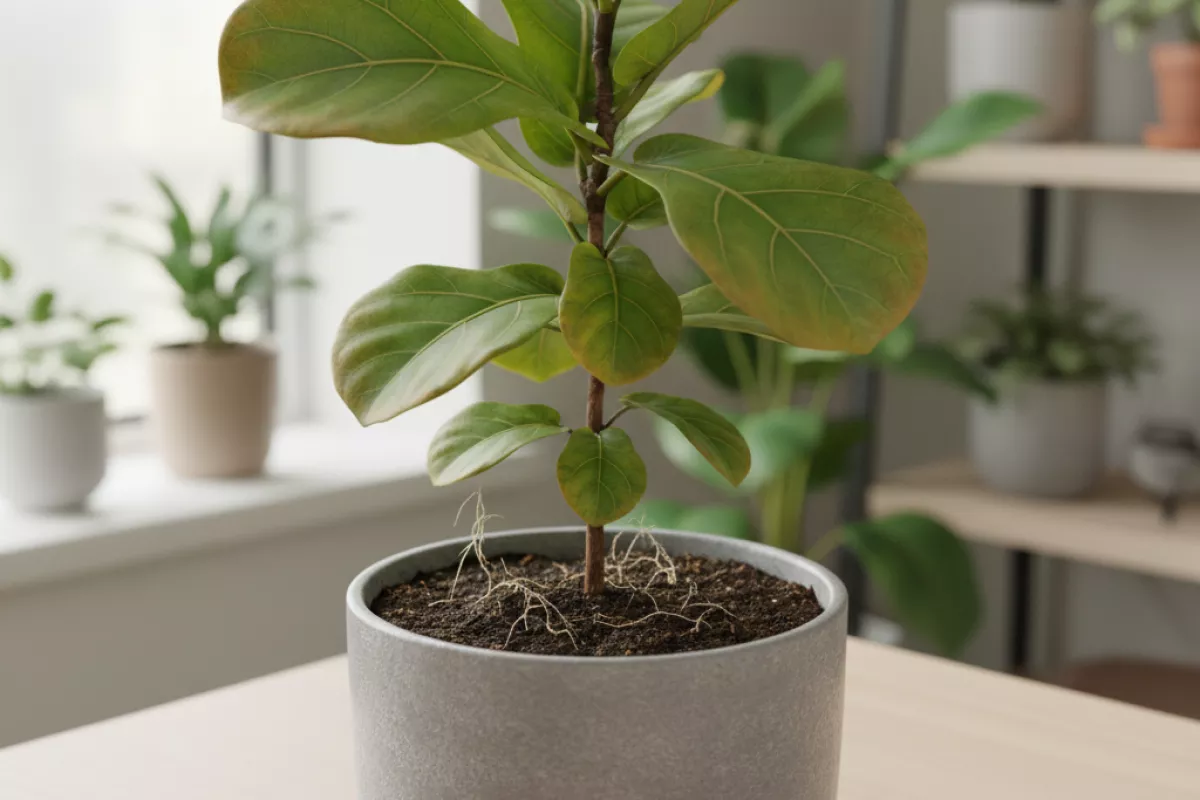
After a move to a new pot, a plant has to “re-balance” how it takes up water, oxygen, and nutrients. Even if you did everything right, the roots were disturbed, the soil environment changed, and the leaves may temporarily lose the steady supply they were used to. Yellowing is often the visible result of that short-term mismatch, not an immediate sign that the plant is doomed.
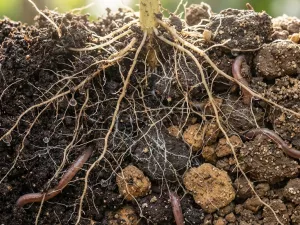
- Root disturbance reduces uptake. Fine feeder roots do most of the drinking and feeding, and they’re easy to tear or dry out during handling. When those tiny roots are damaged, the plant may shed older leaves or turn them yellow while it rebuilds.
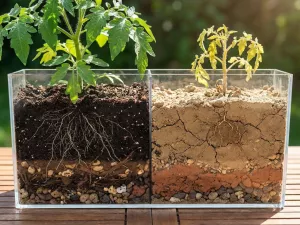
- Water behavior changes in fresh mix. New potting soil can hold water differently than the old one. A mix that stays wetter can limit oxygen around roots, while a faster-draining mix can leave the root ball drier than expected. Either way, leaves may yellow because the plant can’t regulate moisture the way it did before.
- Transplant shock shifts priorities. Many plants pause growth after repotting and redirect energy to root repair. During this pause, they may pull nutrients out of older leaves, causing them to fade or yellow first.
- Pot size and depth affect oxygen. Moving into a much larger container can keep the outer soil wet for longer, especially in cool rooms around 18–20°C (64–68°F). That can slow root respiration and trigger yellow leaves that look like overwatering.
- Compaction and “air gaps” both cause stress. Packing soil too tightly reduces airflow; leaving gaps around the root ball lets roots dry out. Both problems can show up as limp growth followed by yellowing.
- Light and temperature shifts add extra load. Repotting often happens alongside a location change. A jump from bright light to lower light (or vice versa) changes how fast the plant uses water, so your usual watering rhythm may suddenly be wrong.
- Fertilizer sensitivity increases. Fresh potting mix may already contain nutrients. Adding fertilizer right away can raise salt levels around tender roots, leading to yellow leaves or browning edges, especially if the soil is kept on the dry side.
In many cases, the first leaves to yellow are the oldest ones, because the plant treats them as “spare parts” while it stabilizes. New growth that stays green and firm is usually a better sign than the condition of a few older leaves right after the repot.
Root disturbance and transplant shock
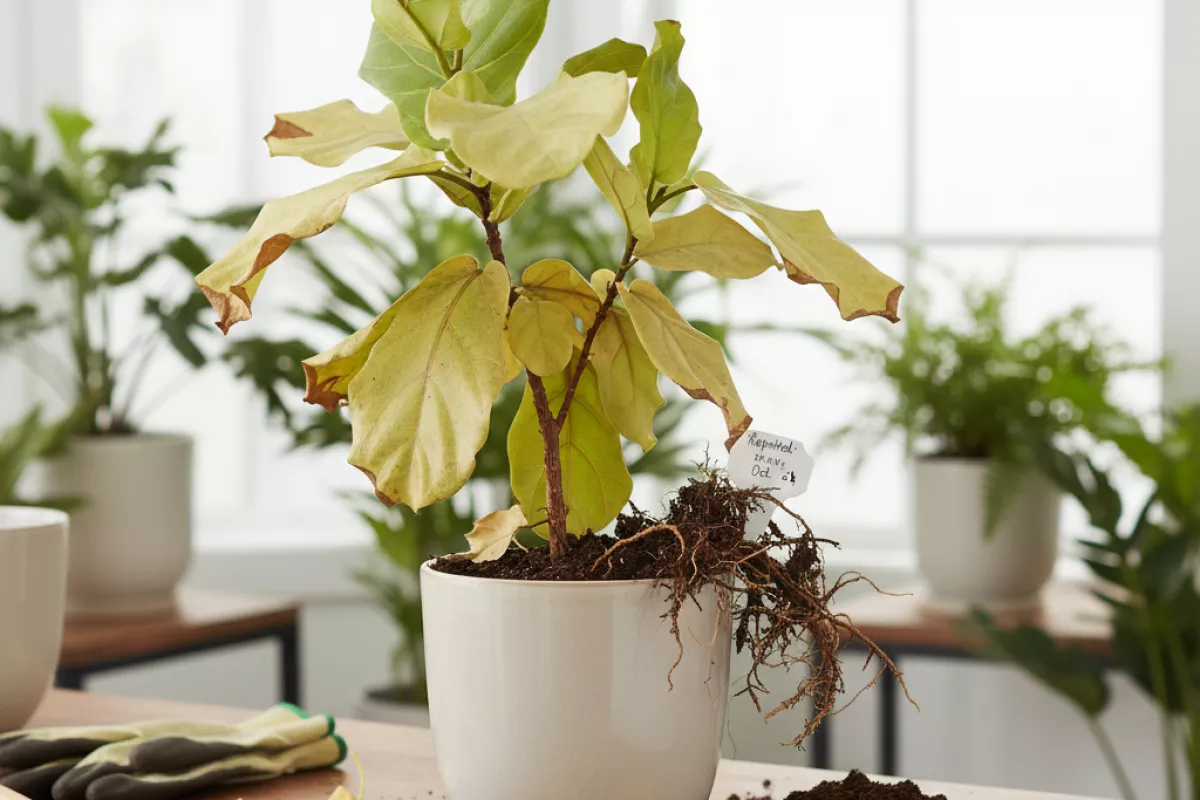
Yellowing right after a move to a new pot is often the plant reacting to its roots being handled, bent, or exposed to air for too long. Fine feeder roots do most of the water and nutrient uptake, and they’re also the easiest to tear. When that uptake drops suddenly, leaves can lose turgor, fade from green to pale yellow, and sometimes develop crispy edges even if the soil looks moist.
This kind of stress is more likely when the root ball was broken apart aggressively, the plant was bare-rooted, or roots were trimmed heavily. It can also happen when you “upgrade” to a pot that’s much larger than the old one; the extra wet soil around a smaller root mass can stay damp longer, compounding the problem by reducing oxygen at the roots.
- What it looks like: Older leaves yellow first, mild droop, slower growth, and occasional leaf drop within the first 7–21 days.
- What it usually doesn’t look like: Rapid blackening of stems, mushy crown, or a strong sour smell from the mix (those point more toward rot than simple handling stress).
- Common triggers: Shaking off all old soil, tearing circling roots instead of loosening them, letting roots dry while you prep the pot, or packing new mix too tightly.
| Situation during repotting | Likely effect on leaves | What to do now |
|---|---|---|
| Root ball kept mostly intact; minimal tugging | Light yellowing or a brief droop for 3–10 days | Keep light steady, water only when the top 2–5 cm (1–2 in) dries, avoid fertilizer for 2–4 weeks |
| Roots loosened aggressively or torn; lots of fine roots lost | Noticeable yellowing and leaf drop over 1–3 weeks | Reduce demand: brighter indirect light, skip pruning, maintain even moisture, consider temporary humidity support |
| Roots trimmed (intentional pruning) more than about 10–20% | Slower recovery; older leaves may yellow as the plant reallocates resources | Hold off feeding, keep temperatures stable around 18–24°C (65–75°F), watch for new growth as the “all clear” sign |
| Pot size increased by more than 5–8 cm (2–3 in) in diameter at once | Yellowing that lingers because the mix stays wet longer | Let the mix dry a bit deeper between waterings, ensure drainage, increase airflow; don’t “chase” yellow leaves with more water |
To help recovery, focus on stability rather than “fixes.” Keep the plant in consistent light, avoid moving it again, and don’t fertilize until you see fresh, healthy growth. If you must remove yellow leaves, wait until they’re mostly yellow so the plant can reclaim what it can; pulling green tissue early can add more stress.
If symptoms worsen after the first week instead of leveling off, check the root zone. A healthy root system smells earthy and feels firm; brown, mushy roots and a swampy odor suggest the issue has shifted from transplant stress to oxygen deprivation or rot, and watering habits (and sometimes the mix) need adjusting.
Soil change effects on leaf color
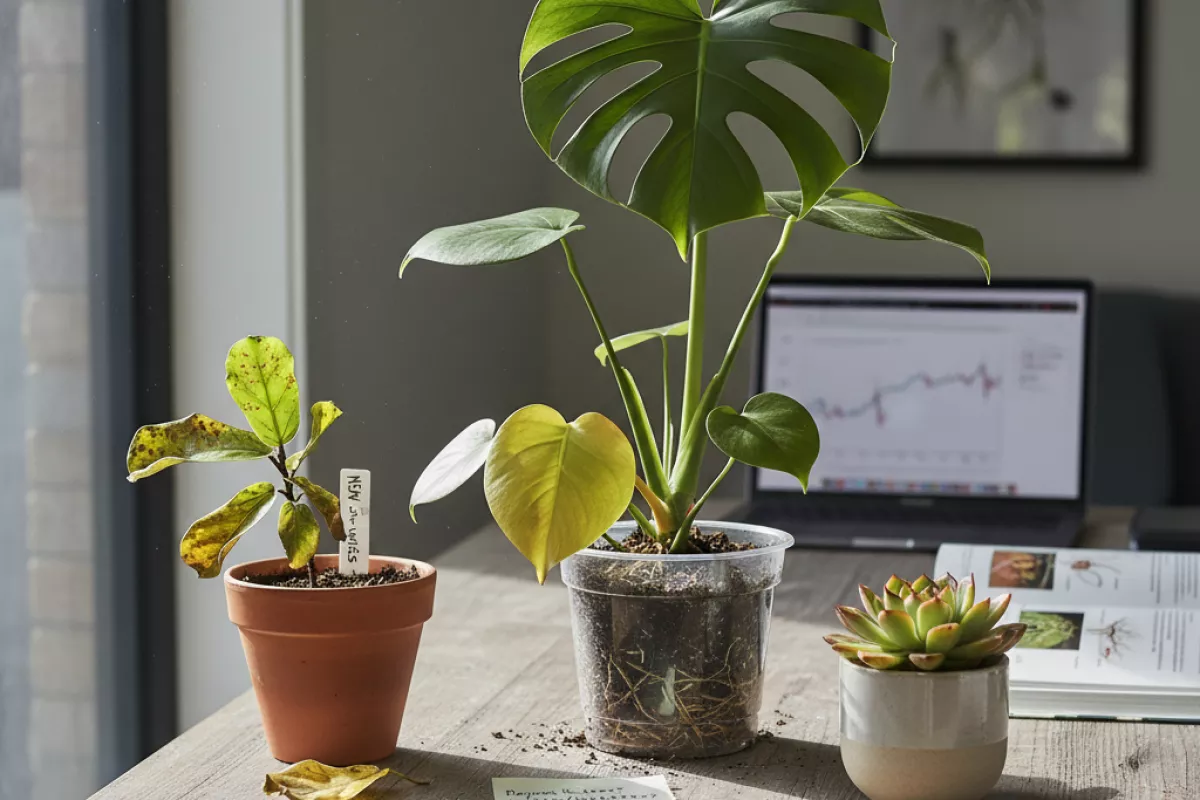
A repot often changes more than the container—it changes how water, air, and nutrients move around the roots. Leaves can turn pale, yellow, or blotchy simply because the plant is adjusting to a new root-zone environment, not because it’s permanently damaged. The key is to connect the color shift to what the new mix is doing (holding water longer, drying faster, or releasing nutrients differently).
| What changed in the new soil | Common leaf-color pattern | Why it happens | What to do next |
|---|---|---|---|
| Mix holds more water (more peat/coir, finer particles) | General yellowing, softer leaves, sometimes lower leaves first | Roots get less oxygen; nutrient uptake slows and older leaves are sacrificed | Let the pot dry further between waterings; ensure drainage holes are clear; consider adding chunkier material at the next repot |
| Mix drains much faster (more bark/perlite/pumice) | Pale leaves, crispy edges, yellowing with dry tips | Plant can’t access water long enough; salts may concentrate if you fertilize heavily | Water thoroughly until excess drains; adjust watering frequency; use a saucer only to catch runoff, not to store water |
| Fresh mix has little nutrition (unamended “soilless” blends) | Uniform light green to yellow, slow growth | New media may be inert; the plant runs low on nitrogen and other basics | After 2–4 weeks, start a gentle feed at 1/4–1/2 strength; avoid fertilizing a visibly wilted plant |
| Soil pH shifted (too acidic or too alkaline for the plant) | Yellowing between veins (interveinal chlorosis), newest leaves often show it first | Iron/manganese become less available outside the right pH range | Use water and fertilizer appropriate for the species; if symptoms persist, repot into a better-matched mix rather than chasing it with supplements |
| “Hot” mix or fertilizer burn (compost/manure, strong slow-release, overfeeding) | Yellowing with brown tips or margins; spots that look scorched | Excess salts pull water out of roots and damage fine root hairs | Flush with clean water (e.g., 2–3× pot volume); pause fertilizing for 3–4 weeks; remove visible fertilizer pellets if concentrated near the stem |
| Hydrophobic dry pockets (peat that repels water after drying) | Random yellow leaves despite “watering,” plus sudden wilting | Water runs down the sides and misses the root ball | Bottom-water 20–30 min (or 20–30 minutes) and then drain; gently poke a few channels with a chopstick to help re-wet evenly |
Timing helps you interpret what you’re seeing. If older leaves yellow within the first 7–14 days, it often points to a temporary uptake slowdown while roots re-establish. If the newest leaves are paling after a few weeks, the new medium may be too lean, the pH may be off, or the roots are staying too wet.
- Check moisture where roots actually are: push a finger 5 cm (2 in) down or use a wooden skewer; wet at depth with a dry surface usually means the mix is holding more water than you think.
- Watch the pattern, not one leaf: a few yellow lower leaves can be normal post-repot; rapid spread to many leaves suggests a watering/oxygen issue.
- Avoid “fixing” with heavy fertilizer right away: stressed roots can’t use it efficiently, and excess salts can worsen yellowing.
- Stabilize conditions for 2–3 weeks: consistent light, temperature, and watering give the plant a chance to adapt so you can judge whether the new soil is truly the problem.
If leaf color keeps declining even though watering is appropriate, consider the possibility that the new mix is simply a poor match for the species (too dense for succulents, too airy for moisture-lovers, or the wrong pH). In that case, a second repot can help—but only once the plant is hydrated and not actively wilting, so the roots can handle the change.
Watering mistakes after repotting
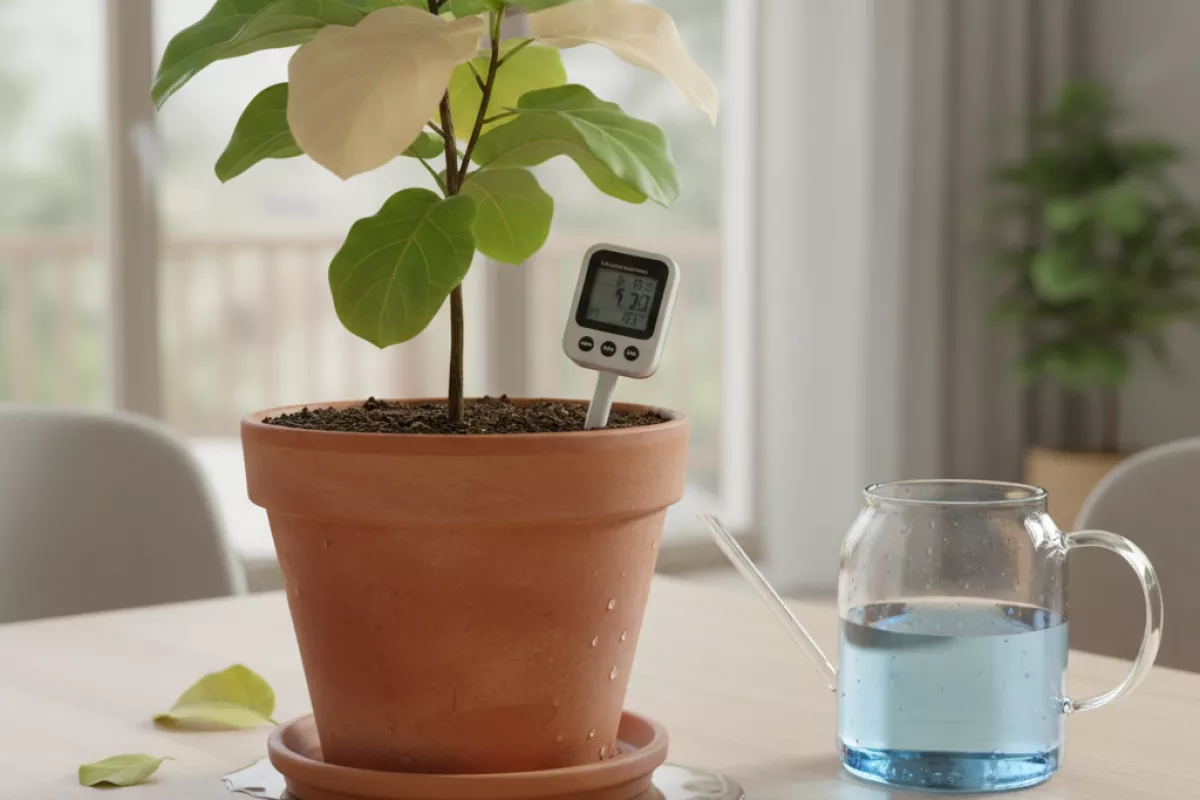
Right after a move to fresh soil, yellowing often comes from moisture management rather than “bad soil.” Repotting disrupts fine roots, and the plant’s ability to take up water can dip for a while. If the pot stays too wet or swings between soaked and bone-dry, leaves may turn pale, then yellow, and sometimes drop.
- Overwatering a freshly potted plant: New mix can hold more water than the old one, especially if it contains peat or coco coir. When roots sit in soggy soil, oxygen drops and the plant can’t “drink” properly even though the pot is wet. Yellow leaves that feel soft, combined with a heavy pot and slow-drying soil, often point here.
- Underwatering because the new mix drains faster: Some repotting blends (chunky bark, perlite-heavy mixes) shed water quickly or can develop dry pockets. If the root ball wasn’t fully moistened, water may run down the sides without soaking in. Leaves may yellow with crisp edges or curl, and the pot feels light soon after watering.
- Watering on the old schedule: A larger pot, different soil texture, and a changed root-to-soil ratio can shift drying time by days. Instead of watering “every X days,” check the plant and the mix. A simple habit: water when the top 2–5 cm (1–2 in) is dry for many houseplants, then adjust based on species and season.
- No drainage (or a blocked drainage hole): A decorative cachepot, compacted mix, or a saucer that’s always full can trap water at the bottom. That lower layer stays saturated and encourages root decline, which shows up as widespread yellowing.
- Cold water or cold, wet soil: Chilly conditions slow root function. If the potting mix stays wet in a cool room, the plant can look “overwatered” even with modest watering. Use room-temperature water around 20–22°C (68–72°F) and avoid leaving the plant in a cold draft.
- Watering immediately after heavy root work: If you trimmed a lot of roots, soaking the pot can overwhelm the reduced root system. In that case, slightly damp (not saturated) soil for the first few days is often safer, then return to a normal deep watering once you see stable growth.
| What you notice | Likely water-related cause | What to do next |
|---|---|---|
| Pot feels heavy for many days; soil surface stays dark; leaves yellow and soft | Too much water / poor aeration | Let it dry further between waterings; empty the saucer; ensure drainage; consider adding more perlite/bark at the next repot. |
| Water runs through quickly; root ball stays dry; leaf tips crisp and yellow | Hydrophobic mix or dry pockets | Water slowly in rounds; bottom-water 15–30 min (0.25–0.5 hr) then drain; gently poke a few holes with a chopstick to help re-wet. |
| Top looks dry but lower half is wet; yellowing starts on older leaves | Water trapped at the bottom | Check drainage holes; remove standing water; avoid oversized pots; use a mix with better structure. |
| Yellowing plus droop; pot alternates very dry then very wet | Inconsistent watering rhythm | Use a moisture check (finger test or skewer); water thoroughly until it drains, then wait until the appropriate depth dries again. |
| Yellow leaves in a cool room; soil dries slowly | Cool, wet conditions slowing roots | Move to a warmer spot around 18–24°C (65–75°F); reduce watering volume; improve airflow without cold drafts. |
If you’re unsure which side you’re on, go by the mix and the pot weight: a consistently heavy pot suggests excess moisture, while a pot that feels light within a day or two suggests the new medium isn’t being fully wetted. Either way, aim for a steady pattern: fully moisten the soil, let excess drain, then wait until the plant actually needs more.
Normal recovery timeline for plants
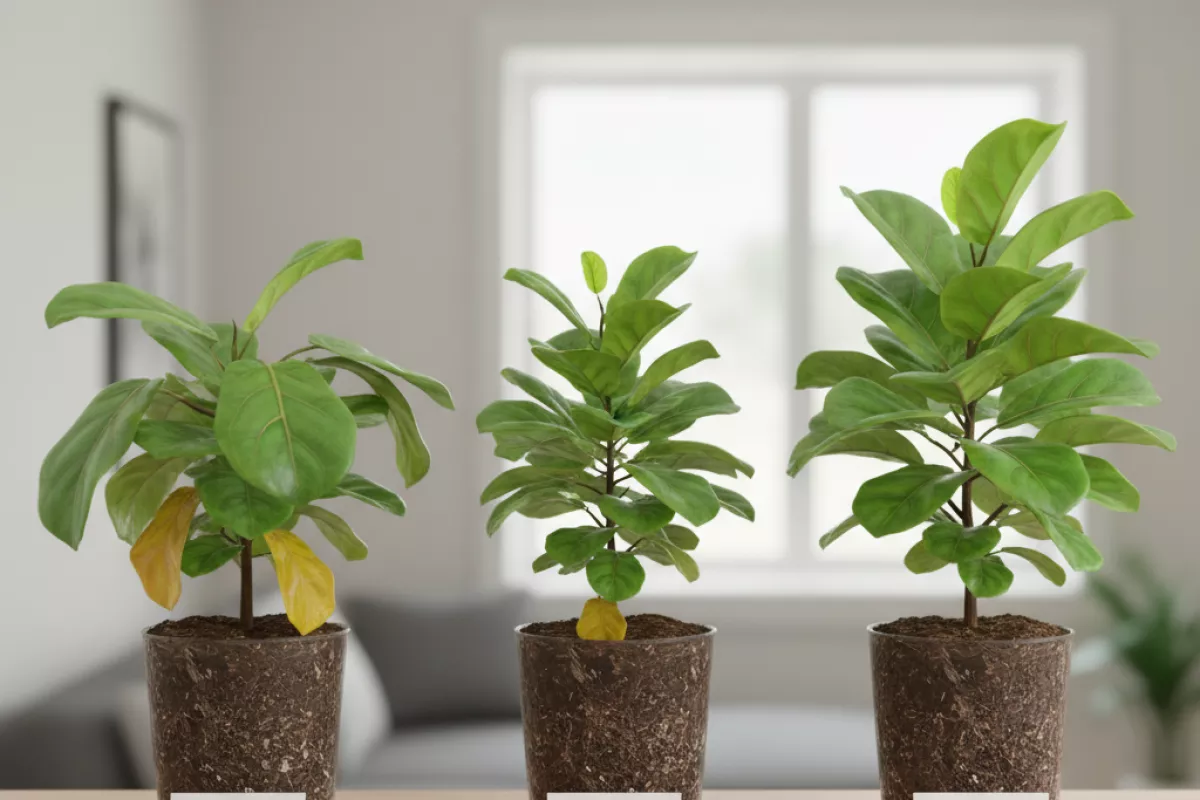
After a move to a new pot, some yellowing is simply the plant reallocating energy: fine roots get disturbed, water uptake wobbles, and older leaves may be “sacrificed” while new roots form. What you’re looking for is a brief dip followed by steady improvement, not a slide that keeps getting worse.
| Time since repotting | What’s typically normal | What suggests trouble | What to do (low-stress steps) |
|---|---|---|---|
| First 24–72 hours |
|
|
|
| Days 4–14 |
|
|
|
| Weeks 2–6 |
|
|
|
| After 6–12 weeks |
|
|
|
Species and season matter. Fast growers (pothos, tradescantia, many herbs) often bounce back in 1–3 weeks, while woody plants and succulents may take 4–8 weeks to look fully settled. Repotting during active growth (often spring to early summer) usually shortens the adjustment period compared with mid-winter, when low light slows root repair.
A practical rule: if yellow leaves appear but the plant also shows at least one “green” sign within 2–4 weeks—firmer stems, stable moisture use, or a new leaf starting—stress is the likely culprit. If the plant keeps losing leaves with no new growth and the pot stays wet for long stretches, start thinking about root damage, overwatering, or a mix that’s holding too much water.
How to reduce stress immediately
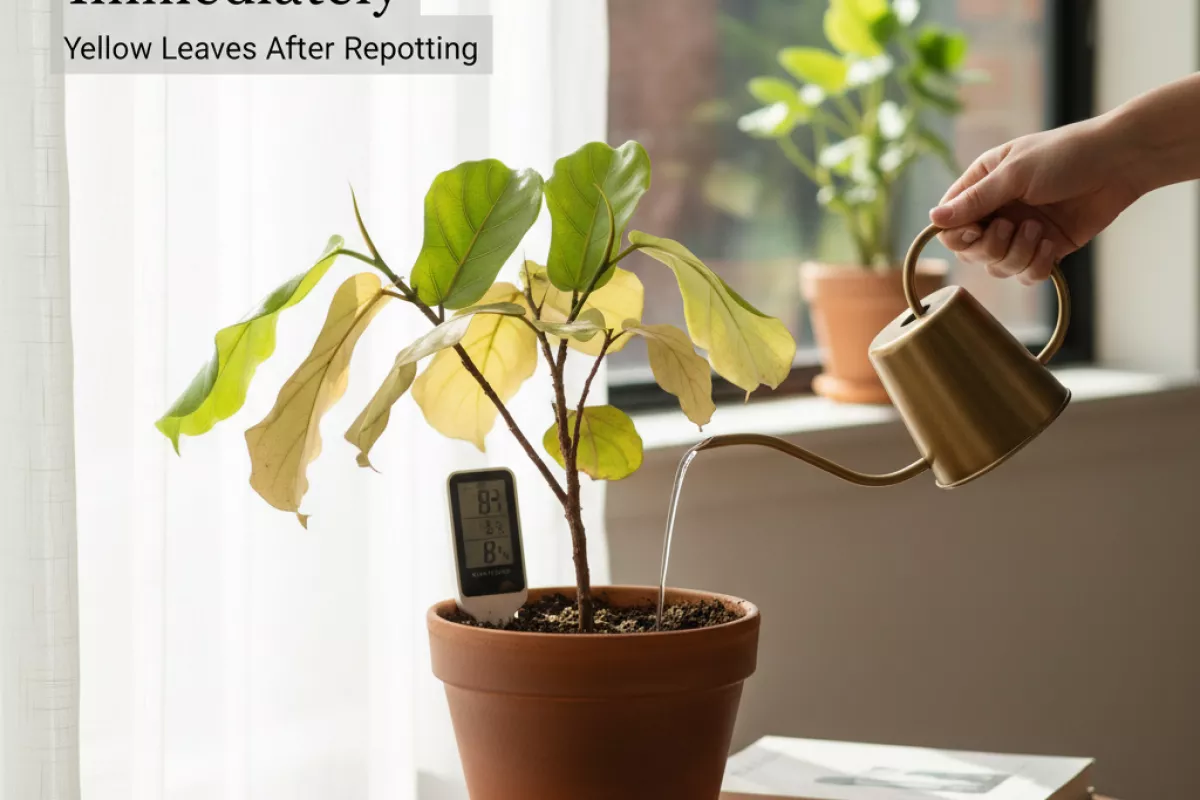
Start by stabilizing the plant’s environment and moisture. Most yellowing right after repotting comes from roots struggling to re-establish contact with the new mix, plus a sudden change in light, temperature, or airflow. Your goal is to reduce demand on the roots while they recover.
- Put it in bright, indirect light for 7–14 days. Avoid hot sun through glass; it increases water loss before the roots can keep up. If it was in low light before, don’t jump straight to full sun.
- Check moisture the right way, then water only if needed. Feel 2–5 cm (1–2 in) down. If it’s dry in that zone, water thoroughly until excess drains; if it’s still damp, wait. Constantly “topping up” keeps roots oxygen-starved.
- Make sure drainage is real. Confirm the pot has a drain hole and the saucer isn’t holding runoff. Empty the saucer after 5–10 minutes so the root zone isn’t sitting in water.
- Hold off on fertilizer for a bit. Skip feeding for 3–4 weeks. Fresh mix often has nutrients, and salts can burn stressed roots and worsen yellow leaves.
- Keep temperatures steady. Aim for roughly 18–24°C (65–75°F). Avoid cold windows, heat vents, and drafty doors; swings can trigger more leaf drop.
- Increase humidity gently (if your home is dry). Group plants together or run a humidifier. A rough target is 40–60% relative humidity. If you mist, do it lightly and early in the day; don’t keep foliage wet overnight.
- Reduce stress from handling. Don’t keep rotating, moving, or “checking” the roots again. Let it settle so new root hairs can form.
- Remove only fully yellow leaves. If a leaf is mostly yellow, it won’t turn green again and can be trimmed. If it’s partly green, leave it; the plant may still reclaim nutrients from it.
- Watch for overpotting. If the new pot is much larger than the root ball, the mix stays wet longer. As a rule of thumb, sizing up by about 2–5 cm (1–2 in) in diameter is usually safer for many houseplants.
If yellowing continues past about two weeks, or you see soft stems, a sour smell, or rapidly spreading yellow leaves, treat it like a root-moisture problem: let the mix dry more between waterings and confirm the soil isn’t compacted. The plant should start producing new growth once the roots reconnect and stabilize.
Signs repotting caused serious damage
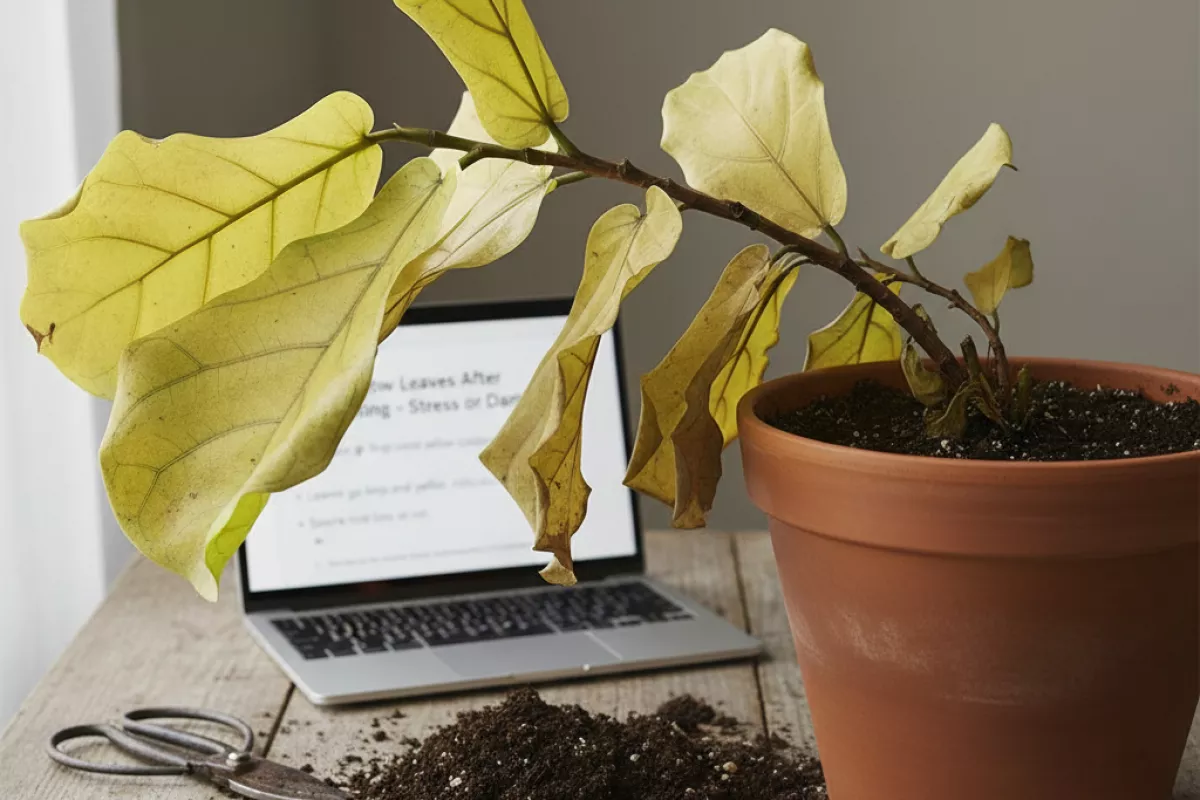
Some yellowing after a move is normal, but a few patterns point to real injury rather than temporary stress. The biggest clue is speed: when symptoms escalate over days (not weeks) and the plant keeps declining even with correct light and watering, the roots or crown may have been compromised during the repot.
| What you see | What it usually means | What to do now |
|---|---|---|
| Leaves go limp and yellow quickly; stems feel soft | Severe root loss or rot triggered by damaged roots sitting in wet mix | Unpot and inspect. Trim mushy roots with clean scissors, let cuts dry 30–60 min, repot into fresh, airy mix and a pot with drainage. |
| Plant wobbles in the pot; it won’t “grab” the soil after 7–14 days | Too many roots were torn off, or the root ball was broken apart too aggressively | Firm the mix gently, stake if needed, and keep conditions steady. Avoid fertilizing until new growth appears. |
| Yellowing starts at the newest leaves or the center rosette/crown | Crown damage, buried growing point, or water trapped in the crown after handling | Expose the crown (don’t bury it), improve airflow, and keep water off the center. Remove collapsing tissue to stop spread. |
| Leaf edges brown and crispy while the mix is wet | Roots can’t take up water (root breakage) even though the potting mix is moist | Let the top 2–5 cm (1–2 in) dry between waterings; reduce sun/wind for a week; check roots if decline continues. |
| Sudden leaf drop (especially on woody plants) within 24–72 hours | Major disturbance to fine feeder roots or a big change in moisture/temperature during repotting | Stabilize: bright indirect light, consistent warmth around 18–24°C (65–75°F), and no fertilizer for 3–4 weeks. |
| Blackened, foul-smelling roots; soil smells sour | Active root rot, often from compacted mix or overwatering after repotting | Remove all rotted roots, rinse if needed, repot into a chunky mix, and water lightly once—then wait until it dries appropriately. |
| White crust, burnt tips, or rapid yellowing soon after feeding | Fertilizer burn on stressed roots (they’re extra sensitive right after repotting) | Flush with clean water equal to 3–4× pot volume (e.g., 1 L for a 250 ml pot; 34 fl oz for an 8 fl oz pot), then pause feeding for a month. |
| Stem base darkens at the soil line; plant collapses | Stem rot from staying too wet, or soil piled against the stem | Lower the soil line, remove affected tissue if possible, and repot into drier, better-draining media. Consider taking cuttings if collapse is advanced. |
If you’re unsure, do a quick “root reality check.” Slide the plant out gently: healthy roots are usually firm and pale/tan; damaged roots are mushy, hollow, or smell bad. When more than roughly 1/3 of the root system is compromised, the yellow leaves are less about adjustment and more about the plant running out of functioning roots.
One more red flag: symptoms that keep spreading even after you correct watering. If the mix is drying at a normal pace and the plant still gets progressively yellower and weaker, it’s worth unpotting and inspecting rather than waiting it out.