Brown Spots After Rain: Fungal or Moisture Stress?

 Explains why rain often comes before spotting, how fungi spread in wet weather, and how to tell moisture stress from infection. Covers leaf pattern clues, what to inspect after rainfall, treatment options for fungal issues, and ways to protect and prevent problems in rainy climates.
Brown spots appearing on leaves right after a rainstorm can be confusing, since they may signal a fungal problem or just moisture stress. Wet weather affects how plants breathe, dry, and protect themselves, so the same symptom can have different causes. This guide helps you spot key clues, rule out common triggers, and decide what to do next.
Why rain often precedes spotting
Wet weather changes the leaf surface and the plant’s “microclimate” in a way that makes blemishes show up fast. Sometimes the marks are true disease lesions; other times they’re stress responses that only become obvious after a soaking.
- Longer leaf wetness gives pathogens time to start. Many fungal and bacterial problems need a continuous film of water on the leaf to germinate or enter tissue. A brief sprinkle may dry too quickly, but a slow rain, drizzle, or repeated showers can keep leaves wet for hours—especially in dense canopies.
- Rain spreads spores and bacteria like a splash zone. Droplets hitting soil or infected leaves can fling spores upward and sideways. Wind-driven rain also carries them to new leaves, so spotting often appears first on lower foliage or on the side facing prevailing storms.
- Humidity stays high after the storm ends. Even when the rain stops, saturated soil and still air keep relative humidity elevated around the plant. That slows drying and helps infections progress, particularly overnight when temperatures drop and dew forms.
- Leaves can be damaged by impact and abrasion. Heavy drops, hail, or wind-whipped leaves can create tiny tears or bruises. Those micro-injuries may look like brown specks later, and they also provide easy entry points for opportunistic fungi.
- Moisture stress can mimic disease. After a downpour, roots may sit in waterlogged soil, reducing oxygen. That can lead to localized browning, edge scorch, or small dead patches that resemble fungal spots—especially if drainage is poor or containers lack airflow.
- Sun after rain can intensify spotting. When bright sun returns quickly, wet leaves can heat unevenly and stressed tissue may discolor. Water droplets don’t reliably “burn” leaves like a magnifying glass, but rapid shifts from cool, wet conditions to hot, sunny conditions can still trigger visible damage.
- Residue and splashback leave marks. Muddy water can splash onto foliage and dry as brown flecks. Fertilizer salts or hard-water minerals can also leave tan spots once the surface dries, which can be mistaken for infection.
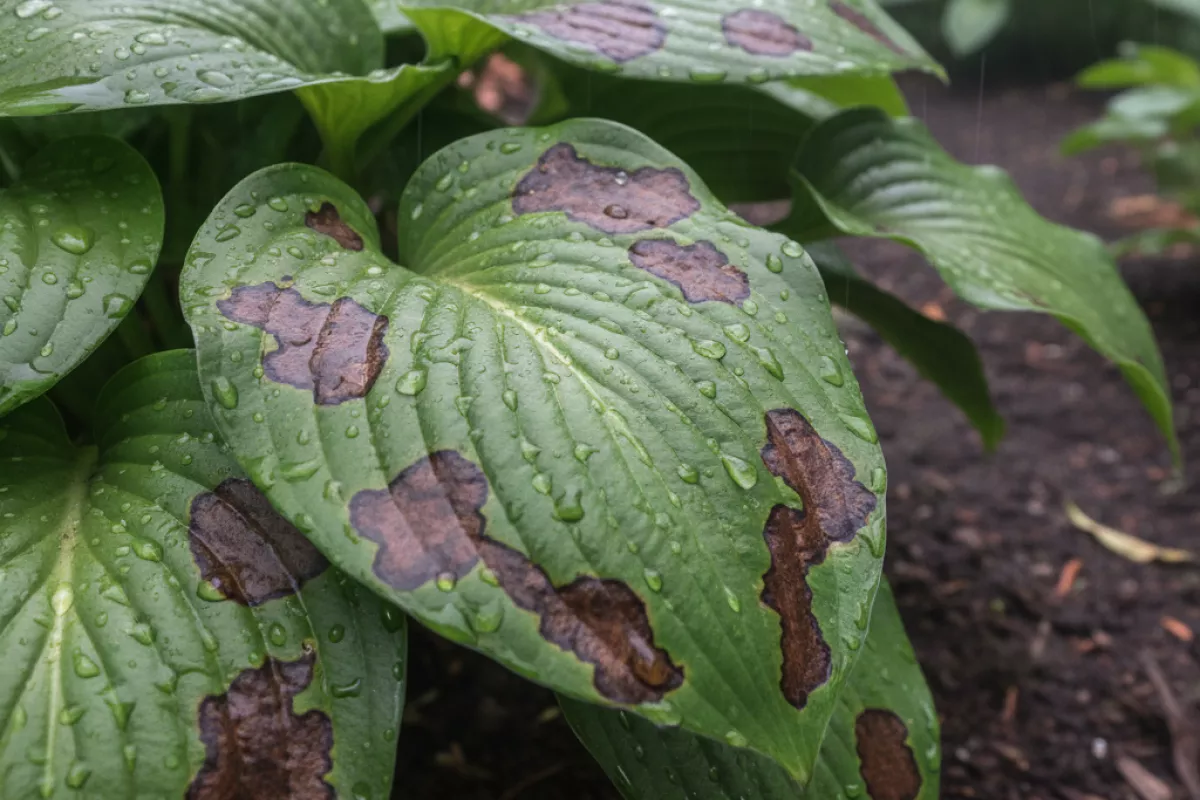
A useful clue is timing: infections often take a little while to show (commonly a few days), while splash marks or bruising can appear almost immediately. If you’re seeing new spots right after every storm, look closely at where they start (lower leaves, windward side, or scattered randomly) and whether the tissue looks sunken, ringed, or fuzzy—those details help separate fungal lesions from simple moisture-related stress.
How fungal pathogens spread in wet conditions
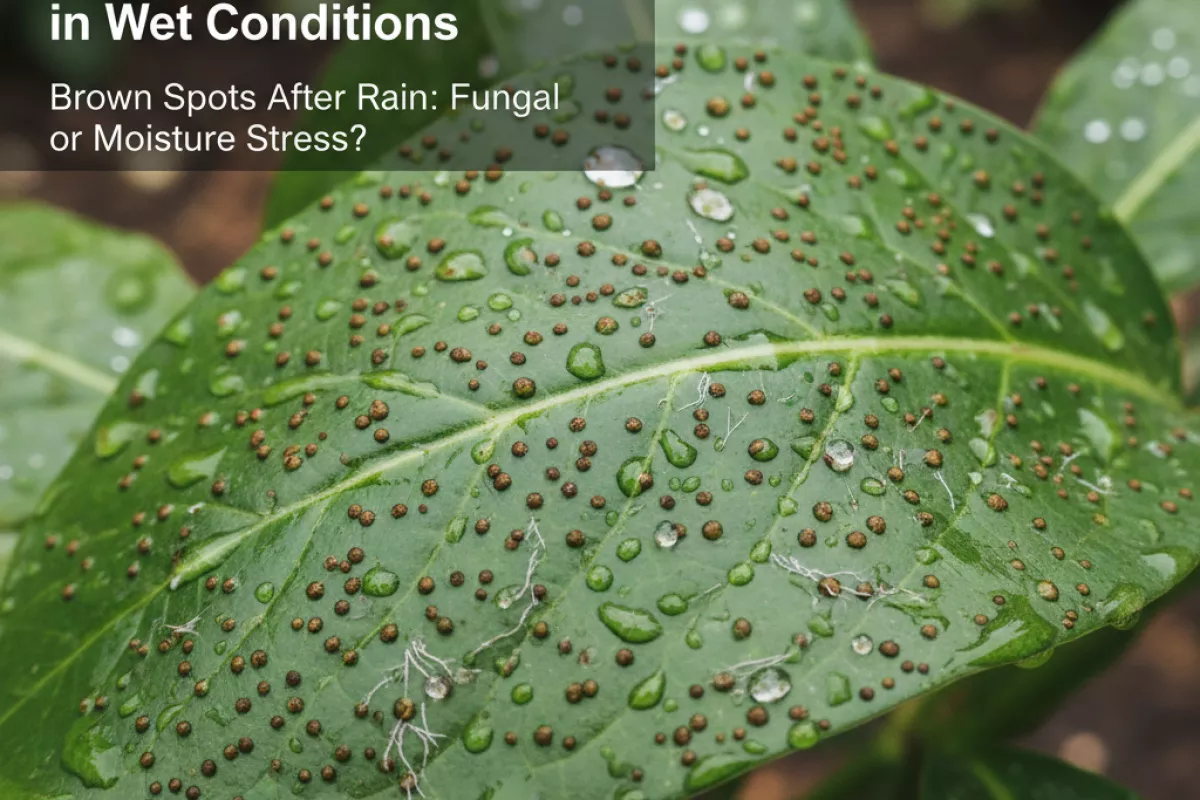
After a stretch of rain, leaf surfaces can stay wet long enough for spores to wake up, germinate, and push into plant tissue. Many common leaf-spot fungi don’t need dramatic storms; they just need a thin film of water, mild temperatures, and time. When the canopy stays damp overnight, the odds of infection rise because the plant doesn’t get a chance to dry out and “reset.”
Moisture also changes how spores move. Instead of drifting only on air currents, they hitch a ride in splashes and runoff, which is why brown spotting often appears first on lower leaves and then creeps upward after repeated wetting.
- Splash dispersal: Raindrops hit infected leaves or soil and launch spores onto nearby foliage. The closer leaves are to the ground (or to each other), the easier it is for spots to spread plant-to-plant.
- Leaf wetness duration: A long wet period (for example, 10–12 hours overnight) can be enough for spores to germinate and infect. Short showers may be less risky if sun and airflow dry the canopy quickly.
- Humidity and dew: Even without new rain, high humidity can keep leaves tacky with dew, extending the infection window and letting lesions expand.
- Water movement along surfaces: Runoff can carry spores along veins and leaf edges, creating irregular blotches that follow drip lines or pooling points.
- Wounds and stressed tissue: Wind-driven rain, hail, or gritty splash can nick leaves. Those tiny injuries give some pathogens an easier entry point, especially when plants are already waterlogged or oxygen-starved at the roots.
- Human and tool transfer: Handling wet plants, brushing past them, or pruning while foliage is damp can move spores mechanically from one leaf to the next.
| Wet-condition factor | What it enables | What you often see on plants |
|---|---|---|
| Repeated rain or overhead watering | Spores splashed upward and outward | New spots appearing after each wet event, starting on lower leaves |
| Leaves staying wet overnight | Spore germination and penetration into tissue | Fresh, small brown flecks that enlarge over several days |
| Dense canopy with poor airflow | Slow drying and higher humidity around foliage | Clusters of lesions in the interior where light and air don’t reach |
| Warm, humid stretch after rain | Faster fungal growth and sporulation | Spots that expand quickly, sometimes with yellow halos |
If the brown marks show up soon after wet weather and keep multiplying with each rainy cycle, that pattern usually points to a pathogen taking advantage of moisture rather than a one-time “rain burn.” The key is that fungi use water both as a transport system and as a germination trigger, so anything that keeps leaves wet longer tends to accelerate the problem.
Moisture stress vs infection symptoms
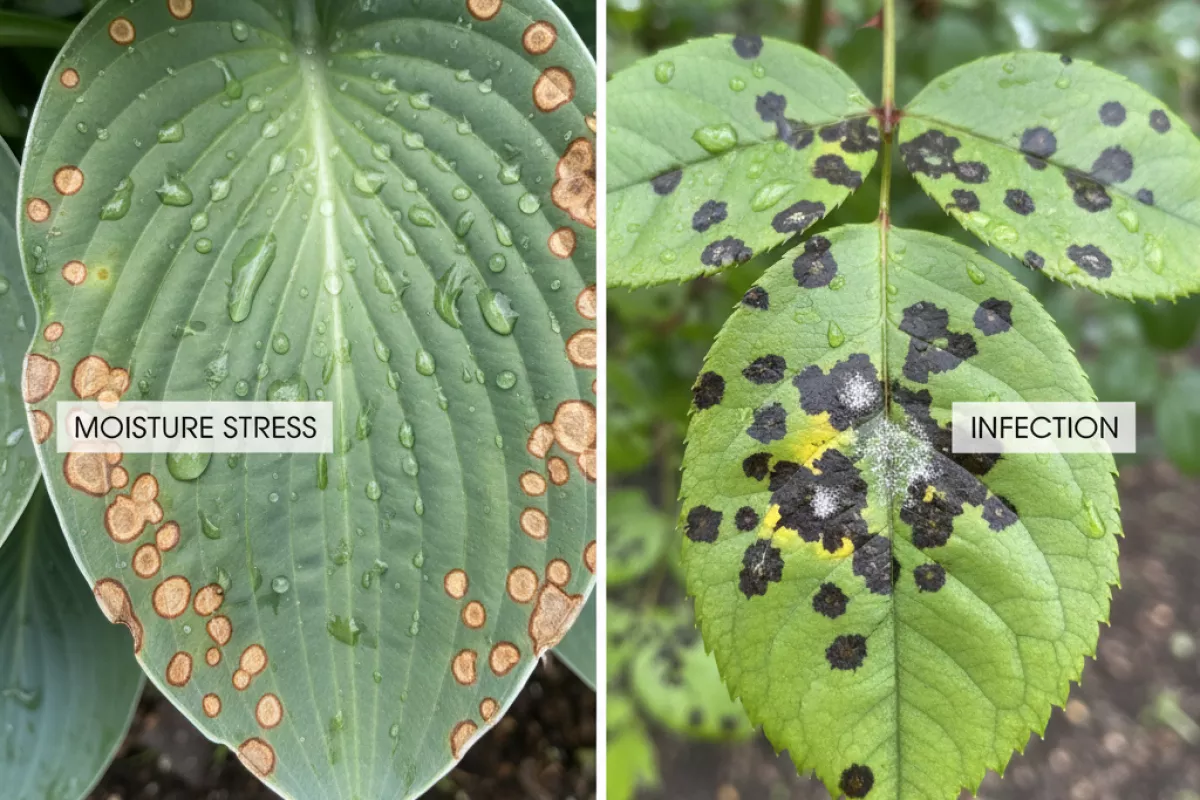
Brown spotting after a rain can come from two very different mechanisms: the plant reacting to water swings (too much water, too little oxygen, or rapid drying) or a pathogen taking advantage of wet leaves. The fastest way to tell is to look at pattern, spot structure, and how quickly it spreads over the next few days.
| What you observe | More typical of moisture stress | More typical of infection |
|---|---|---|
| Where it shows up first | Older leaves or exposed edges; often more uniform across the plant | Random “hot spots,” often starting low in the canopy or where splash hits |
| Spot shape and borders | Blotchy or irregular patches; edges can look scorched without a crisp outline | Round to angular spots with clearer margins; may follow leaf veins |
| Color pattern inside the spot | Mostly one tone of tan/brown; may fade gradually into green tissue | Rings (“target” look), yellow halos, or a darker border around a lighter center |
| Texture of the damaged area | Dry, papery, or brittle tissue; can crack after sun returns | May start water-soaked, then turns necrotic; can look slightly sunken |
| Speed of change | Often stabilizes once watering and drainage normalize | New spots keep appearing every 24–72 hours if leaves stay wet |
| Relationship to weather | Follows saturated soil, poor drainage, or sudden heat/wind after rain | Flares after long leaf-wetness periods, frequent showers, heavy dew, or overhead irrigation |
| Clues on the leaf surface | No fuzzy growth; residue may be mineral splash or dried mud | Possible spore dusting, fuzzy growth, or tiny black dots (fruiting bodies) in lesions |
| Distribution on the plant | More even; may match irrigation zones or container dry-down patterns | Patchy; spreads outward from initial lesions and can move plant-to-plant |
- Do the “wipe and wait” check: Gently wipe a few spots with a damp cloth. If it’s just splash staining, it may lighten. Then watch for 2–3 days; infections typically add new lesions, while stress damage usually doesn’t.
- Look underneath: Many leaf diseases show stronger symptoms on the underside first. Stress marks often look similar on both sides.
- Check the root zone: If soil stays soggy for more than 24–48 hours, roots can lose oxygen and leaves can spot or scorch. Aim for watering that moistens the root zone, then allows partial drying rather than staying saturated.
- Note leaf-wetness time: If leaves stayed wet overnight (roughly 10–12 hours, about 600–720 minutes), disease risk climbs. Improving airflow and watering early in the day can shorten drying time.
If you’re still unsure, treat it like a split problem: correct drainage and watering first (because that helps either case), then remove the worst affected leaves and avoid overhead watering. If new spots keep appearing despite better drying conditions, that points more strongly toward an active infection rather than a one-time water stress event.
Leaf patterns that reveal the cause
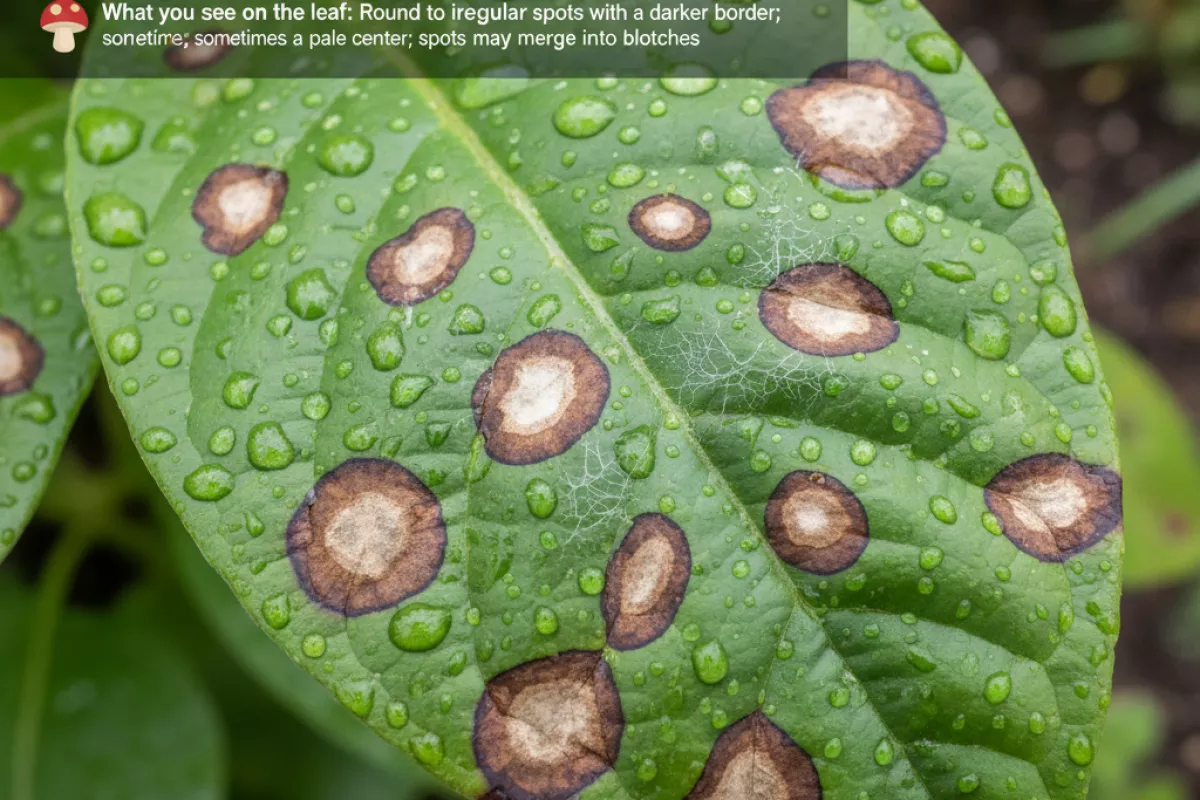
The fastest clue is where the brown shows up and how it’s shaped. Rain-related spotting can come from fungal spores splashing up, bacteria moving in water films, or simple moisture stress when leaves stay wet and oxygen-starved. Use the pattern on the leaf as your “map” before you treat anything.
| What you see on the leaf | Most likely cause after rain | Quick check to confirm | What to do next |
|---|---|---|---|
| Round to irregular spots with a darker border; sometimes a pale center; spots may merge into blotches | Fungal leaf spot (common after splash and long leaf-wetness) | Look for a “target” look or tiny black dots in the spot (fruiting bodies) as it ages | Remove the worst leaves, improve airflow, avoid overhead watering; monitor new growth for fresh lesions |
| Angular, blocky spots bounded by veins; may look water-soaked first, then turn brown | Bacterial leaf spot favored by warm, wet conditions | Hold leaf up to light: lesions often stop sharply at veins; early spots can appear translucent | Keep foliage dry, sanitize tools, don’t handle plants when wet; remove infected leaves if spread is active |
| Brown patches starting at tips or edges (margins), often with a yellow band; damage looks “scorched” | Moisture stress or salt/roots struggling after saturation (not a true spot disease) | Check soil: if it stayed soggy for 24–48 hours (1–2 days), roots may be oxygen-stressed; new leaves may be fine | Let soil dry slightly, ensure drainage, avoid extra fertilizer until growth normalizes |
| Many tiny specks (peppering) that turn tan/brown; worst on lower leaves closest to soil | Splash-up fungi (or spores on soil/mulch) triggered by heavy rain | Pattern is strongest on the bottom third of the plant; spots align with where mud splashed | Add or refresh mulch 5–8 cm (2–3 in), water at the base, prune for clearance from soil |
| Large, uneven brown areas that follow folds or where leaves touched; may appear overnight after a storm | Physical injury + prolonged wetness (bruising, abrasion, or sun after rain) | Damage matches contact points (leaf-to-leaf, leaf-to-stake) or creases; not many discrete “new” spots forming later | Remove badly torn tissue, reduce rubbing, provide support; watch whether new lesions keep appearing |
| Gray-brown blotches with fuzzy growth in humid conditions; petals/soft leaves collapse | Botrytis (gray mold) in cool, damp spells | In early morning humidity, look for gray fuzz on dead tissue; spreads from old flowers and damaged leaves | Deadhead and clean up debris, thin crowded growth, avoid evening watering; increase ventilation |
- Location matters: Spots that begin on lower leaves after a downpour often point to splash dispersal, while upper-canopy spotting can suggest wind-driven rain or overhead watering.
- Timing matters: If brown areas show up within hours of a storm and then stop expanding, think injury or stress. If new spots keep appearing over the next 3–7 days, a pathogen is more likely.
- Edges vs. centers: Margin burn and tip dieback usually track back to waterlogging, salts, or root stress. Discrete spots with borders more often indicate infection.
- One plant vs. many: If only one plant shows symptoms while neighbors are clean, look for drainage issues, a blocked pot hole, or a plant sitting where runoff collects.
Inspection steps after rainfall
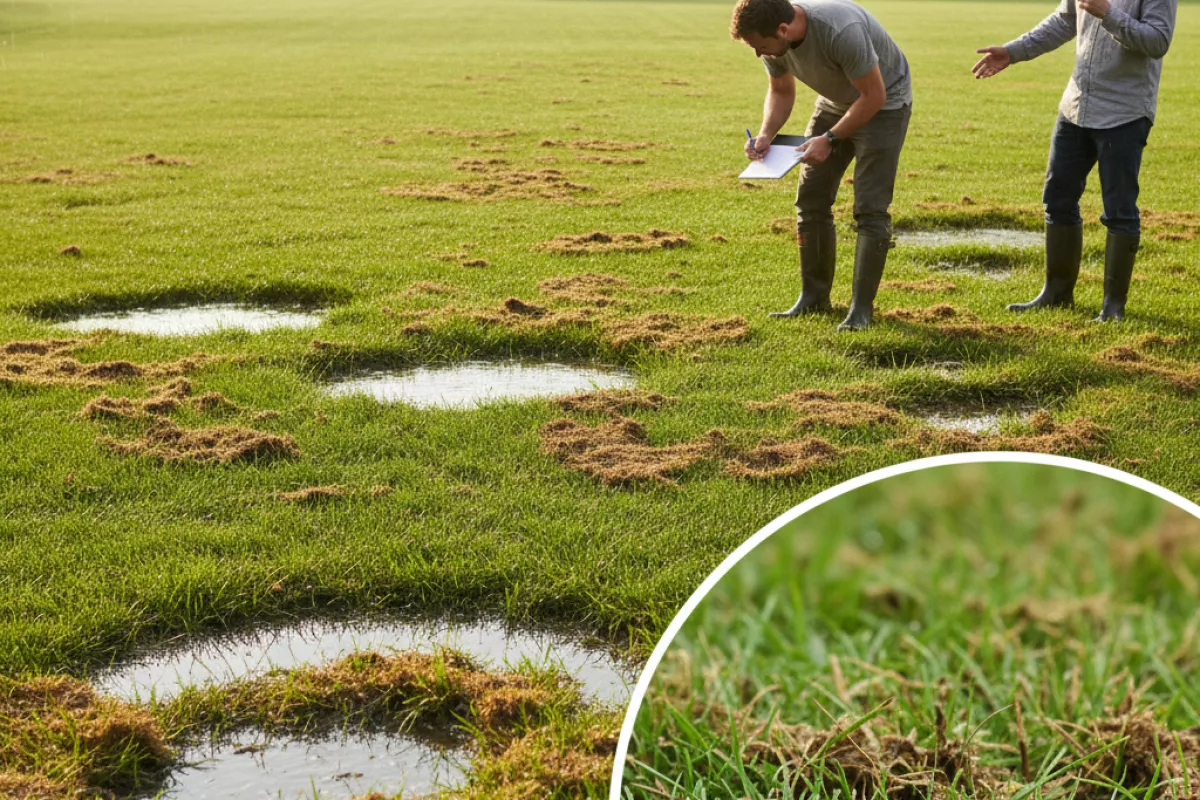
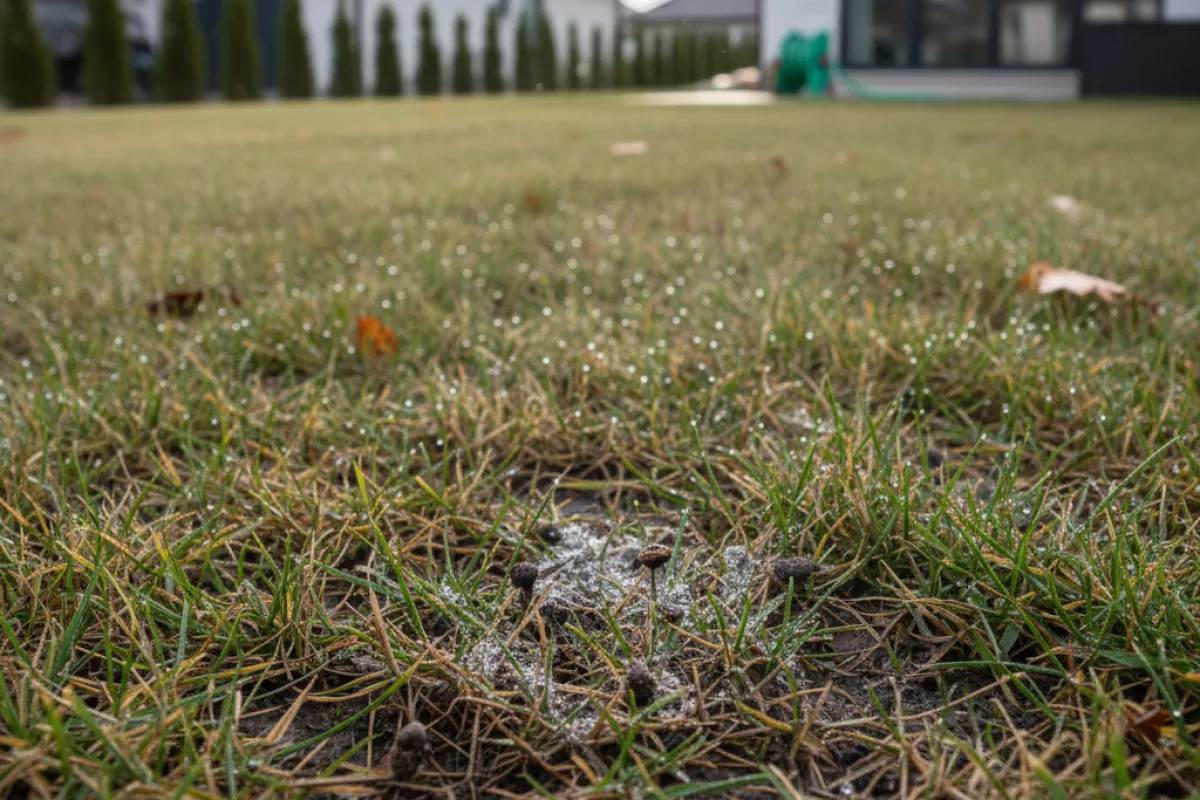
Check the lawn as soon as it’s safe to walk on, ideally once the surface water has drained and the blades are no longer dripping. You’re looking for clues that separate a fungal flare-up from moisture stress, compaction, or simple splash damage.
-
Start with a quick “pattern scan” from a distance.
- Fungal issues often show up as irregular patches, rings, or clusters that expand over a few days.
- Moisture stress more commonly follows low spots (staying wet) or high spots (drying fast), and may align with foot traffic or equipment paths.
-
Look at the leaf surface early in the morning.
- Check for a light, webby film or fuzzy growth on blades (more noticeable at dawn). That points toward active disease rather than just waterlogging.
- If blades look clean but limp and matted, prolonged wetness and lack of oxygen in the root zone may be the bigger problem.
-
Do a “tug test” on browned blades.
- Gently pull a small handful. If blades detach easily from the crown, the plant tissue may be rotting (often tied to constant saturation).
- If the grass is firmly rooted but the tips are brown, think of leaf spot, splash injury, or nutrient washout rather than root failure.
-
Inspect individual blades up close.
- Fungal leaf spots tend to have defined lesions (tan centers, darker borders, or pepper-like dots).
- Moisture stress damage is usually more uniform: yellowing, dull color, and browning that doesn’t form distinct “targets” on the leaf.
-
Check the thatch and soil moisture 5–10 cm (2–4 in) down.
- Use a screwdriver or soil probe. If it slides in easily and the soil is glossy-wet or smells sour, the area is staying saturated too long.
- If the surface is wet but 5–10 cm (2–4 in) down feels only slightly damp, the browning may be from leaf wetness and humidity rather than true waterlogging.
-
Note drainage and compaction clues.
- Standing water that lingers more than 1–2 hours after a typical shower is a red flag for poor infiltration.
- Footprints that remain visible after the lawn dries suggest compaction; compacted areas can mimic disease by weakening grass and keeping crowns wet.
-
Check for mower-related spread.
- If brown streaks follow mowing lines, wet mowing may have moved spores or shredded tender blades.
- Also look for ragged leaf tips, which can turn tan after rain when torn tissue stays wet.
-
Track change over 48–72 hours.
- Mark patch edges with small flags and re-check in 2–3 days. Expanding margins and new spots often indicate fungus.
- If the area improves as the surface dries and sunlight returns, moisture stress (too wet, too little oxygen) is more likely than an aggressive pathogen.
| What you observe | More consistent with fungus | More consistent with moisture stress / wet soil |
|---|---|---|
| Patch shape and spread | Irregular patches or rings that expand day to day | Follows low spots, runoff paths, or compacted zones; spread is slow or stable |
| Blade markings | Distinct lesions, spots, or “target” patterns on leaves | General yellowing or browning without clear lesions |
| Surface appearance at dawn | Webby/fuzzy growth or heavy, persistent leaf wetness in affected areas | Matted grass, algae-like slickness, or muddy crowns without visible growth |
| Soil feel 5–10 cm (2–4 in) down | Moist but not soupy; damage concentrated on leaf tissue | Wet, sticky, or sour-smelling soil; crowns look stressed from lack of oxygen |
| Tug test | Usually stays anchored unless crown/root diseases are involved | May pull loose if crowns are soft or rotting from prolonged saturation |
| Response after drying weather | Often continues or worsens without intervention | Often stabilizes or improves as airflow and drying return |
If you’re unsure, take a few clear photos of the same spot from the same angle each day and compare. The rate of change after rain is often the simplest tie-breaker between a disease cycle and a temporary wet-soil setback.
Treatment options for fungal issues
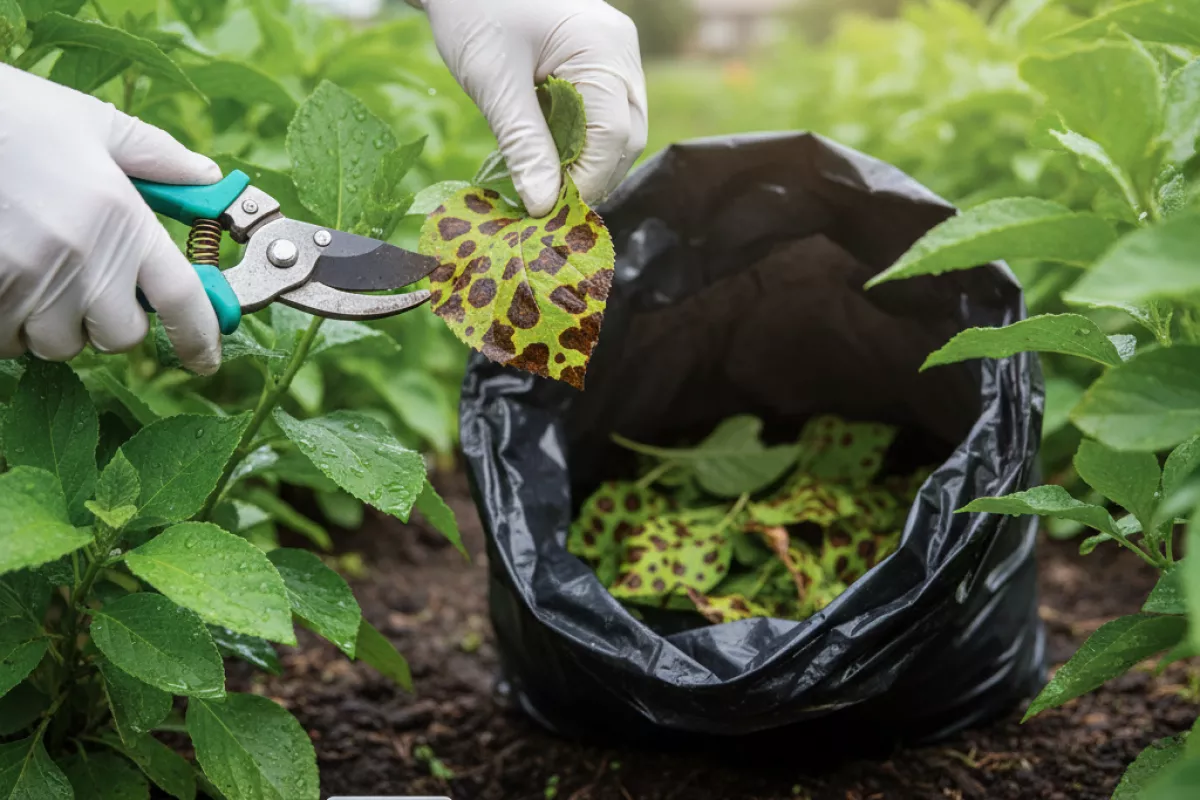
Act quickly once you suspect a fungus is behind the brown spots, because leaf infections spread fastest when foliage stays wet and air movement is poor. Start with low-risk steps (drying the canopy and removing infected material), then escalate to targeted fungicides if new spots keep appearing.
- Remove the worst leaves first. Clip off heavily spotted leaves and any that are yellowing or collapsing. Bag and discard them rather than composting, since many spores survive in a pile. If you’re pruning, sanitize tools between plants (or between cuts on the same plant) to avoid dragging spores around.
- Dry the leaves, not the soil. Switch to watering at the base and do it early in the day so any splashed foliage dries quickly. After rain, gently shake plants or brush off standing droplets where practical, especially on dense ornamentals or vegetables with overlapping leaves.
- Improve airflow and light. Thin crowded growth, stake floppy stems, and keep plants from touching each other so humidity doesn’t linger. As a general guide, aim for at least 30–45 cm (12–18 in) between medium plants; larger crops and shrubs often need 60–90 cm (24–35 in) or more depending on variety.
- Reduce spore splash from the ground. Add a clean mulch layer to limit soil-borne spores bouncing onto leaves during storms. A depth of about 5–8 cm (2–3 in) is usually enough; keep mulch a few centimeters (about 1 in) back from stems to avoid trapping moisture against the crown.
- Use a protectant spray when conditions stay wet. Products like copper-based sprays or sulfur (where labeled for your plant) can help prevent new infections on healthy tissue, but they won’t “erase” existing spots. Apply only according to the label, and avoid spraying during heat (for example, above 29–32°C (85–90°F)) if the product warns about burn risk.
- Choose a systemic fungicide only when needed. If the plant keeps developing fresh lesions despite sanitation and better watering, a systemic option (varies by plant and disease) can slow internal spread. Rotate modes of action when labels allow it to reduce resistance, and don’t exceed the maximum number of applications per season.
- Clean up the site after the outbreak. At the end of the season, remove fallen leaves and old stems where spores overwinter. If the same bed gets hit every year, consider a 1–3 year rotation (or moving containers) so the next crop isn’t planted into the same pathogen pressure.
| Approach | Best for | What it does | Watch-outs |
|---|---|---|---|
| Sanitation (remove spotted leaves, debris cleanup) | Early outbreaks; localized spotting | Reduces spore load so fewer new infections start | Don’t compost infected material; disinfect tools |
| Watering changes (base watering, morning schedule) | Rainy periods; overhead irrigation setups | Keeps foliage drier so spores germinate less | Avoid evening watering; don’t overcorrect into drought stress |
| Airflow improvements (spacing, thinning, staking) | Dense canopies; humid microclimates | Shortens leaf-wetness time after rain | Prune gradually to avoid sunscald on suddenly exposed leaves |
| Mulch or ground cover management | Soil-splash diseases; beds with bare soil | Limits spores splashing from soil onto leaves | Keep mulch off stems; replace moldy mulch if it stays soggy |
| Protectant fungicides (e.g., copper/sulfur where labeled) | Preventing spread during extended wet weather | Protects new growth from infection | Can cause leaf burn in heat; follow label intervals and plant restrictions |
| Systemic fungicides (plant/disease-specific) | Recurring or fast-moving infections | Moves within the plant to slow disease development | Resistance risk; respect reapplication limits and pre-harvest intervals |
If you’re unsure whether you’re dealing with a fungal leaf spot or just moisture stress, focus on the “no-regrets” steps first: remove the worst leaves, keep foliage dry, and open up airflow. If new spots continue to form in rings, clusters, or along leaf veins after you’ve corrected wetness issues, that’s usually the point where a labeled fungicide program becomes worth considering.
How to protect plants during wet seasons
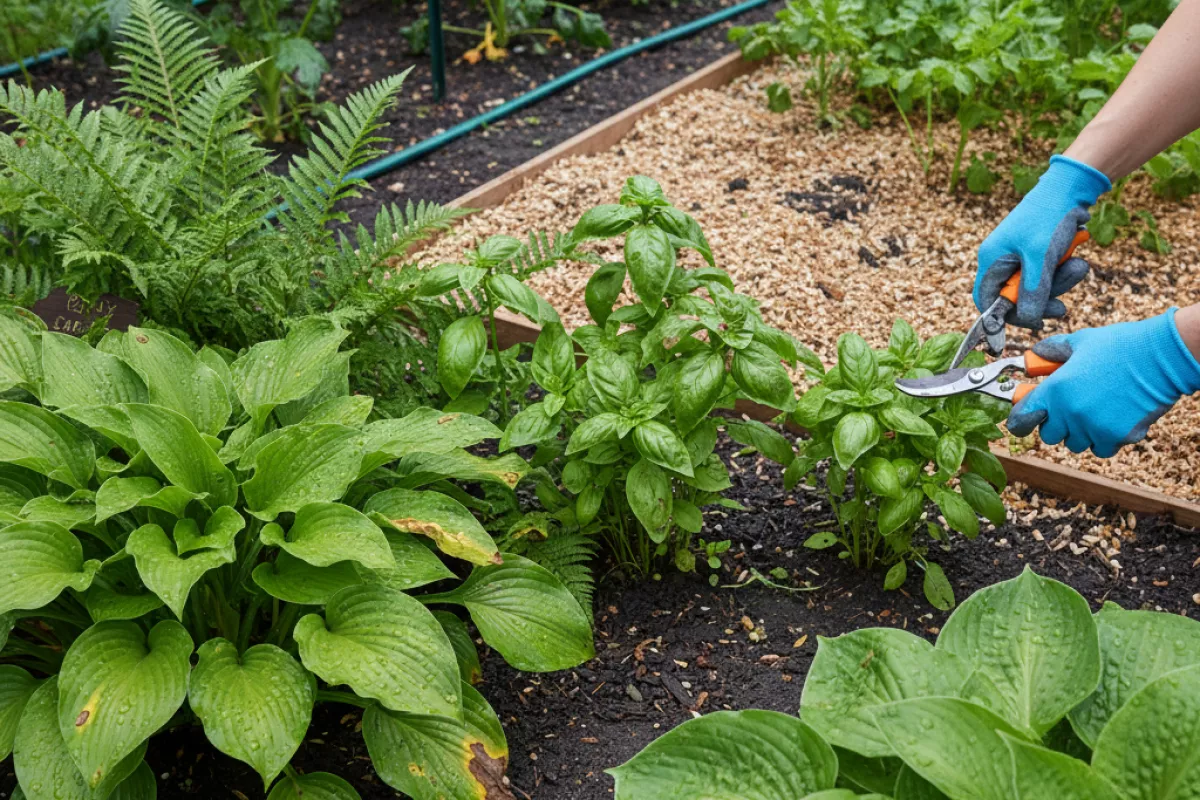
Reduce the time leaves and soil stay wet, because that’s what turns a rainy week into brown spotting, leaf drop, and root problems. The goal isn’t to keep plants dry (you can’t), but to improve airflow, drainage, and hygiene so fungi and moisture stress have fewer chances to take hold.
- Water the soil, not the foliage. If you need to irrigate between storms, do it early in the day and aim at the base. Wet leaves overnight are an easy win for fungal spores.
- Create space for airflow. Thin crowded stems and remove dense inner growth so leaves dry faster after rain. For vining crops, use trellises or supports to lift growth off the ground.
- Mulch to prevent splash-up. A 5–8 cm (2–3 in) layer of clean mulch reduces soil splatter that carries spores onto lower leaves. Keep mulch a few centimeters away from stems to avoid constant stem moisture.
- Improve drainage where water lingers. If puddles sit longer than a few hours after a downpour, consider raised beds, adding organic matter, or regrading. Containers should have clear drainage holes and not sit in saucers full of water.
- Prune and remove the right leaves. Take off heavily spotted leaves (especially those touching soil) and any yellowing, collapsing tissue. Use clean snips and avoid pruning when plants are dripping wet to limit spreading spores.
- Keep the canopy dry at night. Stake floppy plants, remove weeds that block airflow, and avoid evening watering. Even a small change in drying time can reduce new spots.
- Sanitize tools and hands during outbreaks. Wipe blades between plants when disease is active. It’s simple, but it stops you from moving problems plant-to-plant.
- Adjust feeding during prolonged rain. Hold back on heavy nitrogen if growth is soft and lush; tender new leaves spot more easily. If rain has leached nutrients, use a light, balanced feed once soils aren’t saturated.
- Use targeted protection only when conditions justify it. If a plant has a history of fungal issues and you’re entering a long wet spell, a preventative approach (like copper or sulfur where appropriate) can help. Always follow label directions and avoid spraying during high heat or on drought-stressed plants.
| Situation after repeated rain | What to do now | Why it helps |
|---|---|---|
| Lower leaves show new brown spots; soil splashes visible | Add 5–8 cm (2–3 in) mulch and remove the worst lower leaves | Limits spore splash and removes active tissue that can keep producing spores |
| Plant looks limp even though soil is wet | Check drainage, stop watering, and loosen surface crust gently without damaging roots | Prevents oxygen starvation and slows root decline from waterlogged conditions |
| Dense canopy stays wet into afternoon | Thin crowded stems, stake plants, and weed around the base | Speeds drying time, which reduces fungal infection windows |
| Spots spread fast during cool, humid days | Remove infected debris, sanitize tools, and consider a labeled preventative spray | Cuts down inoculum and adds a protective barrier when weather favors disease |
After the weather clears, do a quick reset: pick up fallen leaves, refresh mulch, and reassess spacing. Those small cleanups matter because many leaf-spot fungi survive on debris and return with the next stretch of rain.
Preventive care for rainy climates

Focus on keeping leaves dry and airflow high, because long wet periods are what let fungi get established and what turns minor moisture stress into visible brown spotting. The goal isn’t to “sterilize” your garden—it’s to shorten how long foliage stays wet after storms and to avoid the conditions that splash spores onto leaves.
- Water the soil, not the plant. If you irrigate between rains, use drip lines or a soaker hose and aim for morning watering so any splashed leaves dry quickly. Avoid overhead sprinklers during humid stretches.
- Improve airflow with spacing and pruning. Thin crowded stems, remove crossing branches, and keep plants from touching. Better air movement speeds drying and reduces the window for infection.
- Mulch to stop soil splash. A 5–8 cm (2–3 in) layer of mulch reduces muddy splash that carries spores onto lower leaves. Keep mulch a few cm (1 in) away from stems to prevent constant damp contact.
- Prioritize drainage. If water stands for more than 24 hours after a downpour, consider raised beds, adding organic matter, or redirecting runoff. Roots sitting in saturated soil are more prone to stress, and stressed plants spot more easily.
- Clean up promptly after storms. Remove fallen leaves and prune off heavily spotted foliage (don’t compost if disease is active). Disinfect pruners between plants with 70% isopropyl alcohol to avoid spreading pathogens.
- Feed lightly and avoid late nitrogen surges. Soft, fast growth is more vulnerable to leaf diseases. Use balanced fertilizer and follow label rates; in wet seasons, less is often safer than more.
- Choose resistant varieties when possible. If a plant gets brown spots every rainy season, swapping to a resistant cultivar is often more effective than repeated treatments.
- Use protective sprays only when conditions justify it. If you’ve had repeated fungal issues, apply a preventative product before extended wet weather rather than after spots explode. Follow label directions, and reapply only as instructed—rain can wash off protectants.
| Rainy-season situation | What to do (and why it helps) |
|---|---|
| Leaves stay wet most of the day | Thin the canopy and increase spacing; faster drying reduces fungal germination time. |
| Brown spots start on lower leaves after downpours | Add 5–8 cm (2–3 in) mulch and avoid soil splash; remove the worst lower leaves to cut spore load. |
| Yellowing plus spotting after several days of rain | Check drainage and root oxygen; improve soil structure or raise the planting area to reduce waterlogging stress. |
| Recurring outbreaks every wet season | Rotate susceptible plants, clean debris thoroughly, and consider resistant varieties; prevention beats chasing symptoms. |
If you’re unsure whether you’re dealing with fungus or moisture stress, watch the pattern after the next storm: fungal spotting usually spreads outward and affects new leaves over time, while stress-related browning often stabilizes once the plant dries out and roots recover. Adjusting airflow, splash, and drainage helps both, so it’s a safe starting point either way.