Yellowing Leaves in Garden Plants – What to Check

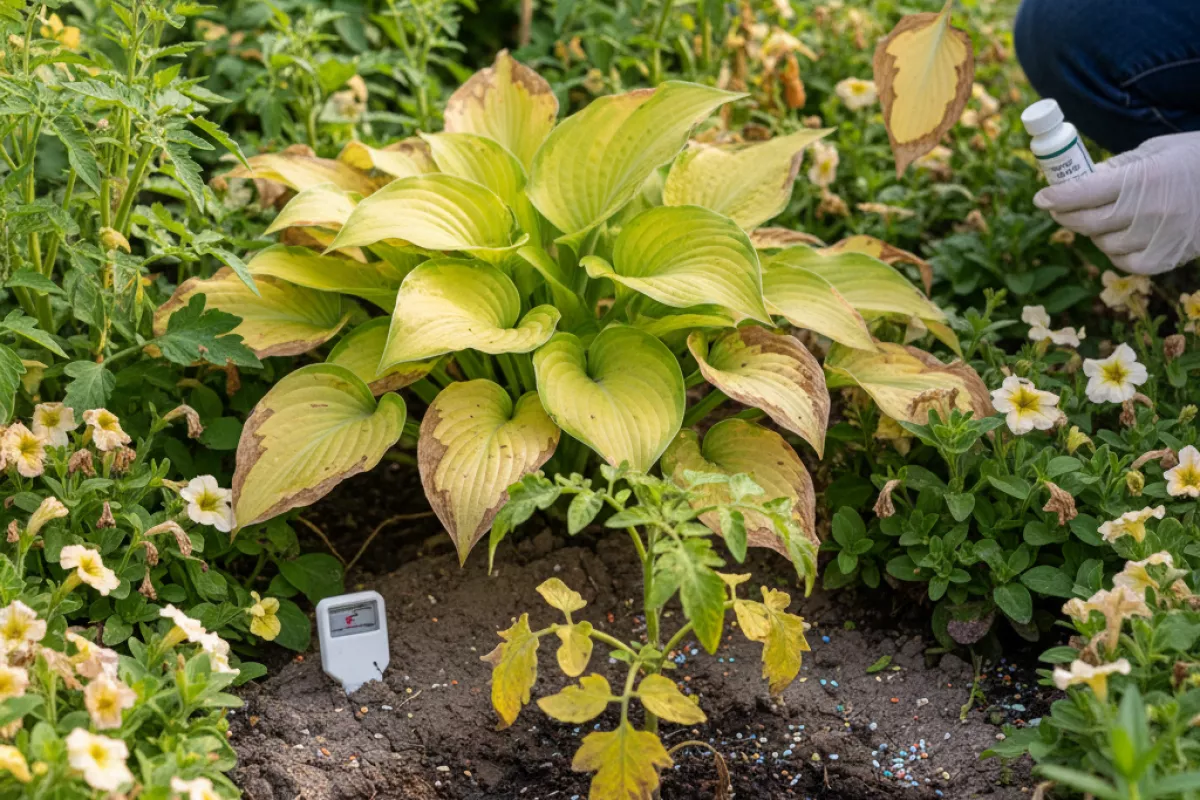 This article explains what different outdoor yellowing patterns can indicate and which soil quality issues to check first. It also covers weather and seasonal stress, pest-related discoloration, drainage and root oxygen, nutrient balance, and a quick inspection routine for gardeners.
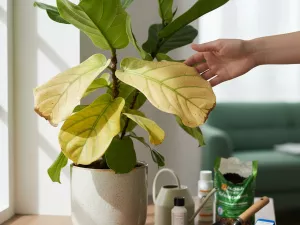
Yellow leaves on garden plants often mean something in their care or growing conditions needs adjustment. Before adding fertilizer or pesticides, review your watering routine, check that the soil drains well, confirm the plant is getting the right amount of light, and think about recent temperature or rainfall changes. These quick checks can reveal the cause and support healthy, green new growth.
Outdoor yellowing patterns and what they suggest
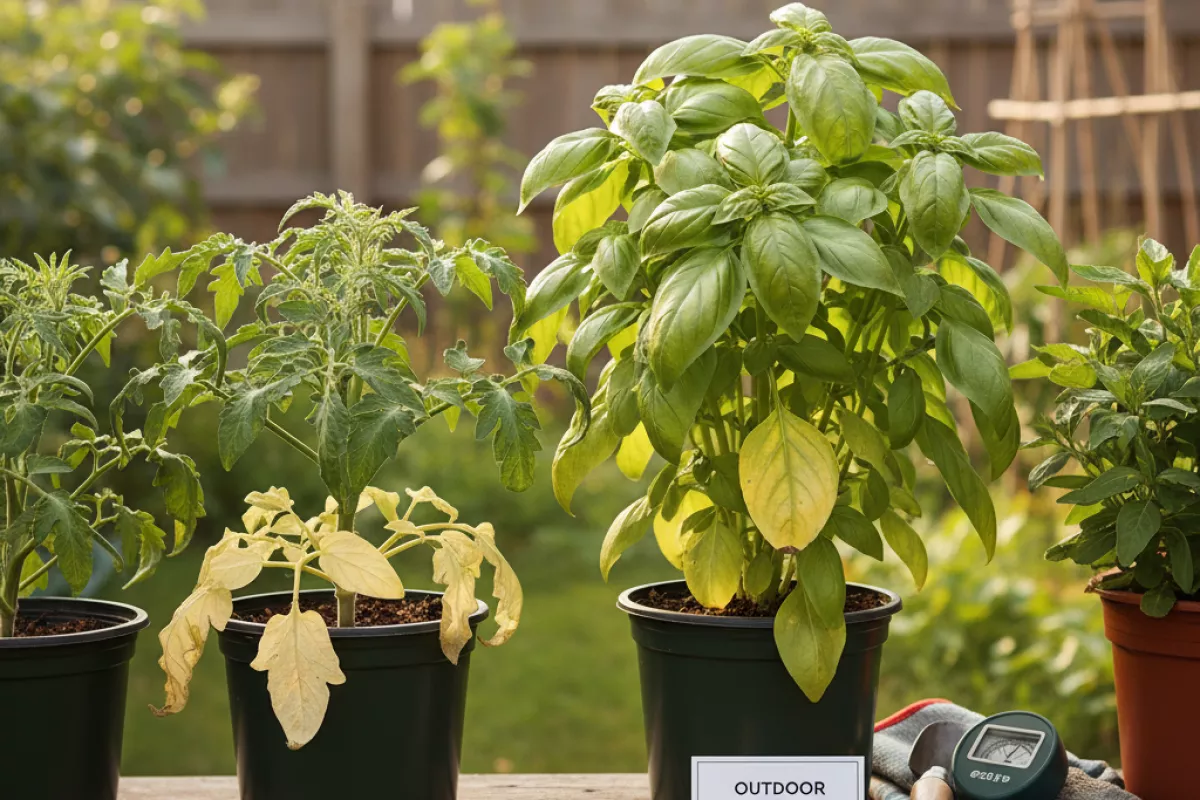
Where the yellow shows up on a plant, and how quickly it spreads, often tells you more than the color itself. Before changing fertilizer or spraying anything, look for a pattern: which leaves are affected (old vs. new), whether veins stay green, and whether the problem is limited to one side, one branch, or the whole plant.
| Yellowing pattern you see | What it commonly points to | Quick checks outdoors | What to do first |
|---|---|---|---|
| Older, lower leaves turn pale yellow first; newer growth looks better | Mobile nutrient shortage (often nitrogen); or normal aging on some plants | Is growth slow and thin? Any recent heavy rain that could have leached nutrients? Is the plant crowded or shaded? | Feed lightly with a balanced fertilizer; avoid overdoing it. If it’s just a few oldest leaves and the plant is otherwise vigorous, treat it as normal turnover. |
| New leaves are yellow or almost white, while older leaves stay greener | Iron deficiency (often from high soil pH), manganese deficiency, or root stress limiting uptake | Check if the soil is alkaline (common near concrete or in limestone areas). Look for waterlogged soil after irrigation or rain. | Improve drainage and root conditions first; then consider a chelated micronutrient if pH is high. |
| Yellowing between veins with veins staying green (interveinal chlorosis) | Iron or magnesium issues (iron tends to show on newer leaves; magnesium on older leaves) | Note leaf age affected. Check for compacted soil and inconsistent watering that can block uptake. | Correct watering and soil structure; then target the likely nutrient (magnesium for older-leaf chlorosis, iron for new-leaf chlorosis). |
| Leaf edges turn yellow, then brown and crispy (marginal scorch) | Drought stress, salt buildup, wind burn, or potassium deficiency | Feel soil 5–10 cm (2–4 in) down: dry or bone hard? Any salty crust from hard water? Is the site windy and exposed? | Deep-water and mulch; flush salts with a slow soak if needed; protect from wind. If growth remains weak, consider a balanced feed that includes potassium. |
| Yellowing plus soft, droopy leaves; soil stays wet | Overwatering, poor drainage, root rot | Dig a small test hole 15 cm (6 in) deep: is it soggy and smelly? Are roots brown and mushy? | Let soil dry between waterings; improve drainage (raised bed, organic matter). Remove severely rotted plants to protect neighbors. |
| One-sided yellowing (one branch, one face of the plant, or one side of a bed) | Localized root damage, uneven watering, herbicide drift, or a vascular disease starting in one stem | Any recent digging, mower/string-trimmer injury, or weed killer use nearby? Is irrigation reaching that side? | Fix the local cause first (water distribution, physical damage). If wilting and yellowing persist on one stem, prune it out and monitor for spread. |
| Yellow patches that later turn brown; distinct spots or halos | Leaf spot diseases, bacterial issues, or sunscald after sudden exposure | Do spots have dark borders or fuzzy growth? Did you recently prune shade away or move a plant into full sun? | Remove heavily affected leaves, improve airflow, water at soil level. For sunscald, provide temporary shade and avoid midday overhead watering. |
| General paling across the whole plant, not just certain leaves | Low light, cold stress, chronic underfeeding, or root restriction | Has it been below 10°C (50°F) at night? Is the plant shaded most of the day? Are roots cramped in a small space? | Wait out cold snaps, increase light if possible, and feed moderately. If root-bound, loosen surrounding soil or transplant when conditions are mild. |
If you’re unsure which pattern fits, start with the simplest outdoor checks: soil moisture, recent weather swings, and whether the newest leaves or the oldest leaves are affected. Those three clues usually narrow yellowing leaves down to either an uptake problem (roots, pH, water) or a true nutrient shortage.
Soil quality factors to inspect first
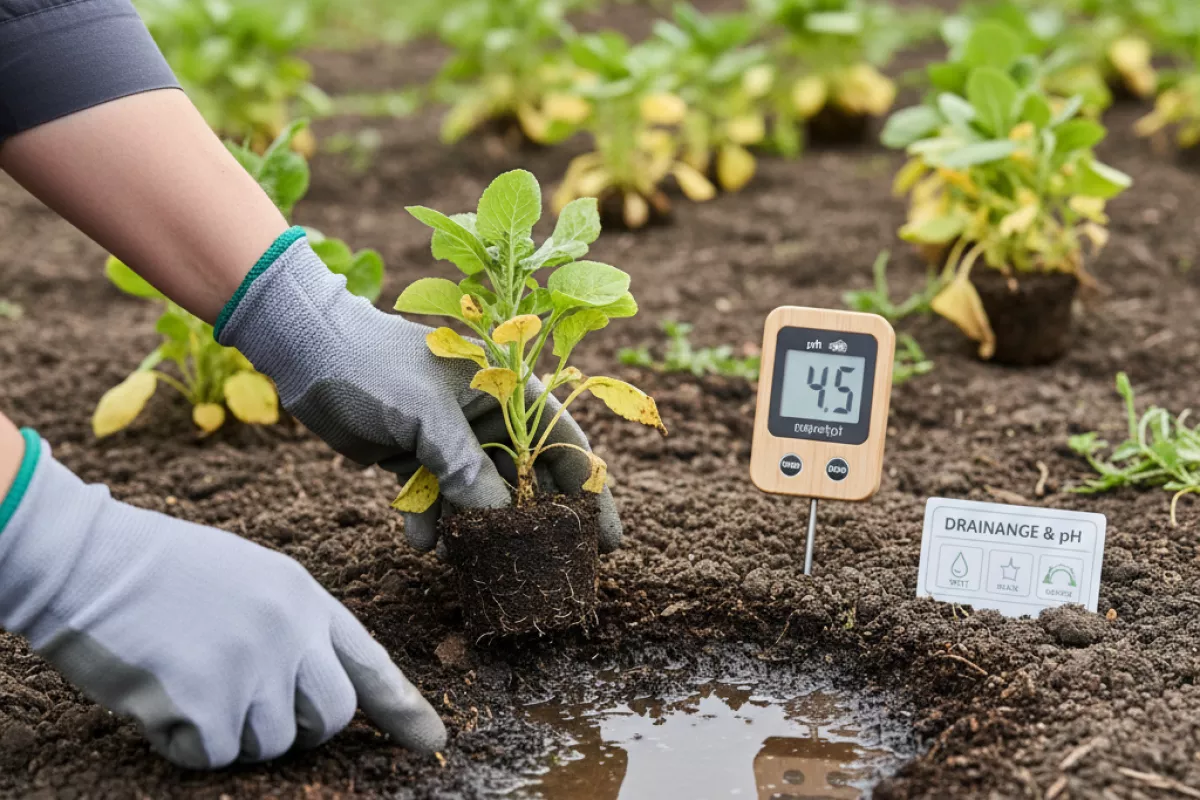
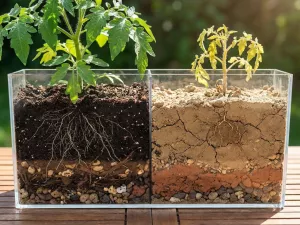
When leaves turn pale or yellow, the fastest clues are often under the surface. Before chasing pests or diseases, check whether the root zone is getting the right balance of air, water, and nutrients. Many “mystery” yellowing problems come down to drainage, pH, compaction, or a nutrient lockout rather than a true deficiency.
- Drainage and waterlogging: Roots need oxygen. If water sits on top for more than 30–60 minutes after a thorough soak, or the soil stays soggy for days, roots can’t take up nutrients and leaves yellow. Dig a small test hole about 20 cm (8 in) deep; if the bottom is gray, smells sour, or feels slimy, drainage is likely the issue.
- Compaction and poor aeration: Hard, crusted ground or soil that’s difficult to push a finger into can restrict root growth. Compacted beds commonly show overall paling plus slow growth. Loosen gently around plants (without tearing roots) and consider adding organic matter to improve structure.
- pH outside the plant’s comfort range: A pH that’s too high or too low can “lock up” iron, manganese, phosphorus, and other nutrients even if they’re present. Yellowing between leaf veins (interveinal chlorosis) on new growth often points to iron being unavailable, which is common in alkaline soil. A simple pH test of the top 10–15 cm (4–6 in) can save a lot of guesswork.
- Low organic matter: Thin, sandy soils can leach nutrients quickly, while very depleted beds struggle to hold moisture evenly. If the soil looks pale, dusty, or doesn’t form a weak clump when squeezed, it may benefit from compost to improve nutrient retention and microbial activity.
- Salt buildup from fertilizer or hard water: Excess salts can burn roots and cause yellowing with crispy edges. White crust on the surface or on pots is a hint. If you suspect this, flush the root zone with clean water: slowly run 10–20 L (2.6–5.3 gal) through a medium container, or irrigate deeply outdoors to push salts below the root area, provided drainage is adequate.
- Recent soil disturbance: Freshly turned soil, new amendments, or construction nearby can damage roots or change pH abruptly. Yellowing that starts soon after digging, transplanting, or adding strong manures is often stress-related rather than a long-term nutrient shortage.
| What you notice | Likely soil-related cause | Quick check | First fix to try |
|---|---|---|---|
| Overall yellowing plus wilting even when soil is wet | Waterlogged roots / low oxygen | Dig 20 cm (8 in); look for sour smell or gray soil | Improve drainage, water less often but deeper, raise the bed 10–20 cm (4–8 in) |
| Yellowing with slow growth; soil feels hard | Compaction | Push a trowel in; if it’s difficult, roots likely struggle too | Gently loosen, add compost, avoid working soil when wet |
| New leaves yellow between green veins | High pH causing iron/manganese unavailability | Test pH in top 10–15 cm (4–6 in) | Use acidifying amendments if appropriate; choose plants suited to your pH |
| Older leaves yellow first; plant looks “hungry” | Nitrogen shortage or leaching | Check if soil is very sandy and dries fast | Mulch 5–8 cm (2–3 in), add compost, feed lightly and consistently |
| Leaf edges brown; white crust on soil or pot | Salt accumulation | Look for crust; review recent fertilizing frequency | Flush with water, reduce fertilizer strength, ensure good drainage |
If you correct a soil problem, expect leaf color to improve on new growth first. Older yellow leaves rarely turn fully green again, but you should see healthier, deeper color within 1–3 weeks (7–21 days) as roots recover and nutrient uptake normalizes.
Weather stress and seasonal leaf reactions
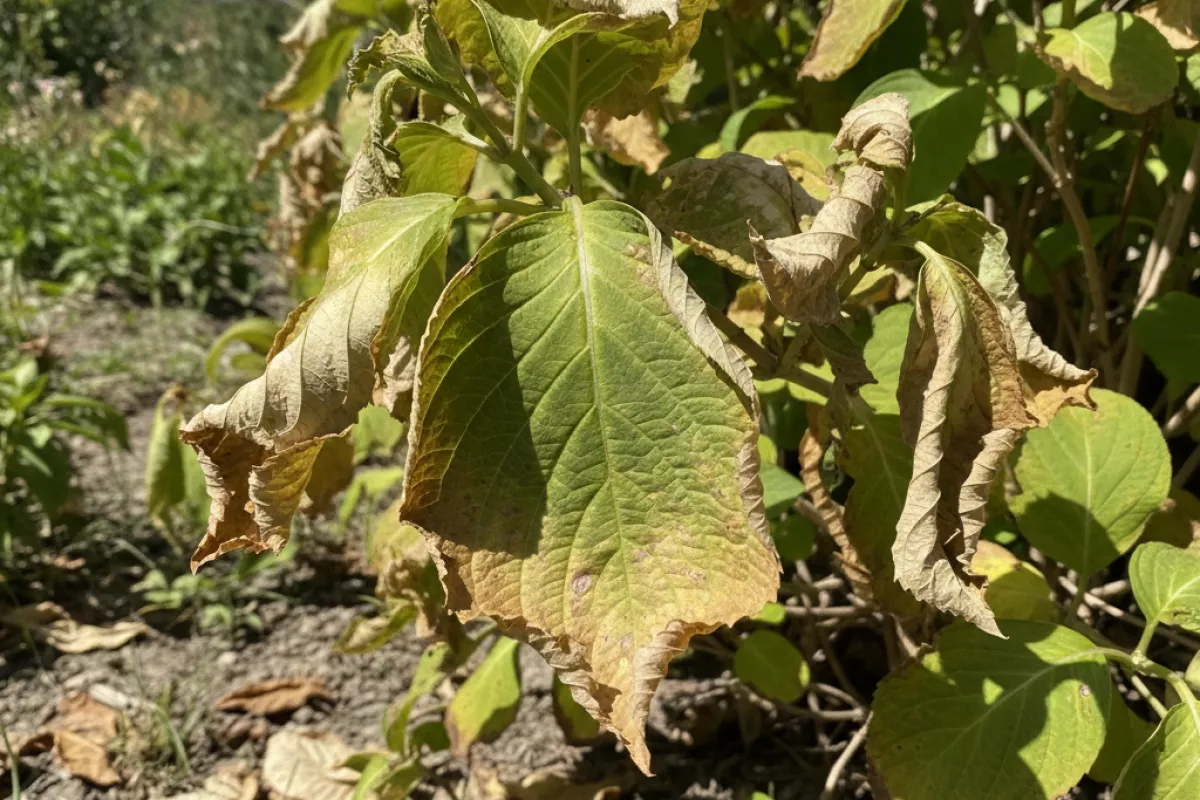
Rapid shifts in temperature, light, wind, and moisture can make leaves fade, blotch, or turn yellow even when pests and nutrients aren’t the main issue. The pattern often shows up soon after a cold snap, heat wave, dry spell, or a sudden change in sun exposure, and it may affect the most exposed leaves first.
| Weather or seasonal trigger | Typical yellowing pattern | Quick checks | What helps most |
|---|---|---|---|
| Heat stress and hot, drying wind | Leaf edges yellow then brown; midday wilting; sun-facing side looks worse | Soil dry 5 cm (2 in) down; pot feels very light; crispy margins | Deep watering early; mulch 5–8 cm (2–3 in); temporary shade cloth; avoid heavy feeding until growth resumes |
| Cold nights, frost, or chilly soil in spring | Patchy yellowing that can turn black or translucent; newest growth may stall | Damage after nights near 0°C (32°F); tender plants hit first; stems may look water-soaked | Cover plants overnight; wait to prune until you see new growth; keep soil evenly moist, not soggy |
| Overwatering after storms or poor drainage | Overall pale yellow; older leaves drop; growth looks soft | Soil stays wet >48 hours (>2 days); sour smell; water pools | Let soil dry between waterings; improve drainage; raise containers off saucers; consider repotting if roots are brown and mushy |
| Drought stress (including “hidden drought” in windy weather) | Lower leaves yellow and shed; leaves curl; plant looks dull or gray-green | Dry soil deeper than 10 cm (4 in); cracks in ground; drooping that improves after watering | Slow soak to wet root zone; water in the morning; add organic matter; group pots to reduce evaporation |
| Sunscald after moving a plant into brighter light | Bleached yellow patches, sometimes papery; mostly on upper/outer leaves | Recent change from shade to full sun; damage on the “top” surface | Harden off over 7–14 days (1–2 weeks); provide afternoon shade; don’t remove all damaged leaves at once |
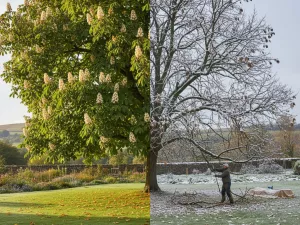
| Seasonal senescence (natural aging in fall or before dormancy) | Even yellowing of older leaves; gradual leaf drop; overall plant still looks “in season” | Timing matches autumn; no spotting, mushy stems, or rapid collapse | Reduce fertilizer; keep watering moderate; clean up fallen leaves; accept some yellowing as normal |
If you’re unsure whether it’s weather-related or a deeper problem, watch the speed and location of the change. Fast yellowing after an extreme day usually points to exposure or moisture swings, while slow yellowing that starts on older leaves can be seasonal or tied to root conditions.
- Check the newest leaves: If new growth stays green and only older leaves fade, the plant may be cycling leaves naturally or reacting to short-term stress.
- Look for a “boundary line”: Sunscald often makes sharp-edged pale patches, unlike nutrient issues that tend to be more evenly distributed.
- Don’t rush to fertilize: After heat, cold, or waterlogging, feeding can worsen stress. Stabilize watering first, then reassess after 7–10 days (1–1.5 weeks).
- Prune carefully: Remove fully dead leaves, but keep partly green ones until the plant rebounds; they still photosynthesize and help recovery.
Pest activity that causes discoloration
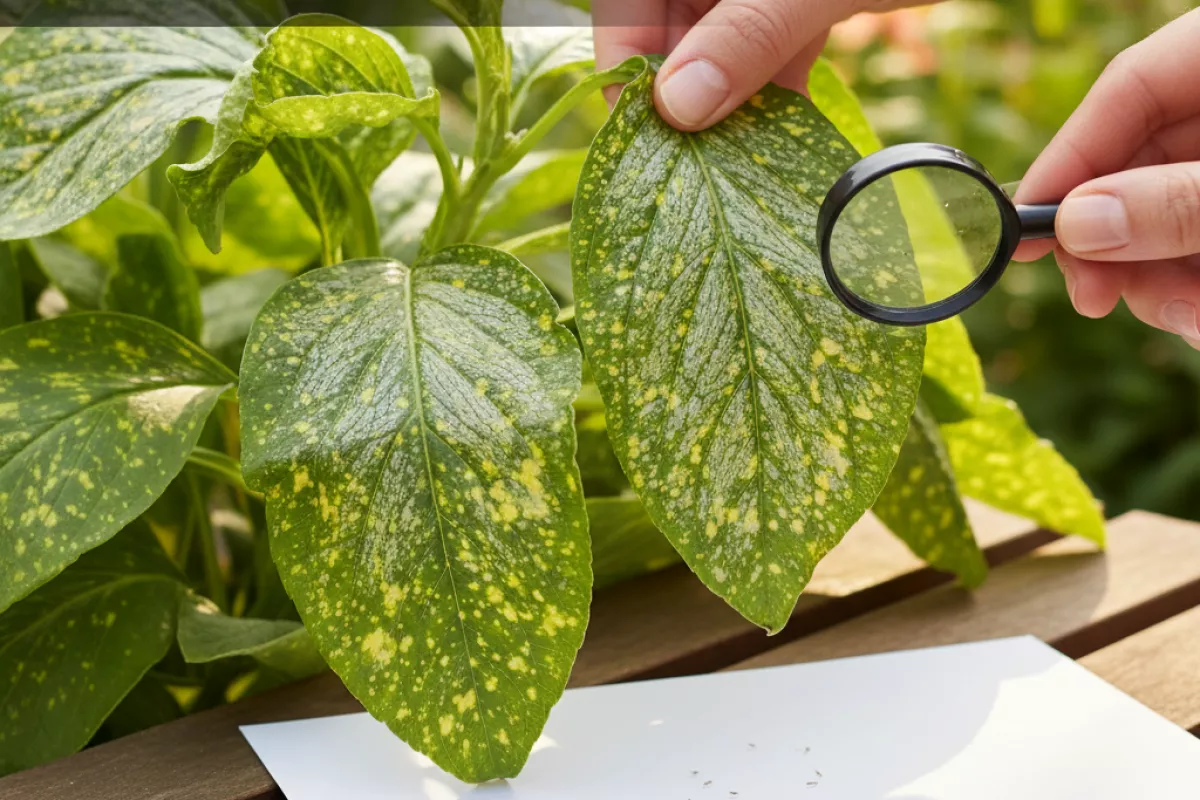
Yellow patches, pale speckling, or leaves that look “washed out” often come from insects and mites feeding on sap or scraping leaf tissue. The pattern matters: some pests cause fine stippling, others leave silvery streaks, sticky residue, or curling that makes the plant look nutrient-starved even when the soil is fine.
Start by checking the undersides of leaves and the newest growth. Use a hand lens if you have one, and tap a suspect leaf over white paper to spot tiny movers. Also look for honeydew (a sticky shine), sooty mold (black film growing on honeydew), webbing, and distorted new leaves—these clues help separate bug damage from watering or fertilizer issues.
| Likely pest | Typical discoloration pattern | Where to look | What helps (least-to-most intensive) |
|---|---|---|---|
| Aphids | Yellowing and curling on tender tips; sticky leaves; black sooty mold may follow | New shoots, flower buds, undersides of soft leaves | Strong water spray; pinch off heavily infested tips; insecticidal soap or horticultural oil, repeated every 7–10 days |
| Spider mites | Fine pale stippling that turns into bronzing/yellowing; leaves may look dusty; light webbing in bad cases | Undersides of leaves, especially in hot, dry spots | Rinse foliage; raise humidity around plants; miticide/soap labeled for mites, applied thoroughly to undersides |
| Whiteflies | General leaf paling/yellowing; sticky honeydew; leaves may drop early | Undersides—adults flutter up when disturbed | Yellow sticky traps; vacuum or rinse adults; soap/oil sprays targeting nymphs on leaf undersides |
| Thrips | Silvery streaks or scarring with small black specks (frass); distorted new growth | Inside flowers, leaf folds, new growth | Remove damaged blooms; rinse; spinosad or soap per label, repeating to catch new hatch |
| Scale (soft or armored) | Slow decline with yellowing; sticky honeydew with soft scale; bumps on stems/leaves | Stems, leaf midribs, branch crotches | Scrape/wipe off; prune heavily infested parts; horticultural oil to smother crawlers (timing matters) |
| Mealybugs | Patchy yellowing and wilting; cottony clusters; sticky residue | Leaf axils, stem joints, undersides, pot rims | Swab with 70% isopropyl alcohol; rinse; follow with soap/oil applications weekly until gone |
To avoid chasing the wrong problem, confirm active feeding before treating. If you see crisp yellow edges without insects, or older leaves yellow evenly first, you may be looking at nutrition or watering instead. But if the discoloration comes with stippling, silvering, sticky shine, or distorted new leaves, a pest is a strong suspect.
- Check timing: Rapid color change over a few days often points to sap-suckers; slower, uniform fading can be cultural stress.
- Target the undersides: Most sprays fail because they miss where pests hide and feed.
- Repeat treatments: Many products don’t kill eggs, so plan on reapplying at 7–10 day intervals to break the cycle.
- Test first: Spray one small section and wait 24 hours before treating the whole plant, especially in heat above 29°C (85°F).
Water drainage and root oxygen levels
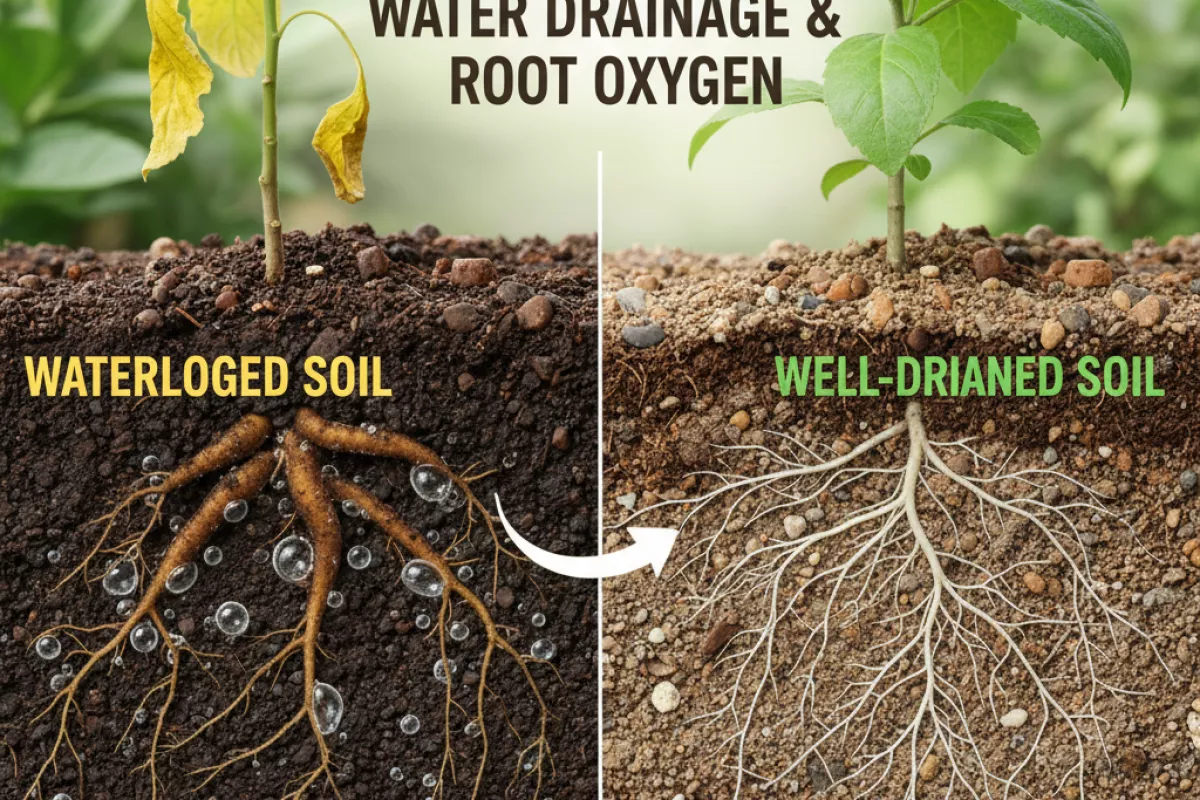
Pale or yellow leaves often trace back to what’s happening below the surface: roots need both moisture and air. When soil stays saturated, the tiny air pockets fill with water, roots struggle to “breathe,” and the plant can’t take up nutrients efficiently. The result can look like a deficiency even when the soil contains plenty of nutrients.
On the other hand, soil that drains too fast can dry out between waterings, stressing roots and causing similar yellowing from interrupted uptake. The goal is steady moisture with enough pore space for oxygen.
- Clues it’s too wet: soil feels soggy 5–10 cm (2–4 in) down a day or two after watering; a sour smell; fungus gnats; lower leaves yellow first; growth looks limp even though the soil is wet.
- Clues it’s too dry: soil pulls away from the pot edge; it’s dusty and hard 5–10 cm (2–4 in) down; leaf edges crisp; yellowing comes with wilting during the warm part of the day.
- Clues it’s poor aeration/compaction: water puddles on top before soaking in; the surface crusts; roots circle tightly in containers; you see slow recovery after watering.
| What you observe | What it suggests | What to do next |
|---|---|---|
| Water sits on the surface for 30–60 seconds before soaking in | Compacted soil or a hydrophobic (water-repelling) mix | Gently loosen the top 2–5 cm (1–2 in); water slowly in pulses; add organic matter to beds or refresh potting mix |
| Soil is still wet 48 hours after watering; leaves yellow and feel soft | Overwatering or poor drainage limiting root oxygen | Let the top 2–3 cm (1 in) dry before watering again; check that pots have open drainage holes; avoid saucers holding water |
| Plant wilts in heat but perks up at night; soil is dry 5–10 cm (2–4 in) down | Underwatering or very fast drainage | Water deeply until moisture reaches the root zone; mulch beds 5–8 cm (2–3 in) to slow evaporation; consider a mix that holds moisture better |
| Yellowing plus stunted growth; roots look brown/black and may smell | Root damage from prolonged saturation (rot risk) | Remove the plant from the pot or dig carefully; trim mushy roots; repot into a fresh, airy mix; improve bed drainage with compost and, if needed, raised planting by 15–30 cm (6–12 in) |
If you’re unsure, do a quick “finger test” or use a moisture meter: check moisture at root depth, not just the surface. In containers, a simple lift test helps too—pots feel much lighter when the mix is dry. Adjust watering based on how quickly the root zone dries, not on the calendar.
For garden beds, drainage problems often come from heavy clay or a low spot that collects runoff. Mixing in compost improves structure over time, while planting on a slight mound or raised area can keep roots from sitting in water after rain.
Nutrient balance in garden soil
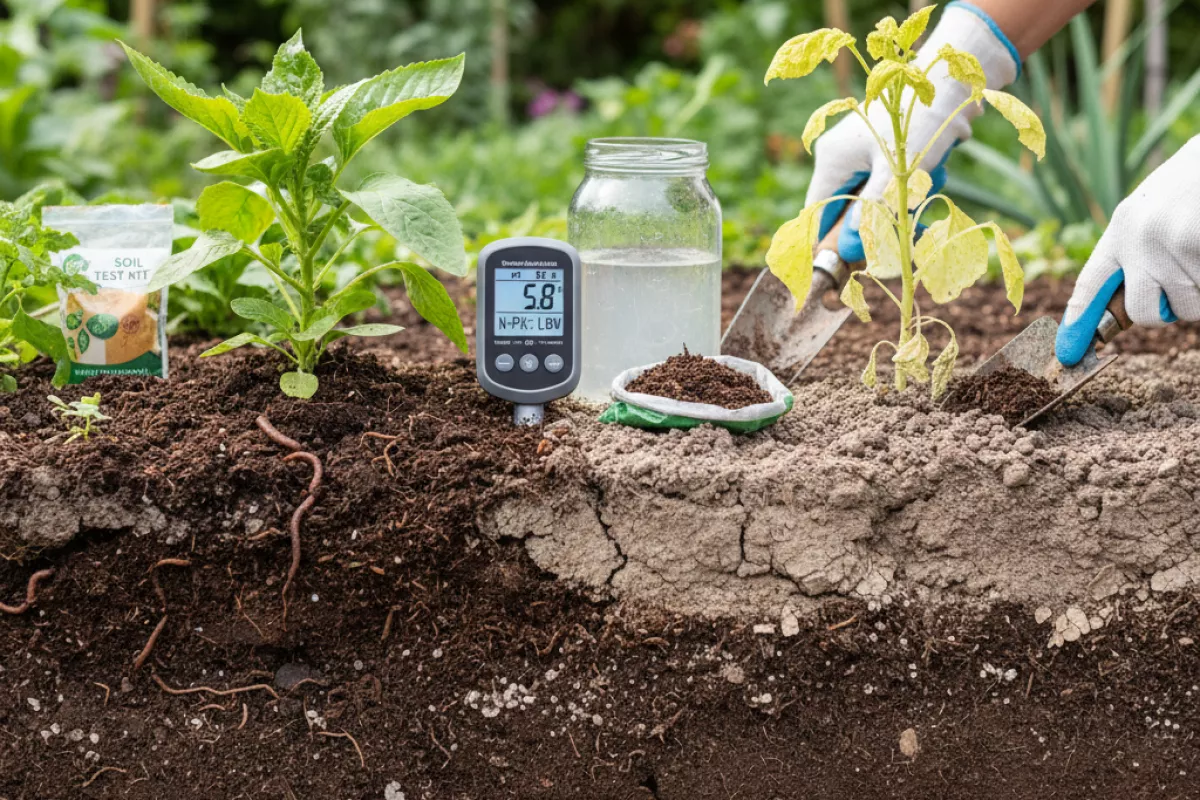
Yellow leaves often trace back to a mismatch between what roots can take up and what the plant needs right now. That mismatch can come from too little fertilizer, too much of the wrong kind, or conditions (like pH or waterlogging) that “lock up” nutrients even when they’re present.
Before adding anything, check the basics: how recently the bed was fertilized, whether compost or manure was added, and if the plant is in a container where nutrients wash out quickly. If you can, do a simple soil test for pH and the main nutrients; it’s the fastest way to avoid guessing and overcorrecting.
| Likely imbalance | What yellowing looks like | Common triggers | What to do next |
|---|---|---|---|
| Nitrogen (N) deficiency | Older, lower leaves turn pale green to yellow first; overall growth slows | Leached soils after heavy rain, sandy beds, low organic matter, frequent container watering | Feed with a balanced fertilizer or a nitrogen-leaning one; top-dress with compost 2–5 cm (0.8–2 in) and water in |
| Iron (Fe) deficiency (often pH-related) | New leaves yellow between veins while veins stay greener (interveinal chlorosis) | High pH (alkaline) soil, over-liming, cold/wet roots, compacted ground | Confirm pH; improve drainage/aeration; consider chelated iron for a quick fix while addressing pH |
| Magnesium (Mg) deficiency | Older leaves show yellowing between veins; edges may curl; green “Christmas tree” pattern on some plants | Acidic soils, potassium-heavy feeding, prolonged rainfall | Use a Mg source suited to your pH (for example, dolomitic lime if soil is acidic); avoid overdoing potassium |
| Potassium (K) deficiency | Leaf edges yellow then brown (scorching), often on older leaves; weak stems | Light soils, heavy cropping without replenishment, imbalanced fertilizers | Apply a balanced fertilizer; add compost; keep watering even to reduce edge burn |
| Overfertilization / salt buildup | Yellowing with brown, crispy tips; sudden wilt despite moist soil | Too-strong feeds, frequent liquid fertilizer, slow-release applied too heavily, poor drainage in pots | Flush containers with water until it runs freely (at least 2–3 pot volumes, e.g., 6–9 L for a 3 L pot (1.6–2.4 gal for a 0.8 gal pot)); pause feeding and reassess |
| pH-driven nutrient lockout (multiple nutrients) | General paling, mixed patterns, poor response to feeding | Soil pH far from the plant’s preference, excess lime or sulfur, alkaline irrigation water | Test pH; adjust gradually (changes take weeks to months); prioritize organic matter and consistent moisture while correcting |
- Match the fix to the leaf age. Yellowing on older leaves points more toward mobile nutrients (like nitrogen or magnesium). Yellowing on new growth suggests issues like iron availability or root stress.
- Don’t “stack” products. Compost plus a mild, balanced feed is usually safer than combining multiple targeted amendments at once.
- Watering affects uptake. Roots in soggy soil can’t absorb well, and very dry soil can concentrate salts. Aim for steady moisture rather than extremes.
- Give changes time. After correcting a deficiency, new growth should look better first; older yellow leaves often won’t turn fully green again.
Quick inspection routine for gardeners
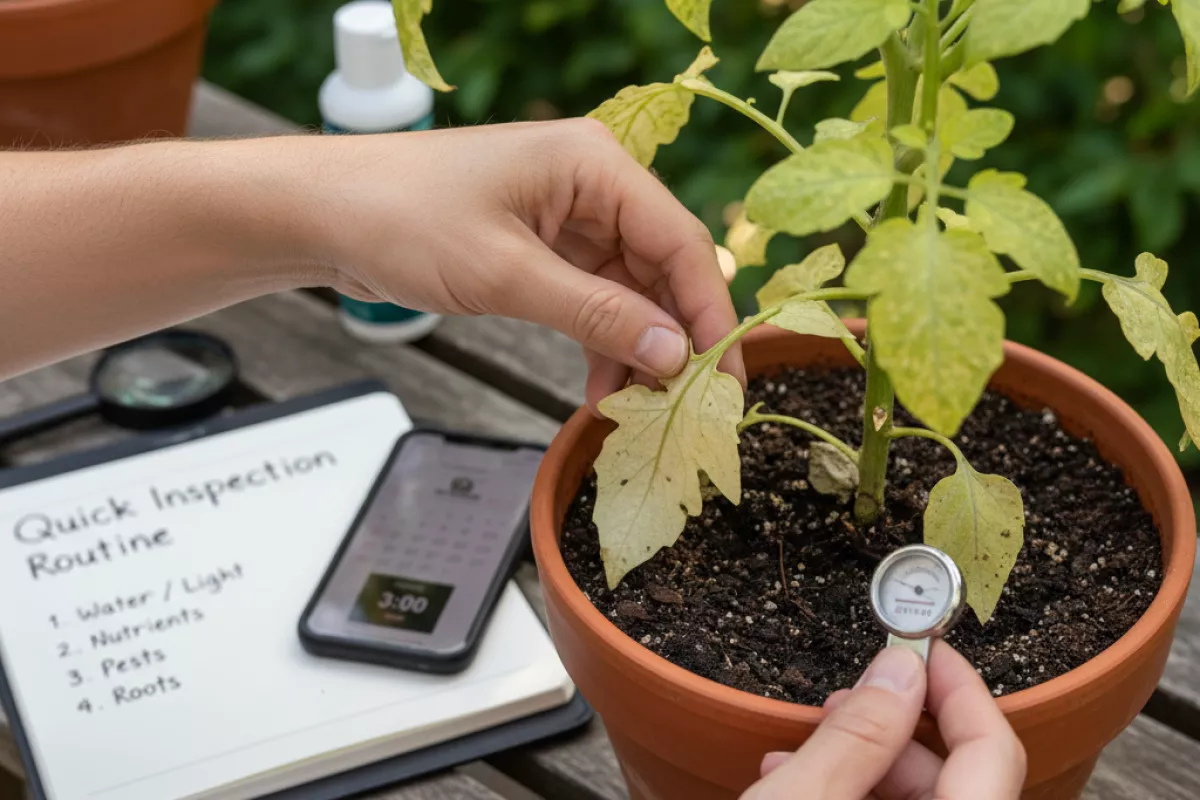
When leaves start turning pale or yellow, you’ll get answers faster by checking the plant in a consistent order. Start with the simplest, most common issues (water and light), then move to nutrients, pests, and root problems. Take 2–3 minutes per plant and note what you see before making changes.
-
Confirm the pattern of yellowing
- Older leaves first often points to mobile nutrient shortages (commonly nitrogen) or normal aging.
- New growth first can suggest iron or manganese issues, cold stress, or root trouble limiting uptake.
- Between veins yellow, veins stay green (interveinal chlorosis) frequently indicates iron or magnesium problems depending on leaf age.
- Spots, rings, or patchy blotches lean toward pests, disease, spray burn, or uneven watering.
-
Check soil moisture at root depth
- Push a finger 5–8 cm (2–3 in) into the soil (or use a trowel). If it’s wet and cool and stays that way for days, suspect overwatering or poor drainage.
- If it’s dry and dusty at that depth, suspect underwatering or hydrophobic potting mix.
- In containers, lift the pot: very light usually means dry; heavy for days can mean waterlogging.
-
Look for drainage and compaction clues
- Water pooling for more than 10–15 minutes after irrigation suggests slow drainage.
- Soil that’s hard to push a finger into can be compacted; roots may be struggling for air.
- In pots, confirm drainage holes are open and not blocked by roots or debris.
-
Scan light and temperature exposure
- Compare the yellowing side to the shaded side. Uneven color can come from too much sun, too little sun, or reflected heat.
- Recent cold nights below 10°C (50°F) can slow nutrient uptake, especially in warm-season crops.
- Heat spikes above 32°C (90°F) can cause temporary chlorosis and leaf drop, particularly in containers.
-
Inspect leaves closely for pests and residue
- Check the undersides: look for mites (fine stippling), aphids (clusters), whiteflies (tiny moth-like adults), or thrips (silvery streaks).
- Sticky shine (honeydew) or black sooty film points to sap-sucking insects.
- Fine webbing between stems and leaves is a red flag for spider mites.
-
Review feeding and pH-related uptake issues
- If you haven’t fertilized in 4–6 weeks during active growth, a mild deficiency is plausible (especially in pots).
- If you fertilized heavily recently and tips are brown or crispy, consider salt stress; flush containers with water equal to 2–3× the pot volume (for example, 6 L for a 2 L pot; 1.6 gal for a 0.5 gal pot).
- Persistent interveinal yellowing despite feeding can be pH-related (nutrients present but unavailable), especially in alkaline soils or hard-water situations.
-
Check the roots if the plant is in a pot (or easily lifted)
- Healthy roots are usually firm and light-colored; dark, mushy roots suggest rot from excess moisture.
- Tightly circling roots indicate the plant is root-bound; yellowing can follow because water and nutrients move unevenly.
-
Make one change, then watch for new growth response
- Correct watering first; it’s the most common driver of yellow leaves and the easiest to overcorrect.
- Give 7–14 days to judge improvement on new leaves; old yellow leaves often won’t turn green again.
- If symptoms spread quickly, isolate the plant (if possible) and remove heavily affected leaves to reduce pest or disease pressure.
| What you notice | Most likely check next | Quick confirmation |
|---|---|---|
| Older leaves yellow evenly, plant looks pale | Nitrogen shortage or general underfeeding | Slow growth; improvement shows on new leaves 7–14 days after a balanced feed |
| New leaves yellow, veins stay greener | Iron uptake issue (often pH or cold/wet roots) | Soil stays wet/cold; hard water use; symptoms strongest on newest growth |
| Yellowing plus limp stems, soil stays wet | Overwatering, poor drainage, root rot risk | Musty smell; pot feels heavy; roots dark or soft if inspected |
| Yellowing plus dry, crispy edges | Underwatering, heat stress, or salt buildup | Soil dry 5–8 cm (2–3 in) down; leaf scorch on sun-exposed side; white crust on soil/pot rim |
| Speckling, stippling, or patchy yellow with tiny dots | Mites, thrips, or other sap-suckers | Underside inspection shows insects, webbing, or black specks (frass) |
| Yellow leaves with distinct spots or halos | Leaf spot disease or spray burn | Spots expand after wet weather; pattern matches recent spraying or sun-after-spray timing |
If you’re unsure after the checks, take a photo of the whole plant and one close-up of the newest and oldest leaves, then repeat the same inspection 3–4 days later. Changes over time (spreading fast vs. stabilizing) often narrow down whether you’re dealing with a watering problem, a nutrient uptake issue, or an active pest/disease situation.