Balanced Watering Techniques for Houseplant Growth

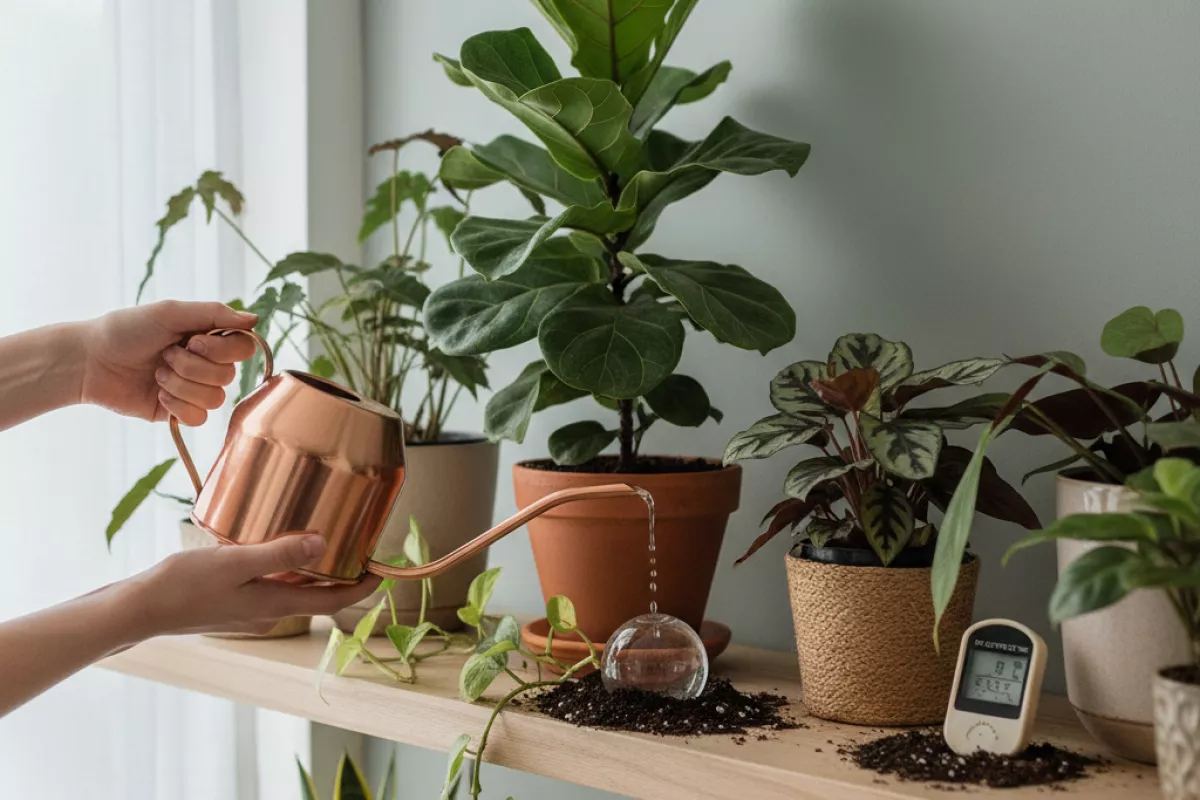 This article explains why steady moisture matters more than watering often, how plants respond to uneven watering, and techniques to keep hydration stable. It covers matching watering to growth stages, how container size affects balance, visual signs you’re doing it right, and mistakes that cause moisture swings.
Balanced watering is the easiest way to keep houseplants growing steadily, and it works best when you respond to conditions instead of following a fixed schedule. Learn to check soil moisture and plant cues, adjust for light, temperature, and season, and prevent the common cycle of overwatering and drought that can rot roots, stall new leaves, and weaken stems.
Why balance matters more than frequency
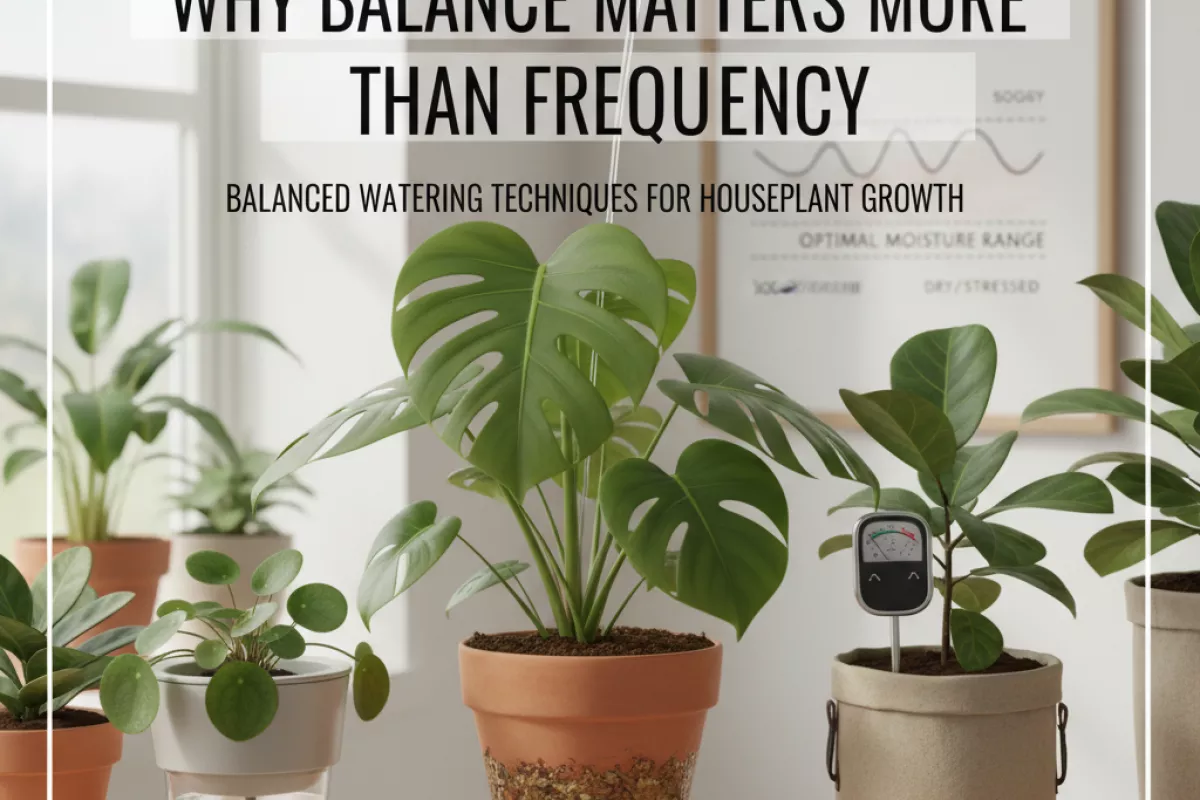
Most houseplants don’t fail because you watered “too often” or “not often enough”—they struggle because the root zone swings between extremes. Roots need a steady mix of moisture and oxygen. When the pot stays soggy, air pockets disappear and roots can’t breathe; when it dries to the point of stress, fine feeder roots die back and the plant has to rebuild them before it can grow again.
Think of watering as managing a range rather than hitting a calendar date. The same plant can need water every 3 days in summer and every 10–14 days in winter, and both can be “right” if the soil is allowed to drain well and then re-wetted before it becomes bone-dry. Consistency comes from reading the plant and the potting mix, not from repeating a schedule.
- Oxygen is as important as water. Saturated soil pushes out air, which slows nutrient uptake and invites rot. A thorough watering followed by proper drainage restores a healthier air-water balance.
- Roots respond to patterns. Repeated drought-to-drench cycles can cause leaf drop, crispy tips, and stalled growth because the plant keeps shifting into survival mode.
- Pot size and mix change everything. A 10 cm (4 in) pot can dry in a day or two, while a 25 cm (10 in) pot may hold moisture for a week or more. Chunky mixes dry faster; peat-heavy mixes hold water longer.
- Light and temperature drive demand. In brighter windows and warmer rooms, plants transpire more and use water faster. In low light or cooler conditions, the same “weekly” watering can become too much.
- Even “underwatering” symptoms can come from overwatering. Wilted leaves aren’t always thirst—damaged roots from constant wetness can’t move water upward, so the plant droops despite wet soil.
A simple way to aim for steadiness is to water thoroughly until excess drains, then wait until the top 2–5 cm (1–2 in) feels dry for many common tropical houseplants. For succulents and cacti, let the mix dry much deeper before watering again; for moisture-lovers, don’t let the pot dry out completely. The goal is a repeatable rhythm where the soil cycles from “evenly moist” to “slightly dry,” not from “swamp” to “dust.”
How plants react to uneven watering
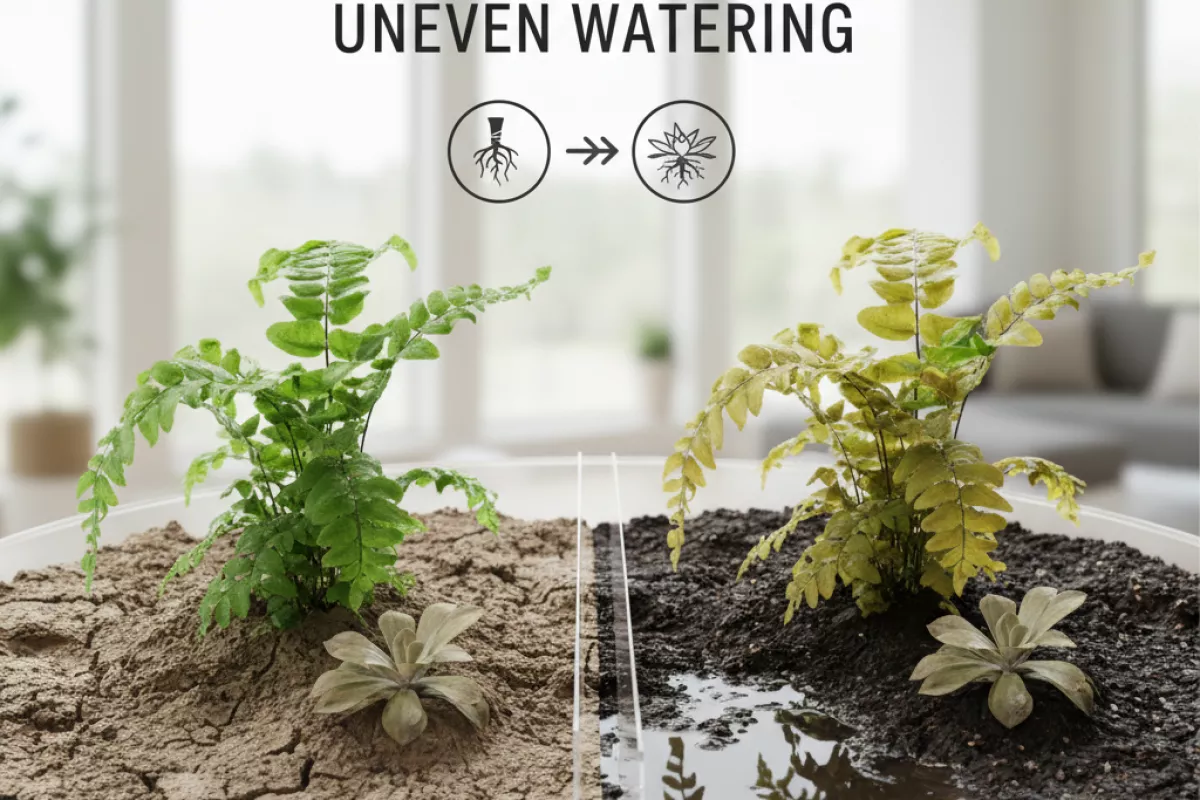
Inconsistent moisture forces a plant to switch between “survival modes”: conserving water when the pot dries out, then coping with low oxygen when it’s suddenly soaked. That back-and-forth is stressful because roots, leaves, and microbes in the potting mix all adjust at different speeds.
When the root zone dries too far, fine feeder roots can die back, so the plant briefly has less ability to take up water even after you rewater. When the mix stays soggy, air pockets fill with water and roots can’t breathe; nutrient uptake slows and the plant may look thirsty despite wet soil.
- Leaf droop that “doesn’t match” the soil: Wilting can happen in a dry pot, but it can also show up in a wet pot when roots are oxygen-starved and can’t move water upward.
- Yellowing leaves (often lower/older first): Repeated swings can interrupt nitrogen and magnesium uptake; older leaves are sacrificed first as the plant reallocates resources.
- Crispy tips and edges: After a dry spell, salts and minerals concentrate in the mix; the next watering can push that concentrated solution into leaf tissue, scorching margins.
- Leaf drop after a “rescue soak”: A plant that was very dry may shed leaves because it can’t support the existing canopy while rebuilding roots.
- Slow growth and smaller new leaves: Growth hormones respond to drought signals; even short dry-downs can reduce cell expansion, so new foliage emerges undersized.
- Fungus gnats and musty smell: Frequent overwatering phases keep the top layer damp, encouraging gnat larvae and microbial imbalance.
| Uneven-watering pattern | What’s happening in the pot | Common plant signals | Gentle correction |
|---|---|---|---|
| Long dry gaps, then heavy soaking | Feeder roots die back; rewetting can be uneven if the mix turns hydrophobic | Sudden wilt, then partial recovery; crispy tips; leaf drop after watering | Rehydrate gradually (two smaller waterings 10–15 min apart); aim for even moisture rather than extremes |
| Frequent small sips that never reach the lower roots | Top stays damp while the bottom remains dry; roots concentrate near the surface | Plant dries quickly; weak anchoring; inconsistent perkiness | Water until a little drains out, then empty the saucer; repeat only when the upper layer has started to dry |
| Wet for days, then allowed to bone-dry | Root stress from low oxygen followed by drought stress; microbes fluctuate | Yellowing, soft stems, then crisping; “thirsty” look in wet soil | Improve aeration (chunkier mix, drainage checks); use a consistent dry-down target rather than waiting for collapse |
| Watering on a fixed calendar despite seasonal changes | Evaporation and uptake slow in cooler, darker conditions; excess water lingers | Stalled growth; persistent dampness; fungus gnats | Adjust to conditions: in cooler rooms, extend intervals; in brighter/warmer rooms, shorten them |
One useful clue is timing: if a plant perks up within 30–60 min (0.5–1 hr) after watering, it was likely under-watered. If it stays limp for a day or two (1–2 days) even though the mix is wet, roots may be struggling, and the fix is usually better airflow and steadier moisture rather than more water.
Techniques for maintaining stable hydration
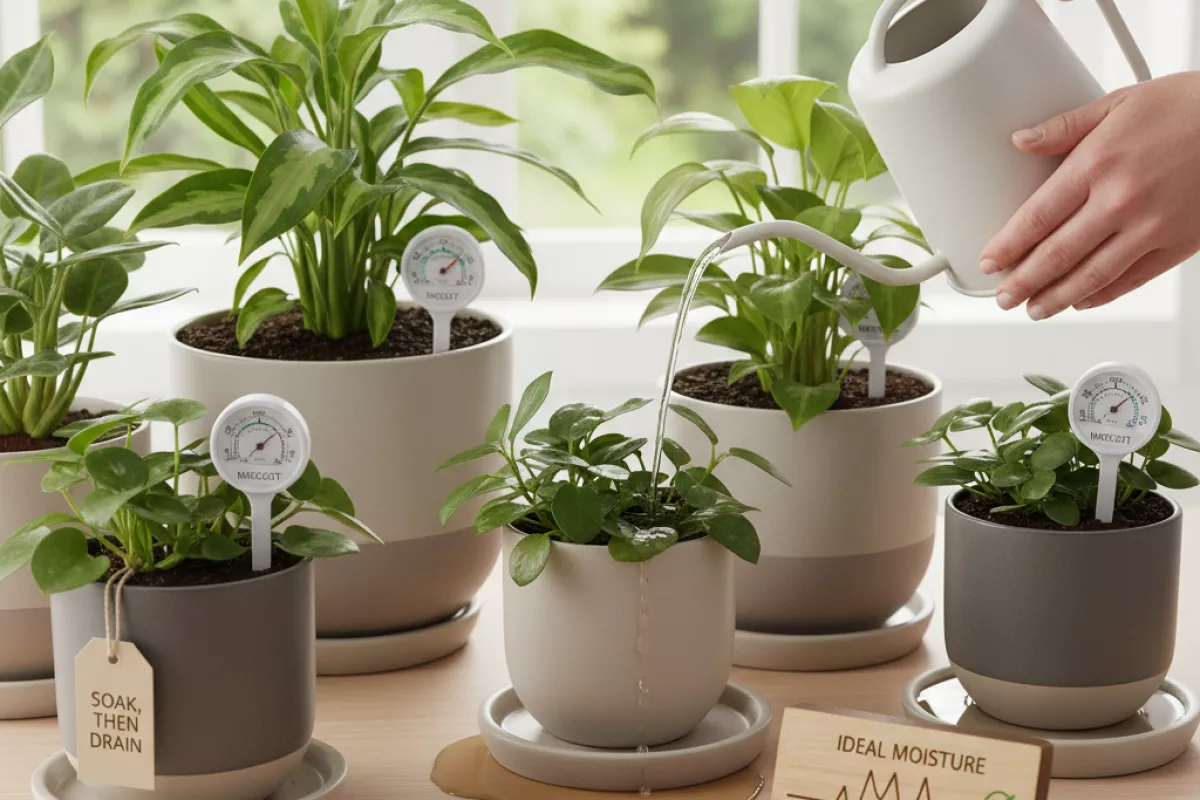
Consistent moisture comes from controlling three things: how much water the potting mix can hold, how quickly it dries, and how reliably you decide when to water. The goal isn’t to keep soil soggy; it’s to avoid the swing between bone-dry and waterlogged that stresses roots and slows growth.
- Use the “soak, then drain” method. Water until you see steady runoff, then let the pot drain completely. This flushes salts and ensures the whole root zone is evenly moistened instead of just the top 2 cm (0.8 in).
- Match the pot to your watering habits. Terracotta breathes and dries faster (helpful if you tend to overwater). Plastic or glazed pots hold moisture longer (helpful if you forget). Whatever you choose, make sure there’s a drainage hole so excess water can leave the container.
- Build a mix that buffers moisture. If your soil dries too fast, blend in water-holding ingredients like coco coir or fine bark. If it stays wet too long, add aeration like perlite or pumice. A practical target is a mix that stays lightly damp for a few days, not saturated for a week.
- Check moisture at root depth, not just the surface. Push a finger or wooden skewer 5–7 cm (2–3 in) down. If it comes out cool and darkened with damp mix, wait; if it’s dry and clean, it’s time. This avoids “false dry” topsoil that tricks you into watering early.
- Water by plant signals, then confirm with the soil. Slight loss of leaf firmness, duller leaves, or a lighter pot can indicate thirst, but always verify the mix before adding water. Many plants droop from overwatering too, so the soil check prevents guesswork.
- Adjust for light and temperature shifts. A plant near a bright window can dry out much faster than one 1 m (3.3 ft) back. Likewise, a room at 24°C (75°F) will pull moisture from soil quicker than 18°C (64°F). Reassess after moving a plant, turning on heating, or changing seasons.
- Bottom-water when the mix becomes hydrophobic. If water runs down the sides and out the bottom, set the pot in a tray with 2–3 cm (0.8–1.2 in) of water for 15–30 minutes, then drain. This rehydrates evenly without repeated top watering that still fails to penetrate.
- Use a simple schedule as a reminder, not a rule. Checking every 3–4 days is fine, but watering should depend on moisture level. A “calendar-only” routine is how plants end up overwatered in winter and underwatered in summer.
- Keep humidity and airflow balanced. Higher humidity slows evaporation; strong airflow speeds it up. If you run a fan or have a drafty spot, expect to water more often. If humidity sits around 50% (about 50% RH) instead of 30% (about 30% RH), the same pot may stay moist longer.
- Empty saucers and cachepots after watering. Standing water at the base keeps the lower mix saturated and can starve roots of oxygen. Give it 10–15 minutes for drainage, then pour off what collects.
| Situation you notice | Likely cause | What to do next |
|---|---|---|
| Top looks dry, but skewer is damp at 5–7 cm (2–3 in) | Surface drying faster than the root zone | Wait 1–2 days, then recheck at depth; consider a light mulch layer 1 cm (0.4 in) to slow surface evaporation |
| Water runs straight through and soil pulls from pot edges | Hydrophobic mix from drying too far | Bottom-water 15–30 minutes; next time water earlier, before the mix fully dries |
| Leaves yellowing and soil stays wet for 7+ days | Low oxygen in the root zone (too dense mix, low light, or oversized pot) | Let it dry further between waterings; increase light; repot into a smaller container or add aeration (perlite/pumice) |
| Plant wilts quickly and pot feels light within 1–2 days | Fast drying from high light/heat, small pot, or very airy mix | Water thoroughly; move 30 cm (12 in) back from intense sun or raise humidity; consider a slightly larger pot at next repot |
If you want one habit that makes the biggest difference, it’s this: measure moisture where the roots actually are. Everything else—pot choice, mix tweaks, and timing—gets easier once you stop watering based on the top layer alone.
Matching watering to plant growth stages
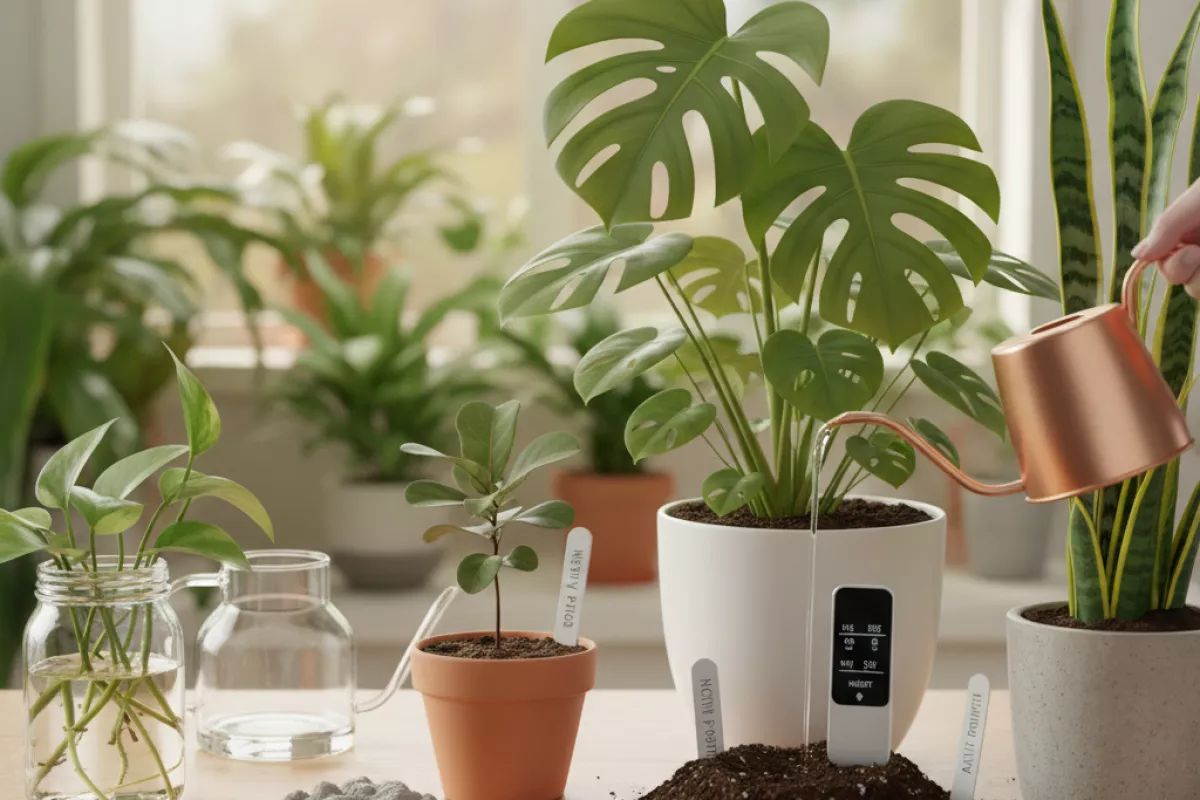
Water needs aren’t static; they shift with how actively a houseplant is building roots, leaves, and stems. When you align your routine with the plant’s current phase, you’ll see fewer yellow leaves, less fungus gnat activity, and steadier growth. The goal is to keep the root zone evenly aerated while supplying enough moisture to match demand.
| Growth stage | What’s happening | How to water | What to watch for |
|---|---|---|---|
| Propagation / newly potted | Limited roots; water uptake is slow and uneven. | Keep the mix lightly moist, not saturated. Water small amounts more often, and avoid leaving runoff sitting in the saucer. | Wilting with wet soil (root stress), algae on the surface, or a sour smell from the pot. |
| Active growth (spring–summer for many plants) | New leaves and roots increase water use; evaporation is higher. | Water thoroughly until a little drains out, then wait until the top 2–5 cm (1–2 in) dries for most foliage plants. Increase frequency rather than volume if the pot dries too fast. | Leaf tips browning from inconsistent moisture, or drooping that perks up after watering. |
| Flowering / fruiting | Higher demand; stress can cause bud drop. | Aim for steadier moisture: don’t let the pot swing from very dry to very wet. Check more often; some plants prefer the top 1–3 cm (0.5–1 in) to dry before rewatering. | Buds dropping, flowers fading quickly, or crispy edges from missed waterings. |
| Slow growth / dormancy (often fall–winter indoors) | Lower light reduces transpiration; roots sit wet longer. | Extend the dry-down period. Let the top 5–8 cm (2–3 in) dry for many tropicals, and water less often. For succulents, let the mix dry almost completely before watering again. | Yellowing lower leaves, soft stems, or persistent dampness more than 7–10 days (1–1.5 weeks) after watering. |
Stage-based adjustments work best when you pair them with quick checks. Lift the pot to feel its “light vs. heavy” difference, and confirm with a finger test or a wooden skewer pushed 5–8 cm (2–3 in) into the mix. If the skewer comes out cool and dark, wait; if it’s mostly dry, it’s usually time.
- After repotting: water enough to settle the mix, then hold back slightly for 7–14 days (1–2 weeks) while damaged roots recover.
- During heat waves: plants can need more frequent watering even if they aren’t “in season.” Prioritize morning watering and ensure excess drains freely.
- When growth stalls unexpectedly: don’t automatically add water. First check light and temperature; overwatering in low light is a common cause of slow growth.
How container size affects balance
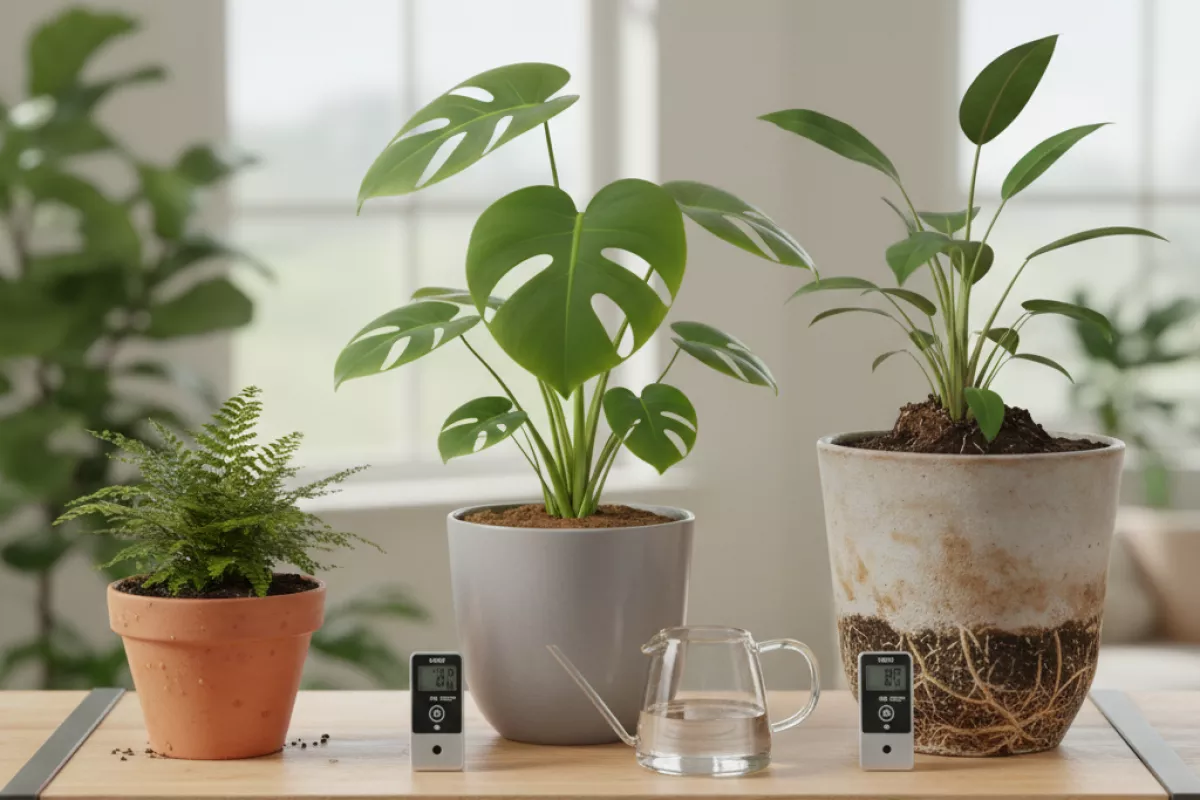
Pot volume changes the way water behaves around roots. A larger container holds more mix, so it stores moisture longer and dries more slowly; a smaller one has less buffer, so it can swing from wet to dry quickly. That means the “right” watering rhythm isn’t just about the plant—it’s also about how much soil is acting like a reservoir.
Another piece is root-to-soil ratio. When a plant is in a pot that’s too big for its current root mass, there’s a lot of damp mix with few roots to use that water. The result is often a persistently wet center, lower oxygen, and slower growth. In a tight pot, the opposite happens: roots fill the space, water is taken up faster, and you may need smaller but more frequent drinks to avoid stress.
- Oversized pots: Water spreads into a large volume, so the top may look dry while the lower half stays wet. This is where “watering to runoff” can backfire—consider smaller doses and confirm moisture deeper down before repeating.
- Undersized pots: Mix dries fast and can become hydrophobic (water-repellent). If water runs down the sides and out quickly, slow down and water in two passes a few minutes apart so the medium can re-wet evenly.
- Shallow vs. tall shapes: Tall pots tend to keep a wetter lower zone due to gravity and less airflow; shallow pots usually dry more evenly. Shape can matter as much as diameter when you’re trying to keep moisture and oxygen in balance.
- Material matters with size: A 15 cm (6 in) terracotta pot typically dries faster than a 15 cm (6 in) plastic pot because the walls breathe. In larger sizes, that difference can be even more noticeable over several days.
| Container situation | What you’ll often notice | How to adjust watering |
|---|---|---|
| Pot is 2–5 cm (1–2 in) wider than the root ball | Even drying; predictable timing | Water thoroughly, then wait until the upper layer is dry and the pot feels lighter before repeating |
| Pot is 5–10 cm (2–4 in) wider than the root ball | Top dries but the center stays damp | Use smaller volumes per session; check moisture 5–8 cm (2–3 in) down before watering again |
| Rootbound in a small pot | Rapid drying; wilting between waterings | Water more frequently in moderate amounts, or repot up one size to add a moisture buffer |
| Very large pot with slow-growing plant | Long wet periods; fungus gnats or musty smell | Let the mix dry deeper between waterings; consider a chunkier mix to increase airflow and reduce soggy zones |
A practical rule: match the container to the root system you have now, not the one you hope for. Moving up one size at a time (often about 2–5 cm / 1–2 in wider) keeps drying time and oxygen levels more stable, which makes “balanced watering” much easier to maintain.
Visual signs of balanced watering
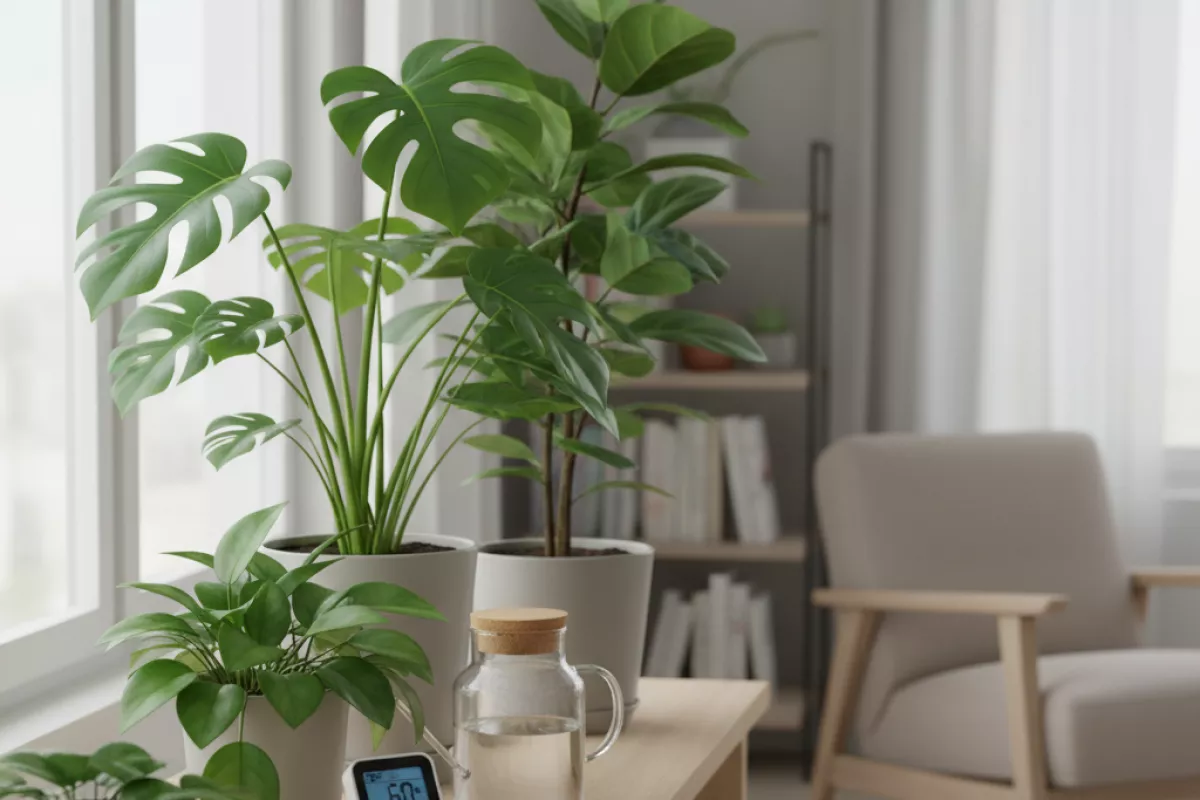
Healthy hydration shows up first in the plant’s posture and new growth. When moisture levels are in the right range, leaves look firm without feeling brittle, stems hold themselves up without staking, and the plant grows at a steady pace rather than in sudden spurts followed by droop.
- Leaves are plump and resilient: They spring back after a gentle bend and don’t feel papery. You’ll see fewer random “flop days” between waterings.
- Even leaf color: Green stays consistent across the canopy. Minor natural variation is normal, but you shouldn’t see widespread pale patches or dull, gray-green cast that suggests chronic thirst.
- New growth looks normal-sized: Fresh leaves unfurl without staying tiny or wrinkled. Stunted new leaves can point to repeated dry-downs; overly soft, thin new growth can hint at staying too wet.
- Stems and petioles hold a steady angle: A plant that’s getting the right amount of water doesn’t constantly “pray” upward one day and collapse the next. Mild daily movement is fine, but big swings are a clue.
- Soil surface behavior makes sense: The top layer dries gradually, not cracking into hard plates within a day or staying dark and glossy for a week. In most homes, the top 2–3 cm (0.8–1.2 in) drying is a normal rhythm for many common houseplants.
- Roots look active (when visible): In clear pots or at drainage holes, you’ll see pale, firm roots and occasional new root tips. A sour smell or brown, mushy roots usually means the mix is staying saturated too long.
- Minimal leaf loss: Older leaves may yellow and drop occasionally as part of normal aging, but you shouldn’t see frequent sudden shedding after watering or after the pot dries.
- Drainage is predictable: After a thorough watering, excess runs out within a minute or two, and the pot doesn’t feel waterlogged for days. If it stays heavy and cold for a long time, the plant may be sitting in too much moisture.
| What you see | What it usually suggests | Quick adjustment |
|---|---|---|
| Leaves droop but perk up within 1–3 hours after watering | Plant is drying a bit too far between waterings | Water slightly earlier next time, or increase mix water-holding (e.g., a bit more coco/peat) without reducing drainage |
| Leaves feel soft, look dull, and droop even though soil is wet | Roots may be stressed from staying too wet; oxygen is limited | Let the mix dry more before the next watering; check drainage holes and avoid leaving water in the saucer |
| Yellowing starts on lower leaves; soil stays dark and heavy for 7+ days | Chronic overwatering or slow-drying potting mix | Reduce watering frequency; consider a chunkier mix and a pot with better airflow |
| Crispy tips/edges while the rest of the leaf stays firm | Often inconsistent moisture or salt buildup (not always “too little water”) | Water more evenly; occasionally flush with 2–3× pot volume (e.g., 1 L for a 0.5 L pot) (34 fl oz for a 17 fl oz pot) and let it drain fully |
| Soil pulls away from pot sides; water runs straight through | Hydrophobic, overly dry mix that can’t re-wet evenly | Bottom-water 15–30 minutes (or top-water slowly in rounds) to rehydrate; then resume a steadier schedule |
If you’re unsure, combine two cues: the plant’s firmness plus how the pot feels. A pot that’s noticeably lighter and a plant that’s just starting to relax is often the sweet spot for the next watering, while a heavy pot paired with limp growth usually means waiting is the better move.
Mistakes that cause moisture swings
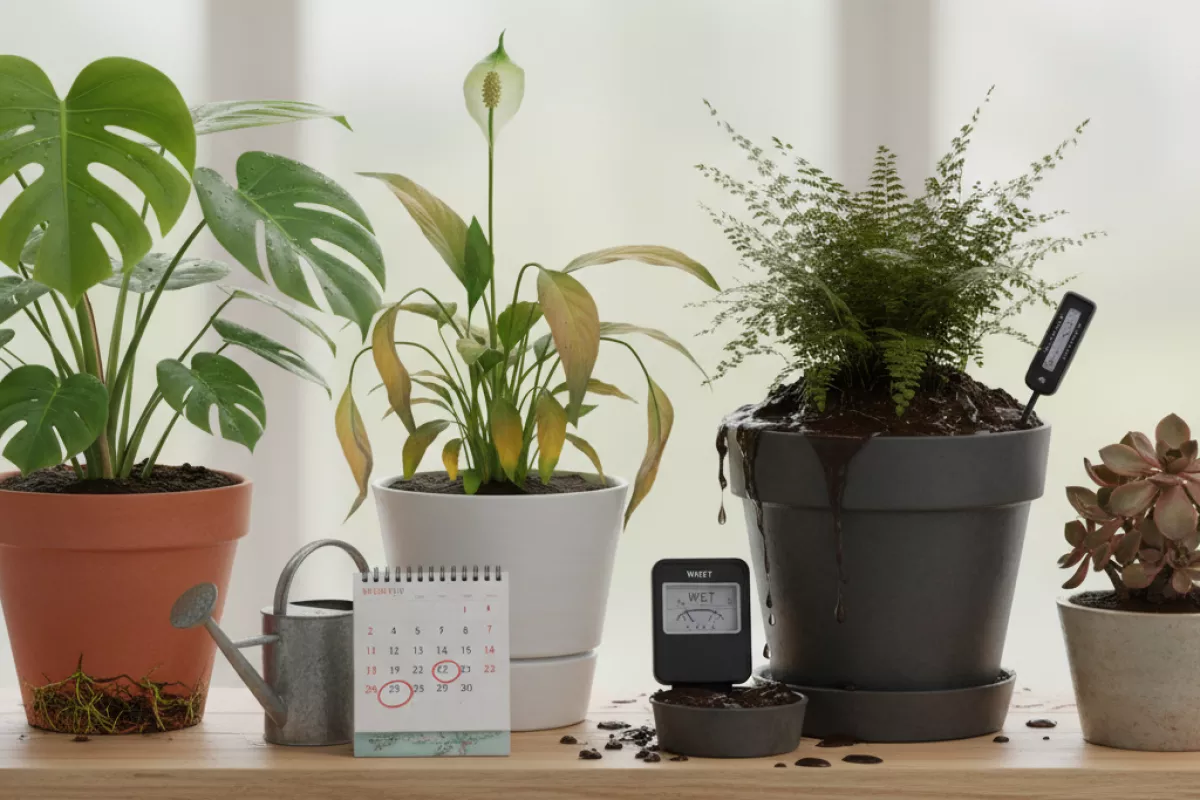
Big ups and downs in pot moisture usually come from a few repeatable habits: watering on a rigid schedule, using the wrong potting mix for the plant, or letting drainage problems go unnoticed. The goal is steadier hydration so roots can keep taking up oxygen and nutrients instead of cycling between drought stress and soggy conditions.
- Watering by the calendar instead of the soil
Light, temperature, and growth rate change week to week, so “every 7 days” often turns into alternating overwatering and underwatering. Check the mix first: if the top 2–3 cm (0.8–1.2 in) is dry for many common houseplants, it may be time; if it’s still cool and damp, wait. - Using a pot without a drainage hole (or leaving a cachepot full of runoff)
Standing water at the bottom keeps the lower root zone saturated long after the surface looks dry. If you use a decorative outer pot, empty it within 10–15 minutes after watering. - “A little splash” watering
Small amounts wet only the top layer, then it dries quickly and tricks you into watering again. That creates a wet-dry seesaw near the surface while deeper roots stay dry. Water until you see a modest amount drain out, then discard the excess. - Letting a plant get bone-dry, then flooding it
Severely dry mix can turn hydrophobic and repel water, so a heavy watering runs down the sides and out the bottom. Re-wet gradually: water lightly, wait 10 minutes, then water again, or bottom-water for 20–30 minutes (0.3–0.5 hr) and drain well. - Potting mix that’s too dense or too airy for the situation
Heavy mixes hold water too long in low light or cool rooms; very chunky mixes can dry too fast in bright windows. Match texture to conditions: more aeration for humid, low-evaporation spaces; a bit more water-holding for warm, bright spots. - Upsizing the pot too much after repotting
A large volume of mix stays wet longer because roots can’t use the water fast enough, leading to a slow dry-down followed by a sudden correction (skipping water) and another swing. Move up gradually, typically 2–5 cm (0.8–2 in) wider in diameter. - Ignoring seasonal shifts
In winter, many plants use less water due to lower light and cooler temps; in summer, they may drink faster. If your room drops from 24°C (75°F) to 18°C (64°F), expect slower drying and adjust frequency rather than keeping the same routine. - Relying on one “finger test” depth for every plant
Shallow-rooted plants and deep-rooted plants dry differently. For deeper pots, check moisture 5–7 cm (2–2.8 in) down with a wooden skewer; if it comes out clean and dry, it’s closer to time. - Not accounting for airflow and heat sources
A plant near a vent, radiator, or sunny glass can dry unevenly: one side of the pot dries fast while the center stays damp. Rotate the pot weekly and reassess moisture in multiple spots. - Fertilizing a thirsty plant instead of watering first
Adding nutrients to dry soil can stress roots and doesn’t fix the underlying moisture deficit. Water first, then fertilize on the next watering (or use a weaker feed) once hydration is stable.
If you’re seeing repeated leaf drop, mushy stems, or crispy tips in alternating cycles, treat it as a consistency problem: improve drainage, water thoroughly but less often, and base timing on how the mix dries in your specific light and temperature.