How to Maintain Proper Moisture in Indoor Plants

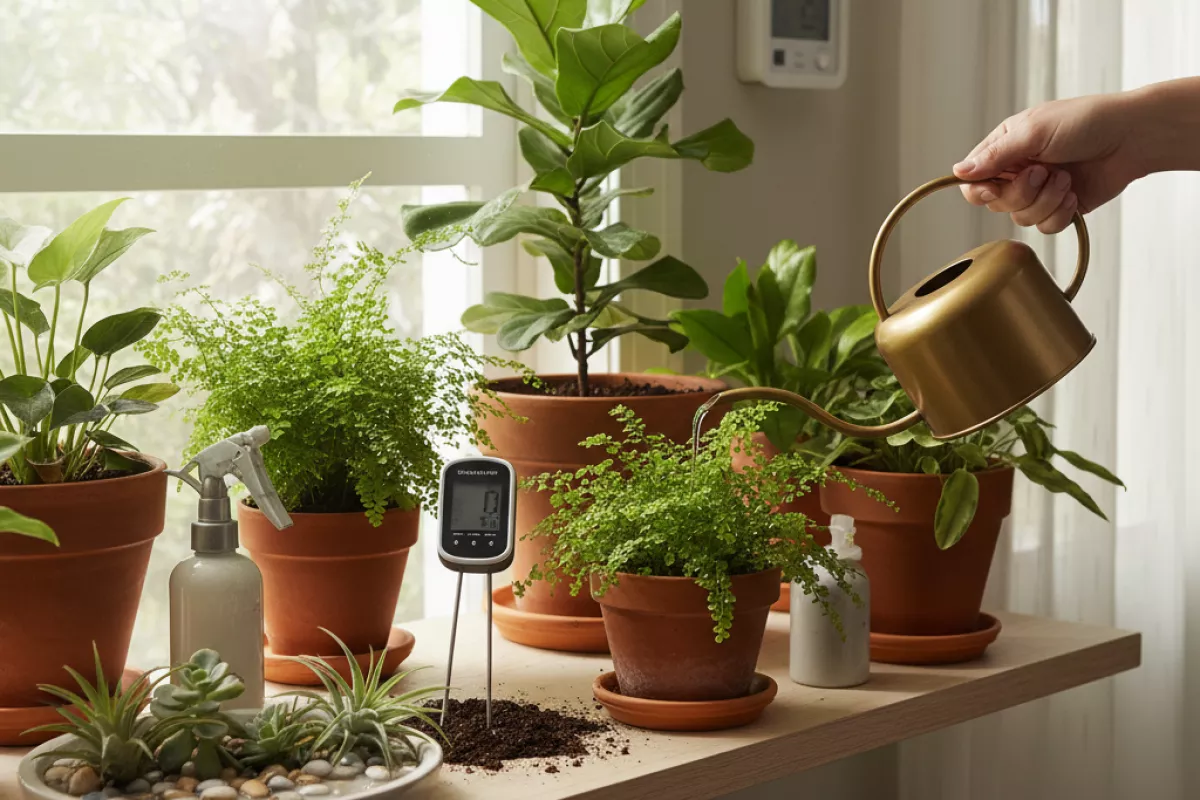 Covers what proper soil moisture really is, how to balance it without leaving soil wet, and how to stabilize watering intervals. Explains soil mixes that hold moisture correctly, environmental factors that speed drying, symptoms of unstable moisture, and practical ways to keep it consistent.
Even, consistent watering helps indoor plants avoid yellowing leaves, root rot, and slow growth. The goal is to match how much water is in the pot with the conditions around the plant, since light, temperature, airflow, and soil mix change how quickly moisture is used. This guide shares simple checks and routines to keep soil moisture steady, so you can water with confidence instead of guessing.
What proper soil moisture actually means
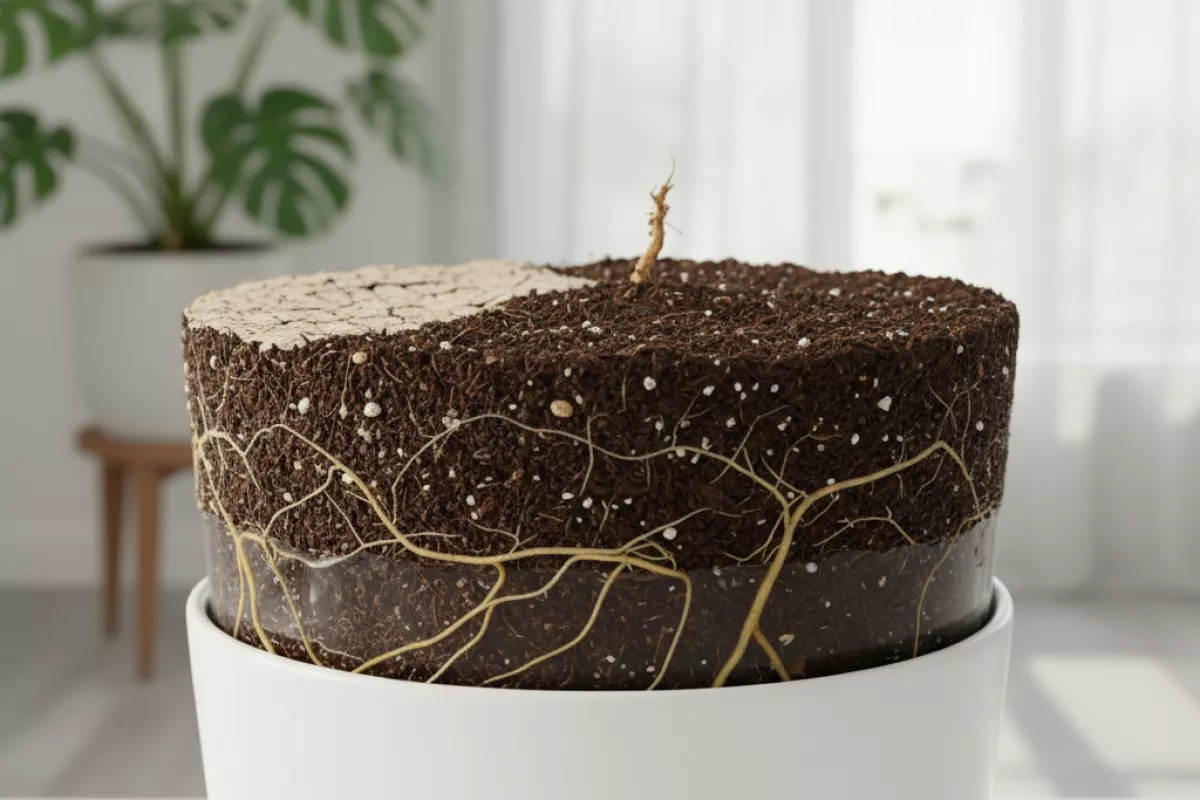
Healthy watering isn’t about keeping the potting mix constantly wet or letting it turn bone-dry; it’s about maintaining a balance of water and air around the roots. Roots need moisture to move nutrients, but they also need oxygen. When the mix stays saturated, air pockets collapse and roots can suffocate. When it stays too dry, fine feeder roots die back, and the plant struggles even after you water again.
A useful way to think about it is “evenly damp, not soggy” for many common houseplants. That doesn’t mean the surface must look wet. The top 2–5 cm (1–2 in) can dry while the root zone lower down remains comfortably moist. The goal is a root area that feels cool and slightly springy, not muddy or dusty.
- Moist (ideal for many plants): The mix feels like a wrung-out sponge. If you squeeze a pinch, it clumps lightly but doesn’t drip. A finger inserted 5 cm (2 in) meets gentle resistance and comes out with a faint, darkened soil stain.
- Too wet: The pot feels heavy for days, the surface stays glossy, and the mix looks compacted. You may notice a sour smell, fungus gnats, or yellowing leaves that drop while the soil is still damp.
- Too dry: The pot feels unusually light, the mix pulls away from the pot’s edge, and water may run down the sides without soaking in. Leaves may curl, crisp at the edges, or droop, then perk up briefly after watering.
“Proper” also changes with the plant and the environment. A cactus in bright sun may prefer a deeper dry-down between waterings, while a peace lily likes more consistent dampness. Temperature, airflow, pot size, and light all shift how fast water leaves the soil, so the same schedule can be perfect one month and wrong the next.
| Plant type (general) | What the soil should feel like before watering | Simple check you can do |
|---|---|---|
| Succulents & cacti | Dry through most of the pot; no coolness near the drainage holes | Lift-test: pot feels very light; skewer comes out clean after 10–12 cm (4–5 in) insertion |
| Most foliage houseplants (pothos, philodendron, dracaena) | Top layer dry, root zone slightly damp | Finger-test: dry at 2–5 cm (1–2 in), faintly moist deeper down |
| Moisture-loving plants (ferns, peace lily) | Consistently lightly damp; never fully dry | Surface feels barely dry, pot still has some weight; leaves may start to soften before wilting |
| Orchids in bark mixes | Approaching dry but not brittle; roots still slightly plump | Look at roots: silvery/gray means water soon; green means wait (aim for 2–3 days (48–72 hours) between checks in active growth) |
One more detail: moisture should be distributed, not layered. If the top is wet but the center is dry, or water shoots straight out the drainage holes, you’re not actually hydrating the root ball. Proper hydration means the entire root zone gets wet, then gradually dries at a pace the plant can use—usually faster in a 10 cm (4 in) pot than a 25 cm (10 in) pot, and faster in 24°C (75°F) bright conditions than in 18°C (64°F) low light.
Balancing moisture without keeping soil wet
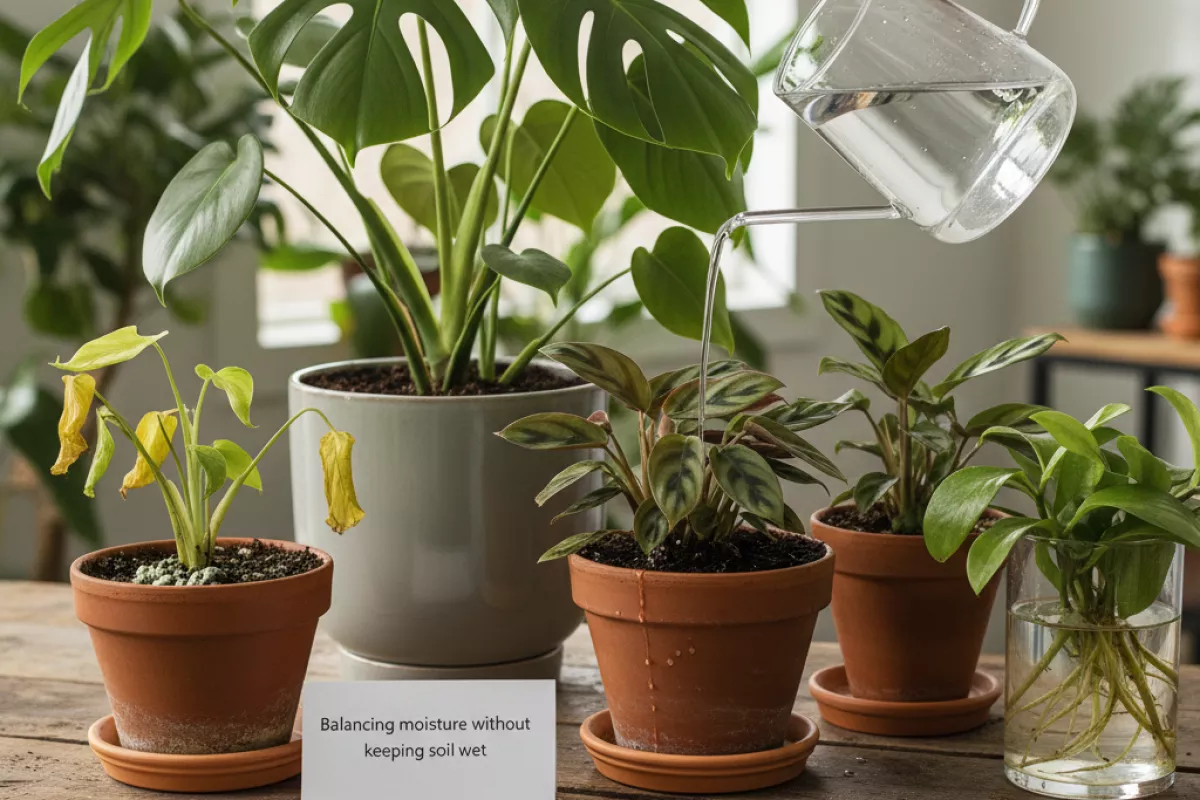
Healthy indoor plants need water and oxygen at the same time. The goal is to keep the root zone evenly damp while still letting air move through the potting mix. If the soil stays saturated, roots can’t “breathe,” and you’ll often see slow growth, yellowing leaves, or a musty smell from the pot.
Start by watering thoroughly, then letting excess drain away. A light sprinkle only wets the top layer and encourages shallow roots, while a deep watering helps moisture distribute through the whole pot. After watering, empty the saucer or cachepot within about 10–15 minutes so the pot isn’t sitting in runoff.
- Use the right test, not the calendar. Check moisture at root depth: insert a finger 2–5 cm (1–2 in) into the mix, or use a wooden skewer and see if it comes out dark and cool (still moist) or mostly clean (ready soon).
- Let the top layer dry a bit. For many common houseplants, waiting until the top 2–3 cm (1 in) dries prevents constant wetness while keeping deeper roots supplied.
- Match water volume to pot size. Water until you get steady drainage, then stop. If you routinely pour a small amount that never reaches the bottom, salts build up and moisture becomes uneven.
- Prioritize drainage and airflow. A pot with drainage holes and a chunky mix (bark, perlite, pumice) dries more predictably than a fine, compacted medium.
- Adjust for season and location. In low light or cooler rooms below 18°C (65°F), plants use less water; in brighter spots or warmer rooms above 24°C (75°F), they dry faster.
- Watch for “false dry.” Peat-heavy mixes can look dry on top while staying wet inside. If the pot feels heavy and the skewer comes out damp, wait even if the surface looks dusty.
| Situation | What’s happening | How to keep moisture steady without sogginess |
|---|---|---|
| Soil stays wet for days | Mix is too dense, pot is oversized, or light/temperature is low | Switch to a more airy mix, confirm drainage holes, move to brighter light, or downsize the pot at the next repot |
| Top dries fast but plant wilts | Water isn’t reaching the root ball evenly | Water slowly in 2 passes, 5 minutes apart; ensure the whole root zone is moistened and drains |
| Water runs straight through | Mix has become hydrophobic or severely dried out | Bottom-water 10–20 minutes, then drain; repeat once if needed, and avoid letting it dry to a hard crust |
| Leaves yellow, soil smells sour | Roots are stressed from low oxygen and possible rot | Let the mix dry more between waterings; consider repotting into fresh, chunkier medium and trimming damaged roots |
If you’re unsure, err slightly on the dry side for a day rather than “topping up” constantly. Consistent cycles of thorough watering followed by partial drying are what keep moisture available while preventing the root zone from staying waterlogged.
How to stabilize watering intervals
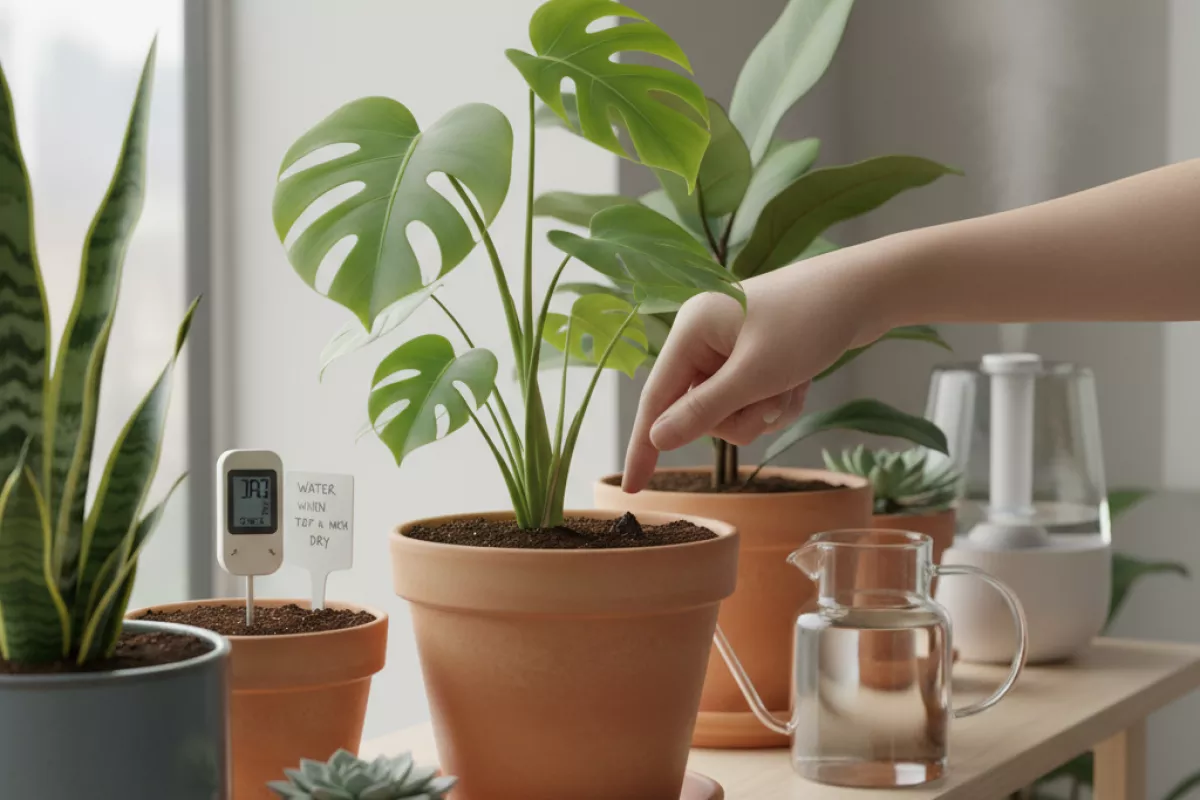
Consistent watering is less about sticking to a calendar and more about reducing the swings that make soil go from soggy to bone-dry. The goal is to create repeatable conditions: similar pot moisture, similar room climate, and a predictable amount of water reaching the root zone each time.
- Pick one “decision signal” and use it every time. For most indoor plants, this is the top 2–5 cm (1–2 in) of soil: water when it’s dry to the touch, not when the surface merely looks lighter. For succulents, wait longer; for thirstier tropicals, don’t let the root ball fully dry.
- Standardize the watering method. Either water thoroughly until a small amount drains out, or bottom-water for a set soak time like 10–20 minutes (10–20 min). Switching methods week to week makes intervals unpredictable.
- Measure once, then repeat. Use a cup or small pitcher so you’re giving roughly the same volume each session (for example, 250 ml (8.5 fl oz) per watering on a medium pot). Adjust only if the plant dries too fast or stays wet too long.
- Reset the “starting line” after watering. Empty saucers 10–15 minutes (10–15 min) after watering so the pot isn’t re-absorbing runoff. Standing water can stretch the time between waterings in a way that encourages root issues.
- Keep potting mix performance consistent. If the soil compacts or becomes hydrophobic, moisture readings become unreliable. Break up the crust, top-dress with fresh mix, or repot if water runs down the sides and out immediately.
- Stabilize the environment where you can. A plant next to a heater or in a sunny window can dry out days earlier than the same plant 1 m (3 ft) away. If you can’t move it, expect shorter gaps and check more often.
- Use a simple tracking habit. Write the date you watered on a tag, or set a reminder to check moisture every 3–7 days (3–7 days) rather than “water every Saturday.” The reminder is for assessment, not automatic watering.
- Match the pot to your schedule. Terracotta breathes and dries faster; plastic holds moisture longer. If you’re often late, a less porous pot can smooth out the interval; if you tend to overwater, terracotta adds a margin of safety.
If your intervals still swing wildly, do a quick diagnostic: after watering, the pot should feel noticeably heavier, and it should take more than 1 day (1 day) to return to “light.” If it dries in 24 hours (24 hr), the plant may be root-bound, the mix too airy, or the light/heat too intense. If it stays heavy for 7+ days (7+ days), the mix may be too dense, the pot too large, or the room too cool.
| What you observe | Likely cause | Adjustment to smooth the interval |
|---|---|---|
| Soil dries in 1–2 days (24–48 hr) | Too much sun/heat, root-bound plant, very porous mix or terracotta | Move 0.5–1 m (1.5–3 ft) from heat/sun, repot one size up, add water-retentive components, or switch to plastic |
| Top looks dry but lower soil stays wet for 7+ days (7+ days) | Dense mix, oversized pot, low light, cool room | Increase light, warm zone to ~20–24°C (68–75°F), repot into a smaller pot, add aeration (bark/perlite) |
| Water runs straight through and the plant wilts soon after | Hydrophobic or shrunken mix pulling from pot edges | Bottom-water 20–30 minutes (20–30 min) to rehydrate, then refresh or replace mix |
| Leaves yellow, soil stays damp, fungus gnats appear | Chronic overwatering or poor drainage | Let the top 5 cm (2 in) dry, improve drainage holes, remove standing water, and adjust volume downward |
| Intervals change dramatically season to season | Light and indoor humidity shifts | In winter, check less often and water less; in summer, check more often and consider a humidity tray or grouping plants |
Once you’ve made one change, keep it in place for at least 2–3 cycles (2–3 cycles) before judging results. Small, consistent adjustments beat frequent tweaks, and they’re what make watering rhythms feel stable instead of random.
Soil mixes that hold moisture correctly
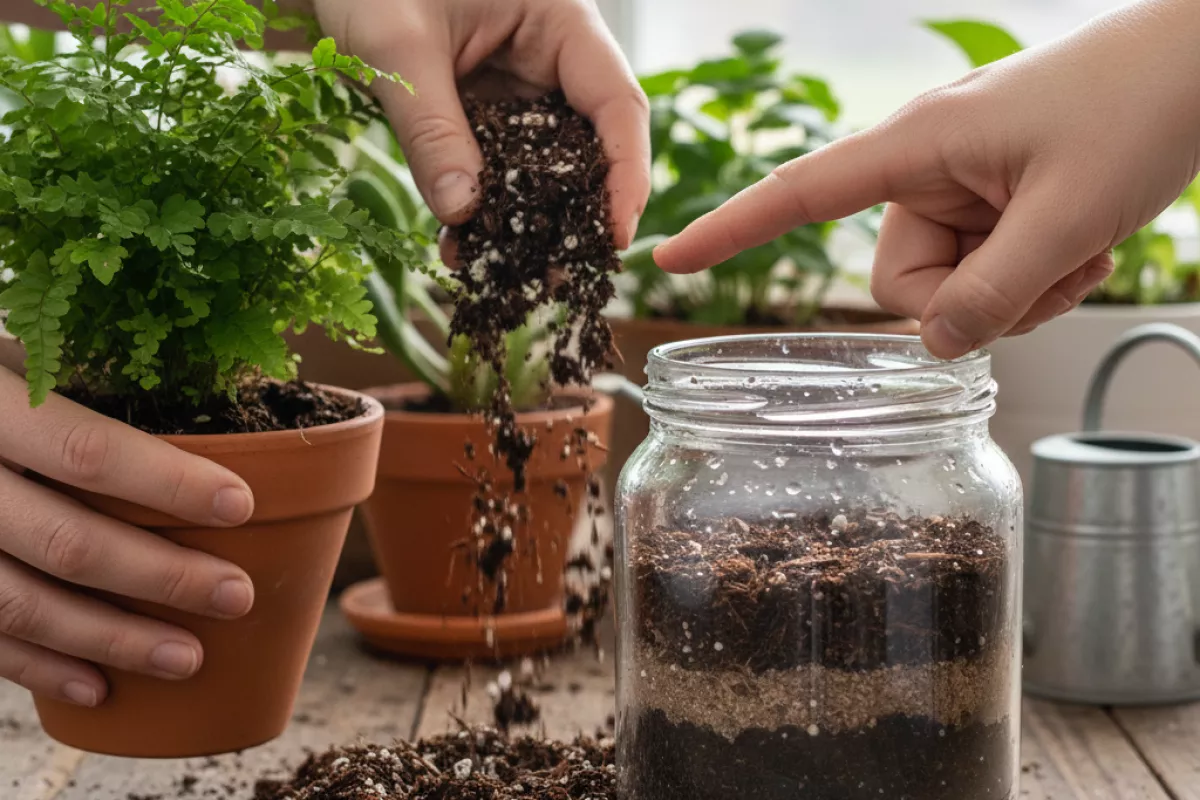
The easiest way to keep indoor plants evenly hydrated is to use a potting blend that holds water in tiny pores while still draining excess. If the mix stays soggy, roots lose oxygen; if it dries into a hard, shrinking block, water runs down the sides and never reaches the root zone. A good blend feels springy when moist, crumbles when squeezed, and rewets without a fight.
Think in terms of ingredients and what each one does. Fine particles and organic matter increase water retention; chunky particles create air pockets and prevent compaction. The “right” balance depends on the plant and your home conditions (heat, airflow, and how often you realistically water).
- Peat moss or coco coir: The main water-holding base. Coir tends to rewet more easily; peat can become hydrophobic if allowed to dry completely.
- Perlite or pumice: Adds air space and improves drainage so moisture stays available without turning stagnant.
- Orchid bark or pine bark fines: Creates structure and long-lasting pore space; helpful for plants that hate “muddy” soil.
- Compost or worm castings (small amounts): Boosts nutrient-holding and moisture buffering, but too much can make the mix heavy.
- Vermiculite (optional): Holds a lot of water; useful for thirsty plants, risky for plants prone to rot if overused.
| Plant type / situation | Example mix ratio (by volume) | Why it helps moisture control |
|---|---|---|
| Most tropical foliage (pothos, philodendron, monstera) | 2 parts coco coir or peat : 1 part perlite : 1 part bark | Coir/peat holds water, while perlite and bark keep oxygen flowing so the root zone stays evenly damp, not waterlogged. |
| Moisture-loving plants (ferns, calathea, fittonia) | 3 parts coir/peat : 1 part perlite : 1 part compost | Higher water storage and better buffering between waterings; perlite prevents the mix from collapsing into a dense mass. |
| Succulents and cacti indoors | 1 part potting mix : 2 parts pumice/perlite : 1 part coarse sand or fine gravel | Fast drainage with small pockets of moisture; reduces the chance of roots sitting wet for days. |
| Very dry homes or small pots that dry fast | 2 parts potting mix : 1 part coir : 1 part perlite (optional: add a small handful of vermiculite) | Extra water-holding without sacrificing too much airflow, helping prevent the “dry by tomorrow” cycle. |
Two practical tips make these blends work better. First, pre-moisten the medium before potting: add water gradually until it feels like a wrung-out sponge, not dripping. Second, choose particle size to match the pot: small containers (10 cm / 4 in) do better with slightly finer ingredients, while larger pots (20 cm / 8 in and up) benefit from more bark or pumice to keep the center from staying wet too long.
If you’re troubleshooting, use the behavior of the mix as your clue. Water pooling on top usually means compaction or too much fine material; water racing through and the pot feeling light again within 24 hours (1 day) points to too much chunk and not enough water-holding base. Adjust one ingredient at a time so you can tell what actually fixed the moisture balance.
Environmental factors that dry soil faster
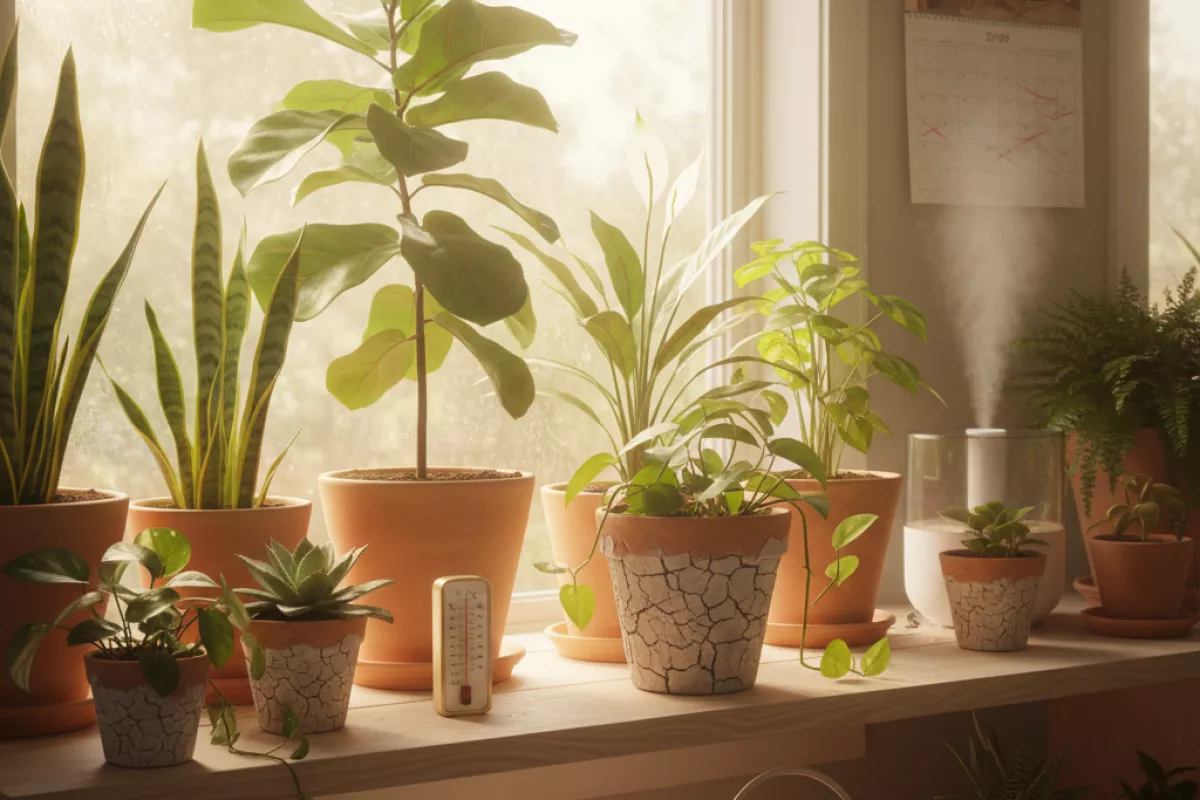
Indoor soil loses water at very different speeds depending on what’s happening around the plant. If you’re watering “on schedule” but the pot keeps drying out early, one (or several) of these conditions is usually pulling moisture out faster than you expect.
-
Warm temperatures
Heat increases evaporation from the potting mix and makes many plants transpire more through their leaves. A spot that sits at 24–27°C (75–81°F) will typically dry sooner than one at 18–21°C (64–70°F), especially in smaller pots. -
Low indoor humidity
Dry air “asks” more water from both soil and foliage. Homes often drop below 40% relative humidity in winter heating season, which can make a previously stable watering routine feel suddenly inadequate. -
Air movement (fans, HVAC vents, drafts)
Moving air strips away the humid layer that normally sits above the soil surface and around leaves. A plant placed under a ceiling fan, beside a supply vent, or in a drafty hallway can dry out noticeably faster than the same plant in still air. -
High light, especially direct sun
Brighter light drives photosynthesis and transpiration, and sun on the pot can warm the mix. A windowsill with a few hours of direct sun can shorten the time between waterings compared with bright, indirect light. -
Heat sources near the container
Radiators, baseboard heaters, heat mats, and even warm electronics can raise the temperature around the pot. If the container feels warm to the touch, moisture is likely leaving the mix faster than you’d predict from room temperature alone. -
Seasonal shifts
Summer often brings more light and warmth; winter often brings drier air from heating. Either way, the environment changes even if you don’t move the plant, so the soil may dry quicker (or slower) than it did a month ago. -
Very dry pot surfaces
A top layer that’s exposed and crumbly encourages faster evaporation, especially in warm, moving air. A thin layer of leaf litter or a breathable top-dressing can slow surface loss, but avoid sealing the soil so tightly that it stays soggy.
If your plant is in a hot, bright, breezy spot, expect the potting mix to dry sooner and check moisture more often. The practical takeaway is to match your checks to conditions: when the room is warmer, drier, or windier, verify moisture at the root zone rather than relying on a fixed calendar.
Symptoms of unstable moisture levels
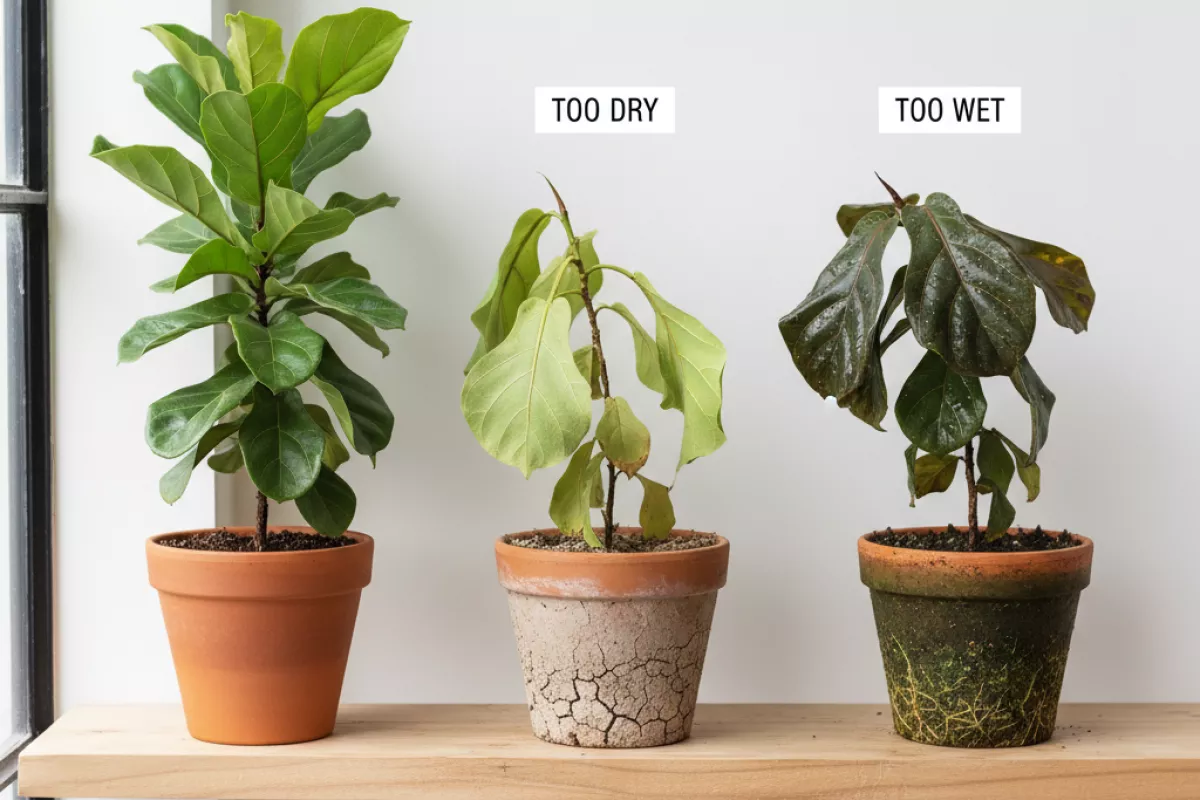
Plants usually tell you when their root zone is swinging between too wet and too dry. The tricky part is that several signs overlap, so it helps to look at the whole pattern: what the leaves are doing, how the soil feels, and whether the plant is still putting out new growth.
| What you notice | More likely too dry | More likely too wet | Quick check to confirm |
|---|---|---|---|
| Leaves droop or look limp | Droop improves within a few hours after watering; leaves may feel thin or papery | Droop persists even after watering; leaves can feel soft and heavy | Feel the mix 5 cm (2 in) down: dry and dusty vs. cool and soggy |
| Leaf edges turn brown or crispy | Crisp margins, curling, brittle tips; older leaves often affected first | Less common; if present, usually paired with yellowing and soft spots | Check for a hard, shrunken root ball pulling from the pot wall vs. constantly damp soil |
| Yellowing leaves | Can happen after repeated drought cycles; leaf drop may follow quickly | Common with waterlogged roots; yellowing may start on lower leaves | Smell the potting mix: neutral/earthy vs. sour or swampy odor |
| Soft, mushy stems or leaf bases | Unlikely unless the plant is severely dehydrated and tissue collapses | Typical of rot; tissue may darken and feel water-soaked | Inspect the crown and soil line; gently press: firm vs. spongy |
| Soil surface behavior | Soil pulls away from the pot; water runs down the sides and out quickly | Surface stays dark and wet; algae or fungus gnats may appear | Water slowly: if it beads and channels, the mix is hydrophobic; if it stays glossy, it’s saturated |
| Stalled growth and small new leaves | New growth pauses during dry spells; leaves may emerge smaller or deformed | Roots can’t breathe; growth slows even though the soil is wet | Compare pot weight after watering vs. 2–3 days later; no change suggests poor drainage |
Mixed signals are common when moisture swings happen: a plant can look thirsty while the lower pot is still wet, especially in a container without enough drainage or in a cool room around 18°C (64°F). In that case, watering again often makes things worse, because the roots are already stressed.
- Frequent leaf drop (especially after a dry spell followed by a heavy soak) often points to repeated wet-dry cycles rather than a single mistake.
- Wrinkled leaves on succulents can mean dehydration, but if the soil is damp and the base is soft, it’s more consistent with rot.
- White crust on the soil can show up when the mix dries too fast and salts concentrate; it’s a clue to check watering rhythm and flush with enough water to drain freely.
If you’re unsure, prioritize root-zone evidence over leaf symptoms. A quick finger test at 5 cm (2 in), checking pot weight, and watching how long the top layer stays wet will usually tell you whether the plant needs water or needs air.
Practical ways to keep moisture consistent
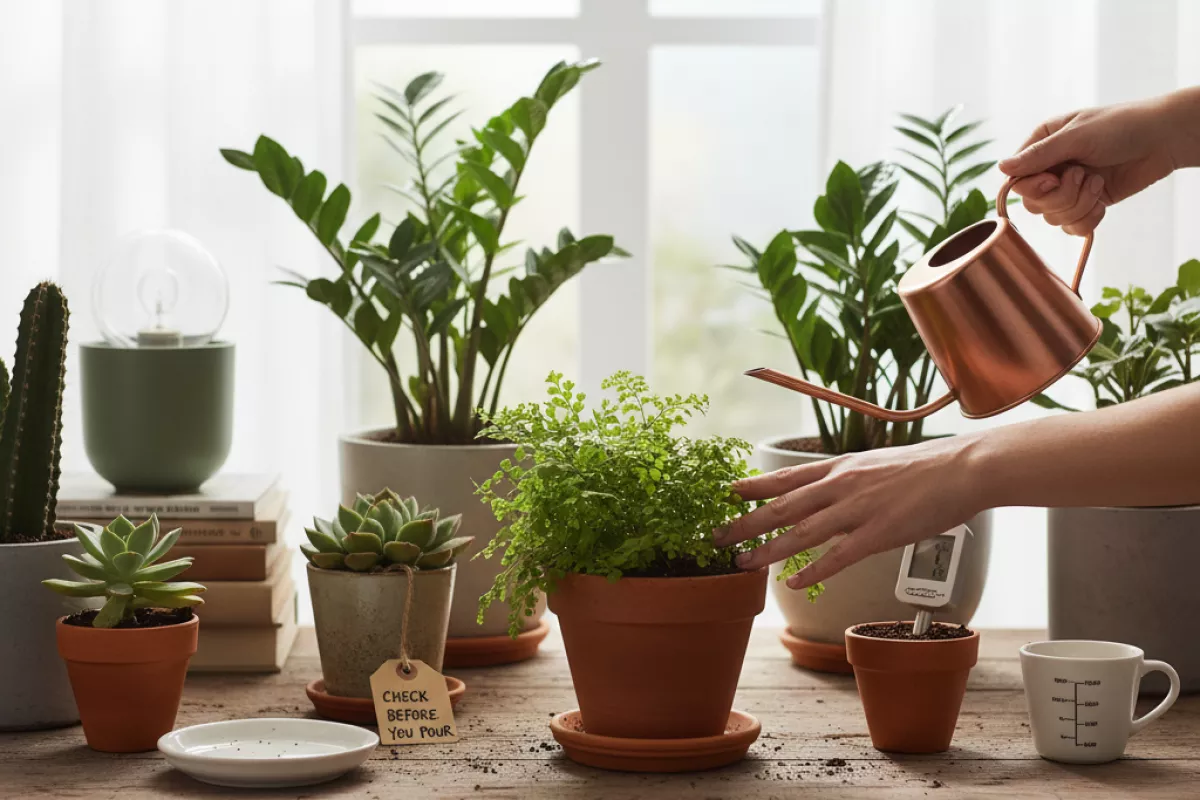
Stable hydration comes from repeatable habits more than “watering on a schedule.” The goal is to keep the root zone evenly damp (not soggy) by matching water, airflow, light, and pot setup to how fast your plant actually uses moisture.
- Water based on the root zone, not the calendar. Check before you pour: press a finger 2–5 cm (1–2 in) into the mix, or lift the pot to feel its weight. Water when the top layer is dry for most foliage plants; wait longer for succulents and cacti.
- Use the right watering method for the pot. Top-watering works well if you water thoroughly until a little drains out, then empty the saucer after 10–15 minutes. Bottom-watering (setting the pot in 2–3 cm (1–1.2 in) of water for 15–30 minutes) helps evenly re-wet dry pockets, especially in peat-based mixes.
- Pick a pot-and-drainage combo that prevents extremes. Drainage holes matter more than pot material. Terracotta dries faster (helpful for overwaterers), while plastic holds moisture longer (helpful in bright, warm rooms). Whatever you choose, avoid “cachepots” that trap runoff unless you remove the inner pot to drain.
- Refresh the potting mix when it stops behaving. If water runs straight through or the surface stays wet for days, the mix may be compacted or hydrophobic. Repot with a chunkier blend (e.g., adding bark or perlite) so water distributes evenly and roots get air.
- Mulch the surface to slow evaporation. A thin top layer of orchid bark, coco chips, or sphagnum can reduce rapid drying in heated rooms. Keep mulch 1–2 cm (0.4–0.8 in) away from stems to reduce rot risk.
- Control the room factors that change drying speed. More light and warmth increase water use; strong HVAC airflow can dry pots quickly. If a plant sits near a vent, move it 30–60 cm (12–24 in) away or redirect airflow so the soil doesn’t swing from wet to bone-dry.
- Group plants and manage humidity thoughtfully. Clustering plants creates a slightly more humid microclimate, which can reduce leaf stress and slow moisture loss. If you use a humidifier, aim for steady levels rather than big swings.
- Right-size the pot. A pot that’s too large holds excess wet mix for too long; one that’s too small dries out fast. When repotting, going up about 2–5 cm (1–2 in) in diameter is usually enough for most houseplants.
- Use simple tools for consistency. A moisture meter can help beginners, but treat it as a second opinion. A kitchen scale is surprisingly useful: weigh the pot after watering and again when it’s time to water to learn your plant’s “dry weight.”
- Fertilize and flush with intention. Salt buildup can make watering uneven and damage roots, which then struggle to take up water. Every 4–8 weeks, flush the pot with plain water equal to about 2–3 times the container volume, letting it drain fully.
| Situation you notice | Likely cause | What to do next |
|---|---|---|
| Soil pulls away from the pot; water runs down the sides | Mix has become hydrophobic from drying too far | Bottom-water 15–30 minutes, then top-water once; consider repotting into a fresher, chunkier mix |
| Top stays wet for days; fungus gnats appear | Poor airflow, compacted mix, or pot too large | Increase light/air movement, let it dry more between waterings, and repot into a better-aerated blend if needed |
| Leaves droop but soil is still damp | Roots stressed from low oxygen or early rot | Pause watering, check drainage, and inspect roots; trim mushy roots and repot if the mix is staying waterlogged |
| Plant dries out in 1–2 days even after a deep watering | Too much light/heat/airflow, undersized pot, or very fast-draining mix | Move away from vents, add a thin mulch layer, or adjust the mix to hold a bit more water; consider a slightly larger pot |
If you change only one thing, make it your checking routine: measure moisture the same way each time, then water deeply and let excess drain. That single loop prevents the most common cycle of “too wet, then too dry,” and keeps indoor plants steadier week to week.